
Key Takeaways
1. Racism is defined by three distinct ideological positions: segregation, assimilation, and antiracism.
The antiracists say there is nothing wrong or right about Black people and everything wrong with racism.
Three racial positions. Throughout American history, the debate over racial inequity has been waged among three distinct groups. Segregationists believe Black people are naturally inferior and cannot be changed, while assimilationists believe Black people can be developed to adopt White cultural standards. Antiracists reject both, asserting that all racial groups are inherently equal and that racist policies are the sole cause of disparity.
The assimilationist trap. Assimilationists often appear to be allies because they advocate for integration and education, but their underlying premise is deeply flawed. They believe that Black people must modify their behavior, language, and culture to earn respect and equality. This position places the burden of ending racism on the victims rather than the perpetrators.
The antiracist solution. Antiracism demands a fundamental shift in focus from changing people to changing policies. It recognizes that there is nothing inherently superior or inferior about any racial group. To build an equitable society, we must actively dismantle the systemic barriers that produce unequal outcomes.
- Segregationists: Attempt to separate from Black people due to perceived permanent inferiority.
- Assimilationists: Attempt to transform Black people to fit White cultural norms.
- Antiracists: Attempt to transform racist policies to ensure absolute group equality.
2. Racist ideas were historically constructed to justify pre-existing exploitative policies.
I found that the need of powerful people to defend racist policies that benefited them led them to produce racist ideas, and when unsuspecting people consumed these racist ideas, they became ignorant and hateful.
Policy precedes ideology. Contrary to popular belief, racism does not begin with ignorance and hatred. Instead, powerful individuals design exploitative policies for economic or political gain, and then invent racist ideas to justify those actions. Ignorance and hatred are the downstream results of consuming these manufactured ideas.
The first racist. This pattern began in 1415 with Gomes Eanes de Zurara, a Portuguese chronicler who wrote the first defense of the African slave trade. Zurara framed the kidnapping and enslavement of Africans by Prince Henry as a noble, missionary endeavor to save "savage" souls. This literature established a blueprint for using racist ideas to protect financial interests.
Economic self-interest. Throughout history, whenever a policy generated immense wealth, intellectual and religious justifications quickly followed. Slavery was never about hatred; it was about free labor and massive profit margins.
- Step 1: Implement an exploitative policy (e.g., enslavement for free labor).
- Step 2: Produce racist ideas to justify the policy (e.g., Africans are subhuman savages).
- Step 3: Public consumes these ideas, resulting in widespread ignorance and hatred.
3. Early American religious and educational institutions codified human hierarchy.
Aristotle believed that Greeks were superior to non-Greeks. John Cotton and Richard Mather took Aristotle’s idea... and flipped it into a new equation, substituting "Puritan" for "Greek."
Puritan power structures. In colonial America, religious leaders like John Cotton and Richard Mather wielded immense political and social influence. They established churches and educational institutions, including Harvard University, to enforce a rigid, disciplined worldview. They integrated classical texts that promoted human hierarchy directly into their curriculums.
Theological justifications. To reconcile their Christian faith with the brutality of slavery, Puritans relied on theories like "curse theory" and "climate theory." They argued that dark skin was a physical manifestation of God's curse on Ham's descendants, making enslavement a benevolent act of Christianization. This framing allowed slaveholders to view themselves as compassionate saviors rather than captors.
Institutionalizing supremacy. By embedding these ideas into the foundational systems of American higher education, early leaders ensured that racism would be treated as academic and theological truth.
- Harvard University: Established with a curriculum that forbade disputing classical texts on human hierarchy.
- Curse Theory: Used the Bible to argue that Black people were cursed to be servants.
- Climate Theory: Claimed extreme heat made Africans inferior, but cooler climates could "whiten" them.
4. Thomas Jefferson embodied the deep-seated American contradiction of liberty and slavery.
He knew slavery was wrong, but not wrong enough to free his own slaves.
The great contradictor. Thomas Jefferson penned the immortal words "all men are created equal" while simultaneously owning hundreds of enslaved human beings. Throughout his life, Jefferson struggled with the tension between his intellectual alignment with liberty and his financial dependence on slave labor. He frequently expressed moral opposition to slavery in public while expanding his personal slaveholdings in private.
Notes on Virginia. In his book Notes on the State of Virginia, Jefferson explicitly laid out his belief in the biological inferiority of Black people. He argued that Black people were incapable of fully assimilating into a free society and advocated for their eventual colonization back to Africa or the Caribbean. This "back-to-Africa" stance allowed him to oppose slavery without ever accepting Black people as equal citizens.
Economic over ethical. Ultimately, Jefferson's financial debts and desire for luxury won out over his moral qualms. Upon his death, he freed only a handful of slaves—mostly members of the Hemings family—leaving the rest to be sold to pay off his massive debts.
- Author of Liberty: Wrote the Declaration of Independence but owned over 600 slaves.
- Biological Racism: Claimed Black people felt less pain and lacked cognitive reflection.
- Colonization Advocate: Believed freed slaves must be deported to maintain a white-dominated America.
5. Uplift suasion and media suasion are assimilationist traps that blame Black people for their oppression.
This strategy was called uplift suasion. It was racist, because what it said was that Black people couldn’t be accepted as themselves, and that they had to fit into some kind of White mold to deserve their freedom.
The burden of proof. Uplift suasion is the belief that if Black people behave exceptionally, speak "properly," and achieve high levels of education, they will disprove racist stereotypes and persuade White people to grant them equality. This strategy is inherently racist because it suggests that Black people are responsible for their own mistreatment. It implies that freedom is a privilege to be earned through good behavior rather than an inherent human right.
Media suasion. A modern offshoot of this strategy is media suasion, which attempts to use art, literature, and television to showcase "refined" Black lives to win White respect. From the poetry of Phillis Wheatley to The Cosby Show, these efforts have historically failed to dismantle systemic racism. While they may create a category of "extraordinary Negroes" in the minds of White observers, they do nothing to protect the average Black person from discriminatory policies.
The human right to be imperfect. Antiracists argue that Black people should not have to be extraordinary to be treated as human. True equality means having the right to be ordinary, imperfect, and diverse without facing systemic violence or exclusion.
- Uplift Suasion: Demands that Black individuals act as flawless representatives of their entire race.
- Media Suasion: Uses positive cultural representations to appeal to White empathy.
- The Flaw: Both strategies assume that racism is caused by ignorance rather than self-interest and policy.
6. William Lloyd Garrison shifted abolition from a political compromise to a moral imperative.
In his first editorial piece, Garrison changed perspectives from gradual abolition to immediate abolition.
Immediate physical freedom. William Lloyd Garrison revolutionized the abolitionist movement by launching his newspaper, the Liberator, in 1831. He abandoned the popular, conservative stance of gradual emancipation and demanded the immediate, unconditional end of slavery. Garrison argued that slavery was a heinous moral sin that required instant eradication, rather than a political issue to be compromised away.
The gradualist compromise. Despite his radical stance on physical emancipation, Garrison remained an assimilationist regarding social equality. He believed that while Black people should be freed immediately, they should only receive social and political rights gradually. He championed uplift suasion, urging freed Black people to adopt quiet, non-threatening lifestyles to ease White anxieties.
The limits of moral suasion. Garrison's belief that moral persuasion alone could end racism was tested by the violent backlash of slaveholders and northern racists. His legacy is a powerful reminder of the difference between opposing the institution of slavery and actively supporting absolute racial equality.
- The Liberator: A radical newspaper that galvanized the northern abolitionist movement.
- Immediate Abolition: The demand for the instant, uncompensated freeing of all slaves.
- Gradual Equality: The belief that social integration must happen slowly to protect social order.
7. W.E.B. Du Bois's intellectual journey mirrors the painful evolution from assimilation to antiracism.
He’d spent so many years trying to convince Black people to mold themselves into a version of White people... He had finally turned away from assimilationism. He had finally turned toward antiracism.
The Talented Tenth. Early in his career, W.E.B. Du Bois was the ultimate champion of assimilation and uplift suasion. He proposed the concept of the "Talented Tenth," arguing that the top ten percent of educated Black men could save the race by proving their intellectual equality to White elites. Du Bois believed that scientific research and refined behavior could educate racism out of existence.
The double consciousness. In his seminal work, The Souls of Black Folk, Du Bois introduced the concept of "double consciousness"—the internal conflict of being both Black and American in a society that devalues Blackness. Over decades of witnessing relentless racial violence, including the Red Summer of 1919, Du Bois realized that White supremacy was not a product of ignorance, but of power. This realization shattered his faith in uplift suasion.
The radical turn. In his later years, Du Bois embraced antiracist socialism and Pan-Africanism, abandoning his quest for White approval. He began advocating for Black self-sufficiency, voluntary segregation for safety, and the direct dismantling of capitalist systems that relied on racial exploitation.
- Early Phase: Promoted the "Talented Tenth" and academic excellence to win White respect.
- Middle Phase: Identified "double consciousness" and began organizing political protests through the NAACP.
- Late Phase: Embraced radical socialism, Pan-Africanism, and rejected the pursuit of integration on White terms.
8. Black Power and figures like Malcolm X redefined the struggle from civil rights to human rights.
Malcolm X’s empowerment philosophy of Black national and international unity, self-determination, self-defense, and cultural pride started to sound like music to the ears of the SNCC youth.
Self-defense and self-determination. In the 1960s, a new generation of activists grew frustrated with the slow, nonviolent progress of the traditional civil rights movement. Malcolm X emerged as a powerful counter-voice, preaching self-defense, economic self-sufficiency, and global African solidarity. He argued that Black people should not beg for civil rights from a government that despised them, but instead demand their basic human rights.
The rise of Black Power. Inspired by Malcolm X, Stokely Carmichael coined the phrase "Black Power" during a 1966 march in Mississippi. This slogan signaled a shift away from the assimilationist goal of integration and toward Black self-determination. It called for Black people to own and control their own communities, schools, and political institutions, free from White paternalism.
The Black Panthers. This philosophy materialized in organizations like the Black Panther Party for Self-Defense, founded by Huey P. Newton and Bobby Seale. The Panthers combined community survival programs, like free breakfasts for children, with armed patrols to protect Black neighborhoods from police brutality.
- Civil Rights vs. Human Rights: Shifting the goal from legal integration to global self-determination.
- Black Power: A call for Black political, economic, and cultural independence.
- Black Panther Party: Implemented a ten-point platform focusing on housing, education, and ending police brutality.
9. Systemic policies like the War on Drugs coded racism into "law and order" rhetoric.
This war was really one on Black people.
The southern strategy. Following the legislative victories of the Civil Rights and Voting Rights Acts, politicians developed new, coded ways to appeal to racist voters. Richard Nixon pioneered the "southern strategy," using racially coded language like "law and order" and "ghetto" to target Black communities without explicitly mentioning race. This strategy successfully united northern and southern racists under the banner of conservatism.
The War on Drugs. Ronald Reagan escalated this strategy in 1982 by launching the War on Drugs, a policy that disproportionately targeted Black and poor communities. The Anti-Drug Abuse Act of 1986 established a notorious 100-to-1 sentencing disparity between crack cocaine (primarily used by poor Blacks) and powder cocaine (primarily used by wealthy Whites). This policy triggered the era of mass incarceration, decimating Black families and stripping millions of their voting rights.
The superpredator myth. To justify these draconian policies, academics and media outlets manufactured the myth of the "superpredator"—the idea that a generation of young Black men were inherently violent and remorseless. This propaganda convinced the public that mass incarceration was a necessary safety measure rather than a racist policy.
- Southern Strategy: Using coded language to appeal to racial anxieties without explicit racial slurs.
- Sentencing Disparities: Punishing five grams of crack cocaine as severely as five hundred grams of powder cocaine.
- Mass Incarceration: Systematically removing Black men from their communities and stripping them of political power.
10. Antiracism requires active participation, intersectional solidarity, and dismantling racist policies.
The antiracist declaration of the era quickly leaped from social media onto shouting signs and shouting mouths... collectively, these activists were pressing against discrimination in all forms...
Active participation. Antiracism is not a passive identity; it requires active, ongoing participation to dismantle racist policies. Simply claiming to be "not racist" is insufficient because it allows existing, inequitable systems to continue functioning. To be an antiracist, one must actively identify, challenge, and replace policies that produce racial disparities.
Intersectional solidarity. Modern antiracism, exemplified by the Black Lives Matter movement founded by Alicia Garza, Patrisse Cullors, and Opal Tometi, recognizes that race intersects with other forms of oppression. To truly fight for Black lives, we must also oppose sexism, homophobia, transphobia, classism, and xenophobia. This intersectional approach ensures that the most vulnerable members of the community are not left behind in the struggle for liberation.
The path forward. The history of racist ideas in America is long and deeply entrenched, but it is not permanent. By acknowledging our past, rejecting the comfort of color-blindness, and committing to policy change, we can build an equitable future.
- Active Antiracism: Shifting from passive non-racism to active policy intervention.
- Intersectionality: Recognizing how race, gender, sexuality, and class intersect to compound oppression.
- Policy Over People: Focusing on changing systemic laws rather than attempting to change human behavior.
Review Summary
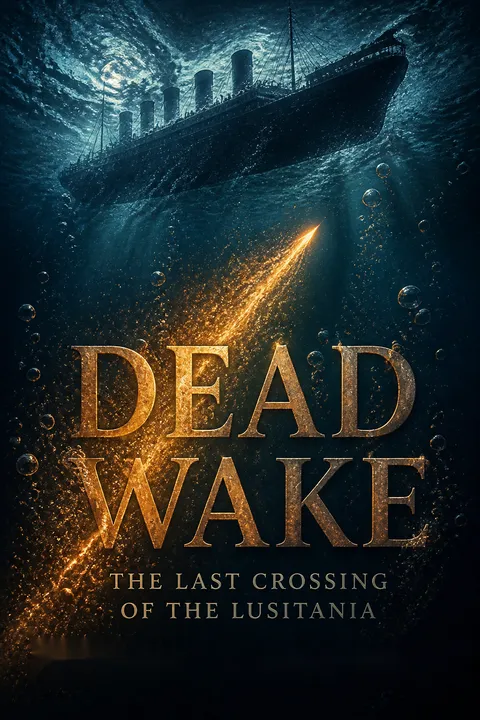
Dead Wake is a meticulously researched account of the Lusitania's sinking during WWI. Larson's narrative style brings the tragedy to life, focusing on passengers, crew, and historical context. While praised for its detailed portrayal and suspenseful buildup, some readers found certain sections less engaging. The book explores the confluence of events leading to the disaster and raises questions about responsibility. Most reviewers appreciated Larson's ability to humanize historical figures and create a vivid atmosphere, making it an informative and compelling read for history enthusiasts.
People Also Read





FAQ
What is Dead Wake: The Last Crossing of the Lusitania about?
- Historical disaster narrative: Dead Wake recounts the final voyage of the Lusitania, a British passenger liner, in May 1915, focusing on the events leading up to its sinking by a German U-boat. It explores the perspectives of various individuals, from passengers and crew to political and military leaders.
- Tension between safety and war: The book examines the conflict between the perceived safety of civilian travel and the harsh realities of World War I, highlighting the decisions and miscalculations that led to the tragedy. It details the German U-boat threat and the British Admiralty's response.
- Human stories amidst chaos: Larson weaves together the personal stories of passengers, crew, and key figures, revealing their hopes, fears, and actions in the face of impending disaster. The narrative emphasizes the human element of the tragedy, making it more than just a historical account.
Why should I read Dead Wake: The Last Crossing of the Lusitania?
- Suspenseful historical thriller: Larson masterfully builds suspense, creating a narrative that reads like a thriller, even though the outcome is known. The book keeps readers engaged with its detailed accounts and shifting perspectives.
- In-depth historical analysis: The book provides a deep dive into the political, military, and technological context of World War I, offering a nuanced understanding of the events leading to the Lusitania's sinking. It reveals the complexities of wartime decision-making.
- Emotional and human connection: Dead Wake connects readers to the human stories behind the tragedy, exploring the hopes, fears, and sacrifices of those involved. It evokes empathy and provides a powerful reminder of the human cost of war.
What is the background of Dead Wake: The Last Crossing of the Lusitania?
- World War I context: The book is set against the backdrop of World War I, specifically the German U-boat campaign against British shipping. It explores the political and military tensions between Germany and Britain, and the impact of these tensions on civilian lives.
- Technological advancements: The narrative highlights the role of new technologies, such as submarines and wireless communication, in shaping the conflict. It examines how these advancements transformed naval warfare and created new dangers for civilian vessels.
- Cultural and social milieu: The book provides a glimpse into the social and cultural norms of the early 20th century, including the class distinctions aboard the Lusitania and the prevailing attitudes toward war and travel. It also explores the role of propaganda and public opinion in shaping the conflict.
What are the most memorable quotes in Dead Wake: The Last Crossing of the Lusitania?
- "The truth is that the Lusitania is the safest boat on the sea. She is too fast for any submarine. No German war vessel can get her or near her.": This quote, attributed to Cunard's New York manager, highlights the misplaced confidence in the ship's invulnerability, a key element of the tragedy. It underscores the hubris that contributed to the disaster.
- "We must be impartial in thought as well as in action, must put a curb upon our sentiments as well as upon every transaction that might be construed as a preference of one party to the struggle before another.": This quote from President Wilson reflects his struggle to maintain American neutrality amidst the growing pressures of World War I. It reveals the complexities of his position and the challenges of balancing national interests with moral principles.
- "If you get into your berth, you'll never get out.": This quote, attributed to a passenger named Alta Piper, captures the sense of foreboding and fear that some passengers felt before the Lusitania's final voyage. It foreshadows the tragedy and highlights the anxieties of those who sensed the impending danger.
What writing style, narrative choices, and literary techniques does Erik Larson use?
- Interweaving multiple perspectives: Larson employs a narrative style that shifts between the perspectives of various characters, including passengers, crew, political leaders, and military personnel. This technique creates a multi-faceted view of the events and enhances the reader's understanding of the complex circumstances surrounding the Lusitania's sinking.
- Detailed and immersive descriptions: Larson's writing is characterized by meticulous attention to detail, bringing the historical setting and characters to life. He uses vivid descriptions of the ship, its passengers, and the surrounding environment to create an immersive reading experience.
- Suspenseful pacing and foreshadowing: Larson masterfully builds suspense by interweaving seemingly unrelated events and foreshadowing the impending disaster. He uses a chronological structure to create a sense of inevitability, keeping readers engaged and anxious about the outcome.
Hidden Details & Subtle Connections
What are some minor details that add significant meaning?
- The "sucking tube": The detail of a baby's "sucking tube" (pacifier) tied around its neck with cord, part of a detailed description of infant clothing, highlights the vulnerability of the youngest passengers and the human cost of the tragedy. It underscores the innocence lost in the disaster.
- The gold watch with a blood-colored face: The description of a woman's Geneva-made watch with a face the color of blood foreshadows the violence and loss of life to come. It serves as a subtle symbol of the impending doom.
- The mention of a memorial fountain for Titanic wireless operators: The inclusion of this detail, with the note that "space is left for the addition of other names in the future," foreshadows the Lusitania's fate and the likelihood of more maritime disasters. It highlights the cyclical nature of tragedy.
What are some subtle foreshadowing and callbacks?
- The mention of the Empress of Ireland sinking: The reference to the Empress of Ireland sinking in fog a year earlier foreshadows the dangers of fog and the potential for maritime disasters. It creates a sense of unease and highlights the vulnerability of ships at sea.
- The description of the Lusitania as a "floating village in steel": This description, while seemingly innocuous, foreshadows the ship's eventual fate as a "floating coffin." It highlights the contrast between the ship's perceived invulnerability and its actual fragility.
- The repeated emphasis on the ship's speed: The repeated emphasis on the Lusitania's speed, often cited as a guarantee of safety, creates dramatic irony, as it ultimately proves insufficient to evade the U-boat attack. It underscores the limitations of human ingenuity in the face of war.
What are some unexpected character connections?
- The shared history of Captain Turner and Chief Officer Piper: The detail that Turner and Piper had previously served together on the Umbria highlights the close-knit nature of the maritime community and the shared experiences of those who worked at sea. It adds a layer of personal connection to the tragedy.
- The connection between Theodate Pope and Henry James: The friendship between Theodate Pope and Henry James, and her naming a puppy after him, reveals a personal side to the historical figures and adds a layer of intimacy to the narrative. It also highlights the cultural and intellectual milieu of the time.
- The shared experience of the Morton brothers: The fact that both Leslie and Cliff Morton jumped ship from the Naiad to join the Lusitania highlights the shared experiences of young men eager to participate in the war. It underscores the personal motivations and sacrifices of those caught up in the conflict.
Who are the most significant supporting characters?
- Chief Officer John Preston Piper: As the Lusitania's first officer, Piper's actions and observations provide a crucial perspective on the ship's operations and the events leading up to the sinking. His presence highlights the responsibilities and challenges faced by the ship's crew.
- Robert Leith, the Marconi operator: Leith's role in sending out distress signals underscores the importance of communication technology during the disaster. His actions highlight the efforts to seek help and the limitations of technology in the face of overwhelming tragedy.
- Mabel Every, Captain Turner's companion: Every's insights into Turner's personality and private life provide a more nuanced understanding of the man behind the captain's uniform. Her perspective humanizes Turner and reveals his personal struggles.
Psychological, Emotional, & Relational Analysis
What are some unspoken motivations of the characters?
- Captain Turner's desire for redemption: Turner's decision to take command of the Lusitania, despite the risks, may have been driven by a desire to redeem himself after past reprimands and to prove his skill as a captain. This unspoken motivation adds a layer of complexity to his character.
- President Wilson's need for companionship: Wilson's pursuit of Edith Galt was driven not only by romantic interest but also by a deep-seated need for companionship and emotional support after the loss of his wife. This unspoken motivation reveals his vulnerability and his search for solace amidst the pressures of leadership.
- Schwieger's ambition and sense of duty: Schwieger's relentless pursuit of targets, even when they were not clearly military, may have been driven by a combination of ambition and a sense of duty to his country. This unspoken motivation highlights the psychological impact of war and the pressures faced by military leaders.
What psychological complexities do the characters exhibit?
- Captain Turner's stoicism and inner turmoil: Turner's outward calm and confidence mask a deep-seated anxiety and a tendency to be blunt and socially awkward. This psychological complexity reveals the internal struggles of a man burdened by responsibility and the weight of past experiences.
- President Wilson's grief and loneliness: Wilson's profound grief over the loss of his wife, coupled with the pressures of leadership, created a complex emotional state. His reliance on Edith Galt for emotional support highlights his vulnerability and his need for human connection.
- Schwieger's ruthlessness and humanity: Schwieger's ability to carry out his mission with ruthless efficiency while also displaying moments of kindness and humor reveals a complex psychological makeup. This duality highlights the moral ambiguities of war and the challenges of reconciling personal values with military duty.
What are the major emotional turning points?
- Turner's address to passengers: Turner's attempt to reassure passengers about the submarine threat, while intended to calm their fears, ultimately underscores the impending danger and the tragic irony of his misplaced confidence. This moment marks a turning point in the narrative, shifting from a sense of hope to one of foreboding.
- Wilson's confession of love to Edith Galt: Wilson's declaration of love to Edith Galt, while offering him personal solace, also highlights the emotional turmoil he faced amidst the pressures of leadership. This moment marks a turning point in his personal life, as he grapples with grief and the possibility of new love.
- Schwieger's decision to abandon his mission: Schwieger's decision to abandon his assigned patrol zone, driven by a combination of frustration and a desire to protect his crew, marks a turning point in his journey. It reveals the limitations of military orders and the influence of personal judgment in wartime.
How do relationship dynamics evolve?
- The bond between Turner and his crew: Despite Turner's gruff exterior, the crew respected and trusted him, highlighting the importance of leadership and camaraderie in the face of danger. This bond underscores the human connections that form in the maritime world.
- The growing intimacy between Wilson and Galt: The relationship between Wilson and Galt evolves from a chance encounter to a deep emotional connection, providing Wilson with a source of solace and support. This relationship highlights the power of human connection in times of personal and national crisis.
- The camaraderie among U-20's crew: The crew of U-20, despite the harsh conditions and the moral ambiguities of their mission, shared a bond of camaraderie and loyalty. This relationship highlights the human element of war and the importance of teamwork in the face of danger.
Interpretation & Debate
Which parts of the story remain ambiguous or open-ended?
- The exact cause of the second explosion: While the book suggests a steam line rupture as the most likely cause, the exact nature of the second explosion remains open to interpretation. This ambiguity highlights the limitations of historical evidence and the challenges of reconstructing past events.
- The extent of the Admiralty's knowledge: The book raises questions about how much the Admiralty knew about the specific threat to the Lusitania and why they chose not to act more decisively. This ambiguity leaves room for debate about the extent of the Admiralty's culpability.
- The true motivations of Captain Turner: While the book portrays Turner as a skilled and experienced captain, his motivations for taking the Lusitania on its final voyage remain somewhat ambiguous. This ambiguity allows readers to consider the complexities of his character and the pressures he faced.
What are some debatable, controversial scenes or moments in Dead Wake: The Last Crossing of the Lusitania?
- The Admiralty's decision not to provide an escort: The Admiralty's decision not to provide a naval escort for the Lusitania, despite knowing about the U-boat threat, is a highly controversial moment. This decision raises questions about the prioritization of military assets over civilian lives and the ethical implications of such choices.
- Schwieger's decision to attack a civilian liner: Schwieger's decision to attack the Lusitania, despite its civilian status, is a controversial moment that raises questions about the morality of submarine warfare and the responsibility of military leaders. It highlights the ethical dilemmas faced by individuals in wartime.
- Wilson's response to the sinking: Wilson's initial response to the Lusitania sinking, characterized by a desire to maintain neutrality, is a controversial moment that raises questions about the role of leadership in times of crisis. It highlights the tension between diplomatic restraint and the need for decisive action.
Dead Wake: The Last Crossing of the Lusitania Ending Explained: How It Ends & What It Means
- The Lusitania's sinking: The book culminates in the sinking of the Lusitania, a tragic event that underscores the human cost of war and the fragility of life. The sinking serves as a powerful reminder of the consequences of political and military decisions.
- The aftermath and blame: The aftermath of the sinking reveals the complexities of assigning blame and the political maneuvering that followed. The Admiralty's attempt to scapegoat Captain Turner highlights the challenges of accountability in wartime.
- The path to war: The sinking of the Lusitania, while not the sole cause, contributed to the growing pressure on the United States to enter World War I. The book's ending underscores the far-reaching consequences of the tragedy and its impact on global events.
About the Author
Other books by Erik Larson




Download PDF
Download EPUB
.epub digital book format is ideal for reading ebooks on phones, tablets, and e-readers.








































