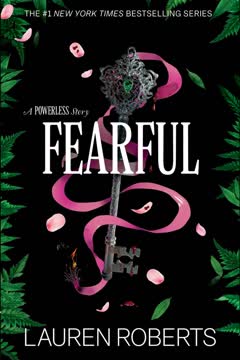

Plot Summary
Prologue
Mara1 drags a sputtering soul through the Mors — her afterlife domain of cracked earth, gnarled trees, and perpetual gray sky. She deposits the man into eternal solitude, one among thousands of wailing souls who search endlessly for escape they will never find.
The ground is ravenous beneath her feet; the trees whisper with voices of those who found peace within them. Mara1 is Death, and this bleak domain has been her existence for longer than she cares to remember.
She sits beneath a familiar tree to scan the lifelines of the living when a flash of golden hair and wild green eyes sears her mind — a young man swallowing a vial, his life unraveling irreversibly. Something in her hollow chest burns with recognition. She vowed never to return to Ilya. She stands anyway.
Death Returns to Ilya
Kitt Azer,2 newly crowned king of Ilya, orders his court Scholars and Healers to bring him a perfected dose of the Plague — the substance that, a century ago, gifted the kingdom's population with supernatural Elite abilities.
He swallows it against their desperate protests, knowing another dose could be fatal. His dead father's7 secret letter revealed the Plague was deliberately engineered, and its Scholars have spent a hundred years refining it. Kitt's2 plan is audacious: survive this dose, become the most powerful Elite alive, then spread the Plague to every neighboring kingdom.
But his motives aren't purely noble — his father Edric7 spent a lifetime calling him weak, and Kitt2 craves a power that will bury that accusation forever. He needs only to evade Death. She1 is already on her way.
The Healer Who Isn't
Mara1 materializes beside the fireplace after the Healers finish their daily examination. Kitt2 mistakes her for one of them — nobody that striking is easy to forget. Their first conversation is careful: she asks why he risked the Plague, and he confesses his ambition to spread Elite power everywhere, to become everything his father7 said he couldn't be.
Mara1 challenges his self-portrait of nobility with calm precision. Before departing, she hesitates over her own name — she hasn't needed one in decades, and the intimacy startles even her.
Meanwhile, she has been trailing Lenny,4 a freckled Imperial guard with heightened senses, newly assigned to protect Blair Archer3 — a telekinetic Elite confined to her room. The king needs Blair3 kept safe from Paedyn Gray,6 his politically motivated fiancée, who blames Blair3 for killing her friend Adena in the Purging Trials.
Blair Vanishes at Midnight
After days of barricading Lenny4 in a furniture cage with her mind, Blair3 strikes a deal: she frees him for sticky buns from the kitchen. While he is gone, she slips through a hidden passage behind the fireplace — a network of tunnels built beneath the castle when Ilya was vulnerable to invasion.
By the time Lenny4 returns with glistening dough, the room is empty. He tracks her to the moonlit slums using his heightened hearing and finds her set on crossing the Scorches desert to Tando, where no hierarchy of power exists.
Lenny4 refuses to let her vanish — her disappearance would destroy the Imperial career he built from nothing in these same streets. They argue until striking a grudging deal: one week for him to devise a plan that lets Blair3 disappear without ruining them both.
Ink That Won't Stay
After orchestrating a parade bombing — a calculated ploy to force Paedyn6 into new Trials — Kitt2 sits in his study trying to write about the woman who materialized on the coach bench beside him during the explosion.
Every time he scrawls Mara's1 name, the ink dissolves, letter by letter, until the page returns to blankness. His own name holds; hers refuses to exist on parchment. He scribbles it on every surface. Nothing stays. When the familiar chill announces her arrival, he confronts her — the vanishing ink, the apparition in the burning coach, the tightening in his chest that worsens with every cough.
Mara1 drops the pretense. Six feet separated them at the parade, she tells him, and every cough closes the gap. She cannot be contained by language or time. She is Death.
The Baker Behind the Blade
A towering stranger ambushes them on Loot's dark streets, choking Blair3 with telekinetic force and hurling Lenny4 into a merchant's cart. He draws a sword — revenge for Blair3 killing the woman he loved in the Purging Trials.
When the blade arcs downward, Lenny4 throws himself between them, arguing that killing Blair3 would free her from the life she already despises — letting her live is the crueler punishment. The man11 sheathes his sword for Adena's sake and vanishes. In Lenny's4 childhood shack, while he bandages her wounds with sandy rags, Blair's3 defenses collapse.
Her mother9 forced military training from age four, forbade her secret passion for baking, and struck a deal: win the Trials, earn freedom. Blair3 killed Adena to win. The Resistance ended the Trials with no winner. Her mother9 voided the bargain. Everything was for nothing.
Punching Father's Ghost
In his dead mother's untouched bedroom, Kitt2 opens a jewelry box and finds love letters — written not by his father7 but by the court Mind Reader.10 If Kitt2 is a bastard, his entire rule is illegitimate.
Desperate for answers only Iris can provide, he presses a letter opener into his own chest to summon Mara,1 then lies on his study floor and lets Death stop his heart. In the Mors, the ground tries to swallow his not-quite-dead body. He searches for his mother among thousands of wandering souls but finds his father7 instead — haggard, unhinged, clawing at a tree where he believes Iris hides.
Kitt2 vows to spread the Plague to every kingdom and bury the old man's legacy forever. Then he swings. While Kitt2 lies temporarily dead, Mara1 traces his jaw with cold fingers, feeling something she hasn't allowed herself in lifetimes: hope.
Flour on Death's Nose
They flip a shilling from the fountain — tails wins. Kitt2 teaches living first. In the castle kitchen at night, they attempt sticky buns and fail spectacularly, producing lumpy dough studded with eggshells. He abandons the apron he tied around Mara's1 waist, dips his fingers in flour, and drags a white streak down her nose.
When she stares blankly, he cups her face with powdered hands and asks what she feels. An exhilarating lack of control, she realizes — and that, he tells her, is what it means to be alive.
Later, on a midnight street beneath gnarled trees, she delivers her half of the bargain: the lesson on dying is a single word — gently. He offers something that leaves her speechless. Since Death cannot hope, he will be her heartbeat — hope vicariously through his still-beating one. She smiles for the first time.
The Death That Wasn't
The plan was straightforward: candles, cooking oil, a staged confrontation. Lenny4 would start the fire; Blair3 would vanish through the hidden passage; he would declare her dead. But Paedyn's6 rage is far worse than anyone predicted.
She pins Blair3 to the scorched floor and shoves the side of her face into the flames, carving a blistered scar from temple to chin before collapsing from smoke. Mara,1 drawn by Blair's3 lifeline splintering, forces herself visible — the first time she has intervened in a mortal's fate.
She tells Blair3 to choose: stay and die slowly in a life of bitterness, or stand up and live. Blair3 stands. Lenny4 carries Paedyn6 to safety, returns for Blair,3 and later brings healing salve and lemon tarts he secretly baked — telling his former assignment to stop mourning her beauty and be the girl with the badass scar.
Known by Her Heartbeat
In the shack in the slums, with Blair3 officially dead to the world, Lenny4 proposes something neither of them planned. He wants to go with her to Tando — not as her guard, but as someone still figuring out who he is without the uniform. Blair3 tells him not to place hope in a hollow heart. He answers by revealing how he found her that first night she escaped the castle: he followed the sound of her heartbeat through the dark streets.
He would know her by that rhythm alone, he says, and that should count for something. Blair,3 who has deflected every sincere word with cruelty for weeks, goes quiet. His words, she finally admits, are the only ones she hasn't hated hearing. Their souls — green and gold — tangle into a single glow.
A Mind Eaten by Power
The Plague gnaws through Kitt's2 mind in escalating seizures of rage and amnesia. He threatens an Imperial with godlike fury and cannot remember the incident afterward. He kills the Mind Reader10 whose love letters he found in his mother's jewelry box — the man who might be his real father — in a paranoid blackout he won't recall.
He orchestrates Paedyn's6 final Trial in the arena, arming a powerful Wielder11 against her, but the man can't deliver the killing blow and Paedyn6 drives a dagger into his chest instead. On his wedding day, Kitt2 doesn't remember walking to the altar. He says the words, kisses Paedyn6 swiftly, and finds Mara's1 gaze in the crowd. A piece of the boy who once believed in love is buried beneath that flower-draped ceremony.
Death Scorned
Mara1 returns from the Mors and declares what she believes is inevitable — they are fated to rule the afterlife together, side by side, never lonely again. She reaches for his hand. Kitt,2 his mind fractured but lucid enough for this, pulls away. She is Death, he tells her.
He didn't want to meet her. They cannot be together. The rejection cracks something ancient in Mara1 — a fury that mirrors a betrayal from another lifetime, another pair of green eyes that told her the same devastating thing.
She warned him once that his death would not be kind. Now she promises it. She will not be made a fool again. His soul is hers regardless — what could have been offered in tenderness will now be seized in wrath. She vanishes, leaving a king alone with the enemy he cannot outrun.
Going Gently
During a sparring session with Kai,5 the Plague blanks Kitt's2 mind at the precise wrong moment. Mara,1 invisible beside the brothers, wraps her hands around the iron stoker and drives it through Kitt's2 chest. He was supposed to dodge. He forgot.
Kai5 catches him as he falls, and for once the noise in Kitt's2 head goes quiet. He tells his brother5 about the letters he wrote — every monstrous choice explained, every manipulation confessed. His final words are for Mara,1 standing over Kai's5 shaking shoulders: he will go gently, for her.
In the Mors, she grants him a taste of perfect peace — silence, nothingness, the rest his tortured mind so craved. Then she rips it away. She showed him quietness only so she could steal it. His soul now carries a sliver of her power, and she crowns him with a title born from love curdled into dominion.
Epilogue
Five years later, Mara1 encounters Blair3 and Lenny4 running a bakery in Tando — their souls fully intertwined, green and gold. Lenny4 greets Death with his heightened sixth sense; Blair3 scoffs at whoever he's talking to. Mara1 also finds Paedyn6 and Kai's5 daughter — a gray-haired girl named Kit who waves at Death and calls her hair pretty.
In the Mors, Kitt2 serves as Mara's1 reluctant apprentice, sent to spy on the child. On one such errand, Kai5 — older now, temples graying — sees his brother's ghost in a castle hallway and weeps. Kitt2 tells him the stoker wasn't his fault, that Death herself guided the blade. Before he can say more, Mara1 pulls him back to the afterlife. She calls him King of the Mors. It is not the crown he imagined.
Analysis
Fearful interrogates the fatal symmetry between love and control. Mara1 and Kitt2 mirror each other precisely: both crave dominion — she over her eternal loneliness, he over a legacy of inadequacy — and both mistake possessiveness for devotion. When Kitt2 rejects Mara,1 her response is not grief but a rage that reveals what she called fate was closer to compulsion. Similarly, Kitt's2 love for Kai5 is genuine but expressed through manipulation — bombing his own citizens, engineering lethal Trials, marrying a woman he doesn't love — all justified by the refrain that this is for them. The novel argues that love filtered through control becomes indistinguishable from tyranny, no matter how sincere its origins.
Blair3 and Lenny4 function as the structural counterargument. Their bond is freely chosen rather than fated, built through friction rather than destiny. Blair's3 transformation from weapon to baker mirrors the central tension: she was controlled by her mother,9 the Trials, the king — and becomes herself only when every imposed structure burns away, literally. Lenny's4 perceived weakness as a Hyper becomes his defining strength because he never tries to overpower Blair.3 He simply pays attention. The sixth sense that lets him perceive Death is the same attentiveness that lets him know Blair3 by her heartbeat.
The novel also deconstructs fantasy fiction's romance with power. The Plague is not a gift but a dependency — those who wield it revere abilities they don't understand, while Ordinaries are persecuted for a deficiency that was never natural. Mara's1 bitter amusement at Elite self-importance carries dramatic irony: she knows the Plague's origins, and the humans' pride in their borrowed abilities is darkly comic to the being who predates them all. Kitt's2 plan to make everyone Elite is framed as egalitarian but is really another imposition — enforcing uniformity rather than accepting difference. His deepest irony: he takes the Plague to escape weakness and is consumed by it, while Lenny,4 the weakest Elite, thrives by embracing exactly what he is.
Review Summary
Reviews for Fearful are mixed, with many readers disappointed. Common criticisms include lack of character development, confusing plot, and unnecessary focus on side characters. Some found Kitt's obsession with his brother disturbing. A few readers enjoyed the exploration of death and appreciated the writing style. Overall, many felt the novella was unnecessary and didn't add value to the series. Some positive reviews praised the emotional depth and unique premise. The ending was controversial, leaving readers conflicted about the future of the series.
People Also Read




Characters
Mara
Death personified, Mors keeperDeath personified, keeper of the Mors. Once a living woman in Ilya whose past love and betrayal are hinted but never fully revealed. She drags souls to an afterlife of eternal solitude with stoic professionalism and wry detachment. Beneath her blank expression lies insatiable curiosity about the living—she calls it observation, though it borders on obsession. Her bluntness is efficiency; she has no patience for decorum. What drives Mara is the memory of what she lost—a love that destroyed her, a life she barely recalls. She craves companionship with the desperation of someone who has spent eternity alone, yet possessive tendencies and ancient wounds make genuine connection perilous. She is not malicious by nature—obedient to a role she never chose—until provocation awakens something far less forgiving.
Kitt Azer
Dying king of IlyaIlya's young king, haunted by his father Edric's7 cruelty and consumed by a need to forge a legacy that eclipses it. He swallowed a second dose of the Plague to become the most powerful Elite, knowing it might kill him. His grand plan—spread the Plague to every kingdom, eliminate the divide between Elites and Ordinaries—is driven by genuine idealism and raw anguish in equal measure. Beneath the ambition lies a boy who was never loved enough: a father who called him weak, a mother who died giving him life. His single unshakeable bond is with his brother Kai5, for whom he would commit any monstrosity and call it love. Kitt writes compulsively to untangle his thoughts, a habit that grows desperate as his mind begins to deteriorate.
Blair Archer
Telekinetic trapped by legacyThe general's daughter, a powerful Tele sculpted into a weapon by an abusive mother9 who forbade softness, friendship, and the baking Blair secretly cherished. Her condescension and cruelty are armor forged in childhood—every cutting remark a defense mechanism perfected over years of being told vulnerability is weakness. She picks obsessively at the skin on her left palm, a nervous habit her mother9 punished and tried to hide. Blair's desire to flee Ilya is not cowardice but the first authentic decision she has ever attempted. She envies those who were allowed to simply exist—to have passions without justification. Underneath the Tele tyrant is a girl who measures spices in secret and dreams of a life defined by what she creates rather than what she destroys.
Lenny
Hyper guard, stubborn heartA red-haired Imperial guard from the slums, burdened with the allegedly weakest Elite ability—Hyper, which heightens his senses. He compensates with self-deprecating humor, always diminishing himself before others get the chance. Raised by a loving single mother, he joined the Imperials to prove a Hyper could earn respect, and secretly aided the Resistance against Elite oppression. His assignment to guard Blair3 was meant as a buffer, but it becomes the defining relationship of his life. Lenny's kindness is radical in a world that rewards cruelty—he sees past Blair's3 armor not through power but through stubborn, earnest attention. His latent sixth sense lets him perceive beyond the normal spectrum, making him uniquely attuned to what others overlook, including the invisible presence of Death.
Kai Azer
Kitt's beloved Enforcer brotherKitt's2 beloved brother and Ilya's Enforcer—a rare Wielder who can channel the powers of nearby Elites. Stern, physically formidable, and duty-bound, he is deeply devoted to both Kitt2 and Paedyn6, navigating an impossible triangle with more restraint than self-awareness. He is everything Kitt2 sacrifices for: the person meant to inherit whatever better world his brother tries to build.
Paedyn Gray
Death's most elusive soulSilver-haired Ordinary who survived the Purging Trials without supernatural ability—Kitt's2 politically motivated fiancée. She has evaded Death more times than any soul Mara1 has encountered, earning the distinction of being her most stubborn quarry. Fiercely resilient and principled, her grief over losing Adena fuels a capacity for cold vengeance that few expect from an Ordinary. Her heart belongs to Kai5, not his brother2.
Edric Azer
Dead tyrannical father kingKitt's2 dead father, former king of Ilya. Cruel and obsessed with eliminating Ordinaries, he spent his reign calling Kitt2 weak. Now a tormented soul in the Mors, clawing at trees, searching for his wife Iris.
Eli
Bold elderly court HealerElderly head court Healer who examines Kitt2 daily after the Plague dose, disapproving openly but obeying his king. His tonics are useless, and he knows it.
Blair's mother
Abusive Bluff motherA Bluff—an Elite who detects lies—who forced Blair3 into military training from age four. She punishes vulnerability, weaponizes shame, and measures her daughter's worth solely by power and legacy.
Calum
Court Mind Reader advisorThe court Mind Reader and Kitt's2 trusted advisor, complicit in the king's secret plans. He helps orchestrate schemes requiring protected thoughts and careful political maneuvering, one of the few who know the full scope of Kitt's2 ambitions.
Mak
Adena's vengeful Wielder loverA powerful Wielder from the slums who loved Adena. His grief drives him to seek vengeance against Blair3, and later makes him a tool in Kitt's2 engineered final Trial for Paedyn6.
Plot Devices
The Plague
Power's price and instrumentCreated a century ago by Ilya's Scholars to strengthen the army, the Plague accidentally spread through the kingdom, granting most citizens supernatural Elite abilities while leaving some as powerless Ordinaries. Kitt2 takes a second refined dose to become the strongest Elite and plans to spread it globally. But the Plague is a double-edged inheritance—it slowly destroys his body and mind, erasing memories and amplifying his worst impulses. The substance embodies the book's central irony: the pursuit of power is the surest path to losing everything, including the self. Mara1 hints repeatedly that Ilya's understanding of the Plague's true nature is dangerously incomplete, and the Elites' pride in their borrowed abilities is darkly comic to the being who predates them all.
The Mors
Afterlife as psychological prisonDeath's domain—a wasteland of cracked earth, perpetual gray sky, and gnarled trees beneath which souls wander in complete isolation. Each soul believes they are utterly alone, unable to see or hear the thousands beside them searching for escape. The secret to freedom is acceptance: those who stop searching find peace and merge into the Mors' fabric, becoming the whispering voices in its trees. The Mors functions as the book's central metaphor—a mind game where resistance prolongs suffering. It mirrors the living characters' struggles: Blair3 trapped in her room, Kitt2 imprisoned by ambition, Mara1 caged by her eternal role. The afterlife is neither fire nor paradise but what you make of it.
Soul Colors and Ties
Invisible bonds made visibleMara1 perceives souls as colored energy on a spiritual plane—Kitt's2 is a fading muted blue, Blair's3 a murky green, Lenny's4 a warm gold, Kai's5 a shimmering dark-and-white complexity. Soul ties are bonds of predestined connection that individuals must choose to accept or resist. Blair3 and Lenny's4 souls gradually reach toward each other throughout the story, growing from indecisive strands into fully laced threads of green and gold. This device externalizes internal states—making relationships, trauma, and moral character visible to Death alone. It underscores the book's argument that connection is chosen rather than forced: even souls drawn together by destiny must decide to meet.
Hidden Fireplace Passages
Freedom within confinementSecret tunnels built into the castle's large rooms, originally designed as escape routes from an era when Ilya was militarily vulnerable. Blair3 uses them twice: first to flee her room and vanish into the slums, then to execute her staged death during the fire. The passages represent liberation hiding within the very structures that imprison—you need only know where to look. That Blair's3 father, the general, showed her these routes suggests even authority figures sometimes recognize when their children need a way out that the system refuses to provide.
Kitt's Letters
Confession through inkKitt2 writes compulsively to process his tangled thoughts—letters to himself, to Kai5, to an imagined audience. His inability to write Mara's1 name—the ink dissolves from every surface—serves as the pivotal reveal of her nature: Death cannot be contained by language. As the Plague deteriorates his mind, his writing becomes increasingly frantic and fragmented, documenting the dissolution of his sanity in real time. His final letters to Kai5 confess every scheme—the bombing, the Plague's spread, the engineered Trials. They are his last attempt at being understood by the one person he loves, ensuring his actions carry an explanation even if not an excuse.