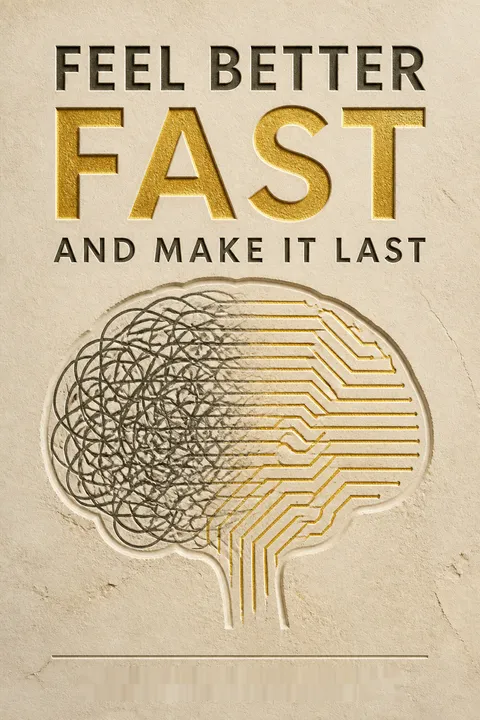

Key Takeaways
1. Mental health is brain health: Optimize the physical hardware first
One of the most important secrets to our success at Amen Clinics is that we focus first on understanding, healing, and optimizing the physical functioning of the brain (hardware), and second on properly programming it (software).
The hardware-software connection. Traditional psychiatry is often "brainless" because it diagnoses and treats symptoms without ever looking at the organ itself. By using SPECT (single photon emission computed tomography) imaging to evaluate blood flow and activity, we can see whether the brain is healthy, underactive, or overactive. When the physical brain is compromised by trauma, toxins, or poor blood flow, psychological interventions alone often fail.
SPECT as a map. Unlike structural scans like MRI or CT, SPECT measures brain function, serving as a leading indicator of trouble years before symptoms manifest. This functional mapping allows clinicians to target treatments directly to the affected areas of the brain. By stimulating underactive areas or calming overactive ones, we can restore balance and improve overall mental well-being.
A paradigm shift. Shifting the conversation from "mental health" to "brain health" reduces the moral stigma of psychiatric struggles. It reframes behavioral issues as medical, treatable conditions rather than character flaws.
- Optimizing brain hardware leads to increased happiness, joy, and resilience.
- It improves focus, memory, and decision-making.
- It fosters better relationship outcomes and career success.
2. Deploy immediate emotional rescue techniques when life feels out of control
Whenever you feel sad, mad, nervous, or out of control, it is critical to have emotional-rescue techniques.
Calming the alarm system. When a crisis strikes, the amygdala triggers the sympathetic nervous system's fight-or-flight response, flooding the body with cortisol and adrenaline. To counteract this, we must intentionally activate the parasympathetic nervous system to reset our physiology. Simple, fast-acting techniques can override acute stress and restore cognitive control within minutes.
The power of self-regulation. By training the autonomic nervous system, we can warm our hands, slow our heart rate, and calm our emotional brain. These practices help us step back from the edge of panic or anger, allowing our rational mind to take over. Over time, these exercises build resilience, making us less vulnerable to future stressors.
Six rapid-rescue tools. These evidence-based strategies provide immediate relief from panic, anger, and anxiety:
- Diaphragmatic breathing: Inhaling deeply to expand the belly, then slowly exhaling to calm the amygdala.
- Self-hypnosis and guided imagery: Visualizing a safe haven to induce a deep, relaxed state.
- Hand warming: Visualizing heat (like a campfire) to dilate blood vessels and trigger relaxation.
- Loving-Kindness Meditation: Repeating phrases of goodwill to foster peace and connection.
- Emotional rescue playlist: Listening to scientifically proven, mood-boosting music.
3. Identify and shield your brain from the BRIGHT MINDS risk factors
Losing brain cells is much harder to recover from than any financial loss.
The BRIGHT MINDS framework. To prevent cognitive decline and feel better fast, you must protect your brain from the eleven major risk factors that steal brain cells. This comprehensive mnemonic helps identify the biological, psychological, and environmental threats to your brain's reserve. By systematically addressing these risks, you can keep your brain young and vibrant.
The threat of silent damage. Many daily habits—such as consuming excessive caffeine, drinking alcohol, smoking, or neglecting sleep—silently erode our brain's capacity. Over time, these risks deplete our "brain reserve," leaving us vulnerable to depression, anxiety, and dementia. Protecting your brain reserve is the ultimate insurance policy for your mind.
The eleven risk factors:
- B - Blood flow: Low circulation shrinks the brain; avoid caffeine, nicotine, and dehydration.
- R - Retirement/Aging: Loneliness and lack of learning accelerate brain aging.
- I - Inflammation: Driven by leaky gut, gum disease, and processed foods.
- G - Genetics: Family history is a wake-up call, not a destiny.
- H - Head trauma: Concussions and contact sports cause lasting executive deficits.
- T - Toxins: Alcohol, marijuana, mold, and environmental pollutants damage brain cells.
- M - Mental health; I - Immunity/Infections; N - Neurohormones; D - Diabesity; S - Sleep issues.
4. Strengthen your Prefrontal Cortex to act as a powerful internal CEO
The PFC is the leader in you and is arguably the most important part of your brain when it comes to making the decisions that will help you feel better fast and make it last.
The brain's executive center. The prefrontal cortex (PFC), comprising the front third of the brain, is responsible for focus, forethought, judgment, impulse control, and empathy. When the PFC is healthy, you act as a thoughtful, organized leader; when it is underactive, the "brakes" of your brain fail. This leads to impulsivity, distractibility, and poor decision-making.
The late-blooming leader. The PFC is the last part of the brain to fully develop, continuing its myelination process until age 25 or 26. This explains why teenagers and young adults are statistically more prone to risky behaviors and poor decision-making. Protecting this area from trauma and toxins during development is crucial for long-term success.
Strengthening your internal CEO. You can actively train your PFC like a muscle to improve willpower and delay gratification:
- Practice saying "no" to yourself: Say no to short-term temptations that conflict with long-term goals.
- Practice saying "no" to others: Use the phrase "I have to think about it" to avoid overcommitting.
- Avoid head trauma and toxins: Protect your PFC from contact sports, alcohol, and marijuana.
- HALT poor judgment: Never make major decisions when you are Hungry, Angry, Lonely, or Tired.
5. Unstick your brain's gear shifter to escape mental ruts and embrace change
When neurons fire together, they wire together, through a process called long-term potentiation (LTP), and habits and responses become an ingrained part of your life.
The brain's gear shifter. The anterior cingulate gyrus (ACG) is the brain's gear shifter, allowing you to shift attention, see options, and go with the flow. When the ACG is overactive—often due to low serotonin—you get stuck on negative thoughts, hold grudges, and become oppositional. This mental rigidity makes it incredibly difficult to break bad habits.
The anatomy of a rut. Repeatedly engaging in a behavior or thought pattern strengthens its neural pathways through long-term potentiation (LTP). If you constantly worry or react with anger, your brain builds a high-speed highway for those negative states, making them automatic. To change, you must consciously build new, positive pathways.
Strategies to unstick your ACG:
- Naturally boost serotonin: Engage in physical exercise, get bright light exposure, and eat tryptophan-rich foods.
- Assess your readiness for change: Identify which of the Six Stages of Change you are currently in.
- Develop "if-then" plans: Create preplanned actions for vulnerable moments (e.g., "If offered a drink, then I will ask for water").
- Turn accomplices into friends: Surround yourself with people who support your positive habits rather than enabling your ruts.
6. Exterminate the ANTs (Automatic Negative Thoughts) with accurate, disciplined thinking
Every time you have an angry, unkind, hopeless, helpless, worthless, sad, or irritating thought, such as I’m stupid, your brain releases chemicals that make you feel bad.
The biology of thought. Your body reacts to every single thought you have by releasing specific chemicals that alter your heart rate, blood pressure, and muscle tension. Thoughts are automatic, but they are not always true; undisciplined thoughts will lie to you and pollute your mental ecosystem. You must learn to challenge them rather than accepting them blindly.
The ANT infestation. Automatic Negative Thoughts (ANTs) are uninvited thoughts that pop into your mind and steal your happiness. To feel better fast, you must learn to identify the specific species of ANTs and actively talk back to them with accurate, honest thinking. Writing them down is the first step to taking away their power.
The seven species of ANTs:
- All-or-Nothing ANTs: Thinking in absolutes like "always," "never," or "everyone."
- Just the Bad ANTs: Focusing exclusively on the negative aspects of a situation.
- Guilt-Beating ANTs: Using words like "should," "must," "ought," or "have to."
- Labeling ANTs: Attaching a negative label to yourself or others (e.g., "I'm a loser").
- Fortune-Teller ANTs: Predicting the worst possible outcome with little or no evidence.
- Mind Reader ANTs: Believing you know what other people are thinking without them telling you.
- Blaming ANTs: Blaming someone else for your problems, which drains you of personal power.
7. Cultivate healing connections using the RELATING framework
The magic ratio is 5:1. We have found that as long as there are five positive interactions for every negative interaction, a couple can have a stable and happy relationship over time.
The necessity of connection. Warm, satisfying relationships keep our brains and bodies healthy, while loneliness and conflict accelerate sickness and early death. Because social rejection activates the same physical pain centers in the brain as a broken bone, healing our connections is vital. Healthy relationships require a brain that can read social cues, listen, and control emotions.
The brain-behavior loop. By practicing the RELATING framework, you can actively improve your interpersonal skills and build stronger, more resilient social bonds. Taking responsibility for your own actions, rather than blaming your partner, is the foundation of any healthy connection. Empathy, driven by our mirror neurons, allows us to truly understand another's perspective.
The RELATING framework:
- Responsibility: Stop blaming others; take responsibility for your own actions and responses.
- Empathy: Use mirroring and the Golden Rule to feel and understand what others are experiencing.
- Listening: Practice active listening by repeating back what you hear to ensure accurate communication.
- Assertiveness: Say what you mean and stick up for what you believe in a calm, clear, kind way.
- Time, Inquiry, Noticing, and Grace: Spend focused time, challenge negative relationship thoughts, notice what you like, and offer forgiveness.
8. Protect your brain's pleasure centers to live with passion and purpose
Life is never made unbearable by circumstances, but only by lack of meaning and purpose.
The dopamine trap. Passion and motivation live in the brain's pleasure centers, which are powered by the neurotransmitter dopamine. Modern distractions—like smartphones, video games, social media, and sugar—overstimulate these centers, eventually wearing them out and leaving us feeling numb and depressed. To feel joy again, we must protect these centers from constant overstimulation.
The power of purpose. Having a strong sense of meaning and purpose provides a steady, healthy drip of dopamine that protects the brain. Purposeful people have a lower risk of Alzheimer's disease, slower cognitive decline, better sleep, and increased longevity. Living with the end in mind helps us focus on what truly matters.
Protecting your pleasure centers:
- Limit digital overstimulation: Schedule regular breaks from smartphones, social media, and video games.
- Find joy in simple things: Cultivate appreciation for daily moments, like a walk in nature or a sunset.
- Complete a One-Page Miracle (OPM): Write down exactly what you want in your relationships, work, finances, and health.
- Know your purpose in five minutes: Answer who you are, what you love to do, who you do it for, what they need, and how they change.
9. Nourish your brain with a targeted, brain-healthy diet and smart nutraceuticals
The real 'weapons of mass destruction' are highly processed, pesticide-sprayed, high-glycemic, low-fiber foodlike substances in plastic containers.
Food as medicine or poison. What you eat directly impacts your brain's chemistry, energy, and inflammation levels. High-glycemic, low-fiber foods cause blood sugar spikes and crashes that trigger brain fog, anxiety, and depression, while nutrient-dense foods support cognitive clarity. To feel better fast, you must learn to love foods that love you back.
The Feel Better Fast diet. To optimize your brain, you must eliminate potential troublemakers like sugar, gluten, dairy, corn, soy, and artificial sweeteners. Focus instead on clean proteins, healthy fats (like omega-3s), and colorful, high-fiber vegetables and fruits. Timing your meals through intermittent fasting can also help your brain cleanse itself of daily debris.
Essential brain nutraceuticals:
- Multivitamin: To provide a solid foundation of essential vitamins and minerals.
- Omega-3 fish oil: High in EPA and DHA to reduce inflammation and support brain cell membranes.
- Vitamin D: To support mood, immunity, and overall brain health.
- Brain-type specific supplements: Such as 5-HTP for worry, or L-tyrosine for focus and motivation.
10. Practice self-love and model brain health to positively alter your genetic legacy
Doing the right thing is the ultimate act of love for yourself and others.
The ultimate act of love. Caring for your brain is not about deprivation; it is about loving yourself and your family enough to stay healthy, energetic, and independent. When you prioritize your brain health, you ensure that you can show up fully for the people who rely on you. It is the most unselfish choice you can make.
The power of epigenetics. Your daily habits, diet, and emotional states do not just affect you—they turn genes on or off through epigenetic marks. This means your lifestyle choices can positively or negatively alter the genetic legacy you pass down to your children and grandchildren. Your health is a gift you give to future generations.
Modeling a healthy legacy:
- Be a healthy role model: Children do what you do, not what you tell them to do.
- Build brain reserve: Every positive choice increases your brain's cushion against future trauma or stress.
- Practice self-love daily: Ask yourself at every decision point, "Is this good for my brain or bad for it?"
Review Summary
Feel Better Fast and Make It Last receives mostly positive reviews for its comprehensive approach to brain health and mental wellness. Readers appreciate Dr. Amen's practical advice, scientific insights, and holistic strategies for improving mood and cognitive function. Many find the book informative and life-changing, praising its accessible language and actionable tips. Some critics, however, find it repetitive or overly simplistic. Overall, the book is recommended for those seeking to understand and optimize their brain health, with many readers reporting positive results from implementing Dr. Amen's suggestions.
People Also Read


FAQ
What's "Feel Better Fast and Make It Last" about?
- Author's Goal: The book, written by Daniel G. Amen, aims to help readers unlock their brain's healing potential to overcome negativity, anxiety, anger, stress, and trauma.
- Focus on Brain Health: It emphasizes the importance of optimizing brain health as a means to improve overall mental well-being and emotional resilience.
- Practical Strategies: The book provides practical, brain-based strategies and techniques to help readers feel better quickly and maintain those improvements over time.
Why should I read "Feel Better Fast and Make It Last"?
- Comprehensive Approach: The book offers a holistic approach to mental health, combining brain science with practical advice.
- Immediate and Long-term Benefits: It provides strategies for both immediate relief from anxiety and stress and long-term mental health improvement.
- Expert Insights: Written by a renowned psychiatrist and brain imaging specialist, the book is grounded in scientific research and clinical experience.
What are the key takeaways of "Feel Better Fast and Make It Last"?
- Brain Optimization: Optimizing brain function is crucial for overcoming mental health challenges.
- Behavioral Change: Small, consistent changes in behavior can lead to significant improvements in mental health.
- Gratitude and Positivity: Focusing on gratitude and positive thoughts can enhance emotional well-being and resilience.
What are the best quotes from "Feel Better Fast and Make It Last" and what do they mean?
- "When your brain works right, you work right." This quote emphasizes the central theme of the book: the importance of brain health in achieving overall well-being.
- "Today is going to be a great day." This mantra encourages readers to start each day with a positive mindset, which can influence their experiences and interactions.
- "Is the decision I’m about to make good for my brain or bad for it?" This question serves as a guiding principle for making healthier choices that support brain function.
How does Daniel G. Amen suggest we conquer anxiety in "Feel Better Fast and Make It Last"?
- Optimize Brain Health: Focus on improving the physical functioning of the brain through diet, exercise, and sleep.
- Challenge Negative Thoughts: Identify and counter automatic negative thoughts (ANTs) to reduce anxiety and improve mood.
- Use Calming Techniques: Employ techniques like diaphragmatic breathing, guided imagery, and meditation to manage stress and anxiety.
What is the ANT concept in "Feel Better Fast and Make It Last"?
- Definition: ANTs, or automatic negative thoughts, are spontaneous, negative thoughts that can lead to anxiety and depression.
- Identification: The book categorizes ANTs into different types, such as All-or-Nothing ANTs and Fortune-Teller ANTs, to help readers recognize them.
- Counteraction: Readers are encouraged to challenge and replace ANTs with more accurate and positive thoughts to improve mental health.
What role does gratitude play in "Feel Better Fast and Make It Last"?
- Enhances Well-being: Practicing gratitude can increase happiness, reduce stress, and improve overall mental health.
- Daily Practice: The book suggests writing down things you are grateful for each day to cultivate a positive mindset.
- Scientific Support: Research cited in the book shows that gratitude can decrease inflammatory markers and improve mood.
How does "Feel Better Fast and Make It Last" address the fight-or-flight response?
- Understanding the Response: The book explains the fight-or-flight response as a natural reaction to stress that can become problematic if chronic.
- Calming Techniques: Techniques like diaphragmatic breathing and visualization are recommended to counteract the fight-or-flight response.
- Brain Function: The book emphasizes the importance of calming the amygdala, a brain region involved in the fight-or-flight response, to reduce anxiety.
What are some practical strategies from "Feel Better Fast and Make It Last" for immediate stress relief?
- Diaphragmatic Breathing: Practice deep belly breathing to increase oxygen flow and calm the nervous system.
- Guided Imagery: Use visualization techniques to create a mental escape and reduce stress.
- Music and Nature: Listening to calming music and spending time in nature can quickly improve mood and reduce anxiety.
How does "Feel Better Fast and Make It Last" suggest we maintain long-term mental health?
- Consistent Habits: Develop and maintain healthy habits, such as regular exercise, a balanced diet, and adequate sleep.
- Ongoing Learning: Engage in lifelong learning and new experiences to keep the brain active and healthy.
- Social Connections: Foster strong relationships and social connections to support emotional well-being.
What is the significance of the BRIGHT MINDS mnemonic in "Feel Better Fast and Make It Last"?
- Risk Factors: BRIGHT MINDS outlines 11 major risk factors that can lead to cognitive decline and mental health issues.
- Preventive Measures: The book provides strategies to address each risk factor, such as improving blood flow and reducing inflammation.
- Holistic Approach: This mnemonic emphasizes a comprehensive approach to brain health, considering both physical and mental aspects.
How does "Feel Better Fast and Make It Last" integrate spirituality and mental health?
- Biblical References: The book includes Bible verses and spiritual practices, such as prayer and meditation, to support mental health.
- Spiritual Practices: Encourages practices like Loving-Kindness Meditation to foster positive emotions and reduce stress.
- Holistic Healing: Integrates spiritual well-being with physical and mental health for a balanced approach to healing.
About the Author
Other books by Daniel G. Amen


Download PDF
Download EPUB
.epub digital book format is ideal for reading ebooks on phones, tablets, and e-readers.








































