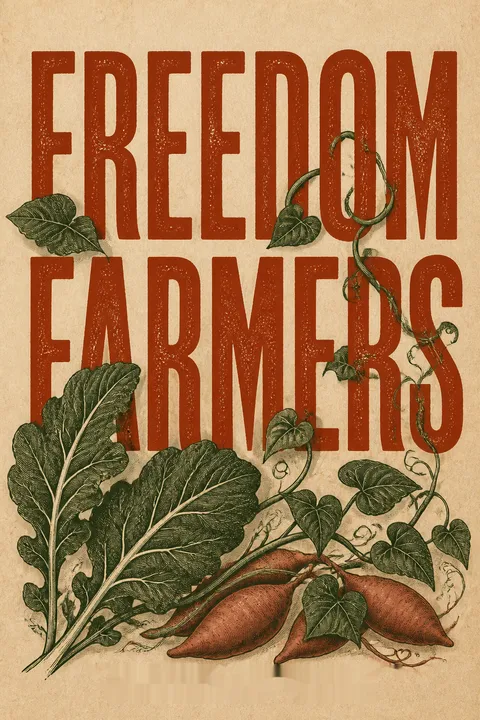

Key Takeaways
1. Black Agriculture: A Legacy of Resistance and Resilience
Historians, novelists, filmmakers, and persons engaged in casual conversation often tell the story of the relationship between landless African American farmers and the soil as one of oppression and exploitation.
Beyond Oppression. The narrative of African Americans and agriculture is often dominated by stories of slavery, tenant farming, and sharecropping, highlighting exploitation and hardship. However, this book seeks to uncover a parallel narrative of resistance, agency, and community resilience, demonstrating how black farmers have actively shaped their relationship with the land.
Historical Roots. This alternative narrative traces back to the earliest days of slavery, where enslaved Africans brought agricultural knowledge and crops from their homelands, using them to sustain themselves and, in turn, contribute to the agricultural development of the Americas. Slave gardens, for example, served as independent production grounds, offering a space for autonomy and cultural preservation.
Contemporary Relevance. By reclaiming this legacy, the book aims to provide a historical foundation for contemporary food justice and sovereignty movements, particularly in urban areas like Detroit, where agriculture is being used to rebuild communities and create sustainable food systems. It emphasizes the importance of understanding the historical context of black agricultural practices to inform and empower current efforts.
2. Booker T. Washington's Institutional Approach to Black Advancement
It is my conviction that the Negro population must live in the future as they have done in the past, by the cultivation of the soil, and the most helpful service now to be done is to enable the race to follow agriculture with intelligence and diligence.
Tuskegee Institute. Booker T. Washington, despite his controversial stance on race relations, played a pivotal role in promoting agricultural education and self-sufficiency among African Americans. His founding of the Tuskegee Institute in 1881 provided vocational training and resources to black farmers, emphasizing the importance of industrial education as a means to economic independence.
Community Outreach. Washington's commitment extended beyond the campus through initiatives like the Negro Farmers Conference and the Movable School, which brought agricultural knowledge and techniques directly to black farmers in the rural South. These programs aimed to improve farming practices, promote landownership, and enhance the overall quality of life for black communities.
Practical Education. Washington's approach focused on practical skills and knowledge that could be immediately applied to improve the lives of black farmers. By building institutions and providing access to education and resources, he sought to empower African Americans to achieve economic self-reliance and participate more fully in society.
3. George Washington Carver's Scientific Agriculture for Self-Sufficiency
The primary idea in all of my work was to help the farmer and fill the poor man’s empty dinner pail.
Applied Science. George Washington Carver, a renowned agricultural scientist, dedicated his career to improving the lives of black farmers through scientific research and practical application. As director of the Tuskegee Agricultural Experiment Station, he focused on developing sustainable farming practices, crop diversification, and innovative uses for agricultural products.
Soil Restoration. Carver's work emphasized the importance of soil conservation and restoration, advocating for crop rotation, composting, and the use of legumes to improve soil fertility. He sought to empower farmers to overcome the challenges of depleted soils and limited resources, enabling them to achieve greater self-sufficiency.
Accessible Knowledge. Carver was committed to disseminating his research findings in an accessible manner, publishing bulletins and conducting demonstrations to share his knowledge with black farmers. His work not only advanced agricultural science but also provided practical solutions for improving the economic and environmental conditions of rural black communities.
4. W.E.B. Du Bois and the Power of Cooperative Economics
There exists today a chance for the Negroes to or ga nize a cooperative state within their own group.
Cooperative Vision. W.E.B. Du Bois, a prominent sociologist and civil rights activist, recognized the potential of cooperative economics to empower African American communities. He advocated for the development of cooperatives as a means to achieve economic self-determination and resist the exploitative conditions of segregation.
Economic Cooperation. Du Bois emphasized the importance of black farmers, artisans, and technicians working together to create a self-sufficient economy within their own communities. He believed that by pooling resources and skills, African Americans could overcome the barriers of discrimination and achieve economic independence.
Negro Cooperative Guild. Du Bois translated his ideas into action by establishing the Negro Cooperative Guild in 1918, an organization dedicated to promoting cooperative businesses and providing training and skills to African Americans. His work laid the groundwork for a vision of economic empowerment and collective action that continues to inspire today.
5. Fannie Lou Hamer's Freedom Farm Cooperative: A Model for Community Empowerment
Down where we are, food is used as a po liti cal weapon. But if you have a pig in your backyard, if you have some vegetables in your garden, you can feed yourself and your family, and nobody can push you around.
Responding to Poverty. Fannie Lou Hamer, a civil rights activist, founded the Freedom Farm Cooperative (FFC) in 1967 as an antipoverty strategy to address the needs of impoverished residents in Sunflower County, Mississippi. FFC aimed to provide housing, employment, education, and access to healthy food, empowering black communities to resist economic and po liti cal oppression.
Holistic Approach. FFC's approach was holistic, addressing not only material needs but also fostering a sense of community, self-reliance, and po liti cal consciousness. The cooperative provided a space for black farmers to practice freedom, engage in demo cratic decision-making, and build a sustainable community based on cooperative living.
Legacy of Empowerment. While FFC faced challenges and ultimately dissolved, its legacy as a model for community empowerment and self-determination continues to inspire. Hamer's vision of a community-based, agricultural approach to addressing poverty and injustice remains relevant for contemporary food justice movements.
6. North Bolivar County Farm Cooperative: Collective Action in the Mississippi Delta
If a man is able to feed himself, he votes the way he wants to.
Community Response. The North Bolivar County Farm Cooperative (NBCFC) emerged in 1967 as a community response to the economic devastation and food insecurity plaguing the Mississippi Delta. Composed primarily of black tenant farmers, sharecroppers, and day laborers, NBCFC sought to create a self-sufficient agricultural system that would provide food and employment for its members.
Cooperative Stores. NBCFC established cooperative stores in various sections of the county, providing access to affordable food and supplies. The cooperative also engaged in crop production, distributing over one million pounds of produce to its members in its first year.
Empowerment through Self-Sufficiency. By pooling resources and working together, NBCFC members aimed to bypass exploitative middlemen and gain greater control over their economic destinies. The cooperative's efforts to provide food, employment, and a sense of community demonstrated the power of collective action in the face of systemic oppression.
7. The Federation of Southern Cooperatives: Scaling Up Agricultural Self-Determination
The cooperative movement found its birth in necessity; the necessity of poor black people to combine their resources, talent, [and] labor to make an economic unit able to survive in an eco nom ically hostile environment.
Regional Network. The Federation of Southern Cooperatives (FSC) was founded in 1967 as an umbrella organization to support and connect black agricultural cooperatives across the South. FSC provided technical assistance, training, and resources to its member cooperatives, enabling them to scale up their operations and address systemic challenges.
Comprehensive Support. FSC's programs encompassed a wide range of areas, including farm management, marketing, purchasing, and access to credit. The organization also addressed issues of housing, health care, and education, recognizing the interconnectedness of economic, social, and po liti cal empowerment.
Advocacy and Resistance. FSC served as an advocate for black farmers and rural communities, lobbying for policies that would support their interests and challenging discriminatory practices. Despite facing resistance from white power structures, FSC played a crucial role in promoting agricultural self-determination and economic justice in the South.
8. Detroit Black Community Food Security Network: Urban Agriculture as a Path to Liberation
For more than four centuries, African Americans provided most of the labor for the production of cotton and tobacco— two of the cash crops that generated sizable wealth in the colonies and the nation.
Responding to Urban Crisis. The Detroit Black Community Food Security Network (DBCFSN) emerged in the context of Detroit's economic decline and food insecurity, seeking to create a self-reliant food system for the city's black community. DBCFSN's work is rooted in a pan-African philosophy of pride and solidarity that is also antiracist, anticapitalist, and self-determined.
D-Town Farm. DBCFSN's flagship project, D-Town Farm, serves as a community center, educational resource, and source of fresh produce for Detroit residents. The farm's activities promote sustainable agriculture, healthy eating, and community empowerment, providing a tangible example of collective action and self-reliance.
Building a Food Sovereign Future. DBCFSN's efforts extend beyond food production to encompass food policy advocacy, cooperative economics, and community education. By building a community-based food system, DBCFSN seeks to create a more just and equitable future for black Detroiters, drawing on the legacy of resistance and resilience that has characterized black agricultural practices for centuries.
Review Summary
Freedom Farmers explores Black agricultural resistance and cooperatives as tools for empowerment and liberation. Readers praise White's thorough research, highlighting figures like Booker T. Washington and Fannie Lou Hamer. The book reframes agriculture as a site of resistance rather than just oppression. Many found it inspiring and enlightening, particularly in connecting historical movements to contemporary urban farming. Some readers noted the academic tone and density of the material, but most appreciated the book's importance in filling gaps in Black agricultural history.
People Also Read








FAQ
What is Freedom Farmers: Agricultural Resistance and the Black Freedom Movement by Monica M. White about?
- Explores Black agricultural resistance: The book examines how Black farmers in the United States used agriculture and cooperatives as tools for resistance, self-determination, and community building.
- Links to Black Freedom Movement: It situates Black agricultural efforts within the broader context of the Black freedom struggle, highlighting farming and land ownership as strategies for economic and political empowerment.
- Historical and contemporary scope: The narrative spans from the post-slavery era through the civil rights movement to modern urban food justice initiatives, connecting past and present struggles for food sovereignty.
Why should I read Freedom Farmers by Monica M. White?
- Uncovers overlooked history: The book reveals the vital but often ignored role of Black farmers and cooperatives in the Black freedom struggle and American history.
- Connects past to present: It draws direct lines between historical agricultural resistance and today’s urban food justice movements, offering lessons for contemporary activism.
- Provides a new framework: Monica M. White introduces the concept of collective agency and community resilience (CACR), offering a fresh lens for understanding how marginalized communities build sustainable alternatives.
What are the key takeaways from Freedom Farmers by Monica M. White?
- Black farmers as agents of change: The book challenges stereotypes, showing Black farmers as active leaders in building economic autonomy and resisting oppression.
- Cooperatives as resistance: Agricultural cooperatives provided spaces for self-sufficiency, democratic governance, and economic independence, bypassing exploitative systems.
- Enduring legacy: The strategies and philosophies of historical Black agricultural movements continue to inspire and inform modern food justice and land reclamation efforts.
How does Monica M. White define “collective agency and community resilience” (CACR) in Freedom Farmers?
- Collective agency: Refers to a group’s ability to act together to shape their political and economic futures, emphasizing shared identity and mutual success.
- Community resilience: Describes how communities adapt, withstand, and reorganize in the face of adversity, such as political violence or economic oppression.
- Three key strategies: CACR is enacted through commons as praxis (shared resources), prefigurative politics (democratic, alternative systems), and economic autonomy (independent economic structures).
What is “commons as praxis” and how is it used in Freedom Farmers by Monica M. White?
- Cooperative sharing of resources: Commons as praxis involves pooling land, tools, labor, and knowledge to build community-based institutions that circumvent oppressive systems.
- Sustaining community: This practice allowed Black farmers to support each other, share risks, and ensure survival in hostile environments.
- Foundation for resistance: By creating shared economic and social spaces, Black communities built resilience and autonomy outside mainstream exploitative structures.
How does Freedom Farmers by Monica M. White connect historical Black agricultural cooperatives to modern food justice movements?
- Legacy of resistance: The book traces how enslaved Africans and their descendants used farming knowledge and cooperative strategies to resist oppression and build community.
- Continuity of strategies: Concepts like commons as praxis, prefigurative politics, and economic autonomy are shown as enduring frameworks, adapted from rural cooperatives to urban food networks.
- Inspiration for today: Historical examples provide lessons and models for contemporary activists working to reclaim land, food systems, and economic power.
What role did Fannie Lou Hamer’s Freedom Farm Cooperative play according to Freedom Farmers by Monica M. White?
- Community-based antipoverty strategy: Founded in 1967, the cooperative aimed to provide food, housing, education, and employment to displaced Black farmworkers in Mississippi.
- Manifestation of CACR: Freedom Farm embodied commons as praxis, prefigurative politics, and economic autonomy through shared gardens, democratic governance, and collective production.
- Enduring legacy: Despite its eventual closure, the cooperative remains a powerful example of agricultural resistance and community resilience in the Black freedom movement.
How did the North Bolivar County Farmers Cooperative (NBCFC) contribute to Black agricultural resistance in Freedom Farmers?
- Regional cooperative model: NBCFC organized nearly a thousand families to grow and distribute produce, addressing hunger and economic displacement in Mississippi.
- Community governance: The cooperative maintained democratic control through elected representatives and community listening sessions, ensuring collective decision-making.
- Economic innovation: NBCFC bypassed exploitative middlemen, partnered with health institutions, and diversified into other cooperative businesses, strengthening economic autonomy.
What is the significance of the Federation of Southern Cooperatives (FSC) in Freedom Farmers by Monica M. White?
- Umbrella organization: FSC provided technical assistance, training, and financial services to over a hundred cooperatives across the South, helping Black farmers maintain land ownership.
- Promoting sustainable agriculture: The federation encouraged crop diversification, soil conservation, and youth training, blending the legacies of Booker T. Washington and George Washington Carver with cooperative principles.
- Political advocacy: FSC defended Black farmers against eviction and economic retaliation, supporting political participation and community resilience.
How does Freedom Farmers by Monica M. White redefine the narrative about Black farmers and land ownership?
- Challenges stereotypes: The book disputes the notion that Black people abandoned farming due to lack of interest, highlighting the impact of systemic racism and violence.
- Highlights agency and activism: Black farmers are portrayed as active agents who fought for land, built cooperatives, and supported civil rights activism.
- Recovers lost histories: By documenting these contributions, the book restores pride and offers a foundation for contemporary food justice and land reclamation movements.
What is the role of Detroit Black Community Food Security Network (DBCFSN) in Freedom Farmers by Monica M. White?
- Urban agricultural resurgence: DBCFSN represents the modern continuation of Black agricultural resistance, addressing food insecurity and economic decline in Detroit.
- Food sovereignty and empowerment: The network emphasizes pan-African solidarity, anti-racism, and cooperative economics, using farming as a form of political and community empowerment.
- Community wellness: Through projects like D-Town Farm, DBCFSN provides fresh produce, health education, and cultural events, fostering economic autonomy and collective agency.
What are the best quotes from Freedom Farmers by Monica M. White and what do they mean?
- Fannie Lou Hamer: “Down where we are, food is used as a political weapon. But if you have a pig in your backyard... you can feed yourself and your family, and nobody can push you around.” This highlights food as a tool of empowerment and resistance.
- bell hooks: “Collective black self-recovery takes place when we begin to renew our relationship to the earth, when we remember the way of our ancestors...” This underscores the importance of reconnecting with agricultural roots for healing and empowerment.
- W. E. B. Du Bois: “If leading the way as intelligent cooperating consumers, we rid ourselves of the ideas of a price system and become pioneer servants of the common good...” This expresses the vision of cooperatives as a path to economic and political freedom.
- Malik Yakini: “Our approach to farming and our approach to land stewardship is related to our interconnectedness to nature...” This reflects a holistic, pan-African philosophy guiding sustainable agriculture and community resilience.
Download PDF
Download EPUB
.epub digital book format is ideal for reading ebooks on phones, tablets, and e-readers.








































