Plot Summary
Grieving in Solitude
The story opens with FitzChivalry, now living under the name Tom Badgerlock, reeling from the death of his wolf companion Nighteyes. The void left by his bond with the wolf is profound, rendering his world half-sensed and numbed. Though surrounded by people who care—his foster son Hap, the enigmatic Fool (now Lord Golden), and court mentor Chade—Fitz finds himself willfully isolated. He recognizes that his solitude is not forced upon him but chosen, an echo of past decisions to detach for self-preservation. The ache is both old and new, as he tries to reconcile duty, loss, and identity in the wake of returning to Buckkeep Castle, where political tides threaten to pull him back into the dangerous game he had left behind.
Piebalds Stake Their Claim
Political tension simmers as the Piebald movement, a radical Wit (Old Blood) faction, acts not out of justice for their kind but for power. They use threats, blackmail, and betrayal to force other Witted folk into their fold. The Piebalds exploit Fitz's hidden existence, spreading rumors that tie him to legendary status—a near-deity "Witted Bastard." Their manipulations target Prince Dutiful, recently rescued from their schemes, as well as Fitz, who senses both personal danger and a broader threat to the Farseer throne. Fitz must guard not only himself, but his prince and anyone he cares for from exposure and retribution, knowing the stakes include death, political upheaval, and the threat of being forced into an impossible allegiance.
Losses Shape Us
Fitz's daily life reflects the profound changes wrought by loss and return. He finds tentative comfort with Jinna, a hedge-witch, but emotional wounds from Nighteyes linger. His foster-son Hap struggles both with apprenticeship drudgery and his own stumbling romance. Amid the storm outside and turmoil within, Fitz is reminded that youth's careless words and decisions can cut sharply. The threat of the Piebalds shadows every relationship, forcing Fitz to weigh again what it means to live honestly, versus safely, within the web of responsibility to those he loves and to the ever-demanding Farseer family legacy.
Betrothal Amidst Intrigue
Buckkeep celebrates the betrothal of Prince Dutiful to the Outislander Narcheska Elliania in an elaborate, multicultural ceremony. The event is suffused with pageantry and seemingly harmonious alliances, but beneath the surface, resentment, rivalry, and cultural misunderstanding bubble. Elliania's own motives and suffering are hidden beneath her poise, and the Outislander delegation's customs—particularly around matriarchy and the dragon-ice myth—hint at deeper mysteries. As allegiances are formalized, old wounds between Six Duchies and Out Islands, as well as the threat of the Piebalds, mean no bond feels truly secure. Both Fitz and Dutiful must play roles—servant, prince, mentor, son—while navigating shifting political and emotional sands.
Grief Shared, Grief Eased
Fitz is summoned to the Queen's presence not for royal business, but mutual grieving. Kettricken reveals her own pain at Nighteyes' loss, recalling the solace and courage the wolf gave her during perilous times. The private moment strips Fitz of defences and allows him to weep, accepting comfort as Kettricken both grieves and nurtures. Their conversation touches on the perils and costs of Wit and Skill magic, personal and political legacies, and the deep, familial connections that endure beyond blood. This quiet exchange provides a rare space where shared vulnerability brings healing, even as the dangers outside remain unresolved.
Dangerous Secrets Unearthed
Fitz realizes that scrolls and writings left in his former home detail Witted secrets, Skill-lore, and the true history of dragons and the Farseers—a trove that, if found by enemies, would doom him and others. In a tense journey, he recovers and destroys much of what could incriminate not just him, but the royal house. Meanwhile, political dangers increase: Piebald threats grow sharper, and the lines between friend and spy blur. The court's protections are fragile, and Fitz's past as an assassin is called upon once again. Each action to protect the future—burning scrolls, forging alliances—comes at the cost of more isolation, more secrets.
Skill and Wit Lessons Begin
Under Chade's urging, Fitz becomes both student and teacher, instructing Prince Dutiful in the arcane royal Skill-magic, even as he discovers a new, rawly talented, and unpredictable candidate, Thick. Fitz learns that Skill is as dangerous as it is necessary, and its perils are felt immediately: the seduction of its current, the risks of unconscious command, and the dangers of magical addiction. As the coterie forms—Fitz, Dutiful, the reluctant Thick, and event Chade himself—the lines between duty, affection, and manipulation blur. Fitz's role as mentor to the prince grows more weighty, complicated by trust, jealousy, and echoes of his own tragic apprenticeship.
Ambitions and Old Wounds
Chade, the Queen's ancient mentor, becomes obsessed with mastering the Skill, seeking not just knowledge but lost youth, freedom from pain, and power denied him by illegitimacy. Fitz grows wary as Chade's relentless ambition threatens both their fragile coterie and the ethical bounds of the magic itself. Meanwhile, Fitz's own role as teacher, friend, and hidden Farseer ever more deeply wounds and isolates him. Hap's struggles with love and discipline mirror Fitz's youthful mistakes, and Jinna's relationship with Fitz founders on mistrust, cultural fears, and the ever-present threat of the Wit's exposure.
Unraveling Form, Unraveling Trust
The Piebald threat is sharper than ever when Fitz discovers their spy within Buckkeep: Thick, a simpleton, has been used as an unwitting informant, his Wit and Skill abilities exploited by traitors who know Fitz's secrets and threaten his life. The coterie's growing Skill-experiments draw attention from outside—other Skilled ones, an alien awareness within the magic, and even Fitz's daughter Nettle, whose strength and curiosity deepen the risk. Meanwhile, betrayals from supposed friends and the unraveling trust between Fitz and the Fool challenge all certainty about who is a tool, who is a friend, and whether the roles can ever be separated.
The Hostage Bargain
Kettricken boldly hosts a Convocation of Witted folk, with herself and then Prince Dutiful offered as hostages in a dangerous show of good faith. Allies and enemies alike maneuver, with the court divided over compromise versus vengeance for past wrongs. Through the events, new leaders for the Old Blood emerge—notably Web, whose measured wisdom earns friends and softens hearts, both at court and among his own people. Yet even amid progress, the Piebalds' radical faction threatens all, while Fitz's dual loyalties are pulled tighter than ever. The choices made around trust, reparation, and personal risk are as personal as they are political.
Allies From Bingtown
Bingtown traders arrive with diplomatic gifts and a proposal for military alliance against Chalced. Their delegation brings marvels, secrets, and a scaled youth who hints at living dragons. The resulting encounter stirs memories and suspicions: the Bingtowners offer the prospect of a real dragon ally, but are met with both interest and rebuke from Queen Kettricken—who asserts the reality and pride of the Six Duchies' own, magically-wrought dragons. The Fool, with his hidden history as Amber among the Traders, is quietly shaken. These complexities, alongside shifting alliances, signal that the story of dragons and prophets is far from over, and that the politics of the wider world will bear heavily on the Farseer line.
Jek—A Face From Elsewhere
The arrival of Jek, a Bingtowner and old friend of the Fool's Amber persona, upends Fitz's perception of his friend's identity. Jek's belief that Fitz and the Fool are lovers, the revelations of the Fool's other selves (Amber, Lord Golden, the Fool), and the secrets shared with Jek but not with Fitz all cut deeply. A wedge grows; Fitz's sense of betrayal clashes with old affection. Their fight brings to the surface their unspoken love, the limits of friendship, and Fitz's inability to accept or reciprocate the fullness of the Fool's devotion. The emotional cost is high, and both carry fresh wounds in the wake of their confrontation.
Forging Dangerous Connections
A convergence of crises—the Piebalds' renewed assault, Thick's peril as a pawn, Civil Bresinga's fraught loyalties, and a political assassination attempt—threaten Fitz and the Farseer court. Fitz is gravely wounded in defense of Dutiful's friend Civil, leading to a desperate Skill-healing in which Chade, Dutiful, the Fool, and Thick unite their strengths: a new, unusual coterie is born. The ordeal remakes Fitz's body—erasing and then restoring scars—and deepens mutual dependence and distrust within the group. The price of such healing, the boundaries of self within magic, and the consequences of coterie bonds become pivotal for the next phase of their journey.
Old Scars, New Decisions
Fitz recovers physically but faces existential disquiet: the removal of his scars, the visible markers of his history, threatens his identity and safety. The process further exposes Chade's recklessness and addiction to the Skill's possibilities—his willingness to use others, notably Thick, for his ambitions. Fitz, now the effective Skillmaster, must mediate ethical and magical boundaries within a team united less by choice than circumstance. At the same time, personal rifts with the Fool and family losses—most notably Burrich's rejection of his Witted son Swift—emphasize the high cost of survival for both individuals and the Farseer line.
Burdens of Fatherhood
The return of Swift as an outcast apprentice, Hap's heartbreak and growth, Nettle's dangerous strengthening in the Skill, and the memories of his own neglected childhood bring Fitz face-to-face with his lifelong struggles around fatherhood. Each relationship—be it with biological or foster children, or his complicated bond with Prince Dutiful—mirrors old wounds, delayed wisdom, and the complex balancing acts of duty, compassion, and secrecy. Fitz must reconcile his own need for love, connection, and redemption with the realization that every father risks both creating suffering and inheriting the limitations of his past.
Revelations and White Prophets
The convergence of prophecies is revealed: the Pale Woman, a White Prophet posing at the heart of the Outislander political maneuver, seeks to engineer Fitz's death and thwart the Fool's vision for a better world. The Fool, marked physically and psychologically by the Pale Woman, confesses his fears, love, and sense of doomed purpose: he and Fitz together have thus far outmaneuvered fate, but the next convergence, at Aslevjal and the sleeping dragon, may finally tip the scales. The bond of White Prophet and Catalyst, of love and sacrifice, stands as both salvation and curse for the world.
Spring: Leaving and Letting Go
As spring arrives, all of Buckkeep prepares for the Prince's quest to Aslevjal—to kill the black dragon Icefyre and secure the Outislander bride. Friends and old enemies gather. The Skill-coterie practices fraught magic, the Fool (as Lord Golden) navigates both friendship and political banishment, and Web, the new Witted leader, finds his voice at court. Fitz faces duty and destiny, aware that every gain carries a cost, every reconciliation is provisional, and the coming quest may demand love, life, and loyalty as payment for a "better" future.
Analysis
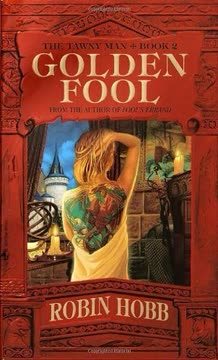
Golden Fool is a story at the intersection of identity, trauma, and political rebirth. Robin Hobb crafts a world in which power is intimate and dangerous: magic is less a tool than a test, companionship both a blessing and a wound. The narrative foregrounds the struggle for personal wholeness against a backdrop of public duty—the cost of loyalty, the inheritance of old wounds, and the necessity of forging new paths even as circles threaten to repeat. Modern readers will recognize in Fitz's journey the timeless crises of fatherhood, friendship across difference, and the ache of being never quite able to belong: to a family, a culture, or one's own history. Hobb reminds us that the price of progress is not the wholesale erasure of the past, but negotiated, partial repair—the bravery to risk new wounds in order to build something better. In an age of division and hidden trauma, Golden Fool resonates as a meditation on the difficulty of trust, the need for sacrifice, and the fragile hope that, even if the dragons do not always return, it is worth striving to bring them back.
Review Summary
Golden Fool receives high praise for its character development, political intrigue, and emotional depth. Readers appreciate the slow-burn storytelling and Hobb's masterful world-building. Many consider it a strong middle entry in the Tawny Man trilogy, though some note it suffers from middle-book syndrome. The book explores themes of identity, love, and duty through complex characters, particularly Fitz and the Fool. Crossovers with previous series enhance the story for longtime fans. While some find the pacing slow, most readers remain captivated by Hobb's immersive writing style.
People Also Read

Characters
FitzChivalry Farseer ("Tom Badgerlock")
Fitz is the orphaned royal bastard whose life has been shaped by loss, loyalty, and the twin burdens of the Wit and Skill magics. Deeply introspective and scarred by previous betrayals and violence, he serves in disguise as Tom Badgerlock, keeping his true identity hidden. His relationships—with the Fool, Chade, Kettricken, Prince Dutiful, and his foster-son Hap—drive the emotional heart of the narrative. He is both assassin and healer, father and orphan, hero and tool. His psychological journey is marked by profound grief, guilt, longing for acceptance, and an endless struggle to define boundaries between self, duty, and love, particularly in the face of the Fool's devotion. The evolution of his identity and the legacy of his choices are central to the story's arc.
The Fool (Lord Golden / Amber / Beloved)
The Fool, true name Beloved, is the White Prophet: androgynous, enigmatic, and driven by visions of possible futures. Adopting various roles—court jester, Jamaillian noble Lord Golden, Bingtown woodcarver Amber—they manipulate events from behind their many masks, always seeking to nudge the world towards a better path in partnership with Fitz, their Catalyst. Profoundly isolated, the Fool loves Fitz with a passion that is simultaneously romantic, filial, and prophetic. Marked (and marred) physically by pain, prophecy, and abuse, especially from the Pale Woman, the Fool's psychological state balances hope with exhaustion, and the relationship with Fitz is both their anchor and torment. The friendship/love between them is the core emotional mystery of the book.
Chade Fallstar
Long-time court spymaster and Fitz's surrogate father, Chade has survived into old age on his cunning and adaptability. Now a powerful councillor, he is obsessed with reclaiming the Skill magic denied him as a bastard and with securing the Farseer line against internal and external threats. His willingness to manipulate, his unchecked curiosity for forbidden knowledge, and his blindness to ethical boundaries (especially when wielding power over Thick) often put him in conflict with Fitz and with his own conscience. Chade's psychological struggle is between loyalty and ambition, wisdom and hubris, mentor and manipulator.
Prince Dutiful
Dutiful, Fitz's secret son (by circumstance, not blood), is the Farseer heir, groomed to reunite Six Duchies and Outislander interests via political marriage. Brilliant but burdened, he wields both the Wit (beast magic) and Skill (royal magic), requiring guidance even as he seeks autonomy. Dutiful's relationships—with Fitz, Chade, Civil Bresinga (his Witted friend), and Narcheska Elliania (his betrothed enemy/ally)—constantly force him to navigate the treacherous path between personal longing, magical addiction, and the crushing weight of leadership. His development is central to the new direction of Old Blood and Farseer politics.
Thick
Thick is a deeply simple, physically unprepossessing man-servant whose latent Skill (and perhaps Wit) powers are rivaled only by his emotional fragility and capacity for music. Used and manipulated as a tool by Chade and others, he is at once a danger, a liability, and a treasure to the Farseers' plans. His emotions run close to the surface—a wounded child in a man's body—and his gifts are as much curse as blessing, opening the coterie to magical threats as well as opportunities. His gradual acceptance into the group forces all to re-examine the ethics of using magical—and human—resources.
Kettricken
Queen Kettricken is Farseer by marriage but Mountain in soul, guided always by the ideal of Sacrifice for her people. Her griefs (for lost husband and wolf companion alike), her forward-thinking politics (in forging peace with the Old Blood and Outislanders), and her unwavering courage and fairness make her the glue of the current Farseer dynasty. She is both nurturing mother and ruthless tactician, especially when faced with the necessity of handing over Prince Dutiful as a political hostage or weathering the wrath of antagonistic nobles.
Narcheska Elliania
Betrothed to Prince Dutiful, Elliania is both innocent girl and steel-willed survivor. Torn from her matriarchal Outisland heritage, she is at the heart of the marriage alliance—her suffering is both personal and political (her tattoos, her role as proxy for the "Pale Woman"). Her psychological arc is one of forced maturation: masking terror and pain behind deliberate subversion and compliance as required.
Civil Bresinga
Civil is Dutiful's friend and an unwilling tool for the Piebalds. Subjected to blackmail, divided loyalties, and the trauma of his mother's abuse and death, he ultimately chooses to stand openly with the Farseers, pledging his loyalty and his Wit magic. His story embodies the costs of persecution, the pain of being forced to choose between kin and principle, and the courage of self-definition in the face of risk.
Web
An unassuming, garrulous Old Blood fisherman, Web becomes a surprising leader, earning respect with his reasoned optimism and capacity to bridge differences between Witted and unWitted. His willingness to act as teacher, mediator, and sacrifice is central to the cautious progress made at the Queen's convocation. Web's role demonstrates the power of dignity, honesty, and story to foster slow reconciliation.
Hap
Hap, Fitz's foster-son, is the living legacy of Fitz's yearning for family, stability, and redemption. As teenage romance and hardship teach him difficult lessons, Hap's journey away from Fitz's shadow towards adulthood mirrors the pleasures and pains of every parent-child relationship in the story. His story highlights the hazards of over-protection, the treasures of forgiveness, and the bittersweet costs of maturity.
Plot Devices
Skill and Coterie Formation
The Skill, an inherited psychic magic, serves as the central device for linking (and endangering) Fitz, Chade, Dutiful, Thick, and the Fool. Structured lessons, magical linking, and dramatic healings (culminating in the creation of a coterie) force characters to both expose their vulnerabilities and reckon with the ethical costs of power. The addictive lure of the Skill, its openness to outside threats, and the collapse of boundaries between self and other, foreshadow both triumph and tragedy. The need to rebuild a functioning coterie—never fully whole—drives much of the narrative tension and underscores themes of dependence and isolation.
False Identities and Disguises
From Tom Badgerlock to Lord Golden to Amber, characters' shifting identities provide both protection and pain. Disguise is never merely physical: it shapes emotional truth, loyalty, and the very possibility of honest relationship. The plot structure itself is built upon these shifting roles, most painfully between Fitz and the Fool, and mirrored politically in manipulated allegiances, secret parentage, and cultural misunderstandings.
Betrayal and Redemption
The story is powered by cycles of betrayal and attempts at reparation: Chade manipulating Fitz; Fitz's anger at the Fool; Old Blood persecuted by both nobles and their own; Civil, forced to betray his prince, finding a way back to loyalty. Characters must continually reckon with the legacy of old hurts and the possibility of change, even as they fear endless repetition.
Foreshadowing, Prophecy, and Convergence
The Fool's visions, the prophecies of White Prophets, skill-dreams, and omens from scrolls and songs create a constant atmosphere of impending doom or hope. The motif of convergence—of key forces, destinies, and people colliding at a crucial point—forms the spine of the narrative, especially as Fitz and the Fool wrestle with the possibility (and cost) of changing the world's fate.
Narrative Structure: Layered and Intimate
The book layers political intrigue with intimate, confessional first-person narrative. Fitz's attempts to record history always break down into personal story, underscoring the impossibility of objectivity in a world built on secrets. Drama is carried as much by emotional revelation as by external plot turns, inviting readers to connect with the psychological undercurrents and moral ambiguity of each choice. Letters, songs, and scrolls serve as meta-narratives, records of past trauma and blueprints for (mis)understanding the present.
Themes of Power, Difference, and Sacrifice
At every level, Golden Fool interrogates the price of belonging: the cost of being Witted or Skilled; of loving where love is forbidden; of seeking justice in a world resistant to change. Sacrifice—of self, of ambition, of hope, of the next generation—is both imposed and chosen, shaping political and personal futures alike.