
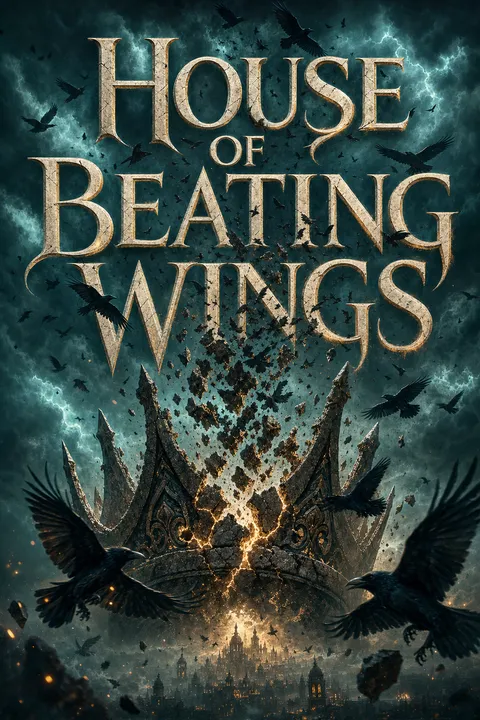

Plot Summary
Prologue
Twelve-year-old Fallon Rossi,1 a magicless half-blood with rounded ears in a kingdom of pointed-eared Fae, chases thieving sprites through the Harbor Market and tumbles into a canal. A juvenile pink serpent13 seizes her ankle, then, tasting her blood, does the unthinkable: it licks her wounds closed and heals her. Onlookers gape as the girl strokes the beast that should have dragged her to its lair.
Her grandmother Ceres,4 terrified the court will discover Fallon1 can charm monsters, uses vine-magic to haul the serpent out, scarring it. She makes Fallon1 swear to lie about what happened, to pretend fear rather than kinship. Fallon1 promises, because unlike the Fae, she can lie. The serpent, whom she later names Minimus,13 becomes her secret.
The opening scene encodes the novel's central tensions in miniature: blood as both stigma and power, and the survival strategy of concealment. Fallon's tenderness toward a creature bred to be feared marks her as an outsider twice over, unwelcome among Fae for her ears and among Fae norms for her empathy. Ceres's fear is instructive: what makes Fallon special is precisely what makes her prey. The lie she is taught to tell becomes her formative act, establishing a heroine whose truthfulness is chosen rather than compelled. The healing serpent seeds the mystery of her heritage, a puzzle the entire book slowly unwraps, while foreshadowing that animals sense something in her blood the Fae cannot.
The Prince Comes Home
Now twenty-two, Fallon1 brushes the hair of her catatonic mother Agrippina,5 who murmurs that a woman named Bronwen9 watches and that the time has come. Grandmother Ceres4 deflects the cryptic words. Then Prince Dante,3 back after four years in the frozen north, calls up to Fallon's1 window, telling her she is lovelier than he remembered and that his barracks now sit across from her house.
Fallon,1 who serves wine at the Bottom of the Jug tavern and has loved Dante3 since he shielded her from bullies as a child, glows under his attention. Ceres4 warns that a prince cannot marry a commoner without forfeiting his crown, and that Fallon's1 heart beats for the wrong man. Fallon1 brushes the caution aside, desperate to be seen and chosen.
The chapter reestablishes Fallon's ordinary world as a cage of longing. Her devotion to Dante is less romance than aspiration, a fantasy of belonging weaponized against a society that names her worthless. Wildenstein threads dramatic irony through Ceres's warnings, which the reader intuits carry weight Fallon refuses to hear. Agrippina's broken utterances function as oracle, positioning madness as a channel for suppressed truth. The window scene stages the class divide literally: Fallon below, the prince exalted, their attraction filtered through hierarchy. Her hunger to be visible, contrasted with her grandmother's instinct to keep her hidden, sets the psychological engine of the book: a girl who wants recognition in a world where recognition means danger.
The Blind Diviner's Prophecy
Denied a ribbon to King Marco's11 betrothal revel (she blames Ceres4 for hiding it), Fallon1 crosses into the forbidden human swamplands of Rax with the tavern-owner's daughter Giana15 and the flirtatious fisherman Antoni.6
She drinks her first ale, kisses Antoni6 beside a bonfire, then slips away to find the blind, scarred diviner her mother5 named. Bronwen9 delivers a staggering prophecy: free five iron crows hidden across Luce, and Fallon1 will one day rule the kingdom. The first waits inside the royal palace.
Bronwen9 calls her Fallon Baeinach, a name she does not recognize, and warns her to speak of the quest to no one or doom them all. Rattled, skeptical, yet unable to dismiss the pull of possibility, Fallon1 returns home haunted by the sense that something unseen is steering her life.
The inciting incident arrives cloaked in riddle, and the prophecy operates as both temptation and trap. Bronwen weaponizes Fallon's deepest wish, a crown that would validate her worth and win Dante, converting private longing into quest. The unfamiliar surname plants the heritage mystery that will detonate later. Crucially, Fallon's agency is compromised from the outset: she suspects she is being maneuvered but proceeds anyway, revealing how desire overrides caution. Rax itself, the squalid human land, forces her first confrontation with Luce's brutal underclass, cracking the naive worldview her Tarecuorin schooling installed. The kiss with Antoni introduces the romantic triangle while marking Fallon's slow drift from the sheltered girl toward an agent of her own reckless fate.
Secrets of the Crows
Consumed by the riddle, Fallon1 presses Antoni's6 crew over wine about iron crows and the Battle of Primanivi. She learns that mountain tribes once fought beside crows armed with iron beaks and talons, that surviving birds fled to the queendom of Shabbe, and that King Marco11 sank a galleon full of rebel humans off Luce's deadly southern coast, feeding them to the serpents.
She discovers the Shabbins revere animals and are rumored to command serpents, deepening the mystery of her own strange affinity. Antoni,6 who secretly ferries contraband and quietly opposes the crown, hints at knowledge he will not share.
Fallon1 starts stitching the crows to Shabbe and to her own oddness, though nothing yet explains how five statues could topple a king or seat a tavern girl on a throne.
This section performs the crucial work of world-historical exposition through character, turning barroom rumor into narrative scaffolding. The revelation that history is contested, that Marco's regime rests on genocide dressed as triumph, primes the reader to distrust official Lucin narratives. Fallon's investigative curiosity marks her growth from passive dreamer to active seeker. The recurring motif of serpents as Shabbin-linked quietly braids her personal anomaly into geopolitics she cannot yet decode. Antoni's withheld secrets model the novel's economy of concealment, where knowledge is currency and danger. Wildenstein uses Fallon's ignorance strategically: the reader assembles clues faster than she does, generating the anticipatory tension that powers a mystery whose answer is Fallon herself.
A Kiss and a Hidden Gown
In the tavern's dank wine cellar, Dante3 surprises Fallon1 and kisses her, reviving their old spark. He reveals he sent her both a ballgown and a party invitation she never received, exposing that Ceres4 hid them to keep her off the royal isle.
Dante3 swears the Glacin princess Alyona is only a political match forced by Marco,11 and promises Fallon1 a proper courtship once his duties ease. Giana15 catches them, her disapproval sharp, while Fallon1 wrestles guilt over her kiss with Antoni.6
Torn between two men and increasingly certain the prophecy could deliver both love and a crown, Fallon1 resolves to keep her crow hunt secret. The reconciliation rekindles her ambition even as it entangles her deeper in half-truths she tells the people who care for her.
The cellar scene dramatizes the seductive danger of validation from above. Dante's revelation reframes Ceres not as neglectful but as fiercely protective, complicating Fallon's resentment and underscoring the generational divide between the grandmother who hides and the girl who craves exposure. Fallon's mounting deceptions mark a moral inversion: the heroine defined by honesty in the prologue now spins webs to preserve her dream. Wildenstein lets the reader feel the intoxication of being chosen by a prince while seeding unease about Dante's casual entitlement and evasiveness regarding Alyona. The triangle sharpens not as mere romance but as a referendum on what Fallon believes she deserves, and from whom she seeks it.
The Dagger in the Serpent
When the arrogant Marquess Ptolemy Timeus harasses Fallon1 along the canal, her secret serpent Minimus13 rams his boat and takes a soldier's dagger to the cheek. Fallon1 plunges into the water, wrenches the blade free, and drives him away, then faces a fine that the kindly white-haired guard Cato negotiates down to a single gold coin.
At home, a shaken Ceres4 finally confesses the buried truth: years ago Justus Rossi,12 Fallon's1 estranged grandfather and Marco's11 general, came to kill the infant Fallon,1 and Ceres4 struck an unclaimed bargain to spare her. She admits hiding the ribbon out of terror that the court would discover Fallon's1 beast-charming and forge her into a weapon. Fallon1 reels at how much has been concealed to keep her alive.
The rescue reasserts Fallon's defining trait, empathy for the hunted, while raising its cost: her love for animals repeatedly endangers her. The scene's real detonation is Ceres's confession, which recasts the entire family history as a project of concealment motivated by love and fear. Justus's aborted infanticide reveals the lethal stakes of Fallon's very existence, deepening the mystery of why a grandfather would murder his own blood. The unclaimed bargain introduces a debt that hangs over the narrative like a loaded weapon. Wildenstein uses the mundane machinery of fines and guards to smuggle in existential revelation, and Fallon's growing awareness that she is valuable enough to kill, or wield, matures her from dreamer to endangered agent.
The Statue That Woke
Needing the gold coin, Fallon1 and her devoted friend Phoebus Acolti8 raid his wealthy family's vault, where a lifelike iron crow hangs pinned by black obsidian spikes.
Prying it loose, the spike slices Fallon's1 arm, and Phoebus8 nearly amputates the limb in panic until she confesses her secret: iron and obsidian, lethal to Fae, do not harm her. Phoebus8 wonders whether she is a human changeling. Back in her bedroom, the statue shudders alive, shifting from metal to feathers to smoke, a living crow with molten gold eyes2 that comprehends her every word.
Terrified yet transfixed, Fallon1 grasps that she has freed the first of Bronwen's9 five crows, and that her prophecy is no treasure hunt but the resurrection of something the kingdom would kill to keep buried.
The crow's awakening is the point of no return, transforming abstract prophecy into a living, dangerous companion. Fallon's confessed immunity finally externalizes her difference as power rather than deficiency, reframing a lifetime of feeling defective. Phoebus's changeling theory plants the seed of the book's final reversal while dramatizing friendship that survives revelation, a rare instance of acceptance in Fallon's life. The shapeshifting statue literalizes the novel's obsession with hidden natures: things are never only what they appear. Wildenstein calibrates awe against dread, letting wonder curdle into the sober recognition that Fallon has smuggled a mythical predator into her home, binding her fate irreversibly to a creature she does not yet understand.
Hearing on the Golden Isle
Commander Silvius Dargento,10 who loathes and lusts after Fallon1 in equal measure, drags her to the golden isle of Isolacuori for a hearing over the serpent incident.
There she meets her grandfather Justus12 for the first time and King Marco11 himself, who wants her to tame the serpents and broker peace, secretly hoping her apparent gift can breach Shabbe's protective wards. In the trophy room, beneath a grotesque chandelier of serpent horns, Fallon1 spots the second crow, forged into a hideous bowl, and nearly touches it before Dante3 intervenes.
Marco11 postpones her fate and leaves for more betrothal festivities. Fallon1 files away the bowl's location, now understanding both why the king11 prizes her and how monstrous the crown's cruelty toward serpents and humans truly is.
The hearing stages Fallon against the apex of Fae power, and her refusal to grovel establishes her spine. Marco's interest reframes her gift as strategic asset, exposing the imperial logic beneath his hunger for Shabbe: even peace is a conquest tool. The serpent-horn chandelier renders the regime's barbarity as decor, radicalizing Fallon's sympathies. Her first sight of Justus, cold and ashamed, closes one loop of the family mystery while opening the wound of paternal abandonment. Crucially, the trophy-room crow gives the quest a concrete objective within the enemy's stronghold. Wildenstein lets Fallon's private agenda run beneath the public interrogation, dramatizing a heroine learning to perform compliance while pursuing subversion, a duplicity the honest girl of the prologue could not have managed.
The Barracks Tent
Before Dante3 departs for palace duties, he brings Fallon1 to his barracks tent, where they finally sleep together. Still dreaming of becoming his queen, Fallon1 gives herself to the prince,3 though the experience proves more painful and less transcendent than the romances in her mother's5 cherished books.
She confesses she once kissed another man;6 Dante3 admits, without a shred of apology, to his own countless lovers. Afterward Fallon1 carefully soaks and hides the bloodstained sheet, mindful of Ceres's4 warning never to leave traces of her strange blood anywhere in the kingdom.
Dante3 refuses to bring her to the palace, calling her too great a distraction, which quietly wounds her. The commander10 watches them part, and Fallon1 senses Silvius10 will shadow her every move until the king11 returns.
The consummation deflates the fantasy that has organized Fallon's inner life. Wildenstein refuses the wish-fulfillment beat, rendering first sex as awkward, hurried, and asymmetric, exposing the gap between narrative romance and lived experience. Dante's unapologetic double standard reveals the entitlement beneath his charm, foreshadowing his limits as a partner and king. Fallon's compulsive concealment of her blood even in an intimate moment underscores that her difference permits no true vulnerability. The scene works as ironic pivot: the goal she has chased is attained yet hollow, subtly beginning her disillusionment. Silvius's surveillance tightens the external noose, converting the aftermath of intimacy into rising dread rather than fulfillment.
Fleeing Into Monteluce
After a bitter fight with Ceres,4 who insists the prince3 will never wed her, Fallon1 resolves to gather the crows herself, spurred by her mother's5 murmured blessing to leave. Guided by unsettling visions, she has Antoni6 smuggle her across the canal hidden inside a wine barrel.
When Silvius10 nearly discovers her, a cloud of birds descends on the wharf, hinting her buried magic is stirring. On the far shore, Bronwen9 waits with a black stallion named Furia and reveals that Antoni6 has secretly served the crow cause all along.
Refusing his company, Bronwen9 sends Fallon1 alone into treacherous Monteluce with the crow2 as her only guide. Fallon1 leaves behind everyone she loves, riding into a mountain range that swallows travelers, chasing a throne through a kingdom that now wants her caught.
The escape marks Fallon's decisive break from her sheltered life and from the authority figures who defined it. The bird swarm is a tantalizing eruption of latent power, teasing the identity mystery while dramatizing the animal kinship that has always set her apart. Bronwen's revelation about Antoni recasts the fisherman's flirtation as cover for a larger loyalty, complicating the triangle with hidden allegiance. The solitary ride into deadly mountains stages a classic threshold crossing: the heroine strips away companions and comforts to be tested. Wildenstein frames Fallon's flight as both liberation and manipulation, since she moves toward self-determination while remaining a piece on Bronwen's board, the paradox that defines her whole journey.
The Crow Finds His Voice
Deep in the mountains, the crow Bronwen9 called Morrgot2 slices two sprite sentries in half to keep Fallon1 hidden, sickening her with his ruthlessness. He plants visions in her mind that reveal her father: Kahol, or Cathal, Baeinach, a Crow warrior now imprisoned beneath the sea. After Fallon1 painstakingly fishes the second crow from a ravine, the two birds merge into a single larger creature, and Morrgot2 gains the power to speak directly into her thoughts.
He confirms he leads an entire race of shapeshifters, that her Lucin nickname raindrop echoes her Crow name, and that Marco11 murdered his own father to seize the throne. Fallon1 reels, absorbing that she is half-Crow, blood-bound to the very people the Fae raised her to fear and despise.
The midpoint revelation reframes Fallon's whole identity and the quest's meaning. Morrgot's casual lethality forces her to confront the moral cost of her alliance, refusing any clean heroism. The father reveal answers the changeling anxiety only partially, deepening rather than dissolving mystery. The birds merging externalizes wholeness as the quest's mechanism and gives Fallon a genuine interlocutor, transforming a silent companion into a sparring partner whose voice will dominate the second half. Marco's patricide retroactively justifies the coming coup, converting Fallon's treason into arguable justice. Wildenstein uses shared visions as intimacy, binding girl and crow through revelation, and stages Fallon's dawning selfhood as inheritance from a father she never knew, exiled beneath the waves.
The City in the Clouds
Morrgot2 leads Fallon1 to an ancient city carved into the mountaintops, the Sky Kingdom the Regios hid beneath perpetual clouds to erase all trace of a place they could never conquer.
He reveals the Crows once flew, that King Costa seeded the swamps with poison moss to exterminate half-bloods, and that the great war remembered as Shabbe against Luce was truly Crows against Fae, with the Shabbins as Crow allies. To flush away Dante's3 pursuing regiment, Morrgot2 unleashes a dammed torrent down the mountain trench.
Along the road he saves her from toxic moss, feeds her berries and coconut, and their sniping softens into reluctant camaraderie. Fallon1 confronts the scale of the history erased from her, and the vertiginous truth that she belongs to the vanquished, not the victors.
The hidden city materializes the novel's thesis that history is written by conquerors and that erasure is a form of power. Fallon's re-education dismantles the propaganda of her schooling, aligning her sympathies definitively with the oppressed. The moss genocide and the rewritten war implicate the Fae order in atrocity, morally underwriting the rebellion. The dam release demonstrates Morrgot's escalating power and cunning while sparing life, a deliberate contrast to his earlier brutality. Most importantly, the shift from antagonism to camaraderie humanizes the crow and warms the reader toward a bond the book will complicate romantically. Wildenstein frames knowledge as both liberation and grief: to see clearly is to lose the comforting story of one's world.
Sewell's Sacrifice
Reaching lush Tarespagia, Fallon1 shelters with Sewell,14 a devoted human ally who dies horribly retrieving the third crow from an obsidian grotto in her family's poisonous grove. Along the way she endures her venomous great-grandmother Xema and aunt Domitina, who dismiss her as a bastard stray.
Meanwhile Dante3 arrives leading Marco's11 army, ostensibly hunting the runaway; back east, humans have stormed Isolacuori as a diversion Morrgot2 engineered. Fallon1 frees the third crow and inhales faerie smoke, surviving only because she is not fully Fae.
Grief over Sewell14 hardens into fury as she reckons with the mounting body count her quest demands, and with how easily the men steering her, crow2 and prince3 alike, spend other lives to reach their own ends.
Sewell's death delivers the quest's human cost with unflinching clarity, puncturing any romance of destiny. His devotion to a cause Fallon barely understands underscores how belief and sacrifice sustain rebellions from below. The reunion with Xema and Domitina completes Fallon's family portrait as one of shame and rejection, sharpening her outsider status even among her own blood. The Isolacuori diversion reveals Morrgot as a strategist willing to instrumentalize desperate people, forcing Fallon to weigh liberation against manipulation. Her survival of the faerie smoke re-emphasizes her anomalous body as both shield and clue. Wildenstein lets grief radicalize the heroine, converting compliance into resentment and setting up her eventual refusal to be anyone's tool.
The Crimson Crow Unmasked
Dante3 intercepts Fallon1 and, reading her violet eyes and the crow's2 protective smoke, realizes she has resurrected the Crimson Crow, the Fae's oldest terror. His hotheaded guard Tavo seizes her; the crow2 beheads a spying parrot and dangles Tavo aloft to force submission.
Cornered, Dante3 strikes a bargain: he will help Fallon1 complete the quest in exchange for the crown, agreeing to cede half of Luce to the Crows. Then arrives the betrayal Fallon1 never suspected. Morrgot2 is no servant of a master called Lore.
The crow himself is Lorcan Rihbiadh,2 the sky king, who let her address him as Your Majesty in his own tongue for days without correction. Feeling like a puppet on borrowed strings, Fallon1 absorbs that the being she trusted deceived her about his very identity.
The unmasking is the book's structural climax of revelation, retroactively recoloring every prior interaction with the crow. Fallon's sense of betrayal is layered: not only was she lied to, but her prophesied crown, she now suspects, was never meant to seat her beside Dante at all. Dante's willingness to fracture his kingdom for power, and later to contemplate fratricide, exposes the transactional cynicism beneath his charm, accelerating Fallon's romantic disillusionment. Tavo's assault and the parrot's beheading demonstrate that alliance with the crow means proximity to violence. Wildenstein detonates the identity twist to convert a companion narrative into a charged, adversarial intimacy, repositioning Lorcan as the story's true magnetic center and Dante as its diminishing star.
The Galleon and the Wave
The party rides to Luce's lethal southern coast, where Antoni,6 Sybille,7 and the crew have dredged up the sunken galleon holding the drowned Crow army. Fallon1 learns her magic was bound in the womb by a Shabbin witch, making her the sole being able to break the obsidian curse.
She dives into the flooded hull and wrenches the fourth crow from its obsidian cage as King Marco's11 ship bears down and hurls a monstrous tidal wave. The now-enormous crow2 flies her clear, shielding her body as the water crashes; on the seafloor a serpent nearly crushes her before, gentled by her touch, it lets her rise. She frees the fifth and final crow from its bowl, completing the sky king2 at last.
The aquatic climax fuses Fallon's two defining gifts, immunity and animal kinship, into a single decisive act. Learning her magic was deliberately bound reframes her lifelong sense of deficiency as sabotage, and positions her as the irreplaceable linchpin of the whole rebellion. The serpent that spares her on the seafloor pays off the prologue's healing, confirming her bond as innate rather than coincidental. Marco's tidal wave escalates the external threat to elemental scale, and Lorcan's protective flight cements the shift in their bond from utility to something like care. Wildenstein choreographs the set piece so that Fallon's compassion, not brute force, saves her, keeping the heroine's core virtue central even at maximum peril.
A Head, A Crown, A Lie
Lorcan2 tears King Marco's11 severed head from his burning ship and drops it at Dante's3 feet; the prince3 crowns himself and thanks the girl who made him king. Phoebus,8 held captive on Silvius's10 vessel, is pulled from the sea alive.
Lorcan2 then takes human form and speaks the ancient words that wake his stone army, thousands of Crows rising from feathers into flesh. His final vision shatters Fallon's1 world: she is a changeling, the half-Shabbin daughter of Kahol and a woman named Zendaya, smuggled to safety and raised in place of the child Agrippina5 truly bore.
Enraged at a lifetime of engineered secrets, Fallon1 demands to go home to the people she loves. Instead Lorcan2 carries her to his Sky Kingdom, insisting her story, and his, has only just begun.
The resolution collapses one mystery only to open the sequel's door. Marco's beheading delivers the promised regime change, yet Dante's cold self-coronation confirms he was never the partner Fallon dreamed, completing her romantic disillusionment. The Crow army's resurrection realizes the quest's true stakes, a whole people restored to flesh through her hands. The changeling revelation reframes Fallon's entire life as a rescue operation built on Agrippina's stolen grief, transforming her from prophesied Fae-adjacent queen into a hidden Shabbin-Crow hybrid. Her fury at being used articulates the book's central wound: agency denied by those who love and exploit her. Wildenstein ends on captivity disguised as destiny, leaving Fallon poised between rage and the unfamiliar man who claims her.
Epilogue
The final passage shifts to Lorcan's2 point of view. Newly restored to his human body, the sky king2 marvels at Fallon's1 fire, unlike any woman he has known across his long, cursed centuries. He reflects on the self-loathing he feels for cursing his people again so soon, and on the vengeance still owed to the Fae.
When Fallon1 shoves at his chest and demands he let her go home, insulting him as no king at all, Lorcan2 only smiles. He carries her by talon to his mountaintop stronghold and sets her gently down amid the returning cries of his people. He tells her that whatever she believes, her story and his are only beginning, and when she answers with a defiant smile, he savors it.
The POV shift grants the reader access to the mind that manipulated Fallon, humanizing the sky king without absolving him. Lorcan's guilt over re-cursing his people complicates his ruthlessness, revealing a leader burdened by the weight of collective survival. His fascination with Fallon's defiance reframes their antagonism as attraction, seeding the romance the series will develop and recasting his earlier deceptions as protective possessiveness. The Crow phrase meaning you belong to the sky asserts a claim Fallon rejects, dramatizing the central power struggle: her autonomy against his certainty of destiny. By ending inside the antagonist-lover's longing rather than the heroine's rage, Wildenstein destabilizes sympathy and leaves the reader suspended between captor and captive, resentment and desire.
Analysis
House of Beating Wings reworks the Cinderella fantasy of a lowborn girl destined for a crown into an interrogation of that very fantasy. Fallon's1 ambition to marry Dante3 and rule beside him is revealed, step by step, as a story sold to her by others, a prophecy that steers rather than rewards. Wildenstein's central preoccupation is manipulated agency: Fallon1 is precious to everyone precisely because she is useful, and the men and diviners who claim to serve or love her all treat her as instrument. Her arc traces the painful conversion of a validation-hungry dreamer into a woman who recognizes she has been used and demands to belong to no one. The novel's thematic backbone is the politics of erasure. History has been rewritten by Fae victors, an entire race turned to statues, a sky city hidden beneath clouds, a genocide recast as heroism. Fallon's1 education is a radicalization: to learn the truth is to switch sides, and her growing sympathy for serpents, humans, and Crows maps the moral reeducation of anyone taught to fear the oppressed. Identity operates as the engine of suspense, with heritage doled out in escalating reveals that repeatedly destabilize who Fallon1 is, culminating in the changeling truth that makes her lifelong sense of defect a deliberate sabotage. The romance is deliberately restless, deflating the prince fantasy through Dante's3 cold pragmatism while charging the antagonistic bond with the crow,2 staging desire as a contest over autonomy rather than rescue. Wildenstein's craft lies in dramatic irony, letting readers assemble truths ahead of a narrator whose blind spots are her humanity. The book's final lesson is that liberation and captivity can wear the same face, and that a girl told she is worthless may prove the linchpin on which a kingdom, and her own selfhood, turns.
Review Summary
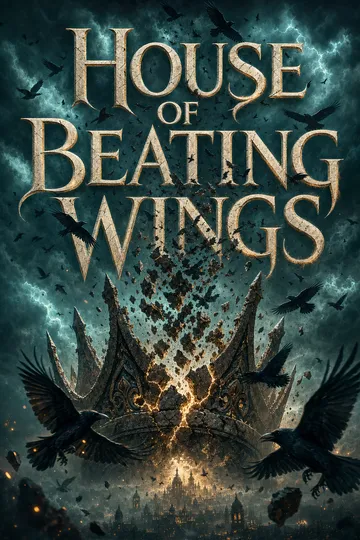
House of Beating Wings received mixed reviews, with an average rating of 4.06 out of 5. Many praised the world-building, magic system, and character development, particularly enjoying the slow-burn romance and intriguing plot. Some readers found the main character, Fallon, frustrating and naive, while others appreciated her growth throughout the story. The book was noted for its unique fantasy elements, including crows and Fae politics. Critics mentioned pacing issues and similarities to other popular fantasy novels. Despite some concerns, many readers eagerly anticipated the sequel.
People Also Read

Characters
Fallon Rossi
Magicless half-blood heroineA twenty-two-year-old tavern server with rounded ears, violet eyes, and no apparent Fae magic, Fallon is defined by fierce compassion for animals and a romantic's hunger to be chosen. Raised on the wrong side of the canal by her grandmother4, she nurses a lifelong love for Prince Dante3 and a secret bond with a serpent she healed as a child13. Beneath her sweetness runs a spine of sarcasm and stubbornness that hardens as the story tests her. Psychologically, Fallon is shaped by exclusion: told she is worthless, she over-invests in the fantasy of a crown as validation. Her journey strips away naivety, replacing borrowed dreams with hard-won self-knowledge. She is honest by choice in a world of liars, yet learns to deceive to survive, mourning the cost each time.
Morrgot
Mysterious iron crowThe first living crow Fallon1 frees from statue form, Morrgot is a shapeshifting creature of iron, feathers, and smoke with molten gold eyes that miss nothing. Proud, sardonic, and lethally protective, he can slip into Fallon's mind and plant visions, guiding Fallon1 across mountain and jungle while withholding as much as he reveals. He kills without hesitation yet shows unexpected tenderness, feeding and shielding her. His true nature and buried history unspool slowly, and much about him is not what it first appears. Driven by vengeance against the Fae crown and devotion to a scattered people, he treats Fallon1 as indispensable, though whether that value is pure utility or something deeper becomes one of the book's central tensions.
Dante Regio
Charming younger princeThe king's11 younger brother, home after four years in the north, Dante has been Fallon's1 protector and crush since childhood, the one Fae who never mocked her ears. Handsome, ambitious, and outwardly fair-minded, he speaks of justice for humans and half-bloods and stirs Fallon's1 dreams of a loving crown. Yet his charm masks entitlement: he keeps lovers without apology, weighs duty above affection, and courts a foreign princess for political gain. Psychologically he is a man raised to prize power and survival, and the pressures of the throne reveal how far his warmth extends and where it stops. His treatment of Fallon1 becomes a barometer of his character, testing whether the boy she loved can become the man she needs.
Ceres (Nonna)
Fierce protective grandmotherA full-blooded Fae of over three centuries, Ceres raised Fallon1 after sacrificing her marriage and status to save her ear-culled daughter5 and half-human granddaughter1. Stern, sharp-tongued, and rarely tender, she guards Fallon1 through concealment, hiding invitations and truths to keep the court from discovering her granddaughter's1 dangerous gifts. Her love expresses itself as vigilance and hard warnings rather than affection, which strains their bond. She carries buried debts and secrets that shaped Fallon's1 entire existence.
Agrippina (Mamma)
Fallon's broken-minded motherFallon's1 mother, whose ears were culled by her own father12 as punishment, leaving her largely catatonic, gazing at the mountains from her armchair. She speaks in fragments that prove eerily prophetic, naming Bronwen9 and directing Fallon1 toward destiny. Once a compassionate woman who tended the poor of Rax, she is now a vessel of grief and cryptic warning, her damaged mind a channel for truths no one else will voice.
Antoni
Flirtatious fisherman with secretsA charming, much-experienced sea captain who ardently courts Fallon1, offering marriage and steady affection. Beneath the roguish surface he trades in secrets and contraband and quietly serves causes larger than himself. Kind and steadfast where Dante3 is cavalier, Antoni forms the third point of Fallon's1 romantic tangle. His hidden allegiances and willingness to risk himself for her mark him as more principled than his playboy reputation suggests.
Sybille
Loyal, sharp-tongued best friendDaughter of the tavern owners and Fallon's1 dearest friend, Sybille is energetic, teasing, and fiercely devoted, forever ready to hold Fallon's1 hand through disaster. Skeptical of Fallon's1 romantic fantasies and quick with a barbed joke, she nonetheless proves willing to stow away and risk everything for her. Her loyalty and irreverence provide warmth and comic ballast amid the darkening quest.
Phoebus Acolti
Wealthy, warm-hearted friendA pure-blooded Fae who trims his hair and rejects his family's prejudices out of solidarity with half-bloods, Phoebus is Fallon's1 beloved, flamboyant, endlessly supportive friend. Generous with his family's fortune and his affection, he helps her in secret schemes without hesitation. His acceptance of Fallon1, whatever she turns out to be, models unconditional friendship, and his safety becomes a stake in the larger conflict.
Bronwen
Blind diviner of prophecyA disfigured, blind seer who traded her sight to a Shabbin sorceress for the ability to glimpse the future. She delivers Fallon's1 prophecy and orchestrates the quest from the shadows, allied to the crow cause. Cryptic and unyielding, she guards her secrets ferociously and reveals only what serves her aims. Her connection to Fallon's1 family runs deeper than the girl first understands.
Silvius Dargento
Menacing army commanderThe commander of the king's11 guard, a handsome, cruel Fae who harasses Fallon1 and covets her while suspecting her of treason. Vindictive and status-obsessed, he shadows her movements and threatens those she loves, serving as a persistent, personal antagonist whose obsession blends bloodlust with desire.
King Marco
Ruthless reigning monarchThe Fae King of Luce, victor of the Battle of Primanivi, a proud, volatile ruler who craves the conquest of Shabbe and treats humans, half-bloods, and serpents with contempt. Charming when it suits him and savage when crossed, he prizes Fallon1 for the strategic value of her supposed serpent-command. His grip on the throne rests on buried atrocities.
Justus Rossi
Estranged general grandfatherFallon's1 grandfather and Marco's11 stern general, who culled his own daughter's5 ears and once came to kill the infant Fallon1. Cold, severe, and loyal to the crown above blood, he embodies the patriarchal cruelty that shaped Fallon's1 fractured family.
Minimus
Fallon's devoted serpentThe scarred pink sea serpent Fallon1 healed and befriended as a child, who returns to her call each night. His loyalty repeatedly endangers and saves her, embodying her mysterious kinship with the creatures the Fae hunt.
Sewell
Devoted human allyA kind, humble human in the western swamplands who shelters Fallon1 and reveres the crow cause, addressing the crow2 as his king. His warmth and sacrifice reveal the depth of human loyalty to the vanquished Crows.
Giana
Steady tavern elder sisterSybille's7 older, more sober sister, a half-blood who works the tavern and quietly resents the Fae hierarchy. Protective of Fallon1, worldly, and secretly connected to the resistance, she offers hard truths and practical help.
Plot Devices
The Five Iron Crows
Quest objects that shapeshiftFive statues of iron crows, pinned in place by obsidian spikes and scattered across the kingdom, form the spine of Fallon's1 quest. Each, when its obsidian is removed, reverts from metal to living crow to smoke, and as they are freed they merge into a single, ever-larger being with growing powers of speech, vision, and eventually human form. Introduced through Bronwen's9 prophecy and first encountered in the Acolti vault, they drive the entire plot as Fallon1 hunts them from palace to ravine to poisoned grove to sunken galleon. Their gradual reunion serves as both physical quest structure and metaphor for restoration of a shattered people, escalating the stakes and the crow companion's abilities with each recovery.
Bronwen's Prophecy
Destiny lure and manipulationThe blind diviner's9 promise that freeing five iron crows will make Fallon1 queen sets the story in motion and rationalizes her every dangerous choice. Delivered in cryptic fragments and reinforced by Fallon's1 mother's5 murmurs, the prophecy functions as both compass and cage: it points Fallon1 toward action while binding her agency to Bronwen's9 unseen design. Its careful wording, promising rulership without specifying alongside whom, plants ambiguity the narrative exploits. The prophecy also raises the book's central question of free will versus fate, since Fallon1 repeatedly senses she is being steered even as she believes she chooses. Its true architecture, and the identities of those it serves, unfolds gradually across the journey.
Fallon's Immunity
Reveals hidden heritageFallon's1 inexplicable resistance to iron, salt, and obsidian, metals and minerals that variously kill or compel the Fae, marks her as fundamentally other. Established early through casual detail (she scrubs stains by hand, having no magic) and dramatized when the obsidian spike merely gashes her, the immunity makes her the only being capable of freeing the crows. It fuels theories that she is a changeling or something rarer, driving the identity mystery. The device works structurally as both key and clue: it explains why the quest requires her specifically, and its ultimate origin unlocks the truth of her parentage. Her resistance to salt also lets her lie under truth-oaths, a crucial survival tool.
Salt Truth-Compulsion
Interrogation and irony engineIn Luce, salt placed on a Fae tongue compels honesty, making it the instrument of oaths and interrogations. The device raises tension in every scene where Fallon1 is questioned, since discovery could cost her life. The delicious irony is that Fallon1, immune to salt, can lie freely even while appearing to swear true, which she exploits during her hearing before the king11 and in confrontations with the commander10. The mechanism also exposes others' secrets, as when the commander10 is forced to reveal uncomfortable truths. It reinforces the book's obsession with concealment and honesty, weaponizing Fallon's1 difference into an advantage that repeatedly saves her from a court hungry to convict her.
The Mind Bond
Crow-to-Fallon telepathyOnce two crows merge, the creature gains the ability to speak directly into Fallon's1 mind and to send her visions of past and present events. This mind-walking becomes the primary vehicle for exposition, delivering the hidden history of Primanivi, the Sky Kingdom, her father, and Marco's11 crimes in vivid immersive scenes rather than dry telling. It also builds intimacy and friction between Fallon1 and her companion2, whose ability to read her thoughts she finds both invasive and, eventually, comforting. The bond structures the second half of the novel, converting a silent guide into a constant interlocutor whose voice steadies, provokes, and ultimately deceives her, making the telepathy central to both plot mechanics and emotional development.
The Kingdom of Crows Series

About the Author


Download PDF
Download EPUB
.epub digital book format is ideal for reading ebooks on phones, tablets, and e-readers.








































