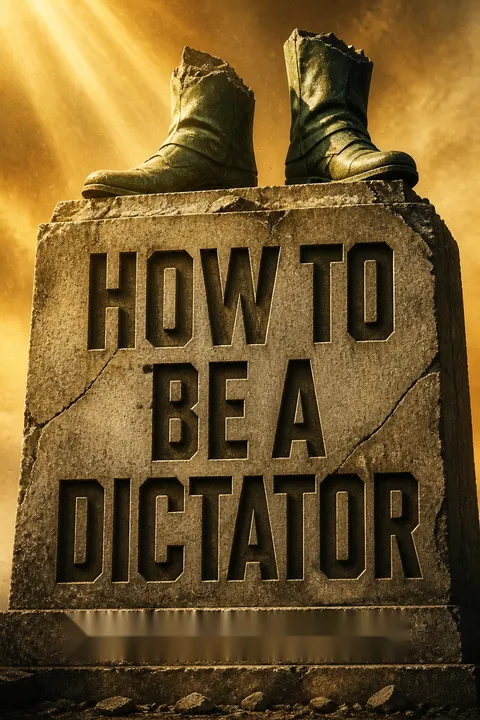

Key Takeaways
1. Dictators' Cults: A Paradox of Manufactured Consent and Fear
The paradox of the modern dictator is that he has to manufacture the illusion of popular support.
Beyond brute force. While violence and terror are foundational to dictatorial rule, they are rarely sufficient for long-term stability. Dictators understand that naked power has a shelf life; it must be cloaked in the guise of popular will. This necessitates the creation of a "cult of personality," a carefully constructed facade of widespread adoration that masks the underlying coercion.
A strategic tool. The cult of personality serves as a powerful psychological weapon. It aims to instill fear, destroy common sense, enforce obedience, and isolate individuals by making everyone a liar. When everyone is compelled to praise the leader, it becomes impossible to discern genuine dissent, making alliances and coups exceedingly difficult to organize.
Architects of their own myth. Dictators are not merely passive recipients of adulation; they are the primary architects of their own cults. From meticulously staging public appearances to personally editing propaganda, they exert granular control over every aspect of their public image. This self-glorification is a core decision, driven by their inherent insecurity and desire for absolute, unquestioned authority.
2. From Obscurity to Infallibility: The Dictator's Image Transformation
He was the man chosen by God to execute his will.
Humble beginnings, grand destiny. Many dictators, like Mussolini, Hitler, and Ceauşescu, started from unremarkable or even disadvantaged backgrounds. Their cults often began by transforming these humble origins into a narrative of a divinely chosen individual, destined to save the nation. This narrative positioned them as unique figures, rising against all odds through sheer will and genius.
The messianic narrative. This transformation often involved portraying the leader as a messianic figure, a "savior" or "redeemer" who alone could guide the nation through crisis. Propaganda machines worked tirelessly to imbue them with superhuman qualities, presenting them as infallible, omniscient, and indispensable. This elevated status made questioning their authority akin to questioning fate itself.
Symbolic rebirth. The process of image transformation was a continuous effort, involving a symbolic "rebirth" of the leader. For instance, Mussolini's "March on Rome" was largely a manufactured event, and Hitler's "Beer Hall Putsch" failure was reframed as a martyrdom. These events were then mythologized to cement their heroic status and justify their ascent to absolute power.
3. Propaganda and Control: The Pillars of Personality Cults
The entire country was transformed into a stage for a meticulously rehearsed performance.
Total information control. Dictators understand that controlling information is paramount. They swiftly suppress free speech, censor media, and rewrite history to align with their preferred narrative. Every newspaper, radio broadcast, and film is repurposed to disseminate the leader's message and glorify their achievements, creating an echo chamber of praise.
Ubiquitous presence. Modern technology allowed dictators to achieve an unprecedented level of omnipresence. From giant billboards and building-sized portraits to mandatory radio broadcasts and films, the leader's image and voice saturated every aspect of public life. This constant exposure aimed to normalize their absolute authority and make their presence feel inescapable.
Indoctrination from birth. The cult extended into every social institution, particularly education. Children were indoctrinated from a young age, learning to revere the leader through textbooks, songs, and daily rituals. Schools became training grounds for loyalty, ensuring that future generations would unquestioningly accept the dictator's infallibility and the party's absolute rule.
4. The Human Touch: Crafting an Accessible Yet Divine Image
He was a man of simple habits, living in a loess cave and growing his own tobacco.
Relatability as a tactic. Despite their divine portrayal, many dictators cultivated an image of accessibility and humility. Mussolini was depicted as a tireless worker, always available to his people. Stalin was presented as a quiet, unassuming figure, a "humble servant" of the party. Mao lived simply in a cave, and Duvalier was "Papa Doc," the caring village doctor.
Charming the elite. Dictators also actively charmed foreign intellectuals, journalists, and politicians. They understood that external validation could legitimize their rule and silence domestic critics. These influential visitors, often eager to believe in a "better society," were carefully managed and presented with a curated reality, leading them to publish glowing accounts that further bolstered the dictator's image.
The "Father of the People" archetype. This humanizing aspect often culminated in the "Father of the People" archetype. Stalin became "batiushka," the caring "little father" of the nation. Kim Il-sung was the "fatherly leader" guiding his people. This paternal image fostered a sense of dependence and loyalty, making it harder for citizens to conceive of a world without their benevolent guide.
5. Eliminating Rivals: The Ruthless Consolidation of Power
The cult of personality served to dwarf allies and enemies alike, forcing them to work together under the dictator’s thumb.
Internal purges. Dictators often rise to power by eliminating or marginalizing rivals within their own ranks. Stalin's "Great Terror" and Mao's Rectification Movement systematically purged perceived threats, ensuring that only the most loyal and subservient individuals remained. This created a climate of intense fear and competition, where flattery became a survival mechanism.
Divide and conquer. Leaders like Hitler and Ceauşescu actively fostered competition among their subordinates, preventing anyone from building an independent power base. By constantly reshuffling positions and encouraging infighting, they ensured that all real power remained centralized in their hands, making them the ultimate arbiters of disputes.
Loyalty above competence. The relentless demand for absolute loyalty often meant that competence was sacrificed for subservience. Dictators surrounded themselves with sycophants and opportunists who would never challenge their decisions, no matter how flawed. This created a self-reinforcing loop where the leader's delusions of grandeur went unchecked, leading to increasingly disastrous outcomes.
6. Economic Ruin: The Cost of Ideological Purity and Grandeur
The more the people suffered, the more extravagant the cult of Ceauşescu became.
Grandiose visions, devastating reality. Dictators often embarked on ambitious economic projects, driven by ideological purity or a desire for self-sufficiency. Mussolini's "Battles" for grain and lira, Hitler's Four-Year Plan, Stalin's Five-Year Plans, Mao's Great Leap Forward, and Ceauşescu's systematization all aimed to transform their nations rapidly. However, these top-down, often irrational, plans consistently led to:
- Widespread shortages
- Famine
- Economic collapse
- Massive human suffering
Sacrifice for the cult. Resources that could have alleviated poverty or improved living standards were instead diverted to fuel the cult of personality. The construction of monumental buildings, statues, and propaganda materials consumed vast national wealth. For example:
- Ceauşescu's Palace of the People consumed a third of Romania's national budget.
- Mengistu's 10th-anniversary celebrations cost millions while millions starved.
The "sacrifice" narrative. Propaganda framed these hardships as necessary sacrifices for a glorious future, or as the result of external enemies. The leader, meanwhile, was portrayed as tirelessly working for the people's welfare, often unaware of the true suffering. This narrative deflected blame from the dictator and reinforced their image as a benevolent, if distant, figure.
7. The Illusion of Omniscience: Isolation and Disastrous Decisions
He was trapped in his own worldview, a slave to his own myth.
Self-imposed isolation. As their cults grew, dictators became increasingly isolated from reality. Surrounded by sycophants who dared not deliver bad news, they lost touch with the true state of their nations. This isolation fostered an unshakeable belief in their own infallibility, leading them to make critical decisions based on intuition rather than accurate information.
Unchecked power, fatal errors. With no checks and balances, and no trusted advisors to offer dissenting opinions, dictators made unilateral decisions with devastating consequences. Hitler's interference in military strategy, Mao's disastrous Great Leap Forward, and Mussolini's overestimation of his military strength are prime examples of how unchecked power led to catastrophic misjudgments.
Paranoia and distrust. The very insecurity that fueled their cults also led to extreme paranoia. Dictators constantly suspected betrayal, even from their closest allies. This pervasive distrust meant they had no true friends or reliable partners, further entrenching their isolation and making them vulnerable to their own flawed judgment.
8. The Fragility of Power: Cults Shatter When Fear Evaporates
When fear evaporated, the entire edifice collapsed.
Instantaneous collapse. Despite their seemingly unshakeable power, personality cults proved remarkably fragile. When the underlying fear that compelled outward conformity dissipated, the entire edifice of adoration could crumble almost instantly. The fall of the Berlin Wall, the execution of Ceauşescu, and the flight of Mengistu all demonstrated how quickly these seemingly invincible cults could vanish.
Public catharsis. The immediate aftermath of a dictator's fall often saw a public outpouring of long-suppressed resentment. Statues were toppled, portraits defaced, and symbols of the regime were destroyed. This cathartic rejection revealed the true nature of the "popular support" – a performance driven by terror, not genuine affection.
The enduring legacy of control. While the overt cults may disappear, the mechanisms of control often leave a lasting impact. In some cases, like North Korea, the cult is successfully passed down through generations. In others, like China, the party learns from past mistakes, banning "personal cults" while still maintaining tight control over information and dissent, demonstrating that the lessons of manufactured consent can be adapted for new eras.
Review Summary
How to Be a Dictator explores the cult of personality surrounding eight 20th-century dictators. Readers found it informative and fascinating, praising its accessible writing and intriguing facts. Some felt it lacked depth or new insights for those already familiar with the subject. The book's focus on personality cults and their role in maintaining power was appreciated. While some desired more analysis or coverage of additional dictators, many recommended it as an engaging introduction to the topic, particularly for those interested in 20th-century history and politics.
People Also Read




FAQ
What is "How to Be a Dictator: The Cult of Personality in the Twentieth Century" by Frank Dikötter about?
- Explores Cult of Personality: The book examines how eight twentieth-century dictators built and maintained cults of personality to consolidate and sustain their power.
- Case Studies of Dictators: It profiles Mussolini, Hitler, Stalin, Mao Zedong, Kim Il-sung, Duvalier, Ceaușescu, and Mengistu, analyzing their rise and fall.
- Mechanisms of Control: Dikötter details the tools and strategies—propaganda, terror, myth-making, and manipulation of history—used to create an aura of invincibility and legitimacy.
- Universal Patterns: The book identifies common patterns among dictators, regardless of ideology or geography, focusing on the psychological and social mechanisms behind their rule.
Why should I read "How to Be a Dictator" by Frank Dikötter?
- Insight into Modern Authoritarianism: The book provides a historical lens to understand how modern dictatorships function and why personality cults remain relevant.
- Comparative Perspective: By comparing different regimes, readers gain a nuanced understanding of both the similarities and unique features of each dictatorship.
- Warning for Democracies: Dikötter’s analysis serves as a cautionary tale about the fragility of democratic institutions and the dangers of unchecked power.
- Engaging Storytelling: The book is accessible, well-researched, and filled with vivid anecdotes, making complex history engaging for a broad audience.
What are the key takeaways from "How to Be a Dictator"?
- Cult of Personality is Central: Dictatorship in the twentieth century often revolved around the deliberate construction of a leader’s myth and image.
- Fear and Flattery Go Hand-in-Hand: Dictators used both terror and orchestrated adulation to isolate individuals and prevent organized resistance.
- Manipulation of History: Leaders rewrote history to erase inconvenient truths and elevate their own roles, often erasing the contributions of rivals or foreign supporters.
- Vulnerability of Dictators: Despite their power, dictators were often deeply insecure, paranoid, and dependent on the very cults they created.
Who are the eight dictators profiled in "How to Be a Dictator" and why were they chosen?
- Benito Mussolini (Italy): The prototype of the modern dictator, pioneering mass propaganda and public spectacle.
- Adolf Hitler (Germany): Master of myth-making and mass mobilization, whose cult of personality enabled catastrophic violence.
- Joseph Stalin (Soviet Union): Built a god-like image through terror, purges, and the rewriting of history.
- Mao Zedong (China): Combined Marxist ideology with Chinese tradition, orchestrating mass campaigns and the Cultural Revolution.
- Kim Il-sung (North Korea): Created a dynastic cult, blending nationalism, myth, and total isolation.
- François Duvalier (Haiti): Used voodoo symbolism and terror to rule as a mystical, omnipotent figure.
- Nicolae Ceaușescu (Romania): Engineered a grotesque personality cult, blending nationalism and communism.
- Mengistu Haile Mariam (Ethiopia): Emulated Soviet-style dictatorship, using violence and propaganda to maintain control.
How does Frank Dikötter define and analyze the "cult of personality" in dictatorships?
- Deliberate Construction: The cult is not spontaneous but carefully engineered by the dictator and their apparatus.
- Tools of the Cult: Includes statues, portraits, slogans, staged public events, and the rewriting of history and ideology.
- Purpose of the Cult: To create an illusion of unanimous support, isolate individuals, and make dissent dangerous or unthinkable.
- Psychological Impact: The cult blurs the line between genuine belief and forced compliance, making it difficult to distinguish true support from fear.
What methods and strategies did dictators use to build and sustain their cults of personality, according to "How to Be a Dictator"?
- Propaganda and Media Control: Dictators monopolized newspapers, radio, film, and later television to broadcast their image and message.
- Public Rituals and Spectacle: Mass rallies, parades, and orchestrated displays of loyalty reinforced the leader’s centrality.
- Rewriting History: Regimes erased rivals and inconvenient facts, presenting the dictator as the sole architect of national progress.
- Reward and Punishment: Flattery was rewarded, while dissent or insufficient enthusiasm could lead to imprisonment or death.
How did the cult of personality affect ordinary people and society under these dictatorships?
- Enforced Participation: Citizens were compelled to participate in rituals, display portraits, and recite slogans, regardless of personal belief.
- Atmosphere of Fear: The inability to distinguish genuine from feigned loyalty fostered mutual suspicion and social atomization.
- Loss of Truth and Trust: Constant propaganda and forced adulation eroded common sense and made it dangerous to express honest opinions.
- Isolation and Loneliness: People became isolated, unable to trust even friends or family, which made collective resistance nearly impossible.
What role did ideology play in the cults of personality described in "How to Be a Dictator"?
- Ideology as a Tool: While some dictators had strong ideological commitments, many used ideology flexibly to serve personal power.
- Personalization of Doctrine: Dictators often inserted their own names and ideas into official ideology (e.g., Mao Zedong Thought, Kimilsungism).
- Supremacy of the Leader: Loyalty to the leader often superseded loyalty to any abstract principle or party.
- Shifting Justifications: Ideological tenets could be changed or reversed as needed to justify the leader’s actions and maintain the cult.
How does "How to Be a Dictator" explain the eventual downfall or collapse of these dictatorships?
- Internal Contradictions: The cult of personality breeds paranoia, poor decision-making, and isolation at the top, undermining effective governance.
- Loss of Fear or Faith: When fear dissipates or the cult’s illusions are shattered, regimes can collapse rapidly, as seen in Romania and Ethiopia.
- Dependency on the Leader: Systems built around a single figure often lack resilience and crumble when the leader dies or is overthrown.
- External Pressures: Economic crises, war, or foreign intervention can expose the hollowness of the cult and accelerate collapse.
What are some of the most memorable quotes from "How to Be a Dictator" and what do they mean?
- "Dictators deceive their people, but they also deceive themselves." – Highlights how leaders become trapped by their own propaganda and lose touch with reality.
- "The cult of personality is not about belief or persuasion, but about creating confusion, destroying common sense, and enforcing obedience." – Emphasizes the cult’s function as a tool of control, not genuine conviction.
- "When everyone is a liar, it becomes impossible to know who is an ally." – Shows how enforced flattery and suspicion undermine trust and solidarity.
- "The greatest threat to a dictator is not just the people, but themselves." – Suggests that the internal dynamics of dictatorship are inherently self-destructive.
How does Frank Dikötter’s approach in "How to Be a Dictator" differ from other books on dictatorship or totalitarianism?
- Focus on Personality Cults: Rather than analyzing ideology or institutions alone, Dikötter centers his analysis on the construction and consequences of the leader’s image.
- Comparative and Global Scope: The book covers dictators from Europe, Asia, Africa, and the Americas, highlighting universal patterns.
- Use of Anecdotes and Primary Sources: Dikötter draws on diaries, letters, propaganda materials, and eyewitness accounts to illustrate the lived experience of dictatorship.
- Critical of Simplistic Explanations: He challenges the idea that dictatorships are sustained by mass belief, emphasizing coercion, manipulation, and the ambiguity of public support.
What lessons does "How to Be a Dictator" offer for understanding contemporary politics and the risk of new personality cults?
- Vigilance Against Authoritarianism: The book warns that the mechanisms of personality cults can reappear in new forms, even in nominally democratic societies.
- Importance of Institutions: Strong, independent institutions and a free press are crucial safeguards against the rise of unchecked leaders.
- Dangers of Flattery and Isolation: Leaders surrounded by sycophants and shielded from criticism are prone to disastrous decisions.
- Need for Historical Awareness: Understanding the history of personality cults helps societies recognize early warning signs and resist the allure of charismatic, authoritarian figures.
Download PDF
Download EPUB
.epub digital book format is ideal for reading ebooks on phones, tablets, and e-readers.








































