
Key Takeaways
1. The Osage became the wealthiest people per capita due to oil.
The Osage were considered the wealthiest people per capita in the world.
Sudden, unimaginable wealth. In the early twentieth century, the Osage Nation, who had been driven onto a rocky, seemingly worthless reservation in Oklahoma, discovered they were sitting on some of the largest oil deposits in the United States. This black gold transformed their lives overnight, yielding millions of dollars in royalties that were distributed quarterly to registered members on the tribal roll.
Public fascination and resentment. The sudden prosperity of the "red millionaires" transfixed the American public, sparking sensationalized media reports about their mansions, chauffeured cars, and lavish spending. However, this fascination quickly curdled into deep-seated racial resentment among white settlers who coveted the tribe's wealth.
The headright system. To protect the tribe's mineral trust, the 1906 Allotment Act established "headrights"—shares in the oil royalties that could only be inherited, never sold. This legal structure, meant to safeguard the Osage, ironically painted a target on their backs, as white predators realized the only way to acquire these fortunes was through marriage or murder.
- In 1923 alone, the tribe took in more than $30 million (equivalent to over $400 million today).
- Headrights could not be bought or sold, only inherited by legal heirs.
- The public viewed the Osage with a mix of awe and racist contempt.
2. A systematic Reign of Terror targeted Osage families for their headrights.
The perennial question in the Osage land is, ‘who will be next?’
A campaign of death. Between 1921 and 1926, a period known as the "Reign of Terror" saw dozens of wealthy Osage die under highly suspicious circumstances. The family of Mollie Burkhart, a full-blooded Osage woman, was systematically targeted, beginning with the disappearance and murder of her sister Anna Brown, followed by the suspected poisoning of her mother, Lizzie, and the bombing of her sister Rita.
Diverse and brutal methods. The killers did not rely on a single method, making the crimes incredibly difficult to track and investigate. Victims were shot in lonely ravines, poisoned slowly with tainted medicine or alcohol, and blown up in their own homes while they slept.
A climate of paralyzing fear. The mounting death toll created an atmosphere of absolute terror across the reservation, forcing residents to keep electric lights burning around their homes all night to deter stealthy assassins. Neighbors suspected neighbors, and the community realized that anyone who tried to investigate the crimes was likely to be murdered next.
- Anna Brown was found shot in the back of the head in a ravine in 1921.
- Rita and Bill Smith's house was completely demolished by a bomb in 1923.
- The official death toll reached at least twenty-four, but the actual number was much higher.
3. The federally imposed "guardianship" system institutionalized the exploitation of the Osage.
The blackest chapter in the history of this State will be the Indian guardianship over these estates.
Institutionalized racism. Contending that the Osage were unable to manage their sudden wealth, the U.S. government passed laws requiring many tribal members to have white "guardians" to oversee their finances. This designation of "incompetency" was based strictly on the quantum of Indian blood, effectively rendering full-blooded Osage second-class citizens in their own land.
A license to steal. The guardianship system created an incredibly lucrative and corrupt industry, where prominent white citizens—including businessmen, lawyers, and politicians—were appointed to manage Osage estates. These guardians routinely embezzled millions of dollars, overcharged their wards for basic goods, and pocketed kickbacks from local merchants.
Total financial control. Restricted Osage were legally barred from withdrawing more than a few thousand dollars annually from their own trust funds, even for medical emergencies or education. This absolute control over Osage fortunes made the guardianships highly coveted political plums and left the Osage completely vulnerable to financial and physical ruin.
- Full-blooded Osage were automatically deemed "incompetent" and assigned guardians.
- Guardians routinely stole an estimated $8 million directly from restricted accounts before 1925.
- The system was legally sanctioned and overseen by the Office of Indian Affairs.
4. Local law enforcement and institutions were deeply complicit in the crimes.
There’s a lot of talk. But you have to have proof, not talk.
A wall of silence. Local law enforcement, led by corrupt figures like Sheriff Harve Freas, repeatedly ignored or covered up the murders of the Osage. Inquests were perfunctory, evidence was routinely destroyed or manufactured, and files mysteriously vanished from offices, ensuring that no local investigation could ever succeed.
Complicit professionals. The conspiracy extended far beyond outlaws and bootleggers to include the county's most respected professionals. Doctors, such as the Shoun brothers, falsified death certificates to attribute poisonings to "peculiar wasting illnesses," while undertakers charged exorbitant rates to bury the victims and cover up physical evidence.
A rigged judicial system. The local legal machinery was entirely controlled by the conspirators, who used bribery, jury tampering, and intimidation to protect themselves. Any honest investigator or witness who threatened to expose the truth was swiftly eliminated, creating a lawless vacuum where justice was impossible to obtain.
- Sheriff Freas was eventually removed from office for failing to enforce the law.
- The bullet that killed Anna Brown was intentionally stolen during her autopsy.
- Witnesses and investigators, like attorney W.W. Vaughan, were murdered to keep them silent.
5. J. Edgar Hoover used the Osage crisis to reform and empower the FBI.
This Bureau cannot afford to have a public scandal visited upon it.
A young director's ambition. In 1924, a twenty-nine-year-old J. Edgar Hoover took command of the Bureau of Investigation, which was reeling from the corruption of the Teapot Dome scandal. When the bureau's early attempts to solve the Osage murders failed catastrophically—even resulting in an undercover informant committing bank robbery and murder—Hoover faced a career-threatening public scandal.
The birth of scientific policing. To salvage his reputation and build his bureaucratic empire, Hoover used the Osage case to implement sweeping reforms, replacing old-school frontier detectives with college-educated "Boy Scouts." He established centralized fingerprint repositories, standardized reporting methods, and championed the use of forensic science to create a highly disciplined, national police force.
A powerful mythos. Hoover carefully managed the public narrative of the Osage investigation, feeding sensationalized stories to the press to portray his agents as invincible, scientific crime-fighters. This carefully crafted mythology helped transform the obscure Bureau of Investigation into the powerful Federal Bureau of Investigation (FBI), cementing Hoover's decades-long grip on power.
- Hoover took over the bureau in 1924 amid intense political pressure.
- He standardized the bureau's filing systems and created the Identification Division.
- The Osage case became the FBI's first major, highly publicized homicide investigation.
6. Tom White and his undercover agents used modern and traditional detective work to crack the case.
He was an impressive sight in his large, suede Stetson, and a plumb-line running from head to heel would touch every part of the rear of his body.
The old-school lawman. To resolve the crisis, Hoover turned to Tom White, a former Texas Ranger and one of the few experienced "Cowboys" left in the bureau. White was a towering, stoic investigator who understood the violent realities of the frontier but also respected the need for meticulous, legally admissible evidence.
The undercover operation. Recognizing that local paranoia and corruption prevented witnesses from speaking openly, White assembled a specialized team of undercover agents to infiltrate the county. These agents assumed various disguises—including cattlemen, an insurance salesman, and an Indian medicine man—to quietly gather intelligence from the community and the criminal underworld.
Building an unbroken chain. White and his team methodically dismantled the false alibis and manufactured evidence created by the conspirators. By combining traditional tracking skills with modern forensic analysis, they slowly turned key accomplices against each other, building an airtight case that could withstand the corrupt local courts.
- Tom White was a legendary former Texas Ranger who joined the bureau in 1917.
- Agent John Wren, a part-Ute investigator, successfully infiltrated the Osage community.
- The team used undercover tactics to bypass the wall of local silence and fear.
7. William K. Hale acted as a wolf in sheep's clothing, orchestrating the murders of his own family-in-law.
I’m too slick and keen to catch cold.
The King of the Osage Hills. William K. Hale was revered as Osage County's greatest benefactor, a powerful self-made cattleman who donated to charities, served as a deputy sheriff, and claimed to be the "true friend" of the Osage. In reality, he was a cold-blooded mastermind who used his respectable facade to mask a vast criminal empire.
A monstrous family plot. Hale orchestrated the systematic elimination of Mollie Burkhart's family to funnel their oil headrights directly to his nephew, Ernest Burkhart, who was married to Mollie. Ernest, completely dominated by his uncle, acted as the inside man, sharing a bed with Mollie and raising their children while helping to plot the murders of her sisters and mother.
The ultimate betrayal. Hale's conspiracy was breathtaking in its cruelty, requiring Ernest to slowly poison Mollie herself once the other heirs were dead. Despite his public displays of grief and his role as a pallbearer at the victims' funerals, Hale was ultimately exposed by White's investigation and convicted of first-degree murder.
- Hale was a prominent, politically connected cattleman who dominated the county.
- Ernest Burkhart confessed to his role in the conspiracy after being confronted with evidence.
- Hale was sentenced to life imprisonment at Leavenworth penitentiary in 1926.
8. The conspiracy was a systemic "Indian business" far wider than the FBI's official narrative.
There are so many of these murder cases. There are hundreds and hundreds.
A convenient scapegoat. The FBI's official narrative portrayed the Osage murders as the work of a single, isolated conspiracy led by William K. Hale. By focusing solely on Hale and his immediate henchmen, the bureau could declare a swift victory, protect Hoover's reputation, and avoid exposing the deeper, systemic rot that plagued the entire state.
A vast, complicit network. In truth, the exploitation of the Osage was a highly organized, multi-layered criminal enterprise that involved virtually every sector of white society. Countless guardians, lawyers, doctors, bankers, and lawmen operated independently to swindle and murder wealthy Osage, knowing that the legal system would protect them.
Unpunished crimes. Decades after the FBI closed its files, independent investigations revealed that dozens of other suspicious Osage deaths were never investigated or prosecuted. This systemic "Indian business" allowed hundreds of murderers to escape justice, leaving a trail of unrecorded victims whose fortunes were stolen by respectable citizens.
- The FBI officially estimated twenty-four murders, but the actual toll was likely in the hundreds.
- Many guardianships were used as legal covers to slowly poison or neglect Osage wards.
- The vast majority of these crimes were never prosecuted, and the stolen wealth was never recovered.
9. The legacy of the Reign of Terror remains an unhealed wound for the Osage Nation.
This land is saturated with blood.
A generational trauma. The Reign of Terror did not end with the convictions of Hale and Burkhart; its devastating psychological and financial effects have reverberated through generations of Osage families. The systematic slaughter of their ancestors stripped the tribe of its leadership, its wealth, and its sense of security, leaving an enduring legacy of distrust and grief.
The fight for sovereignty. In the decades following the murders, the Osage Nation fought tirelessly to dismantle the corrupt guardianship system and reclaim control over their mineral trust. Though the oil boom has faded, the tribe has successfully rebuilt its institutions, ratified a new constitution, and secured a historic $380 million settlement from the federal government for historical mismanagement.
An open wound. For the descendants of the victims, the past is not a distant historical event but a living, painful reality. The graves of the murdered families stand as silent witnesses to a tragedy that was largely erased from American history, serving as a stark reminder of the original sin of greed and violence from which the country was born.
- Mollie Burkhart was finally restored to legal competency in 1931.
- The Osage Nation successfully sued the federal government for $380 million in 2011.
- The memory of the Reign of Terror is preserved through tribal oral histories and traditions.
Review Summary
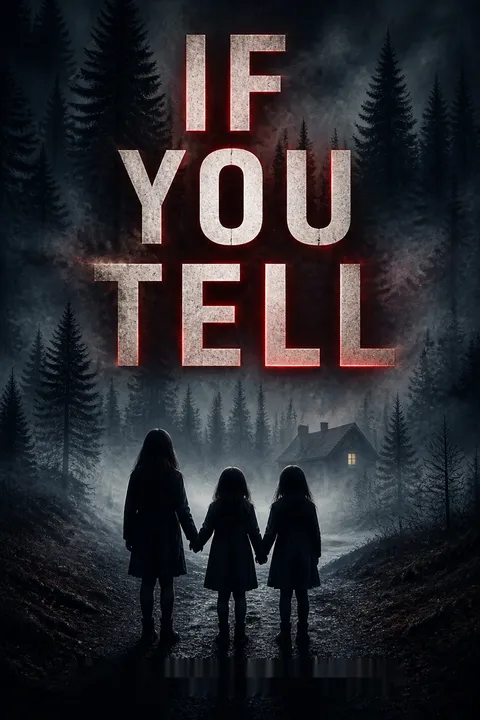
If You Tell is a disturbing true crime book that deeply affects readers. Many found it well-researched but repetitive and poorly written. The story of Shelly Knotek's abuse shocked and horrified most reviewers. Some praised the resilience of the survivors, while others felt unsatisfied with the lack of psychological insight. The graphic content was difficult for many to process. Opinions were divided on the book's merits, with ratings ranging from 1 to 5 stars. Overall, readers agreed the subject matter was deeply unsettling.
People Also Read







FAQ
What is If You Tell: A True Story of Murder, Family Secrets, and the Unbreakable Bond of Sisterhood about?
- True Crime Horror Story: The book chronicles the horrific abuse inflicted by Shelly Knotek on her daughters, Nikki, Sami, and Tori, and others who came into her orbit.
- Family Secrets Unveiled: It explores the complex dynamics of a family bound by fear and the devastating consequences of keeping secrets.
- Sisterhood as Survival: The narrative emphasizes the unbreakable bond between the sisters as they navigate their traumatic childhoods and seek justice.
Why should I read If You Tell: A True Story of Murder, Family Secrets, and the Unbreakable Bond of Sisterhood?
- Compelling True Crime: The book offers a gripping and disturbing look into a real-life case of extreme abuse and manipulation.
- Emotional Depth: It delves into the psychological and emotional impact of trauma, providing a profound understanding of the characters' experiences.
- Triumph of the Human Spirit: The story highlights the resilience and strength of the sisters as they fight for survival and seek justice, offering a message of hope.
What is the background of If You Tell: A True Story of Murder, Family Secrets, and the Unbreakable Bond of Sisterhood?
- Small-Town America: The story is set in the Pacific Northwest, in small towns like Battle Ground and Raymond, Washington, where a facade of normalcy hides dark secrets.
- Dysfunctional Family Patterns: The book explores the cycle of abuse and dysfunction that spans generations, highlighting the impact of family history on individual lives.
- True Crime Context: It is rooted in the true crime genre, drawing from real events and investigative documents to create a chilling and authentic narrative.
What are the most memorable quotes in If You Tell: A True Story of Murder, Family Secrets, and the Unbreakable Bond of Sisterhood?
- "Every now and then, she literally shudders when she hears it, a visceral reaction to a word that scrapes at her like the talons of an eagle, cutting and slicing her skin until blood runs out. To look at her, no one would know what she's lived through and survived.": This quote from the prologue highlights the lasting trauma experienced by Nikki and the hidden nature of her suffering.
- "She told me every single day that she hated me. I'm not joking. It was honestly every day.": Lara's recollection of Shelly's behavior as a child reveals the deep-seated animosity and cruelty that defined Shelly's character from a young age.
- "You need to call him Dad," she said.: This recurring instruction from Shelly to Nikki, whenever a new boyfriend entered their lives, underscores the instability and manipulation that characterized their family dynamics.
What writing style, narrative choices, and literary techniques does Gregg Olsen use?
- Detailed and Immersive: Olsen employs a detailed and immersive writing style, drawing the reader into the dark and disturbing world of the Knotek family.
- Multiple Perspectives: The narrative shifts between the perspectives of the sisters, their stepmother, and other key figures, providing a comprehensive view of the events.
- Foreshadowing and Suspense: Olsen uses subtle foreshadowing and suspenseful pacing to build tension and keep the reader engaged, revealing the horrors gradually.
Hidden Details & Subtle Connections
What are some minor details that add significant meaning?
- The Dog-Eared Magazine: The discovery of a "True Confessions" magazine with a cover story about a father raping his daughter foreshadows Shelly's false accusation against her own father, revealing her manipulative nature.
- Anna's Shed: The detail of Anna Watson's husband sleeping in a shed outside the house foreshadows the isolation and cruelty that will later be inflicted on others by Shelly.
- The Missing Invitations: The fact that Shelly never mailed wedding invitations to Randy's family reveals her controlling nature and her desire to isolate him from his loved ones.
What are some subtle foreshadowing and callbacks?
- Shelly's Early Lies: Shelly's childhood lies and manipulations foreshadow her later, more extreme acts of deceit and abuse, establishing a pattern of behavior.
- The Cabbage Patch Doll: The Cabbage Patch doll that Shelly takes away from Nikki foreshadows the pattern of giving and then taking away, a form of psychological abuse she uses throughout the book.
- The Broken Glass: Shelly's habit of putting broken glass in the children's shoes foreshadows the physical violence and cruelty she will later inflict on Kathy and others.
What are some unexpected character connections?
- Anna and Shelly: The connection between Shelly and her paternal grandmother, Anna, reveals a pattern of cruelty and control that spans generations, highlighting the influence of family history.
- Kathy and Shelly: The friendship between Kathy and Shelly, which initially seems like a source of support, quickly devolves into a horrific cycle of abuse, revealing Shelly's manipulative nature.
- Dave and Shane: The relationship between Dave and Shane, which starts with a sense of camaraderie, ends in betrayal and violence, highlighting the destructive power of Shelly's influence.
Who are the most significant supporting characters?
- Lara Watson: As Shelly's stepmother, Lara provides a crucial perspective on Shelly's early life and her manipulative behavior, serving as a voice of reason and concern.
- Kathy Loreno: Kathy's tragic story highlights the extent of Shelly's cruelty and the devastating impact of her abuse on those who trusted her.
- Shane Watson: Shane's presence in the Knotek household reveals the cycle of abuse and the lengths to which Shelly will go to maintain control, and his bond with Nikki underscores the importance of family.
Psychological, Emotional, & Relational Analysis
What are some unspoken motivations of the characters?
- Shelly's Need for Control: Shelly's unspoken motivation is her insatiable need for control, which drives her to manipulate and abuse those around her, seeking power and validation through their suffering.
- Dave's Desire for Acceptance: Dave's unspoken motivation is his desire for acceptance and love from Shelly, which leads him to become complicit in her abuse, even when he knows it is wrong.
- The Sisters' Need for Connection: The sisters' unspoken motivation is their need for connection and support, which drives them to form an unbreakable bond and seek justice for the wrongs they have endured.
What psychological complexities do the characters exhibit?
- Shelly's Narcissism: Shelly exhibits narcissistic traits, including a lack of empathy, a need for admiration, and a sense of entitlement, which fuel her abusive behavior.
- Dave's Passivity: Dave's passivity and inability to stand up to Shelly reveal a deep-seated insecurity and a fear of confrontation, making him a willing participant in her crimes.
- The Sisters' Resilience: The sisters exhibit remarkable resilience and strength in the face of trauma, developing coping mechanisms and a deep sense of loyalty to one another.
What are the major emotional turning points?
- Kathy's Death: Kathy's death is a major emotional turning point, highlighting the devastating consequences of Shelly's abuse and forcing the family to confront the reality of their situation.
- Shane's Murder: Shane's murder is another major emotional turning point, revealing the depths of Shelly's cruelty and the extent of Dave's complicity.
- The Sisters' Revelation: The sisters' decision to reveal the truth about their mother is a major emotional turning point, marking their break from the cycle of abuse and their commitment to seeking justice.
How do relationship dynamics evolve?
- Sisters' Bond: The sisters' bond evolves from a source of comfort and support to a powerful force for change, as they unite to expose their mother's crimes.
- Shelly and Dave's Marriage: Shelly and Dave's marriage devolves from a seemingly normal relationship into a toxic partnership of abuse and complicity, highlighting the destructive power of manipulation.
- Shelly and Kathy's Friendship: The friendship between Shelly and Kathy transforms from a source of support to a horrific cycle of abuse, revealing the insidious nature of Shelly's cruelty.
Interpretation & Debate
Which parts of the story remain ambiguous or open-ended?
- Shelly's True Motives: The true extent of Shelly's motivations and her capacity for empathy remain ambiguous, leaving the reader to question the nature of her evil.
- Dave's Level of Complicity: The degree to which Dave was aware of and complicit in Shelly's crimes remains open to interpretation, raising questions about his culpability.
- The Full Extent of the Abuse: The full extent of the abuse inflicted on Kathy and others remains somewhat ambiguous, leaving the reader to imagine the horrors that occurred behind closed doors.
What are some debatable, controversial scenes or moments in If You Tell: A True Story of Murder, Family Secrets, and the Unbreakable Bond of Sisterhood?
- Dave's Actions: Dave's role in the abuse and his decision to dispose of the bodies are highly debatable, raising questions about his moral culpability and his motivations.
- The Sisters' Silence: The sisters' silence and their inability to seek help from the outside world are controversial, prompting discussions about the complexities of abuse and the challenges of breaking free.
- Shelly's Portrayal: Shelly's portrayal as a complex and manipulative figure is controversial, raising questions about the nature of evil and the extent to which she was aware of her actions.
If You Tell: A True Story of Murder, Family Secrets, and the Unbreakable Bond of Sisterhood Ending Explained: How It Ends & What It Means
- Justice Served, Scars Remain: The ending sees Shelly and Dave brought to justice, but the emotional scars of their abuse remain, highlighting the lasting impact of trauma.
- Sisters' Resilience: The sisters' ability to unite and seek justice underscores their resilience and the power of sisterhood in overcoming adversity.
- Hope for the Future: The ending offers a glimmer of hope for the future, as the sisters begin to heal and rebuild their lives, free from the shadows of their past.
Download PDF
Download EPUB
.epub digital book format is ideal for reading ebooks on phones, tablets, and e-readers.








































