


Plot Summary
Thirteen Hours Behind Locked Doors
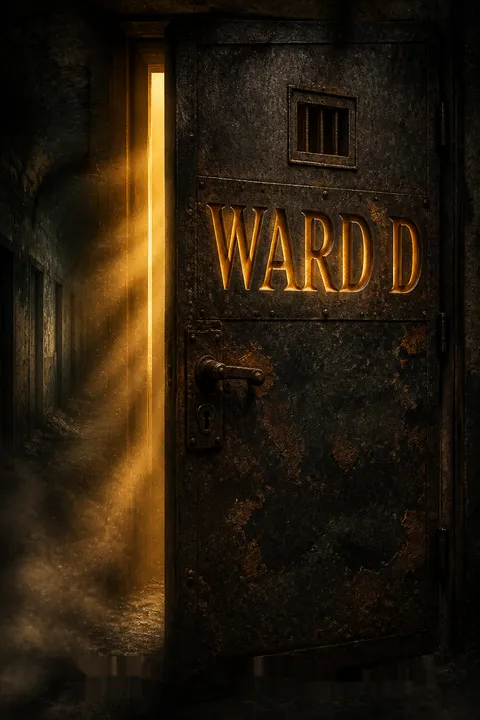
Amy Brenner,1 a third-year medical student finishing a mild psychiatry clerkship under a sleepy outpatient doctor, receives an assignment she has been losing sleep over: an overnight shift on Ward D, the hospital's locked psychiatric unit. Her roommate Gabby10 and her gentle mentor try to reassure her that the supervising attending, Dr. Beck,3 is brilliant and kind, but nobody understands her real terror.
Nearly a decade earlier, Amy1 visited this same ward to see her institutionalized best friend,2 who spat that Amy1 was the one who deserved to be locked up. Now she rides the slow elevator to the ninth floor clutching a cheese sandwich, given a single six-digit code as her only escape, certain something terrible waits behind the door.
McFadden front-loads dread through institutional banality: a checklist of forbidden objects, a malfunctioning phone, a code that must be memorized. The horror is procedural before it is human. Amy's reluctance reads as ordinary anxiety, but the buried memory of her friend's accusation seeds an unreliable-narrator engine that the reader cannot yet feel. The locked ward functions as a literalized superego, a place that decides who is sane enough to leave. By withholding why Amy fears psychiatry above all specialties, the chapter weaponizes the gap between what Amy tells others and what she tells herself, establishing confession as the novel's central, deferred transaction.
The Sweater and the Stranger
Eight years earlier, sixteen-year-old Amy1 admires an expensive pink sweater while her best friend Jade Carpenter,2 once a rule-follower now drifting into recklessness, slips a shirt into her red purse and triggers the store alarm. They sprint out laughing.
During the escape, Amy1 notices a small blond girl11 in a frilly pink dress who calmly urged her to steal, telling her no one would notice. When Amy1 mentions the child, Jade2 insists no such girl was ever there.
The friendship that began in kindergarten, matching dresses and sworn secrets, is curdling: Jade2 now skips study sessions to get high, while Amy1 clings to grades and her dream of medical school. Two wrongnesses surface at once, Jade2's escalating delinquency and the impossible girl11 only Amy1 can see.
The flashback braids two anxieties that the novel will eventually fuse. Jade embodies external chaos, a friend mutating into a stranger, while the phantom girl embodies internal chaos, a hallucination dispensing permission to transgress. McFadden frames adolescence as the membrane where heredity and identity become visible, and the pink dress doubles the coveted sweater, linking desire to theft to seeing-what-isn't-there. Crucially, the girl appears as temptation, not menace: she does not frighten Amy so much as license her. This recasts the conventional ghost trope as a moral solvent, dissolving the boundary between victim and perpetrator that Amy spends the entire book insisting upon.
The Ex and the Caged Man
Inside Ward D, Amy1 learns her assigned partner is not the calm classmate she expected but Cameron Berger,5 the ex-boyfriend who recently dumped her to study for a board exam.
The young, dimpled attending Dr. Beck3 welcomes them warmly, teaches them the exit code, and walks them past the patients: Miguel,9 who believes his father is God; Mary,8 an elderly woman endlessly knitting; and a Spider-Man-obsessed man the staff call Spider-Dan.7 Beck3 warns them most sharply about Seclusion One, where a dangerous patient named Damon Sawyer3 lies restrained, awaiting transfer.
Through the cracked door of room 905, a pair of blue eyes flecked with yellow watches Amy,1 achingly familiar. From within the locked seclusion room comes a sound barely human, a growl that promises the night will not stay quiet.
The ward becomes a gallery of estranged minds, each patient a variation on the theme of a reality unshared by others. Cameron's intrusion converts professional dread into romantic discomfort, humanizing Amy while distracting her, and us, from the structural threats. McFadden plants every payoff here with magician's precision: the code, Spider-Dan's delusion, Mary's needles, Sawyer's growl, the yellow-flecked eyes. The charismatic doctor who insists patients are people deserving dignity is positioned as the night's stable authority, which is precisely the assumption a thriller exists to detonate. Authority, the chapter suggests, is just a costume of competence we agree not to inspect.
Best Friend in 905
Choosing charts to follow, Amy1 first interviews Will Schoenfeld4 in 906, a disarmingly normal twenty-nine-year-old who claims voices once told him to push people into traffic, and who bonds with her over their shared love of John Irving novels before his guard slams shut.
Then the watcher emerges: Jade Carpenter,2 her childhood best friend, now a Ward D patient diagnosed bipolar, bloated by medication and brimming with resentment. Jade2 accuses Amy1 of destroying her life to build her own, of skipping her mother's funeral, of pretending not to know her.
Their history hangs heavy between sympathy and venom. Amy1 realizes the largest psychiatric ward in the region was always likely to swallow Jade2 eventually, but the reunion strips away any hope the night will be merely uncomfortable rather than personal.
The discovery transforms the ward from random nightmare into reckoning. Jade is both casualty and accuser, a mirror Amy has spent years avoiding. McFadden stages the reunion as a guilt audit: each grievance Jade lists is true, and Amy's defensiveness reveals how thoroughly she has narrativized herself as the reasonable one. Will, meanwhile, is introduced as the lone patient who seems sane, a categorization the book will repeatedly scramble. The chapter's deeper move is to make proximity unbearable: Amy chose to follow a patient one door from Jade, betraying an unconscious pull toward the unfinished business she claims to dread, the compulsion to return to the scene.
The Answer Key in the Trash
In the past, Jade2 lures Amy1 into a locked classroom under the pretext of retrieving a textbook, then steals the answer key to their trigonometry midterm from their despised teacher Mr. Riordan13's desk. Amy1 is horrified and refuses, fleeing when she glimpses the phantom girl11 watching from the hallway.
That night Jade2 climbs a ladder to Amy1's window and tosses the worked-out exam inside; Amy1 throws it in the trash, declaring she would rather fail. But the little girl11 reappears, insisting a peek would hurt no one. Days later, summoned by Riordan13 after the janitor identifies them, Amy1 admits to Jade2 she fished the test out of the garbage and used it. Her self-image as the honest one cracks, even as she clings to it.
This is the moral hinge of the flashback and a thesis statement for Amy's character: she condemns transgression aloud while committing it privately, then preserves her virtue by emphasizing reluctance. The phantom girl arrives at the exact moment of temptation, functioning less as madness than as the voice of disavowed desire, the self Amy refuses to own. McFadden exploits the universal adolescent terror of a permanent record to show how easily principle bends under fear of consequence. The detail that Amy cheated and still got caught underscores the futility of her bargains. Her righteousness is revealed as performance, a habit of narration that will eventually indict her.
Blood That Becomes Jelly
The night curdles into the uncanny. Miguel,9 naked and smeared in what Amy1 first screams is blood, has urinated on a light socket and shorted the power; the red is strawberry jelly. Forced into the second seclusion room, he wails that Damon Sawyer3 will murder everyone before dawn, an echo of Spider-Dan7's earlier warning and Mary8 's, who presses a steel knitting needle into Amy1's hand for protection.
Later Amy1 sees a dark liquid seeping under the seclusion door and hears choking, but when she drags Dr. Beck3 to look, the floor is spotless. Beck3 gently suggests she was dreaming and relieves her of duty. The nurse Ramona6 later claims she mopped up jelly. Amy1 can no longer trust the boundary between what she perceives and what is real.
McFadden orchestrates a gaslighting symphony where every disturbing perception is plausibly explained away, weaponizing Amy's secret history against her. The jelly-as-blood gag is grim comedy that doubles as epistemology: the same red substance reads as horror or harmless depending on who frames it. Each patient's prophecy about Sawyer accumulates dread while remaining dismissible because the messengers are deemed insane. The chapter dramatizes how institutions discredit witnesses by pathologizing them, and how a woman taught to distrust her own mind becomes the perfect victim. Mary's needle, casually accepted, is Chekhov's weapon, sliding into Amy's pocket against a violence she cannot yet imagine.
Cameron Simply Vanishes
Amy1 realizes she has not seen Cameron5 since they interviewed Spider-Dan7 hours earlier. She searches every room, every bathroom, the lounges, finding only patients: a woman begging to see her son, a man licking his arms.
Cameron,5 the relentless overachiever who once punched a wall over a lost research fellowship and who never sacrifices a grade, would not abandon a rotation. When Amy1 asks Dr. Beck,3 he reports that Cameron5 left a voicemail about a sudden family emergency and rushed off the unit.
The explanation rings false: Cameron5 sounded choked up, unlike the unflappable man Amy1 knew, and he never spoke to Beck3 directly despite both being on the floor. A man who brought Amy1 a packet of her favorite Ring Dings would not leave without a word. Something is wrong.
Cameron's disappearance is the thriller's first concrete crime, escaping the realm of contestable perception. McFadden uses character consistency as forensic evidence: Amy knows Cameron's psychology, his vanity, his ambition, his light sleep, and every trait contradicts the official story. The voicemail is a classic misdirection device, secondhand testimony that conveniently removes a body from the board. The Ring Dings detail, a small tenderness from a man Amy resents, quietly recalibrates the reader's sympathy and seeds future grief. The chapter shifts the genre register from psychological ambiguity toward predatory plot, suggesting that the night's chaos is not symptom but design, orchestrated by someone tidying up witnesses.
The Hollowed-Out Book
Searching Will4's room for a novel to borrow, Amy1 discovers his copy of a Garp novel carved hollow and stuffed with the antipsychotic pills he was supposed to be swallowing. She reports it to Dr. Beck,3 who plans to switch Will4 to injections.
Later, cornering her in a darkened room, Will4 confesses the real secret: he never heard voices at all. He is a reporter for a local paper who faked paranoid schizophrenia to investigate patient mistreatment on Ward D from the inside, intending to claim recovery and leave.
He insists he too saw the blood, that he heard Cameron5 scream, that he glimpsed the seclusion door swinging shut. He begs Amy1 to trust him and survive the night together. She cannot decide whether he is her only ally or her cleverest threat.
Will detonates the schizophrenia premise, revealing performance where the reader assumed pathology, a meta-commentary on a book that constantly asks who is faking sanity and who is faking madness. His confession aligns him with Amy as a fellow secret-keeper, yet his admitted deception makes him structurally untrustworthy precisely when he tells the truth. McFadden constructs an impossible epistemic trap: the one person corroborating Amy's perceptions is, by his own account, a liar. The chapter interrogates journalistic ethics, the violation of feigning illness to expose a system, while using that deception to destabilize the reader's last reliable witness. Trust becomes a wager with no safe bet.
The Teacher Taped to a Chair
The flashback delivers its catastrophe. Jade2 drives Amy1 to Mr. Riordan13's house, where she has bound the teacher with duct tape, bloodied and terrified, and announces they will kill him and stage a burglary so he can never report their cheating.
When Amy1 refuses in horror, Jade2 reveals her trump card: she knows about the little blond girl11 no one else can see, and threatens to expose Amy1 as crazy unless she helps. The phantom girl11 materializes, urging Amy1 to kill.
Amy1 screams, flees the house, hitches home, and tells her mother12 everything except the hallucinations. Police save Riordan13 in time. Jade2 receives a bipolar diagnosis that spares her prison and lands her in Ward D, where she vows she will never forgive Amy,1 and one day will kill her.
Here the two flashback threads collide: Jade's violence and Amy's hallucination become mutually incriminating, sealed by blackmail. McFadden reframes Amy's act of conscience, turning Jade in, as simultaneously heroic and self-protective, since exposure would have revealed Amy's own breaking mind. The scene establishes the revenge motive powering the present-day plot and clarifies the friendship's tragic asymmetry: Jade, abused and untreated, weaponizes the one truth that could destroy Amy. The girl's command to kill, refused here, plants the question of whether refusal is permanent. Trauma, heredity, and loyalty knot into a wound that the locked ward will reopen eight years later.
Blood on Mary's Sheets
Back in the present, Mary8 suffers a violent sundowning episode, shrieking Damon Sawyer3's name before staff sedate her. Soon after, Amy1 finds Mary8's bed empty, then learns from Ramona6 and a suddenly frightened-seeming Jade2 that Will4 attacked the old woman, leaving her sheets soaked with blood.
Jade2 tearfully claims Will4 is her unstable boyfriend, a compulsive liar who invented the reporter story, and that she fears what he will do next. Persuaded against her gut, Amy1 stands by as Dr. Beck3 and Ramona6 wrestle a pleading Will4 to the floor and inject him with a heavy sedative.
As Will4 goes limp, begging her not to trust them, Amy1 notices Jade2 smirking from the doorway, savoring the scene. The wrongness of it lodges in her chest like a splinter she cannot pull free.
This is Amy's repetition compulsion made literal: once again she chooses the version of events that lets her believe she is helping, and once again she betrays someone who told her the truth. Jade's manufactured fear is a masterclass in social engineering, exploiting Amy's documented willingness to defer to authority and to distrust the marginal. The smirk is the tell, the moment the reader sees the puppeteer behind the panic. McFadden stages sedation as silencing, the institution's power to render a witness unconscious, and implicates Amy in it. Her guilt deepens precisely because she sensed the lie and complied anyway, recapitulating her lifelong pattern of disavowed complicity.
The Chart and the Text
Alone, Amy1 finally reads Damon Sawyer3's chart: an arsonist since childhood, killer of two, schizoaffective, repeatedly committed. Most chilling, he arrived at the hospital after robbing banks with his girlfriend using beer bottles as fake weapons, the identical crime listed in Jade2's chart.
Jade2's boyfriend is not Will.4 It is Damon Sawyer.3 Moments later, a single bar of phone reception delivers an old text from Gabby,10 reacting with disbelief that Amy1 called Dr. Beck3 cute, because the real Dr. Beck is roughly eighty years old.
The dimpled young man3 who has run the ward all night, taught her the code, dismissed the blood, and sedated Will4 is an imposter. Amy1 understands at last that she has been trapped inside an elaborate performance, with no allies and no exit.
The double revelation collapses the entire night's architecture in two strokes, a structural climax of information rather than action. McFadden rewards the attentive reader: the bank-robbery detail, planted in Jade's chart chapters earlier, becomes the key that unlocks the imposture. The Gabby text is the perfect low-tech reveal, an offhand joke about a crush that exposes a murderer's costume. Authority, established in chapter three as the night's anchor, is unmasked as theater, and Amy's habitual deference to credentials becomes the mechanism of her endangerment. The chapter converts dread into horror by retroactively reframing every reassurance she received as a hunter calming prey before the kill.
What Seclusion One Hides
Desperate to escape, Amy1 douses a light socket to short the power and disengage the locks, but cannot resist checking Seclusion One first, the room she was warned to avoid.
Inside, the stench of blood and four corpses: Mary,8 Cameron,5 an unfamiliar dead woman, and an elderly bearded man whose skull was bashed when he tried to break out, the real Dr. Beck. The man she trusted all night3 steps from the shadows and introduces himself: Damon Sawyer.3 Jade2 and the fake nurse, actually a patient named Nicole,6 arrive.
The trio's scheme surfaces: free Sawyer3 during the blackout, kill anyone who recognized him, impersonate the staff, and stage their own fiery deaths to vanish. Sawyer3 casually murders Nicole6 when she grows mouthy, proving Amy1 is utterly expendable.
The reveal of the charnel room is McFadden's gothic crescendo, where every absence is accounted for in flesh. Sawyer's introduction by his real name inverts chapter three's masquerade, the monster shedding the doctor's skin. Nicole's sudden murder demonstrates that even accomplices are disposable, stripping the reader of any hope for negotiated mercy. Amy's fatal curiosity, opening the door instead of fleeing, is psychologically exact: the same compulsion to return, to look, to know, that brought her back to Ward D at all. The plan to fake death by arson resurrects Sawyer's childhood pyromania, fusing backstory and present peril into a single incendiary threat counting down to dawn.
Dental Floss and a Knitting Needle
As Jade2 prepares a syringe and Sawyer3 douses the floor with paint thinner to incinerate the unit and stage their disappearance, Amy1 is cornered against the locked door.
Salvation arrives from the patient everyone dismissed: Spider-Dan7 drops a web spun from dental floss over Sawyer3's face and chokes him unconscious, exactly the improvised power Cameron5 once jokingly suggested. Amy1 tackles Jade,2 and when Jade2's hands close around her throat, Amy1 drives Mary8's smuggled steel knitting needle into her ribs, then holds the point to Jade2's eye until a maintenance worker named Chuck, hearing the screams, unlocks the door.
Police arrest Jade2 and Sawyer.3 Will,4 found in cardiac arrest from the sedative, is rushed to intensive care alive. Amy1 survives the night that killed five, carrying grief and unbearable guilt.
McFadden's climax pays off her most disrespected characters, the delusional Spider-Dan and the homicidal-seeming Mary, whose supposed madness furnishes the literal tools of rescue. The thematic payoff is pointed: the patients dismissed as broken see and arm the truth more reliably than the credentialed staff who proved fraudulent. Amy's needle thrust marks her capacity for decisive violence, a foreshadow the epilogue will exploit. Survival is granted without absolution; the body count, including Cameron, whose Ring Dings spill from his shroud, ensures triumph tastes like loss. The chapter resolves the external plot while leaving Amy's internal verdict, sane or not, deliberately unsettled.
Epilogue
One year later, Amy1 has survived her third year of medical school and is dating Will,4 who recovered and turned the night into a viral article and a forthcoming book dedicated to her. Jade2 and Damon Sawyer3 were committed to a hospital for the criminally insane. Amy1 befriends Spider-Dan7 and resolves to treat psychiatric patients with compassion.
Then, in a coffee shop, the little blond girl11 in the pink dress reappears, taunting that Will4 will leave her unless Amy1 kills him first. Amy1 reveals she never stopped seeing the girl,11 and that she has quietly obeyed her before: poisoning Cameron5's girlfriend's drink, sabotaging his fellowship, prompting the stabbing of Jade.2 She insists she would never kill, then admits, only sometimes.
The epilogue executes the novel's final and most chilling inversion: the victim was always partly the predator. The phantom girl, long framed as trauma or drug damage, returns unbidden, confirming Amy's pathology is native, not chemically induced by Jade's spiked iced tea. Each casual confession, the laxatives, the sabotaging letter, the lethal suggestion during the climax, retroactively recolors Amy's lifelong self-portrait as the reasonable, honest one. McFadden closes the unreliable-narrator loop: the reader trusted Amy precisely as Amy trusted the fake doctor, persuaded by a calm, sympathetic surface. The dedication's gratitude curdles into dramatic irony. Sanity, the book's obsession, is exposed as the most convincing performance of all.
Analysis
Ward D is a thriller obsessed with a single question: what distinguishes the sane from the institutionalized, and who gets to decide? McFadden, drawing on her psychiatric expertise, builds a locked-room nightmare where every reassurance is contestable and every authority is a costume. The novel's engine is epistemic instability. Amy1 perceives blood, hears prophecies, doubts a doctor, and is told repeatedly that she is the unreliable one, a gaslighting made plausible by her buried history of hallucination. The reader, trusting Amy1's narration, becomes complicit in exactly the error that nearly kills her: mistaking a calm, sympathetic surface for truth. The masquerade of Damon Sawyer3 as the humane Dr. Beck3 literalizes the theme that competence is a performance we agree not to inspect, and the credentialed staff prove fraudulent while the dismissed patients, Spider-Dan7 and Mary,8 supply the night's salvation. There is sharp social critique here in how institutions discredit witnesses by pathologizing them. The dual timeline frames mental illness as both inheritance and circumstance, Jade2 shaped by an abusive home and untreated disorder, her menace and her woundedness inseparable. Amy1's lifelong self-portrait as the honest, reasonable one is steadily dismantled: she cheats and emphasizes reluctance, she sedates an innocent against her gut, she returns compulsively to the scene she claims to dread. The devastating epilogue completes the unreliable-narrator loop, revealing the phantom girl11 was never merely Jade2's chemistry but Amy1's own native pathology, and that Amy1 has quietly obeyed its lethal suggestions for years. The lesson is unnerving: sanity is the most convincing performance of all, and the most dangerous mind in any room may be the one narrating, the one insisting, with perfect reasonableness, that she would never.
Review Summary
Ward D by Freida McFadden is a psychological thriller set in a psychiatric ward. Reviews are mixed, with some praising its fast-paced plot and unexpected twists, while others criticize the mental health representation and predictability. Many readers found it entertaining despite its flaws, appreciating McFadden's storytelling style. The main character, Amy, is a medical student spending a night in Ward D, facing her fears and uncovering secrets. Some reviewers felt the book lacked depth and realism but still enjoyed it as a quick, suspenseful read.
People Also Read








Characters
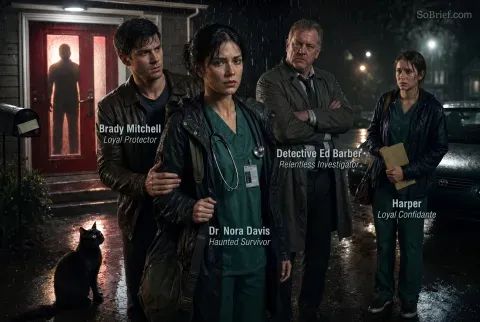
Amy Brenner
Anxious medical studentA third-year medical student narrating both timelines, Amy is a conscientious rule-follower who prizes her image as the honest, reasonable one among messier people. She is a gifted listener, warm with patients, terrified of psychiatry above all specialties for reasons she hides even from those closest to her. Driven by ambition and a desperate need to be seen as good, she habitually condemns wrongdoing aloud while quietly bending under fear and desire, then preserves her virtue by emphasizing reluctance. Her relationship with her mother12 is loving but evasive, her romance with Cameron5 bruised by his rejection. Beneath her competence runs a current of dread about her own mind, a fear that something inside her does not match the dependable self she presents to the world.
Jade Carpenter
Estranged childhood friendAmy1's best friend since kindergarten, Jade grew up in a chaotic, neglectful home with an addicted, abusive mother. Once bookish and rule-abiding, she curdled in adolescence into a reckless, manipulative risk-taker: shoplifting, drugs, grand schemes, and a magnetic gift for persuasion. Diagnosed with bipolar disorder, she cycles in and out of hospitalization, brilliant, wounded, and consumed by resentment toward the friend she believes abandoned and betrayed her. Jade is a virtuoso liar who reads people instantly and exploits their guilt with surgical precision. Loyalty and grievance war inside her; she can be tender one moment and venomous the next. Her tragedy is that genuine pain and genuine menace are indistinguishable in her, making her both the novel's victim and its most dangerous engine.
Damon Sawyer / Dr. Beck
Charismatic ward attendingThe young, dimpled physician supervising Amy1's overnight shift presents as brilliant, warm, and unusually humane, insisting patients be treated as people rather than diagnoses. He teaches Amy1 the exit code, calms agitated patients, and gently dismisses her fears, embodying the night's reassuring authority. His easy charm masks an unreadable depth, and his composure under chaos suggests long experience. The novel frames him as the stable center to which Amy1 keeps returning for help, the credentialed adult whose word she instinctively trusts. How that trust is rewarded becomes the engine of the book's dread.
Will Schoenfeld
Patient who loves booksA disarmingly ordinary twenty-nine-year-old patient in room 906, admitted for hearing voices urging him to kill, yet calm, articulate, and wryly funny in a way that unsettles Amy1's expectations. He bonds with her instantly over a shared devotion to John Irving novels, and his shy smile suggests the kind of man Amy1 might date in another life. Guarded and watchful, he reveals himself in flashes, then slams his defenses shut. Will becomes Amy1's reluctant confidant as the night unravels, the one patient she cannot neatly categorize as sane or ill. His true motives and his hidden history form one of the night's central uncertainties, making him simultaneously her likeliest ally and her most plausible threat.
Cameron Berger
Amy's overachiever exA linebacker-built, top-of-the-class medical student bound for orthopedic surgery, Cameron recently dumped Amy1 to focus on a board exam, wounding her pride. Charming, relentlessly diligent, and a shameless professor-pleaser, he hides a temper that once put his fist through a wall. He swaps onto Amy1's shift hoping to reconcile, bringing her favorite snack as a peace offering. Beneath the gentlemanly polish and competitive drive lurks genuine, clumsy affection for the woman he let go.
Ramona / Nicole
Unflappable night nurseThe seasoned, no-nonsense nurse staffing Ward D overnight, who flips through magazines, passes out medications, and treats the unit's chaos with practiced calm. She seems to have done this job for decades and will do it for decades more, administering sedatives without flinching. Her brisk reassurances repeatedly explain away the disturbing things Amy1 perceives. How much she truly is what she appears to be becomes one of the night's destabilizing questions.
Daniel Ludwig (Spider-Dan)
Web-obsessed patientA middle-aged man with textbook schizophrenia who believes he is Spider-Man, staring at his wrists trying to shoot webs and convinced his Spidey sense detects danger. He speaks in a flat monotone and rhyming word-salad, dismissed by staff and students as comic and harmless. Yet beneath the delusion runs a protective tenderness; he fixates on warning and shielding Amy1. His supposed madness conceals an unexpected loyalty and resourcefulness.
Mary Cummings
Knitting elderly patientA frail woman in her late seventies who knits an impossibly long scarf and warns Amy1 ominously about surviving the night. Admitted for a violent outburst over a squeaking swing, possibly with a darker history involving her late husband, she sundowns badly after dark. She presses a smuggled steel knitting needle on Amy1 as protection, insisting she will need it, a gesture that proves more prophetic than anyone expects.
Miguel
Patient believing father divineA large, gentle patient who believes his father is God and insists he must leave the ward tonight. He layers on multiple shirts, frets about Damon Sawyer3, and triggers a power outage in a memorably chaotic episode that destabilizes the unit.
Gabby
Amy's loyal roommateAmy1's chaotic-driving roommate and best friend, who works Ward D by day, adores Dr. Beck3, and ferries Amy1 to and from the hospital. Her cheerful texts and one offhand remark prove unexpectedly consequential.
The little blond girl
Phantom in pinkA sweet-faced child of six or seven in a frilly pink dress with blue eyes and blond curls, visible only to Amy1. She appears at moments of temptation, calmly urging Amy1 toward transgressions large and small. Neither clearly ghost nor clearly hallucination, she is the unsettling embodiment of Amy1's disavowed impulses, the quiet voice granting permission to do what Amy1 insists she would never do.
Amy's mother
Worried, perceptive parentA loving, slightly overbearing mother who senses something troubling in her daughter1 and in Jade2, urging help and offering support. She fears the ward and Jade2's influence, and her instincts about hereditary mental illness prove sharper than Amy1 admits.
Mr. Riordan
Disliked math teacherThe students' least favorite trigonometry teacher, sour and foul-smelling, whose locked desk holds the exam that sets the flashback's catastrophe in motion. He becomes the focus of Jade2's most dangerous scheme.
Plot Devices
The little girl in pink
Embodies disavowed impulseA recurring child apparition visible only to Amy1, appearing at decisive moments to urge transgression in a sweet, reasonable voice. Introduced in the shopping flashback and threaded through both timelines, she is alternately explained as a hallucination, a symptom, or the product of drugged drinks. The device lets McFadden externalize Amy1's hidden desires while preserving deniability: Amy1 can claim she would never act, even as the girl voices exactly what she secretly wants. As a structural engine, the girl quietly undermines the reliability of the narrator the reader has been trusting, and her persistence past every offered explanation becomes the key to the book's final reframing of who Amy1 actually is.
The exit code 347244
Promise of escape, then trapA six-digit keypad code is the sole means of leaving the locked ward, drilled into Amy1 at orientation and recited obsessively throughout the night. McFadden uses it first as a fragile comfort, the rational tether to safety, then as an instrument of entrapment when the code mysteriously stops working after the blackout. The keypad's distinctive alarms, loud for success, soft for failure, also function as forensic evidence: the absence of the exit siren tells Amy1 a supposed departure never happened. The code dramatizes the thin membrane between containment and freedom, and how easily an authority who controls the door can convert a sanctuary into a cage.
Peach iced tea
Hidden chemical sabotageAmy1's beloved signature drink, present in nearly every flashback scene, seems a harmless character quirk. It is retroactively revealed as the vehicle by which Jade2 secretly dosed Amy1 with hallucinogens, offering a tidy explanation for the phantom girl11's appearances during their teenage years. McFadden deploys the drink as a false resolution: it lets Amy1, and the reader, believe the visions were externally caused and therefore curable, the betrayal of a manipulative friend rather than a flaw in Amy1's own mind. The device's true power lies in what it cannot explain, the girl11's continued presence long after the spiked drinks ended.
Mary's knitting needle
Concealed lifesaving weaponA real steel knitting needle, smuggled past ward rules by an elderly patient8 who swaps it for the approved plastic ones, then pressed urgently into Amy1's pocket with a warning she will need it against Damon Sawyer3. McFadden plants it early as an unsettling detail and an apparent symptom of an old woman's paranoia. It rides forgotten in Amy1's scrub pocket through chapters of dread until the climax, when it becomes the decisive instrument of Amy1's survival. The needle exemplifies the book's pattern of patients dismissed as mad supplying the practical truths and tools the credentialed staff fail to provide.
Dual-timeline structure
Withholds and detonates truthThe narrative alternates between the present overnight shift and a teenage past, parceling out the history of Amy1 and Jade2's friendship, the cheating scandal, and the kidnapping in fragments. McFadden uses the structure to control sympathy and suspense: the past explains Jade2's grievance and Amy1's dread while concealing the full nature of Amy1's condition. Each flashback recontextualizes a present-day fear, and the timelines converge so that backstory becomes weaponized motive. The braided form also conditions the reader to trust Amy1's self-account, since she is the sole narrator of both threads, setting up the final inversion where her reliability collapses.
FAQ
Synopsis & Basic Details
What is Ward D about?
- Locked psych unit chaos: Ward D is a thriller about a medical student, Amy, who is assigned an overnight shift at a locked psychiatric unit, where she encounters a series of unsettling events and must fight to survive.
- Unreliable perceptions: The story explores themes of trust and perception, as Amy questions her own sanity and the motives of those around her, including patients and staff.
- Past and present collide: Amy's past with her troubled best friend, Jade, intertwines with the present danger, creating a complex narrative of psychological suspense and personal conflict.
Why should I read Ward D?
- Twisting psychological thriller: The novel offers a suspenseful and unpredictable plot, filled with twists and turns that keep the reader guessing until the very end.
- Exploration of mental health: It delves into the complexities of mental illness, challenging perceptions of sanity and exploring the impact of trauma and betrayal.
- Unlikely alliances and betrayals: The story features a cast of complex characters, including patients and staff, whose motivations are constantly questioned, creating a sense of unease and uncertainty.
What is the background of Ward D?
- Modern hospital setting: The story takes place in a modern hospital with a locked psychiatric unit, highlighting the tension between advanced medical technology and the unpredictable nature of mental illness.
- Psychiatric ward environment: The setting of a locked psychiatric ward creates a claustrophobic and unsettling atmosphere, emphasizing the isolation and vulnerability of the characters.
- Medical student perspective: The narrative is told from the perspective of a medical student, providing a unique insight into the challenges and ethical dilemmas of the medical profession, particularly in psychiatry.
What are the most memorable quotes in Ward D?
- "You should be the one locked up here, Amy.": This quote, spoken by Jade to Amy, foreshadows the psychological turmoil and guilt that Amy experiences throughout the story, highlighting the blurred lines between sanity and insanity.
- "Damon Sawyer wants to kill every single one of us tonight.": This line, spoken by Spider-Dan, creates a sense of impending doom and paranoia, emphasizing the danger lurking within the psychiatric unit.
- "I'm not knitting because I enjoy it. I'm knitting for protection.": This quote from Mary reveals the underlying fear and desperation of the patients, highlighting the vulnerability of those within the ward.
What writing style, narrative choices, and literary techniques does Freida McFadden use?
- First-person perspective: The story is told from Amy's point of view, creating a sense of intimacy and immediacy, while also limiting the reader's knowledge to her perceptions, which are often unreliable.
- Foreshadowing and suspense: McFadden uses subtle clues and hints to foreshadow future events, building suspense and keeping the reader guessing about the true nature of the characters and the unfolding plot.
- Psychological tension: The narrative focuses on the psychological states of the characters, exploring their fears, anxieties, and motivations, creating a sense of unease and paranoia that permeates the story.
Hidden Details & Subtle Connections
What are some minor details that add significant meaning?
- The cat painting: Mrs. Pritchett's gift of a large, angry-looking cat painting foreshadows the unsettling and dangerous events that will unfold on Ward D, symbolizing the hidden darkness beneath the surface.
- The recurring clicking sound: The rhythmic clicking of Mary's knitting needles creates a sense of unease and foreshadows her later violent outburst, highlighting the unpredictable nature of the patients.
- The mention of peach iced tea: Amy's love for peach iced tea, later revealed to be laced with drugs by Jade, symbolizes the betrayal and manipulation that she experiences, highlighting the hidden dangers in seemingly harmless things.
What are some subtle foreshadowing and callbacks?
- The little girl: Amy's repeated sightings of a little girl in a pink dress foreshadow her own mental instability and the blurring lines between reality and hallucination, creating a sense of unease and paranoia.
- The mention of the code: The emphasis on the code to exit Ward D early in the story foreshadows the later power outage and the characters' desperate attempts to escape, highlighting the theme of confinement.
- The description of the staff lounge: The description of the staff lounge as bare-bones and uninviting foreshadows the lack of support and safety that Amy experiences, emphasizing her isolation and vulnerability.
What are some unexpected character connections?
- Will and Jade's relationship: The revelation that Will and Jade are actually a couple, despite their attempts to hide it, adds a layer of complexity to their characters and their motivations, highlighting the theme of deception.
- Damon and Jade's past: The connection between Damon and Jade as former drug dealer and user adds a layer of depravity to their characters, revealing the depth of their shared history and their willingness to commit violence.
- Nicole's true identity: The reveal that Ramona/Nicole is actually Nicole, a patient with a history of violence, highlights the theme of deception and the difficulty of discerning friend from foe, adding to the overall sense of unease.
Who are the most significant supporting characters?
- Spider-Dan: Despite his delusions, Spider-Dan's unexpected bravery and loyalty to Amy make him a crucial ally, highlighting the theme of finding strength in unexpected places and challenging perceptions of mental illness.
- Mary Cummings: Mary's seemingly harmless knitting and her ominous warnings foreshadow the danger lurking on Ward D, highlighting the vulnerability of the patients and the unpredictable nature of mental illness.
- Ramona/Nicole: As a seemingly trustworthy nurse, Ramona/Nicole's betrayal and complicity in Damon's plan highlight the theme of deception and the difficulty of discerning friend from foe, adding to the overall sense of unease.
Psychological, Emotional, & Relational Analysis
What are some unspoken motivations of the characters?
- Amy's guilt and fear: Amy's unspoken guilt over her past with Jade and her fear of mental illness drive her actions, making her overly cautious and questioning her own sanity.
- Will's ambition and deception: Will's unspoken desire to be a successful reporter leads him to deceive others, including Amy, highlighting the lengths people will go to achieve their goals.
- Jade's resentment and revenge: Jade's unspoken resentment towards Amy and her desire for revenge fuel her actions, leading to a dangerous alliance with Damon and a plan to destroy everything Amy holds dear.
What psychological complexities do the characters exhibit?
- Amy's anxiety and paranoia: Amy's anxiety about Ward D and her past with Jade lead to paranoia and self-doubt, blurring the lines between reality and hallucination, highlighting the fragility of the human mind.
- Will's manipulative charm: Will's ability to charm and deceive others, while also displaying genuine vulnerability, highlights the complexities of his character and the difficulty of discerning his true intentions.
- Jade's bipolar disorder and rage: Jade's bipolar disorder and her deep-seated rage fuel her erratic behavior and her desire for revenge, highlighting the destructive nature of mental illness and the impact of betrayal.
What are the major emotional turning points?
- Amy's discovery of the fake Dr. Beck: The revelation that Dr. Beck is actually Damon Sawyer marks a turning point, shifting the story from a psychological thriller to a life-or-death situation, forcing Amy to confront the immediate danger.
- Amy's realization of Will's deception: The discovery that Will has been lying about his identity and his motivations creates a sense of betrayal and isolation, forcing Amy to question her own judgment and trust.
- Amy's confrontation with Jade: The final confrontation between Amy and Jade forces Amy to confront her past and her guilt, leading to a dramatic showdown that tests her resolve and her ability to survive.
How do relationship dynamics evolve?
- Amy and Jade's fractured friendship: The relationship between Amy and Jade evolves from a close childhood bond to a bitter rivalry, highlighting the destructive impact of betrayal and unresolved conflict.
- Amy and Will's shifting alliance: The relationship between Amy and Will shifts from suspicion to trust, then back to suspicion, highlighting the difficulty of discerning truth from deception and the complexities of human connection.
- Amy and Cameron's unresolved feelings: The relationship between Amy and Cameron evolves from a romantic connection to a source of guilt and regret, highlighting the impact of past relationships on present actions and emotions.
Interpretation & Debate
Which parts of the story remain ambiguous or open-ended?
- The nature of Amy's hallucinations: The extent to which Amy's hallucinations are real or a product of her own anxiety and trauma remains ambiguous, leaving the reader to question the reliability of her perceptions.
- Will's true motivations: While Will claims to be a reporter, his true motivations and the extent of his deception remain somewhat ambiguous, leaving the reader to wonder if he was ever truly trustworthy.
- The possibility of redemption: The ending leaves open the possibility of redemption for some characters, particularly Jade, but it is unclear whether they will ever be able to overcome their past traumas and find peace.
What are some debatable, controversial scenes or moments in Ward D?
- The portrayal of mental illness: The novel's portrayal of mental illness, particularly the characters of Jade and Will, may be seen as controversial, raising questions about the ethics of using mental illness as a plot device.
- The violence and gore: The graphic descriptions of violence and death may be seen as excessive or gratuitous, raising questions about the novel's use of shock value to create suspense.
- Amy's actions and choices: Amy's actions and choices throughout the story, particularly her decision to trust Will and her initial reluctance to help Jade, may be seen as debatable, raising questions about her morality and judgment.
Ward D Ending Explained: How It Ends & What It Means
- Amy's survival and trauma: Amy survives the night, but the experience leaves her deeply traumatized, highlighting the lasting impact of violence and betrayal on the human psyche.
- The cycle of violence and deception: The ending reveals the cyclical nature of violence and deception, as the characters are trapped in a web of their own making, highlighting the destructive consequences of their actions.
- The ambiguity of hope: While Amy survives, the ending leaves open the possibility of future struggles, highlighting the ambiguity of hope and the ongoing challenges of mental illness and trauma.
About the Author
Other books by Freida McFadden








Download PDF
Download EPUB
.epub digital book format is ideal for reading ebooks on phones, tablets, and e-readers.








































