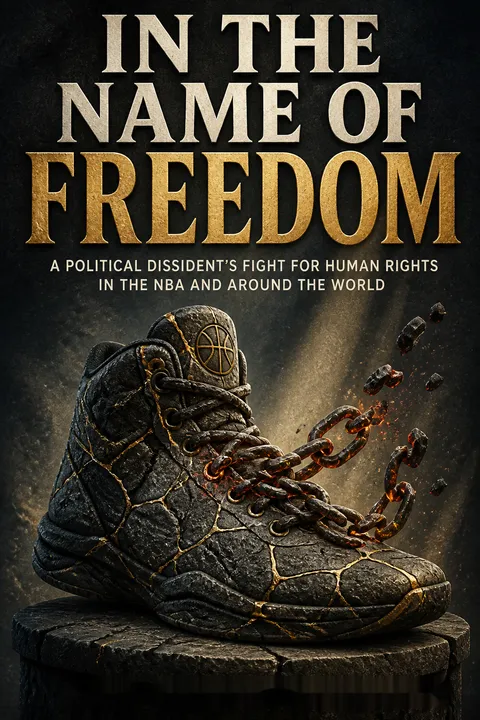
Key Takeaways
1. Freedom's Cost: A Life of Unprecedented Sacrifice
It is a story born from the pain of being disowned by my home country, shut out from contact with my family for ten years, and banished from playing the game I love in the NBA and elsewhere.
A Heavy Price. Enes Kanter Freedom's journey is a stark illustration that freedom is not free, but comes at an immense personal cost. His outspoken criticism of authoritarian regimes, particularly in Turkey and China, led to a cascade of severe consequences that reshaped his entire life. These sacrifices included not only his professional basketball career but also his most cherished personal relationships and sense of security.
Personal Losses. The repercussions of his activism were deeply personal and far-reaching. He was:
- Disowned by his family, who were pressured by the Turkish government.
- Cut off from contact with his loved ones for a decade.
- Banned from playing basketball in the NBA and internationally.
- Labeled an "international criminal" with an Interpol arrest warrant.
- Subjected to countless death threats and a $500,000 bounty on his head.
- Forced to live with the constant fear of kidnapping or assassination attempts.
Unwavering Resolve. Despite these profound losses and ongoing threats, Freedom maintained an unwavering commitment to his principles. He chose to prioritize human rights and justice over personal comfort, financial gain, and even his own safety, demonstrating a rare courage that transcended the world of sports. His story serves as a powerful testament to the sacrifices some individuals make for the greater good of liberty.
2. The Enduring Power of a Mother's Promise
“I’m not going to tell you what to do. But don’t hate anyone before you meet them.”
Foundational Principle. At just nine years old, Enes received a profound piece of advice from his mother that would become the bedrock of his life's mission. Witnessing his friends burning American flags and breaking crosses, fueled by hateful propaganda, he was urged not to prejudge or hate anyone without personal interaction. This simple yet powerful promise defined his engagement with others and became the driving force behind his activism.
Challenging Bias. Keeping this promise was challenging in a childhood saturated with anti-American and anti-Semitic narratives, especially as Erdoğan's Islamist regime gained power. Public schools even forced children to step on American flags, and he absorbed many myths about Jews and Christians. However, his mother's words instilled a critical lens, prompting him to question ingrained prejudices and seek understanding rather than succumb to hatred.
Transformative Encounters. This early moral compass led to transformative experiences, such as his initial reluctance to room with an Israeli teammate, Tomer Bar-Even, which eventually evolved into a humbling lesson in shared humanity. Later, a Thanksgiving dinner with a Christian family and a Shabbat dinner with a Jewish family further dismantled his preconceived notions, revealing the kindness and commonalities among people of different faiths. These encounters solidified his belief in coexistence and motivated him to combat ignorance globally.
3. America: A Sanctuary and Platform for Global Liberty
Whenever freedom-loving people are in crisis, they look to one nation as their savior: the United States of America.
A Desperate Escape. Freedom's harrowing escape from Indonesia and detention in Romania underscored America's role as a beacon of liberty. Facing imminent extradition to Turkey, he reached out to U.S. officials, who swiftly intervened to secure his safe passage to the United States. This experience solidified his conviction that America was the "standard-bearer of liberty around the world."
Embracing Freedoms. Upon arriving in the U.S., he was astonished by the freedoms Americans enjoyed, particularly freedom of speech, which was starkly absent in Turkey. He realized that criticizing the government without fear of imprisonment was a profound gift. This newfound appreciation for constitutional protections became his "secret weapon" in his fight against Erdoğan's regime, allowing him to speak out publicly without immediate reprisal.
A New Home. His journey culminated in becoming a U.S. citizen and changing his last name to "Freedom," a symbolic act reflecting his deep gratitude and commitment to American ideals. He found immense support from diverse Americans—teammates, journalists, politicians—who encouraged his activism. This sense of belonging and the opportunity to fight for universal human rights from American soil transformed his identity, making him a passionate advocate for the nation's values.
4. Erdoğan's Authoritarian Grip and Personal Vengeance
“I apologize to the Turkish people and the president for having such a son,” my dad wrote. “His statements and behavior trouble our family. I would not have taken Enes to the U.S. for the basketball camp where his talent was discovered had I known that it would come to this point.”
Escalating Repression. The Erdoğan regime's descent into authoritarianism profoundly impacted Freedom's life and family. Beginning with the Gezi Park protests and a major corruption scandal in 2013, Erdoğan systematically dismantled democratic institutions, imprisoned journalists, judges, and police, and targeted anyone associated with the Hizmet movement, including Freedom's mentor, Fethullah Gülen. This crackdown transformed Turkey into a police state, making it unsafe for Freedom to return.
Family Persecution. Freedom's outspoken criticism led to direct retaliation against his family. His father, a respected geneticist, was fired from his university position just months before retirement, losing his pension. The family was forced to issue a public statement disowning Enes under duress, and their home was raided by police. Later, his father was unjustly sentenced to fifteen years in prison, and though eventually released, he suffered severe trauma and was banned from working.
Global Reach of Vengeance. Erdoğan's vendetta extended beyond Turkey's borders, attempting to silence Freedom through international channels. This included:
- Pressuring Indonesian authorities to kidnap him.
- Issuing an Interpol arrest warrant, leading to his detention in Romania.
- Lobbying U.S. presidents (Obama, Trump) for his and Gülen's extradition.
- Placing a $500,000 bounty on his head, prompting FBI warnings.
- Harassing his family in Turkey, including public spitting and mosque expulsion.
These actions highlight the regime's determination to punish dissent and the severe personal cost of challenging a dictator.
5. The NBA's Moral Compromise: Money Over Principles
The NBA, sensitive to the political moment, calmly bowed to the players and postponed the games.
Selective Activism. The NBA's response to Daryl Morey's tweet supporting Hong Kong democracy exposed a glaring double standard in the league's commitment to social justice. While the NBA readily supported players protesting racial injustice in the U.S., it reacted with alarm when Morey's comments threatened its lucrative financial ties with China. This stark contrast revealed that the league's activism was often contingent on its economic interests.
Chinese Coercion. China's swift and severe retaliation against Morey's tweet—including suspending broadcasts and sponsorships—demonstrated its power to silence critics through economic leverage. The NBA's subsequent actions, such as issuing a diluted apology and pressuring teams to avoid the topic, underscored its prioritization of Chinese market access over fundamental American values like free speech. This created a climate where criticizing China became a career-ending risk.
Hypocrisy Exposed. Freedom directly challenged this hypocrisy, noting that LeBron James, who famously told a Fox News host to "shut up and dribble" when discussing U.S. politics, chastised Morey for being "misinformed." Freedom's agent and even Celtics management warned him against speaking out, fearing financial repercussions. This selective application of social justice principles by the NBA and its stars highlighted a disturbing willingness to compromise on human rights when billions of dollars were at stake.
6. The "Freedom Shoes" Campaign: A Visual Protest
Every young basketball viewer is fixated on shoes, so why not use mine to bring attention to human rights abuses in China?
A Creative Strategy. Recognizing the NBA's reluctance to address China's human rights abuses, Freedom devised a unique and highly visible protest: custom-designed "Freedom Shoes." He aimed to leverage the global fascination with basketball sneakers to draw attention to the plight of oppressed groups in China, believing this visual statement would resonate more powerfully than words alone. This innovative approach bypassed traditional media gatekeepers and directly engaged fans.
Ethical Footwear. His commitment extended to ensuring his protest was ethically sound. He refused to wear Nikes or other shoes potentially made with forced labor, instead sourcing sneakers from a company with fair labor practices. He then collaborated with dissident artists worldwide to create powerful designs depicting the struggles of Uyghurs, Tibetans, Hong Kongers, and others, ensuring each pair carried a potent message.
Unleashing Impact. The debut of his "Free Tibet" shoes, followed by "Free Uyghur" and "Winnie-the-Pooh" designs, immediately ignited a global media storm. Despite attempts by the NBA and NBPA to silence him—including threats of fines, rule changes, and even a ban—Freedom persisted. His shoes became a symbol of defiance, forcing conversations about China's atrocities and the NBA's complicity, ultimately costing him his career but amplifying his message to millions.
7. From Athlete to Activist: A New Life's Purpose
I was overjoyed that I finally had a country again, and to be able to be part of the magic of America: the fact that we are united as Americans, and not as distinct ethnic groups living inside the same borders.
A Forced Transition. Freedom's NBA career, though successful, was ultimately cut short due to his unwavering activism against China. His final game, a symbolic three-pointer, marked the end of his professional basketball dream. This forced transition, however, opened a new, more profound chapter in his life: becoming a full-time human rights activist, a role he embraced with passion and conviction.
Embracing American Identity. A pivotal moment in this transformation was becoming a U.S. citizen and changing his last name to "Freedom." This act symbolized his deep connection to American values and his commitment to fighting for liberty globally. His teammates celebrated this milestone, reinforcing his sense of belonging and purpose, particularly in Boston, the "Cradle of Liberty."
A New Platform. Post-NBA, Freedom found a new platform for his voice. He was nominated for the Nobel Peace Prize, received numerous awards, and was invited to speak worldwide. He engaged with political leaders, religious figures like Pope Francis and the Dalai Lama, and established the Enes Kanter Freedom Foundation to promote understanding through sports among diverse youth. This new path, though fraught with danger, provided a profound sense of fulfillment, proving that his life was indeed "bigger than basketball."
8. The Gülen Movement's Vision of Tolerance and Education
His vision to make this world a peaceful place for people in all walks of life, his mission to educate youth, his dream of coexistence between religions, his fight against hunger, his love for interfaith dialogue, and his care for human rights for everyone, all of which were so inspiring.
A Guiding Light. Fethullah Gülen, Freedom's mentor and "spiritual son," profoundly shaped his worldview. Gülen, a Turkish Islamic scholar, advocated a moderate form of Islam characterized by tolerance, open-mindedness, and respect for secular government and democratic norms. His philosophy stood in stark contrast to the hateful narratives prevalent in Turkey during Freedom's youth, offering a path toward peaceful coexistence.
Educational Advocacy. Gülen and the Hizmet movement he inspired prioritized education as a long-term solution to societal problems like poverty, intolerance, and discrimination. They established secular, nonsectarian schools globally, including those Freedom attended, focusing on academic excellence, multilingualism, and fostering respect among diverse students. These schools aimed to protect young minds from toxic ideologies and empower them as contributing citizens.
Interfaith Dialogue and Humanitarianism. Beyond education, Gülen promoted interfaith dialogue, bringing together intellectuals and religious leaders from different backgrounds to find common ground. His supporters also founded humanitarian relief agencies, providing aid to disaster victims and establishing long-term projects in underserved regions. This holistic approach to service and peace deeply influenced Freedom, motivating him to dedicate his life to similar causes, even as Gülen himself faced persecution and false accusations from the Erdoğan regime.
9. The Global Reach of Dictators: Threats Beyond Borders
“With China, from now on you will be getting messages, phone calls, direct messages, etc., from the most beautiful girls in the world. Do not answer them; they are Chinese spies.”
Beyond National Borders. Freedom's activism revealed the insidious global reach of authoritarian regimes, particularly Turkey and China, which extend their threats and influence far beyond their own territories. His personal experiences, from attempted kidnappings to Interpol warrants, demonstrated that challenging dictators carries risks even on foreign soil. This globalized repression forced him to live with constant vigilance and security concerns.
Sophisticated Tactics. The State Department briefed Freedom on the diverse and sophisticated methods used by these regimes to target dissidents:
- China: Employing honey traps (spies disguised as attractive individuals), a "50 Cent Army" of online trolls, and economic blackmail (e.g., threatening Turkish friends in China if Freedom went to Taiwan).
- Russia: Using poison attempts, advising him to never eat at the same restaurant twice.
- Iran: Direct assassination plots, as evidenced by bounties on former U.S. officials.
- North Korea: Cyberattacks and phone hacking.
- Turkey: Propaganda, harassment of family, and paying students to film him.
Erosion of Safety. These threats created a pervasive sense of insecurity, making it difficult for Freedom to trust new acquaintances or travel freely. Even offers to play basketball in Greece or Taiwan were thwarted by the regimes' ability to exert pressure and endanger those around him. This constant state of alert underscores the profound impact of dictatorships on the lives of those who dare to speak out, even when living in democratic nations.
10. Joy in the Face of Adversity: A Secret Motivation
I could be a volcano inside on any given day, but my enemies will never see me sweat. They rejoice when they see you struggling, and I will never give them that privilege. Joy is my secret motivation to keep fighting.
Resilience Through Joy. Despite enduring immense pain—losing his career, family, and facing constant threats—Freedom consciously chooses joy as his "secret motivation." He refuses to grant his enemies the satisfaction of seeing him suffer, instead drawing strength and purpose from the positive impact of his work. This deliberate cultivation of joy is a powerful act of defiance against those who seek to break his spirit.
Finding Purpose. The gratification he derives from helping others, particularly children and victims of repression, fuels his optimism and resolve. Whether through his Peace Basketball Camps, which unite kids from different faiths, or his foundation aimed at fostering understanding through sports, he finds profound meaning in his new life as an activist. These moments of connection and positive change remind him that his sacrifices are worthwhile.
Unwavering Optimism. Freedom maintains an unwavering optimism for the future, dreaming of a day when he can return to a democratic Turkey and continue his work in American politics. He believes in the enduring power of freedom and the potential for unity, even amidst global polarization. His journey exemplifies that even when everything is taken away, the human spirit can find new purpose and continue to fight for what is right, driven by an inner joy that transcends external circumstances.
People Also Read






Download PDF
Download EPUB
.epub digital book format is ideal for reading ebooks on phones, tablets, and e-readers.








































