Key Takeaways
1. Rediscovering Jesus as the Great Philosopher
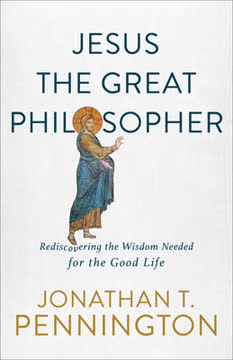
Throughout the vast span of the church’s history, Christianity has been understood as a sophisticated philosophy of life with Jesus as the Great Philosopher.
A forgotten identity. For centuries, early Christians, like those in the ancient city of Dura-Europos who depicted Jesus in philosopher's robes, and thinkers like Justin Martyr, readily identified Jesus as a philosopher. They saw Christianity not merely as a religion, but as the "true philosophy" offering wisdom for abundant living. This historical understanding has largely been lost in modern times, where the mention of "Jesus" and "philosopher" in the same breath often elicits surprise or even reprimand.
Consequences of this loss. This modern disconnect has profound implications for the church and individual believers. Our faith often becomes compartmentalized, relegated to a "religion drawer" separate from the "real life" of vocations, relationships, and emotions. This fragmentation leads us to seek alternative gurus for life wisdom, neglect the Bible's answers to big philosophical questions, and limit our witness to a world hungry for comprehensive meaning.
A call to re-engagement. The book argues for a re-engagement with this ancient perspective, urging readers to see Jesus as the ultimate source of wisdom for human flourishing. By understanding Christianity as a holistic philosophy, we can reconnect faith to all aspects of life, find ultimate guidance in Christ, ask deeper questions of Scripture, and offer a more compelling witness to a searching world.
2. Ancient Philosophy as a Practical Way of Life
The effect of philosophy was not to bungle the rest of your life but to provide a way of being in the world that offered true life and flourishing.
Beyond abstract speculation. Unlike the often-abstract and irrelevant image of philosophy today, ancient philosophy was the "lodestar" for individuals and society. Thinkers like Socrates, Plato, and Aristotle weren't just speculating about whether chairs exist; they were crafting comprehensive visions for the "Good Life" (eudaimonia) and how to achieve it. Their philosophy was intensely practical, guiding people on how to live and die well.
A holistic education. Ancient philosophy encompassed a "whole-life vision" for flourishing, integrating:
- Metaphysics: Understanding the true nature of the universe and how it works.
- Epistemology: How we know things and discern truth from falsehood.
- Ethics: What is right and how to live virtuously.
- Politics: How to structure society for the common good.
This holistic approach, known as paideia, aimed to form a teleios anēr (a whole/mature person) through communal learning and the virtuous example of teachers.
The modern fragmentation. The shift from this integrated approach began with the Enlightenment and was solidified by the rise of the modern "scientific" university. Philosophy became fragmented, with its practical aspects parceled out to other disciplines like psychology or sociology. This left a void, as modern philosophers rarely offer a comprehensive vision for life, leading to a sense of meaninglessness that Steve Martin humorously captured as philosophy "screwing you up for the rest of your life."
3. The Bible as Divinely Revealed Philosophy
The Hebrew Scriptures present themselves as a work of divinely revealed ancient philosophy.
Old Testament's philosophical depth. The Hebrew Scriptures, from Genesis to the Prophets, function as a profound work of ancient philosophy. Figures like Moses were seen as great philosophers, providing divine instructions for living well. The Old Testament addresses core philosophical questions:
- Metaphysics: One benevolent God created and sustains a linear, purposeful universe, with humans made in His image.
- Epistemology: True "knowing" is an intimate, relational experience with God, leading to wisdom (e.g., "the fear of the LORD is the beginning of knowledge").
- Ethics: Torah provides covenantal instructions for virtue, rooted in God's nature.
- Politics: Israel's politeia (societal structure) is a model for justice and flourishing, with God as the ultimate King.
New Testament's continuation. The New Testament continues this philosophical tradition, presenting Jesus as the ultimate sage. The Gospels, written as bioi (biographies of philosophers), record Jesus's teachings through:
- Aphorisms and parables: Memorable, life-shaping wisdom.
- Philosophical epitomes: Organized teachings like the Sermon on the Mount, addressing happiness (makarios) and righteousness.
- Metaphysics: Jesus as the Logos, the divine agent of creation and sustenance, bringing a new age.
- Epistemology: Sin's "noetic effect" blinds, but the Holy Spirit renews the mind for true knowledge of Christ.
- Ethics: Christ-centered, kingdom-oriented virtue ethics, emphasizing imitation of God and becoming a teleios anēr (complete human).
A comprehensive worldview. The Bible, therefore, is not just a religious text but a divinely revealed philosophy that offers profound answers to humanity's deepest questions about reality, knowledge, ethics, and how to live a truly good life. It provides a coherent framework for understanding the world and our place within it, inviting us to a way of seeing and being that promises flourishing.
4. Christianity's Sophisticated Approach to Emotions
Emotions are not primitive impulses to be controlled or ignored, but cognitive judgments or construals that tell us about ourselves and our world.
Beyond reductionism. Ancient philosophers debated the nature of emotions: Plato saw them as irrational forces, while Aristotle viewed them as cognitive judgments. Christianity aligns with Aristotle, understanding emotions as deeply intertwined with our thoughts, ethics, and bodies. It rejects both the modern reduction of emotions to mere brain chemicals and the Platonic/Stoic idea that they are inherently bad or untrustworthy.
God and Jesus as emotional models. Crucially, the Bible portrays God as having emotions—anger, jealousy, grief, joy, and above all, love—but always in a perfectly harmonious and just way. Jesus, as the incarnate Son, models a full emotional life, demonstrating compassion, righteous anger, and joy. His emotions are strong and appropriate, never mastering him, providing an imitative model for believers whose emotions are often disordered by sin.
Educating emotions through practice. Christianity's philosophy of emotions is cognitive but not Stoic; it values emotions but emphasizes their education, not detachment. It encourages:
- Reflection: Intentional meditation on God's truths (e.g., Psalm 1, Jesus's teaching on anxiety in Matthew 6) to shape our emotional responses.
- Prayer: Confession for dealing with guilt and shame, and supplication for God's intervention and care, fostering emotional health and peace.
This approach allows for a vibrant emotional life, acknowledging suffering while cultivating virtues like joy and peace through faith and hope in God.
5. Relationships as the Core of Human Flourishing
It is "love and friendship, the sanctity and celebration of our relationships, that not only support a good life, but create one."
The relational fabric of life. From Wallace Stegner's novels to psychological research, the necessity of relationships for human flourishing is undeniable. Ancient philosophers, too, recognized this, dedicating significant thought to marital, familial, friendly, and societal relationships as foundational to the "Good Life." Christianity, far from existing in a vacuum, actively engages with and transforms these relational philosophies.
Redefining family and household. The Bible begins with Adam and Eve's mutual interdependence, establishing family as the core unit. The Old Testament narrative is driven by familial relationships, culminating in God's kingdom structured like a good household. The New Testament, while affirming family, radically redefines it:
- Household codes: Instructions for husbands, wives, children, and servants, emphasizing equal worth and functional differences, contrasting with ancient societal devaluation.
- Jesus's new family: Disciples are called to prioritize their relationship with Christ and fellow believers as their true, lasting family, even above biological ties.
The church as a new politeia. Christianity is inherently political, offering a vision for societal relationships. The church is presented as God's "temple-city," a new politeia (society) that:
- Engages the world: Christians are dual citizens, honoring earthly authorities while recognizing ultimate allegiance to Christ's kingdom.
- Models new community: The ekklēsia (church) and koinōnia (fellowship) embody radical equality across race, gender, and class, exemplified at the Lord's Table.
- Cultivates friendship: Building on Old Testament examples (Ruth and Naomi, David and Jonathan's hesed), Jesus calls his disciples "friends," fostering deep, honest (parrhēsia) relationships as the distinguishing mark of believers.
6. Jesus: The Philosopher of True Happiness
Happiness consists in seeing one’s life in its entirety as meaningful and worthwhile.
The universal quest for meaning. The desire for happiness (eudaimonia) is a universal human drive, as thinkers from Augustine to modern psychologists like Yuval Noah Harari affirm. Yet, humanity faces a persistent problem: how to find and maintain true, meaningful happiness in a world often perceived as nihilistic or fragmented. Modern self-help gurus offer myriad, often limited, solutions, but few provide a comprehensive, whole-life philosophy.
The Bible's core message. The Bible, at its very core, is a philosophy of happiness. Psalm 1 opens the Psalter by defining flourishing as delighting in God's law. Jesus's Sermon on the Mount begins with the Beatitudes, authoritative declarations of what true happiness (makarios) looks like, even in paradoxical circumstances like mourning or persecution. This "life to the full" (John 10:10) is not a superficial emotional state but a deep, meaningful existence.
Beyond hedonism and altruism. Christianity's philosophy of happiness is neither hedonistic (pursuing fleeting pleasure) nor altruistic (denying personal benefit for good actions, as Kant proposed). Instead, it affirms that the desire for happiness is God-given, but it must be rightly ordered. C.S. Lewis and John Piper argue that God finds our desires for happiness "not too strong, but too weak." Jesus himself was motivated by "the joy set before him" (Hebrews 12:2) to endure the cross, demonstrating that self-denial is a means to profound, ultimate joy, not an end in itself.
7. Hope: Bridging Life's Inevitable "Eudaimonia Gap"
The Christian hope is that God is going to return to restore the world to right, to bring light into darkness, to create a new creation of shalom and peace, to be present face-to-face with his creatures.
The human dilemma. Despite our innate longing for happiness, life's brokenness—poverty, disease, injustice, and ultimately death—creates a "eudaimonia gap" between the happiness we desire and what we can reliably attain. This gap often leads to melancholy, resignation, or self-medication, as even the most advanced secular "hope therapy" struggles to provide ultimate, transcendent meaning.
Biblical hope as the bridge. Christian hope is the critical virtue that bridges this gap. It's not naive optimism or escapism, but a robust, forward-looking conviction rooted in God's faithfulness. The Old Testament's arc of hope, from creation to the prophets' vision of God's reign, sets the stage. The New Testament proclaims that Jesus's life, death, and resurrection inaugurate this promised restoration, bringing a new creation and enabling flourishing even amidst suffering.
A virtue for a broken world. Hope, alongside faith and love, is a core Christian virtue. It empowers believers to:
- Endure suffering: Knowing that trials can produce greater, truer happiness, as exemplified by Job and Jesus.
- Live "sub specie aeternitatis": To live in the light of eternity, freeing us from the "tyranny of the present" and enabling costly acts of fidelity and duty.
- Pray for intervention: Trusting a compassionate and capable God to intervene and ultimately set the world right, fulfilling our deepest longings for shalom.
This Christian philosophy of hope provides a comprehensive and profound answer to the human quest for a whole, meaningful, and flourishing life, embracing both the sadness and fruitfulness, the brokenness and truth of our existence.
Review Summary
Readers largely praise Jesus the Great Philosopher as an insightful, accessible work that reframes Christianity as a whole-life philosophy rather than mere religion. Pennington is commended for his intellectual honesty, engaging writing style, and thoughtful engagement with ancient and modern philosophical traditions. Reviewers particularly appreciated chapters on emotions, relationships, and happiness. Some critics noted the book's introductory nature left them wanting more depth, and a few flagged minor exegetical quibbles. Overall, most found it a timely, thought-provoking read that meaningfully positioned Jesus as history's greatest philosopher.
People Also Read