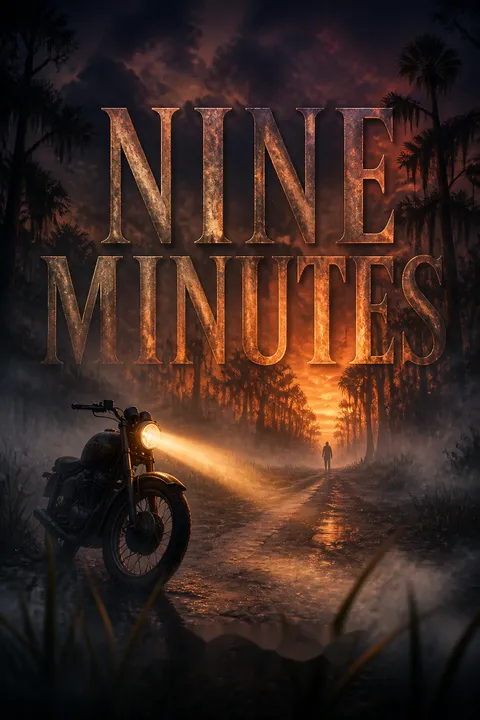

Plot Summary
Execution Room Shadows
In the stark witness room, Ginny sits beside her current husband and a Rolling Stone journalist, moments from watching Grizz—her abductor, first love, and the biological father of her first child—be executed by lethal injection. Twenty-five years after her abduction, the vivid history of violence, tangled love, and loyalty surges inside her throughout the nine interminable minutes of Grizz's death. As the needle drains his life, memories of power and vulnerability clash within her, and she faces anew the core question: was she a victim or a co-conspirator, prisoner or beloved? Grizz's silent hand gesture as the curtain lifts marks their last private secret, for Ginny alone, a gesture containing all the complicated love and darkness between them, setting the tone for reliving her entire journey in hindsight—rife with guilt, nostalgia, loss, and bittersweet yearning.
Random Abduction or Fate?
In 1975, fifteen-year-old Ginny—bookish, neglected, self-sufficient—unwittingly climbs onto a motorcycle, thinking she's simply getting a longer ride home. Instead, her decision launches her into Grizz's world, taken as a "gift" from Monster, a new gang member eager to please the notorious leader of Satan's Army. Ginny's small choices—an abandoned ride, a friendly conversation, a missed detail on a biker's jacket—become momentous, suddenly jeopardizing her autonomy and safety. What appears random is soon revealed as anything but: her abduction is the first step in a much longer, stranger game of obsession. But from the start, even as fear pulses through her, Ginny's dry wit, stubbornness, and quiet strength become apparent, giving the reader a glimpse of the emotional ambiguities that will define her captivity.
Welcome to the Glades Motel
At the dilapidated Glades Motel, Ginny enters a chaotic, lawless world of bikers, gang jargon, and power struggles. She is "presented" to Grizz, his interest in her cutting through the background of seedy arguments, jealousy, and aggression. Here, Ginny begins to meet her new "family": the bitter Willow, the silent Moe, the enigmatic young Grunt, and a collection of violent, unpredictable men. Terror gives way to numbness as Ginny realises her prize status hinges on Grizz's whims—her fate no longer her own. Acts of casual violence establish the group's norms, and Ginny glimpses both cruelty and strange pockets of loyalty among the outcasts. In this darkness, Moe's mute kindness offers a thin thread of hope, hinting at complex inner worlds beneath the gang's brutal exterior.
Becoming Kit, Losing Ginny
Grizz strips Ginny of her name, her family connections, and every shred of her identity. She becomes "Kit," a creature of the motel, watched and controlled by her captor—but also, paradoxically, protected by him. Small domestic routines displace her previous life: caring for a rescued kitten, appeasing violent tempers, negotiating with the tough Moe, and occasionally earning Grizz's strange indulgence. Simultaneously, she learns the web of secrets at the heart of Satan's Army, from false aliases to coded trust, from exploited loyalty to Moe's wordless wisdom. The complex dynamic between terror and gratitude, dependence and resistance, starts to surface—blurring victimhood, and setting the stage for the tangled emotional drama to follow.
Prisoner or Priceless Gift?
The days stretch into months, and Kit's role evolves from a mere abductee to an object of Grizz's unwavering obsession. She isn't forced into prostitution, nor is she treated quite like the other women trapped at the motel; instead, Grizz exerts his authority subtly, isolating her while tending to her material needs. The dogs, Damien and Lucifer, become symbols of captivity and protection. Moe emerges as a tragic mirrored twin—mute, loyal, weathered by her own trauma. Meanwhile, the others—Willow, Chicky, Grunt—show Kit the convoluted ranks of the gang's family, where brutality is indistinguishable from affection. Questions of consent and complicity flicker in the background, as Kit and Grizz orbit around the possibility of something gentler, though always within the bounds he defines.
Brutality and New Bonds
Navigating danger and power, Kit proves resourceful, forging routines and alliances that help her survive. She learns to read Grizz's moods; she earns Chicky's cautious respect and tries to draw out Moe's silent companionship. Her relationship with Grunt, the smart, quiet youngest, deepens into friendship and unspoken longing. Sometimes, gang life intrudes violently—random cruelty, sexual threats, the torment and murder of outsiders. Yet acts of small kindness—saving a kitten, cleaning wounds, playing chess—become lifelines, subtle acts of resistance or attempts at connection. Kit grows up quickly, becoming more observant, more calculating. Her own moral lines shift, and guilt accrues even as she catalogues atrocities—from animal cruelty to cold executions—witnessed and justified by Grizz and his army.
The Kitten and the Name
After Kit intervenes in an act of senseless violence to save a tiny kitten—a rare moment where her empathy compels Grizz to quell the usual brutality—she is finally given her new name: Kit. The kitten, Gwinny, becomes a tangible remnant of her lost past and a vessel for her love, sharpened with both tenderness and regret. Care for the kitten gives her a small sense of agency, while her relationship with Grizz deepens in complexity—sometimes caring, sometimes cold, always controlling. Kit's own desires, anger, and loneliness surface, especially as she witnesses more of the gang's horrors and sees herself shrinking inward. Yet there is always a glimmer of power; Grizz doesn't only reform her—sometimes he bends toward her, too, confounding the boundaries between captor and companion.
Testing Grizz's Reach
Believing that she might outwit her captors, Kit tests the boundaries: she eyes the phone, considers escape, and pushes Grizz with questions about her family's safety. Grizz reveals his omniscience—he knows her name, every family detail, even orchestrated her 'random' abduction. His threats are not idle: her most precious possession, her guitar, appears at the motel, proof he could hurt her real family at any time. The illusion of choice vanishes for Kit, instilling both terror and grief. Bit by bit, she concedes to his rules. But the more Grizz confesses, the more his obsession is revealed—he has watched her for years, has orchestrated her life's narrative for his own ends. Kit is forced to choose survival, no matter the cost to dignity or memory.
Control, Obsession, and Release
As Grizz's desire intensifies, he engineers a disturbing solution: unwilling to force himself on Kit, he commands Grunt to "take" her virginity while she is unconscious. The plan fails—Kit is awake, and Grunt, torn between loyalty and longing, acts out of awkward compassion. This act both scars and complicates the triangle: Grizz is both grateful and angry, Kit is humiliated but slightly empowered, and Grunt is left in agony. Kit drifts into a strange submission, negotiating her nudity, privacy, and newly visible, sexual adulthood. The rules are always Grizz's, but every so often she asserts herself, quietly testing the edges of his patience—an implicit negotiation of power. Even as her desires and fears swirl, old jealousies emerge; when Kit walks in on Grizz with Willow, she tastes the poison of betrayal and finally claims her own jealousy as leverage.
Secrets, Loyalties, Betrayals
The tenuous balance of power and emotion within the gang cracks. Kit forges a tight alliance with Moe, discovers the real story behind her missing tongue, and starts to see the human tangle behind each outlaw's persona. She also befriends Sarah Jo, Fess's daughter, who becomes her confidante as the years slide by. Grunt emerges as her quiet protector, and, in his own way, confidant and rival to Grizz. Yet secrets fester: Kit learns Grizz's obsession started when she was six, not thirteen as she'd been told. Loyalties shimmer uneasily between tenderness and control. Eventually, Kit loses her virginity in searing trauma but finds herself aided by Grunt's gentleness. The lines between love and captivity blur further, and the precarious emotional triangle deepens: even Grizz cannot control the human cost of his own obsessions.
Grunt's Confession and First Love
Kit and Grunt's relationship crests with mutual confession—each recognizes the love neither can act upon without risking destruction. Their bond is forged in adversity, grown through intellectual companionship and deepening trust, yet stifled by Grizz's possessiveness. There are near-misses and confessions never fully spoken; moments of desire, longing, and carefully veiled care. Grunt orchestrates small, invisible rebellions—protecting Kit, skewing Grizz's plans, even knowingly testing loyalty with Sarah Jo's staged affection. The emotional web is as taut as any the gang spins: Kit understands, too late, how both men have shaped and shadowed her growing self. The trauma, secrecy, and small acts of kindness between them pull tighter as Kit's autonomy is imperiled and preserved, again and again.
Marriage, Rules, and Domesticity
Grizz, determined to claim Kit entirely, weds her with a mix of dramatic ritual (tattooed rings) and legal sleight of hand. Though the wedding is as much a claim of ownership as love, Kit consents—partly for validation, partly as a survival mechanism. Settling into an uneasy domesticity, Kit negotiates rules, routines, and the illusion of safety. She cooks, cleans, studies, and plays chess, while Grizz feeds her ambitions and simultaneously enforces her isolation. The gang's criminal world recedes, replaced by the trappings of an unconventional marriage—new cars, a house, and, for a while, the prospect of children. And yet, within this near-normalcy, Kit is ever vigilant; guilt, complicity, and the knowledge of "where it all began" press against her earned comfort. All along, she holds inside the knowledge that happiness is built on a fragile, shifting foundation.
Guilt, Descent, and Moe's Farewell
Kit's increasing intimacy with darkness—watching casual murders, enduring Grizz's calculated violence, justifying the unjustifiable—corrodes her conscience, leading to guilt and self-loathing. The rape she suffers from a gang outsider wounds her physically and emotionally, plunging her into depression and further complicating her relationship with Grizz and the surviving gang. Moe, once Kit's confidante and protector, becomes another casualty of the gang's toxic world, ultimately taking her own life. Moe's death is a profound loss for Kit, a tipping point between growing up and growing hard; her loneliness and regret crystallize in Moe's memory, who, in a final act of loyalty, preserves a piece of Kit's old life for her. The cycle of violence and loss seems inescapable—as they bury Moe, Kit understands both the costs and inheritance of belonging to the Glades Motel.
The Rape, the Revenge
When Kit is brutally raped by an outsider with a vendetta against Grizz, her sense of safety and self shatters. Grizz's response is obsessive vengeance, turning Satan's Army into a machine for locating and destroying the perpetrator—and, by extension, anyone who crossed him. The retribution visited on Darryl (the rapist) and Willow (the architect of revenge) is unspeakably savage: a slow, torturous death in a drained motel swimming pool. Kit is both complicit in her silence—never naming names, never calling police—and horrified by the violence her suffering has unleashed. The circle of trauma compounds as Kit attempts to reclaim her body, stumbles through emotional and sexual healing, and mourns the irretrievable loss of innocence. The road to recovery is slow, uncertain, and shadowed by the knowledge that even justice here is administered in blood.
Willow and Darryl: Retribution's Price
Grizz's relentless pursuit of vengeance leads to a new nadir for the group's collective morality. Willow and her lover Darryl, responsible for Kit's rape, are subjected to public torture and slow death by the gang's cruel rituals—offering a spectacle of violence to the others, a warning to enemies. Kit is both disgusted and numbed, her own hands metaphorically bloodied by the chain reaction her presence and love have triggered. The lines between justice, power, and retribution are erased; Kit internalizes the guilt and horror, her sense of self ever more fragmented and fragile. Meanwhile, outside, other lives go on: domestic routines, friendships, plans for college, attempts to cultivate normality. But the acts of violence linger, unshriven, in the newly tightened circle around Grizz and Kit.
Blue, Jan, and Collapse
The gang's careful lattice of trust, anonymity, and lawfastness shatters when Blue's ex-wife Jan, seeking leverage in a custody battle, reveals Ginny's real identity to the authorities. As Jan pursues protection and vengeance, she recruits Froggy to turn state's witness, setting off an avalanche that pulls down all the careful boundaries Grizz tried to construct to protect himself, Kit, and the gang. Kit's world, built on secrets and emotional bartering, collapses. Simultaneously, Blue's loyalty is tested and, through Jan's machinations, ultimately exposed as limited and self-preserving. The network of family, friendship, and substitutional love is found wanting—revealing in the end that nothing, not even love, can stand against the inexorable machinery of justice.
Collapse of the Empire
Law and fate finally catch up: Grizz is arrested on an avalanche of charges, including the abduction of Kit (Ginny). Kit faces a trial by public opinion, the press, and the law. But Grizz—always self-sacrificing when it comes to Kit—confesses to everything in order to protect her and the others, bargaining his own life for their freedom. Forced by circumstance, Kit remarries—her long-concealed love for Grunt/Tommy (now revealed) finally merging into legitimacy, even as it is layered with guilt and sorrow. Through the courtroom drama, Kit reclaims portions of her autonomy and identity, but not without massive casualty and compromise. The old circle fractures, and freedom, when it comes, is complex and bittersweet.
Trials, Sacrifices, and New Beginnings
Grizz is executed, refusing to apologize for his crimes, still loving Kit and accepting the death she insists he deserves. Kit, now Ginny again, raises her daughter as if Grizz were already dead, burying her secrets amid the ordinariness of a second marriage to Tommy (Grunt), whose loyalty and quiet power have always shadowed the story's periphery. The Rolling Stone journalist's relentless probing uncovers a final, devastating twist: the full truth about Grizz, Grunt, Kit, and Blue, their tangled pasts and betrayals, and the generational cost of violence, love, and choice. Kit faces, at last, the necessity of living with many truths: that she loved her captor, that she enabled his crimes, that she was both victim and agent—and that, impossibly, life goes forward anyway.
Analysis
Beth Flynn's Nine Minutes is a searing exploration of power, trauma, and the blurred boundaries between victim and participant. Using the conventions of biker-gang romance and crime fiction, the novel transcends genre by rooting itself in the traumatized, unreliable consciousness of its narrator—a woman at the intersection of love, captivity, and loss. The narrative relentlessly interrogates questions of autonomy, consent, identity, and fate: can a scarred childhood lead to love with a monster? Is rescue ever simple, or does it create new debts and obligations? The love triangle between Grizz, Kit, and Grunt is less a matter of romance than an embodied inquiry into generational violence—the way suffering is inherited, love is weaponized, and secrets twist every relationship. The structural device of the "last nine minutes"—life, death, a story retold—is both ethical challenge and narrative anchor, reminding the reader that time dilates under trauma, and redemption rarely comes clean. Ultimately, the book rejects simple catharsis. Instead, it leaves readers with a mosaic of broken loyalties, ambiguous healing, and the haunting lesson that, even when the past is over, its consequences echo forever.
Review Summary
Nine Minutes is a dark, gripping debut novel that has left readers emotionally shattered and unable to stop thinking about it. Overwhelmingly rated 5 stars, reviewers praise its unique storytelling, unexpected twists, and complex characters. The story of kidnapped 15-year-old Ginny and biker gang leader Grizz is described as raw, morally conflicting, and unlike any MC romance. While some note difficult triggers including underage relationships and violence, most find it an unforgettable, compelling read that defies genre classification.
People Also Read

Characters
Ginny (Guinevere "Kit" Lemon)
Ginny is a neglected, hyper-capable teen when kidnapped, but her emotional complexity grows in captivity. Intelligent, stubborn, and practical, she oscillates between survival mode, complicity, and the longing for affection/agency her real family never provided. Her relationship to Grizz is the emotional heart of the novel: it embodies both genuine love and deep trauma, a constantly shifting dance between autonomy and submission. She is psychologically nuanced—her feelings for Grizz deepen his humanity even as she enables his cruelty. Her guilt, empathy, and longing for redemption color every choice. Kit's relationships with Grunt (Grizz's "son"), Moe, and Sarah Jo round out her psychological landscape, foiling loneliness and complicity alike. Over years, she is reshaped: neither solely victim nor villain, becoming mother, wife, and survivor—haunted by both what she's lost and what she's chosen.
Grizz (Jason William Talbot)
Grizz's imposing physical presence mirrors his emotional intensity. Ruthless, strategic, and capable of extreme violence, he is feared as Satan's Army's leader. Yet beneath brutality lies deep passion and unexpected tenderness—especially toward Kit, whom he "collects" as a child and obsesses over for years. Grizz's own neglected, abusive childhood and desire for control reshape his need for love into both a redemptive and destructive force. His possessive love guides, imprisons, and ultimately destroys those around him. Never repentant, he owns the consequences of his choices, choosing death over betrayal. Yet he is not a simple villain: his longing for family, ability to be moved by Kit's vulnerability, and final self-sacrifice reveal complicated layers beneath the monster.
Grunt (Tommy)
Grunt, nicknamed for his maturity, intelligence, and bitter upbringing, is a "runt" made strong by hardship. Second in command, he is Grizz's emotional mirror—caring, careful, almost clinical, yet deeply wounded. His hidden love for Kit runs parallel to (and is eventually consumed by) her forced relationship with Grizz, forming the core of the novel's emotional triangle. Long the only person Kit truly trusts, Grunt's quiet nurturing both saves and betrays her—never able to act openly without devastating cost. He, too, is shaped by history, loyalty, and hidden desires. His eventual confession, marriage to Kit, and role as a patient, present father stand in contrast to Grizz's violence—he is, ultimately, the "better man" won through immense suffering.
Moe (Miriam Parker)
Moe is both a victim of the gang's politics and a survivor: her tongue was cut out for perceived disloyalty, rendering her mute. She becomes Kit's confidante, protector, and poignant reflection of the consequences for women in this lawless world. Her loyalty is absolute, her kindness quiet but absolute; she suffers deeply, her eventual suicide after losing her place within the "family" revealing the cost of lovelessness, deprivation, and perpetual outsider status. Moe's arc provides the novel's most tender moments and signals the vulnerability beneath the group's surface brutality. Her unspoken trauma and her loyalty to Kit encapsulate the novel's examination of love, silence, and betrayal.
Blue
Blue, Grunt's "older brother" by adoption, is the group's steady, level-headed fixer. He straddles two worlds: the violence of the gang and the domestic normalcy of a wife (Jan) and children. Blue's pragmatism stands in contrast to Grizz's emotional intensity—he maintains order, ensures survival, and attempts to contain dissent. His own marriage's collapse and Jan's betrayal set the larger downfall in motion. Blue serves as the chief engineer of practical loyalty and, eventually, retaliation; he is exhibit A for how love, power, and criminality mesh and unravel.
Willow
Once Grizz's lover, Willow is acerbic, addicted, and desperately jealous, perpetually bitter as Kit's arrival shatters her fragile status. She embodies both the disposability and peril of women in gang culture—her voice veers from malice to woundedness. Her pivotal role in orchestrating Kit's rape enacts the worst forms of female rivalry and internalized violence. Her eventual shocking death in the pool—suffering at the hands of those she trusted—reflects the ultimate firestorm of venom, vengeance, and victimization.
Chicky
One of the "regulars," Chicky is practical and sensuous, holding herself aloof in order to survive. She forms a pragmatic friendship with Kit, offering rare moments of humor and solidarity. Chicky's outsider perspective, romantic longing (for Fess), and ability to navigate both the gang's violence and temporary domesticity illustrate another way to endure within monstrous systems—never fully surrendering, never fully belonging.
Sarah Jo
Sarah Jo, daughter of Fess, is Kit's first "real" peer alongside the chaos. Their friendship provides hope and the vision of a life beyond captivity. Sarah Jo is earnest, loving, vibrantly "normal"—a reminder that not all futures are destroyed. Her family's survival and her presence in Kit's post-Gang life preserve the possibility of repair. She is also the "outside" witness to both Kit's disappearance and the shadows surrounding it.
Jan
Jan begins as a figure of domestic ambition, seeking upward social mobility, but her mental instability and betrayal alter the course of everyone's life. Her choices, infidelities, and ultimate decision to inform on the gang to protect her own interests (and secure custody) show the destructive power of secrets, and the way personal desperation can destroy whole systems of loyalty and trust.
Fess
Intellectual, regretful, and initially roped into the gang for pragmatic reasons, Fess keeps the books, provides key informant networks, and is confidante both to his daughter and, eventually, Kit. Ambivalent about criminality but fiercely loyal to his children, he demonstrates how weakness, grief, and vulnerability can tip good men into criminal compromise.
Plot Devices
Non-linear narrative and retrospective confession
The novel is structured through dual timelines and multiple forms of confession: courtroom, journalist interviews, letters, and self-examination. The prologue drops the reader into the execution scene, then the story backtracks to reveal, step by step, Ginny/Kit's journey from abduction to execution room, using first-person reflection, flashbacks, and alternating vignettes to unravel layers of secrecy and unreliability. The shifting timeline and confessional style allow for sudden reveals, emotional pivots, and a highly subjective account of trauma, love, and betrayal. By withholding or re-contextualizing key facts (such as Grizz as Grunt's father, or Ginny's true complicity), the narrative preserves tension, delivers emotional gut-punches, and mirrors the psychological fragmentation of a life lived in shadows.
Triangular emotional structure and unreliable narration
At the heart of the novel is the fraught triangle between Ginny/Kit, Grizz, and Grunt. Their interlocking loyalties, betrayals, and shifting allegiances constantly undercut the reader's certainties. Ginny's emotional reliability is always suspect—her justifications, unacknowledged trauma, and moral rationalizations force the audience to question what happened versus what is recalled or constructed under duress. Grunt/Grizz's hidden parentage, Ginny's shifting affections, and the consequences of small acts (such as the truth about her virginity, the keeping of her wallet, or the final phone call to Grizz) deliver repeated shocks and call into question whether any true "ending" can be found.
Foreshadowing and cyclical fate
Items—Kit's guitar, kitten, wedding band, tattooed ring, wallet—are loaded with symbolic value, recur at key junctures, and often double as Chekhovian "guns," prefiguring later reveals and catastrophic reversals. Characters' choices often loop back upon themselves (the first ride, the cycle of abuse and rescue, the final betrayal), giving the sense of fated tragedy within a web of personal agency, psychological need, and escaped consequence. The cyclical violence and the motif of "nine minutes" create emotional resonance and fatalism—reminders that what starts in randomness often ends in reckoning.
Nine Minutes Series Series
Download PDF
Download EPUB
.epub digital book format is ideal for reading ebooks on phones, tablets, and e-readers.








































