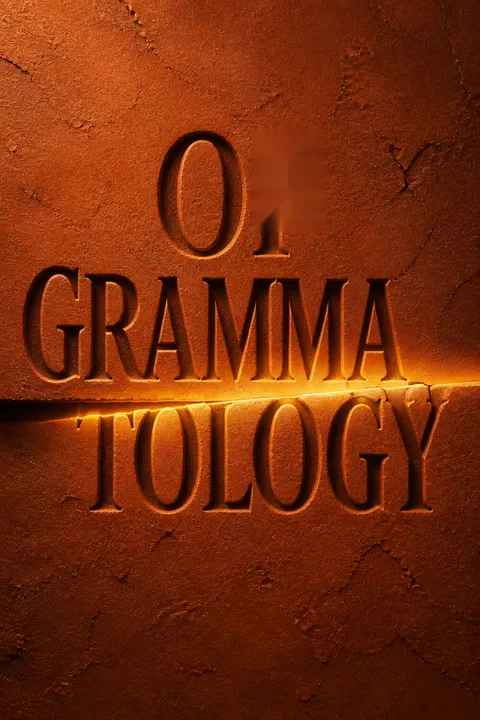

Key Takeaways
1. The Illusion of Phonocentrism and the Privilege of Speech
The system of “hearing (understanding)-oneself-speak” through the phonic substance—which presents itself as the non-exterior, non-worldly, therefore non-empirical or non-contingent signifier—had to dominate the history of the world during an entire epoch...
The voice as self-presence. Western philosophy has historically elevated the spoken word over the written word, a bias known as phonocentrism. This preference stems from the illusion that when we speak, our thoughts are immediately present to us and to others without the distorting mediation of physical signs. The voice is perceived as a pure, unmediated expression of the mind, while writing is cast aside as a secondary, artificial, and potentially corrupting representation of speech.
The mechanics of exclusion. This systematic bias operates by establishing a rigid hierarchy that devalues the written word. Key aspects of this historical exclusion include:
- The belief that speech is natural, living, and direct, while writing is silent, dead, and artificial.
- The assumption that the written word is merely a "sign of a sign," twice removed from the original thought.
- The historical exclusion of non-phonetic writing systems from the definition of true language.
A fragile hierarchy. By analyzing this hierarchy, we discover that speech itself relies on the same structural differences and absences that characterize writing. The voice cannot produce meaning without intervals, pauses, and conventional codes, meaning that the supposed purity of the spoken word is an illusion. Speech is always already a form of writing, and the privilege accorded to it is a metaphysical construct designed to protect the illusion of immediate self-presence.
2. Logocentrism and the Metaphysics of Presence
Logocentrism would thus be solidary with determination of the being of the entity as presence.
The quest for absolute truth. Logocentrism is the philosophical assumption that there is an ultimate, stable, and self-evident foundation of meaning—the "logos"—which anchors all truth. This framework relies on the "metaphysics of presence," which assumes that reality, essence, and truth can be fully grasped in an unmediated, immediate present. It treats language as a transparent medium that simply reflects an already existing, independent reality.
Foundational concepts of presence. Throughout Western history, this metaphysical foundation has been given various names to represent an invariant, central presence. These include:
- Eidos or the ideal form in Platonic philosophy.
- Ousia or substance and essence in Aristotelian thought.
- The Cogito or self-conscious subject in Cartesian rationalism.
- The infinite understanding of God in medieval theology.
The collapse of the center. This desire for a central, reassuring anchor of meaning is fundamentally challenged by the nature of language. Because every sign refers to other signs rather than to an unmediated reality, there is no "transcendental signified" that escapes the play of signification. The center is permanently empty and unstable, and any attempt to establish an absolute origin or end of meaning is a metaphysical illusion.
3. Writing as the "Dangerous Supplement"
The supplement adds itself, it is a surplus, a plenitude enriching another plenitude, the zenith of presence.
The double logic of substitution. The concept of the "supplement" carries a dual, contradictory meaning: it is both an extra addition to something already complete and a replacement for something that is lacking. Jean-Jacques Rousseau famously used this concept to describe writing as a "dangerous supplement" to speech, warning that it corrupts the natural purity of the spoken word. Yet, this very warning reveals that speech is not as self-sufficient as it claims to be.
The chain of supplements. This logic of supplementarity is not confined to language but extends to all aspects of human culture and experience. Examples of this chain include:
- Writing supplementing the perceived limitations and absences of speech.
- Masturbation supplementing the perceived dangers or absences of physical intimacy.
- Culture and education supplementing the inherent deficiencies of nature.
- Art and representation supplementing the silent presence of the real world.
An inherent lack. By examining this chain, we realize that the supplement is only necessary because the "original" was never truly complete or self-sufficient in the first place. The need for a supplement reveals an originary lack at the heart of presence, showing that nature, speech, and intimacy are always already fractured and incomplete. The supplement does not merely add to presence; it produces the illusion of presence by filling a pre-existing void.
4. The Concept of the Trace and the Illusion of Origins
The trace is not only the disappearance of origin . . . it means that the origin did not even disappear, that it was never constituted except reciprocally by a nonorigin, the trace, which thus becomes the origin of the origin.
The erasure of the beginning. The search for a pure, unmediated origin of language or consciousness is a metaphysical illusion. Meaning is always already inhabited by the "trace"—the mark of a radically absent other that is never present as such, yet is necessary for any sign to signify. The trace is the silent, invisible background that allows differences to appear and produce meaning.
Characteristics of the trace. The trace is a paradoxical concept that defies classical, binary logic. Its key features include:
- It is neither a presence nor an absence, but the condition of possibility for both.
- It is always already past, referring to an absolute past that was never a present.
- It is erased in the very act of its presentation, leaving only a track of its departure.
- It is the "origin of the origin," showing that all beginnings are retroactive constructions.
The illusion of self-identity. Because the trace is constitutive of all experience, nothing can be purely self-identical or self-present. The trace forces us to recognize that what we perceive as an immediate, original presence is actually a product of a prior, differential marking. This realization dismantles the metaphysical dream of a pure, uncorrupted origin, showing that the beginning is always already a copy.
5. Différance as the Engine of Meaning
This differance is therefore not more sensible than intelligible and it permits the articulation of signs among themselves within the same abstract order...
The deferral of meaning. Meaning is never fully present in a single sign; it is produced through "différance," a coined term that combines the French words for "differing" and "deferring." This structure ensures that a sign only gains its identity by differing from other signs and by deferring its meaning along an endless chain of references. Meaning is always on the move, permanently postponed and never fully captured.
The mechanics of différance. This movement of differing and deferring operates as the silent engine of all signification. Its operations include:
- The spatial spacing of signs, which distinguishes them from one another.
- The temporal delay, which postpones the arrival of a final, stable meaning.
- The neutralization of binary oppositions, showing each term to be an accomplice of its opposite.
- The production of the illusion of presence through the play of differences.
Beyond negative theology. Différance is not a concept, a word, or a supreme being, but the pre-conceptual play that makes concepts possible. It cannot be understood as a negative theology that points to an ineffable, transcendent truth; rather, it is the radical, endless play of signs that prevents any transcendent truth from ever being fully present. It is the very condition of language, ensuring that meaning remains open, dynamic, and incomplete.
6. Deconstruction from Within
Operating necessarily from the inside, borrowing all the strategic and economic resources of subversion from the old structure, borrowing them structurally, that is to say without being able to isolate their elements and atoms, the enterprise of deconstruction always in a certain way falls prey (est emportée) to its own work.
Inhabiting the structure. Deconstruction is not an external demolition of philosophical systems, but an internal reading that exposes their inherent instability. To deconstruct a text, one must inhabit its structure, using its own concepts, logic, and language to reveal the points where it contradicts and undermines itself. It is a patient, rigorous process of showing how a text's explicit arguments are subverted by its own rhetorical operations.
The deconstructive strategy. This internal subversion is carried out through a series of rigorous, strategic steps. These steps include:
- Identifying the violent hierarchies and binary oppositions that organize the text.
- Reversing the hierarchy to put the marginalized term (e.g., writing) above the privileged one (e.g., speech).
- Displacing the opposition entirely, introducing a new, undecidable concept (like the supplement or the trace).
- Locating the "hinges" or "brisures" where the text's logic breaks down.
The double bind. Because the deconstructor must use the very language of the metaphysics they are questioning, deconstruction is caught in a perpetual double bind. It is a self-effacing movement that must constantly put its own tools under erasure, ensuring that it can never settle into a stable, positive science or a dogmatic method. It is an ongoing, self-critical practice of reading that remains permanently open to its own undoing.
7. The Illusion of the "Innocent" Oral Culture
The first little girl had come vengefully to tell me her enemy’s name, and when the enemy found out what was going on she communicated the other girl’s name, by way of reprisal.
The myth of original innocence. Anthropologists like Claude Lévi-Strauss have often romanticized oral cultures as "societies without writing," viewing them as innocent, non-violent communities untouched by the corrupting influence of civilization. However, this view is a form of double ethnocentrism that fails to recognize that these societies already practice writing in a broader, structural sense. The absence of a physical script does not mean the absence of writing.
The violence of classification. The famous "writing lesson" and the battle of proper names among the Nambikwara reveal that violence and writing are co-originary. This is demonstrated by:
- The prohibition of proper names, which shows that names are already classified and non-unique.
- The act of naming as the primary, violent inscription of the individual into a social system.
- The use of genealogical designs and social classifications, which function as non-phonetic writing.
- The immediate outbreak of political and domestic conflicts, proving that these societies are not naturally peaceful.
Writing as sociality. By showing that social classification, naming, and the prohibition of incest are themselves forms of arche-writing, we dismantle the binary opposition between oral and written cultures. Writing is not a late, accidental addition to human society; it is the very condition of sociality and difference that makes any human community possible. The violence of the letter is the violence of the social order itself.
8. The Linearization of Thought and the End of the Book
The linear norm was never able to impose itself absolutely for the very reasons that intrinsically circumscribed graphic phoneticism.
The crisis of the book. The traditional format of the "book" is bound to a linear, phonetic model of time and thought that has dominated Western civilization for millennia. This linear model is currently undergoing a profound crisis, as modern science, mathematics, and information technology increasingly require non-linear, multidimensional systems of inscription. The book is a metaphysical enclosure that is being disrupted by the rise of the text.
The limits of linearity. The dominance of linear writing has historically suppressed other, more complex forms of symbolic thought. This suppression is characterized by:
- The marginalization of non-linear, multi-dimensional "mythograms."
- The alignment of thought into a single, irreversible line of successivity.
- The close association of linear writing with political centralization and state control.
- The illusion that time is a homogeneous sequence of continuous "now" points.
The dawn of the text. The end of the linear book does not mean the end of writing, but rather the liberation of the "text" from its physical and metaphysical enclosures. As we transition into a digital and cybernetic era, we are forced to develop new, non-linear ways of reading and writing that expose the limits of logocentric rationality. The text is an open, multi-dimensional web of relations that can no longer be contained within the covers of a book.
Review Summary
Reviews of Of Grammatology are sharply divided. Many praise it as a foundational, transformative work that introduced deconstruction and reshaped Western philosophy, literary theory, and cultural criticism. Admirers acknowledge its difficulty but argue the struggle yields profound rewards. Critics, however, find the prose needlessly impenetrable, dismissing it as pretentious or hollow. Several reviewers note that Derrida's concepts—différance, logocentrism, and the supplement—become clearer with patience and supplementary reading. The book's influence on postmodern thought is largely undisputed, even among detractors.
People Also Read

Download PDF
Download EPUB
.epub digital book format is ideal for reading ebooks on phones, tablets, and e-readers.








































