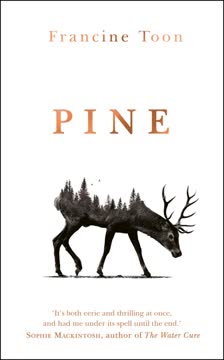
Plot Summary
Halloween Shadows in Pines
On Halloween night, Lauren and her father Niall drive through the dense Scottish pine forest, heading out for guising. The darkness is thick, the road narrow, and the village is a constellation of scattered lights. Lauren, dressed as a vampire, clings to her mother's lipstick—a secret, precious connection to the mother who vanished years ago. As they pass through the woods, they glimpse a mysterious woman in a white dressing gown on the roadside, a vision that unsettles Lauren and seems to disturb Niall. The night is filled with small rituals—songs, jokes, and the comfort of familiar faces—but beneath it all, there's a sense of something missing, something haunting the edges of their lives. The forest, the darkness, and the absence of Lauren's mother press in, setting the tone for a story where the supernatural and the psychological intertwine.
The Woman in White
Returning home, Lauren and Niall encounter the woman in white again, this time stumbling into the road, barefoot and bruised. Niall recognizes her, though he won't say how. He brings her into their home, where she sits silently, her presence both ghostly and corporeal. Lauren is both frightened and fascinated, sensing something unearthly about the woman, yet also a strange familiarity. Niall's discomfort grows, and he avoids Lauren's questions, retreating into silence and drink. The woman's arrival stirs up memories of Lauren's missing mother, and the house fills with the tension of things unsaid. That night, Lauren dreams of cards, rituals, and the possibility of magic—her childish hope mingling with the adult grief that saturates the home.
Village Whispers and Secrets
The next day, the woman is gone, and Niall claims not to remember her. Lauren is left doubting her own memory, while the village's routines continue—school, chores, and the ever-present gossip. The community is tight-knit but wary, each neighbor carrying their own secrets and suspicions. Lauren's friendship with Billy offers moments of escape, but even in the woods, she feels watched. The children's games are shadowed by the adult world's mysteries: locked rooms, forbidden sheds, and the lingering question of what happened to Lauren's mother. The forest becomes a place of both adventure and dread, echoing the uncertainty that defines Lauren's life.
Haunted by Absence
Niall's perspective reveals a man hollowed out by loss. The house, once filled with Christine's energy and rituals, now feels like a mausoleum. He is haunted by memories—of love, of arguments, of Christine's strangeness and warmth. The village's history is layered with tragedy, and Niall's own story is just one among many. He struggles with guilt, anger, and the fear that he is failing Lauren. The supernatural seems to hover at the edges of his perception, blurring the line between memory and haunting. The absence of Christine is a wound that never heals, shaping both father and daughter in ways they can barely articulate.
Rituals and Remnants
Left alone, Lauren turns to the rituals she's inherited from her mother and grandmother—tarot cards, worry dolls, and protective circles made from stones and herbs. She performs small spells to keep herself and her father safe, clinging to the hope that magic might fill the void left by her mother's disappearance. The house is filled with remnants of Christine's life: crystals, notebooks, and the ever-present scent of something floral and decaying. Lauren's belief in the supernatural is both a comfort and a source of fear, as she senses that the boundaries between the living and the dead are thin in the pine-shadowed village.
Schoolyard Cruelties
At school, Lauren is an outsider, marked by her family's strangeness and her mother's absence. She endures bullying from classmates, particularly Maisie, who weaponizes rumors and cruelty. The school bus, the cloakrooms, and even the playground become battlegrounds where Lauren must defend herself against both physical and emotional attacks. Yet, moments of kindness—Billy's friendship, a teacher's brief protection—offer glimmers of hope. The cruelty of children mirrors the suspicion and gossip of adults, reinforcing Lauren's sense of isolation and her longing for connection.
Ghost Stories and Fears
The village is steeped in ghost stories and folklore—tales of kelpies, selkies, and haunted woods. Lauren and her peers trade these stories, half-believing, half-mocking, but always aware that the line between myth and reality is thin. The story of a dog bringing home a human leg from the woods circulates, feeding the children's fears and suspicions. Lauren's own experiences—visions, dreams, and the recurring presence of the woman in white—make her question what is real. The supernatural becomes a language for expressing the inexpressible grief and anxiety that haunt the village.
Babysitters and Broken Homes
When Ann-Marie, home from boarding school, babysits Lauren, the two girls bond over stories, rituals, and shared feelings of being outsiders. Ann-Marie reveals fragments of the past—memories of Christine, hints of village secrets, and her own struggles with rebellion and belonging. Their night together is both comforting and unsettling, as the house fills with strange smells, flickering lights, and the sense of a presence watching. Ann-Marie's tattoo, her suspension from school, and her connection to Diane hint at deeper currents of trauma and resistance. The night ends with both girls feeling more alone, yet also more determined to uncover the truth.
Ceilidh Night Revelations
Niall plays at a village ceilidh, losing himself in music and drink. The event is both a celebration and a reminder of everything he has lost. Memories of Christine surface, mingling with the present's anxieties. Ann-Marie's disappearance after the ceilidh sets off alarms, and the village's veneer of normalcy begins to crack. The night is marked by violence—Niall's outburst at work, the children's bullying, and the growing sense that something terrible is lurking in the woods. The ceilidh becomes a turning point, after which nothing can be the same.
Circles in the Woods
Lauren and Billy discover mysterious circles of stones and debris in the woods, echoing the protective rituals Lauren performs at home. These circles, along with other omens—buzzards, strange fires, and the recurring woman in white—signal that the boundary between the natural and supernatural is breaking down. The woods, once a place of play, become a site of dread and revelation. The children's discoveries are dismissed by adults, but Lauren senses that they are warnings, connected to the village's buried secrets and her mother's fate.
The Hermit's Path
As the search for Ann-Marie intensifies, the narrative focuses on the theme of isolation—both physical and emotional. Niall, Lauren, and Ann-Marie each follow their own hermit's path, seeking answers in solitude. The tarot card of the Hermit recurs, symbolizing the quest for truth and the dangers of secrecy. The locked room in Niall's house, the forbidden shed, and the hidden basement in the woods all represent the secrets that must be confronted. The characters' journeys through darkness—literal and metaphorical—bring them closer to the truth, but also to the edge of despair.
The Locked Room
Lauren finally enters the locked room in her house, discovering relics of her mother's life—dresses, photographs, and the Claddagh ring. The room is a shrine to absence, filled with the weight of unspoken grief. Niall, too, is forced to confront his memories, performing Christine's rituals in a desperate attempt to summon her presence. The past and present collide, and the truth of Christine's disappearance begins to surface. The locked room becomes a symbol of the secrets that have shaped—and nearly destroyed—the family.
The Missing and the Dead
The search for Ann-Marie leads to the discovery of a hidden basement in a ruined house in the woods. There, Lauren and Diane find evidence of violence and captivity, including the remains of Christine. The revelation shatters the village's sense of safety and forces a reckoning with the past. The police investigation uncovers layers of complicity, silence, and trauma. Niall is both suspect and victim, his grief now public and undeniable. The community must confront the reality that evil can hide in plain sight, and that the dead demand justice.
The Knife and the Ring
Lauren's stolen pocketknife and the Claddagh ring become symbols of survival, inheritance, and the transmission of trauma. Ann-Marie, wounded but alive, returns with the knife—an object that has passed through many hands and played a role in both violence and protection. The ring, once Christine's, is found in the woods and returned to Lauren, closing a circle of loss and memory. These objects carry the weight of the story's mysteries, linking the living and the dead, the past and the present.
The Forest's Secret House
Ann-Marie's account reveals that Sandy, a trusted figure in the village, was responsible for Christine's death and Ann-Marie's abduction. The secret house in the woods, with its basement and hidden rooms, is the site of both horror and revelation. Ann-Marie's escape, aided by Lauren's knife and the intervention of supernatural forces, brings the truth to light. The confrontation with Sandy exposes the darkness at the heart of the community and the ways in which evil can be hidden by familiarity and denial.
The Basement Below
The basement is both a literal and symbolic space—a place where secrets are buried, and where the boundaries between life and death blur. Lauren and Diane's descent into the basement mirrors their journey into the heart of the village's trauma. The discovery of Christine's remains, the evidence of captivity, and the violence inflicted on Ann-Marie force the characters to confront the reality of evil. Survival is hard-won, and the scars—physical and emotional—will remain.
Truths Unearthed
With Sandy arrested and the truth revealed, the village begins the slow process of healing. Niall and Lauren, though marked by grief, find new ways to connect—sharing stories, rituals, and memories of Christine. The community, too, must reckon with its failures and silences. Ann-Marie's survival is a testament to resilience, but also a reminder of the cost of denial. The supernatural elements—visions, omens, and rituals—are reinterpreted as expressions of trauma and the longing for justice.
The Return and Release
In the aftermath, Lauren and Niall create new rituals to honor Christine's memory and to protect themselves from future harm. The locked room is opened, the secrets are spoken, and the family begins to rebuild. Lauren, now called Oren, embraces her inheritance—the magic, the grief, and the strength passed down from her mother. The story ends with a sense of release: the dead are honored, the living are changed, and the pines stand witness to both suffering and survival.
Analysis
Francine Toon's Pine is a haunting exploration of grief, trauma, and the porous boundaries between the natural and supernatural. Set in a remote Scottish village, the novel uses the conventions of gothic fiction—haunted houses, spectral women, and mysterious disappearances—to probe the psychological wounds left by loss and violence. At its core, Pine is about the ways in which communities and families fail to confront their own darkness, preferring silence and denial to the painful work of truth-telling. The supernatural elements are never fully explained, allowing readers to interpret them as either literal hauntings or as manifestations of collective trauma. The novel's structure—alternating perspectives, recurring symbols, and the gradual revelation of secrets—mirrors the process of grieving and healing. Toon's prose is lyrical yet precise, capturing both the beauty and menace of the Scottish landscape. The lessons of Pine are both universal and timely: that the past cannot be buried, that justice requires courage, and that healing is possible only when secrets are brought into the light. In the end, the novel offers a hard-won sense of hope, as Lauren and Niall begin to rebuild their lives, honoring the dead and embracing the living.
Review Summary
Reviews for Pine are polarized, averaging 3.37/5. Admirers praise its atmospheric Scottish Highland setting, pitch-perfect child protagonist Lauren, and slow-burning supernatural tension, with many calling it an immersive debut. Critics, however, find the pacing sluggish, the prose overly descriptive, and the mystery disappointingly resolved within the final pages. Common complaints include underdeveloped characters and an abrupt ending, while fans celebrate its gothic, folk-horror sensibility and emotional depth. The novel won the William McIlvanney Prize, though some readers found that surprising given their experience of it.
People Also Read




Characters
Lauren (Oren) Mackay
Lauren is the emotional heart of the novel—a ten-year-old girl navigating the loss of her mother, the emotional distance of her father, and the cruelties of her peers. Her psychological landscape is shaped by longing, confusion, and a fierce desire for connection. Lauren's rituals—tarot, worry dolls, protective circles—are both coping mechanisms and expressions of inherited magic. She is haunted by the absence of her mother, Christine, and by the supernatural possibilities that seem to hover at the edge of her reality. Lauren's journey is one of survival, self-discovery, and the gradual acceptance of both grief and strength. Her relationships—with her father, Billy, Ann-Marie, and the spectral woman in white—reveal her capacity for empathy, courage, and transformation.
Niall Mackay
Niall is a man hollowed out by loss, struggling to care for Lauren while haunted by the disappearance of his wife, Christine. His psychological state is marked by depression, alcoholism, and a deep sense of failure. Niall's love for Lauren is real but often obscured by his inability to communicate or process his grief. He is both victim and suspect, caught in the web of village suspicion and his own self-doubt. Niall's journey is one of painful reckoning—with his past, his responsibilities, and the truth about Christine's fate. His eventual willingness to share memories and open the locked room signals the beginning of healing, both for himself and for Lauren.
Christine Mackay (The Woman in White)
Christine is both a memory and a haunting—a woman whose disappearance shapes the lives of everyone around her. In life, she was unconventional, spiritual, and loving, marked by her rituals, her healing practices, and her refusal to conform. In death, she becomes the woman in white, a figure who blurs the line between ghost and memory, protector and victim. Christine's legacy is both magical and traumatic, passed down to Lauren through objects, rituals, and stories. Her presence in the narrative is felt in every absence, every unanswered question, and every act of survival.
Ann-Marie Walker
Ann-Marie is a bridge between childhood and adulthood, between the village's secrets and the possibility of revelation. Suspended from school, marked by tattoos and defiance, she is both vulnerable and determined. Her friendship with Lauren and Diane is a source of strength, but also of risk, as she becomes entangled in the search for Christine's killer. Ann-Marie's abduction and survival are central to the novel's climax, and her return is both a victory and a reminder of the cost of truth. Her psychological journey is one of trauma, resilience, and the struggle to reclaim agency.
Diane Armstrong
Diane is a teenage girl marked by her own traumas and by her role as a caretaker for her ill mother. She is tough, resourceful, and fiercely loyal to her friends, especially Ann-Marie. Diane's willingness to confront danger, to search the woods, and to challenge the village's silences makes her a key figure in the unraveling of the mystery. Her relationship with Lauren is both protective and challenging, pushing Lauren to face difficult truths. Diane's psychological complexity—her bravado, her vulnerability, her anger—adds depth to the novel's exploration of survival and justice.
Billy Matheson
Billy is Lauren's closest friend, offering companionship, humor, and moments of respite from the darkness that surrounds them. His family provides a contrast to Lauren's—more stable, if not without its own tensions. Billy's presence in the woods, his games, and his loyalty are sources of comfort for Lauren. He represents the possibility of normalcy, even as he is drawn into the village's mysteries and dangers.
Sandy Ross
Sandy is a respected figure in the village—a musician, handyman, and friend to many. His outward charm masks a capacity for violence and manipulation. Sandy's role as Christine's killer and Ann-Marie's abductor is a devastating revelation, forcing the community to confront the reality that evil can hide behind familiarity and trust. His psychological profile is one of narcissism, duplicity, and predation, making him both a symbol of the village's denial and the embodiment of its darkest secrets.
Vairi Grant
Vairi is an old woman who straddles the line between wisdom and madness. She is a repository of folklore, rituals, and village history, offering Lauren both comfort and cryptic warnings. Vairi's belief in the supernatural, her friendship with Christine, and her role in the search for the missing girls make her a key figure in the novel's exploration of magic, memory, and survival. Her psychological complexity lies in her ability to see what others refuse to acknowledge, and in her willingness to act as a bridge between worlds.
Angela and Malcolm Walker
Angela and Malcolm represent the village's surface stability—educated, involved, and outwardly supportive. Yet, their family is marked by its own fractures: Ann-Marie's rebellion, Fraser's absence, and the strain of maintaining appearances. Angela's relationship with Lauren is ambivalent—both caring and judgmental. The Walkers' struggles mirror those of the Mackays, highlighting the ways in which grief, secrecy, and denial permeate even the most respectable homes.
Maisie MacAllister
Maisie is the primary source of Lauren's suffering at school—a bully who exploits Lauren's vulnerability and difference. Her actions are both personal and symptomatic of the village's broader culture of suspicion and exclusion. Maisie's cruelty is a reflection of the anxieties and prejudices that shape the community, and her eventual involvement in the search for Ann-Marie reveals the complexity of her character. She is both a victim and a perpetrator, shaped by the same forces that haunt Lauren.
Plot Devices
Dual Narrative Perspective
The novel shifts between Lauren's and Niall's perspectives, allowing readers to experience both the child's confusion and the adult's grief. This duality creates a layered emotional landscape, where misunderstandings, secrets, and unspoken pain are revealed through contrasting lenses. The alternating voices also highlight the generational transmission of trauma and the different ways in which loss is processed.
Supernatural Ambiguity
Throughout the novel, supernatural elements—visions, omens, rituals—are presented with ambiguity. Are they real, or are they manifestations of trauma and longing? The woman in white, the circles in the woods, and the rituals Lauren performs all serve as both literal and symbolic devices, expressing the characters' need for meaning and protection in a world marked by absence and danger.
Foreshadowing and Symbolism
Key objects—the pocketknife, the Claddagh ring, the tarot cards—are imbued with symbolic significance, foreshadowing the novel's revelations. Circles of stones, buzzards, and the recurring motif of the locked room all serve as warnings and clues, guiding both characters and readers toward the truth. The use of folklore and ghost stories further deepens the sense of inevitability and fate.
Locked Spaces and Hidden Rooms
The novel's architecture—locked rooms, forbidden sheds, hidden basements—mirrors the secrets and traumas that shape the characters' lives. These spaces are sites of both danger and revelation, where the past is confronted and the possibility of healing emerges. The act of unlocking these rooms becomes a metaphor for the process of grieving, remembering, and seeking justice.
Community as Character
The small Scottish village is more than a setting—it is a character in its own right, shaped by history, gossip, and collective denial. The community's rituals, suspicions, and silences both protect and endanger its members. The search parties, the ceilidh, and the schoolyard all serve as stages where the village's anxieties and hopes are played out.
Trauma and Memory
The novel explores the ways in which trauma is inherited, repressed, and expressed. Lauren's rituals, Niall's drinking, and the community's ghost stories are all attempts to manage unbearable memories. The supernatural is both a metaphor for trauma and a possible source of healing, as the characters learn to speak the unspeakable and honor the dead.








































