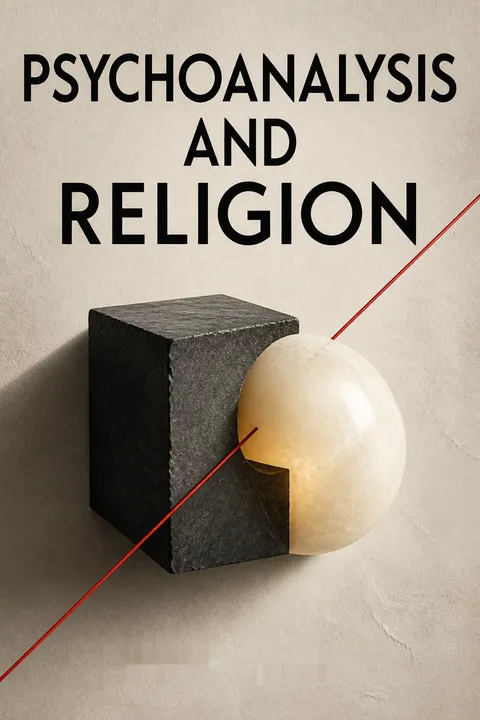

Key Takeaways
1. Modern Man's Spiritual Crisis Amidst Material Progress
While we have created wonderful things we have failed to make of ourselves beings for whom this tremendous effort would seem worthwhile.
A profound paradox. Humanity stands at a crossroads, having achieved unprecedented scientific and technical advancements that promise a world of abundance and unity. Yet, this material success is starkly contrasted by a pervasive spiritual chaos, bewilderment, and a dangerous loss of contact with inner reality, akin to schizophrenia. We build marvels but neglect the inner self.
Everyday contradictions. This spiritual void manifests in daily life through glaring contradictions: prayers for rain alongside chemical rainmaking, preaching love and charity while engaging in exploitative commerce, and teaching honesty to children who then face a cynical reality. Despite claims of happiness and progress, many feel stunned, frightened, and unable to find meaning, clinging to illusions rather than confronting their unease.
The forgotten question. Modern society has become so engrossed in external achievements that it has forgotten to ask the fundamental questions about life's meaning and purpose. Many seek a return to traditional religion not out of genuine faith, but as an escape from intolerable doubt, mistaking security for devotion. This "failure of nerve" highlights a deeper societal sickness where the soul's demands are ignored.
2. Redefining Religion: A Universal Human Need for Orientation and Devotion
I understand by religion any system of thought and action shared by a group which gives the individual a frame of orientation and an object of devotion.
Beyond traditional definitions. Fromm proposes a broad definition of religion, moving beyond monotheistic concepts to encompass any shared system that provides a framework for understanding the world and a focus for devotion. This includes non-theistic systems like Buddhism, Taoism, and Confucianism, and even secular ideologies like authoritarianism, which psychologically function as religions.
Rooted in human existence. The need for such a system is deeply ingrained in the human condition. Our self-awareness, reason, and imagination disrupt the natural harmony of animal existence, creating an unavoidable state of disequilibrium. Man is the only animal for whom his own existence is a problem, driven to overcome inner splits and find a sense of belonging and meaning.
- Man is an anomaly, part of nature yet transcending it.
- He is homeless, yet chained to his earthly home.
- Aware of his powerlessness and mortality.
- Tormented by a craving for "absoluteness."
Idealism is inherent. All humans are "idealists," striving for something beyond mere physical satisfaction. The choice is not whether to have ideals, but what kind of ideals to pursue—whether devotion to power and destruction or to reason and love. A relativistic view that any ideal is valuable is dangerous; ideals must be judged by their truth and their capacity to foster human development.
3. The Crucial Distinction: Authoritarian vs. Humanistic Religion
The essential element in authoritarian religion and in the authoritarian religious experience is the surrender to a power transcending man.
Two fundamental types. Fromm introduces a critical distinction between authoritarian and humanistic religions, a divide that cuts across both theistic and non-theistic systems. This differentiation is key to understanding the psychological impact of religious experience on individuals and societies.
Authoritarian religion. This type emphasizes man's submission to a higher, unseen power that controls his destiny and is "entitled" to obedience, reverence, and worship due to its sheer power, not its moral qualities.
- Virtue: Obedience; Cardinal Sin: Disobedience.
- Man is conceived as powerless and insignificant, gaining strength only through complete surrender.
- Examples: Calvin's theology (despising oneself, submission), secular authoritarianism (worship of Führer, State, Race).
- Psychologically, man projects his own powers onto God, becoming impoverished and alienated from himself.
Humanistic religion. In contrast, humanistic religion centers on man and his inherent strengths. Its aim is the development of reason, love, and solidarity, fostering self-realization rather than submission.
- Virtue: Self-realization, not obedience.
- Faith: Certainty of conviction based on experience, not blind assent.
- Mood: Joy, not sorrow or guilt.
- God, if present, is a symbol of man's own potential powers.
- Examples: Early Buddhism (Buddha as a teacher of reason), Taoism, teachings of Isaiah, Jesus, Socrates, Spinoza, Jewish and Christian mysticism, Zen-Buddhism (Tanka burning Buddha image).
4. Neurosis as a Private Form of Primitive Religion
We can interpret neurosis as a private form of religion, more specifically, as a regression to primitive forms of religion conflicting with officially recognized patterns of religious thought.
Failure to integrate. When individuals fail to achieve maturity and integrate their energies towards their "higher self," they channel them into "lower goals," often creating illusory worldviews. This inherent need for orientation means that if a person doesn't find a healthy, truthful system, they will create a pathological one, clinging to it with religious tenacity.
Primitive cults in modern guise. Psychoanalysis reveals that many neuroses are, in essence, individualized forms of primitive religions, often clashing with conventional religious thought. These include:
- Ancestor worship: Neurotic fixation to father or mother, where a deceased parent's approval dictates life choices, crippling judgment and love.
- Totemism: Exclusive devotion to the state, political party, or nation, where the group's symbols become holy objects and its interests define truth and value.
- Fetishism/Ritualism: Compulsive behaviors like washing compulsions or repetitive formulas to avert disaster, functioning as private religious rituals to cope with unconscious guilt.
- Cult of cleanliness: Judging others based on orderliness, a modern form of ritualistic systems seeking security through strict performance.
Isolation vs. shared belief. A key difference between a neurotic "private religion" and a collective cult is the element of shared experience. Even the most irrational orientation, if shared by a group, provides a sense of oneness and security that the isolated neurotic lacks. This explains why mass madness can be so compelling, as individuals prefer to believe in irrational doctrines rather than face ostracism.
5. Psychoanalysis as the "Physician of the Soul"
The analyst is not a theologian or a philosopher and does not claim competence in those fields, but as a physician of the soul he is concerned with the very same problems as philosophy and theology: the soul of man and its cure.
Beyond symptom removal. Psychoanalysis, initially focused on curing symptoms, evolved to address deeper character reorientation and "difficulties in living." It moved from merely removing overt neurotic manifestations to helping individuals achieve optimal development and self-realization, becoming a "physician of the soul" in the Platonic sense.
Adjustment vs. integrity. The therapeutic aim hinges on the analyst's philosophy:
- Adjustment therapy: Prioritizes conformity to cultural norms and social patterns, reducing suffering to an "average level." It risks sacrificing integrity for external success.
- Cure of the soul: Upholds immutable laws of human nature, emphasizing independence, integrity, and the capacity to love as supreme values. Symptoms are seen as protests against a life that violates these fundamental human needs.
Core humanistic ideals. Psychoanalysis, in its "cure of the soul" function, aligns with the core ideals of humanistic religions:
- Truth: Scrutinizing thoughts and feelings to discern genuine experience from rationalization.
- Freedom & Independence: Breaking primary ties and developing self-reliance.
- Love: Cultivating genuine concern, responsibility, respect, and understanding for others and oneself.
- Conscience: Listening to one's inner voice, recognizing sin as a violation against oneself, and responding with active self-improvement.
6. Achieving Freedom by Breaking Incestuous Ties
The development of mankind is the development from incest to freedom.
Oedipus complex reinterpreted. Freud's concept of the Oedipus complex, often narrowly understood in sexual terms, is reinterpreted by Fromm as a profound desire to remain a child, attached to protecting figures. The essence of "incest" is not just sexual craving, but the fundamental human challenge of psychologically severing the "navel string" from mother, father, and family to achieve true independence.
The path to self-emancipation. Remaining tied to these primary bonds provides a false sense of security but prevents the individual from becoming a full human being, developing reason and love. This "incestuous orientation" extends beyond the family to larger social units:
- Tribe, nation, race, state, political parties: These become substitutes for home and family, fostering nationalism and racism.
- Jesus' teaching: "For I am come to set a man at variance against his father..." signifies the need to break these ties for human freedom.
- Old Testament: Abraham's wandering, Moses' upbringing as a stranger, Israel's forty years in the desert—all symbolize severing ties of blood and soil.
Universal taboos and their purpose. The universality of incest taboos reflects mankind's imperative need to guide the need for closeness away from primary family units, enabling the growth of reason and rational value judgments. While progress has been made, the ties to larger, substitute units remain powerful. Only the complete eradication of incestuous fixation will allow for the realization of human brotherhood.
7. The Real Threat to Religion: Idolatry, Not Science
The problem of religion is not the problem of God but the problem of man; religious formulations and religious symbols are attempts to give expression to certain kinds of human experience.
Science and religious feeling. Fromm argues that genuine religious feeling and devotion, focused on man's soul and the unfolding of love and reason, are not threatened by scientific progress. Increased understanding of the universe and human nature can only foster self-reliance and humility, contributing to a religious attitude rather than undermining it.
The marketing orientation. The true threat to religious experience lies in the predominant practices of daily life, particularly modern man's "marketing orientation." In this paradigm:
- Man becomes a commodity, valuing himself based on salability and others' approval.
- Self-esteem is detached from inner powers and their use.
- Success, efficiency, and prestige become supreme values, overshadowing love, truth, and justice.
- This leads to inner emptiness, insecurity, and alienation from oneself.
Idolatry in modern forms. The conflict is not between belief in God and atheism, but between a humanistic religious attitude and idolatry. Idolatry is the deification of things or partial aspects of the world, and man's submission to them.
- Traditional idols: Wood, stone.
- Modern idols: Words, machines, leaders, the state, power, political groups, science, public opinion, and even the word "God" itself when it becomes a rigid, defined image.
Unmasking contemporary idols. The biblical injunction against making images of God signifies that God is a symbol of spiritual reality beyond definition, a process of being ("I AM THAT I AM"). Religious intolerance, stemming from claims of exclusive knowledge of God, leads to a new form of idolatry—worshiping an image of God in words. The call is to unite in unmasking contemporary idolatry, focusing on human attitudes rather than dogmatic symbols.
8. The Ambiguity of Thought: Reason Versus Rationalization
The power of rationalization, this counterfeit of reason, is one of the most puzzling human phenomena.
Beyond conscious belief. Psychoanalysis profoundly changed the understanding of human thought, demonstrating that a person's sincere belief in a statement does not guarantee its truth or the sincerity of its underlying motivation. Much of what truly matters operates unconsciously, and conscious ideas can often be rationalizations.
Rationalization as a defense. Rationalization is a sophisticated defense mechanism, a "counterfeit of reason," where individuals construct logical-sounding arguments to justify irrational impulses, desires, or group allegiances.
- Paranoid system analogy: Like a paranoid person who is intelligent in all areas except their delusion, a rationalizing person uses intellect to defend a closed system of thought.
- Examples: A Stalinist justifying authoritarianism as democracy, or slave labor as education; arguments for the Inquisition or racial prejudice.
The herd vs. human reason. This ambiguity of thinking stems from a fundamental dichotomy in man: the coexisting need for "herd allegiance" (security in conformity) and "human nature" (reason, independent of the herd). Rationalization is a compromise, making irrational actions appear reasonable to satisfy both needs.
- Herd allegiance: Right/wrong, true/false determined by the group; fear of isolation.
- Human reason: Independent thought, capable of discerning truth regardless of popular opinion.
Truth's emotional matrix. Psychoanalysis reveals that an idea's strength and influence on action depend on its "emotional matrix"—whether it's rooted in genuine feelings and character structure, or merely an "empty shell" of conventional opinion. True reason and objectivity flourish only in a social order that respects individual freedom and where the pursuit of truth unites, rather than isolates, people.
9. The Power and Purpose of Rituals
A ritual, broadly speaking, is shared action expressive of common strivings rooted in common values.
Beyond neurotic compulsion. Psychoanalysis, initially observing similarities between neurotic compulsions and religious rituals, recognized that not all rituals are irrational. It differentiates between:
- Irrational rituals: Compulsive behaviors stemming from repressed, unconscious impulses (e.g., washing compulsion to cope with unconscious destructive urges). Violation causes intense anxiety.
- Rational rituals: Shared actions expressing conscious, valuable strivings rooted in common values (e.g., greeting, applauding, honoring the dead). Non-performance may be regretted but not feared.
A fundamental human need. The need for ritualistic action is undeniable and often underestimated in modern society. Rituals provide a means to express devotion to dominant values through shared actions, fostering a sense of community and purpose.
- Modern examples: Elaborate lodge ceremonies, patriotic observances, etiquette rules.
- Problem: Many contemporary rituals are "empty" due to a lack of genuinely shared, meaningful values, reflecting an impoverishment of devotional aim.
The challenge of creation. While authoritarian systems readily devise politically colored ceremonies to bind citizens, humanistic rituals cannot be simply manufactured. They emerge organically from genuinely shared common values. The Quakers, for instance, attempted rational humanistic rituals. Psychoanalysis contributes by clarifying the psychological roots of this need and distinguishing between healthy and pathological forms of ritualistic expression.
10. Unlocking Wisdom Through Symbolic Language
It was Freud who made this forgotten language accessible to us.
The universal language. Religion, in its teachings and rituals, often communicates through symbolic language—a universal form of expression where inner experiences (thoughts, feelings) are conveyed as sensory images. This is the same language found in ancient myths and contemporary dreams, transcending cultural and historical boundaries.
Misunderstanding and rediscovery. In modern culture, this symbolic language is largely misunderstood, often mistaken for literal events or childish concepts of reality. Dreams were dismissed as nonsensical, and myths as primitive. Freud's groundbreaking work in psychoanalysis, particularly his efforts to understand dreams, reopened access to this forgotten language, revealing its structure and profound meaning.
A new appreciation for religious wisdom. While Freud's interpretations were sometimes narrowed by his emphasis on the sexual drive, he laid the foundation for a new understanding of religious symbols in myth, dogma, and ritual. This comprehension does not necessarily lead to a return to traditional religion but fosters a deep appreciation for the significant wisdom expressed through these symbolic forms.
Focus on human experience. The central conviction is that religious formulations and symbols are attempts to articulate human experience. The true religious problem is not about affirming or denying God, but about affirming or denying certain human attitudes. By understanding the "human reality behind thought systems," psychoanalysis helps discern genuine faith and love from mere lip service or idolatry, regardless of the specific symbols employed.
Review Summary
Readers broadly praise Psychoanalysis and Religion as a courageous, accessible, and thought-provoking work. Many highlight Fromm's compelling distinction between authoritarian and humanistic religion, and his balanced critique of both Freud and Jung. Reviewers appreciate his humanistic vision, arguing that psychoanalysis and religion share common goals around love, self-realization, and spiritual growth. Some Arabic-language reviewers note the absence of Islam from discussion. A minority found the work underdeveloped or overly optimistic, while most consider it essential reading that challenges assumptions about faith, psychology, and human nature.
People Also Read








About the Author
Other books by Erich Fromm




Download PDF
Download EPUB
.epub digital book format is ideal for reading ebooks on phones, tablets, and e-readers.








































