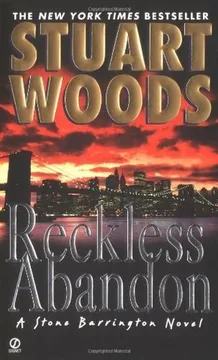
Plot Summary
A Sudden Manhattan Reunion
Stone Barrington, ex-cop and now a polished New York attorney-detective, sits down in his usual NYC haunt, only to receive a call from Holly Barker, the tough police chief from Florida, in need of urgent help. Their reunion carries a spark and a charge of latent attraction, but more than that: Holly is on the hunt for Trini Rodriguez, an elusive, violent killer with Mafia roots and a direct hand in mass murder. Their chemistry turns quickly into a partnership, as their professional and personal lines blur against the Manhattan lights. Yet, this is just the overture—danger follows Holly, and together the pair are drawn into a citywide game of pursuit where they quickly realize they may have become the hunted.
Fugitive With Mafia Ties
Holly explains Trini's history—a son of the mob, a killer with a taste for elaborate violence, protected by the Federal Witness Protection Program. Despite his atrocities, including a funeral bombing, the FBI shields him for his "cooperation" against organized crime. Racing against both bureaucracy and danger, Holly and Stone attempt to penetrate the world of Mafia hangouts, seeking leads in Little Italy. Their hunt is complicated by jurisdictional friction, politics, and the lurking knowledge that vengeance is often personal. Holly's personal motivation burns: Trini must answer for his crimes. But he is everywhere and nowhere, moving through New York's underbelly as the city's dangers multiply.
Explosive Funerals And Federal Shields
The grim tale escalates as Holly recalls Trini's use of casket bombs to assassinate witnesses—an act that solidifies his status as enemy number one in Holly's eyes. The system, however, proves its limits: rather than prosecution, the FBI cocooned Trini, desperate for his testimony. Their protection of such evil provides a searing critique of realpolitik in law enforcement. Meanwhile, Stone and Holly push for help from Stone's contacts, but the evidence of divided loyalties grows, and danger swirls. The specter of bureaucracy and old-boy protection shows that justice for the dead is anything but certain.
Crosshairs In Little Italy
While following a slender lead, Holly spots Trini on the crowded streets, igniting a wild chase that ends in frustration—Trini always manages an escape. Their investigation sees them turn to Stone's old policing partner, Dino, and former adversaries now friendly, in a cityw ide net that only serves to show how thoroughly Trini is insulated by government agencies. The scope of criminal collusion is revealed; perception colors Holly's and Stone's quest, forcing uneasy alliances, questionable deals, and reminders that in this world, trust is as rare as real justice.
Witnesses, Weapons, And Warnings
The hunt for Trini remains fruitless, but peril amplifies. Stone's own home is no refuge—Holly must confront her own mortality, and Stone, usually wry and guarded, sees his world upended. Risks compound as mafia intermediaries begin shadowing them, and FBI interference intensifies. Their network of confidants grows: CIA strings are pulled, former British operatives surface—all further complicating Stone's balancing act between survival and honor. The pursuit is personal, visceral, and potentially lethal to everyone involved.
CIA Interludes And Legal Peril
Enter Lance Cabot—Stone's enigmatic CIA contact and a man whose affiliations are as slippery as his motives. Lance's overlapping agendas reveal the intersection of criminal, legal, and covert operations. Stone gets pressured into representing a difficult ex-client, exposing him to legal and ethical minefields, and providing glimpses into the labyrinthine world of spy games. Meanwhile, Holly's position grows precarious, highlighting how government interests can override justice—and how much madness one endures for a paycheck.
Dinner, Danger, And Deception
Unlikely alliances form over convivial dinners—CIA, NYPD, and Stone's circle gather in the shadows of New York's iconic spots. Exposures and deals with antagonists heighten paranoia and mutual suspicion. Each character weaves their own dance of alliance and betrayal; even the dog, Daisy, isn't above suspicion. The costs of involvement grow clearer: a city of watchers and watched, of informants and opportunists, and always, somewhere in the night, Trini on the prowl.
Cat-And-Mouse Escalates
With Holly relentless, Dino offers wary support, and Lance manipulates behind the scenes, the pursuit grows desperate. Trini, trapped by neither law nor gang, turns predator—unpredictable and now personally targeting Stone and Holly. The dangers ratchet up: assassination attempts leave Stone running for his life, finding temporary solace only in happenstance—the windshield bullets don't hit, but they leave a mark. Each close call steadies their resolve but frays their nerves.
Desperate Law and Disorder
Bureaucratic inertia threatens to doom Holly's efforts, and Stone must beg favors from powerful underworld contacts—most notably Eduardo Bianchi, a retired but respected mafioso who weighs the value of justice and loyalty. Attempts to move Trini via covert means lead to courtrooms and further escapes, while FBI and CIA rivalries play out in their lives. The labyrinth of law enforcement, criminal code, and personal vendetta grows as tangled as ever, as the city itself seems to conspire in keeping its monsters at large.
Holly's Dogged Pursuit
Chasing Trini across state lines and time zones, Holly and Stone's partnership is sorely tested, but so too is their bond—emotional, sexual, and psychological. Ham Barker, Holly's father—equal parts charming and dangerous—arrives, adding firepower and fatherly intimidation to the hunt. The violence spills over to Florida, putting Holly's loved ones at risk. In the chaos, Holly's drive becomes obsession, threatening to consume all else. Meanwhile, Trini grows more unpredictable, more dangerous; the consequences of perpetual pursuit loom ever larger.
Stone Under Fire
Stone survives an assassination attempt—his armored car is riddled with bullets but saves his life, a reminder that chance paths can be as decisive as skill or cunning. Legal maneuvers, violent showdowns, and the constant need to check one's back become the norm. Holly and Stone retreat to Florida, thinking themselves safe, but violence follows: Ham and Ginny must fend off killers. The personal cost mounts; survival hangs on a knife's edge. Justice feels further away than ever.
Trini's Vanishing Act
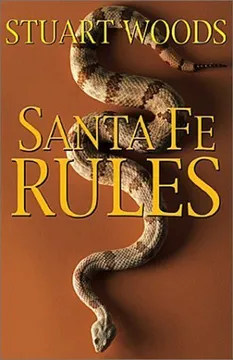
Trini slips away repeatedly, often with FBI help for "the greater good." The game escalates to Santa Fe, with an informant's help, followed by a citywide hunt and a courtroom ambush. Each triumph for Holly and Stone is met with a fresh defeat—federal warrants cancel state ones, agencies obscure more than they illuminate, and at every escape, Trini leaves more bodies and more questions.
Red Tape And Betrayals
In Santa Fe, Stone and Holly engineer Trini's briefest capture, only to lose him to federal bureaucracy. A judge's common sense allows Holly to arrest Trini—for a heartbeat—before the US Attorney and FBI spirit him away. The futility of righteous pursuit becomes painfully clear, as government agencies shield their informant-asset from justice, and Holly must decide how deeply to compromise or escalate. Their failure is public, humiliating, and breeds further obsession.
High Stakes In Santa Fe
Following Trini's trail to a remote safe house, Holly and Stone participate in a tense, fruitless stakeout. The system fails them again: as the target moves, they are forced to watch their quarry escape by private jet, with federal protection. Disappointments pile up; hope shrinks. Yet their camaraderie deepens, if only as a bulwark against their constant, often public, frustrations.
Stakeout, Courtroom, Runaway
The pattern repeats in city after city: near-captures followed by procedural sabotage. The climax of this legal cat-and-mouse game is not in a gunfight, but in endless courtrooms, hearings, and negotiations where "national security" trumps justice at the street level. With the public watching, the FBI claims all successes for itself. Holly, denied her quarry, is left drained and bitter.
The Last Escape Route
Trini, now desperate, goes on the offensive. He invades Stone's home, threatening murder, before vanishing again into the city's depths. Stone and Holly are forced to rely on unorthodox connections to the underworld—mafia middlemen, blackmailers, and old friends. Clever tactics, luck, and some help from the likes of Vito and Eduardo Bianchi are now their only hope of closing in on Trini. The final hunt is not official—there is no more faith in the system. It is personal and, in the end, resignedly transactional.
Streets, Graves, And Laughter
Stone and Holly are nearly executed in an Italian grocery store, saved only by invoking the favor of an old mobster. The politics of vengeance give way to gallows humor; Stone negotiates for survival by trading on old debts, and Holly, always relentless, turns Trini's allies against him with cunning promises. Their world is now one where rules no longer offer security; access and guile are all that count. For a moment, their adversities are so absurd, they can only laugh.
Showdown In The Storefront
Vito, seeking to curry favor and perhaps the FBI reward, arranges a setup: Trini is lured by the false promise of a hidden truck and escape; the ambush is laid within the grocery store. There, amid hanging sausages and family photos, Holly, Stone, and Dino finally subdue the monster they've chased for so long. The confrontation is brutal and humiliating—a punch to the groin, a snarl from Daisy the dog, and the full weight of Holly's physical and psychological rage. The villain is bound, his fate seemingly sealed.
Cuffs, Choices, And Consequences
Nothing is simple in their world: Vito wants the FBI's reward for Trini's capture, threatening to disrupt Holly's rightful claim. Holly, demonstrating political savvy, brokers a deal—one that bends the rules but ensures justice is finally served. She arranges Trini's clandestine transport, sidestepping the federal circus. The villain is delivered to the cell he so richly deserves, and Holly, at last, breathes the liberating air of closure.
Win, Lose, And Move On
With Trini incarcerated, lives slowly return to normal. Holly hides the illicit reward money with equal cleverness, outwitting the system once more. Stone, processing the aftermath, realizes the price of the chase: his sense of certainty is upended, and both he and Holly must question the institutions they've defended. Their connection lingers—deepened by shared trauma, cemented by survival—but the cost of reckless abandon is indelibly marked on their lives.
Analysis
"Reckless Abandon" is as much a satire of institutional failure as it is a high-velocity crime thriller. The novel's central tension—between the pursuit of justice and the convolution of modern law enforcement—serves as both plot engine and philosophical critique. Woods paints a world in which the most dangerous criminals thrive by leveraging bureaucratic inertia and personal connections, while the system's ostensible guardians are revealed as venal, self-protective, or simply ineffectual. Throughout, loyalty is less a matter of badge or title than of personal code and negotiated respect: true justice is achieved only through off-the-book, morally ambiguous collaborations, where courage is less about heroics than resilience in the face of farce. Holly and Stone's doggedness exposes both the heroism and absurdity intrinsic to their work. The lesson is bittersweet: in a labyrinth where the lines between law and crime, justice and betrayal, are always blurred, victory is fugitive—its reward no purer than "services rendered" in a manila envelope. The price of reckless abandon is grim stamina, a willingness to crawl through the city's dirty rooms, and, sometimes, the company of those with just enough principle—or guilty conscience—to get the job done.
Review Summary
Characters
Stone Barrington
Stone is a hybrid of urban sophistication, old-school policing, and unexpected vulnerability, drawing strength from intuition, connections, and an ability to adapt quickly. A former NYPD detective, now private lawyer, he is equally comfortable trading dry wit over drinks as he is navigating life-and-death gambits in the city's underbelly. Closely bonded to Dino Bacchetti and gradually, fitfully, to Holly, Stone's psychology is marked by a desire for order and justice, yet he's perennially confronted by institutional failures and moral ambiguity. His connection to women—often sexual, sometimes tender—reveals both a longing for intimacy and a self-preserving aloofness, finally challenged by his ordeal with Holly.
Holly Barker
Holly's core is resilience—she is haunted by death, betrayal, and injustice. As the police chief of Orchid Beach, Florida, she is fearless, direct, and indefatigable, marked by a traumatic loss (her murdered fiancé) and ongoing wars against Florida's underworld. Her dogged pursuit of Trini, even at personal risk and expense, lays bare her compulsion for justice, which borders at times on vendetta. Her alliances with Stone and Dino become vehicles for both survival and unexpected emotional fulfillment. Her sexuality is as fierce as her loyalty—never ornamental but reflective of her need for genuine connection.
Trini Rodriguez
Trini is the archetype of mob-bred evil, combining charisma and lethal intent with a chameleon's talent for survival. The son of a mafia kingpin, he kills for pleasure and for profit, and his signature is theatrical violence—a wedding day murder, casket bombings, and cold-blooded executions. Trini is insulated by wit and government protection (as a snitch), but his true allegiance is always to himself. His intelligence makes him a formidable foe, but his psychological lack of remorse renders him ultimately alone, an animal cornered by the hunt.
Dino Bacchetti
Dino's brash humor masks a keen investigative mind and streetwise sense of loyalty. Head of the detective squad, he is more than Stone's sidekick—he is both a grounding force and a foil, bringing a no-nonsense approach to both policing and friendship. He is the quintessential New York cop: skeptical, ready to bend rules, yet narcotically loyal to those he trusts. Dino's presence offers comic relief and, more crucially, demonstrates the power of unyielding personal bonds.
Lance Cabot
Lance is intellectual, dryly witty, and always playing a long game. His motives are rarely pure, operating at the intersection of national security, personal gain, and bureaucratic survival. His involvement leavens the story with spy intrigue, duplicity, and moments of uncomfortable alliance. He is never entirely trustworthy, but his skills at reading people and situations make him both indispensable and unsettling. He represents the capricious, morally gray nature of institutional power.
Ham Barker
Ham is Holly's father—a Vietnam vet and master marksman, infused with old-school toughness and homespun wisdom. He appears when most needed, ready with both gun and advice. His analytical approach to violence and loyalty offers a generational counterweight to the chaos engulfing the other characters.
Daisy
Daisy, Holly's Doberman, is more than a pet—she is a symbol of vigilance, loyalty, and the primal need for protection in a world rife with double-crossers. Her presence by Holly's side is both comfort and threat; she is trained to kill on command, a physical embodiment of Holly's dedication and the hidden strengths the latter keeps close.
Vito Galeano
Vito straddles the line between old-school mobster code and survival in modern criminal New York. His allegiance is transactional—respect paid is respect owed. He shows the complex world of family, honor, and profit that governs Mafia logic; in the final reckoning, he is as vital to justice as any badge-wearing cop.
Herbie Fisher
Herbie is the hapless PI-photographer whose incompetence nevertheless ends up being useful. His legal troubles, bumbling manner, and cavalier attitude to danger embody the story's dark comic undertones—a useful idiot whose luck is both inexplicable and infuriating to the professionals around him.
Eduardo Bianchi
Eduardo is the elder statesman of New York organized crime, wielding influence and respect even as he tries to retire from active life. He epitomizes the complex morality of "honor among thieves," willing to help Stone and Holly not out of legal compulsion but for reasons rooted in familial loyalty and his own code. Eduardo's role as arbiter and fixer makes him an essential pivot in untangling the city's criminal web.
Plot Devices
Parallel narrative and cross-threading
The story employs a dual protagonist approach, with Stone and Holly's intersecting journeys slowly revealing their complementary (and at times, conflicting) investigative philosophies. This structure allows for maximum tension, switching POVs and priorities as their arcs entwine, offering glimpses into each character's psyche and backstory.
Federal versus State Tension
The narrative's core mechanism is jurisdictional tug-of-war—FBI, local police, the Mafia, and the CIA, each vying for control over Trini's fate. This structural device not only generates procedural hurdles but becomes thematically resonant: the price of justice, the duplicity of institutions, and the easy subordination of morality to expediency.
Escalating threats, failed resolutions, and dark comedy
Each attempted capture of Trini ends in failure or irony—a courtroom defeat, a bureaucratic subversion, or a near-death laugh. This structural repetition becomes a kind of blackly comic foreshadowing: readers learn quickly that things will get worse before they get better, underscoring the randomness and cruelty of fate.
Secrets and betrayals
Information is always partial, and characters must navigate a world of half-truths, secret handshakes, double-crosses, and last-minute revelations (the concealed truck, the mafia's switches of allegiance). These plot twists simultaneously drive action and force the protagonists to confront their own shifting values and relationships.
Psychological echoing
The recurring motif of Daisy the dog—sniffing, guarding, snuggling—mirrors the story's themes of loyalty, protection, and animal instinct. Similarly, the frequent invocation of bodily risk, injury, and sexual tension blurs the lines between vulnerability and power, danger and desire.
About the Author
Other books by Stuart Woods





Download PDF
Download EPUB
.epub digital book format is ideal for reading ebooks on phones, tablets, and e-readers.








































