Plot Summary
Undertaker's Heir Apparent
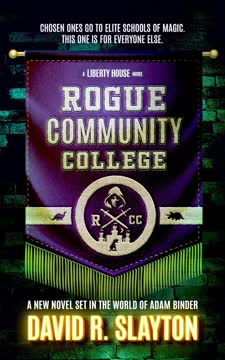
Raised under the harsh tutelage of a near-mythic necromancer called the Undertaker, Isaac is shaped to be a killer, haunted by loneliness and an unreachable memory of warmth. When a job goes awry—he's ordered to "rescue" a mysterious, bound elf, Vran—he's nudged into a world he doesn't understand but desperately needs: a magical college promising safety in exchange for cooperation. Isaac's skills as a "Phage"—a mimic able to gain powers through tasting blood—mark him as a valuable asset, yet an outsider. Simultaneously, he's tasked with a secret: to infiltrate Rogue Community College, destroy its mysterious heart, and secure his own freedom from the Undertaker's shadow, even as uncertainty about his place in both worlds gnaws at him.
Rescue Gone Awry
The rescue of Vran proves anything but straightforward. Isaac's action triggers a standoff with goblins, unleashing Vran's barely controlled and terrifying magic—the first hint that both he and the school are full of dangerous secrets. This confrontation brings Isaac to the attention of Argent, a queen-like enforcer for the elven Guardians, and results in his arrest—but also his protection. Vran's trust is tentative, but Argent's interest in Isaac is clinical and pragmatic: she sees potential in him but also danger. The aftermath leaves Isaac drafted into the school's ranks, both as student and potential pawn, his mission compromised and his loyalties strained, setting the stage for social and existential peril.
School of Outcasts
Rogue Community College is unlike anything Isaac expects. Neither prison nor paradise, it's a strange hybrid—a floating, living castle full of haunted halls, unpredictable architecture, dire geese, and a curriculum equal parts remedial and arcane. Isaac meets classmates Hex (witchy hacker-mathematician), Ford (half-troll jock), Daffodil (girl with deadly touch), Shy (kid nearly invisible), and Jack (machine-librarian), all carrying wounds and secrets of their own. The school gathers students excluded from more prestigious institutions, seeking to forge a new, more inclusive Guardian order. Isaac learns that rules here bend weirdly, and the boundaries between realms, safety, and identity are as fluid as the campus walls.
Truths Buried and Unearthed
As Isaac adapts to lessons in politeness and privilege rather than violence and stealth, his role as the Undertaker's agent gnaws at him. Visions of his difficult childhood, flashbacks of the vulnerable Samuel—a fellow Undertaker's child whom Isaac failed to save—haunt him. The school's living structure mirrors his internal labyrinth: both shift under scrutiny, offering false doors and corridors, refusing to give up their hearts easily. Every test, whether battling a dinosaur in gym or decoding Elvish histories in the library, becomes a negotiation between Isaac's past programming and budding connections, especially with Vran. The gap between the assassin he was trained to be and the person he might become widens uneasily.
The Survivor's Curriculum
Isaac's education is as much about unlearning as learning. Unlike the ruthlessly transactional teachings of the Undertaker, here, value is placed on cooperation, discipline, empathy, and understanding other realms' injustices—a history fraught with elven genocide and Guardian complicity. Isaac chafes at slow lectures and position papers, frustrated by the school's faith in social reform, but slowly, help from others (especially Vran) creates new paths for growth. Disasters—real and simulated—test teamwork and force Isaac to use powers for protection, not destruction. The process is humbling and healing, showing Isaac the value (and cost) of vulnerability, even as he still chases the secret heart of the school.
Rules, Rebellion, and Revelations
By accident and design, Isaac learns the school's "heart" is hidden deep within a labyrinth guarded by supernatural terrors—a place designed to keep threats out and students' traumas in. Paranormal counseling with Shepherd, a patchwork demon, forces Isaac to face grief over Samuel and doubts about his own past: is he truly an orphan, or was he taken from a family who still lives? Isaac's search for answers—about the school, about himself, about the blood-magic thefts that threaten everyone—draws in classmates, and an honest yearning for connection slowly develops. Even as he trains for battle and navigates supernatural politics, Isaac discovers that emotional survival matters as much as physical.
Coping with Ghosts
Isaac's nightmares and necro-counseling bring him again and again to the crypt and pond where Samuel drowned. These psychic hauntings expose wounds that drive Isaac to protect others yet also remind him that the drive to survive often has a cost: leaving the weak behind. His trauma, bonds, guilt, and suppressed longing for family become the ghosts he must confront. The school's labyrinth brings out the worst of these, testing whether Isaac can choose compassion or if he's doomed to repeat older patterns. With each failure and each friend made, Isaac learns that freedom only comes with confession, empathy, and letting go of the cycle of pain.
Disasters and Teamwork
When a magical flood threatens and a fire rages elsewhere, the school's students are dispatched to help. Forced to act as a team, Isaac must harness not only his blood-mimic powers but also his ability to trust—tasting Ford's troll blood, swimming through trauma and memory, and collaborating to save trapped villagers. In these moments of crisis, class differences dissolve, and Isaac experiences camaraderie and purpose beyond violence. Vran, too, reveals both strengths and cracks in his magical control, drawing the two closer in shared vulnerability. These disasters underscore the school's philosophy: strength lies in unity, and learning to help others is what truly redeems past mistakes.
The Labyrinth Below
In pursuit of the elusive "school's heart," Isaac journeys into the labyrinth—guarded by demons, haunted by personal and collective trauma, and populated by voices whispering of guilt, lost potential, and erased history. In facing spectral trials and memories, Isaac begins to shed the singular selfhood of the assassin. The maze reflects his internal battle: whether to remain a tool for others' violence or become something new. Encounters with Shepherd and visions of childhood melt the boundaries between past and present, guilt and hope. Ultimately, Isaac must choose if he will betray his friends for a future won by violence, or sacrifice his old loyalties for the promise of healing.
Conspiracies and Confessions
As the investigation into magical blood thefts escalates, the school's students and faculty are drawn into a wider conspiracy implicating ancient rivalries, power-hungry royals, and the possible genocide of Isaac's own kind—the Phages. Encounters with rival assassin groups, confrontations in deadly underworlds, and vulnerable moments with Vran force Isaac's long-overdue confession: he has always been a double agent for the Undertaker. The confession does not end him; it frees him, as friends rally—or at least refuse to abandon him. Instead of the cold calculus of assassination, Isaac is finally enveloped by support, sorrow, and a demand that he live up to something better than his miserable inheritance.
The Mask Slips
With the school threatened by both external attack and internal sabotage, Isaac's confession is met by a spectrum of responses: suspicion, hurt, forgiveness. The tenuous trust built over months is strained as classmates and mentors debate his place among them. Yet, the collective decision—guided by the living will of the school itself—is to keep Isaac, to transform acceptance into another form of healing, community, and resistance. The chapter reaches its emotional climax as Isaac is forced to battle a fellow "brother," Shy, who attempts to destroy the school's heart. In saving the heart and, by extension, the school itself, Isaac kills for something bigger than contract or survival—he kills to protect.
Dance Among Shadows
While the larger battle for the school's survival unfolds, Isaac's relationship with Vran deepens into mutual honesty, desire, and sacrifice. Their romance is a rare bright spot: flirtation in libraries, dances at elven balls, first kisses and heartbreak. Yet, love is not enough to save all. When the heart of the school is threatened at its most vulnerable moment, Vran alone is able to save it—at the ultimate price: he melds with the school, becoming its new living core. The sacrifice is not only for survival but for future generations—breaking the cycle of violence endemic to both Isaac's and Vran's upbringings. The joy of intimacy is shadowed permanently by loss.
Death and Redemption
As the dust settles, Isaac must contend with the literal and figurative ghosts of his life. The Undertaker and his own "family" of assassins invade, threatening to erase the progress made and drag everyone back into darkness. With violence erupting on old ground, Isaac chooses to reject his inheritance as an assassin and instead protect the home he's found. Betrayal, forgiveness, and justice swirl together; old loyalties are severed and a new destiny forged—not just for Isaac, but for those he leads. Vran's absence is palpable, but a new solidarity forms among the misfits who have survived. Together, they vow never to let the mistakes of the past dictate their future.
Heart of the School
In the aftermath of Vran's sacrifice and the defeat of the Undertaker, the school becomes a symbol—a living, breathing hope for those discarded or exploited by the old magical order. The remaining students and faculty, once united by fear and difference, become something more: a society founded on acceptance, honesty, and healing instead of power and suspicion. Isaac's relationship to roguehood, guardianhood, and family is redefined. The school itself, alive and sentient, defies any attempt to oust Isaac, insisting by force of will that he belongs. In the tension between home and homelessness, loss and love, Isaac finds himself, finally, in community.
A Family's Price
Questions of kinship, ancestry, and inheritance haunt Isaac throughout, culminating in a confrontation with the remains of his former family and revelations about his own origins. The solution to the central plot—the theft of magical blood and the disappearance of the Phages—forces Isaac to choose which family he will claim: those bound by blood, contract, or love. The decision to protect not just his friends' lives but their happiness—and his own—marks his final transformation. He inherits not the Undertaker's legacy of violence, but Vran's vision of choosing love, empathy, and mutual support, even in the face of grief and hardship. It's a future hard-won and dearly paid.
The Shoals and the Sea
The pursuit of the broader conspiracy draws Isaac and Vran into the dangerous Shoals, home of sea elves and exiled killers. Here, past and future collide: Isaac comes face to face with his family's murderers and victims, and Vran relives the terror of exile. The labyrinthine power structures of the planes—politically and magically—are exposed as corrupt, exploitative, and indifferent to the costs. Only love, loyalty, and concerted resistance can create safe harbor. Their victories here are more than points scored—they're wounds licked, old losses finally avenged, and new possibility carved out from the bones of suffering.
Love, Loss, and Choices
After love is lost and the heart of the school saved, Isaac is finally given a choice: who he will be, where he will belong. The answer is neither assassin nor Guardian but something between—an agent of balance who can straddle worlds and heal rifts. The community of survivors around him—odd, broken, beautiful—offers a home not predicated on violence but trust. In choosing this, he honors Vran's sacrifice and his own growth. The story closes with Isaac settling, however uneasily, into this new role: neither erased nor haunted, but finally, fully present, surrounded by chosen family and a future both uncertain and, for the first time, truly his.
Analysis
Rogue Community College is a genre-savvy, self-aware take on the magic-school narrative that interweaves trauma, queer found family, and institutional critique with rare depth. Where classic fantasy often valorizes the exceptional, Slayton here challenges the vision of heroism built on violence and survival at all costs. Isaac's journey reflects broader social questions: How do we mend after being forged in abuse? How do we choose belonging over power, vulnerability over control? The book's speculative elements—living colleges, magical blood mimicry, cross-planar politics—act as scaffolding for a deeply human theme: real transformation is born of honest reckoning with one's past, grief, and longing for connection. The communal, not the exceptional, is the true site of magic and hope. The high cost of growth is foregrounded in love's bittersweet triumph, making this a powerful testament to the possibility of healing, home, and the new worlds we might build together.
People Also Read
Characters
Isaac Frost
Isaac is both product and victim of the Undertaker's brutal mentorship, raised in a crypt to kill and survive, hardened by loss and the constant threat of erasure. As a Phage, his ability to sample others' powers through blood leaves him burdened by empathy and confusion over his true origin. Isaac's psychological journey is one of wrenching transformation: from weapon to protector, from outcast to reluctant leader. His relationships, especially with Vran, expose vulnerabilities he hides in wry humor and bluster. Loyalty and guilt war within him—not just for those he's lost (Samuel), but for those he fears he will lose (his classmates). Ultimately, Isaac is defined by his struggles with identity, the price of survival, and his yearning for a meaningful family.
Vran
Vran is both archetype and outlier: a lost sea elf banished for breaking the resonance between worlds. Disarmingly gentle, yet burdened by cascading ages and mistakes, he's the emotional heart of Isaac's journey. His powers are immense—and dangerously hard to control—hinting at trauma and costs beneath his cool affect. Vran's kindness draws others to him, but he's prone to moodiness, self‐doubt, and the lonely path of one who straddles many worlds but belongs to none. His love for Isaac is a healing force—and a reason for ultimate sacrifice, as he merges with the school to save it and ensure a future for outcasts like himself. Vran's arc is one of self-acceptance through love, even at the cost of personal erasure.
The Undertaker
A chilling mixture of monstrous paternal care and calculated sadism, the Undertaker is both architect and warden of Isaac's childhood. He takes in "disposable" boys, converts them into assassins, and enforces a regime of survival, violence, and emotional isolation. Behind his stoicism lies a fear of irrelevance and a willingness to sacrifice anything for self-preservation. Through his manipulation—assigning Isaac to infiltrate and destroy RCC—he remains a specter of the past even after his physical defeat. The Undertaker is a symbol of abusive cycles, the violence of institutions, and the false allure of family based on fear and utility, rather than love.
Argent
Argent straddles the spectrum between unsentimental authority and complex, pragmatic care. Her stewardship over RCC is driven by the larger project of reforming Guardian society, ensuring that outcasts and the "dangerous" are not lost to violence or neglect. Her relationship with Isaac is trust-but-verify: she protects and trains him but is never blinded by sentimentality. Argent is a predator—her "hawk" energy underlines her priorities as a protector—but she is also haunted by the failures of her order, determined to avoid repeating past genocides and abuses. Through her, the story asks what true justice and mercy look like, and if broken institutions can be redeemed.
Hex
Hex brings a calculated intelligence to everything she does, using math and magic to analyze, measure, and—when necessary—wield overwhelming force. Her powers manifest as much in sarcasm as spellcraft. As a mother exiled for "dangerous" magic, Hex carries guilt and longing, channeling both into protecting her class and learning how to care for others. Her relationships with Isaac and the group are both mentoring and fiercely loyal, but she brooks no nonsense and is slow to trust. Over time, Hex softens, showing that intellect and survival can coexist with vulnerability and hope.
Ford
Ford's hulking exterior masks an introspective, sometimes shy, soul forced to embrace transformation well beyond his control. The loss of his old life and massive changes in body and prospects make Ford an unexpected source of solidarity and comic relief. He acts as the social glue in the group, extending compassion to Isaac during crisis and serving as quiet moral compass. His grapple with identity—human, troll, outcast—mirrors the greater project of RCC: forging new paths when the world throws out the script.
Daffodil ("Daff")
Daffodil's "gift" is lethal, an echo of societal fears about queerness and contagion. Her inherent threat makes relationships impossible, yet she refuses to let tragedy define her. As the group's cheerleader and "buddy," Daffodill deploys wit and hope as weapons, and refuses to settle for small lives. Her fatal capabilities sit in tension with her enormous longing for connection. She is the story's challenge to the idea that danger and love are mutually exclusive, and a reminder that a found family can heal what birth family cannot.
Jack
Part automaton, part student, Jack's primary function is access: to information, networks, and quietly offered kindness. He is both outsider and indispensable, making literal the book's theme of translation—between languages, between selves, between past and present. Jack's relationship with Daffodil, immune to her poison, is a tender counterpoint to Isaac's story. As librarian, Jack also embodies the story's faith that knowledge and learning are worth fighting for.
Shepherd
Shepherd is a study in monstrous therapy: stitched from many souls, capable of resurrecting the dead for "necrocounseling," yet gentle in his push for healing. He represents what institutions can be at their best—conduits for truth, nonjudgmental acceptance, and transformation. His therapy with Isaac—forcing him to relive trauma and choose healing—pushes the story beyond fantasy into honest psychological reckoning.
Kenji
Kenji is everything Isaac is supposed to be—dominant, successful, unfeeling. He serves as both role model and cautionary tale, the end game of the Undertaker's training. Kenji's support is conditional, grounded in the belief that only the strong deserve survival. Yet, buried affection for Isaac complicates his willingness to follow the Old Man's orders, adding nuance to the question of whether found family can overcome structural harm.
Plot Devices
Living School / Shifting Architecture
Rogue Community College itself is alive, constantly rearranging its halls and walls, refusing to be mapped or mastered. This living structure parallels Isaac's own struggle between old programming and emergent selfhood. The school excludes, embraces, punishes, or saves as its students prove themselves, acting as both character and crucible. Its labyrinth and "heart" are literalizations of central thematic questions: where does belonging come from, and how do we navigate a world designed to test our weaknesses and exploit our differences?
Blood Magic / Phage Power
Isaac's unique ability to gain powers through tasting blood is both a tool and a curse, forcing him into proximity with danger and intimacy, but always raising the possibility of overwhelming transformation or corruption. Blood magic becomes a mechanism for the story's questions about inheritance, chosen versus birthed family, and the cost of survival in a world that erases the weak.
Trauma, Memory, and Hauntings
The school's labyrinth, Shepherd's necrocounseling, and Isaac's haunted dreams of Samuel all act as vehicles for exploring grief, guilt, and cycles of violence. These plot devices force Isaac (and the reader) to confront truths that mere escapism or violence cannot erase—healing comes only when pain is faced head-on.
Test-as-Thesis Structure
From dinosaur fights and disaster responses to navigating bureaucracy and field trips to scenes of genocide, RCC's curriculum sequences academic and magical challenges as devices for character growth and plot propulsion. Each test grants or withholds insight not just into the magical world but into the politics and inequality at its core.
The Subverted Chosen One / Found Family Trope
Unlike traditional hero arcs, Isaac's growth is administered not through exceptionalism but vulnerability, mentorship, and confession. The found family—an ensemble of misfits—rises from mere accident to necessity, illustrating that healing and success are only possible as a communal act.
Miracle and Sacrifice
In the final act, love and magic combine for genuine risk and loss. Vran's self-sacrifice to save the school literalizes the emotional stakes of the novel: only by giving up the dream of isolated safety can the future be built. The miracle is not reversal, but change itself—the capacity to survive grief and choose joy again.