Key Takeaways
1. Teresa's Radical Spiritual Awakening
When at last she rose from her immovable spot, her own face was radiant with satisfaction.
A life transformed. Saint Teresa of Avila's journey began with a tumultuous youth, marked by rebellion, illness, and a deep internal conflict between worldly attachments and spiritual longing. Despite her initial reluctance to fully embrace monastic life, she found herself drawn to prayer, yet struggled with a sense of unworthiness and spiritual dryness for nearly two decades. This period of internal struggle was a crucible, preparing her for a profound shift.
The pivotal moment. Her spiritual breakthrough occurred when she encountered a statue of the scourged Christ, which deeply moved her to tears and shattered the emotional shell she had built around her heart. This experience ignited an unshakeable love for God, opening the floodgates to visions, divine voices, and public raptures that would define her mystical path. This radical awakening marked the true beginning of her intimate relationship with the Divine.
Defying norms. This intense, personal connection with God, independent of traditional intermediaries, made her a controversial figure during the Spanish Inquisition. Despite repeated denunciations, Teresa's authenticity and profound spiritual experiences often disarmed her inquisitors, leading many to recognize her as a "saint in progress." Her journey illustrates a powerful transformation from a conflicted individual to a fearless mystic.
2. The Soul as an Interior Crystal Castle
This interior castle is a soft, womblike place, and the journey within is circular rather than linear.
A profound metaphor. Teresa of Avila envisioned the soul as a magnificent, multifaceted crystal palace, an "interior castle" with countless chambers leading progressively inward. At its very center, the Beloved—God—resides, patiently awaiting our arrival. This metaphor reframes the spiritual journey not as an ascent out of the world, but as a deep, inward exploration to the core of our own being.
The inward path. Unlike traditional linear paths of spiritual ascent, Teresa's journey within is described as circular, organic, and unpredictable, mirroring the complexities of human experience. It emphasizes that the divine is not distant but intimately present within us, making the paramount spiritual practice one of cultivating stillness to feel the Beloved's presence and hear His heart. This inner dwelling is our true home, a refuge from external distractions.
God's dwelling place. Teresa teaches that the Beloved chooses the center of the human soul as His dwelling place because it is the most beautiful place in all creation. This means we don't need to seek God in external rituals or distant monasteries; rather, we are invited to simply close our eyes, go within, and discover Him waiting there. This radical accessibility of the Divine underscores the intimacy of her mystical theology.
3. Self-Knowledge and the Annihilation of Ego
We cannot have union with the Beloved as long as we are clothed in the robes of the ego.
The path to oneness. For Teresa, unflinching self-inquiry is the essential path to unitive consciousness, leading to the realization of our true nature as "drops of God-water dissolved in the boundless ocean of the Divine." This isn't about self-condemnation but about recognizing our "essential nobodyness" to step out of our own way and allow for mystical marriage with God. The ego, with its vanity and self-importance, acts as a barrier to this union.
Naked entry. To achieve union with the Beloved, we must enter the inner chamber "naked," stripped of the robes of the ego. This process involves emptying ourselves to be filled, melting into oneness by stepping into the transformative fire of divine love. Teresa emphasizes that true humility is content with what is received, rather than demanding favors from God as if they were due.
Overcoming inner thieves. Teresa warns against the "worst thief than we ourselves," referring to the self-deception and spiritual pride that can hinder our progress. Cultivating self-knowledge means dismissing the "serpents of vanity and greed" and conquering the "lizards of self-importance," allowing our steps to become lighter. This rigorous self-assessment is crucial for clearing the path to our true love.
4. Spiritual Metamorphosis: The Silkworm's Transformation
Let the silkworm die. This is the natural outcome once it has done what it was created to do.
A powerful analogy. Teresa of Avila used the metaphor of the silkworm and butterfly to illustrate the process of spiritual transformation, a concept revolutionary for her time. Just as the silkworm consumes mulberry leaves, spins a cocoon, and seemingly "dies" to emerge as a beautiful butterfly, the soul must undergo a similar process of dissolution and regeneration. This transformation is a byproduct of intense spiritual work.
The process of dying to self. The silkworm's journey symbolizes the soul's awakening through the "heat of the Holy Spirit," accepting divine help and engaging in spiritual practices like ritual, sacred literature, and inspiring talks. The crucial step is building the silken cocoon by relinquishing self-centeredness, personal willfulness, and attachment to worldly things. This "dying" to the old self is not an end but a necessary prelude to a higher form of being.
Emergence into greatness. Once the silkworm dies within its cocoon, it emerges as a graceful white butterfly, symbolizing the soul's transfiguration into a state of union with God. This metamorphosis allows the soul to "see God, and see ourselves nestled inside his greatness." It's a call to embrace the "fire of transformation," allowing limitations to be transmuted into something greater, becoming undone to become truly great.
5. The Reciprocal and Consuming Love of God
Since my Beloved is for me and I am for my Beloved, who will be able to separate and extinguish two fires so enkindled?
A mutual longing. Teresa teaches that God's desire for union with us is as fervent as our own longing for Him, a matter of "perfect reciprocity." This divine love is an "enkindled fire" that seeks to merge with the soul, making separation impossible. The Beloved actively calls the soul home, demonstrating a profound and passionate yearning.
Annihilation for union. The ultimate union with the Holy One involves the annihilation of the small self, where the soul "disappears and he grows." Teresa uses powerful imagery to describe this: the raindrop falling into the river, the candle flame absorbed by the sun, two softened candles yielding a single light, or a stream entering the sea. In this state, "nothing but water" remains, and it's impossible to divide the individual from the divine.
A delicious death. Teresa describes this intense love as a "delicious death" that the soul would never dream of avoiding, a "supreme trickster" who hides Himself only to afflict the soul with greater love. This longing is so powerful that it makes her "crazy with love," willing to complain to God, knowing His mercy. This profound, consuming love is the ultimate goal, where the soul is "wholly inebriated, drinking of all the wines in God’s storehouse."
6. Sacred Friendship: Love of Neighbor as Divine Service
Be assured that the more progress you make in loving your neighbor, the greater will be your love for God.
The true test of love. Teresa asserts that the most reliable sign of following God's teachings—to love Him and to love each other—is found in our love for our neighbor. She emphasizes that God repays our love for others by increasing our love for Him "in a thousand ways," making this virtue vital for spiritual progress. This practical application of love is paramount.
Beyond self-interest. Teresa believed that if world leaders could achieve "exalted consciousness" through contemplative prayer, their self-interest would dissolve, leading them to serve God by serving all creation. She passionately desired to speak truth to power, convinced that direct experience of divine love would prevent atrocities and foster righteousness. This highlights her commitment to social responsibility, even as a cloistered nun.
Service as prayer. For Teresa, selfless service often takes precedence over formal devotional practices. If a friend is sick, caring for her, feeling her pain, and even fasting for her is "true union with his will," more important than interrupting devotional practice. This practical approach to love extends to being happier when others are praised, and concealing their faults, demonstrating humility and compassion in action.
7. The Prayer of Pain: Finding Secret Medicine in Suffering
I die because I do not die.
The well of grief. Teresa understood that the pain of loss, remorse, and unfulfilled desires is intimately connected to our longing for God. She recognized that our hearts hold both immense sorrow and profound joy, and that there is room for it all. This perspective transforms suffering into a pathway for deeper connection, a "secret medicine" for those who hurt so deeply they cannot hope.
Suffering as catalyst. The "rapture of mystical union comes with a price," often followed by suffering upon returning to ordinary consciousness, which can feel like a "prison sentence." Yet, Teresa insists that this pain and longing are catalysts, pushing the soul "out of herself, beyond all thought, transcending all creation." This wilderness experience, though desolate, is where the Beloved unexpectedly floods the heart, filling the void with abundance.
An offering of pain. Teresa encourages embracing suffering, seeing it as an opportunity to imitate Christ and transform hardship into something golden. She challenges us to say, "Bring it on," to the trials of life, believing that even the most desperate moments can lead to transfiguration. Her poem "I die because I do not die" encapsulates the intense yearning for ultimate union, where death itself becomes the gateway to true life and the cure for pain.
8. Holy Intoxication: Embracing Ecstasy and Divine Visions
The sweetness this anguish carries with it is so bountiful that I could never wish for it to cease.
Embracing rapture. Teresa encourages saying "yes to joy" and allowing rapture to enter when it knocks, disregarding notions that ecstatic states are self-indulgent or spiritually lazy. She describes various "flavors" of spiritual experience, including intellectual visions (direct transmission of sacred teachings), spiritual voices (whispers from the Beloved), imaginative visions (Christ appearing), and corporeal visions (angels, Mother Mary, blossoming crucifixes).
Discerning true visions. A key aspect of Teresa's mystical experience was her rigorous self-inquiry to discern the origin of her visions—whether from God, the devil, or mental imbalance. Her primary proof for divine origin was the lasting impact: they left "life-changing peace in her soul and an irrevocable increase of love in her heart," impressing a subtle wholeness, serenity, and a "delicious longing." True visions change you "irrevocably, and for the better."
Physical manifestations. Teresa's raptures often had dramatic physical effects, including levitation, a drop in body temperature, rigid limbs, and a stopping pulse, leaving her body aching as if dislocated. Despite the embarrassment of public ecstasies, she learned to surrender to these experiences, recognizing them as gifts from God. She implored God to stop the outward shows, yet accepted them as part of her unique spiritual journey.
9. Practical Mysticism: Balancing Contemplation and Action
When I fast, I fast. And when I eat partridge, I eat partridge!
Grounded spirituality. Despite her profound mystical experiences, Teresa of Avila was an exceedingly pragmatic mystic, embodying a "beautiful balance between active service and quiet contemplation." She was an excellent cook, a talented spinner, and preferred practical experience over abstract theology. Her common-sense approach extended to discouraging excessive penances and mistrusting "learned men" who lacked direct spiritual experience.
A holy troublemaker. Teresa was a "holy troublemaker," unafraid to challenge authority and pursue her sacred destiny, even risking execution as a heretic. She used her wit and charm to navigate the political landscape, disarming inquisitors and winning over benefactors. Her famous retort, "When I fast, I fast. And when I eat partridge, I eat partridge!" exemplifies her embodied, life-affirming approach, rejecting rigid asceticism for a full embrace of life's pleasures.
Embodied humanity. Teresa's sainthood was not in spite of her human qualities—her neuroses, compulsions, and desire to be liked—but integrated with them. She was gregarious, impatient, and loved her loved ones with "ferocious tenderness." She taught that enlightened beings become more human, not less, embracing the world fully while remaining "in this world, yet not of it." Her life demonstrated that the sublime is inseparable from the ridiculous in the authentic self.
10. Piercing the Veil to the Real World
There are times when the beings that live in that other world are more real to me than those who inhabit this one.
Beyond the relative. Teresa's visions and experiences gave her the "gift of recognizing that we are all pilgrims in this world and our real home lies beyond this one." She often perceived this earthly world as a "relative thing," a "dream or a joke," with the "Real World" existing just beyond the peripheral vision. This perspective allowed her to see the profound interconnectedness of all things and the ultimate purpose of human existence.
Companions from another realm. For Teresa, the beings from the "other world" became her true companions, feeling "truly alive" compared to those on earth who seemed "so dead." This deep connection to the unseen realm provided her with comfort and a sense of belonging, especially during her raptures. This profound awareness of a greater reality fueled her longing for ultimate union and her dedication to spiritual reform.
Longing for home. This heightened perception of the divine reality made her earthly life feel like "death," intensifying her desire to leave this "exile" and enjoy the Beloved she had so much desired. Yet, she acknowledged that "mercifully, the Beloved allows us to forget from time to time," enabling her to function in the world. Her journey ultimately points to a life lived with one foot in this world and one in the eternal, constantly striving to pierce the veil and return home.
Review Summary
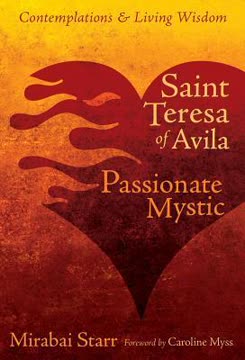
Readers widely praise Saint Teresa of Avila for its accessibility, wisdom, and spiritual depth. Mirabai Starr's commentary and translation are frequently highlighted as illuminating and relevant for modern readers. Many appreciate the book's compact format, describing it as a perfect pocket companion filled with meaningful insights. Reviewers connect deeply with Teresa's mystical experiences and her ability to blend the sacred with the ordinary. Several readers note the book sparked curiosity about related saints and mystics. The overall rating of 4.46 reflects strong enthusiasm, with only minor criticism around its introductory rather than biographical nature.