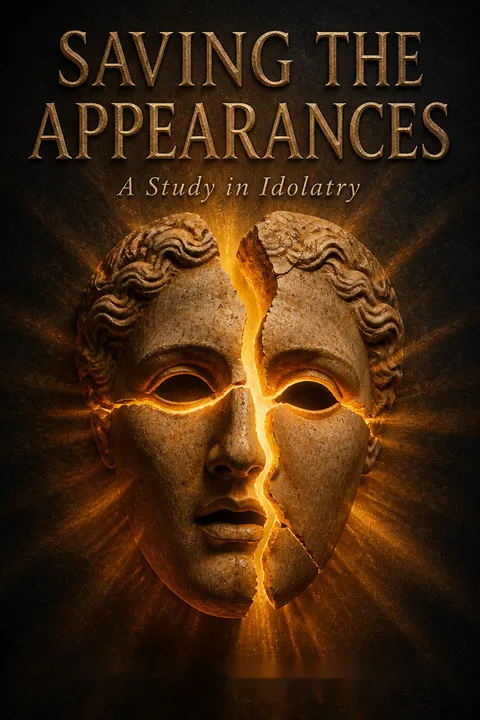
Ideas clave
1. Our Perceived World is a System of Collective Representations
The familiar world which we see and know around us—the blue sky with white clouds in it, the noise of a waterfall or a motor-bus, the shapes of flowers and their scent, the gesture and utterance of animals and the faces of our friends—the world too, which (apart from the special inquiry of physics) experts of all kinds methodically investigate—is a system of collective representations.
Beyond raw sensation. The world we experience daily is not merely an objective, independent reality. Instead, it's a system of "collective representations," meaning it's a shared mental construct shaped by human consciousness. Just as a rainbow is the outcome of raindrops and our vision, a tree is the outcome of "particles" (the unrepresented) and our senses and minds.
Figuration's role. This process involves "figuration," an unconscious activity within us that converts raw sensations into recognizable "things." While our senses provide the basic input, our minds actively construct the coherent world we perceive. This means a significant part of what we call "reality" is our own contribution, a fact often overlooked in modern thought.
Shared reality. The difference between a hallucination and a "real" tree is its "collectivity"—it's a representation shared by many. This shared experience forms the basis of our common sense, yet it doesn't negate the underlying representational nature of phenomena. Understanding this distinction is crucial for re-evaluating our relationship with nature and the evolution of consciousness.
2. Ancient Consciousness: Original Participation
The essence of original participation is that there stands behind the phenomena, and on the other side of them from me, a represented which is of the same nature as me.
Deep connection. Historically, early humans experienced "original participation," a state of consciousness characterized by an immediate, extra-sensory link with phenomena. They perceived nature not as inert objects, but as living representations imbued with psychic and voluntary qualities, often attributed to gods, spirits, or "mana."
Integrated self. In this state, the "represented" (the underlying reality) was felt to be external yet akin to the perceiving self, not merely an internal mental construct. This meant a profound integration of man with nature, where the human soul was seen as one of many "stopping-places" for a universal life principle, rather than an isolated entity.
Pre-logical perception. This participation was not a theoretical belief but an immediate, lived experience, preceding our modern distinctions between literal and symbolic. Anthropological evidence suggests that primitive minds were "prelogical," perceiving synthetic wholes where the explanation was inherent in the representation itself, rather than inferred through cause and effect.
3. The Scientific Revolution Ushered in Idolatry
A representation, which is collectively mistaken for an ultimate—ought not to be called a representation. It is an idol.
Shift in perception. The scientific revolution marked a profound shift, as humanity began to treat phenomena as wholly independent, mechanical objects. This "alpha-thinking" aimed to exclude participation, leading to a "literalness" where the mechanical models of science were taken as the ultimate, exclusive structure of the universe.
Creation of idols. When collective representations are mistaken for ultimate, independent realities, they become "idols." This "idolatry" stripped phenomena of their representational overtones, eliminating the last traces of original participation. The world became a collection of "dead" objects, devoid of inner life or meaning, existing "out there" without human involvement.
Consequences for science. This mechanomorphic view, while enabling precise quantitative analysis and technological advancement, also led to a "dashboard-knowledge" of nature, focusing on manipulation rather than intrinsic understanding. It fostered a fragmentation of science, losing sight of any unifying principle and obscuring the true, participatory nature of reality.
4. Consciousness and Nature Evolve Together
It is only necessary to take the first feeble step towards a renewal of participation—that is, the bare acknowledgement in beta-thinking that phenomena are collective representations—in order to see that the actual evolution of the earth we know must have been at the same time an evolution of consciousness.
Correlative evolution. The evolution of the natural world is inextricably linked to the evolution of human consciousness. Any description of Earth's history, particularly before human appearance, implicitly relies on the assumption of a human-like consciousness to perceive those phenomena. Without consciousness, there are no "appearances," only the "unrepresented."
Beyond biological evolution. This means that evolutionary changes are not solely biological or limited to pre-history; they include subtle shifts in consciousness measurable over centuries. The prevailing "evolution of idols" (e.g., Darwinian theory applied to a dead, objective nature) distorts our understanding of human consciousness by assuming a static human mind observing unchanging phenomena.
Forces beneath the threshold. The historical development of consciousness is not merely a dialectical progression of ideas. Deeper, subliminal forces drive significant shifts, such as:
- The sudden emergence of Aryan cultures.
- The Greeks' speculative thought.
- The Jewish nation's unique impulse to eliminate participation.
These changes indicate an underlying evolutionary process shaping how humanity perceives and interacts with the world.
5. Language Reflects and Shapes Consciousness
Throughout the recorded history of language the movement of meaning has been from concrete to abstract.
Semantic shift. The history of language reveals a consistent semantic progression from concrete, perceptible objects or physical activities to abstract concepts. Words like "understanding" (once "standing under") or "melancholy" (from "black bile") show how meanings have become increasingly divorced from their original sensory roots.
Beyond metaphor. The traditional theory that abstract meanings arose purely from metaphor (e.g., primitive man inventing words for concrete things, then using them metaphorically for inner life) is flawed. This theory assumes an early human mind already perceiving a world like ours, which contradicts the evidence of original participation.
Roots of participation. Instead, many ancient words point back to a time of "original participation," where the distinction between outer and inner, phenomenon and name, was not yet exclusive. Language did not merely describe nature; it co-arose with nature, embodying the unity of sound and meaning. The "roots" of language are echoes of nature sounding in man, reflecting a time when the name was the form, and the form was the name.
6. Jewish Iconoclasm: A Unique Path to Detachment
The Jews, with their language trailing vestiges of the world’s Creator and their special awareness of history, were the dawning memory in the human race.
Willed non-participation. While Greek alpha-thinking gradually eroded participation, the Jewish nation pursued a distinct, morally driven path to non-participation. Their paramount impulse was to eliminate idolatry, forbidding the making of graven images and condemning the participatory cults of surrounding nations.
Inward focus. This was not a materialist non-participation, but a concentration on an inward, ineffable God. The Old Testament emphasizes God as Creator, distinct from His creation, and knowledge of Him is primarily through moral law, not through contemplating natural phenomena. This detachment from nature's images fostered a unique "inwardness" of the Divine Name, "I AM," which was too holy to be uttered.
Memory and history. The Jewish impulse cultivated the "inwardness of the represented," making phenomena internal rather than external. This process is likened to memory in an individual, where outward appearances become inward experiences. The Jews, with their profound sense of history as a linear progression towards an end, became the "dawning memory" of the human race, preparing for a future where cosmic wisdom would reside within human consciousness.
7. Imagination as the Seed of Future Participation
We receive but what we give / And in our life alone does Nature live.
Creative power. As original participation faded, a new awareness of man's "creative" power began to emerge, particularly in art and poetry. Early hints, from Dio Chrysostom to Plotinus, suggested that imagination could create beyond mere imitation, reascending to the principles from which nature itself derived.
Romantic re-enchantment. The Romantic movement, especially through figures like Coleridge and Wordsworth, popularized the idea that if nature is "dis-godded" and experienced as alive again, it is because "in our life alone does Nature live." This marked a shift from seeking nature spirits externally to finding them within ourselves, recognizing man's inner contribution to the perceived world.
Iconoclasm's symptoms. This growing emphasis on the "creative imagination" is a symptom of "iconoclasm"—the breaking of idols. It signifies a nascent human capacity to consciously impart meaning to phenomena, transforming them from passive objects into active representations. This is a rudimentary step towards a new kind of participation, where man's inner life begins to re-enliven the world.
8. Final Participation: Consciously Re-engaging with Phenomena
To be able to experience the representations as idols, and then to be able also to perform the act of figuration consciously, so as to experience them as participated; that is imagination.
A new direction. "Final participation" is the conscious, willed re-engagement with phenomena, recognizing their representational nature and man's "directionally creator" role. Unlike original participation, which was given and unconscious, final participation is achieved through conscious effort and imagination.
Systematic imagination. This involves a systematic use of imagination, as exemplified by Goethe's scientific method, where "Urpflanze" and "Urphänomen" are potential phenomena perceived directly. This approach enhances figuration, making hitherto unconscious parts of phenomena perceptible and transforming the "unrepresented" into collective representations.
Beyond idolatry. Final participation means overcoming the idolatry that treats phenomena as independent objects. It allows us to experience nature as both objective and independent (as idols) and as participated (through conscious figuration). This dual relation is crucial for the future of both art and science, demanding profound responsibility and piety towards the world.
9. The Incarnation as the Turning Point of Evolution
In one man the inwardness of the Divine Name had been fully realized; the final participation, whereby man’s Creator speaks from within man himself, had been accomplished. The Word had been made flesh.
Culmination of history. The Incarnation of the Word, the central event of Christianity, represents the culminating point of Earth's history and the evolution of consciousness. It marks the transition from original to final participation, where the Divine Word, once external, becomes fully realized within humanity.
Christ's mission. Christ's mission was to enable this transition for all humanity. The Eucharist, where participants take the Divine substance into themselves, symbolizes this process, bridging the gap between original (unconscious, blood-based) and final (conscious, spirit-based) participation.
A missed opportunity. The crucifixion, rather than recognition, meant a tragic detour. The Jewish nation, poised to realize the inwardness of the Divine Name, instead externalized God, creating a chasm between Creator and man. This intellectual pharisaism, later amplified by the scientific revolution, swept away the last vestiges of original participation before final participation could fully blossom.
10. Saving the Appearances: A Moral Imperative
The appearances will be ‘saved’ only if, as men approach nearer and nearer to conscious figuration and realize that it is something which may be affected by their choices, the final participation which is thus being thrust upon them is exercised with the profoundest sense of responsibility, with the deepest thankfulness and piety towards the world as it was originally given to them in original participation, and with a full understanding of the momentous process of history, as it brings about the emergence of the one from the other.
Preventing chaos. The future of nature and human coherence depends on "saving the appearances." If humanity eliminates all original participation without cultivating final participation, it risks losing all meaning and coherence from the cosmos, leading to a "fragmentation of science" and a societal "idiocy" where communication breaks down.
Moral demand. This transition to final participation is not merely an intellectual exercise but a profound moral demand. It requires a "goodness of heart and a steady furnace in the will" to consciously shape the phenomenal world. Imagination, in this context, is a cardinal virtue, combating the "besetting sin of literalness" that underpins idolatry.
Transformative vision. The world of final participation promises a re-enchanted reality, sparkling with a light derived from conscious human engagement. This involves embracing our "directionally creator" relation to phenomena with responsibility, gratitude for the world as originally given, and a deep understanding of history's role in this evolution.
Resumen de reseñas
También leyeron

Descargar PDF
Descargar EPUB
.epub digital book format is ideal for reading ebooks on phones, tablets, and e-readers.








































