Plot Summary
Ghosts and Gilt Invitations
Rain batters the walls of the family's old Vermont farmhouse, where siblings Guinevere (Guin) and Ennis Sharpe, children of the famed (and now deceased) author Edith Sharpe, uncover books lining the attic. One battered book conceals a golden admission card—neither a mere library checkout slip nor an ordinary object, but a talisman glittering with secrets and promises. Even in childhood, both sense, and flee from, hidden presences among the shelves—shadows of the librarian, ghosts of the past, and the weight of being children whose very names, likenesses, and inner worlds have been mined for their mother's literary success. The card is a portal, a symbol, a pact: "Admits Two." The children's story begins with this uneasy mixture of love, loss, and a door-ready promise of transformation.
Saintly Girl, Monster Brother
As an adult, Guin moves through public life as both the curated "living avatar" of her mother's book character and a broken person. Promotion for her memoir is complicated by her brother's refusal to participate in any Ninth City nostalgia. Ennis, now a controversial artist, is estranged and rendered monstrous by the world's gaze and his own trauma. On a TV set, members of the public (and cynics alike) project their memories and wounds onto Guin, expecting her to be an idol or a scapegoat. Hidden family secrets fester beneath the media's glare, while Ennis becomes infamous—his next art show, pointedly titled "Mother," threatens to resurrect everything the Sharpe children tried to bury. The siblings' unresolved childhood aches ripple into adulthood, twisting love, art, and identity into new forms.
Broken Family, Enchanted House
Edith Sharpe moves her husband Llewellyn and their children from Venice to a neglected Vermont house. The house, with animals carved in wood and secrets in every room, becomes their world. Edith is haunted and otherworldly; Llewellyn alternates between dazzling and depressive, his own dreams faded by scandal and illness. The parents are spectral presences—Edith locked away to write, Llewellyn obsessed with keeping the old bones of the place together. The children, unsupervised, carve kingdoms from woods and orchard, their bond so deep as to seem unbreakable. Yet the house is hungry, reshaping itself according to their stories even as it drains from them the innocence and certainty they yearn for.
Orchard Bees and Hidden Hands
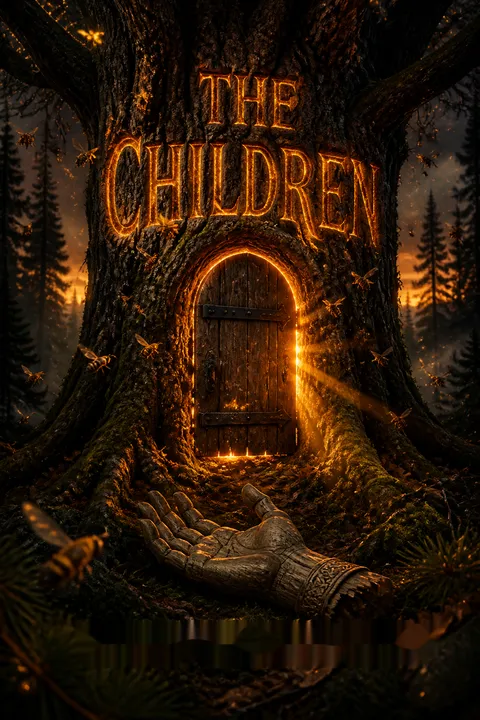
Among the farmhouse's treasures, the siblings find a carved wooden hand—luminous, feminine, missing from a forgotten sculpture, its finger broken like a witch's curse. Bees swarm the orchard through summer and autumn, omens both protective and deadly. An enigmatic caretaker and his red dog are ambiguous guides, warning and aiding them without explanation. The siblings turn found objects into rituals: guns as pirate muskets, wooden hands as talismans, secrets buried and barely understood. In the distance, the orchard's bees murmur their own ley lines as the children play at war, not knowing the real battles rumble beneath the surface—between parents, between siblings, between the living and the dead.
The Power of Stories
Guin discovers the solace and peril of writing: her secret stories bleed into her mother's books, and vice versa. The siblings' make-believe becomes indistinguishable from their lived pain, while the adults harness these inventions for art and for survival. Edith retreats wholly into her writing, crafting the beloved Ninth City series from the tender parts of her children—but also, at times, from their wounds. Llewellyn, denied his old vanities, becomes the house's apothecary and storyteller, spinning tales both healing and corrosive. The children, their identities already looted by fiction, wonder who they really are, and what price "being the story" demands.
Mother's Shadow, Father's Light
The sharp divide between Edith's love for her stories and her children wounds Guin and Ennis irreparably. Llewellyn's ability to nurture flickers alongside his longing for lost fame. Private resentments, infidelity, and emotional abuse seethe in nighttime arguments that seep through bedroom doors. Motherhood, for Edith, is less an identity than a haunting—she is both the nurturing keeper and the predatory presence. Parental wounds connect generations: Edith's desire to be a "respected woman, not a child bride" echoes her own mother's failures. For Llewellyn, fatherhood is a role played (sometimes well, sometimes in abjection), his true self lost somewhere between "Sun King" and hollowed-out man.
Unraveling Family Myths
Strangers—caretakers, artists, acolytes, and Jonathan, the mother's sinister editor—recur like omens. The children's cult status breeds trespass and danger: readers cross into their boundaries, and predators, both literal and psychic, enter their lives. As adolescents, the mythos of their family becomes a curse, luring the hungry and dangerous. Sibling quarrels and shared secrets combust under the strain of exposure. Mother's writing room becomes a taboo locus; the wooden hand, a vessel of buried magic and unresolved harm. As childhood ends, nostalgia curdles, and former fantasies (books, visitors, family) become traps holding the siblings in patterns of secrecy and desire.
Night of Endless Doors
Night becomes a place of trembling—endless trips to the bathroom, ghostly parental arguments, ominous noises through the house. For the children, sleep is never safe. Dreams turn into stories; stories coil into omens. Doors literal and metaphorical abound: attic hatches, hollow desks with brass hands, walls where mothers knock at night. Magic flickers in the edges—the wrongness in Edith's writing room, the desk full of "keys", and the sense that the house itself is a living archive, writing its own book from their memories and wishes. Love—maternal, fraternal, artistic—is inseparable from loss and the possibility of being devoured.
Fire, Bees, & Becoming Orphans
The explosive climax covers the farmhouse's last night—bees swarming halls in unexplainable floods, a kitchen ablaze, windows detonating, and the siblings forced to flee into the woods. In the aftermath: blood, shock, "wrong" bodies and stories, finger amputations (Edith's lost wedding ring; Ennis's severed hand), and a new existence as living reminders of tragedy. The children, alone and stilled, become property of their grandparents, forcibly separated. The world makes legends of them: "the sole survivors of a fire so voracious there was nothing left to bury." The reality—fear, shame, survivor's guilt—is their real inheritance, and the foundation for all that comes after.
Children Made of Stories
In public, Guin is the "story" her mother wrote, forced to perform the polished role of grieving child, orphan, avatar. She tries to control her own story through memoir, only to distort it further for media consumption. Ennis, the "monster brother," wears infamy like a badge, cannibalizes his own history for art, and refuses to participate in the myth. Both siblings are haunted—by the house, the fire, and the Ninth City itself, which fans and journalists now own as "shared cultural property." Attempts to love (through Hank, publicists, old school friends) collapse under the weight of their unresolved trauma.
Sins of the Architect
Ennis crafts immersive art installations—The Door Museum, Film Still—that function as psychic traps, consuming fragments of his audience in exchange for unwanted enlightenment, as if channeling the same creative "force" that once haunted Edith. Art and memory are dangerous: when a student dies exploring one of Ennis's shows, and a woman's suicide is linked to his work, the line between creative genius and predatory magic smears. The children learn the truth: Mother (the "Architect") is not just a metaphor, but a supernatural entity (or force) that has shaped, fed on, and destroyed the Sharpe line for generations, promising creative brilliance at unspeakable cost.
The Artist's Hunger
Guin's confrontation with Ennis in the dreamlike woods is both literal and metaphysical—the siblings meet at the heart of their own myths, forced to own the darkness that made them. Ennis admits his complicity with Mother, the truth of the family bargain, and his deliberate choice to trade innocence for survival (and artistic power). Guin realizes her own complicity—her longing for stories, her desire for meaning, her willingness to accept the "even trade" if it means escaping the drab pain of adulthood. They choose, together, to claim their inherited magic: not as penance, but as agency—and become, anew, "Mother's children." The price is known, and embraced.
Graveyards of Memory
Years after the fire, Guin returns to Vermont, adulthood a costume, luminous with loss. The farmhouse and orchard are gone, replaced by wildflowers—a natural grave, a magic ward, a living story. The land is still haunted; the possibility of reunion with her brother is both promise and threat. The world's attempts to commodify and mythologize her pain leave her more uncertain, hungrier, but not erased. Memory is unreliable, and magic cannot erase grief. Yet something survives: the love that binds her to Ennis, a new chance to write her own ending, and the realization that what began as fiction has forever reshaped reality.
Haunted by Mother
The border between the creative and the monstrous dissolves. Within Ennis's final installation, the Graveyard (constructed in a factory, simultaneously art and sorcery), Guin passes through doors that reveal her own past, her family's ghosts, and the truth about "Mother." The Architect—the original creative hunger, the shadow mother, the true source of both Edith's inspiration and demise—has traversed generational lines, feeding on bright children and leaving behind hollows and ruins. Yet this haunting is not only grief and loss: it is also the inheritance of genius, the burning, selfish need to create something transcendent no matter the cost.
Opening the Factory Door
Ennis's exhibition, "Mother," is equal parts memory palace, magical snare, and confrontation with the family curse. Within impossible spaces (remade house, woods, lost studios), Guin journeys through mirrors of her life—childhood talismans, lost friends, the labyrinth of stories and betrayals. Every "door" offers a vision, a wound, an answer. At its heart, she is handed the literal key: her brother's finger, transformed by sacrifice, and Edith's chain. Opening the final door means passing into an impossible wood, where her brother waits (an Eden that is both blessing and trap), and is also a final act of surrender to their legacy.
Reunion in the Impossible Woods
In the timeless wood, siblings are reunited—not as lost children but as changed beings. Ennis tells, and Guin reckons with, their true story: the family curse is real and cyclical, a compact with Mother, a being who can grant magical gifts in exchange for terrible losses (fingers, families, souls). Together, the Sharpe siblings decide: they will no longer be merely victims. Instead, they claim their monstrous inheritance, offering "tithes," opening new doors, becoming the new "Mother's children"—artists and keepers of their own legacy, if not wholly in charge of their fate.
The Price of Imagination
Acceptance is not absolution. Guin is confronted with choice: either become like Edith—a creative thief feeding on herself and others—or step into a second childhood, a willing participant in the magic of the eerie woods. They agree to let go of regret, empathy, shame. The "even trade" is fully owned: their pain for power, their story for a chance at happiness and creative agency. There is relief in surrender. In the world, they will finally write the sixth book; in the magical realm, they become new iterations of creators and dreamers, guardians of the cyclic, haunted city they inherited.
Architect's Key, Children's Crown
In the real world, the siblings negotiate terms with their mother's publisher—no longer orphans, but authoritative writers and artists set to finish the Ninth City series on their own terms. Their missing fingers are a personal and public mark: symbols of sacrifice, complicity, and power. The world's hunger for stories is eternal, and the cycle begins anew: they offer the "Architect's Key" to readers, promising an ending (and a beginning), telling a story that's as much spell as confession. The last page is both an excerpt from the final book and a fairytale echo of reunion—where the lost children, at last, become their own kind of myth.
Analysis
Melissa Albert's The Children is a modern Gothic—a meta-fable and a meditation on the monstrous inheritance of creativity, trauma, and myth. Its greatest insight is that stories are not mere comfort: they are hungry; they take, transform, and sometimes destroy. The book interrogates what is owed by artists (and parents) to the people who form their material, and what it means for children to live inside a story not of their own making. Themes of maternal absence, the sacrifice of innocence, and the intertwining of genius and damage are illuminated not just as family tragedy, but as metaphysical curse. The siblings' decision to accept, then wield, their inheritance—choosing to become monsters and creators—is both a horror and an emancipation. The Children is a cautionary tale for our age of narrative oversharing, legacy-building, and artistic hunger. Its ultimate lesson: the price of "admitting" oneself to the land of story is inexorably steep, and those keys, once turned, redraw the border between wish and nightmare, love and consumption, until nothing remains but the unending city of our own making.
Review Summary
People Also Read
Characters
Guinevere (Guin) Sharpe
Guin is both the protagonist and the embodiment of all the book's tensions: the child whose name, face, and psyche were plundered for her mother's stories, and the adult trying to shape a life after unimaginable loss. Endlessly split—between public and private self, fiction and reality, love and resentment—she masks pain with polished charm while seething with longing to be understood and seen. Her relationship with Ennis is foundational, wrapped in adoration, envy, and shared trauma; adult estrangement is a wound that refuses to close. Through the story, Guin is forced to reckon with her complicity in perpetuating myths, her hunger for story, and her ultimate willingness to bargain for agency—even at monstrous cost. Her psychological arc vacillates between victim, survivor, and self-claimed monster.
Ennis Sharpe
Ennis grows from Guin's beloved partner-in-crime to a sullen, inscrutable young man, and finally to an infamous, haunted artist whose work manipulates, destroys, and beguiles. Marked by loss and family lore, estranged from his sister by pain and mutual guilt, Ennis is both monster and martyr—his sacrifice of a finger (mirroring Edith's), and his bargain with "Mother," transform him into both victim and new Architect. He is driven by an endless hunger: to be known, to create, to escape the curse, but not at the cost of his sister. His installations serve as both confessions and traps. Ennis's psychological complexity rests in his oscillation between love and predation, guilt and self-justification. Ultimately, he chooses to claim agency in monstrosity—and invites Guin to do the same.
Edith Sharpe ("Mother" / The Architect)
Edith is the absent center—half human, half myth, at once brilliant and hollowed out. Her love for her children is refracted through creative obsession; she gives them literary immortality but at the cost of emotional nourishment and psychic safety. The root of the family curse, she is both a real mother (wounded, hungry, lost) and the literal Architect in the Ninth City: the being who bargains away innocence for stories. Psychoanalytically, Edith represents creative consumption—she loves by devouring, and she is herself devoured by story and legacy. Even in death, Edith's presence (as haunting, Architect, "Mother," and psychical virus) shapes the siblings' fates.
Llewellyn Sharpe
Llewellyn is a theater actor fallen from promise, his career and self-esteem battered by scandal and the inexorable pull of Edith's orbit. His love for his children is sincere (the "shepherd/apothecary"), but he is too wounded and self-absorbed to protect them. His decline—marked by strange, recurring dreams and eventual hollowness—mirrors the fate of the men before him. Llewellyn is emblematic of ordinary creativity, "landlocked" by monstrosity and unable to withstand the artistic or emotional appetites swirling around him. He is both nurturing and absent, a luminous shadow whose tragic arc compounds the children's loss.
Jonathan Froud
Jonathan is the mother's publisher and constant house guest. He garners suspicion and dislike from both the children and readers, representing the external exploitation of the family's story for fame and profit. He is manipulative, calculating—his interest in the children is professional rather than nurturing, and he both catalyzes and enables Edith's transformation of her children into "content." Psychoanalytically, he is the intruder, the invasive witness to the destruction of the family, and a key figure in the story's commentary on exploitation.
Anne Read (the artist)
Anne, the rural artist whose presence in the Sharpe orbit is marked by light, joy, and true creative possibility, serves as a counterpoint to Edith's devouring artistry. She is open-hearted and creative, befriending the children, but—despite her resilience, kindness, and strong sense of play—she is ultimately consumed (dying by suicide) as the family curse spreads. Anne's brief arc exposes the cost to any "bright" outsider caught in Mother's web, highlighting the unresolvable tragedy at the heart of the Sharpe legacy.
Hank
Hank, the Brooklyn schoolteacher, is Guin's fiancé and symbolic lifeline to normalcy. He is decent, loving, and an ultimately impossible partner for Guin; he seeks access to her pain, but cannot truly hold it. Their romance—beginning as fairytale escape, ending in necessary dissolution—reveals both Guin's yearning to escape her fate and the impossibility of ordinary love for those forged by monstrous inheritance. Hank is a lens for the book's critique of intimacy: to love these children is to confront the void at their center.
Arthur Borelli
Arthur, artist and brief house guest, is both a mirror and a warning for Guin. Gifted, vulnerable, and ultimately driven from the family's world by the consuming nature of both Edith and Mother. Psychoanalytically, Arthur symbolizes the "outside world"—what creativity might be without coercion—and the price of proximity to curse.
Bitsy (Elizabeth Keen Cooper)
As Guin's and Edith's grandmother, Bitsy serves as both rescuer and cold comfort after the fire. Her own relationships with family, art, and power are as fraught as her daughter's. If Edith is the "bad mother," Bitsy is the model of maternal detachment, unable or unwilling to offer the warmth and healing Guin needs. She is a reminder that the family curse is not merely supernatural—but embedded in inherited patterns of coldness, ambition, and avoidance.
Candy
Candy, longtime assistant to Ennis and survivor of her own self-destruction, binds herself to Ennis with devotion. Her arc is one of helpless witness—unable to mitigate his choices, suffering as both confidante and outsider. Candy illuminates the cost of loving someone consumed by their own legend, and the limitations of loyalty in the face of inexorable tragedy.
Plot Devices
Nested Storytelling and Meta-Fiction
The novel operates on multiple levels of narrative: recollections, invented stories, book excerpts, and the literal city of dreams. The siblings' own fictions (childhood rituals, notebooks, the stories they invent to survive), their mother's books, and Ennis's art all refract and iterate past traumas. Real events are disguised as "Ninth City" adventures, the invented hallways and portals standing in for wounds both psychic and physical. The book meditates openly on how stories are used for both destruction and salvation—and how the lushness of fantasy is fed by real suffering.
Recursive Doors and Objects as Magical Technologies
Throughout the book, literal and figurative "doors" proliferate: attic hatches, the architect's tree, "admit" cards, keys, hands, and rooms whose doors may or may not be real. These offer access—to stories and to trauma, to magic and to creative power—but at severe cost. The carved hand (an unassembled witch-effigy), string lights, keys, and even severed fingers recur as tokens or validators of entry into new worlds or new states of being.
Hauntology, Doubling, and Estrangement
Parental figures (especially Edith and "Mother") are at once loving and monstrous. Past, present, and invented "future stories" exist in superposition, with trauma endlessly repeating and recasting itself. Child and adult, real and fictional selves, are doubled and reflected, sometimes cannibalizing each other. These doublings sustain the mysterious force (or curse) that governs the Sharpe legacy, and the siblings' eventual choice to embrace monstrosity is the ultimate act of self-doubling.
Immersive and Impossible Art
Art (whether by Edith or Ennis) is not a neutral aesthetic exercise. Ennis's work ("Mother" and other immersive shows) produces real harm (fatalities, creative "hollows"). The exhibitions are both confession and spell—offering catharsis or death to participants, and making the siblings both magicians and executioners. This extends the novel's strongest theme: the price of the artist's hunger, and the collateral damage inflicted on the audience and loved ones.
Foreshadowing, Unreliable Memory, and Nonlinear Structure
The book is structured in discontinuity—present-day unravelings trigger glancing returns to the past, while dreams and visions offer ambiguous guides. Key events (the fire; the loss of fingers; fatal installations; the night of truth in the woods) are foreshadowed and revisited, each time accruing new trauma and altered meaning. Memory is suspect; the "truth" emerges by accretion, not revelation.
Download PDF
Download EPUB
.epub digital book format is ideal for reading ebooks on phones, tablets, and e-readers.








































