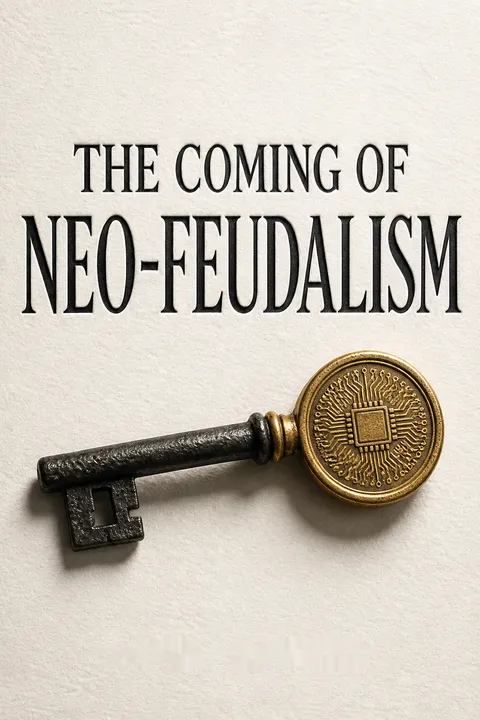
Key Takeaways
1. Neo-Feudalism's Return: A Hierarchical Shift
What we are seeing is a new form of aristocracy developing in the United States and beyond, as wealth in our postindustrial economy tends to be ever more concentrated in fewer hands.
Echoes of the Past. Modern society is experiencing a resurgence of feudal-like structures, characterized by a rigid social hierarchy, concentrated wealth, and limited upward mobility. This isn't a literal return to knights and serfs, but a new system where power and privilege are increasingly concentrated in the hands of a few, mirroring the static class structures of the Middle Ages.
- Wealth is increasingly concentrated at the top, with the top 1% controlling a disproportionate share of global assets.
- Social mobility is declining, making it harder for people to move up the economic ladder.
- A new "clerisy" of intellectuals and experts provides ideological support for this emerging hierarchy.
A Global Phenomenon. This trend isn't limited to the United States; it's a global phenomenon affecting countries across Europe, Asia, and Australia. The benefits of economic growth are increasingly flowing to the wealthiest, while the middle and working classes struggle to maintain their standard of living. This shift is creating a more stratified society with diminishing opportunities for most.
A Warning to the Middle Class. This book serves as a warning to the global middle class, highlighting the dangers of this neo-feudal trend. It calls for action to halt the current trajectory toward a society defined by class immobility and immense concentrations of wealth and power. The author emphasizes that this is not a partisan issue, but a global challenge that requires a unified response.
2. The Oligarchs: Tech's New Aristocracy
These technocratic elites are the twenty-first-century realization of what Daniel Bell prophetically labeled “a new priesthood of power” based on scientific expertise.
Digital Land Grab. The rise of tech giants has created a new class of oligarchs who control vast digital empires, wielding unprecedented economic and cultural power. These companies, often based in Silicon Valley, have achieved monopolistic or duopolistic control over key markets, eclipsing the old industrial economy.
- A small number of tech firms dominate search, social media, cloud computing, and e-commerce.
- These firms have amassed enormous wealth, creating a new class of tech billionaires.
- They are increasingly resistant to competition and seek to expand their influence into other sectors.
Beyond Entrepreneurship. While these tech leaders were once celebrated as innovative entrepreneurs, they now resemble an exclusive ruling class, resistant to any dispersion of their power. They are not just creating value, but also shaping the culture and controlling the flow of information. This concentration of power raises concerns about the future of democracy and individual freedom.
China's Tech Elite. China is also developing its own tech oligarchy, often intertwined with the ruling Communist Party. This model of state-directed capitalism, combined with advanced surveillance technology, presents a challenge to the liberal capitalist model. The Chinese government is using AI to regulate society and public opinion, raising concerns about the future of freedom and privacy.
3. The Clerisy: Justifying the New Order
The modern clerisy often claim science as the basis of their doctrines and tout academic credentials as the key to status and authority.
Intellectual Legitimizers. Just as the medieval clergy supported the feudal order, a new "clerisy" of intellectuals, academics, and media figures provides intellectual support for the emerging neo-feudal hierarchy. This group, often sharing similar views with the oligarchs, shapes public opinion and promotes a secular orthodoxy.
- The clerisy dominates universities, media, and cultural institutions.
- They often share a common worldview with the oligarchs, particularly on globalism and the environment.
- They seek to replace traditional values with "progressive" ideas about globalism, sustainability, and the authority of experts.
The New Orthodoxy. The modern clerisy often claims science and academic credentials as the basis of their authority, seeking to replace bourgeois values with "progressive" ideas. They promote a worldview that emphasizes globalism, environmental sustainability, and the authority of experts, often dismissing traditional values as outdated or harmful. This new orthodoxy is inculcated through higher education and media, aided by the oligarchy's control of information technology.
Dangers of Technocratic Rule. The rise of a powerful, unelected clerisy poses a threat to liberal democracy. History shows that rule by "experts" or those claiming intellectual superiority can lead to tyranny and oppression. The clerisy's tendency to impose their own values and suppress dissenting opinions is a cause for concern.
4. The Embattled Yeomanry: Squeezed Middle Class
Historically the yeomanry played a critical part in overturning the feudal order—but today their counterparts are being squeezed beneath the oligarchy.
The Third Estate. The "yeomanry," or the modern middle class, is being squeezed by the rising power of the oligarchs and the clerisy. This group, once the backbone of liberal capitalism, is facing diminishing opportunities and declining economic security.
- Upward mobility for the middle class has stalled, with fewer opportunities to climb the economic ladder.
- Homeownership rates are stagnant or declining, making it harder for families to build wealth.
- Globalization and technological change have eroded middle-class jobs, leading to economic insecurity.
A Divided Third Estate. The Third Estate is increasingly divided between a property-owning middle class and a working class that is becoming more like medieval serfs. The working class faces diminishing chances of owning significant assets or improving their lot, except through government transfers. This division weakens the potential for a unified challenge to the dominant orders.
A Source of Resistance. Despite their declining fortunes, the yeomanry still has the potential to challenge the oligarchs and the clerisy. They are no longer quiescent in the face of globalism and technological obsolescence, and their anger is fueling populist movements and protests. This resistance, however, is often fragmented and lacks a clear vision for the future.
5. The New Serfs: A Precarious Working Class
Like the revolutionaries of 1789, many in today’s Third Estate are disgusted by the hauteur and hypocrisy of the upper classes.
The Precariat. The modern working class is increasingly becoming a "precariat," characterized by precarious employment, low wages, and limited control over their working conditions. This group, often working in the gig economy or in low-wage service jobs, faces diminishing opportunities for upward mobility.
- The shift from manufacturing to service jobs has led to a decline in well-paying blue-collar work.
- The gig economy offers flexibility but often lacks job security and benefits.
- Many workers are forced to rely on government assistance to make ends meet.
Cultural Erosion. The economic decline of the working class is often accompanied by cultural erosion, including the breakdown of family structures and community ties. This social decay further weakens their ability to challenge the dominant orders.
- Single parenthood and out-of-wedlock births are on the rise.
- Rates of drug addiction and suicide are increasing in working-class communities.
- Traditional institutions like churches and unions are losing influence.
A Potential for Rebellion. The growing discontent among the working class could lead to a new kind of "peasant rebellion," as they become increasingly frustrated with the policies and values of the oligarchs and the clerisy. This rebellion could take various forms, from political protests to social unrest, and could pose a serious challenge to the existing order.
6. The Gated City: A Divided Urban Landscape
Like the castle towns of Japan or the walled cities of medieval Italy, a few choice locales are enclaves of privilege, while the less appealing places are inhabited by the newly servile classes.
Urban Bifurcation. The modern city is becoming increasingly divided between affluent, gentrified areas and impoverished, neglected peripheries. This trend reflects the growing economic inequality and the concentration of wealth in a few urban centers.
- "Superstar cities" attract the wealthy and highly educated, while pushing out the middle and working classes.
- Gentrification displaces long-time residents, often minorities, and creates a more segregated urban landscape.
- The urban core becomes a playground for the elite, while the periphery is left to struggle.
The "Smart City" Dystopia. The push for "smart cities," driven by tech companies, threatens to further entrench this urban hierarchy. These cities, with their emphasis on surveillance and data collection, could become tools for social control, limiting individual freedom and autonomy.
- Data collection and surveillance become ubiquitous, eroding privacy.
- Algorithms are used to manage and control urban life, reducing human agency.
- The focus on efficiency and control comes at the expense of community and social interaction.
A New Form of Urban Feudalism. The emerging urban landscape resembles a new form of feudalism, with the wealthy living in gated communities and the poor relegated to the periphery. This division undermines the traditional role of cities as engines of upward mobility and opportunity.
7. A Manifesto for the Third Estate: Reclaiming the Future
The future course of history is never inevitable if we retain the will to shape it.
A New Political Paradigm. To challenge neo-feudalism, a new political paradigm is needed that focuses on expanding opportunities for the middle and working classes. This approach must move beyond the current emphasis on redistribution and subsidies, which only serve to entrench dependency and consolidate power.
- Policies should promote upward mobility, not just alleviate poverty.
- The focus should be on creating a more equitable economic system, not just a more "sustainable" one.
- The goal should be to empower individuals and communities, not just to expand the power of the state.
Reclaiming Liberal Values. The Third Estate must reclaim the values that once drove the rise of liberal capitalism, including a commitment to individual freedom, property rights, and upward mobility. This requires a rejection of the "progressive" orthodoxy that seeks to replace these values with a new form of social control.
- The importance of family, community, and nation must be reaffirmed.
- The value of literacy, learning, and critical thinking must be emphasized.
- The need for a robust public sphere, where diverse viewpoints can be expressed and debated, must be recognized.
A Call to Action. The return to feudalism is not inevitable. By understanding the forces at play and mobilizing to challenge them, the Third Estate can reclaim its future. This requires a new kind of politics that is rooted in the aspirations of ordinary people and committed to the principles of liberal democracy. The future is not predetermined; it is up to us to shape it.
Review Summary
The Coming of Neo-Feudalism receives mixed reviews, with some praising its analysis of growing inequality and the concentration of wealth among elites. Critics argue the book oversimplifies complex issues, displays a conservative bias, and lacks concrete solutions. Many reviewers find the feudalism analogy interesting but flawed. The author's criticism of environmentalism, academia, and progressive ideologies is contentious. While some appreciate the book's insights into societal changes, others find it alarmist and poorly researched.
People Also Read


FAQ
What is The Coming of Neo-Feudalism by Joel Kotkin about?
- Central thesis: The book argues that modern society is experiencing a resurgence of feudal-like structures, with power and wealth increasingly concentrated among a small elite, threatening the global middle class.
- Historical parallels: Kotkin draws comparisons between today’s social order and medieval feudalism, highlighting the emergence of new oligarchs and a clerisy who dominate economic and cultural life.
- Global perspective: The analysis spans the United States, Europe, China, and other regions, examining how these trends undermine democracy and social mobility worldwide.
- Call to action: Kotkin warns that unless these trends are recognized and challenged, society risks becoming more hierarchical and stagnant, eroding the foundations of liberal democracy.
Why should I read The Coming of Neo-Feudalism by Joel Kotkin?
- Insight into inequality: The book provides a comprehensive analysis of how economic, technological, and political forces are reshaping society, leading to increased inequality and diminished upward mobility.
- Context for current events: Kotkin’s historical and global approach helps readers understand the roots of today’s social and political shifts, including the decline of the middle class and rise of authoritarianism.
- Practical relevance: The book encourages readers to engage in discussions and actions to resist neo-feudal trends, making it valuable for policymakers, activists, and concerned citizens.
- Critical perspective: Kotkin critiques mainstream solutions and highlights the importance of revitalizing the middle and working classes to preserve democracy and opportunity.
What are the key takeaways from The Coming of Neo-Feudalism by Joel Kotkin?
- Resurgence of hierarchy: Modern society is moving toward a rigid, hierarchical structure reminiscent of medieval feudalism, with elites consolidating power and wealth.
- Threats to democracy: The concentration of power among oligarchs and the clerisy undermines democratic participation and accountability.
- Decline of the middle class: Economic centralization, technological disruption, and restrictive policies are eroding the economic base and social mobility of the middle and working classes.
- Need for new politics: Kotkin calls for political and cultural renewal focused on expanding opportunity, property ownership, and family stability to counteract neo-feudal trends.
What are the main concepts and definitions in The Coming of Neo-Feudalism by Joel Kotkin?
- Neo-feudalism: A modern social order marked by extreme wealth concentration, diminished mobility, and dominance by oligarchs and a legitimizing clerisy, echoing medieval feudal structures.
- Oligarchy: The small, wealthy elite who control economic resources, markets, and political influence, often bypassing democratic processes.
- Clerisy: The intellectual and managerial class—including academics, media, and cultural leaders—who shape societal values and legitimize elite dominance.
- Third Estate: The middle and working classes, historically the engine of social mobility and democracy, now increasingly marginalized and dependent.
How does Joel Kotkin define and describe "neo-feudalism" in The Coming of Neo-Feudalism?
- Modern feudal parallels: Neo-feudalism is characterized by a rigid hierarchy, with a small elite controlling wealth, power, and cultural narratives, similar to medieval lords and clergy.
- Private monopolies: The rise of monopolistic corporations, especially in technology, mirrors the land-based power of feudal lords, limiting competition and opportunity.
- Social stagnation: Upward mobility is restricted, and the majority face economic dependency and declining prospects, much like serfs in the past.
- Warning against repetition: Kotkin sees neo-feudalism as a cautionary tale, urging society to avoid repeating the mistakes that led to historical collapses.
What is the "clerisy" and what role does it play in The Coming of Neo-Feudalism by Joel Kotkin?
- Definition of clerisy: The clerisy is a broad intellectual and cultural elite—including academics, media professionals, and public intellectuals—who shape societal values and legitimize the existing hierarchy.
- Modern-day priests: They act as ideological gatekeepers, promoting globalism, environmentalism, and technocratic governance, often enforcing orthodoxy and marginalizing dissent.
- Support for oligarchy: The clerisy aligns with the oligarchs, helping to maintain their dominance and justify policies that reinforce social stratification.
- Cultural influence: Their control over education, media, and public discourse contributes to polarization and the erosion of pluralism.
How does The Coming of Neo-Feudalism by Joel Kotkin explain the role of technology and tech oligarchs?
- Tech oligarchs as new nobility: Leaders of major technology firms have amassed unprecedented wealth and influence, resembling a new aristocracy that dominates the economy and culture.
- Monopolistic control: A handful of tech companies control critical digital infrastructure, limiting competition and consolidating power over information and commerce.
- Surveillance and dependency: Advanced technologies enable pervasive data collection and monitoring, creating a "digital feudalism" where individuals’ lives are commodified and privacy is eroded.
- Labor market impact: Despite their wealth, tech firms create relatively few jobs, contributing to job polarization and precarious gig work that resembles modern serfdom.
How does Joel Kotkin describe the decline of the middle class and upward mobility in The Coming of Neo-Feudalism?
- Economic concentration: Wealth and property ownership are increasingly concentrated among a small elite, reducing opportunities for the middle class to accumulate assets or improve their status.
- Housing and inheritance: Rising housing costs and restrictive land-use policies make homeownership unattainable for many, while inheritance becomes a key factor in maintaining class divisions.
- Cultural and demographic shifts: Declining birth rates, weakening family structures, and cultural erosion undermine the social foundations that once supported upward mobility.
- Stagnation and dependency: The middle and working classes face stagnation, loss of property, and increased reliance on elites, echoing feudal patterns.
What does The Coming of Neo-Feudalism by Joel Kotkin say about the new urban geography and city life?
- Urban bifurcation: Major cities are increasingly divided into affluent cores for the elite and clerisy, surrounded by impoverished peripheries where the middle and working classes struggle.
- Gentrification and densification: Urban policies often favor high-density, expensive developments that displace families and promote a transient, childless population.
- Smart cities and surveillance: The rise of tech-driven "smart cities" promises efficiency but also increases surveillance and control, reinforcing social stratification.
- Loss of community: Traditional, family-oriented neighborhoods are undermined, reducing opportunities for social mobility and civic engagement.
How does The Coming of Neo-Feudalism by Joel Kotkin address the future of the working class and the concept of new serfs?
- Precarious employment: The working class faces job insecurity, low wages, and the rise of the gig economy, often lacking protections and benefits.
- Cultural decline: Institutions that once supported working-class communities—such as unions, families, and religious organizations—are weakening, increasing vulnerability.
- Political realignment: Disillusionment with traditional parties has led many working-class voters to support populist movements, reflecting frustration with the current order.
- Potential for rebellion: Kotkin sees the possibility of a new "peasant rebellion," but warns that current movements often lack coherent programs and risk devolving into nativism.
What solutions or actions does Joel Kotkin propose in The Coming of Neo-Feudalism to challenge neo-feudalism?
- Awareness and acknowledgment: Recognizing the dangers of neo-feudalism is the first step toward reversing its trajectory and preserving liberal democratic values.
- Empowering the Third Estate: Kotkin advocates for revitalizing the middle and working classes by expanding opportunities for property ownership, family stability, and social mobility.
- Rejecting nativism: He warns against blaming minorities or immigrants, emphasizing the need for inclusive societies that integrate newcomers while upholding democratic values.
- Cultural renewal: Rebuilding pride in Western culture and democratic achievements, while remaining open to new influences, is essential for sustaining democracy and social cohesion.
What are the best quotes from The Coming of Neo-Feudalism by Joel Kotkin and what do they mean?
- “Floods are ‘acts of God,’ but flood losses are largely acts of man.” This quote highlights the importance of human decisions and preparedness in shaping the impact of disasters, emphasizing practical solutions over fatalism.
- “Democracy is the planet’s biggest enemy.” Cited from a Foreign Policy article, this provocative statement reflects the tension between technocratic governance and democratic processes, especially in addressing crises like climate change.
- “Happy the nation whose people have not forgotten how to rebel.” Quoting historian R. H., this underscores the value of civic engagement and the willingness to challenge unjust authority as essential for a healthy democracy.
- Quotes as warnings: These and other quotes in the book serve as reminders of the dangers of complacency, the need for vigilance, and the importance of preserving democratic values in the face of rising hierarchy.
Download PDF
Download EPUB
.epub digital book format is ideal for reading ebooks on phones, tablets, and e-readers.








































