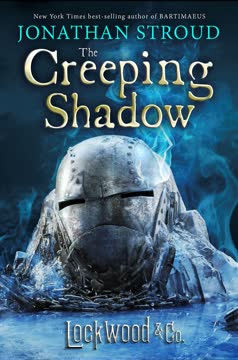
Plot Summary
Midnight Hauntings Begin
In the moonlit office, Lucy Carlyle confronts a dangerous ghost, Emma Marchment, with only her wits and the sarcastic skull in her backpack for company. The haunting is tense and chilling, with Lucy's freelance team proving unreliable and cowardly. She must rely on her own talents—Listening and Touch—to locate the Source, a mummified head hidden behind a secret panel. The encounter is harrowing, but Lucy's improvisation and courage allow her to suppress the ghost. Yet, the aftermath is bitter: adult supervisors dismiss her efforts, and Lucy is left feeling isolated, her skills undervalued. The night sets the tone for her lonely, dangerous life as a freelance agent, haunted not just by ghosts, but by the absence of true companions.
Lucy's Freelance Struggles
Lucy's life as a freelance agent is both liberating and lonely. She's respected for her rare Listening Talent, but the work is perilous and the camaraderie of her old team, Lockwood & Co., is sorely missed. The city is still gripped by the Problem—ghosts everywhere, agencies stretched thin, and many young agents dying. Lucy's days are hollow, her nights frantic. She reflects on why she left Lockwood & Co.: a vision of Lockwood's death, her own loss of control, and the fear of endangering those she loves. Despite her professional success, Lucy's heart aches for the friends she left behind, and the emptiness of her solitary victories.
Lockwood's Unexpected Visit
After months apart, Lockwood arrives at Lucy's shabby flat, catching her off guard and vulnerable. The reunion is awkward, filled with unspoken feelings and memories. Lockwood asks Lucy to join his team for a special case—Penelope Fittes herself has requested her. Lucy is torn: she's built a life apart for good reason, but the pull of her old friends and the thrill of real teamwork is irresistible. The conversation is laced with humor, embarrassment, and longing. Ultimately, Lucy agrees to help, setting aside her fears for one or two nights, and the old spark between them flickers back to life.
Penelope Fittes' Proposition
At Fittes House, Lucy reunites with Lockwood, George, and Holly. The atmosphere is tense—old wounds and rivalries simmer beneath polite greetings. Penelope Fittes, enigmatic and formidable, offers Lockwood & Co. a high-profile case: a haunting at the home of the infamous Ealing Cannibal, Solomon Guppy. She singles out Lucy's Listening Talent as essential, making it clear that Lucy's involvement is a condition of the commission. The team is both honored and unsettled, aware that success could bring new opportunities, but also that they are being tested by the most powerful figure in the field.
The Ealing Cannibal Case
The team investigates Guppy's house, a place steeped in grisly history and psychic trauma. Lucy's Listening uncovers chilling sounds—whistling, chopping, eating—echoes of the cannibal's crimes. The haunting is everywhere, the Source elusive. The team's nerves fray as the ghost's presence intensifies. In a climactic confrontation, Lucy identifies the Source: a jar of human teeth hidden beneath the kitchen. With teamwork and courage, they suppress the haunting, but the experience leaves them shaken. The case cements Lucy's value, but also exposes the dangers of their work and the emotional scars they all carry.
Reunion and Old Tensions
After the case, Lucy's return to Lockwood & Co. is bittersweet. George is hurt by her departure, Holly is polite but distant, and Lucy herself is unsure of her place. Yet, the thrill of working together again is undeniable. The team's dynamic is tested as they prepare for new challenges, and Lucy's longing for belonging wars with her fear of causing harm. Meanwhile, the black market for haunted artifacts is thriving, and Lucy's prized skull is stolen, setting off a chain of events that will draw the team into deeper danger.
The Black Market Skull
Lucy's rare Type Three skull is stolen by black marketeers, with clues leading to the Winkman family and a corrupt furnace attendant. Determined to recover it, Lucy enlists Lockwood's help. Their investigation takes them into the underworld of relic-men and illegal auctions, where danger lurks at every turn. The skull's sarcastic voice is missed, and Lucy feels incomplete without it. The quest to retrieve the skull becomes a test of loyalty, ingenuity, and courage, drawing the team into a web of criminal intrigue and supernatural peril.
The Creeping Shadow Emerges
In the cursed village of Aldbury Castle, the team faces a haunting unlike any before: the Creeping Shadow, a giant, flaming apparition that stirs up other ghosts in its wake. The village is beset by death, fear, and a sense of impending doom. The Shadow's origins are mysterious, its power unprecedented. Lucy and Lockwood witness its passage, followed by a host of the dead, and realize that something new and terrible is at work. The case becomes a race to understand the Shadow's nature and stop its devastation before more lives are lost.
The Cursed Village's Secrets
As the team investigates, they uncover layers of history—ancient battles, mass graves, and a pattern of hauntings that suggest a deeper cause. The Rotwell Institute's nearby facility raises suspicions, especially as Steve Rotwell himself appears, warning them off. The team splits up to tackle the village's many ghosts, but the Shadow's influence grows. Lucy and Lockwood's bond deepens as they face danger together, and the team's unity is tested by fear, exhaustion, and the sheer scale of the supernatural threat.
Rotwell's Sinister Institute
The team discovers that the Rotwell Institute is conducting forbidden experiments, collecting powerful Sources to create a massive psychic breach. The iron circle at the heart of the facility is a window to the Other Side, and the armored man—the Creeping Shadow—is a living person sent through to explore and manipulate the world of the dead. The experiments have unleashed chaos, causing the village's epidemic of hauntings. The team infiltrates the facility, risking everything to uncover the truth and stop the catastrophe.
Crossing to the Other Side
In a desperate bid to escape, Lucy and Lockwood cross the iron circle and find themselves in a world of the dead—a cold, gray mirror of their own, inhabited by the ghosts of Aldbury Castle. Pursued by the dead, they struggle to find their way back, relying on each other and the protection of spirit-capes. The experience is harrowing and transformative, revealing the thinness of the barrier between life and death, and the true nature of the Problem. Their escape is a triumph of will and trust, but leaves them changed and haunted by what they have seen.
The Iron Circle's Horror
The team realizes that the iron circle is not just a window, but a door—one that can be crossed both ways. The Creeping Shadow's passage has stirred up the dead, spreading the Problem like a contagion. The team's own crossing has similar effects, and they narrowly escape being trapped forever. The destruction of the circle is necessary to restore balance, but the implications are profound: the boundaries between worlds are fragile, and human actions can have catastrophic consequences.
The Battle at the Institute
As the Rotwell facility erupts in chaos, the team launches a daring assault to rescue Lucy and Lockwood and destroy the iron circle. The battle is fierce, with ghost-bombs, flares, and rapiers clashing amid the burning ruins. Steve Rotwell is consumed by the very forces he unleashed, and the team barely escapes with their lives. The skull is recovered, and the institute's secrets are exposed. The victory is hard-won, but the cost is high, and the world will never be the same.
Aftermath and Revelations
In the wake of the disaster, DEPRAC covers up the truth, and Penelope Fittes takes control of both the Fittes and Rotwell agencies. The team is celebrated for their role in ending the village's curse, but the deeper mysteries remain unresolved. Lucy and Lockwood's relationship is renewed, and the team is stronger than ever, but the experience has left scars. The Problem persists, and the forces behind it are more complex and dangerous than anyone realized.
Penelope's Chilling Warning
Penelope Fittes visits Lockwood & Co., now the most powerful figure in the field. She thanks them for their "services," but makes it clear that further meddling will not be tolerated. Her words are both a warning and a challenge, and the team resolves to continue their investigations, undeterred by her threats. The encounter is tense, revealing the true extent of Penelope's ambition and the dangers that lie ahead.
The Truth About Marissa
In a quiet moment, the skull reveals to Lucy the ultimate secret: Penelope Fittes is not who she claims to be. She is Marissa Fittes herself, somehow alive and unchanged after decades. The implications are staggering—about the origins of the Problem, the nature of the agencies, and the true enemy they face. The team stands on the brink of a new era, armed with knowledge and determination, ready to confront the mysteries that remain.
Analysis
Jonathan Stroud's The Creeping Shadow is a masterful blend of supernatural adventure, psychological depth, and social commentary. At its heart, the novel is about boundaries—between life and death, self and other, power and vulnerability. The iron circle is both a literal device and a metaphor for the dangers of crossing lines that should not be crossed, whether in science, ambition, or relationships. The story explores the costs of isolation and the necessity of connection: Lucy's journey from lonely freelancer to reunited teammate is mirrored by the team's struggle to confront forces larger than themselves. The book interrogates the ethics of power—Penelope Fittes' chilling ambition, Rotwell's reckless experiments, and the complicity of institutions like DEPRAC and the Rotwell Institute. The final revelation—that Penelope is Marissa Fittes herself—raises profound questions about identity, immortality, and the true origins of the Problem. Stroud's narrative is both thrilling and thoughtful, using ghosts as a lens to examine trauma, loss, and the resilience of the human spirit. The lesson is clear: the greatest dangers are not always supernatural, and the only way to face the darkness is together, with courage, honesty, and hope.
Review Summary
The Creeping Shadow is widely praised as the best installment in the Lockwood & Co. series, earning an average of 4.52 stars. Readers love the darker tone, fast pacing, and character development, particularly Lucy's journey as a freelance operative before rejoining the team. Fan favorites include the witty, sarcastic skull and the heartwarming friendships. Some critics note early pacing issues and repetition, while many highlight exciting plot revelations and a shocking cliffhanger ending that leaves readers eagerly anticipating the final book.
People Also Read

Characters
Lucy Carlyle
Lucy is the heart and voice of the story—a young agent with extraordinary Listening and Touch Talents, able to communicate with the dead in ways few others can. Her journey is one of isolation, guilt, and longing for connection. She left Lockwood & Co. to protect her friends from her own dangerous powers, but her love for them draws her back. Lucy's relationship with Lockwood is complex—marked by affection, frustration, and deep trust. Her bond with the skull is unique, blending sarcasm and genuine partnership. Over the course of the story, Lucy grows in confidence and self-acceptance, learning that her greatest strength lies in her willingness to risk everything for those she loves.
Anthony Lockwood
Lockwood is the brilliant, enigmatic leader of Lockwood & Co., defined by his charm, courage, and relentless drive. Haunted by the deaths of his family, he throws himself into danger with abandon, often risking his life for others—especially Lucy. His recklessness is both his greatest asset and his deepest flaw, a way of coping with grief and guilt. Lockwood's relationship with Lucy is central: he trusts her implicitly, values her talents, and is quietly devastated by her absence. His leadership is tested by the challenges they face, but his unwavering belief in his team is what ultimately saves them.
George Cubbins
George is the brains of the operation, obsessed with history, research, and experimentation. His appearance is disheveled, his manners blunt, but his loyalty is fierce. George is deeply hurt by Lucy's departure, masking his pain with sarcasm and stubbornness. He is fascinated by the mysteries of the Problem, always seeking patterns and explanations. George's scientific curiosity drives much of the plot, and his willingness to challenge authority is crucial to the team's success. His friendship with Lucy is complicated but ultimately unbreakable.
Holly Munro
Holly is the newest member of Lockwood & Co., initially seen as a rival by Lucy. She is organized, efficient, and outwardly perfect, but beneath the surface is vulnerable and eager to prove herself. Holly's relationship with Lucy evolves from tension to mutual respect, as they learn to trust and support each other. Holly's courage is revealed in crisis, and her empathy helps hold the team together. She represents the possibility of growth and change, both for herself and for Lucy.
The Skull
The skull is a rare Type Three ghost, able to communicate fully with Lucy. Its personality is caustic, mocking, and often cruel, but it provides invaluable insight and assistance. The skull's relationship with Lucy is a twisted partnership—part adversary, part confidant. It is both a symbol of Lucy's unique Talent and a reminder of the thin line between life and death. The skull's final revelation about Penelope Fittes hints at deeper mysteries and its own hidden agenda.
Quill Kipps
Once a rival supervisor at the Fittes Agency, Kipps has lost his psychic Talent and his place in the world. His journey is one of humility and adaptation, as he joins Lockwood & Co. as a consultant. Kipps's bitterness masks a desire for belonging and respect. His expertise and courage prove valuable, and his acceptance by the team is a testament to their inclusiveness and the possibility of redemption.
Penelope Fittes / Marissa Fittes
Penelope Fittes is the most influential figure in the world of psychic investigation—charismatic, beautiful, and utterly ruthless. Her interest in Lockwood & Co. is both flattering and threatening. The final revelation that she is, in fact, Marissa Fittes herself, alive and unchanged, recasts her as the ultimate antagonist—a master manipulator with secrets that go to the heart of the Problem. Her presence looms over the story, a symbol of the dangers of unchecked power and the mysteries yet to be solved.
Steve Rotwell
The head of the Rotwell Agency, Steve Rotwell is driven by rivalry with Fittes and a desire for dominance. His willingness to conduct forbidden experiments and unleash chaos for personal gain makes him a dangerous adversary. Rotwell's confrontation with Lockwood is a clash of egos and philosophies, ending in his destruction by the very forces he sought to control. He embodies the perils of hubris and the corrupting influence of power.
Saul Johnson
Johnson is the bland, forgettable face of the Rotwell Institute's darkest activities. He orchestrates the collection of haunted Sources, oversees illegal experiments, and enables the black market trade. His ordinariness masks a chilling amorality. Johnson's role is to grease the wheels of the system, making him a symbol of institutional complicity and the dangers of faceless authority.
Danny Skinner
Danny is the young client who brings the team to Aldbury Castle. His brashness and vulnerability highlight the toll the Problem takes on children. Danny's pleas for help, and his faith in Lockwood & Co., drive the plot forward. He represents the ordinary people caught in the crossfire of supernatural and human machinations, and his story is a reminder of what is at stake.
Plot Devices
Iron Circle and Psychic Breach
The central plot device is the iron circle at the Rotwell Institute—a massive assembly of haunted Sources, chained together to create a breach between the living world and the Other Side. This device is both literal and symbolic: it is a window, a door, and a trap. The chain provides a tenuous path of safety, but crossing it has profound consequences. The iron circle's power to stir up the dead, and the use of a living person (the Creeping Shadow) to explore the world beyond, drive the story's central mysteries and escalate the stakes. The device is foreshadowed by earlier hauntings and experiments, and its destruction is the climax of the narrative.
The Skull as Guide and Foil
The skull serves as both a plot device and a character, providing crucial information, comic relief, and a unique perspective on the supernatural. Its ability to communicate with Lucy allows for exposition and insight that would otherwise be inaccessible. The skull's final revelation about Penelope Fittes is a masterstroke of foreshadowing, tying together themes of identity, immortality, and the dangers of unchecked power.
Crossing Worlds and Narrative Structure
The story's structure mirrors its themes: Lucy's journey from isolation to reunion, from the world of the living to the world of the dead, is echoed in the narrative's movement between personal and cosmic stakes. The crossing of the iron circle is both a literal and metaphorical passage, blurring the boundaries between life and death, self and other. The use of multiple hauntings, investigations, and confrontations builds tension and deepens the emotional arc, while the final revelations reframe everything that has come before.
Foreshadowing and Revelation
The narrative is rich with foreshadowing: the skull's cryptic warnings, Penelope's interest in Lucy, the recurring theme of boundaries and breaches. Each haunting, each case, is a piece of a larger puzzle, culminating in the exposure of the iron circle's true purpose and Penelope's real identity. The revelations are both shocking and inevitable, the payoff for careful planting of clues throughout the story.