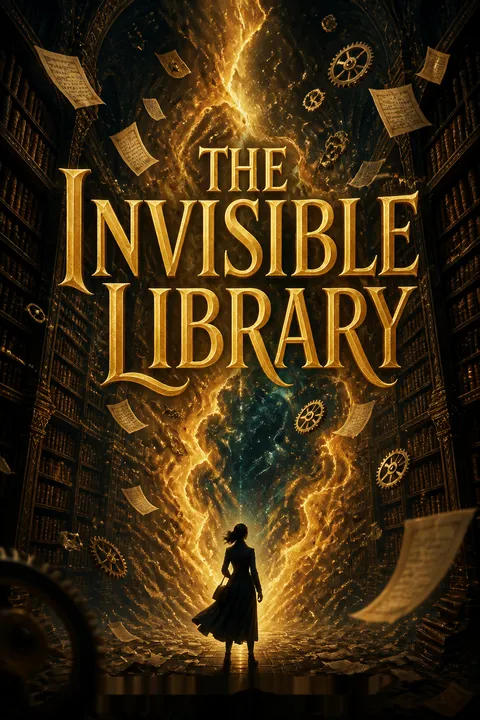

Plot Summary
Theft at Midnight Academy
Irene, undercover at a magical boy's boarding school, executes a daring midnight theft of a rare manuscript. Her mission: retrieve unique works for the mysterious Library, an extradimensional institution tasked with collecting and preserving rare books across realities. After triggering magical alarms, surviving animated gargoyle attacks, and evading hellhounds with her command of the Library's special Language, Irene escapes through a secret passage, returning safely to the Library. Despite her calm professionalism, the incident exposes her love for stories and the thrill of the chase, but also the dangers of her vocation. This opening sets a tone of wit, danger, and the complex satisfaction of working as a world-hopping book thief among magic, chaos, and hidden rules.
Summoned to New Mission
Back in the endless Library, Irene craves rest but is quickly assigned a difficult new task. Her supervisor, Coppelia, insists she mentor a promising but enigmatic newcomer, Kai, on his first field assignment: to retrieve the unique 1812 Grimm fairy-tale manuscript from a quarantined alternate—London B-395. Irene, frustrated by the rushed briefing, immediately notes the urgency; danger is hinted. Introductions with Kai are awkward—he's dazzling, cocky, and oddly formal. Together, they embark on this new mission, revealing Irene's burden of responsibility and her underlying loneliness, and introducing the complexity of Library politics, obligations, and hidden motives behind simple assignments.
A Trainee and a Rival
Navigating the labyrinthine Library, Irene and Kai are intercepted by Bradamant—her former mentor, now rival—who demands their mission. The rivalry is sharp: Bradamant is ruthless, ambitious, and widely respected, with a pattern of blaming subordinates for failures. Bradamant's sudden appearance signals political machinations beyond the official mission, and Irene's friction with both her trainee and superior hint at deeper Library schemes. Tension and distrust permeate Irene's world, showing that while the Library stands for order, ambition, secrecy, and betrayal are never far beneath its surface.
Into a Chaotic London
Irene and Kai Traverse to alternate Victorian-esque London, a world saturated with magic and chaos: vampires, zeppelins, aggressive scientific societies, and the Fae—creatures of wild glamour and narrative power. Their local contact, Librarian-in-Residence Dominic Aubrey, delivers a grim briefing: the target Grimm book was recently stolen from the murdered vampire Lord Wyndham, possibly by famed cat burglar Belphegor, but Fae, mad scientists, and other sinister powers are also involved. The sense of instability and encroaching danger sharpens; Irene must balance discretion, quick thinking, and her role as Kai's mentor.
Vampires, Fae, and Cat Burglars
Investigating the murder, Irene realizes this London blurs the lines between reason and fairy tale—technology and magic fuse, every faction is dangerous, and chaos is contagious. Encountering the seductive Fae ambassador Silver, Irene is drawn into dangerous bargains and forced to adopt a façade of submission while maneuvering for information. Meanwhile, Irene and Kai gather clues about Lord Wyndham's murder and the book's fate, learning of rival collectors, shadowy societies, and a world teetering between rational order and unpredictable fantasy, heightening both suspense and the emotional cost of the mission.
Striking Alliances, Facing Peril
As Irene and Kai's investigations draw heat, they reluctantly ally with the brilliant but aloof detective Peregrine Vale. Together, they're embroiled in attack after attack—from clockwork centipedes to assassination attempts—while elaborate parties, secret societies, and political posturing distract and endanger. Irene's careful persona—balancing academic, spy, and mentor—wobbles as she's forced to flee, orchestrate false identities, and reflect on the heavy costs both personal and systemic. Chaos surges outside; rivalries simmer within, especially as political and supernatural actors spiral the city into open conflict.
Silver's Ball, Bradamant's Move
Attending Silver's decadent embassy ball, Irene juggles diplomacy, spying, and wariness—Fae magic warps reality and social dynamics, Bradamant reappears with ambiguous motives, and a riot of alligator-mounted werewolves attacks. Silver publicly unmasks Bradamant as legendary thief Belphegor, sowing mayhem and exposing hidden allegiances. Irene's trust is tested, the mission disintegrates further, and trust in all allies—including her own student—erodes just as violence explodes around them. Irrationality threatens to subsume order; Irene confronts the prospect that even her fellow Librarians might be her greatest threat.
Attacks, Betrayals, Confessions
Chaos crescendos: Irene is poisoned and left paralyzed by Bradamant, who attempts to seize the book for herself, twisting professional loyalty and personal animosity into betrayal. Meanwhile, evidence mounts that their supposed ally, Dominic Aubrey, was murdered much earlier—his skin stolen for infiltration by a master of disguise. Alberich, the legendary traitor Librarian, is implicated: a figure of horror whose mythic reputation haunts all Library operatives. Confessions and secrets emerge—bits of the past, ambiguous motivations, and the acknowledgement that even Librarians cannot shield themselves from treachery, chaos, or loss.
Dead Librarians and Living Lies
Alberich, revealed as masquerading among them, is a chilling enemy: a Librarian-turned-agent of chaos who skins and impersonates others, using both the Library's Language and Fae magic. Trust collapses as Irene realizes how many deceptions have gone undetected and how much she's underestimated the stakes. Vale is gravely hurt, Bradamant's motivations tangle admiration and resentment, and the world itself—once so rich in story—becomes a maze of paranoia and explicit danger. Irene must act quickly, balancing the Library's protocol with personal loyalty and the cost of disillusionment.
Chase for the Grimm Manuscript
After uncovering multiple forgeries and dead ends, Irene, Kai, and their uneasy allies home in on the location of the genuine Grimm manuscript, hidden amid innocuous parcels in the British Library. The chase is physically and emotionally exhausting, complicated by magical traps—rampaging silverfish, clockwork monsters, betrayals, and the ever-encroaching presence of Alberich. The quest becomes personal: a collision of responsibility, trauma, hunger for meaning, and the simple, desperate urge to keep hope and order alive in a world of chaos.
Bradamant's Gambit, Irene's Suffering
Having paralyzed Irene, Bradamant seeks to secure the book for her own political survival. Alone and helpless, Irene debates her own failings and Bradamant's motivations, reflecting on the Library's culture of competition and sacrifice. As she recovers—with help from Kai and Vale—they race to confront Alberich at the site of the book's presumed hiding, setting up a final series of psychological and magical duels that will test Irene's ingenuity, courage, and the limits of Library loyalty versus personal morality.
Alberich Unmasked, Wards Deployed
The final showdown: Alberich, in a stolen body, holds Vale hostage and forces Irene to make impossible choices. She gambles on love and logic—deliberately sending Kai out to ward the Library against chaos, buys time with her own betrayal, and feigns collaboration with Alberich to keep Vale alive. The tension is unbearable; reality itself is warped by Alberich's will. Bradamant, battered but not defeated, joins the fray as embattled, wounded allies combine knowledge, risk, and magical expertise, setting up the climax.
Confronting Chaos, Defying Fate
In a visceral, nightmarish confrontation, Irene writes the Library's symbol in blood and pain, invoking the Library's reality against Alberich's chaos at the cost of her own safety. Bradamant stabilizes Vale, Kai enforces the boundary from without, and together they create a moment where two primal magical powers collide. Alberich—the predator and traitor—screams as he is forced through the boundary, stripped of disguise and power, and banished, at least temporarily. Irene's resilience is matched by the quiet courage of her allies. The book is recovered, but the costs—physical, moral, and emotional—are high.
Triumph and Return to the Library
In the aftermath, Irene and her companions regroup in the Library, battered but alive. Brent with remorse and shock, Irene examines what it means to be a Librarian: not just a thief or agent of order, but a custodian of dangerous stories and truths. Her supervisor, Coppelia, challenges her on ethics and the personal risks she's taken, but ultimately offers her new responsibility—a Librarian-in-Residence post in the world she's just fought to save. Kai's loyalty as a dragon becomes clear; Bradamant's rivalry is re-examined but never neatly resolved. Irene, changed by her ordeal, braces herself for the next chapter of work, love, anxiety, and discovery.
Aftermath, Revelations, and Renewal
The final pages see Irene, her hands healing, accepting that neutrality, curiosity, and the courage to choose remain her best guides. The Library is neither good nor evil, but a complex, living force—balancing order and chaos, reason and fiction. Irene is no longer just a servant, but a cautious master of her own fate, shaping meaning in a world that demands both skepticism and belief. The bonds forged with Kai and Vale, the ambiguous truce with Bradamant, and the the lessons learned at the edge of chaos promise that every victory is only the beginning of another story.
Analysis
The Invisible Library is more than a delightful genre mashup; it is a meditation on the value and danger of stories, the responsibilities of those who preserve them, and the difficult, ongoing negotiation between order, chaos, and meaning. Genevieve Cogman uses the tropes of fantasy, detective fiction, and metafictional adventure to reflect on how stories shape—and endanger—identity, culture, and even reality itself. The Library's ambiguous neutrality is both comfort and threat; its agents are caught between the need to protect and the inevitability of getting personally involved. Irene's arc dramatizes the cost of institutional loyalty and the power of personal ethics, showing that true heroism lies not in blind obedience or solitary rebellion, but in the fraught space where love, doubt, and curiosity all converge. The novel's meta-commentary on genre, its clever use of the magical Language, and its willingness to question its own rules make it both fun and urgent: a story about why we read, and what we risk when we decide which stories to save. In an age of information overload and fracturing realities, The Invisible Library insists that stories are worth fighting for—but only if we remain vigilant about what, and whom, we're really serving.
Review Summary
Reviews for The Invisible Library are mixed, averaging 3.74/5. Many readers praise its imaginative premise—a secret interdimensional library staffed by spy-librarians collecting rare books across alternate realities—alongside its steampunk Victorian setting, witty humor, and enjoyable characters like Irene, Kai, and Vale. Critics highlight weak worldbuilding explanations, flat characterization, inconsistent pacing, and an overstuffed plot. While fans compare it favorably to Doctor Who and Thursday Next, detractors find the writing bland and the story underwhelming. Most agree the series shows strong potential for growth.
People Also Read





Characters
Irene
Irene is The Invisible Library's protagonist: pragmatic, adaptable, and sharply intelligent, she treads the line between librarian, spy, detective, and survivor. Raised by Librarian parents, she's simultaneously a true believer and quietly critical of its culture of secrecy, rivalry, and utilitarianism. Her psychoanalysis reveals a longing for connection and clarity, often masked by dry wit, academic detachment, and a fierce love of literature. Over the narrative, Irene's development hinges on her embrace of personal ethics (loyalty to friends, defense of the innocent) even when they contradict the Library's rules. Her resilience is continually tested—by betrayal, injury, competing missions, and by her own doubts about what neutrality, order, or preservation really mean in a world of lies and chaos.
Kai
Introduced as Irene's new trainee, Kai is beautiful, mysterious, and bristling with repressed power. Outwardly, he is charming, hopeful, and eager—but underneath, he struggles with his hidden identity as a dragon, his sense of displaced loyalty, and a yearning for acceptance. His relationships—with Irene, Coppelia, and his absent family—reframe the story's power dynamics, as he alternates between vulnerability and awe-inspiring magical command. His emotional arc navigates trust, pride, and cultural alienation; he wants to belong yet fears being used. Over time, his bond with Irene grows from friction and rivalry to deep mutual respect, and his willingness to risk everything for her and their world signals true heroism.
Bradamant
Bradamant, once Irene's mentor, is a foil: glamorous, cunning, ruthlessly self-interested, and famed for tossing students under the metaphorical bus. Her psychoanalysis centers on insecurity masked as arrogance, and a genuine, if twisted, belief in the Library's mission as justification for any means. She both admires and resents Irene, viewing her as both threat and test case. Her betrayals—drugging Irene, seeking the manuscript out of self-preservation—are not merely personal but systemic, a reflection of the Library's own cutthroat politics. Yet, when pushed, Bradamant does not side with true evil, and her complexity is revealed in moments of genuine fear, courage, and even apology.
Peregrine Vale
Peregrine Vale, London's Sherlock-analogue detective, is analytical, sardonic, devoted to evidence and reason. Torn between British decorum and the realities of a Fae-haunted city, his friendship with Irene bridges practical necessity and genuine regard. Vale serves as both ally and skeptical observer—continually challenging the ethics of the Library and questioning the assumptions of magic and bureaucracy. His scars from family betrayal parallel Irene's doubts about institutional loyalty, making him both a stabilizing and complicating force. His emotional growth is evident in his willingness to trust Irene, risk himself, and accept otherworldly explanations.
Coppelia
Coppelia is Irene's immediate Library superior—a charismatic blend of realism, sarcasm, and Machiavellian politics. Outwardly nurturing, she subtly orchestrates assignments for maximum institutional and individual growth, sometimes at Irene's expense. Her psychoanalytic depth lies in her pragmatic, affection-laced sternness—she encourages courage and compromise, but punishes carelessness and sentimentality. Coppelia's relationship with Irene encapsulates the Library's own conflicting principles: trust coupled with opacity, parental affection warred by ruthless detachment, always nudging Irene (and the reader) to ask, "Who tells our stories, and why?"
Alberich
Alberich is myth, rumor, and ever-present threat—a Librarian who betrayed the institution to side with chaos and the Fae, notorious for skinning victims to impersonate them. His psychological profile is that of a master predator: intelligent, patient, charismatic, but fundamentally empty, lacking empathy and seeking only power and change for change's sake. His infiltration and sabotage function as a narrative virus—destabilizing order, eroding identity, leveraging the Library's own weakness: secrecy. His encounters with Irene are complex duels of logic, will, and narrative, and his fate symbolizes the story's ongoing struggle between meaning and entropy.
Silver
Silver is the chaos-world's Fae envoy: charismatic, beautiful, and deadly, mastering glamour and narrative manipulation. He represents the seductive danger of stories themselves—how narratives can overtake reality, how every tale seeks to draw the unwary into a starring role. With Silver, alliances are double-edged; he tempts Irene with bargains and threatens her with psychic seduction. His motives seldom align with mortal logic, and his power lies in his ability to turn every social exchange into a stage-managed drama. To face Silver is to confront the dangers of being a protagonist rather than a free agent.
Dominic Aubrey
Dominic's role is brief but crucial: as the established agent in chaotic London, he represents what Irene could become—competent, entangled in local magic, but ultimately disposable. His murder and replacement by Alberich shatter assumed lines of safety, and his posthumous presence as a skinned disguise is both a chilling motif and a warning. His interactions with Irene and Kai are tinged with genuine warmth, making his fate felt deeply as a personal and professional loss.
Inspector Singh
Singh is the no-nonsense law enforcer, managing the seemingly impossible task of policing a world of vampires, Fae, and weaponized alligators. His suspicion, methodical investigation, and doggedness bring "ordinary" human justice into play. Singh grounds the more fantastical elements, showing how systems—flawed as they may be—can still serve order. His presence is a reminder of the varied forms real heroism can take, even when outmatched.
The Library (as character)
The Library is more than setting; it is an active, almost sentient force—shaping destinies, enforcing rules, and standing as both sanctuary and threat. Psychoanalytically, it functions as collective superego: the place from which meaning, order, identity arise, but which can turn cold, impersonal, and destructive if unchallenged. Its nurturing and punishing aspects reflect in its agents, its language (a magical tongue that literally rewrites reality), and in the ambiguous neutrality it maintains between chaos (Fae) and order (dragons).
Plot Devices
Multiverse Hopping and The Library
The story leverages an endlessly connected set of alternate realities, accessed via magic and the Library's secret passages. The Library itself is both hub and sanctum—a place out of time, ensuring that unique books (and realities' narrative structures) are preserved for all time. Each mission is not just about a physical book, but about protecting the boundaries between chaos (Fae/fantasy) and order (dragon/reality)—a meta-commentary on fiction, culture, and what gives stories power.
The Language
Only Librarians can wield the Language, an evolving, magical tongue that commands the universe in precise terms. Its use is both a blessing and a trap—an unstable source of power that requires continuous study and self-discipline. It cannot affect "chaos" directly, reflecting the limits of rationality in the face of the irrational. Its function as both plot device and metaphor allows for clever escapes, subtle worldbuilding, and disastrous consequences, reminding readers that words, like stories, always have their constraints.
Secret Societies, Fae, and Dragons
Competing secret societies (Iron Brotherhood, Fae enclaves, vampire cabals) and the ancient rivalry between dragons (order) and Fae (chaos/fairy tale) structure both the immediate stakes and the metaphysical landscape. London's instability is both literal (transformative magic, violence) and thematic (narrative logic overtaking reality). The presence of dragons and Fae provides opportunities for alliances, betrayal, and tests of loyalty, with every side wielding power but never full control—underscoring the novel's concern with balance, ambiguity, and unintended consequences.
Imposture and Paranoia
The enemy Alberich's use of stolen skins, as well as the habitual use of assumed names, disguises, and covers, creates an atmosphere of uncertainty. No one, not even fellow Librarians, is guaranteed to be who they seem. This device enables tension, reversals, and a pointed exploration of the costs of institutional secrecy and rivalry.
Foreshadowing and Narrative Patterns
The text often signals future events (warnings about chaos contamination, mentions of traitors, the dangers of glamour), letting the reader anticipate twists without losing suspense. The world's tendency towards "narrative logic"—where supernatural threats behave like stories—allows Cogman to both parody and inhabit the adventure, detective, and fantasy genres, blurring the line between expectation and surprise.
Psychodrama and Existential Stakes
Emotional and existential threats run parallel. Irene's self-doubt, Bradamant's ambition, Kai's search for belonging, and the Library's self-questioning reflect larger questions of what stories are for, and what kind of order (or disorder) is worth fighting for. The journey is not just about saving a book, but about understanding identity, loyalty, and the risks of loving either order or chaos too much.
Download PDF
Download EPUB
.epub digital book format is ideal for reading ebooks on phones, tablets, and e-readers.








































