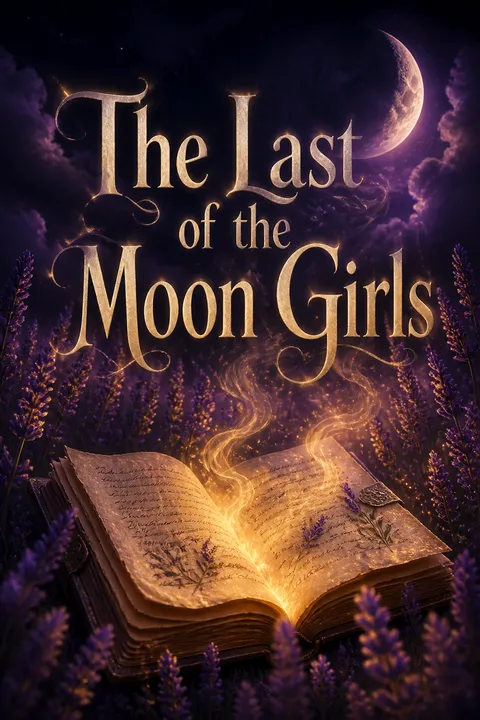
Plot Summary
Ashes and Accusations
The story opens with the death of Althea Moon, matriarch of the Moon women, and the lingering shadow of a tragedy: the unsolved murder of two local girls, Heather and Darcy Gilman, whose bodies were found in the Moon family pond. The town of Salem Creek, steeped in superstition and old wounds, has always eyed the Moons with suspicion, branding them as witches and outsiders. Althea's passing leaves her granddaughter, Lizzy, as the last of the Moon girls, inheriting not only the family farm but also the burden of a community's mistrust and the unresolved pain of the past. The ashes of Althea are scattered on the land, but the ashes of accusation still smolder, threatening to consume what remains of the Moon legacy.
The Last Moon Girl
Lizzy Moon, now living in New York and working in the world of fragrance, receives news of her grandmother's death and the inheritance of Moon Girl Farm. The farm is more than property—it's a repository of generations of women's wisdom, secrets, and pain. Lizzy is reluctant to return, haunted by memories of her childhood and the scandal that drove her away. She is the last Moon girl, the final link in a chain of women who have always been healers, outsiders, and survivors. The weight of expectation and the ache of unfinished business pull her back to Salem Creek, where she must confront not only her family's past but her own sense of belonging.
Return to Salem Creek
Lizzy's return to the farm is fraught with emotional landmines. The land is neglected, the house worn, and the community's suspicion palpable. She meets Evvie, Althea's friend and caretaker, who has become a fixture at the farm. The farm's decay mirrors the unraveling of the Moon family, and Lizzy is forced to reckon with the physical and emotional ruins left behind. The journals of the Moon women, locked away in Althea's room, beckon her to remember and to heal. The past is not easily buried, and Lizzy's presence reignites old gossip and unresolved grief.
Ghosts in the Lavender
As Lizzy settles in, she is haunted by memories and by the palpable presence of her grandmother. The scent of lavender and bergamot—Althea's signature—lingers in the air, blurring the line between memory and haunting. Lizzy discovers a new journal, The Book of Remembrances, written by Althea for her alone. Through its pages, Althea's voice guides Lizzy, urging her to face the truth, mend what is broken, and reclaim her gifts. The supernatural is woven subtly into the fabric of daily life, as the Moon women's legacy of healing and intuition asserts itself, challenging Lizzy to accept her inheritance.
The Weight of Inheritance
Lizzy grapples with the responsibilities thrust upon her: the stewardship of the farm, the care of Althea's journals, and the unspoken expectation to continue the Moon line. She is torn between her life in New York and the pull of her heritage. The farm's decline is a metaphor for the fading of the Moon legacy, and Lizzy feels both guilt for her absence and resentment at the burden. The journals reveal the sacrifices and resilience of the women before her, and Lizzy must decide whether to sell the farm and sever the past, or to stay and try to heal what remains.
Old Wounds, New Faces
Lizzy's presence in Salem Creek stirs up old animosities. She faces open hostility from townspeople who still blame the Moons for the Gilman girls' deaths. Yet, she also finds unexpected allies: Evvie, whose own gifts and outsider status make her kin; Andrew, the neighbor who has always cared for the Moons; and a handful of townsfolk who remember Althea's kindness. The arrival of Andrew, now an architect and handyman, rekindles old feelings and offers Lizzy a glimpse of connection and belonging. But the wounds of the past—her mother's abandonment, the town's cruelty—remain raw.
The Scent of Truth
Lizzy's unique gift—her ability to read emotions through scent—returns as she reconnects with the land and the people of Salem Creek. This heightened intuition becomes both a blessing and a curse as she begins to investigate the Gilman case, driven by a need to clear Althea's name. The scent of fear, guilt, and anger clings to those she questions, guiding her toward hidden truths. Lizzy's work with fragrance becomes a metaphor for her search: blending, distilling, and revealing the essence beneath the surface. The past refuses to stay buried, and the truth begins to emerge, one note at a time.
The Pond's Dark Secret
Lizzy's investigation leads her to revisit the site of the tragedy—the pond where the girls' bodies were found. The memory of that day is vivid and traumatic, both for Lizzy and for the town. She interviews townspeople, former friends of the girls, and the Gilman family, uncovering layers of dysfunction, abuse, and denial. The police chief, Summers, is dismissive, but a former detective, Roger, offers a more sympathetic ear. The case is cold, but Lizzy's persistence begins to shake loose new clues. The pond becomes a symbol of the secrets that lie beneath the surface, waiting to be dredged up.
Mending What's Broken
Amid the turmoil, Lizzy finds solace in acts of healing—making remedies for old customers, tending the neglected gardens, and reconnecting with the rituals of her childhood. These small acts become a way to honor Althea and to reclaim her own sense of purpose. The community's wounds are mirrored in Lizzy's own, and as she offers comfort to others, she begins to heal herself. The process is slow and fraught, but each kindness—each jar of tea, each bar of soap—becomes a stitch in the mending of broken hearts and broken trust.
The Keeper's Promise
Althea's journal becomes a lifeline for Lizzy, offering wisdom, comfort, and challenge. Through its pages, Lizzy learns the stories of the Moon women—their struggles, their resilience, their sacrifices. The journal is both a record and a charge: to remember, to heal, and to continue the work. Lizzy is the keeper of the Moons' secrets, and the promise she makes—to herself, to Althea, and to the generations before her—is to write her own story, to fill the blank pages with truth and love. The past is not a chain, but a circle, unbroken and ever-renewing.
The Witch's Shadow
As Lizzy's investigation gains momentum, the threats against her escalate. A straw doll—a witch effigy—appears in the yard, followed by an arson attack that destroys part of the orchard. The town's fear and hatred are made manifest, and Lizzy is forced to confront the real danger of being a Moon in Salem Creek. The line between superstition and violence blurs, and the cost of seeking the truth becomes painfully clear. Yet, Lizzy refuses to be cowed, drawing strength from her ancestors and her own growing sense of purpose.
Seeking the Lost Girls
Lizzy's persistence pays off as she uncovers the tangled web of relationships and secrets that led to the Gilman girls' deaths. She learns of abuse, jealousy, and the complicity of silence. The Hanley brothers, long considered outsiders, emerge as key figures in the tragedy. Helen, the widow of one brother, finally breaks her silence, revealing the truth of what happened that night. The revelation is both devastating and liberating, offering closure to the families and to the town. The lost girls are finally found, not in body, but in truth.
The Circle Unbroken
With the truth revealed, Lizzy turns to the work of reconciliation—between herself and her mother, between the Moons and the town, and within her own heart. Rhanna, her mother, returns, and together they confront the pain and misunderstandings that have kept them apart. The circle of women—Althea, Rhanna, Lizzy, and Evvie—becomes a source of strength and healing. The rituals of the Moons, once a source of suspicion, are reclaimed as acts of love and resilience. The circle is unbroken, and the legacy endures.
The Fire and the Doll
The threats against Lizzy culminate in a violent confrontation with Dennis Hanley, who tries to silence her by setting the barn on fire. In a harrowing struggle, Lizzy fights for her life, using her wits and her courage to survive. The fire destroys the barn, but not the spirit of the Moons. The violence is both an ending and a beginning, burning away the last vestiges of fear and secrecy. Lizzy emerges scarred but unbroken, her resolve strengthened by the ordeal.
The Price of Silence
The aftermath of the fire brings a reckoning for all involved. The truth about the Gilman girls' deaths is finally spoken, and those who kept silent—out of fear, guilt, or complicity—must face the consequences. Lizzy learns the cost of silence, both for herself and for the community. Forgiveness becomes possible, not as an erasure of the past, but as an acceptance of its pain and complexity. The Moons' legacy is not one of perfection, but of resilience and the willingness to begin again.
The Book of Remembrances
As Lizzy reads the last pages of Althea's journal, she is confronted with her grandmother's deepest regrets and hopes. Althea confesses to a lost love, a choice made out of fear and duty rather than desire. She urges Lizzy to write her own story, to choose love over fear, and to step into the light. The journal becomes a mirror, reflecting both the wounds and the wisdom of the past. Lizzy's awakening is both personal and ancestral—a reclaiming of her power and her right to happiness.
The Truth in Bloom
With the farm's future uncertain and her own path at a crossroads, Lizzy makes a choice: to stay, to love, and to continue the work of the Moons. She reconciles with Andrew, embracing the possibility of happiness and partnership. The farm is reborn, not as a relic of the past, but as a living testament to the resilience and creativity of the women who built it. The circle is complete, and a new generation is promised. The truth, once buried, now blooms in the open air.
Reconciliation and Release
In the epilogue, Lizzy writes the first pages of her own journal, The Book of Elzibeth, for her unborn daughter. The legacy of the Moons is not one of isolation or fear, but of love, magick, and the courage to live one's truth. The farm, the family, and the community are transformed by the healing that comes from facing the past and choosing a different future. The story ends not with an ending, but with a beginning—the promise of new life, new stories, and the enduring power of women's wisdom.
Analysis
Barbara Davis's The Last of the Moon Girls is a luminous exploration of legacy, healing, and the courage to claim one's own story. At its heart, the novel is a meditation on the power of women's wisdom—passed down through generations, encoded in rituals, remedies, and the quiet acts of everyday magick. The story interrogates the ways in which fear, suspicion, and silence can poison both individuals and communities, and it offers a counter-narrative of resilience, forgiveness, and the transformative power of truth. Through Lizzy's journey, Davis challenges readers to consider the cost of living by someone else's rules, and the liberation that comes from stepping into the light of one's own truth. The novel's structure—interweaving past and present, mystery and memoir—mirrors the complexity of inheritance and the necessity of both remembering and letting go. Ultimately, The Last of the Moon Girls is a celebration of the enduring bonds between women, the healing that comes from facing the past, and the hope that blooms when we dare to write our own happy endings.
Review Summary
The Last of the Moon Girls receives mixed reviews, averaging 4.19/5. Many praise its magical realism, compelling characters, and Lizzy's self-discovery journey. Readers particularly loved grandmother Althea's Book of Remembrances and the charming Salem Creek setting. However, critics found the murder mystery predictable and underwhelming, the romance between Lizzy and Andrew uncomfortably obsessive, and Lizzy's motivation for solving the case unconvincing. Several noted the book struggles to balance its many genres—mystery, romance, family drama, and magical realism—resulting in an uneven but largely enjoyable read.
People Also Read

Characters
Lizzy Moon
Lizzy is the last of the Moon girls, a woman caught between worlds—her urban life in New York and her ancestral roots in Salem Creek. Raised by her grandmother Althea after her mother's abandonment, Lizzy is both fiercely independent and deeply wounded. Her gift for reading emotions through scent is both a blessing and a burden, connecting her to the legacy of the Moon women while marking her as different. Lizzy's journey is one of self-discovery, as she confronts the pain of her past, the expectations of her lineage, and the challenge of forging her own path. Her relationships—with her mother, with Andrew, with the community—are fraught with tension and longing. Through acts of healing, investigation, and reconciliation, Lizzy transforms from a reluctant heir to a courageous keeper of her family's legacy, ultimately choosing love and belonging over fear and isolation.
Althea Moon
Althea is the heart of the Moon family, a woman of wisdom, strength, and quiet magick. Her death sets the story in motion, but her presence lingers through her journals and the memories of those she touched. Althea's life was marked by sacrifice—raising her granddaughter, enduring the town's suspicion, and carrying the weight of unsolved tragedy. Her final gift to Lizzy is The Book of Remembrances, a deeply personal journal that offers guidance, confession, and hope. Althea's psychoanalysis reveals a woman who struggled with regret, longing, and the tension between duty and desire. Her legacy is not only the farm and the journals, but the example of resilience, forgiveness, and the courage to love.
Rhanna Moon
Rhanna is Lizzy's mother, a woman who fled the constraints of the Moon legacy and her own pain, leaving her daughter to be raised by Althea. Her return to Salem Creek is fraught with guilt, shame, and the hope for redemption. Rhanna's gift—visions of death—has haunted her since adolescence, driving her to self-destruction and isolation. Her relationship with Lizzy is marked by misunderstanding, resentment, and a deep, unspoken longing for connection. Through confession and acts of care, Rhanna seeks reconciliation, offering Lizzy the chance to forgive and to heal. Her development is a testament to the possibility of change, even after years of estrangement.
Evvie Broussard
Evvie is Althea's friend and caretaker, a Creole woman with her own gifts—singing to bees, crafting remedies, and offering wisdom. She is both kin and confidante to Lizzy, providing support, challenge, and a model of resilience. Evvie's presence bridges the gap between the Moon family and the wider world, embodying the power of chosen family and the importance of community. Her relationship with Ben, the hardware store owner, offers a subplot of late-life romance and the healing power of companionship. Evvie's psychoanalysis reveals a woman who has known loss and prejudice, but who chooses kindness, loyalty, and hope.
Andrew Greyson
Andrew is the boy next door, now grown into a man who has always cared for the Moons. An architect and handyman, he is both practical and deeply empathetic. Andrew's love for Lizzy is patient, enduring, and unconditional, offering her a safe harbor amid the storms of her life. His own wounds—loss of his father, the burden of unrequited love—make him both vulnerable and strong. Andrew's development is marked by his willingness to wait, to support, and to challenge Lizzy to claim her happiness. His relationship with her is a model of partnership, rooted in respect, understanding, and shared history.
Dennis Hanley
Dennis is a neighbor and the brother of Hollis Hanley, whose actions are central to the mystery of the Gilman girls' deaths. Marked by violence, secrecy, and a warped sense of loyalty, Dennis becomes the primary antagonist as he seeks to silence Lizzy and protect his family's secrets. His actions—threats, arson, attempted murder—are driven by fear, guilt, and the legacy of abuse. Dennis's psychoanalysis reveals a man broken by his upbringing, unable to break the cycle of harm. His ultimate confrontation with Lizzy is both a climax and a cautionary tale about the cost of silence and the corrosive power of shame.
Helen Hanley
Helen is the widow of Hollis Hanley and the sister-in-law of Dennis. Trapped in a web of fear and abuse, she becomes a key witness in the unraveling of the Gilman case. Her silence is both a survival strategy and a source of guilt, and her eventual decision to speak the truth is an act of courage and liberation. Helen's psychoanalysis reveals the complexities of victimhood, the difficulty of breaking free from control, and the possibility of redemption through honesty.
Roger Coleman
Roger is the ex-cop who originally investigated the Gilman case. Disillusioned by the corruption and apathy of the local police, he left the force but never stopped caring about the truth. His meticulous notes and willingness to help Lizzy are instrumental in solving the mystery. Roger's own losses—his wife and son—make him both empathetic and driven. His development is marked by a commitment to justice, even when the system fails, and a recognition of the limits of what can be known or healed.
Fred Gilman
Fred is the father of Heather and Darcy, a man broken by loss and consumed by anger. His fixation on blaming the Moons for his daughters' deaths blinds him to the dysfunction in his own family. Fred's psychoanalysis reveals the dangers of denial, the corrosive effects of unresolved grief, and the ways in which pain can be weaponized. His eventual confrontation with the truth is both a reckoning and a release.
Susan Gilman
Susan is the stepmother of the Gilman girls, a woman marginalized by her husband and the community. Her doubts about Althea's guilt and her insights into the family's dysfunction provide crucial context for Lizzy's investigation. Susan's psychoanalysis reveals the complexities of blended families, the pain of powerlessness, and the courage required to speak uncomfortable truths.
Plot Devices
Generational Journals
The journals of the Moon women serve as both a literal and symbolic device, connecting past and present, and offering guidance, confession, and challenge. Each journal is a repository of remedies, rituals, and personal stories, passed from mother to daughter. Althea's Book of Remembrances, written specifically for Lizzy, becomes a narrative within the narrative, providing foreshadowing, backstory, and thematic resonance. The journals are a means of preserving legacy, confronting regret, and urging the next generation to write their own story.
Scent as Intuition
Lizzy's gift for reading emotions through scent is a unique plot device that blurs the line between the natural and the supernatural. It allows her to sense fear, guilt, and deception, guiding her investigation and deepening her understanding of others. This device is both a metaphor for intuition and a practical tool for uncovering hidden truths. It also serves as a link to her work in fragrance, tying her personal and professional identities together.
The Unsolved Mystery
The murder of the Gilman girls is the central mystery that drives the plot. The investigation is both a literal search for justice and a metaphorical search for healing—of the family, the community, and the self. The cold case structure allows for the gradual revelation of secrets, the testing of relationships, and the ultimate confrontation with the past. The resolution of the mystery is not only about finding the killer, but about breaking the cycle of silence and shame.
Supernatural Realism
The story employs a gentle form of magical realism, where the supernatural is present but understated. The Moons' gifts—healing, intuition, visions—are treated as natural extensions of their character, rather than as spectacle. The presence of Althea's spirit, the rituals of the farm, and the symbolism of flowers and herbs all contribute to an atmosphere of quiet magick. This device reinforces the themes of resilience, legacy, and the power of women's wisdom.
The Circle and the Cycle
The story is structured around cycles—of the moon, of the seasons, of life and death. The scattering of ashes, the rituals of healing, and the passing of journals all reinforce the idea of the circle as both ending and beginning. The narrative returns to its starting point, but transformed, as Lizzy chooses to stay and begin her own story. This cyclical structure mirrors the themes of rebirth, resilience, and the unbroken chain of women's lives.
Download PDF
Download EPUB
.epub digital book format is ideal for reading ebooks on phones, tablets, and e-readers.








































