
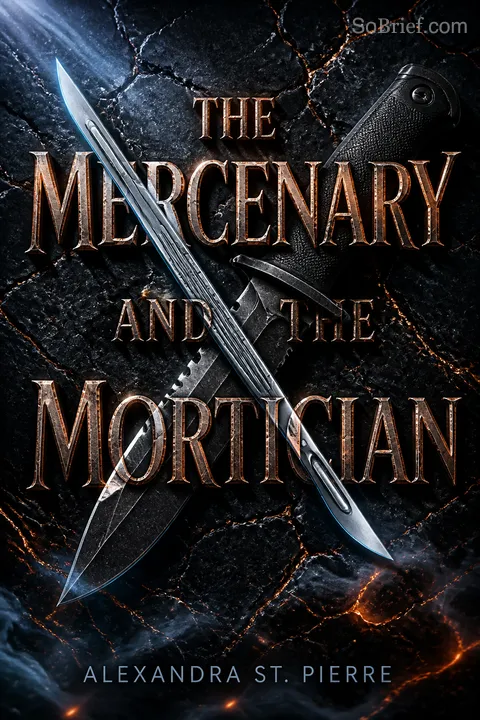

Plot Summary
Prologue
At ten, Callum Walker1 has spent his life caged in a filthy basement by a mother who calls her children demons sent to punish her. He pries loose a bar to reach his starving toddler sister, Naomi.5 When their mother strangles Cal,1 his older sister Cassandra6 slits the woman's throat, but Cal1 is the one found clutching the bloody knife.
A polished stranger named Damian Ryker4 walks into the police station and offers a devil's bargain: confess to the killing, and he will house and fund all three siblings, provided Cal1 comes to work for him. Cal1 chooses the blame so his sisters stay free, and shakes Ryker's4 hand, trading a childhood for survival.
The opening establishes the central wound that governs Cal's psychology: love arrived only through sacrifice, and safety only through obedience. St. Pierre stages a grim inversion of rescue, where the state fails these children and a predator poses as savior. Cal's decision to shoulder Cassandra's crime encodes his lifelong pattern of protecting everyone but himself, a martyrdom disguised as agency. The mother's biblical accusations plant the devil motif that will haunt Cal literally and figuratively. Crucially, the handshake is framed as a business deal, teaching a traumatized child that his worth is transactional. This prologue is less backstory than blueprint: every later choice echoes the boy who learned that being needed is the closest thing to being loved.
The Boy Who Moves Wrong
Now twenty-six, Cal1 kills for Damian's organization,4 Apex, but keeps one rule: never children. Between contracts he hunts abusers, using his cheerful sister Naomi5 to scout playgrounds for injured kids. She flags a boy named Caleb9 who cradles his ribs as if they ache. When Caleb9 slips into a Victorian funeral home, Cal1 follows, enchanted by the haunted-mansion building.
He clashes with a muscular woman guarding the boy7 and learns the home belongs to her brother, Ryan,2 whom Cal1 instantly assumes is the abuser. Spying that night, Cal1 watches Ryan2 grab and shout at the sobbing child. His own scarred history erupts into certainty, and he decides to break in after dark and execute the man he has convicted on sight.
The chapter reframes the romance's inciting engine as a case of catastrophic misreading, a theme the whole book interrogates: how trauma makes us pattern-match strangers into monsters. Cal's vigilante hobby is presented as self-medication, a karmic ledger balancing his contract kills, but St. Pierre withholds moral comfort by showing his judgment is impulsive and wrong. Naomi's participation complicates easy villainy, suggesting a family that has normalized violence as care. The funeral home functions as gothic mirror, a house of death that will become a house of healing. Cal's arousal-adjacent fixation on the building foreshadows how attraction and mortality braid together in this world, where love and killing occupy the same nervous system.
Fists, Fear, and Ghouls
Cal1 ambushes Ryan2 in the basement gym, but Ryan,2 a trained boxer, fights back hard. Mid-struggle Cal1 notices that terror arouses Ryan,2 and Ryan2 realizes with humiliation that fear is his trigger. Cal1 pins him at gunpoint and demands proof he never hurt Caleb.9 They wake the sleeping boy, who insists Ryan2 is his sanctuary, not his abuser.
What Cal1 cannot see is that Ryan is secretly watching a swarm of malevolent spirits cling to him, including a shrieking woman who screams that her son is a demon. Cal1 spares Ryan2 but names him a loose end who has glimpsed his face. Studying the funeral home, an idea blooms: a mortician and a mercenary share one useful thing, dead bodies.
The combat scene doubles as courtship, literalizing enemies-to-lovers through a body that responds to threat with desire. St. Pierre uses Ryan's fear-arousal to externalize a psychological truth: control freaks crave surrender they cannot request. The reveal of Cal's ghouls, visible only to Ryan, quietly recasts Cal as a walking accumulation of guilt, his victims following him like debts. The mother's spectral accusation ties present menace to the prologue's abuse, suggesting trauma is not past but ambient. Cal's pivot from executioner to prospective partner shows his transactional worldview at work: he cannot simply spare Ryan, he must find a use for him, converting a threat into an asset the only way he knows.
You Work For Me Now
By morning Cal1 has invited himself to breakfast. Ryan's2 dreamy, silk-robed mother, Iris,8 greets him like an expected guest, declaring he is the dark angel she has prophesied since Ryan2 was small, and pressing a protective charm into his pocket to shield her sensitive son. Cal1 corners Ryan2 in the hall, grinding against him and announcing they are partners now, because Damian4 will otherwise want the witness erased.
When Caleb's9 polished, ring-heavy father10 arrives demanding the boy, Cal1 stomps the man's phone to pieces and throws him out, then chases his Jaguar to finish the job, driven to protect Caleb9 as no one protected him. Ryan2 and Theo7 are left stunned, dragged into something monstrous with no visible exit.
Iris introduces the book's mystical register and its thesis of destiny, reframing a home invader as fated deliverance. Her charm becomes a recurring instrument that gates the supernatural, but here it mostly signals that the uncanny will operate as literal machinery, not metaphor. Cal's simultaneous tenderness toward Iris and coercion of Ryan captures his central contradiction: gentle with the vulnerable, ruthless with obstacles. The father's arrival escalates stakes from private trespass to a rescue mission, and Cal's protective fury reveals his hobby as displaced self-rescue. St. Pierre binds the household into complicity, using consent's gray zones to generate the dark-romance friction the genre promises while keeping Cal's child-protective code as moral anchor.
The Judge's Secret Room
Cal1 tranquilizes Caleb's9 father, Judge Kyle Bradshaw,10 and interrogates him with a scalpel in his own kitchen. Vox,3 Cal's1 mute hacker friend, decrypts files revealing ownership papers for trafficked people, including a caged woman named Amanda,11 Caleb's9 mother. Every slip carries the number 2739, the exact code Cal1 uses to confirm his kills for Apex.
Sickened, Cal1 frees Amanda11 and snaps Kyle's10 neck, then delivers the plastic-wrapped corpse to Fairview and forces Ryan2 to cremate it. When Ryan,2 terrified and defiant, calls him the devil, Cal1 blacks out into his abuser's script, pins him over the prep table, and forces him to climax against his will before storming off, leaving Ryan2 to clean the blood alone.
The trafficking code is the plot's structural hinge, seeding the suspicion that Cal's employer is entangled in the very crimes Cal exists to punish, corroding the fiction that his contract kills are morally separable from his vigilante ones. The scene marks the book's darkest consent violation, and St. Pierre is deliberate: the word devil functions as a literal trauma trigger, collapsing Cal into the mother who nearly killed him. This is dark romance at its most fraught, staging harm not as titillation alone but as the machinery of Cal's wound. The aftermath, Cal fleeing in shame, establishes the recovery loop that structures their romance: rupture, guilt, apology, and painstaking repair.
Recalibration Is Coming
After Cal1 apologizes and a fragile truce forms, Damian Ryker4 summons him to Apex, the concrete compound where he breeds child soldiers. Damian4 displays fresh surveillance photos of Naomi5 at the park and Cass's6 portrait, reminding Cal1 he owns him and can erase his family whenever he chooses.
He punishes Cal1 for killing Bradshaw10 without clearance, then assigns him to eliminate a vigilante pair, an ex-cop named Ronan17 and a tattoo-artist killer named Logan,17 forbidding further hobby hunting. Worst of all, Damian4 now knows about Ryan2 and treats the mortician as a disposable chip to control his favorite weapon. Cal1 realizes he has handed Ryker4 one more leash, and that everyone he has let close is now exposed to harm.
Damian's power is dramatized not through violence here but through curation, the framed photographs of Cal's sisters facing him like trophies, surveillance as ownership. St. Pierre nails the mechanics of coercive control: the abuser weaponizes love itself, converting each of Cal's attachments into a hostage. The assignment to hunt fellow vigilantes sharpens the book's central irony, forcing Cal to protect the predators he privately despises. Ryan's sudden vulnerability raises the romance's stakes from emotional to existential. The chapter reframes the earlier romance as dangerous rather than merely transgressive, establishing that Cal's capacity to love is precisely the lever his maker will pull to keep him kneeling.
Lilies on the Porch
When Cal1 barges into a funeral to defend Ryan2 from a screaming relative, the flood of ghouls only Ryan can see overwhelms him, and he orders Cal1 out. Guilt-stricken, Cal1 returns that night with a bouquet of Ryan's2 cherished lilies. Theo,7 unexpectedly rooting for Cal,1 has already spent the evening convincing Ryan2 he is falling for the psycho.
Tipsy and honest, Ryan2 asks Cal1 to stay, and Cal1 kisses him, then kneels and gives him his first blowjob from a man. Cal1 refuses to let Ryan2 reciprocate while drunk, insisting Ryan2 prove desire sober. Later, Ryan2 touches himself in the shower moaning Cal's1 name, unaware Cal1 watches through cameras he has secretly hidden throughout the house.
The lilies, later revealed as the flower of Ryan's late father, quietly become the book's emblem of grief transmuted into love. St. Pierre uses Theo as an unexpected matchmaker to soften the coercion dynamic, letting Ryan choose the kiss rather than have it imposed. Cal's refusal to accept a drunken reciprocation is a pointed inversion of the prep-room scene, evidence of his moral growth and an attempt at earned consent. Yet the hidden cameras darken the tenderness, keeping the romance genuinely unsettling: Cal's love expresses itself through surveillance and possession, the only intimacy his conditioning taught him. Desire and violation remain uncomfortably adjacent, which is the genre's contract and the character's tragedy.
A Fight for Who Leads
After Cal1 terrorizes Joanna,12 Ryan's2 convenient fake girlfriend, at a cafe, he drives Ryan2 to an empty field. Ryan2 proposes settling their power struggle with a fair fistfight, winner leading the relationship. Cal1 wins, loops his belt around Ryan's2 throat, and works him to a shattering climax while extracting rules: no one else touches him, no contact with Joanna,12 and Cal1 governs their private life.
Afterward Ryan2 admits, laughing through tears, that he might be gay. On the drive home Cal1 explains enough of his past to earn trust, and Ryan2 begins to glimpse the wounded boy beneath the killer. Their dynamic crystallizes: Ryan2 surrenders control he clings to by day, and Cal,1 chaotic everywhere else, finally feels grounded.
The negotiated brawl literalizes BDSM's consent theater, letting a control-obsessed man ritually lose so he can safely relinquish authority. St. Pierre frames submission as therapeutic release rather than degradation, articulating the well-documented psychology of dominant personalities who crave surrender in intimacy. Ryan's tearful admission of queerness reframes his lifelong sexual numbness as repression rather than deficiency, a coming-out that is also a homecoming. Cal's grounding in Ryan reverses their apparent roles: the sadist needs the anchor more than the anchor needs the sadist. The chapter converts violence into vocabulary, showing how two damaged people build a private grammar of care from the only materials, pain and control, they were ever given.
Cages and a Stolen Childhood
Cal1 brings Ryan2 home to meet Naomi,5 his sunshine sister, and tours the townhouse. The photo wall documents Cass6 and Naomi5 thriving while Cal1 barely appears, a boy who never went to school. He confesses the full truth: a mother who caged them, a killing he took blame for, and Damian,4 who purchased him at ten and trained him to murder, holding his sisters' safety as permanent ransom.
Ryan,2 devastated, insists Cal1 is not a killer by nature but a gentle soul molded by a monster, and that he will never forgive the man who did it. Cal,1 who never learned to receive empathy for himself, deflects with frantic jokes, yet weeps without noticing, cracked open by simply being seen.
This is the emotional fulcrum where Ryan reclassifies Cal from perpetrator to survivor, and St. Pierre lets the reframing land through concrete evidence, the missing photographs, the absent schooling, rather than speech alone. Cal's involuntary tears expose the specific cruelty of his conditioning: he can mourn others but has no schema for mourning himself. Ryan's protective rage redirects the story's moral energy from Cal's victims toward Cal's maker, effectively transferring blame where it belongs. The scene also foregrounds sibling love as Cal's animating force, contextualizing his obedience as devotion rather than weakness. It is the book's argument in miniature, that identity forged in captivity is not destiny, and that being witnessed can begin to loosen the chains.
The Mission Goes Dark
Ordered to kill Ronan17 and Logan,17 Cal1 and Vox3 stalk the vigilantes but stall, sympathizing with men who hunt the same predators Cal1 does. Growing reckless, Cal1 gasses Logan's17 trailer and kicks in the door, only to land in a shootout that grazes his side, and Vox3 drags him out before he can finish anyone.
When Cal1 steals a daylight visit to Ryan,2 Damian's4 tail spots them, and their true target slips away and is killed by the rivals. Damian,4 enraged that Cal1 failed and is distracted by his mortician, summons him. Knowing punishment waits, Cal1 warns Ryan2 he will be unreachable, resists the urge to run, and surrenders himself to Apex to keep his family safe.
Cal's professional collapse is characterological, not coincidental: his conscience sabotages a job his morality rejects, and his lovesickness makes him careless. St. Pierre uses the vigilante trio as ethical doubles, men doing openly what Cal does in secret, to underscore that Cal has been pointed at the wrong enemies. The stolen visit dramatizes how love makes him legible to his hunter, converting intimacy into liability exactly as the earlier chapter warned. Cal's choice to surrender rather than flee is his tragic default, self-sacrifice as reflex, protecting others by offering his own body to the machine. It sets the trap for the book's harrowing midpoint, where devotion delivers him straight into the tub.
The Tub and the Brand
At Apex, Damian4 chains Cal1 naked in a torture tub, blasting his beloved dubstep while a guard hoses and electrocutes him for days. Sleep-starved, Cal1 is forced to renounce Ryan,2 and Damian4 brands his own initials over Cal's1 heart, poisoning both the music and the bathtub with trauma. Released and hollow-eyed, Cal1 drives to Fairview and coldly tells Ryan2 they are finished, that he was a mistake.
Ryan2 refuses to believe it, kisses him, and vows to wait however long it takes. Meanwhile Vox,3 finally done with Ryker,4 has fortified Fairview, gathered Cass6 and Naomi5 under one roof, discovered the surveillance around them, and begun teaching Ryan2 to shoot, quietly preparing for the war he senses coming.
Recalibration is St. Pierre's most literal dramatization of coercive reconditioning, weaponizing pleasure sources, music and bathing, into triggers, so that Cal's own joys become instruments of control. The brand externalizes ownership onto the body, a scar of possession over the organ of love. Cal's breakup is thus not betrayal but programmed self-protection, and Ryan's refusal to accept it reverses their rescue roles: the mortician becomes the one who insists on life. Vox's parallel mobilization introduces the resistance plot, transforming the sprawling household from bystanders into combatants. The chapter's genius is showing that torture aims not at the body but at attachment itself, and that community is the only counter-conditioning strong enough to answer it.
Bleeding on the Table
Paired with the cruel guard McGreggor,15 a drunken Cal1 stumbles onto the vigilantes burying a body. When he accidentally tears the head off Ronan's17 beloved stuffed cow, a panicked Dakota17 shoots him. Vox3 drags him, gushing blood, to Fairview, where Ryan2 snaps into command, converting his embalming room into an operating theater while Cassandra6 summons a discreet doctor named Tom Callahan.14
They stabilize the bullet wound and discover the brand. Ryan,2 haunted by his father's death, nurses Cal1 obsessively. When Cal1 wakes screaming from a night terror and nearly strangles Ryan,2 the word angel breaks the trance, and Ryan,2 refusing to be frightened off, promises they will work through the trauma together, one nightmare at a time.
The near-fatal wound literalizes Ryan's deepest fear and forces his growth: the man who tends the dead must now fight to keep the living. St. Pierre turns the funeral home's tools toward preservation rather than disposal, a thematic reversal of the whole premise. The revealed brand lets Ryan read the torture on Cal's skin, deepening his protective fury. The strangulation scene honestly depicts PTSD's danger without romanticizing it, and Ryan's response, staying rather than fleeing, models the difference between rescuing someone and abandoning them at the first sign of damage. The endearment angel becomes a grounding cue, evidence that love can build new neural pathways over the ones an abuser carved.
I Love You Back
As Cal1 recovers, the household unites around him. Cassandra6 reveals she, not Cal,1 killed their mother, freeing him from the lie he carried for years, and everyone vows to protect Naomi5 together so Cal1 can quit Apex. Theo7 declares Cal1 family. Slowly, Cal1 lets himself believe someone is finally protecting him.
He and Ryan2 make love for the first time, and Cal1 confesses he loves Ryan,2 braced for silence, only for Ryan2 to say it back instantly. Then Damian's4 messages surface, threatening to start killing people, Ryan2 first, within three days. Reading Ryan's2 fifty unanswered texts of devotion sent during his captivity, Cal1 resolves to end his maker4 for good and drives to Apex alone.
Cassandra's confession dissolves the founding falsehood of Cal's identity, retroactively proving his self-sacrifice was chosen, not owed, and inviting him to relinquish the guilt that anchored his servitude. The collective pledge to guard Naomi dismantles Damian's core leverage, love as hostage, by distributing that love across a family too large to hold captive. Cal's first reciprocated I love you is the emotional climax the whole book builds toward, the moment his belief in his own unlovability finally cracks. St. Pierre then converts intimacy into resolve: it is precisely because Cal is now loved that he can act. The solo drive to Apex is both regression and transformation, self-sacrifice repurposed into liberation.
Burning Down Apex
Inside Apex, Damian4 nearly reasserts his hypnotic hold, confessing a sick love and leaning in to kiss Cal.1 The thought of betraying Ryan2 finally snaps the leash. Cal1 pistol-whips Damian,4 empties a clip into his chest, then fights through waves of guards with grenades and a stolen rifle, leaving the compound in flames as he races home elated.
He buys lilies and tells Ryan2 the nightmare is over. But Cal1 never watched his maker's4 heart stop. In parallel, Vox3 uncovers tracking chips sewn into every piece of their clothing, exposing just how completely Damian4 has surveilled them, and microwaves them in defiance. The wary family settles into Fairview as their fortified base, believing the worst has passed.
Damian's attempted kiss is the ultimate manipulation, love as a final override command, and Cal's ability to resist by invoking Ryan proves the counter-conditioning has taken. St. Pierre stages the assault as catharsis, but withholds confirmation of death, a deliberate suspense mechanism that also thematically insists trauma is rarely killed cleanly on the first attempt. The trackers Vox discovers retroactively reframe the entire romance under surveillance, mirroring Cal's own hidden cameras and suggesting a world where love and control perpetually blur. The premature victory, celebrated with lilies, sets an ironic trap: the family lowers its guard exactly when the abuser, like the trauma he embodies, proves harder to bury than anyone hoped.
The Crash on the Country Road
Weeks later, driving Naomi5 home from an IKEA trip, Cal1 is boxed in by black SUVs and run off the road. Masked men drug him and abduct both siblings. Before blacking out, Cal1 drops Iris's8 protective charm as a breadcrumb, gambling that Ryan2 can find him by tracking the screaming ghouls only he can see.
Cal1 wakes tied to a chair before a hideously burned Damian,4 who survived the grenade. Damian4 gloats that he will sell Naomi5 into the trafficking ring Cal1 despises, rape and kill Cal,1 and force his sister to know no rescue is coming. As he speaks, long-repressed memories surface: Damian4 sexually abused Cal1 throughout his childhood, a horror Cal's1 mind had buried.
Damian's survival, scarred into a literal monster, externalizes the truth that abusers are not exorcised by a single act of resistance. The abduction targets Naomi, Cal's oldest love object, closing the loop from the prologue where he first risked everything for her. St. Pierre's boldest move is the return of repressed memory, revealing the full scope of Damian's grooming and reframing every earlier ambiguity as survival-driven amnesia. This is trauma theory rendered as plot: the mind protects itself until safety permits remembering. Cal's dropped charm converts the supernatural gift from atmosphere into rescue mechanism, uniting the book's mystical and thriller registers. The chapter strips away the last comfort, forcing the family to confront that the war was never over.
The Dark Angel's Rescue
Guided by the ghost of Gavin,13 Cal1 and Vox's3 murdered childhood friend, Ryan,2 Theo,7 and Vox3 storm Apex with the vigilante trio17 as backup. Vox3 kills the man assaulting Naomi5 and carries her out. Theo7 battles Damian4 and is stabbed but survives. Cal1 beats his maker4 down, yet, weeping, cannot bring himself to kill the man who built him.
Ryan2 takes the gun and shoots Damian4 through the head, insisting Cal1 never had to be the one. Afterward, Gavin's13 spirit and Cal's1 tormenting ghouls, including his shrieking mother, are dragged to hell by summoned demons, and Gavin13 finally moves on in peace. Cal1 walks out free at last, body, mind, and soul.
The rescue redistributes heroism across the entire found family, insisting that liberation is collective, not solitary. St. Pierre's decisive choice is to let Ryan, not Cal, pull the trigger, sparing Cal the identity-defining act of killing his father-figure and symbolically transferring that burden to someone whose hands are not already conditioned to it. It is the ultimate act of protection reversed: the one Cal spent his life saving now saves him. The supernatural exorcism resolves the ghoul motif, purging Cal of the accumulated dead and banishing both mother and maker, the twin voices that named him devil. Gavin's release grants closure to Vox's grief. The chapter completes the book's argument that a fallen angel can be lifted.
Epilogue
In a funeral home drowning in lilies, the flower Ryan's late father2 loved, Cal1 kneels and proposes. Because he could not ask Ryan's father2 for a blessing, he says, he summoned the man's memory with the blooms. He calls Ryan2 the reason he learned that even a fallen angel can fly again, and Ryan2 says yes before Cal1 finishes.
Their matching rings read together and forever. Naomi5 heads off to art school, Theo7 and Cassandra6 circle a slow-burning attraction, Vox3 quietly watches over Naomi,5 and Cal1 takes his place beside Ryan2 at Fairview, comforting the grieving instead of creating grief. Ryan2 promises to always bring Cal1 back whenever the darkness comes for him.
The proposal completes the book's central symbol: lilies migrate from funeral flower to engagement flower, grief transmuted into commitment, and Ryan's dead father is invited into the moment as absent blessing. Cal's self-description as a fallen angel who relearned flight resolves the devil motif his mother and maker imposed, replacing damnation with grace. The vocational turn matters most: the former mercenary now consoles mourners, redirecting his intimacy with death toward healing, which is the thesis Ryan articulated early, that funerals serve the living. The paired rings, together and forever, mirror the book's insistence that survival is collective. St. Pierre closes not on cure but on stewardship, love as the ongoing labor of retrieval from the dark.
Analysis
The Mercenary and the Mortician weds two gothic archetypes, the assassin and the undertaker, to interrogate a single question: can a person manufactured by abuse become someone he was not built to be. St. Pierre structures the novel as trauma theory in narrative form. Cal1 is a case study in coercive control and grooming, a child taught that love is transactional and safety requires obedience, whose adult jokes and impulsivity are legible as dissociation and hypervigilance. Ryan's2 perfectionism and fear of loss read as the anxious armor of a bereaved introvert. Their romance works because their wounds interlock: the control freak craves surrender he cannot request, and the chaotic sadist craves the grounding only a steady anchor provides. The book's frankest ideas concern grief's moral complexity, most sharply in the funeral scene where a girl is shamed for hating her dead abuser. Cal,1 uniquely qualified to grieve a monster, becomes an unlikely counselor, and the vocational pivot from creating death to consoling the bereaved crystallizes the thesis that funerals, and by extension survival, serve the living. The dark-romance apparatus, dubious consent, torture, possession, is not incidental titillation but the machinery of Cal's1 wound, and St. Pierre repeatedly stages rupture, guilt, and painstaking repair to model accountability rather than excuse. The lily motif, migrating from funeral flower to engagement bloom, tracks the alchemy of grief into commitment, while the devil-versus-angel binary his mother imposed resolves into the gentler image of a fallen angel relearning flight. Most pointedly, the climax refuses to let Cal1 kill his maker,4 transferring that burden to Ryan2 and insisting that liberation is collective, that being witnessed and protected by a found family is the only counter-conditioning strong enough to loosen chains forged in captivity. The takeaway: identity born in a cage is not destiny.
Review Summary
The Mercenary and the Mortician receives polarizing reviews with an overall 4.4/5 rating. Fans praise the emotional depth, character development, and intense chemistry between Cal and Ryan, highlighting the hurt/comfort dynamics and paranormal elements. Many love the found family aspect and side characters. Critics cite excessive length (700+ pages), repetitive content, problematic consent issues including non-consensual scenes between main characters, and inconsistent paranormal elements. The spice level earns high marks, though some find the BDSM and violence unnecessary. Trigger warnings include child abuse, sexual assault, and trauma throughout.
People Also Read


Characters
Cal
Vigilante mercenaryCallum Walker, a tattooed, dubstep-blasting killer raised from age ten inside a lethal organization called Apex. Charming, impulsive, and relentlessly funny, he masks profound trauma beneath a golden-retriever grin. He treats murder and sex as interchangeable outlets and keeps one inviolable rule: never harm a child. Between contracts he hunts abusers to balance a private karmic ledger, propelled by a childhood spent caged by a cruel mother. Fiercely devoted to his sisters, he has spent his life saving everyone but himself, convinced by years of conditioning that he is an unlovable devil doomed to bring only pain. His arc is a slow, agonizing reckoning with the gap between what he was manufactured into and the gentle person he might actually be.
Ryan
Grief-scarred morticianRyan Fairview, an introverted mortician who inherited his father's Victorian funeral home along with a hidden gift: he sees and speaks with the dead. Mocked in childhood for his family trade, his red hair, and his witchy mother8, he armors himself in routine, control, and perfectionism. He believes funerals serve the living and quietly endures the vengeful spirits that crowd his work. Haunted by his father's sudden death, he fears loss above all and has buried his own desires so deep he mistakes numbness for identity. Beneath the buttoned-up decorum lives a man starving for touch and terrified of change, who gradually discovers that surrendering control can become its own strange liberation.
Vox
Mute hacker allyVox Moretti, a bleach-haired hacking prodigy and Cal's1 only true friend inside Apex. He communicates through one-word texts, emojis, and expressions Cal1 reads like a private language. Loyal to the bone and quietly lethal, he despises their employer4 and has long dreamed of escape. His chosen silence is an act of defiance rooted in old trauma, and his fierce protectiveness runs deeper than words.
Damian Ryker
Manipulative makerThe elegant, whiskey-eyed architect of Apex who plucked Cal1 from a police station at ten and forged him into a weapon. A master manipulator, he blends praise, gifts, and torture to keep his investments obedient, treating people as tools to be maintained. Charismatic and utterly conscienceless, he embodies the abuser who convinces his victim that the cage is love and the leash is care.
Naomi
Cheerful younger sisterCal's1 bright, blonde younger sister, the toddler he once risked death to save. Now nineteen, she is a smut-reading, gnome-collecting ray of sunshine who scouts abused children for Cal1 and knows exactly what her brother does for a living. Beneath the relentless cheer runs surprising steel, a competitive streak, and a hunger for the ordinary family life she never had.
Cass
Ruthless lawyer sisterCassandra Walker, Cal's1 older sister, a razor-sharp Ivy League attorney in designer heels. Coldly fearless and formidably intelligent, she defends Cal1 both legally and morally while despising his employer4. She survived the same caged childhood and carries her own buried capacity for violence beneath the tailored blazers and cutting remarks.
Theo
Ryan's fighter sisterTheodora Fairview, Ryan's2 older sister, a stocky, tattooed underground fighter who took up boxing to shield them both from bullies. Gruff, sardonic, and unexpectedly perceptive, she hides a loyal heart behind an angry exterior and delights in needling anyone who intrigues her, especially sharp-tongued lawyers.
Iris
Whimsical witch motherRyan's2 dreamy, silk-robed mother, a practicing witch who drifts through life with serene optimism and unnerving foresight. She has prophesied Ryan's2 dark angel since his boyhood and reads auras, fallen brooms, and omens as easily as weather, dispensing charms and cryptic guidance with unshakable calm.
Caleb
Abused neighbor boyA small, frightened boy who seeks sanctuary in the funeral home, unknowingly setting the entire story in motion when Cal1 mistakes his protector2 for his abuser.
Kyle Bradshaw
Corrupt judgeA polished, respected judge whose family-man image conceals monstrous crimes, and Cal's1 first target in the story's present-day timeline.
Amanda
Captive motherA frail woman held prisoner for a decade, whose survival and freedom become bound to young Caleb's9 fate.
Joanna
Convenient girlfriendRyan's2 modest Sunday-school-teacher partner, whose relationship with him proves more mutual arrangement than romance, each using the other as a socially acceptable front.
Gavin
Lost childhood friendA gentle, surfer-looking friend from Cal1 and Vox's3 early years at Apex, remembered with deep grief and guilt by both men.
Tom Callahan
Discreet doctorA young physician summoned through Cassandra's6 connections to quietly treat injuries no hospital can be told about.
McGreggor
Sadistic Apex guardA homophobic Apex enforcer who resents Cal's1 favored status and relishes any chance to inflict suffering on him.
Kenny Samuels
Childhood bullyA cruel schoolyard tormentor whose slurs and abuse left lasting scars on Ryan's2 sense of self.
Logan, Ronan, and Dakota
Rival vigilante trioA trio of killers, an ex-cop, a tattoo artist, and a freckled young man, who hunt the same predators Cal1 does and cross his path with lethal, chaotic consequences.
Plot Devices
The Dark Angel Prophecy
Destiny framing deviceIris8 has insisted since Ryan's2 childhood that a dark angel will one day arrive to save him, a belief Ryan2 half-resented as no rescuer ever came. The prophecy operates as both foreshadowing and thematic scaffolding, priming the reader to see the violent intruder as fated deliverance rather than mere threat. St. Pierre threads the motif through recurring imagery of wings, fallen angels, and the epithet angel that Ryan2 adopts for Cal1, reframing the mother's curse of devil into something redemptive. The prophecy also grants Iris8 an oracular authority that legitimizes the book's supernatural logic, and its eventual fulfillment gives the romance a mythic inevitability, converting a dark-romance meet-cute into a story about a wounded protector finally answering a long-unheard call.
Ryan's Sight and the Charm
Supernatural sensing toolRyan2 can see and hear the dead, a gift he hides from everyone, and malevolent spirits cluster around the guilty. Iris8 crafts a protective talisman that keeps ghouls at bay, which Cal1 carries in his pocket. The device begins as atmospheric characterization, explaining Ryan's2 oddness and revealing Cal's1 accumulated victims as literal hauntings, but it steadily becomes functional machinery. The charm's presence or absence gates who can approach whom, and the ghouls that shriek around an unprotected Cal1 ultimately serve as a homing beacon. St. Pierre uses the gift to fuse the book's mystical and thriller registers, letting a paranormal ability drive concrete plot outcomes, and to externalize guilt, grief, and the possibility of banishment and release.
Apex Code 2739
Conspiracy connective threadThe number Cal1 uses to confirm his contract kills for Apex turns up stamped on trafficking ownership papers he discovers while torturing a corrupt judge10. This single detail is the plot's connective tissue, suggesting that the organization Cal1 serves is entangled in the very crimes his vigilante conscience exists to punish. It collapses the moral distinction Cal1 has maintained between his sanctioned jobs and his private hunts, forcing him to confront that he may have been protecting predators. The code recurs as a breadcrumb the rival vigilantes17 have also been following, converging their mission with Cal's1 arc. St. Pierre uses it to escalate stakes from personal to systemic, transforming a romance into a story about complicity, awakening, and the difficulty of clean hands.
The Torture Tub and Dubstep
Trauma-conditioning anchorDamian's4 method of recalibration chains Cal1 in a torture tub while blasting his favorite dubstep, deliberately poisoning the sources of Cal's1 pleasure so that music and bathing become triggers, and finishes by branding his initials over Cal's1 heart. The device dramatizes coercive reconditioning with clinical cruelty, weaponizing intimacy and joy into instruments of control. It generates Cal's1 later aversions, his refusal to enter bathtubs and his abandonment of the music he loves, and becomes the site of the couple's most harrowing healing work. St. Pierre uses these anchors to visualize trauma as environmental rather than merely psychological, and to structure recovery as the patient overwriting of triggers with new, safer associations built through love and consent.
Cameras and Trackers
Surveillance mirroring motifCal1 secretly wires Ryan's2 entire house with cameras, watching him even in private moments, while Damian4 sews tracking chips into all of Cal1 and Vox's3 clothing to monitor them completely. The paired surveillance systems create a disquieting mirror: Cal's1 possessive love expresses itself through the same violation of privacy that his abuser uses to control him. St. Pierre deploys the device to complicate the romance's tenderness, keeping Cal1 genuinely unsettling rather than sanitized, and to demonstrate how the conditioned mind reproduces the very behaviors that harmed it. Practically, the cameras enable rescues and the trackers reveal the depth of Damian's4 reach, but thematically they interrogate where devotion ends and control begins, a question the book never fully lets its readers resolve.
Download PDF
Download EPUB
.epub digital book format is ideal for reading ebooks on phones, tablets, and e-readers.








































