
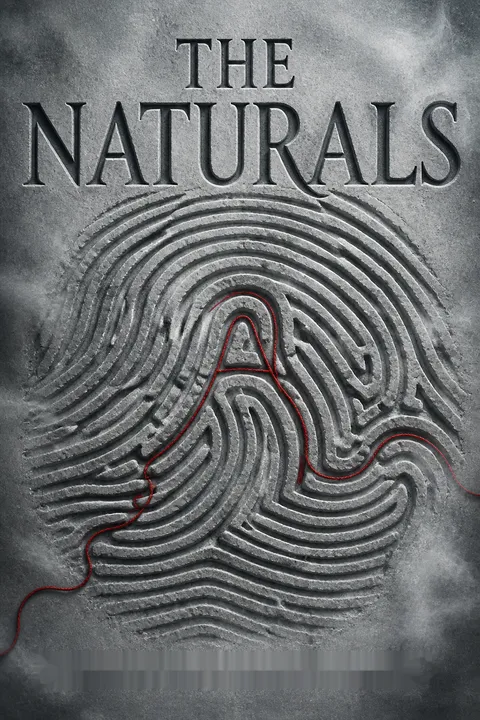


Plot Summary
Prologue
A predator studies a woman with icy blue eyes, a so-called psychic who convinces audiences she can see the unseen. He counts her breaths and admires her certainty, sure she will never sense the one truth that matters: that he has chosen her, that she is fragile, marked, and that the single thing this fortune-teller will never predict is him.
These second-person interludes recur throughout, a cold interior monologue tracking the killer's rituals, his keepsakes, his memory of a first victim he can never quite replicate, and his growing fixation on a girl named Cassie1 who is closer to him than anyone yet knows.
The Card Left With The Tip
Cassie1 waits tables in a Denver diner, reading every customer like an open file: who will stiff her, who is faking a taste for jalapenos. The reflex is her dead mother's legacy, a fake psychic stabbed five years earlier in a blood-soaked dressing room. A polished, country-club boy2 takes the window table, refuses to order, and dares Cassie1 to guess how he likes his eggs.
He vanishes, leaving twenty dollars and a business card: Special Agent Tanner Briggs,6 FBI. The back carries a typed plea to call, and beneath it a stranger's scrawled warning not to. Certain it must concern her mother, she pockets it. The card detonates a single question she cannot silence: what has she done to attract the Bureau?
Barnes opens by establishing profiling as both gift and wound. Cassie's compulsive reading of strangers is inseparable from trauma, a survival skill inherited from a con-artist mother. The dueling messages on the card, official summons versus handwritten warning, instantly frame the series' moral ambiguity: the institution that wants to use her and the insider who fears what it will cost. The diner setting grounds extraordinary talent in ordinary tedium, making her latent specialness feel earned rather than declared.
Briggs Names What She Is
At the FBI office the boy reappears, introduces himself only as Michael,2 and warns her again before she crosses the threshold. Briggs,6 twenty-nine and quietly hungry for legitimacy, names her aloud: a Natural profiler, someone who reads people instantly without retracing the clues. He runs a secret program that trains gifted teenagers to crack cold cases the Bureau cannot.
The price is relocating across the country to Quantico. He dangles the unspoken bait, her mother's unsolved murder, then concedes the offer is not about that. Cassie1 knows she will accept before he finishes speaking. The work is grim, profiling abductions and serial murder, yet it promises to forge her into someone who might spare another child the thing she once found.
The recruitment scene weaponizes Cassie's grief into vocation. Briggs reads her need for closure and offers purpose disguised as opportunity, a transactional seduction. Barnes complicates the mentor archetype: his ambition is transparent, his belief sincere. The chapter dramatizes how institutions recruit the wounded, converting private loss into useful labor. Cassie's instant certainty reveals her central drive, not heroism but a hunger to never again be the helpless girl at a crime scene she could not prevent.
The House Of Famous Killers
Cassie1 breaks the news to her sprawling Italian family, weathering Nonna's10 full-scale intervention before holding firm, promising only to return for Christmas. Michael2 drives her to a private jet, trading barbs the whole ride, and they fly to a Victorian house in Quantico overseen by Judd,8 a terse ex-marine cook. Framed portraits of serial killers line the staircase, a deliberate reminder aimed at one resident.
She meets her housemates: Lia,4 a gleeful pathological liar who detects every deception; Sloane,5 a statistics savant forbidden caffeine; and Dean,3 a brooding profiler who bench-presses like penance and tells her, lying, that it is nice to meet her. Each is a different kind of damaged, and the home itself is engineered for immersion.
The ensemble arrives as a gallery of weaponized traumas: deception, numbers, emotion, profiling, each gift a coping mechanism turned tool. The killer portraits convert domestic space into psychological warfare, hinting that one resident's identity is built around proximity to murder. Barnes uses found-family tropes against expectation, the warmth tempered by the knowledge that these children were selected for what broke them. Cassie's departure from her loving but alien family underscores her core ache: belonging among those who see what she sees.
Learning To Say I
Agent Locke,7 a sharp, impish red-haired profiler and Briggs's6 partner, takes command of Cassie's1 training. She marches Cassie1 and a reluctant Dean3 through a shopping mall, demanding full portraits of strangers built from posture, shoes, and crooked parking jobs. Dean3 teaches the discipline's hardest trick: abandon the words he and she, say I to climb inside a subject's skull, or say you to keep a thread of distance.
Late one night Cassie1 swims in the backyard pool and finds Dean3 already there. He throws a switch, and black light reveals the water blooming with glowing fake blood, a faithful reconstruction of a real murder. The whole house, he warns her, is built to teach a language no decent person should crave.
Training scenes externalize the book's central anxiety: empathy as infiltration. The grammatical lesson, I versus you, is really a meditation on how deeply one can inhabit a monster before becoming complicit in his logic. Dean's reluctance and the glowing pool mark him as someone who has gone too far inside and cannot return. Locke's playful pedagogy contrasts with the macabre curriculum, dramatizing how the program normalizes horror through repetition until atrocity becomes mere data to parse.
A Dare And A Kiss
Lia4 corrals the housemates into Truth or Dare, exploiting a game her gift renders unbeatable. She pries loose that Sloane5 knows her father, that her own birth name was Sadie,4 and pushes Cassie1 to admit she now loves only one person, her dead mother. Then she dares Cassie1 to kiss Dean.3 The brief contact lands like a live wire, rattling them both.
Cornered for a truth, Dean3 reveals he was the program's very first Natural, recruited by Briggs6 at twelve to answer questions about killers. Michael,2 openly jealous, needles Dean3 about an old film until Dean3 storms out and slams the front door. The evening peels back every guarded surface and seeds a charged triangle between Cassie,1 Michael,2 and Dean.3
The party game functions as forced therapy and emotional reconnaissance. Lia's truth-extraction strips away each character's protective fiction, including Cassie's chilling self-diagnosis that grief amputated her capacity to love. The kiss introduces romance not as relief but as another destabilizing variable. Barnes positions adolescent intimacy and trauma as entangled: these teens flirt in the same vocabulary they use to dissect killers. Dean's revelation hints at a manufactured childhood, foreshadowing the heredity dread that will define him.
The Serial Killer's Son
Reading through binders of recorded prison interviews, Cassie1 hits a transcript labeled Redding, conducted by Briggs6 himself. Dean's3 father, Daniel Redding, is an incarcerated serial murderer who tortured and killed women in a shack near where Dean3 grew up.
Everything realigns: the killer portraits hung for Dean's3 benefit, his uncanny fluency inside murderous minds, Lia's4 earlier plea that Cassie1 say nothing about the interviews. When Cassie1 confronts him, Dean3 turns deliberately cruel, insisting that heredity and upbringing have already made him a monster in waiting and that they can never be partners.
Lia4 physically intervenes, spinning Cassie1 away and warning her to leave him alone. The revelation recasts Dean3 entirely, not a difficult boy but one terrified of his own inheritance.
Dean's secret crystallizes the novel's nature-versus-nurture inquiry. His self-loathing is preemptive defense: by declaring himself doomed, he controls a verdict he fears others will pronounce. Barnes refuses easy reassurance, letting Dean voice the genuine statistical and environmental case against him. The scene also indicts the program's ethics, having raised a traumatized child amid trophies of his father's kind. Cassie's insistence that origin does not equal destiny becomes the book's quiet thesis, tested rather than asserted.
Victims Who Wear Her Face
After Michael2 drags her down to the basement to blow off steam, Sloane5 confesses she pocketed a USB drive from Locke's7 briefcase. The trio cracks its encryption and finds seven homicide files from the active case Locke7 and Briggs6 are quietly failing to solve. Sorting the photographs, Cassie1 perceives one killer behind two apparent victim pools: redheaded women and self-proclaimed psychics, all knifed, one corpse's hair freshly dyed scarlet.
Then the ground vanishes beneath her. The dead resemble her own mother, a red-haired fraudulent psychic stabbed five years before. Cassie1 sets her mother's photograph among the murdered women and declares with certainty that this killer hunts a single type: people who look like Lorelai Hobbes.
The midpoint collapses the boundary between case and self. Cassie's analytical detachment shatters when pattern recognition turns inward, and the hunt for a stranger becomes a confrontation with her own loss. Barnes stages the revelation through collaborative profiling, each Natural contributing a fragment, demonstrating that truth here is assembled, not intuited alone. The dyed hair as deliberate signature signals a killer performing for an audience, transforming victims into messages and foreshadowing that Cassie herself is the intended reader.
Gifts Wrapped In Silk
Briggs6 catches the hackers, confiscates the files, and forbids Cassie1 any contact with the case, threatening to send her home. Then a silk-ribboned black box arrives addressed to her, cradling a lock of red hair that DNA confirms belongs to the killer's newest victim. The murderer is now speaking to Cassie1 directly.
A second box, smuggled in under Sloane's5 name, holds blond hair and a photograph of a bound, beaten teenager, Genevieve Ridgerton, a United States senator's kidnapped daughter, with a note asking whether she would look better red. Director Sterling9 himself appears. The meaning is brutal and plain: the Bureau's effort to wall Cassie1 off has goaded the killer into seizing a hostage to force her back in.
Escalation here is fundamentally relational, not merely violent. The killer courts Cassie with the grammar of romance, ribbons and handwritten cards, perverting intimacy into terror. Genevieve's abduction proves the murderer is watching the investigation from impossibly close, weaponizing the FBI's protective instinct against it. Barnes sharpens the ethical bind: institutional caution actively endangers the innocent, while a teenager's involvement becomes the only currency the predator will accept. The gift motif reframes obsession as a grotesque parody of being chosen.
For A Good Time, Call Lorelai
Desperate to find Genevieve alive, the team deploys Cassie1 as bait. At Club Muse, the bar where Genevieve vanished from a bathroom in nine seconds, Cassie1 and Dean3 reenact the abduction in character while plainclothes agents canvass the crowd.
On the bathroom wall Cassie1 recognizes graffiti written in the killer's distinctive, half-cursive hand. Sloane5 decodes the embedded number as the word Lorelai, Cassie's mother's name, and unscrambles the remaining gibberish into North Oakland.
Cassie1 guesses the destination must be a theater. Inside an Arlington playhouse they discover a staged dressing room drenched in blood, mirrors and all, a murdered woman arranged as a prop, the entire tableau built to force Cassie1 to relive the night she found her mother.
The treasure-hunt structure exposes the killer's true aim: not concealment but choreography. Every clue is calibrated to the Naturals' specific abilities, revealing intimate knowledge of the team. The staged theater shifts the crime from murder to psychological torture aimed at Cassie alone, a corpse reduced to set dressing. Barnes interrogates spectatorship and reenactment: the killer directs, Cassie is compelled to perform grief on cue. The puzzle's elegance is its horror, intellect bent entirely toward cruelty.
The Blood On The Switch
Comparing the staged theater to her mother's actual case file, Cassie1 and Dean3 conclude the scene is too controlled, too clinical, to be the work of the frenzied person who killed Lorelai. Sloane5 isolates the fatal tell: blood smeared across the light switch as it was turned on, a mark Cassie1 herself made the day she discovered her mother, knowable only from sealed FBI photographs.
Someone with inside access staged this recreation. The Rose Red lipstick left anonymously on Lia's4 bed turns out to be her mother's exact girlhood shade. Locke7 phones, warns of a leak inside the unit, and orders Cassie1 to flee to a safe house with Dean.3 To shield Michael,2 Cassie1 coldly drives him away with a lie.
The forensic reversal is the book's intellectual climax: the recreation's perfection betrays it, because authentic rage cannot be reproduced with such cold fidelity. Barnes rewards close reading, the light-switch detail recasting an entire investigation. The realization that the predator is embedded within the trusted circle weaponizes the family-home premise, turning sanctuary into hunting ground. Cassie's cruelty toward Michael is sacrificial love disguised as rejection, a profiler manipulating the one person who can read her, proving she has learned the program's darkest lesson too well.
Just Us Girls Now
Dean3 and Cassie1 reach the safe house. Michael2 bursts in with a stolen gun, and the two boys aim at each other until Michael2 lowers his weapon, at which point gunfire erupts: Agent Locke7 shoots Michael2 twice and pistol-whips Dean3 unconscious. Smiling, she reveals herself as the murderer and as Cassie's1 aunt, Lacey Hobbes,7 the little sister Lorelai abandoned to their abusive father decades ago.
She joined the FBI to hunt the sister who left her, found Lorelai already dead, and has been restaging that killing on stand-ins ever since. She presses a knife on Cassie1 and the tortured Genevieve, demanding a protege. Cassie1 stalls with a fabricated confession until the gut-shot Michael2 drags himself to his fallen gun and kills Lacey.7
The reveal fuses the personal and procedural: the mentor who taught Cassie to inhabit killers was one all along, hidden in plain sight by the very rapport that should have exposed her. Lacey embodies abandonment metastasized into atrocity, a child who wanted family so badly she would carve it from corpses. Barnes lands the thematic payoff of nature versus nurture through contrast: Dean refuses his inheritance, Lacey surrendered to hers. Cassie's survival hinges not on force but on performance, profiling weaponized for self-rescue.
Epilogue
Genevieve survives, barely, and refuses to see Cassie.1 Michael2 faces months of rehabilitation and a likely permanent limp; Dean3 cannot forgive himself for hesitating to fire. Investigators confirm Lacey Hobbes7 was Cassie's aunt, that she had killed at least fourteen people across state lines, escalating only after Cassie entered the program.
The worn tube of Rose Red lipstick clutched in her dead hand had been Lorelai's since girlhood, a stolen keepsake. Cassie's mother's true murderer remains unidentified, her body never recovered. Lia4 prods Cassie1 out of her grief, and Cassie chooses to stay. She keeps the lipstick as a talisman of survival and leaves her feelings for Michael2 and Dean,3 and for herself, deliberately unresolved.
Analysis
The Naturals reframes the serial-killer thriller as a coming-of-age study in empathy as both gift and liability. Barnes, a psychologist, builds her plot on a genuine question: if reading people deeply requires inhabiting them, what happens when the people you inhabit are monsters? The grammatical lesson at the book's core, the move from he to I, dramatizes how understanding shades toward complicity, and the novel populates a single house with adolescents whose extraordinary talents are inseparable from their traumas. Profiling, lie detection, statistical pattern-recognition, and emotion-reading are not superpowers but scar tissue, coping mechanisms grown over wounds. The found-family premise is therefore double-edged: these teenagers belong together precisely because the ordinary world cannot hold what they have seen. The central thematic engine is nature versus nurture, posed most starkly through Dean,3 who fears his killer father's blood is destiny, and answered through contrast by the antagonist,7 whose abandonment in childhood curdled into atrocity. Barnes refuses sentimental reassurance; she lets the case for determinism be spoken aloud, then shows it defeated only by choice and sacrifice rather than by comforting denial. The murderer's hiding in plain sight indicts the very intimacy the program prizes, suggesting that proximity can blind as easily as it reveals, and that the most dangerous people are those we have decided to trust. Cassie's1 climactic survival is thematically precise: she escapes not through violence but by performing a false self, weaponizing the profiling she was taught and proving how thoroughly the work has colonized her identity. The unresolved romance and, pointedly, the still-unsolved murder of her mother resist tidy closure, insisting that some wounds drive us without ever healing. The book argues that the line between investigator and predator is a discipline maintained moment to moment, never a settled fact.
Review Summary
The Naturals receives mostly positive reviews, with readers praising its fast-paced plot, intriguing characters, and captivating mystery. Many compare it to a YA version of Criminal Minds. The love triangle and teenage drama aspects divide opinions. Some find the premise of teens working for the FBI unrealistic, while others enjoy the suspense and plot twists. Readers appreciate the short chapters and addictive nature of the story. The book is often recommended for those in reading slumps or fans of true crime and mystery genres.
People Also Read









Characters
Cassie Hobbes
Natural profiler protagonistSeventeen and orphaned in all but name, Cassie reads strangers compulsively, a skill drilled into her by a con-artist mother who pretended to be psychic and was murdered when Cassie was twelve. She narrates with wry detachment that masks unhealed grief and a conviction that she is permanently outside every family that loves her. Driven by the unsolved killing she literally walked into, she joins the Naturals less from heroism than from a need to convert helplessness into agency. Her gift, profiling personality from behavior and environment, makes her brilliant at decoding others yet leaves her bewildered by her own desires. Beneath the analytic cool runs a frightened girl who suspects loss has hollowed out her ability to love.
Michael Townsend
Emotion-reading charmerA wealthy, sardonic boy who reads emotions from the smallest facial flickers, Michael hides behind shifting wardrobes and a bulletproof smirk. The product of boarding schools and a father whose tax fraud bought his immunity, he masks genuine hurt with performance, admitting he fears what an honest profile would expose. Capable of frightening violence when he loses control, he is also the warmest presence in Cassie's1 orbit, pursuing her openly and protectively. His flippancy is armor over abandonment and self-loathing, and his pull toward Cassie1 is one of the few unguarded things about him.
Dean Redding
Brooding profiler partnerThe program's original recruit, brought in at twelve, Dean profiles killers with a fluency that disturbs even him. Quiet, watchful, and physically punishing himself with workouts, he keeps the world at arm's length and saves his words for what matters. A dark inheritance shadows his every choice, fueling a terror that he is destined to become something monstrous. He warns Cassie1 away from the work and from himself, yet steadies her at crime scenes with a hand on her neck and an instinct that matches her own. His cruelty is self-protective, his tenderness reluctant, both rooted in shame he did not earn.
Lia
Deception specialistA theatrical, sharp-tongued Natural who detects lies and tells flawless ones, Lia changes clothes and personas as easily as moods. Once named Sadie, she guards her past fiercely and uses provocation to keep others off balance. Beneath the kleptomaniac mischief and verbal cruelty lies fierce loyalty, especially toward Dean3, whom she treats as a brother. She bonds with Cassie1 through antagonism that gradually softens into something like friendship.
Sloane
Statistics savant roommateCassie's1 roommate, a pale, blunt-banged genius who perceives patterns and probabilities everywhere and recites statistics as a form of communication and comfort. Forbidden coffee because it sends her into hyperdrive, she finds human motivation bewildering yet decodes ciphers and crime-scene physics with eerie speed. Socially uncertain and hungry for belonging, she steals small objects and counts everything, her precision a shield against a world she struggles to read emotionally.
Agent Tanner Briggs
Program's driven founderThe ambitious FBI agent who conceived the Naturals program and recruited Cassie1, Briggs is single-minded, professionally guarded, and eager to prove the unproven. He recruited Dean3 as a child and bears the institutional scars of that gamble. Protective of his teenagers even as he uses them, he forbids their involvement in active cases to safeguard both their lives and his career, a tension he never fully reconciles.
Agent Lacey Locke
Charismatic profiling mentorBriggs's6 red-haired partner and Cassie's1 training mentor, Locke is warm, impish, and disarmingly funny, a profiler who learned her craft the hard way through the Academy rather than by gift. She answers questions before they are asked, treats the teenagers with rare candor, and pushes Cassie1 toward the deep end of victimology and signature analysis. Genuinely invested in her protege, she becomes the adult who seems most to understand Cassie1, blurring the line between teacher and confidante in ways that prove consequential.
Judd Hawkins
Terse house caretakerA sixty-something retired marine who cooks for and watches over the household. Gruff and economical with words, eagle-eyed and quietly perceptive, he misses almost nothing that happens under his roof and harbors more soft spots than his manner suggests.
Director Sterling
Skeptical FBI superiorThe senior FBI official who reluctantly approved the Naturals program and remains doubtful its results justify the risk. Authoritative and politically cautious, he treats the teenagers as liabilities until a senator's daughter raises the stakes too high to ignore.
Nonna
Fierce Italian grandmotherCassie's1 paternal grandmother, who rules her large family like a general and took Cassie1 in at twelve. Loving, suspicious, and formidable, she fights Cassie's1 departure with a full family intervention and a half-joking threat, demanding only that she come home for Christmas.
Plot Devices
BPE Profiling
Reading people as dataBehavior, Personality, Environment, the framework Cassie's1 mother taught her, lets the Naturals reconstruct a stranger's life from posture, clothing, and habits. The program refines it into a discipline of perspective: say I to inhabit a killer's mind, say you to keep distance, never say he or she, which leaves the analyst safely outside. This grammar of empathy is the engine of every investigation in the book, and also its central danger, since inhabiting a murderer too fully threatens the inhabitant. Cassie's1 fluency in profiling drives both her insights and her eventual self-rescue, while Dean's3 terrifying ease with the technique embodies the cost of seeing too clearly into darkness.
The Killer Interludes
Predator's interior voiceRecurring second-person passages, each titled with the word You, drop the reader directly inside the murderer's consciousness between chapters. They detail his rituals, his rage at imperfect kills, his hoard of stolen lipsticks, and his memory of an unrepeatable first victim. Crucially, they grow obsessed with Cassie1, addressing her by name and tracking the investigation from the inside. The device generates dramatic irony and dread, letting readers feel the noose tighten while Cassie1 remains unaware, and its intimate, abused-child psychology quietly seeds the eventual revelation of who the killer truly is and what wound drives the violence.
The Black Box Gifts
Killer's escalating courtshipSilk-ribboned black boxes, each bearing Cassie's1 name in a half-cursive hand, arrive carrying locks of victims' hair and, later, a photograph of a kidnapped hostage. They transform an active investigation into a personal correspondence, proving the killer is watching Cassie1 and demanding her involvement. The gifts pervert the language of romance into terror and force the FBI's hand, since walling Cassie1 off only provokes worse atrocities. As physical evidence they advance the plot, but as messages they reveal the murderer's craving to be seen by Cassie1 specifically, the obsession that ultimately exposes a hidden connection between hunter and prey.
Rose Red Lipstick
Keepsake linking past to presentRose Red was Lorelai Hobbes's signature shade, and a fresh tube appears anonymously among makeup left on Lia's4 bed, later used to make Cassie1 up to resemble her dead mother. Initially read as cruel coincidence, the lipstick becomes a thread proving the killer has been inside the Naturals' home and possesses intimate knowledge of Cassie's1 mother. A worn-down tube of the same color recovered at the climax confirms a buried familial bond and a lifetime of obsession. The object functions as both clue and emotional symbol, an inheritance of grief Cassie1 ultimately chooses to keep as a reminder of what she survived.
The Graffiti Cipher
Puzzle staging the huntAt the nightclub crime scene, the killer leaves a coded message scrawled in his distinctive handwriting: a fake phone number, a guaranteed plus one, and the nonsense phrase Kola and Thorn. Sloane5 translates the digits into the word Lorelai and unscrambles the anagram into North Oakland, while Cassie1 intuits the destination is a theater echoing her mother's death. The cipher demonstrates that the killer designed the entire chase around the Naturals' specific talents, knowing exactly who would decode it. It converts investigation into a guided performance, escalating the dread that every discovery is choreographed and that the team is being led, not leading.
FAQ
Synopsis & Basic Details
What is The Naturals about?
- Gifted teens solve crimes: The Naturals follows a group of teenagers with unique abilities who are recruited by the FBI to solve cold cases.
- Haunted by the past: The protagonist, Cassie, is driven by her mother's unsolved murder and seeks answers through the program.
- Blending skills and danger: The story explores how these teens use their skills while navigating the dangers of real-world investigations and their own personal demons.
Why should I read The Naturals?
- Unique premise: The blend of crime procedural, psychological thriller, and young adult fiction offers a fresh and engaging reading experience.
- Compelling characters: The diverse cast of characters, each with their own unique abilities and backstories, creates a dynamic and intriguing ensemble.
- Intriguing mysteries: The book is full of twists and turns, keeping readers guessing until the very end, with a focus on the psychology of both the victims and the perpetrators.
What is the background of The Naturals?
- FBI Behavioral Science Unit: The story is set within the context of the FBI's Behavioral Science Unit, which uses profiling and psychological analysis to solve crimes.
- Focus on "Naturals": The program is based on the idea that certain individuals possess innate abilities that can be honed for crime-solving, a concept rooted in cognitive science.
- Contemporary setting: The story takes place in a modern setting, with references to current technology and cultural trends, enhancing its relatability.
What are the most memorable quotes in The Naturals?
- "Maybe she really can see things. Maybe she knows things.": This quote from the prologue highlights the mystery surrounding Cassie's abilities and sets the tone for the book.
- "No expectations, no disappointments.": This line, spoken by Michael, reveals his cynical worldview and his attempt to protect himself from emotional pain.
- "If you want to climb inside someone's head, you use the word I.": This quote, from Dean, emphasizes the importance of empathy and perspective in profiling, and the danger of becoming the killer.
What writing style, narrative choices, and literary techniques does Jennifer Lynn Barnes use?
- Fast-paced and suspenseful: Barnes employs a quick, engaging pace with frequent cliffhangers, keeping the reader hooked and eager to turn the page.
- Multiple perspectives: While primarily told from Cassie's point of view, the narrative occasionally shifts to other characters, providing insights into their thoughts and motivations.
- Foreshadowing and red herrings: Barnes uses subtle clues and misdirection to create suspense and keep the reader guessing, making the mystery more complex and engaging.
Hidden Details & Subtle Connections
What are some minor details that add significant meaning?
- The Porsche: Michael's insistence on keeping his Porsche is not just about material possessions; it symbolizes his desire to hold onto his past and his rebellion against authority.
- Lia's clothing changes: Lia's frequent changes in clothing style reflect her ability to adapt and deceive, highlighting her complex and multifaceted personality.
- Sloane's card game: Sloane's playing solitaire with facedown cards symbolizes her ability to see patterns and probabilities that others cannot, even without complete information.
What are some subtle foreshadowing and callbacks?
- The opening "You" sections: The prologue's "You" sections foreshadow the killer's obsession with Cassie and the twisted nature of their connection.
- The mention of red hair: The recurring emphasis on red hair foreshadows the killer's fixation on Cassie and her mother, and the significance of the hair in the black box.
- Dean's warnings: Dean's repeated warnings to Cassie about the dangers of profiling and the program foreshadow his own internal struggles and the dark truths he hides.
What are some unexpected character connections?
- Lacey Locke's true identity: The revelation that Agent Locke is Cassie's aunt and the killer is a shocking twist that recontextualizes their entire relationship.
- Dean's father's history: Dean's connection to a serial killer is a dark secret that adds depth to his character and creates a parallel with Cassie's own family trauma.
- Michael and Lia's past: The hints of a past relationship between Michael and Lia add complexity to their interactions and reveal a shared history of emotional vulnerability.
Who are the most significant supporting characters?
- Judd Hawkins: The retired marine who manages the house is more than just a caretaker; he is a keen observer and a source of stability for the Naturals.
- Agent Starmans: The agent assigned to Cassie's protection detail is a reminder of the constant surveillance and danger that the Naturals face, and the limitations of the FBI.
- Director Sterling: The head of the FBI division overseeing the program represents the bureaucratic and political forces that influence the Naturals' work, and the skepticism they face.
Psychological, Emotional, & Relational Analysis
What are some unspoken motivations of the characters?
- Cassie's need for closure: Beyond solving crimes, Cassie is driven by a deep need to understand her mother's murder and find closure for her own trauma.
- Dean's fear of his nature: Dean's guarded behavior stems from his fear that he might be inherently evil, like his father, and his struggle to control his dark impulses.
- Michael's desire for connection: Despite his cynical exterior, Michael craves genuine emotional connection and is drawn to Cassie's vulnerability and strength.
What psychological complexities do the characters exhibit?
- Cassie's detachment: Cassie's ability to detach herself from her emotions and analyze people objectively is both a strength and a weakness, highlighting her struggle to connect with others.
- Dean's internal conflict: Dean's internal conflict between his desire to help others and his fear of his own dark nature creates a complex and compelling character.
- Lia's deceptive nature: Lia's skill at lying and her tendency to manipulate situations reveal a deep-seated need for control and a fear of vulnerability.
What are the major emotional turning points?
- Cassie's discovery of the black box: The arrival of the black box with the lock of hair is a turning point, forcing Cassie to confront the possibility that her mother's killer is still at large.
- The Truth or Dare game: The Truth or Dare game reveals the characters' vulnerabilities and hidden feelings, creating tension and shifting the dynamics of the group.
- The revelation of Locke's identity: The reveal that Agent Locke is the killer is a shocking betrayal that forces Cassie to question everything she thought she knew.
How do relationship dynamics evolve?
- Cassie and Dean's connection: Cassie and Dean's relationship evolves from a mentor-mentee dynamic to a deeper connection based on shared trauma and understanding.
- Cassie and Michael's tension: Cassie and Michael's relationship is marked by flirtation and conflict, but also by a growing sense of trust and mutual respect.
- The Naturals' bond: The Naturals' bond strengthens as they face danger together, learning to rely on each other's unique skills and support.
Interpretation & Debate
Which parts of the story remain ambiguous or open-ended?
- The true nature of the Naturals' abilities: The extent and limitations of the Naturals' abilities are never fully explained, leaving room for interpretation and speculation.
- The long-term impact of the program: The long-term effects of the Naturals Program on the Naturals' lives and their ability to integrate into society are left open-ended.
- The possibility of future threats: The ending leaves open the possibility that other threats may emerge, suggesting that the Naturals' journey is far from over.
What are some debatable, controversial scenes or moments in The Naturals?
- The use of teenagers in dangerous situations: The FBI's decision to use teenagers in active investigations raises ethical questions about the exploitation of vulnerable individuals.
- The romantic relationships: The romantic relationships between Cassie, Dean, and Michael are a source of debate, with readers often divided on who they believe is the best match for Cassie.
- The portrayal of mental illness: The portrayal of Agent Locke's mental state and her descent into madness raises questions about the nature of evil and the impact of trauma.
The Naturals Ending Explained: How It Ends & What It Means
- Locke's death: The final confrontation with Agent Locke ends with her death, but it leaves Cassie with a sense of loss and betrayal, and the knowledge that her aunt was the killer.
- The team's survival: The Naturals survive the ordeal, but they are forever changed by the experience, and their relationships are tested and strengthened.
- Cassie's choice to stay: Cassie's decision to stay in the Naturals Program signifies her commitment to using her abilities for good, despite the risks and the emotional toll.
The Naturals Series


About the Author
Other books by Jennifer Lynn Barnes







Download PDF
Download EPUB
.epub digital book format is ideal for reading ebooks on phones, tablets, and e-readers.








































