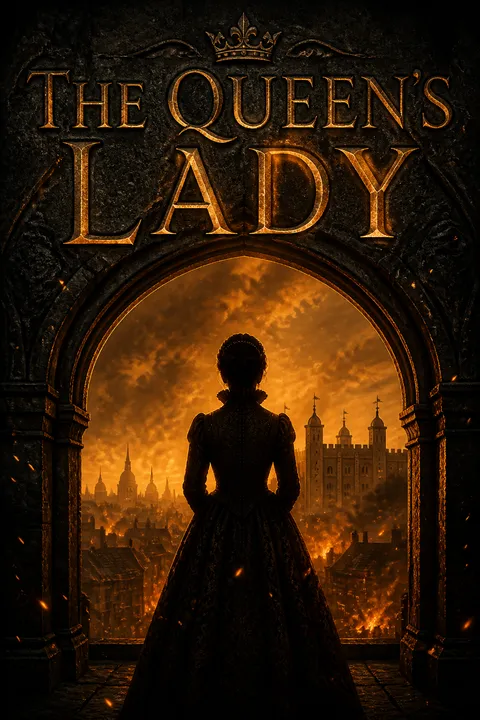
Plot Summary
May Day's Chaos
On a riotous May Day in 1517 London, seven-year-old Honor Larke is thrust into terror as anti-foreigner violence erupts. Lost and alone, she witnesses the murder of a foreigner who, in his dying moments, entrusts her with a mysterious book and a warning: never show it to a priest. The chaos of the night is a crucible, forging Honor's first encounter with death, injustice, and the arbitrary cruelty of the world. Her innocence is forever marked by the violence she witnesses, and the secret she carries becomes a symbol of forbidden knowledge and the beginning of her lifelong quest for truth and belonging.
Orphaned and Betrayed
Honor returns home to find her father dying of the sweating sickness, his last moments poisoned by a corrupt priest, Bastwick, who excommunicates him for refusing a mortuary fee. Orphaned and vulnerable, Honor is betrayed by those meant to protect her. Bastwick and the venal Sir Guy Tyrell conspire to seize her inheritance, forcibly removing her from her home and setting her on a path of captivity and exploitation. The trauma of loss and betrayal etches itself into Honor's psyche, shaping her distrust of authority and her yearning for justice.
Tyrell Court's Cruelty
At Tyrell Court, Honor endures years of psychological and physical torment. Married as a child to the brutish Hugh Tyrell, she is treated as property, her body and fortune the spoils of her captors. When the Tyrells attempt to consummate the marriage by force, Ralph, her loyal protector, kills Hugh to save her. The act brands them both as fugitives. The violence and degradation Honor suffers ignite her fierce will to survive and resist, while Ralph's sacrifice cements a bond of love and gratitude that will haunt her for years.
Escape and Justice
Honor and Ralph escape Tyrell Court, fleeing through rain and darkness to London. There, Honor seeks justice from Sir Thomas More, a rising lawyer known for his integrity. With More's help, Tyrell and Bastwick are brought to trial, and Honor is freed from their grasp. More becomes her guardian, offering her safety, education, and a home. Yet the cost is high: Ralph, wanted for murder, must disappear from her life. The escape is both a liberation and a loss, as Honor's longing for Ralph and her hunger for justice become intertwined.
Chelsea's Sanctuary
In More's enlightened household at Chelsea, Honor flourishes intellectually, learning Latin, Greek, and the arts of reason. She finds friendship and belonging among More's family, but also develops a forbidden attachment to her guardian. The wounds of her past linger, and the mysterious book from her childhood remains lost, a symbol of unanswered questions. As the world outside grows more turbulent, Honor's sanctuary is both a refuge and a gilded cage, her heart torn between gratitude, longing, and the stirrings of independence.
The Queen's Lady
Honor is summoned to serve Queen Catherine, whose marriage to Henry VIII is under threat. At court, Honor navigates a labyrinth of intrigue, witnessing the rise of Anne Boleyn and the King's obsession with an heir. She becomes the Queen's confidante and secret messenger, risking her safety to smuggle letters and information. The court's moral ambiguities and shifting alliances force Honor to confront her own values, as her loyalty to Catherine and her growing awareness of injustice deepen her resolve to act, even at great personal risk.
Court Intrigues and Temptations
Honor's duties bring her into contact with Richard Thornleigh, a charismatic and reckless courtier. Their encounters are charged with attraction and rivalry, as Thornleigh both threatens and protects her. The court is a stage for seduction, betrayal, and ambition, and Honor must navigate its perils while guarding her secrets. Her relationship with Thornleigh becomes a crucible for her emerging sense of self, as desire and danger intertwine, and the boundaries between friend and foe blur.
Fires of Heresy
The religious ferment of the age erupts in violence as heretics are hunted, tried, and burned. Honor is forced to watch the execution of Ralph, her childhood protector, condemned for possessing forbidden Bibles. The horror of the burning sears her soul, fueling her hatred of Bastwick and her disillusionment with the Church. The spectacle of suffering and the machinery of persecution become central to Honor's understanding of power, conscience, and the price of dissent. Her vow to remember Ralph's agony becomes a driving force in her life.
The King's Great Matter
As Henry VIII's quest for a divorce from Catherine intensifies, the kingdom is torn apart by legal, religious, and personal conflicts. Honor is drawn into the heart of the struggle, serving as a go-between for the Queen and her allies, and witnessing the downfall of Wolsey, the rise of Cromwell, and the transformation of More from reformer to persecutor. The shifting sands of loyalty, law, and faith test every character, and Honor's own beliefs are challenged as she sees the cost of standing by principle in a world where the ground is always moving.
Love and Loss
Honor and Thornleigh's relationship deepens, marked by passion, misunderstanding, and sacrifice. Their love is forged in adversity, but threatened by the demands of duty, the scars of the past, and the dangers of the present. As the fires of persecution burn hotter, and the machinery of state grinds down all who resist, Honor must choose between love and conscience, safety and action. The losses she endures—of friends, ideals, and innocence—force her to confront the limits of her power and the meaning of her life.
The Devil's Bargain
Honor's work aiding heretics and dissenters brings her into conflict with Cromwell, Bastwick, and even More. Betrayed and hunted, she flees England with Thornleigh, only to be separated and cast adrift in the chaos of Reformation Europe. In Münster, she witnesses the collapse of utopian dreams into fanaticism and violence. The search for safety, truth, and redemption becomes a journey through the wreckage of ideals, as Honor grapples with despair, guilt, and the possibility of forgiveness.
The Oath and the Tower
Sir Thomas More, imprisoned in the Tower, faces the ultimate test of conscience as he refuses to swear the Oath of Supremacy. Honor, risking everything, returns to England to plead for his life. Their final encounter is a reckoning of love, betrayal, and the irreconcilable demands of faith and reason. More's martyrdom is both a tragedy and a release, as Honor comes to terms with the limits of her power and the necessity of letting go. The execution is a moment of collective trauma, marking the end of an era and the birth of a new, uncertain world.
Münster's New Jerusalem
Seeking refuge, Honor finds herself in Münster, a city transformed by Anabaptist revolution into a theocratic commune. The promise of equality and peace quickly devolves into fanaticism, violence, and tyranny. Honor's illusions about reform and human nature are shattered as she witnesses the city's descent into chaos and the suffering of innocents. The collapse of Münster becomes a parable of the dangers of certainty, the corruption of ideals, and the tragic cost of utopian dreams.
Despair and Revelation
In the ruins of Münster, Honor is stripped of all certainties. Separated from Thornleigh, haunted by guilt and failure, she cares for a traumatized child and confronts the limits of faith, hope, and reason. The rediscovery of the foreigner's book—an essay on the mortality of the soul—becomes a catalyst for her own revelation: that life, not dogma, is sacred, and that meaning must be found in love, action, and the acceptance of impermanence. The journey from despair to clarity is both a personal and philosophical awakening.
The Final Rescue
Against all odds, Thornleigh survives and orchestrates Honor's rescue from execution. Their reunion is a testament to endurance, loyalty, and the power of human connection. The debts of the past are paid, and the wounds of betrayal and loss begin to heal. The rescue is not only a physical deliverance but a symbolic redemption, as Honor and Thornleigh, joined by Adam and their friends, escape England for a new life. The cycle of violence is broken, and the possibility of renewal is affirmed.
Immortality and Charity
In exile, Honor reflects on the lessons of her journey: the dangers of certainty, the necessity of charity, and the enduring power of love. The deaths of More, Fisher, and so many others are mourned, but their lives are honored through memory, action, and the written word. The rediscovered book, the birth of her daughter, and the bonds of friendship and family become her true immortality. The novel closes with a vision of hope: that in a world of suffering and change, the greatest virtue is charity, and the only immortality is the legacy we leave in the hearts of others.
Analysis
Barbara Kyle's The Queen's Lady is a sweeping historical novel that explores the tumultuous intersection of personal conscience, political power, and religious upheaval in Tudor England. Through the eyes of Honor Larke, the reader is immersed in a world where the certainties of faith, law, and love are constantly challenged by violence, betrayal, and the relentless march of change. The novel interrogates the dangers of certainty—whether in the form of religious dogma, political ideology, or personal vendetta—and affirms the necessity of charity, humility, and the acceptance of impermanence. The psychological depth of the characters, the vivid depiction of historical events, and the intricate web of relationships create a narrative that is both emotionally resonant and intellectually provocative. In a modern context, the novel's lessons are clear: the greatest virtue is not in being right, but in being kind; the only immortality is the legacy of love and action we leave behind; and in a world of suffering and uncertainty, the courage to act with charity is the truest form of heroism.
Review Summary
The Queen's Lady receives mixed reviews, averaging 3.8/5. Many readers praise its intricate plot, vivid historical detail, and compelling protagonist Honor Larke, noting strong writing comparable to Ken Follett. The religious conflicts of Tudor England are highlighted as both a strength and weakness — some find the depth enriching, others overwhelming. Common criticisms include abrupt timeline jumps, a misleading title and blurb, and occasionally one-dimensional secondary characters. Positive reviewers particularly appreciate the nuanced portrayal of Thomas More and the seamless blending of fiction with history.
People Also Read


Characters
Honor Larke
Honor is the emotional and moral center of the novel, a woman forged by trauma, loss, and the relentless pursuit of justice. Orphaned and betrayed as a child, she endures captivity, abuse, and the loss of those she loves. Her journey from innocence to experience is marked by a fierce intellect, a hunger for truth, and a refusal to accept the world's injustices. Honor's relationships—with Ralph, More, Catherine, Thornleigh, and others—are complex, shaped by gratitude, longing, and the scars of betrayal. Her psychological arc is one of disillusionment and self-discovery, as she moves from faith in institutions to a hard-won acceptance of life's ambiguity and the necessity of charity. Her ultimate legacy is not in dogma or victory, but in the lives she touches and the love she gives.
Richard Thornleigh
Thornleigh is Honor's equal and opposite: reckless, passionate, and haunted by his own failures. A man of action and appetite, he is both a savior and a source of danger for Honor. His journey is one of redemption, as he moves from self-destructive bravado to a deeper understanding of love, responsibility, and sacrifice. His marriage to Honor is a union of wounded souls, each seeking healing in the other. Thornleigh's survival and ultimate rescue of Honor are testaments to his resilience and the transformative power of love. His psychological complexity lies in his struggle to reconcile desire, duty, and the ghosts of the past.
Sir Thomas More
More is both a father figure and an antagonist, embodying the contradictions of conscience, law, and faith. His brilliance, wit, and humanity make him a compelling guardian and teacher for Honor, but his rigidity and capacity for cruelty—especially as Chancellor—reveal the dark side of principle. More's refusal to compromise, his embrace of martyrdom, and his inability to see the suffering caused by his actions are both admirable and tragic. His psychological arc is one of increasing isolation, as the world changes around him and his certainties become his undoing. His death is both a personal and historical tragedy, marking the end of an era and the limits of human integrity.
Jerome Bastwick
Bastwick is the novel's primary antagonist, a priest whose hunger for power and revenge drives much of the plot's conflict. His psychological makeup is shaped by resentment, ambition, and a deep-seated sense of inferiority. Bastwick's capacity for cruelty is matched only by his cunning, and his vendetta against Honor is both personal and symbolic of the dangers of unchecked authority. His downfall is a product of his own excesses, and his legacy is one of destruction and wasted potential.
Queen Catherine of Aragon
Catherine is a figure of immense strength and suffering, embodying the virtues of loyalty, faith, and endurance. Her relationship with Honor is one of mutual respect and affection, and her struggle against Henry's divorce is both personal and political. Catherine's psychological arc is one of increasing isolation and martyrdom, as she is stripped of power, dignity, and even her daughter. Her refusal to compromise is both her greatness and her tragedy, and her fate is a warning about the costs of principle in a world ruled by power.
Anne Boleyn
Anne is both a rival and a mirror for Honor, embodying the allure and danger of ambition. Her rise and fall are emblematic of the volatility of the court and the perils of desire. Anne's psychological complexity lies in her ability to manipulate, inspire, and ultimately become a victim of the very forces she unleashes. Her relationship with Henry, her rivalry with Catherine, and her ambiguous connection to Honor make her a pivotal figure in the novel's exploration of power, gender, and fate.
Ralph Pepperton
Ralph is Honor's childhood guardian and the embodiment of selfless love. His sacrifice—killing to save Honor, enduring torture, and ultimately dying for his beliefs—haunts Honor throughout her life. Ralph's psychological simplicity is his strength: he acts out of loyalty, courage, and a sense of rightness that stands in stark contrast to the moral ambiguities of the world around him. His death is a turning point for Honor, fueling her hatred of injustice and her quest for meaning.
Samuel Jinner
Jinner is Thornleigh's right-hand man, a figure of loyalty, resourcefulness, and earthy humor. His devotion to Honor and Thornleigh, his courage in moments of crisis, and his ability to survive and adapt make him an indispensable ally. Jinner's psychological resilience is rooted in pragmatism and affection, and his presence provides both comfort and comic relief in the darkest moments.
Bridget Sydenham
Bridget is a figure of endurance and principle, shaped by suffering and loss. Her commitment to her faith, her family, and the memory of her husband drives her actions, even as she is forced to make impossible choices. Bridget's psychological strength lies in her ability to bear witness, to forgive, and to act with charity even in the face of betrayal and despair.
Pieter
Pieter is a traumatized child, abandoned and abused, yet capable of resilience, learning, and love. His relationship with Honor is one of mutual need and healing, and his journey from victim to apprentice printer is a testament to the possibility of renewal. Pieter's psychological arc is one of recovery and growth, and his presence in the novel affirms the enduring power of kindness and the hope for a better future.
Plot Devices
Duality of Faith and Reason
The novel's central plot device is the tension between faith and reason, embodied in the characters' struggles with conscience, law, and power. The narrative structure juxtaposes personal and political crises, using foreshadowing and parallelism to highlight the costs of principle and the dangers of certainty. The motif of forbidden books, secret knowledge, and the search for truth recurs throughout, symbolizing the quest for meaning in a world of shifting allegiances. The use of historical events—trials, executions, revolutions—anchors the personal stories in the broader currents of Reformation and change. The interplay of love and betrayal, rescue and loss, and the cyclical nature of violence and redemption are woven through the plot, culminating in moments of revelation and acceptance.
Masks, Disguises, and Rescue
The recurring use of masks, disguises, and mistaken identities serves both as a literal means of escape and as a metaphor for the fluidity of identity and the necessity of adaptation. The climactic rescue at Smithfield, with its carnival of devils and children, is both a plot twist and a symbolic inversion of the machinery of persecution. The motif of rescue—physical, emotional, and spiritual—runs throughout, highlighting the importance of solidarity, ingenuity, and the willingness to risk everything for others.
The Lost Book
The foreigner's book, entrusted to Honor as a child, is a central plot device, representing the allure and danger of knowledge, the power of ideas, and the journey from innocence to understanding. Its rediscovery and the revelation of its contents serve as a catalyst for Honor's final transformation, linking the personal and philosophical arcs of the novel. The book's journey mirrors Honor's own, and its message—of mortality, impermanence, and the necessity of charity—becomes the novel's ultimate lesson.








































