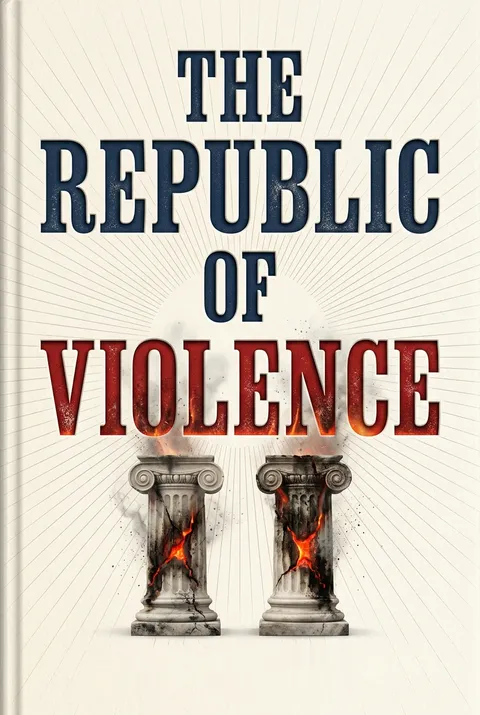

Key Takeaways
1. The Birth of Radical Abolition Amidst Hostility
The figures of the early movement are no less important because they remain obscure.
Early struggles. The abolition movement's early stages (1833-1838) were marked by immense challenges, operating under the hostile administration of Andrew Jackson. This era saw the rise of an interracial abolition movement, but also unprecedented violence, often directed against its proponents. Unlike later, more celebrated figures, these pioneers laid the groundwork for success despite obscurity and persecution.
Black leadership. The movement for immediate abolition was significantly shaped by Black Americans long before prominent white allies joined. In 1817, a mass meeting in Philadelphia overwhelmingly rejected the American Colonization Society's proposal to deport free Black people to Africa, asserting their right to remain in the U.S. This defiance, led by figures like James Forten, directly challenged the prevailing narrative and called for immediate, not gradual, emancipation.
Garrison's transformation. William Lloyd Garrison, initially a supporter of colonization, shifted to immediate abolition after being influenced by Black writers and activists like David Walker and William Watkins. His newspaper, The Liberator, became a strident voice for the cause, attracting both dedicated followers and fierce enemies who despised his uncompromising rhetoric and attacks on American institutions. His early notoriety, however, often overshadowed the foundational contributions of Black abolitionists.
2. Mobs and "Amalgamation" as Tools of Suppression
Amalgamation could mean Black and white people fraternizing, communing socially, dancing together, working together, worshipping together, becoming friends, sharing a meal, sharing a bed, or getting married.
Inciting violence. The Jacksonian Era was characterized by widespread mob violence, with over a thousand deaths before the Civil War, half of which targeted free Black people and abolitionists. Pro-slavery forces and colonizationists, often amplified by a hostile press like James Watson Webb's Courier and Enquirer, used the loaded term "amalgamation" to incite fear and hatred, portraying any interracial cooperation as a threat to social order and an invitation to violence.
Racial prejudice. The accusation of "amalgamation" served as a potent excuse for rioters to attack Black churches, schools, and homes, and to assault antislavery activists across Northern cities. This prejudice was deeply ingrained, with many whites romanticizing the South and consuming blackface performances that depicted African Americans as buffoons. The fear of race mixing was a political tool, designed to divide and conquer the nascent abolition movement.
Targeting activists. Abolitionists who dared to work across racial lines or advocate for equal rights were branded as "amalgamators" and targets for violence. This tactic aimed to isolate the movement and deter potential converts, making it dangerous for anyone to openly support racial equality. The constant threat of mob action forced activists to confront not just slavery, but the pervasive racism that fueled attacks in both the North and South.
3. The Tappans: Wealth, Piety, and the Price of Activism
Arthur Tappan was nominally a pacifist, but he was also a realist who had no interest in sacrificing himself as a martyr to a bunch of whiskey-fueled hooligans.
Philanthropic power. Arthur and Lewis Tappan, wealthy silk merchants from New York, became crucial benefactors of the abolitionist movement, channeling their evangelical Christian zeal into social reform. They funded numerous causes, from temperance and moral uplift societies to Black education initiatives, and underwrote abolitionist publications like The Emancipator and The Liberator. Their financial support was indispensable, especially for Garrison's struggling newspaper.
Facing the mob. Despite their traditional values and attempts at moderation, the Tappans became prime targets for anti-abolitionist mobs. In October 1833, a mob incited by the press sought to kidnap Arthur Tappan during the founding of the New York Anti-Slavery Society. The brothers narrowly escaped, but their Pearl Street business and Lewis's home were later attacked and ransacked in the 1834 New York riots, forcing Arthur to arm his clerks for defense.
Strategic shifts. The Tappans' experiences with mob violence and financial boycotts forced them to adapt. While Arthur initially sought to distance himself from Garrison's more radical rhetoric, Lewis recognized the need for a unified front. They helped establish the American Anti-Slavery Society, embracing integration in its leadership, and later launched a massive postal campaign to flood the South with antislavery literature, directly challenging pro-slavery forces despite the risks.
4. David Ruggles: Direct Action Against Man-Stealers
The pleas of crying soft and sparing never answered the purpose of a reform, and never will.
Radical pragmatism. David Ruggles, a Black bookseller and activist in New York City, embodied a more confrontational approach to abolition, blending David Walker's defiance with daily acts of resistance. He rejected passive moral suasion, believing that direct action was necessary to combat the pervasive injustice. His bookstore became a hub for abolitionist literature and a meeting place for activists to strategize against oppression.
Fighting kidnappers. Ruggles founded the New York Committee of Vigilance in 1835, a groundbreaking organization dedicated to protecting Black New Yorkers from kidnappers and slave catchers. Operating in dangerous neighborhoods like the Five Points, Ruggles and his agents actively investigated illegal abductions, helped victims in court, identified informants, and provided safe passage for fugitives to Canada, laying early foundations for the Underground Railroad.
Personal sacrifice. Ruggles faced constant threats, including an arson attack on his business and multiple kidnapping attempts, yet he refused to be intimidated. He openly preached self-defense, a stance that put him at odds with many white pacifist abolitionists, including Samuel Cornish. Despite financial struggles, declining health, and legal battles, Ruggles's unwavering commitment to practical abolition made him one of the most effective and revered figures in the movement, directly freeing hundreds of individuals.
5. The Postal Campaign: Provoking the South, Galvanizing the North
We will persevere, come life or death, if any fall by the hand of violence, others will continue the blessed work.
Mass distribution. In 1835, Lewis Tappan spearheaded a daring postal campaign, aiming to flood the South with over a million pieces of antislavery literature, including The Emancipator and The Slave's Friend. This unprecedented effort used cheap steam-press printing and the U.S. postal system to reach politicians, ministers, and citizens, graphically depicting the cruelties of slavery and challenging the institution head-on.
Southern outrage. The campaign provoked an explosive reaction in the South, where the literature was deemed "incendiary" and a threat to social order. Postmasters, with the tacit approval of President Jackson and Postmaster General Amos Kendall, began censoring and confiscating mail. Vigilance committees formed, burning abolitionist materials in public bonfires and threatening anyone suspected of sympathy, including the Tappans, for whom bounties were offered.
The "gag rule." The Southern backlash extended to Congress, where politicians, led by John Calhoun, pushed for federal censorship laws and the "gag rule" to prevent any discussion of slavery-related petitions. While Calhoun's censorship bill failed, the gag rule passed in the House, effectively silencing debate on slavery. Ironically, these attempts at suppression only galvanized Northern abolitionists, drawing more converts and intensifying the national debate over free speech and slavery.
6. Garrison's Near-Martyrdom and the Power of Non-Resistance
I felt perfectly calm, nay very happy. It seemed to me that it was indeed a blessed privilege thus to suffer in the cause of Christ.
Boston mob. In October 1835, William Lloyd Garrison faced a violent mob in Boston, incited by handbills offering a reward for his capture. The "gentlemen of property and standing" who comprised the mob sought to lynch him, but he narrowly escaped, being rescued by wagoners and the mayor, and temporarily jailed for his own safety. This near-lynching, though terrifying, became a pivotal moment for the abolitionist cause.
Martyrdom's impact. Garrison, a staunch pacifist, framed his ordeal as a Christian martyrdom, writing about his "perfectly calm" state during the attack. This narrative, widely circulated in abolitionist publications, resonated with many, increasing subscriptions to The Liberator and drawing new, influential allies like Wendell Phillips to the movement. The event highlighted the brutality of anti-abolitionists and garnered sympathy for the cause, demonstrating the unexpected power of non-resistance.
Thompson's ordeal. Garrison's friend, British orator George Thompson, faced even more intense xenophobic violence during his U.S. tour, enduring twenty major mob attacks. Despite Garrison's efforts to portray him as a "philanthropist of the world," Thompson's foreign status and occasional arrogance made him an easy target for pro-slavery forces. His forced departure from America underscored the extreme dangers faced by abolitionists, particularly those perceived as "foreign intermeddlers."
7. The Grimké Sisters: Women's Voices Challenge Church and State
I hold, Mr. Chairman, that American women have to do with this subject, not only because it is moral and religious, but because it is political, inasmuch as we are citizens of this republic, and as such, our honor, happiness, and well being, are bound up in its politics, government, and laws.
Southern defiance. Angelina and Sarah Grimké, sisters from a prominent South Carolina slaveholding family, became fervent abolitionists after witnessing the horrors of slavery firsthand. They moved to Philadelphia, joined the Female Anti-Slavery Society, and challenged both the Quaker hierarchy's indifference to slavery and societal norms that confined women to a "domestic sphere." Angelina's Appeal to the Christian Women of the South directly confronted her former peers, urging them to reject slavery.
Public speaking pioneers. The Grimkés embarked on a groundbreaking lecture tour, speaking to unprecedented mixed-gender audiences across the Northeast. Their powerful oratory, blending evangelical fervor with radical calls for racial and gender equality, captivated thousands. Angelina's address to the Massachusetts state legislature in 1838 marked the first time a woman spoke before a legislative body in America, asserting women's right to engage in political issues as citizens.
Clerical backlash. Their public activism, however, drew fierce criticism from conservative ministers and figures like Catharine Beecher, who condemned them for stepping outside their "proper sphere" and undermining traditional womanhood. Despite these attacks and internal disagreements with allies like Theodore Weld over the focus on women's rights, the Grimkés remained resolute, believing that women's emancipation was intertwined with the abolition of slavery.
8. Theodore Weld: Evangelism in the Heartland, Silence in the City
Our Cause is work, work, boneing down to it.
Midwestern evangelist. Theodore Weld, known as "the most mobbed man in America," became a highly effective evangelist for the American Anti-Slavery Society in the Midwest. He trained a corps of agents, "The Seventy," to spread the message of immediate abolition through tireless lecturing and debate. Weld's strategy involved patiently engaging hostile audiences, converting them town by town, and building grassroots support for the movement in rural areas.
Lane Rebels. Weld's influence was first demonstrated at Lane Theological Seminary in Cincinnati, where he led students to embrace immediate abolition, defying the faculty and president Lyman Beecher. This "Lane Rebellion" resulted in a mass walkout, with many students joining Weld on the road to become abolitionist agents, further solidifying his reputation as a charismatic and transformative leader.
Sacrifice of voice. Despite his remarkable success in converting thousands and founding numerous antislavery societies, Weld's relentless lecturing took a severe toll on his health, permanently damaging his vocal cords. By 1837, he could only speak in a whisper, effectively ending his public speaking career. He then shifted to training agents and conducting research, demonstrating a profound personal sacrifice for the cause, even as he resisted Lewis Tappan's initial pleas to move his efforts to the East Coast.
9. Pennsylvania Hall: A Symbol of Unity, A Target for Violence
In a few hours the smouldering walls alone were left.
Temple of liberty. In Philadelphia, abolitionists, particularly the Philadelphia Female Anti-Slavery Society led by Sarah Forten and Lucretia Mott, raised funds to construct Pennsylvania Hall. This magnificent Greek Ionic temple, completed in 1838, was envisioned as a sanctuary for free speech and integrated gatherings, a place where abolitionist orators could speak without fear of harassment or intimidation, and where all people, regardless of race or gender, were welcome.
Riot and destruction. The Hall's opening in May 1838, coinciding with the Anti-Slavery Convention of American Women, immediately drew the ire of anti-abolitionist mobs. Incited by inflammatory handbills and the presence of racially mixed audiences and women speakers like Angelina Grimké, a crowd of thousands besieged the building. Despite Angelina's courageous speech urging non-resistance, the mob eventually broke in, ransacked the interior, and set the Hall ablaze, reducing it to "smouldering walls" within hours.
Unpunished atrocity. The burning of Pennsylvania Hall, a symbol of abolitionist aspirations, was a devastating blow. No one was punished for the crime, and the Southern press celebrated the destruction. While the event temporarily demoralized some, it also served as a powerful symbol of the brutality faced by the movement, galvanizing public opinion in the North and reinforcing the abolitionists' resolve to continue their fight against slavery and the violence that upheld it.
10. Fractured Front: Internal Divisions and the Future of Abolition
All hopes of fusing into one the main divisions of the anti-slavery host seemed to me utterly vain… Deep, irreconcilable, personal animosities and repulsions, added to diverse other considerations made such a cooperation impossible.
Garrison's radicalism. By 1840, the abolitionist movement, despite its growth, was deeply fractured. William Lloyd Garrison, emboldened by his near-lynching and unwavering in his radical views, intensified his attacks on the church, government, and traditional institutions, advocating for non-resistance and women's equal participation. His insistence on these points led to a major schism within the American Anti-Slavery Society, as more moderate members, including Lewis Tappan, found his positions too extreme.
The Tappan split. Lewis Tappan, unable to reconcile with Garrison's radicalism, resigned from the American Anti-Slavery Society and formed the American and Foreign Anti-Slavery Society. This new group aimed for a more conservative approach, excluding women from leadership and focusing on political action rather than Garrison's moral suasion. This split, though damaging to unity, allowed different factions to pursue their distinct strategies, from electoral politics (Liberty Party) to legal battles (Amistad case).
Evolving strategies. The early years of the movement (1833-1838) laid bare the limitations of purely moral appeals in the face of entrenched racism and violence. While Garrison continued to champion pacifism, figures like David Ruggles and later Elijah Lovejoy demonstrated the effectiveness of self-defense and direct action. The experiences of Black activists, in particular, highlighted the necessity of active resistance and the inadequacy of "respectability" alone to combat systemic oppression, influencing a younger generation of abolitionists like Frederick Douglass to adopt more diverse and confrontational tactics.
Review Summary
Reviews for The Republic of Violence are largely positive, averaging 4.03 out of 5. Readers praise the book's detailed and well-researched account of the 1830s abolitionist movement, highlighting its portrayal of key figures and the surprising violence abolitionists faced, even in the North. Many found it highly readable and relevant to modern times. Some noted the text can feel dry in places, and one reader found the organization somewhat lacking, though most considered it an important and illuminating work of American history.
People Also Read






Download PDF
Download EPUB
.epub digital book format is ideal for reading ebooks on phones, tablets, and e-readers.








































