
Key Takeaways
1. Story as a Deeper Truth Beyond Facts
The life-giving, lifesaving story is true story that transcends facts.
Truth over facts. L'Engle argues that "truth" is far more profound and expansive than mere "facts." While facts are static and provable, truth is dynamic, often mysterious, and requires faith. She illustrates this by noting contradictions in the Bible, like the two Creation stories, which do not diminish its truth but rather deepen its meaning.
Imagination's role. Stories, whether biblical parables, ancient myths, or modern novels, serve as essential vehicles for humanity's search for truth. They illuminate the human condition, allowing us to understand ourselves and our world in ways that purely factual accounts cannot. For L'Engle, the Bible is the greatest storybook, offering truths that resonate across centuries.
Literalism's limitations. A rigid, literal interpretation of stories, especially religious ones, can strip them of their life and power. Literalism, L'Engle suggests, is a "terrible crippler" that prevents us from engaging with deeper truths, such as the Virgin Birth or the Resurrection, which defy factual explanation but are profoundly true.
2. God's Unconditional Love Sustains Through Suffering
The basic truth for me, the freeing truth, is God’s love, God’s total, unequivocal love.
Love's unwavering presence. In the aftermath of her severe car accident, L'Engle found solace not in explanations for suffering, but in the unwavering assurance of God's love. This love, she emphasizes, is not punitive; accidents and misfortunes are not divine punishments but rather events God is present within, offering comfort and support.
Beyond human understanding. God's love is infinite and unmerited, a gift that cannot be earned. This understanding frees us from the burden of striving for moral perfection to gain divine favor. L'Engle contrasts this with a "punitive, forensic God" often taught, asserting that God's love and forgiveness far outweigh anger in Scripture.
Forgiveness as grace. Forgiveness, both for others and for oneself, is ultimately a gift of grace, not an act of will. It requires patience and a willingness to accept that healing, like physical recovery, takes time. L'Engle's own experience of not immediately forgiving the truck driver highlights that true forgiveness is a matter of the heart, granted by God.
3. The Essential Role of Community and Interdependence
When we say the Lord’s Prayer we do not say it alone, no matter how physically alone we are. We say it in community...
Shared human journey. L'Engle emphasizes that human beings are fundamentally "family creatures," and community is vital for navigating life's challenges. Her personal experience of isolation in the hospital underscored the profound need for connection, whether through family, friends, or church.
Diverse forms of family. Family extends beyond traditional definitions, encompassing chosen friends, church congregations, and even the characters in stories. L'Engle's "open door" policy for her home and her delight in shared meals illustrate how these diverse connections provide support, meaning, and a "foretaste of the heavenly banquet."
Interdependence, not independence. True freedom, L'Engle argues, lies not in independence but in interdependence. Just as Jesus relied on Simon of Cyrene to carry his cross, we are not meant to face life's burdens alone. Accepting help and being part of a supportive community allows us to grow and thrive.
4. Embracing Grief as a Path to Healing and Wholeness
The proper expression of grief is mortification.
Mourning's necessity. L'Engle asserts that grief is a natural and necessary part of the human experience, a "mourning over death" in its many forms—loss of friendship, hope, or life itself. Repressing grief, a common modern tendency, leads to festering pain and hinders healing.
Mortification redefined. The archaic term "mortification" is reinterpreted not as self-punishment, but as "to die to that within us which is selfish and self-willed." This process of letting go of ego and self-centeredness allows for true repentance and acceptance of God's grace, leading to new life.
Costly grace. Healthy grief is part of "costly grace," a concept L'Engle borrows from Bonhoeffer. This grace is not cheap or easy; it demands our lives but offers true life in return. It involves accepting pain, acknowledging our fallibility, and allowing God to work through our brokenness, rather than seeking superficial security.
5. Our Vocation as Co-Creators in God's Story
Our calling, our vocation in all we do and are to try to do is to help in the furthering of the coming of the kingdom...
Collaboration with the Divine. L'Engle believes that humans are called to be co-creators with God, using the gifts we've been given to contribute to the unfolding story of the universe. This creative act is not about controlling the outcome but about listening humbly to where the story wants to go.
Art as truth-telling. All art, when truly good, transcends its culture to touch the eternal. For a Christian artist, faith is not something consciously injected but an inherent quality that emerges from who they are. The act of writing, for L'Engle, is a process of deep listening and letting go of intellectual control, allowing the story to reveal itself.
Humility in creation. True creativity requires humility, a willingness to be "got out of the way" so God can work through us. This means accepting our weaknesses and foolishness, as the world defines them, and trusting that God's strength is made perfect in our vulnerability.
6. The Power of Humility and Vulnerability
In story, isn’t it usually the weak one, the foolish one, who ends up doing what the worldly and strong people fail to do?
The younger son/true princess. L'Engle frequently uses the archetypes of the "younger son" and "true princess" from fairy tales to illustrate the power of humility and vulnerability. These characters, often underestimated or deemed foolish, succeed in their quests not through worldly strength or cunning, but through openness, love, and reliance on a higher power.
Beyond worldly expectations. This archetype challenges societal values that prioritize power, control, and self-sufficiency. It suggests that true strength lies in recognizing our interdependence and accepting our imperfections, rather than striving for an impossible moral rectitude or self-fulfillment.
Naming and unNaming. The act of "Naming" is closely tied to loving and recognizing the inherent worth of individuals, while "unNaming" (reducing people to anonymous digits or labels) is destructive. The true princess, or wise old woman, sees beyond superficial labels to the whole person, including their "monsters," and transforms them with love.
7. Joy in Faith: A Radical Affirmation of God's Creation
Yes, I enjoy my faith, and enjoying my faith frees me to enjoy all the lovely legitimate pleasures of life.
Faith as enjoyment. L'Engle challenges the notion that faith must be grim or devoid of pleasure. She asserts that enjoying one's faith is a legitimate and vital aspect of Christian life, freeing individuals to appreciate the "lovely legitimate pleasures" of God's creation, from dancing to playing cards.
God's joyous creation. Her faith is rooted in the belief that God created the universe out of love and joy, a sentiment reflected in the beauty of nature and the human capacity for delight. This perspective contrasts sharply with a "strict" religious upbringing that equates fun with sin.
Beyond pious words. True evangelism, L'Engle suggests, is not primarily about what we say, but about who we are. A joyful, loving faith, authentically lived, is the most powerful testimony to God's love and draws others to Christ more effectively than pious words or rigid doctrines.
8. Overcoming Fear and Literalism to Embrace Mystery
If my faith is secure, what am I afraid of?
Fear's corrosive effect. L'Engle observes that fear often drives people to literalism, judgmentalism, and the creation of "enemies" (like the "Anti-New Agers"). This fear, she argues, stems from an insecure faith that seeks to control and define God, rather than trusting in divine mystery.
Challenging narrow views. She questions the tendency to label practices like meditation or symbols like unicorns and rainbows as "New Age" or "Satanic," pointing out their deep roots in Christian tradition and Scripture. Such fear-driven accusations, she contends, are irrational and distract from genuine evil.
Trusting the incomprehensible. A secure faith, for L'Engle, means embracing the "unreasonableness of the Incarnation" and other divine mysteries that defy human logic. It involves letting go of the need for absolute control and allowing God to be "beyond our comprehension but who comprehends us and cares about us."
9. The Resurrection: The Ultimate Story of Hope and New Life
The Resurrection, too, is beyond the realm of fact... and bursts into the realm of love, of truth, for in Jesus, truth and love are one and the same.
Beyond factual proof. The Resurrection, for L'Engle, is not a mere historical fact to be proven, but a profound, life-altering truth that transcends human understanding. It is the central, joyous affirmation of Christian faith, bursting through the limitations of literalism and blazing with a reality too fierce to bear.
Inseparable from the Cross. The Resurrection cannot be separated from the Cross; there is no new life without death. This understanding encourages a "costly grace" that embraces pain and grief as integral parts of the journey toward wholeness and new birth.
Eternal hope. The Resurrection offers the ultimate "happy ending," a promise that God will succeed with all of Creation. This hope sustains us through life's challenges, reminding us that our stories, though filled with human flaws and suffering, are part of a larger, redemptive narrative orchestrated by an infinitely loving God.
Review Summary
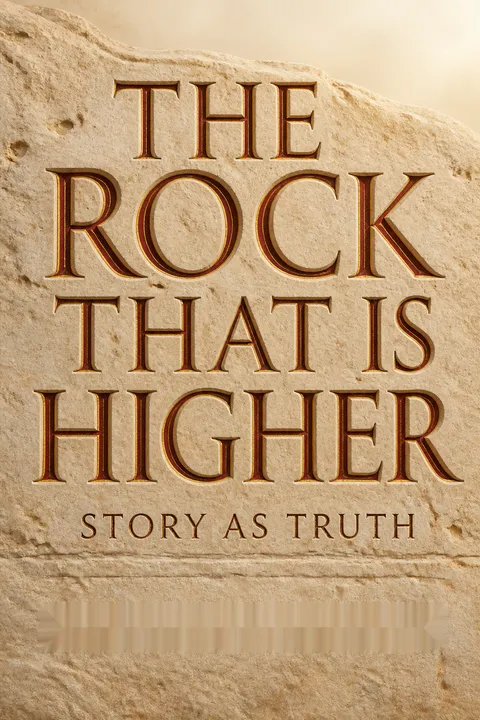
Reviews for The Rock That Is Higher are largely positive (4.14/5), with readers praising L'Engle's reflections on story, faith, and truth. Many appreciated her insights on Scripture as truth beyond literal fact, her exploration of fairy tales, and her personal memoir elements following a car accident. Common criticisms include a rambling, stream-of-consciousness style and occasional loss of focus. Some noted theological disagreements, though even skeptical readers found wisdom in her writing. Overall, most found it thought-provoking and spiritually enriching.
People Also Read



Download PDF
Download EPUB
.epub digital book format is ideal for reading ebooks on phones, tablets, and e-readers.








































