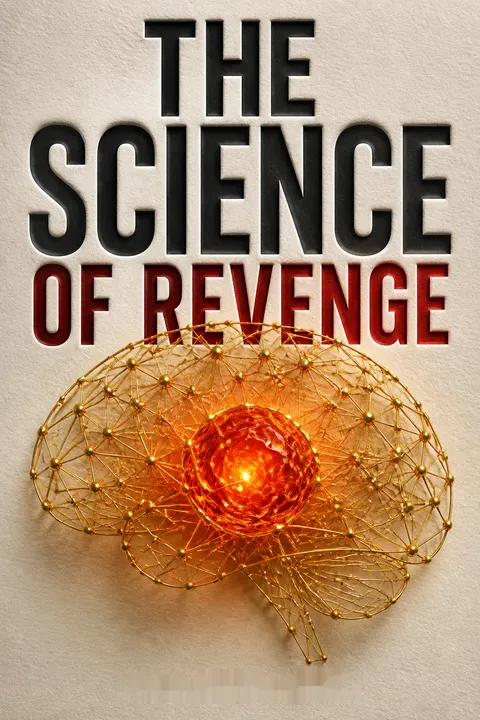

Key Takeaways
1. Revenge is a Deadly Addiction, Not Just a Human Emotion.
It turns out that your brain on revenge looks like your brain on drugs.
A primal urge. Revenge is the root motivation behind most human aggression and violence, from intimate partner disputes to global wars, yet it offers no material gain and comes with enormous risks. This seemingly irrational desire to inflict pain on those who hurt us is, surprisingly, a deeply ingrained biological process. Evolutionary psychologists suggest it might have evolved over eleven thousand years ago, hardwired into our brains.
Addiction's neurocircuitry. Recent neuroscience reveals that grievances activate the brain's reward and craving neurocircuitry, much like stress cues an addict's brain to crave narcotics. Being harmed is painful, activating the brain's "pain network." Getting revenge, or even just fantasizing about it, releases dopamine and activates the brain's pleasure and reward circuitry, temporarily covering up the pain. This "gratification now, not consequences later" mechanism is a hallmark of addiction, where the prefrontal cortex (responsible for self-control) is hijacked.
A personal journey. The author, a recovering revenge addict, shares his own story of almost committing a mass shooting as a teenager and later becoming a "revenge-dealing lawyer." He realized his compulsive desire for retribution mirrored addiction, leading him to research the scientific basis of this "deadliest addiction no one has ever heard of." This understanding is crucial for developing strategies to control or stop wanting revenge, transforming victims into perpetrators.
2. The Brain's "Courtroom of the Mind" Drives Our Vengeful Actions.
In our unconscious we daily and hourly do away with all those who stand in our way, all those who have insulted or harmed us.
Internal trials. When we feel wronged, we instinctively put the perceived perpetrators on trial in our minds. In this "courtroom of the mind," we play all roles: victim, prosecutor, defendant, judge, jury, and warden. This internal process, as exemplified by mass murderer Olga Hepnarová, dictates whether we choose to carry out our sentences in the real world, often with life-and-death consequences.
Rigged by biology. Our brain's biology often rigs these internal trials against us. Retaliation, whether imagined or real, feels good—sometimes irresistibly so. Studies using fMRI and PET scans show that planning or even just witnessing revenge activates the brain's pleasure and reward circuitry (dorsal striatum, nucleus accumbens), while inhibiting empathy in men. This "satisfaction" can outweigh the costs, driving compulsive revenge-seeking.
The GO! and STOP! signals. Addiction scientists describe this as a balance between the brain's GO! signal (seeking pleasure/reward, mediated by dopamine) and the STOP! signal (cognitive control, self-regulation from the prefrontal cortex). When grievances trigger pain, a dopamine deficit creates a craving for revenge to restore balance. If the STOP! circuitry is weakened or hijacked, the craving becomes compulsive, leading to destructive actions despite negative consequences.
3. Mass Killers and Tyrants Are Often Victims of Severe Revenge Addiction.
The common denominator of those who commit acts of violence isn’t that they’re deranged or evil. It’s their perception, real or imagined, that they’ve been wronged or victimized.
A hidden mental illness. Most mass murderers are not suffering from severe mental illnesses recognized by the DSM, yet their pathological behavior points to a severe, often fatal, form of mental illness: revenge addiction. Mass shooters are typically "isolated, angry, grievance-collecting loners" whose culminating acts of violence are often the peak of many repetitive acts of grievance rumination and revenge gratification.
Manifestos as cries for help. Examining the manifestos of mass killers like Seung-Hui Cho (Virginia Tech) and Andre Bing (Walmart) reveals a consistent pattern. They express:
- Deeply felt, often delusional, grievances (e.g., "raped my soul," "dignity completely taken away").
- Overwhelming, unrestrained cravings for revenge to relieve pain.
- An awareness of their illness and a desire for help, often expressing regret or blaming external forces ("led by the Satan").
Historical tyrants. The deadliest figures in modern history—Adolf Hitler, Joseph Stalin, and Mao Zedong—were also severe revenge addicts. Their atrocities, responsible for over 100 million deaths, were fueled by:
- Hitler: Grievances over the Treaty of Versailles, "stab-in-the-back" myth, and personal rejections, leading to a "twenty-three-year binge of revenge."
- Stalin: Childhood abuse, "greatest pleasure" in "implacable vengeance," collectivization, and the Great Purge, driven by perceived betrayals.
- Mao: Brutal father, "ecstasy" from peasant revenge, Great Leap Forward famine, and Cultural Revolution, settling personal scores.
4. Revenge Addiction Fuels Global Conflicts and Societal Division.
Justice is to revenge as OxyContin is to heroin: consumer branding of a highly dangerous, addictive substance.
The "justice" euphemism. The term "justice" often serves as a polite, politically correct cover for revenge. Leaders, from President George W. Bush after 9/11 to President Obama after Osama bin Laden's death, invoked "justice" to justify retaliatory violence, sanitizing atrocities and gaining public consent for actions that would otherwise be deemed unacceptable. This linguistic fraud obliterates our defense against revenge cravings.
Media and political exploitation. Revenge addiction is exploited across society:
- Entertainment: Disney's The Lion King and superhero films systematically traumatize audiences with grievances and then gratify their darkest revenge desires for profit.
- Social Media: Platforms like Facebook and X (formerly Twitter) use algorithms that reward grievance-posting and retaliatory engagement, driving divisiveness and rage. This creates "digital age mass-induced revenge addiction," as seen in the January 6th insurrection.
- Politics: Leaders like Donald Trump explicitly campaign on promises of "retribution" for perceived wrongs, appealing to a nation's collective grievances.
A national epidemic. America has become a revenge-addicted nation, where "justice" in the form of revenge unifies and sanctifies racism, antisemitism, misogyny, and other forms of violent extremism. This pervasive addiction infects all aspects of society, from criminal justice to religious institutions, demonstrating its reliable and predictable power.
5. Forgiveness is the Brain's Natural Antidote to Revenge Addiction.
Forgiveness might be a wonder drug that works wonders.
Healing, not giving. Forgiveness is not about condoning the actions of those who hurt you or granting them a gift. It is a powerful brain-biological process designed to reduce or eliminate the pain of remembered grievances, thereby reducing or eliminating the desire for revenge. The primary beneficiary of forgiveness is the forgiver, as it directly addresses the psychological pain and revenge cravings within one's own mind.
Neuroscience of healing. Studies using fMRI brain scans show that when individuals choose to forgive rather than retaliate:
- The brain's "pain network" (anterior insula) activity decreases, indicating a reduction in emotional pain.
- The executive function and control (STOP!) circuitry in the prefrontal cortex activates, inhibiting revenge desires.
- The reward and pleasure (GO!) circuitry remains quiet, preventing the dopamine surge associated with revenge.
This process involves cognitive reappraisal, where the victim reinterprets the negative event and the offender's motivations in more benign ways, leading to a sense of "subjective relief."
Abundant benefits. Beyond reducing emotional pain and revenge cravings, forgiveness offers significant psychological and physical health benefits:
- Reduces stress, anxiety, anger, rumination, depression, and PTSD symptoms.
- Improves cognitive resilience and overall well-being.
- Associated with lower blood pressure, reduced rates of cardiovascular disease, improved sleep, and enhanced immune function.
Evolutionary psychologists theorize that forgiveness evolved to help humans avoid the high costs of revenge and preserve valuable relationships, aligning with ancient wisdom traditions.
6. The Nonjustice System Offers a Path to Personal Freedom from Revenge.
The most important trial of your life is the trial of your enemies because your freedom is at stake, not theirs.
A virtual courtroom for healing. The Nonjustice System (NJS) is a unique intervention that combines addiction recovery principles with neurobiological forgiveness. It's a virtual courtroom where you, the victim, play all roles: prosecutor, defendant, judge, warden, and judge of your own life. This allows for a safe, internal processing of grievances and revenge desires without causing real-world harm.
Five transformative steps: The NJS guides participants through a structured process:
- The Prosecution: Articulate what happened and how you were harmed.
- The Defense: Step into the perpetrator's shoes to understand their perspective.
- The Verdict and Sentence: Decide guilt and impose a punishment.
- The Punishment: Imagine the punishment being carried out.
- The Final Judgment: Reflect on the impact of revenge on your own life and choose mercy or continued suffering.
Real-world impact. Studies and anecdotal evidence show the NJS's effectiveness:
- Reduced revenge desires and increased benevolence in participants.
- A 50% reduction in recidivism for inmates in a peer support program incorporating NJS.
- Former KKK Nighthawk Chris Buckley found "subliminal conversation" changing and "softening" him, leading to forgiveness.
- A young man contemplating a mass shooting used NJS to release revenge cravings and avoid violence.
7. Recognizing a "Revenge Attack" is Crucial for Preventing Violence.
Treat the warning signs of a revenge attack as a life-threatening medical emergency.
A medical emergency. Just as a heart attack has clear warning signs, so does a "revenge attack"—a life-threatening medical emergency where an individual is overwhelmed by revenge desires and poses an imminent threat of violence. Recognizing these signs is critical for intervention and saving lives, not just of the potential victims but also the person experiencing the attack.
Key warning signs:
- Preoccupation or obsession with a real or imagined grievance.
- Escalating anger or rage that doesn't subside.
- Talking or writing about getting revenge or "payback."
- Threats to hurt or kill specific individuals, groups, or types of people.
- Acquiring or seeking access to weapons.
- Identifying targets and conducting surveillance.
- Detailed planning for an attack, including date, time, and location.
Immediate action saves lives. If you or someone you know exhibits these signs, act quickly:
- Call emergency services (911 in the U.S.) or a crisis lifeline (988).
- Remove access to weapons if safe to do so.
- Seek a safe location if you are a potential target.
- Encourage nonviolent alternatives like counseling or using The Nonjustice System.
8. Humanity Has Proven It Can Recover from Mass Revenge Addiction.
The European revenge cycle was broken at last.
Learning from history. The punitive Treaty of Versailles after World War I fueled Hitler's grievances and led to the catastrophic revenge-driven World War II. However, after WWII, Allied leaders at the Potsdam Conference, particularly President Harry Truman, chose a different path. Instead of imposing crushing reparations on defeated Germany, they opted for a strategy of preservation and rebuilding.
A new era of peace. This decision, enshrined in the Potsdam Protocol and later realized through the Marshall Plan, led to the rebuilding of Western Europe, including Germany. The result was the unprecedented peace between major Western European nations since 1945, culminating in the formation of the European Union. This demonstrates that even on a mass scale, societies can recover from severe revenge addiction by choosing self-interest through non-punitive approaches.
A path forward. Despite ongoing global conflicts and violence, the science of revenge offers renewed hope. We now understand that most intentionally inflicted suffering stems from real or imagined grievances activating compulsive revenge cravings. This knowledge empowers us to:
- Control these cravings through addiction-informed strategies.
- Reduce the psychological pain of grievances through forgiveness.
- Break cycles of violence in our personal lives and communities.
As Jesus taught, forgiving "seventy times seven" is not just pious instruction, but practical, scientifically sound, and lifesaving advice for overcoming revenge addiction and securing peace.
Review Summary
"The Science of Revenge" receives mostly positive reviews for its unique perspective on revenge as an addiction. Readers appreciate Kimmel's blend of neuroscience, psychology, and practical strategies. Many find the book insightful, particularly its exploration of forgiveness as a counterbalance to revenge. Some critics note that certain examples feel stretched, and the latter half of the book may not resonate with all readers. Overall, reviewers find the book thought-provoking and potentially life-changing, offering a fresh understanding of human behavior and conflict resolution.
People Also Read









FAQ
What is The Science of Revenge by James Kimmel Jr. about?
- Explores revenge as addiction: The book investigates why humans are driven to hurt those who have hurt them, framing revenge as a powerful, deadly addiction rooted in brain biology.
- Scientific and historical scope: It combines neuroscience, psychology, history, and personal stories to explain how revenge cravings operate like substance addiction and have shaped violence throughout history.
- Personal narrative: James Kimmel Jr. shares his journey as a recovering revenge addict, weaving his experiences with scientific research and real-life case studies.
- Practical solutions: The book introduces actionable strategies, including forgiveness and the Nonjustice System, to help individuals overcome revenge cravings and foster peace.
Why should I read The Science of Revenge by James Kimmel Jr.?
- Groundbreaking perspective on violence: The book reveals that revenge is the root motivation behind most human aggression, from personal disputes to mass violence, offering insights crucial for violence prevention.
- Innovative addiction framework: It reframes revenge as a brain-based addiction, opening new avenues for treatment and recovery using addiction science and forgiveness neuroscience.
- Practical recovery tools: Readers gain access to actionable strategies, such as the Nonjustice System, to break cycles of violence and heal from grievances.
- Relevance for all audiences: The book is valuable for clinicians, policymakers, and anyone seeking to understand or prevent violence in personal or societal contexts.
What are the key takeaways from The Science of Revenge by James Kimmel Jr.?
- Revenge is an addiction: Revenge operates as a compulsive behavioral addiction, driven by the same brain circuits as substance use disorders.
- Violence is preventable: Understanding the brain mechanisms behind revenge can help predict and prevent acts of violence, from bullying to war.
- Forgiveness is healing: Forgiveness is presented as a brain-biological antidote to revenge, reducing emotional pain and cravings for retaliation.
- Practical interventions exist: The Nonjustice System and other addiction-informed strategies offer hope for individuals and communities to overcome revenge addiction and restore peace.
How does The Science of Revenge by James Kimmel Jr. define and explain revenge addiction?
- Chronic brain disease: Revenge addiction, or "revenge use disorder," is described as a treatable, chronic brain disease involving compulsive desires to retaliate despite harmful consequences.
- Neurobiological basis: The addiction hijacks the brain’s reward and craving circuits (nucleus accumbens, dorsal striatum), producing dopamine surges similar to those seen in drug addiction.
- Behavioral parallels: Revenge addicts experience cravings, tolerance, withdrawal, and loss of control, mirroring substance addiction patterns.
- Societal impact: The book argues that revenge addiction is the deadliest addiction in human history, fueling mass violence and atrocities.
What is the neuroscience behind revenge cravings in The Science of Revenge by James Kimmel Jr.?
- Reward circuitry activation: Grievances trigger the brain’s pain network (anterior insula), and revenge fantasies or acts release dopamine in reward centers, creating pleasure and relief.
- Craving and compulsion: Anticipation of revenge produces intense cravings, while the prefrontal cortex (executive control) often fails to inhibit these urges in addicts.
- Cycle of pain and relief: Revenge temporarily alleviates emotional pain but reinforces the craving cycle, leading to repeated harmful behaviors.
- Scientific evidence: fMRI studies, including ultimatum game experiments, support these findings by showing brain activity patterns during revenge and forgiveness decisions.
How does The Science of Revenge by James Kimmel Jr. explain the concept of the “courtroom of the mind”?
- Internal trial metaphor: Individuals mentally put offenders “on trial” in their minds, playing all roles—victim, prosecutor, judge, jury, and executioner—to justify and motivate revenge.
- Real-world consequences: These internal verdicts often lead to actual acts of retaliation, escalating cycles of violence and conflict.
- Addiction distortion: In revenge addiction, this mental courtroom becomes a “kangaroo court,” where rational judgment is overridden by compulsive cravings.
- Role in recovery: Understanding and restructuring this internal process is key to overcoming revenge addiction, as addressed by the Nonjustice System.
What is the Nonjustice System (NJS) method introduced in The Science of Revenge by James Kimmel Jr.?
- Virtual courtroom intervention: The NJS is a mental health tool where individuals process grievances by role-playing all courtroom roles in their minds, safely releasing revenge cravings.
- Structured five-phase process: The method includes Prosecution, Defense, Verdict and Sentence, Punishment, and Final Judgment, allowing for cognitive reframing and emotional healing.
- Evidence of effectiveness: Pilot studies show the NJS reduces revenge cravings and increases benevolence, with applications in prisons, violence prevention, and youth programs.
- Accessible self-help: The book provides detailed instructions for using the NJS, encouraging repeated practice for lasting recovery.
How does forgiveness function as an antidote to revenge addiction in The Science of Revenge by James Kimmel Jr.?
- Biological mechanism: Forgiveness activates the brain’s executive control regions, inhibiting the reward circuitry and reducing activity in the pain network, which decreases revenge cravings.
- Self-healing focus: Forgiveness is framed as a tool for the victim’s own healing, not as a gift to the offender.
- Psychological strategies: It involves cognitive control, perspective taking, and social valuation, helping reframe the offender’s actions and reduce emotional pain.
- Health benefits: Forgiveness improves mental and physical health, lowering stress, anxiety, depression, and even enhancing immune function.
What historical and real-life examples of revenge addiction are discussed in The Science of Revenge by James Kimmel Jr.?
- Biblical and ancient history: The book traces revenge addiction from the story of Cain and Abel through biblical mass violence and Roman revenge spectacles.
- Dictators and atrocities: Figures like Hitler, Stalin, and Mao are analyzed as severe revenge addicts whose compulsive behaviors led to genocide and mass suffering.
- Modern case studies: Real-life examples include Michael Stokes (double murderer) and Chris Buckley (former KKK member), illustrating how ordinary people can become violent under revenge cravings.
- Mass shootings and extremism: The book examines manifestos and motivations of mass murderers, linking their actions to overwhelming revenge addiction.
How does The Science of Revenge by James Kimmel Jr. relate revenge addiction to modern issues like gun violence, extremism, and social media?
- Gun violence root cause: Revenge addiction is identified as a primary driver of many acts of gun violence, including mass shootings.
- Extremism and radicalization: The book links revenge cravings to violent extremism, showing how trauma and grievance fuel hate and group violence.
- Social media amplification: Platforms like Facebook and X are criticized for algorithms that amplify grievance and revenge content, worsening addiction and societal division.
- Cultural and political impact: Revenge addiction permeates American culture, politics, and justice systems, fueling cycles of violence and division.
What practical advice and interventions does The Science of Revenge by James Kimmel Jr. offer for overcoming revenge addiction?
- Dopamine fasting: The book recommends a 30-day abstinence from revenge seeking to reset the brain’s reward system and reduce cravings.
- Addiction recovery techniques: Cognitive behavioral therapy, motivational interviewing, peer support, and possibly anti-craving medications are suggested as effective approaches.
- Using the Nonjustice System: The NJS is presented as a powerful self-help tool for processing grievances and practicing forgiveness.
- Education and prevention: The book emphasizes the importance of public health interventions, mental health support, and education to control revenge cravings and prevent violence.
What are the best quotes from The Science of Revenge by James Kimmel Jr. and what do they mean?
- On forgiveness: “The person who receives the benefit from forgiving is you, the person who was hurt, not the person who did the hurting.” This highlights forgiveness as a self-healing act.
- On revenge addiction: “Revenge addiction is an ongoing pandemic that has lasted thousands of years and been the source of incalculable tragedy and suffering.” This underscores the pervasive and deadly nature of revenge addiction.
- On personal power: “You alone have the power to heal yourself from the pain of the past. You alone have the power to restore your peace and happiness. You alone have the power to give yourself mercy and set yourself free.” This quote from the NJS Final Judgment step empowers individuals to take control of their healing journey.
- On violence prevention: The book repeatedly stresses that violence is predictable and preventable with the right knowledge and tools, offering hope for individuals and society.
Download PDF
Download EPUB
.epub digital book format is ideal for reading ebooks on phones, tablets, and e-readers.








































