


Plot Summary
The Call from Atlantis
Maia,1 eldest of six daughters adopted from across the globe by the enigmatic Pa Salt,6 is relaxing in a London garden when Marina,15 the family's beloved guardian, telephones with news that their father6 has died of a heart attack at Atlantis, their lakeside Geneva estate. Maia1 flies home numb, unable to weep.
She remembers a childhood in which Pa6 returned from his voyages bearing a new baby sister each time, naming each after a star in the Seven Sisters cluster, though the seventh, Merope, never arrived. Now the man who held their enchanted world aloft6 is gone, and Maia,1 the only sister who never flew the nest, must absorb that the excuse she used to hide from life has died alongside him.
Riley opens with loss as liberation's grim midwife. Pa Salt functions less as a man than as a gravitational center, and his death scatters the apples from the bough, a recurring image of children needing a steady hand. Maia's inability to cry signals a deeper emotional anesthesia, a woman frozen by some earlier wound. The motif of naming after stars establishes the mythological scaffolding (the Pleiades) while the absent seventh sister plants a quiet ache. The chapter equates the father's omnipotence with a kind of enchantment, and his removal exposes how thoroughly Maia has outsourced her identity to his presence, setting up her necessary journey toward selfhood.
A Burial No One Witnessed
Marina15 reveals that Pa6 ordered his body sealed in a lead coffin long stored aboard his yacht and buried at sea before any daughter could say goodbye. As the sisters converge (sailor Ally,18 gentle Tiggy, silent Star, blunt CeCe, volatile Electra), Pa's6 lawyer Georg Hoffman16 explains that each will receive a modest income but must earn her own living.
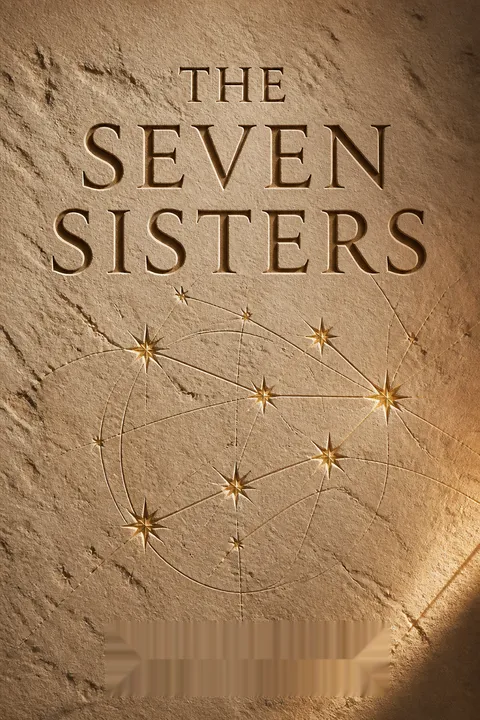
In a hidden garden he reveals an armillary sphere engraved with every daughter's name, a Greek motto, and a set of coordinates marking where Pa6 first found her. Each receives a sealed farewell letter. Maia's1 contains a triangular soapstone tile and a single line counseling her never to let fear decide her destiny, words that pierce her precisely because they describe her life.
The secret sea burial dramatizes Pa Salt's defining trait: control exercised even beyond death, love expressed through orchestration rather than transparency. The armillary sphere is a brilliant structural engine, converting grief into quest and offering each daughter agency disguised as inheritance. Notably, Pa withholds answers while pointing toward them, trusting his daughters to choose. Maia's inscribed motto operates as diagnosis and prescription at once. The scene also quietly characterizes the sisterhood through contrast, establishing an ensemble whose individual stories the series will unspool, while centering Maia's particular paralysis as the first thread to be pulled.
Coordinates Point to Rio
Maia1 decodes her coordinates to A Casa das Orquideas in Rio de Janeiro, the city of her birth. She hesitates to act until Zed Eszu,17 the man who broke her heart fourteen years earlier and whose tycoon father has just died at sea suspiciously near Pa's6 own grave, leaves a voicemail proposing they meet in Geneva.
Panicked, Maia1 flees to Brazil, telling herself she is escaping Zed17 as much as chasing her origins. Carrying only the soapstone tile with its faded 1929 inscription and the opalescent moonstone necklace Pa6 once gave her, she lands in Rio. Standing on Ipanema Beach beneath Christ the Redeemer, she feels an unexpected sense of belonging, as though the city already lives inside her blood.
Fear and desire fuse into a single propulsive act. Maia frames her flight as avoidance, yet the journey toward Zed's ghost is also a journey toward the very wound she has never named. Riley uses geography as psychology: Geneva is sterile control, Rio is sensual chaos and origin. The Cristo, glimpsed hovering above the city, becomes the novel's presiding symbol, a figure of open-armed acceptance that mirrors the self-forgiveness Maia must eventually reach. The Eszu coincidence seeds a larger mystery threading through the sisters' saga while keeping Maia's private trauma deliberately unspoken.
The Door That Stays Shut
At the crumbling Casa, Maia1 finds an emaciated old woman, Senhora Beatriz Carvalho,7 who coldly insists no babies were born there and dismisses her. Refusing to surrender, Maia1 enlists Floriano Quintelas,4 the Brazilian novelist whose book she once translated into French, now a historian and occasional tour guide.
He notes her resemblance to a celebrated Rio beauty and begins detective work, tracing the aristocratic Aires Cabral family through baptismal records. He matches her soapstone tile to the mosaic that clads Christ the Redeemer, and to two engraved names: Izabela Aires Cabral2 and Laurent Brouilly.3
Most tellingly, Maia's1 moonstone appears in Izabela's2 surviving wedding photograph, irrefutable proof that this long-dead society beauty is her great-grandmother and that her story began long before any orphanage.
The investigation structure lets Riley braid mystery with romance, and Floriano enters as both research partner and emotional foil, a man whose warmth and lived complexity contrast Maia's brittle isolation. Beatriz's hostility is a locked door that paradoxically confirms a secret worth guarding. The moonstone, recurring across generations, becomes the genetic thread of recognition, a heirloom carrying memory where documents fail. Riley folds real history (Landowski, da Silva Costa, the Cristo) into fiction, making heritage tactile. The chapter reframes adoption: identity is not erased by it but layered, awaiting excavation by someone brave enough to dig.
Letters from a Caged Girl
As Maia1 leaves the Casa, the elderly maid Yara8 secretly presses a packet of letters into her hands, sworn to silence because she recognized the moonstone. Written by Izabela Bonifacio2 to her own maid Loen,11 they carry Maia1 eighty years into the past.
Izabela, called Bel,2 is the spirited daughter of Antonio,10 a self-made Italian coffee millionaire desperate for the social acceptance only an aristocratic Portuguese surname can purchase. Trapped by etiquette tutors and whalebone corsets, Bel2 yearns for art and freedom while her father10 grooms her beauty as a marriageable commodity.
Reading by lamplight in her hotel, Maia1 recognizes that the woman whose face mirrors her own once waged the same private war between duty and desire that has quietly governed Maia's1 whole life.
The handoff of letters activates the dual-timeline engine, and Riley makes the parallel explicit: two women, two eras, one inherited tension between obligation and self. Yara's furtive gift, motivated by the moonstone, reframes servants as the true keepers of family memory, custodians excluded from inheritance yet entrusted with truth. Bel's corset becomes the perfect metaphor for socially enforced femininity, constraint disguised as refinement. Antonio embodies immigrant aspiration curdled into using his daughter as currency. The reading scene collapses temporal distance, suggesting that the dilemmas of women, the bargaining of beauty and autonomy, have stubbornly survived a century.
Engagement as Currency
At her lavish eighteenth birthday party at the Copacabana Palace, Bel2 is presented to Gustavo Aires Cabral,5 heir to one of Rio's grandest but bankrupt aristocratic families.
Though she privately likens him to a ferret, Gustavo5 proves gentle and utterly smitten, and Antonio10 is jubilant, for the union will finally make him the equal of Portuguese nobility. Gustavo5 proposes atop Corcovado Mountain and, sensing her reluctance, offers an irresistible gift before the wedding: a cultural tour of Europe alongside her friend Maria Elisa's20 family, the da Silva Costas.
Bel2 accepts both the ring and the bargain, seizing the only escape she craves. She sails for Paris wearing the moonstone Gustavo5 gave her for protection, the same necklace destined to one day rest at Maia's1 throat.
Marriage here is a merger, romance subordinated to social arithmetic, and Bel's clear-eyed contempt for the transaction coexists with genuine sympathy for the kind man caught in it. Gustavo's surprising generosity (releasing his fiancee to Europe) reveals a tenderness that complicates any easy villainy. The proposal on Corcovado fuses the personal with the monumental Cristo project rising overhead. Crucially, the moonstone changes hands as a talisman of protection, ironically loosed upon the journey where Bel will fall in love elsewhere. Riley shows how women negotiate fragments of freedom within cages they cannot escape.
The Sculptor's Atelier
Maria Elisa's20 father, Heitor da Silva Costa,13 is the engineer behind Rio's planned Christ the Redeemer, and in Paris he consults Professor Paul Landowski,14 the sculptor chosen to give the statue its form.
There Bel2 meets Landowski's14 assistant, Laurent Brouilly,3 a charming aristocrat-turned-bohemian who renounced his title for art. Entranced by her hands, he begs to sculpt her. Through stolen Montparnasse lunches arranged by fellow Brazilian Margarida19 and long sittings in the atelier, Bel2 discovers a world where talent eclipses lineage.
Laurent3 draws out her hidden self, insisting a life without love is no life at all. For the first time, the girl raised to be ornamental feels seen as a person, and a forbidden current begins to pull her toward a future she was never meant to want.
Paris functions as the threshold of selfhood, the bohemian Left Bank a counter-world to Rio's rigid hierarchies. Laurent, who traded inheritance for authenticity, is the living rebuttal to everything Bel has been taught, and his fascination with her hands foreshadows their literal immortalization on the Cristo. Riley stages art as seduction and liberation simultaneously: to be sculpted is to be truly observed. The chapter's tension lies in the gap between recognition and possibility, Bel awakening to desire precisely when she is least free to act on it. The Cristo's construction becomes the unlikely cradle of a doomed love.
A Starving Boy, A First Kiss
One night, outside Landowski's14 studio, Bel2 discovers a filthy, feverish orphan boy hiding beneath a hedge. Cradling him, cleaning his wound, refusing to abandon him to the streets, she reveals a tenderness that finally dissolves Laurent's3 restraint. He confesses he loves her, and they kiss. The mute boy, clutching a mysterious leather pouch, is taken in by the household.
Over the following weeks Bel2 and Laurent3 fall deeply and recklessly in love, their passion intensifying with each sitting as her sculpted likeness nears completion. Yet her months in Europe are draining away, and the engagement ring still gleams on her finger, a binding promise to a gentle man waiting an ocean away in Rio,5 oblivious to the woman his fiancee is becoming.
The orphan boy is the hinge: Bel's instinctive compassion is the quality that converts Laurent's flirtation into love, proving her worth lies beneath the beauty everyone trades upon. The boy himself, mute and clutching his pouch, is planted as a tantalizing enigma whose significance will ripen across the saga. Riley times the romance against the sculpture's completion, equating the finishing of art with the impossibility of sustaining the love that birthed it. The kiss is both fulfillment and doom, since every step toward Laurent is a step away from the duty Bel has never seriously considered abandoning.
She Chooses Duty
Laurent3 pleads with Bel2 to stay in Paris, to abandon Gustavo5 and build a life of art and love. Torn to pieces, she ultimately cannot betray her parents or demolish her father's10 lifelong dream, and bids the sculptor3 farewell in a Paris park. She returns to Rio to find her mother Carla9 gravely weakened by cancer.
The grand cathedral wedding proceeds in spectacular fashion, but the marriage bed becomes a nightly ordeal as Gustavo,5 increasingly dependent on alcohol, paws at a wife who feels only revulsion. Living beneath the icy roof of her contemptuous mother-in-law Luiza,12 Bel2 buries her grief and resigns herself to a loveless existence, convinced that the sculptor3 and the brief Parisian spring they shared are lost to her forever.
Bel's choice is the novel's moral fulcrum, duty triumphing over desire at devastating personal cost, and Riley refuses to make it simple: her loyalty to wounded parents is genuine virtue, not mere cowardice. The wedding's grandeur ironically frames an emotional funeral. The marriage's intimate misery, rendered without prurience, exposes how a kind man and an unwilling wife can both be victims of a system that mistakes possession for love. Luiza embodies inherited bitterness, beauty soured into cruelty, a warning of who Bel could become. The chapter establishes the price of self-sacrifice that the second timeline will quietly interrogate.
Laurent Crosses the Ocean
To Bel's2 astonishment, Laurent3 arrives in Rio, having volunteered to accompany the cast head and hands of the Cristo across the Atlantic, confessing he could not live without her.
Fate twists the knife sweetly: Gustavo,5 wishing to surprise his bride, has purchased Laurent's3 sculpture of Bel2 as a wedding gift and invites the sculptor3 to dinner. Beneath her husband's oblivious gaze, the lovers rekindle their bond, and Bel2 begins slipping to Laurent's3 Ipanema apartment under the pretext of dressmaker appointments.
Luiza,12 ever suspicious, sets the family driver to follow her daughter-in-law. Caught between the unbearable nights with Gustavo5 and the stolen afternoons of genuine joy, Bel2 surrenders fully to the only love she has ever known, heedless of the gathering danger.
Dramatic irony reaches its peak: the husband himself, in an act of devoted generosity, delivers the lover into his own home. Riley relishes the cruelty of coincidence while underscoring Gustavo's tragic decency. The affair's mechanics, alibis and surveillance, transform a love story into a suspense engine. Luiza's spying weaponizes the era's policing of female virtue. Bel's surrender is framed not as moral failure but as a starved woman finally eating, a defiance of the transactional world that sold her. Yet the apparatus of secrecy makes exposure inevitable, and the chapter tightens the noose with every clandestine visit.
A Mother's Death, A Secret Life
Bel2 takes the dying Carla9 to the family's beloved mountain fazenda for her final days, where her mother,9 sensing the affair, warns that following her heart can only end in heartbreak. After Carla9 dies, Bel2 returns to Rio and realizes her body has betrayed every precaution: she is pregnant, and the child is unmistakably Laurent's.3
Meanwhile her father Antonio,10 who had quietly transferred the fazenda into a protective trust for Bel2 as a wedding gift, watches his fortune teeter as coffee prices slide. Gustavo,5 briefly sober and vowing to become a better husband, aches for an heir who would silence his mother12 forever. Bel2 now carries a secret capable of either rescuing or annihilating every person she loves, with no path that spares them all.
Pregnancy converts private transgression into irreversible consequence, the body overruling the will. Carla's deathbed warning links the generations of women through inherited caution, mother counseling daughter against the very passion the novel cherishes. Riley layers grief, financial collapse, and concealment into a pressure system. The fazenda, given in secret trust, becomes a quiet emblem of maternal love defying patriarchal law (a property safeguarded for a daughter). Gustavo's longing for an heir, poignantly sincere, makes Bel's deception both a betrayal and a mercy. The chapter poses an impossible ethics where every honest act would devastate the innocent.
Black Tuesday and the Letter
As the 1929 crash obliterates Antonio's10 fortune and threatens Brazil's coffee economy, Laurent3 books his passage home and implores Bel2 to flee to Paris with him and their unborn child. Torn between her ruined, suicidal-with-grief father10 and her lover,3 Bel2 chooses duty a second time.
She announces the pregnancy to a joyful Gustavo,5 letting him believe the baby is his, then writes Laurent3 a farewell letter and inscribes a soapstone tile with both their names and a line of poetry. She entrusts both to Loen11 for delivery. But Gustavo,5 alerted by his mother's12 spy, intercepts the maid,11 reads the letter, and learns the shattering truth, choosing to destroy the evidence and silently keep the wife he still loves.
History's catastrophe mirrors the personal one, the global crash externalizing Bel's internal collapse of options. Her second renunciation rhymes with the first, suggesting character as destiny: she is constitutionally incapable of abandoning the wounded. The soapstone tile, which the reader has already met in Maia's hands, snaps the timelines together, revealing the artifact's origin. Gustavo's interception and silence is the chapter's masterstroke, transforming him from oblivious cuckold to knowing martyr, a man who chooses love over vengeance and pride. His suppressed pain will quietly poison the family for a generation, the secret's true cost.
The Boy Who Plays Violin
Laurent3 receives only the soapstone tile from Loen's11 trembling hand, and the door of his hope closes forever. Devastated, he sails back to France and resumes work in Landowski's14 atelier, channeling his anguish into sculpture that finally elevates him to mastery. One night he hears exquisite music drifting through the studio: the once-mute orphan boy, now grown and thriving under Landowski's14 care, is playing a battered fiddle with breathtaking skill.
Laurent3 recognizes a fellow artist who speaks through his craft and urges him to treasure the gift. The reader glimpses, without it yet being named, that this nameless child with his leather pouch may become someone whose destiny will one day loop back across the decades to touch Maia's1 life.
Suffering as the price of artistic greatness is made literal: Laurent's heartbreak completes him as a master, Landowski's mentorship reframing pain as raw material. The chapter closes the Parisian timeline on a note of melancholy resolution rather than reunion, honoring the cost of Bel's choice. The orphan boy's reappearance, transfigured from mute waif into gifted violinist, deepens the tantalizing mystery seeded earlier, inviting the reader to wonder who he will become. Riley uses music and sculpture as parallel languages of the inarticulate, art giving voice to what love could not keep.
The Daughter with Green Eyes
In the present, Maia1 returns to the convent hospice where the dying Beatriz7 now lies, and Yara8 finishes the tale. Bel2 gave birth to a daughter, Beatriz,7 who grew up with Laurent's3 green eyes and artistic gift rather than any resemblance to Gustavo.5 When Christ the Redeemer was consecrated in 1931, Bel2 insisted on attending despite a yellow fever outbreak, caught the disease, and died at just twenty-one, interred beside her despised mother-in-law Luiza.12
Gustavo,5 who had loved Bel2 in spite of everything, drowned himself in drink, and Yara's8 mother Loen11 helped raise the motherless Beatriz7 at the Casa. Floriano4 suspects that the very hands cradling Rio from the mountaintop may be Bel's2 own, cast by the lover who immortalized her.3
Bel's early death lends her story the brevity of the doomed romantic heroine, her insistence on witnessing the Cristo's blessing a final loyalty to the monument entwined with her love. The green-eyed daughter encodes the affair in flesh, biology testifying where words were forbidden. Gustavo's alcoholic ruin completes his tragedy, the secret he buried consuming him. Riley's suggestion that Bel's sculpted hands bless Rio elevates the personal into the eternal: the lover's tribute made monumental and public. Servants again carry continuity, Loen mothering the orphaned child, foreshadowing the chains of care that will eventually reach Maia.
Cristina and the Orphanage
Beatriz,7 lucid and refusing pain medication for one final conversation, tells Maia1 the truth she feared would shatter her. Her own daughter Cristina,21 brilliant but cruel and emotionally remote, fell into drugs and the favelas, stole Bel's2 emerald heirlooms, and was finally asked to leave the Casa. Cristina21 later abandoned her newborn at a Rio orphanage with only the moonstone necklace.
When Beatriz7 and her husband rushed to claim the baby, a kind foreign man6 and a woman had already adopted her days earlier. That infant was Maia.1 Weeping with relief at finally embracing the granddaughter she had searched for in vain, Beatriz7 bequeaths Maia1 the Casa, the fazenda, and the charity that shelters favela women.
The revelation refuses sentimental tidiness: Maia's birth mother was not a tragic romantic but a damaged, unloving woman, complicating the fantasy of the idealized lost parent. Beatriz's brutal honesty is itself a form of love, refusing platitudes. Riley confronts the fear of inherited darkness (does Cristina's nature run in Maia's veins) and answers it through chosen identity over genetics. The moonstone, abandoned with the baby, proves even a broken mother could not wholly sever the thread. Pa Salt's mysterious presence at the orphanage deepens the central enigma: how and why did he find precisely this child.
Maia's Own Buried Child
Floriano,4 a widowed single father raising his daughter Valentina alone, has steadily cracked Maia's1 protective shell, teaching her to dance the samba and to taste life again. Over wine on his rooftop, Maia1 finally confesses the wound she has hidden since university: pregnant at nineteen by Zed Eszu,17 she secretly bore a son and surrendered him for adoption, never telling Pa Salt.6
Floriano4 refuses to judge her, gently insisting she forgive herself, and they become lovers. He flies to Paris for his book launch and she follows, where he leads her to a fountain crowned by Laurent's3 second, sensuous sculpture of Izabela,2 its delicate hands matching the Cristo's, a grandfather's3 silent monument to the woman he could never keep.2
The two timelines fuse thematically: Maia's surrendered son mirrors Cristina's abandonment of Maia and Bel's relinquished love, three generations of women losing children to circumstance. Confession becomes catharsis, and Floriano, who lost a wife and chose to raise his daughter alone, embodies the alternative path of staying. Riley insists the cruelty Maia feels toward herself is the only judgment in the room. The Paris sculpture, hands echoing the Cristo, closes the artistic mystery and crowns Bel's tragedy with immortality, proving love outlasts its frustration. Maia's healing requires forgiving both her mother and herself.
The Statuette in the Study
Back at Atlantis, Floriano4 spots a Landowski-signed14 Cristo statuette among Pa Salt's6 treasures, one of only a handful in existence, deepening the riddle of who Pa truly was and why he chose to find Maia1 in that Rio orphanage. Visiting the lawyer Georg,16 Maia1 deduces from his guilty slip that Pa Salt6 always knew about her abandoned son and almost certainly watched over him.
Comforted rather than enraged, she forgives her mother Cristina21 and herself, resolving to leave a trail her son might one day follow, exactly as Pa6 left one for her. Choosing love over fear at last, fulfilling the motto on her armillary band, Maia1 packs her life into two suitcases and flies to Rio to build a family with Floriano4 and Valentina.
The signed statuette ties Pa Salt explicitly to the Landowski lineage, suggesting his presence in Bel's saga was no accident, an unresolved enigma that powers the wider series. Georg's slip reframes Pa's omniscient control as protective love rather than cold manipulation, redeeming the surveillance theme. Maia's decision to leave a trail for her own son completes the generational pattern as restoration rather than repetition: this time the chain of loss may be broken by openness. Her motto fulfilled, she chooses Rio, sensuality, and family over Geneva's safe sterility, the recluse finally claiming a life.
Epilogue
After Maia1 departs for Rio, her sister Ally18 remains at Atlantis, preparing for a sailing race and quietly grieving Pa Salt.6 Alone in his study, she plays his favorite recording, the opening of Grieg's Morning Mood, the theme of her childhood sunrises with him.
Reaching for the telephone to make a call, she finds the line already in use and hears, unmistakably, the living, resonant voice of the father she believed buried at sea.6 The instant she speaks, the line goes dead. Shaken to her core, Ally18 is left clutching the receiver, unable to dismiss what she heard. The seed of an impossible doubt is planted: is Pa Salt6 truly gone, and the narrative baton passes to the next sister.
The shift to Ally's first-person voice signals the series' relay structure, each sister inheriting the telling. Riley converts closure into suspense: just as Maia achieves peace, the foundational fact of the novel (Pa Salt's death) is destabilized. Grieg's Morning Mood, associated with new beginnings and sunrises, ironically underscores a dawn of uncertainty. The phantom voice resurrects the central enigma of Pa's identity and possible survival, retroactively recoloring every act of his omniscient guardianship. The epilogue insists that mysteries of family run deeper than any single resolution, and that the dead, like the stars, may not be where we believe them to be.
Analysis
Riley constructs a dual-timeline meditation on inheritance, both genetic and emotional, arguing that the present can only be understood by reading the past. The novel's governing tension is duty versus desire, dramatized across three generations of women who each surrender a child or a love to circumstance: Bel2 relinquishes Laurent,3 Cristina21 abandons Maia,1 and Maia1 gives up her son. By rhyming these losses, Riley suggests that trauma echoes through bloodlines, yet she refuses fatalism. Maia's1 arc breaks the pattern not by reclaiming what was lost but by choosing openness over concealment, resolving to leave a trail for her son as Pa Salt6 left one for her. The recurring artifacts (the moonstone, the soapstone tile, the armillary sphere) materialize the theme that love leaves traces stronger than any document. The book interrogates adoption and identity with unusual nuance: Maia1 fears she carries her mother's21 darkness, and the novel answers that selfhood is chosen and nurtured rather than inherited, that, as Maia1 herself comes to believe, it matters less who raises a child than whether the child is loved. Christ the Redeemer presides as the master symbol, open-armed acceptance and self-forgiveness rendered in stone, with Bel's2 own hands possibly blessing the city, art transmuting frustrated love into permanence. The frame narrative also explores the cost of female sacrifice within patriarchal systems that price beauty as currency, while granting servants like Loen11 and Yara8 the dignity of being history's true keepers. Beneath the romance pulses an enduring mystery: Pa Salt's6 identity, his uncanny foreknowledge, and the unsettling possibility, planted in the final pages, that he may not be dead at all. The lesson Riley presses is Floriano's:4 hiding never works, because one must still meet oneself each morning. Healing requires forgiveness, of one's mother, and of oneself.
Review Summary
The Seven Sisters receives mixed reviews, with many praising its engaging storytelling and vivid descriptions of exotic locations. Readers appreciate the historical elements and character development. Some criticize the predictable plot and unrealistic premise. The book is part of a series following adopted sisters discovering their origins. While some found it captivating and emotional, others felt it was clichéd and poorly written. Overall, it's a popular choice for fans of historical fiction and family sagas, despite its flaws.
People Also Read




Characters
Maia D'Apliese
Grieving eldest sisterThe eldest of six adopted daughters, a gifted multilingual translator who lives reclusively in a pavilion on her father's6 estate, hiding behind work and the excuse of caring for him. Outwardly the family's calm touchstone, Maia is inwardly the most fearful, paralyzed by a buried trauma that taught her to distrust her own beauty and to retreat from intimacy. Pa Salt's6 death and the clue he leaves propel her toward the homeland she never knew. Across the novel she moves from emotional anesthesia toward feeling, learning through her ancestors' stories and a new love4 to forgive herself and others. Her arc is a slow thaw, the reanimation of a woman who has spent fourteen years merely surviving rather than living.
Izabela Bonifacio (Bel)
Caged great-grandmotherA passionate, beautiful young woman in 1920s Rio, daughter of a self-made Italian coffee magnate10 who treats her loveliness as social currency. Bel chafes against corsets, etiquette tutors, and the marriage arranged to launder her family into aristocracy. Fiercely alive and drawn to art, she discovers in Paris a freedom and love she was never meant to want. Her defining struggle is between fierce desire and devout loyalty to family, and she repeatedly sacrifices her own happiness rather than wound those she loves. Tender, impulsive, and ultimately self-abnegating, Bel embodies the generations of women who bargained autonomy for duty. Her story, recovered through letters, becomes the mirror in which Maia1 recognizes her own hidden choices.
Laurent Brouilly
Bohemian sculptor loverA French sculptor who abandoned an aristocratic title and inheritance to pursue art in Montparnasse, working as assistant to Professor Landowski14 on Christ the Redeemer. Charming, sensual, and initially a practiced seducer, Laurent is transformed by genuine love into a man capable of devotion and great artistry. He believes a life without love is no life at all, and he stakes everything on that conviction, crossing an ocean to pursue the woman he cannot forget2. Tender yet sometimes selfish in his demands, he embodies the romantic ideal of passion over security. His grief becomes the crucible of his greatness, and his sculptures, public and private, immortalize a love that circumstance refused to let him keep.
Floriano Quintelas
Warm Brazilian novelistA celebrated Rio author and historian who supplements his income as a tour guide, and whose first novel Maia1 translated into French. A widower raising his young daughter Valentina alone, Floriano is grounded, incisive, and unafraid to puncture Maia's1 defenses with blunt honesty. He becomes her research partner in unearthing her ancestry and, gradually, the man who teaches her to live again through samba, laughter, and refusal to judge. Where Maia1 hides, Floriano embraces complexity and risk, having chosen to keep his daughter rather than surrender her to grandparents. His insistence that hiding from the world never works, since you must still meet yourself each morning, becomes the lesson Maia1 most needs to learn.
Gustavo Aires Cabral
Devoted aristocratic husbandHeir to one of Rio's grandest but financially ruined Portuguese aristocratic families, slight in build and overshadowed by a domineering mother12. Privately mocked as ferret-like, Gustavo is nonetheless genuinely kind, cultured, and hopelessly in love with the wife who cannot love him back2. His tragedy is awareness: sensitive and self-doubting, he drowns his inadequacy in alcohol while longing to be worthy. Caught between a controlling mother12 and an unreachable bride2, he makes choices that reveal surprising depths of dignity and pain. Gustavo is less a villain than a casualty of a marriage built on social arithmetic, a man who loves more than he is loved and pays dearly for it.
Pa Salt
Enigmatic adoptive fatherThe fabulously wealthy, secretive man who adopted six baby girls from around the world and raised them at his lakeside Geneva estate, naming each after a star in the Pleiades. A self-described magician and master illusionist, he loved his daughters as irreplaceable works of art while revealing almost nothing of his own origins or business. Controlling even in death, he orchestrates an elaborate legacy of clues that send each daughter toward her roots. His true identity and history remain a deliberate, tantalizing mystery, and his guiding hand seems to extend mysteriously into Maia's1 life long before she ever knew him.
Beatriz Carvalho
Dying secret-keeping grandmotherAn emaciated, dignified old woman living in the decaying Casa das Orquideas, the green-eyed daughter raised in a household poisoned by buried secrets. Gifted as an artist, she escaped to Paris in youth before returning to Rio. Initially hostile to Maia1, she guards painful truths about her own troubled child21. Beneath her wariness lies a woman who searched, and grieved, and longed for a granddaughter1 she feared she had lost forever. Her honesty, however brutal, is its own form of love.
Yara Canterino
Loyal truth-bearing maidThe elderly servant of the Aires Cabral household, daughter of Loen11, who grew up almost as a sister to Beatriz7. Torn between fierce loyalty to her dying mistress7 and a deeper sense that the truth must be told, Yara secretly entrusts Maia1 with the letters that unlock the past. Frightened for her own uncertain future yet ultimately courageous, she is the custodian of a family's hidden history.
Carla Bonifacio
Bel's gentle motherIzabela's2 warm, placid mother, of Italian peasant stock, who tolerates her husband's10 social ambitions while privately resenting them. She loves her daughter fiercely and counsels her toward duty and the slow growth of marital love. Stricken by cancer, she becomes the cause Bel2 rallies around. Perceptive beneath her softness, she senses her daughter's2 forbidden passion and warns against its dangers.
Antonio Bonifacio
Ambitious coffee magnateA self-made Italian immigrant who built a coffee fortune and craves the social acceptance only an aristocratic surname can grant, grooming his beautiful daughter2 as the means. Charming, proud, and obsessed with status, he reveals unexpected vulnerability and devotion when his wife9 sickens and his fortune collapses in the crash, exposing the fragile self-esteem beneath his bravado.
Loen Fagundes
Bel's devoted confidante maidBorn on the Bonifacio fazenda to a freed-slave family, Loen grew up alongside Bel2 and serves as her closest confidante and ally. Wise beyond her years, she keeps Bel's2 secrets, carries her letters, and faces her own pregnancy and impossible loyalties. The recipient of Bel's2 letters, she becomes the hidden hinge on which the family's fate quietly turns.
Luiza Aires Cabral
Cold aristocratic mother-in-lawGustavo's5 haughty, diamond-laden mother, embittered by her family's faded fortunes and openly disdainful of Bel's2 new-money origins. Controlling, manipulative, and devout in appearance only, she polices her daughter-in-law's2 virtue and engineers schemes to discredit her, embodying inherited bitterness, beauty curdled into cruelty by clinging to a vanished world.
Heitor da Silva Costa
Visionary Cristo engineerThe real-life architect and engineer driving the construction of Christ the Redeemer, here a thoughtful, distracted visionary consumed by his monumental project. As Bel's2 host and guardian in Europe, he opens her eyes to art and ideas, treating her with paternal kindness while his obsession with his Cristo strains his own marriage.
Paul Landowski
Master sculptor mentorThe renowned French sculptor commissioned to shape the Cristo, gruff, brilliant, and devoted to his craft. He mentors Laurent3, takes in a starving orphan boy, and casts the hands that will bless Rio. His belief that one must suffer to achieve greatness frames the artistic philosophy threaded through the novel.
Marina (Ma)
Beloved family guardianThe elegant Frenchwoman who raised the six sisters as a glorified nursemaid turned surrogate mother, wiping tears and steering them through childhood. Devoted, discreet, and the keeper of certain confidences, she anchors Atlantis after Pa Salt's6 death and offers Maia1 unconditional, quietly perceptive love.
Georg Hoffman
Pa Salt's discreet lawyerThe formal Swiss lawyer who manages Pa Salt's6 affairs and administers the daughters' trust. Loyal, professional, and tight-lipped about his employer's secrets, he reveals the armillary sphere and letters, and a single guilty slip suggests he knows more about Maia's1 hidden past than he is permitted to say.
Zed Eszu
Maia's painful first loveThe charismatic university boyfriend whose abandonment scarred Maia1 for fourteen years, son of a tycoon whose death at sea eerily coincides with Pa Salt's6. His sudden reappearance by voicemail catalyzes Maia's1 flight to Brazil. He represents the wound and the careless privilege from which she has long hidden.
Ally
Sailor second sisterThe charismatic, water-loving second daughter, a competitive sailor and trained flautist who naturally leads the sisterhood. Open, warm, and resilient, she was uncannily near Pa Salt's6 sea burial. She and Maia1 grow closer through shared confidences, and she carries the narrative into its unsettling final note.
Margarida Lopes de Almeida
Worldly fellow BrazilianA sophisticated young Brazilian sculptor and pianist studying in Paris who introduces Bel2 to bohemian Montparnasse. Pragmatic about love after her own betrayal, she warns Bel2 about the dangers of artists' charms.
Maria Elisa da Silva Costa
Bel's loyal friendHeitor's13 level-headed, kind daughter and Bel's2 closest Rio friend, whose family hosts Bel2 in Europe. Aspiring to be a nurse, she is sensible and accepting where Bel2 is fiery, and she gently urges her toward her duty.
Cristina
Troubled absent motherBeatriz's7 brilliant but emotionally remote and self-destructive daughter, who fell into drugs and the favelas. Her abandonment of her newborn at a Rio orphanage, leaving only a moonstone necklace, is the origin point of Maia's1 adoption.
Plot Devices
The Armillary Sphere
Quest-launching star mapA celestial sculpture that appears in Pa Salt's6 hidden garden after his death, engraved with each daughter's name, a Greek motto, and a set of coordinates marking where she was found. It converts grief into quest, giving each sister the means to trace her origins without forcing her to. Maia's1 motto, urging her never to let fear decide her destiny, functions as both diagnosis and prescription for her arc. The empty seventh band, awaiting the sister who never arrived, sustains the series-wide mystery. The device elegantly externalizes the novel's central theme: that identity is something one must choose to pursue, and that a parent's love can guide without controlling.
The Moonstone Necklace
Heirloom of recognitionAn opalescent stone ringed with diamonds, given by Gustavo5 to Bel2 before her Paris voyage as a talisman of protection. Passed down through the female line, it becomes the genetic thread of recognition that documents cannot provide. Yara8 hands Maia1 the crucial letters precisely because she recognizes the necklace at Maia's1 throat, and it appears in Bel's2 wedding photograph as proof of lineage. Most poignantly, it is the single object left with the abandoned newborn at the orphanage, the one trace of love a broken mother21 could not sever. Across eighty years and three generations the moonstone carries memory where words and records fail, binding strangers into family.
The Soapstone Tile
Cross-timeline keystone clueA triangular fragment of the same soapstone that clads Christ the Redeemer, inscribed on its reverse with two names and a line of poetry. Pa Salt6 leaves it in Maia's1 farewell envelope as the clue to her past, and Floriano4 matches it to the Cristo's mosaic and to the Aires Cabral records. In the historical timeline, Bel2 herself inscribes the tile and sends it to Laurent3 as a final keepsake when she cannot follow him. The artifact is the keystone that locks the two timelines together, revealing that an object the reader meets in the present was created in the past by the very lovers whose story explains Maia's1 existence.
Izabela's Letters
Embedded historical narrativeA bundle of letters written by Bel2 to her maid Loen11, secretly given to Maia1 by Yara8. They serve as the portal into the 1927 to 1929 timeline, allowing the past to unfold in intimate, first-person immediacy alongside Maia's1 present-day investigation. As both family history and historical artifact (touching real figures around the Cristo's creation), they thrill the historian Floriano4 and devastate Maia1, who recognizes her own buried choices mirrored in her great-grandmother's2. The device embodies the novel's structural conceit, that the present is decoded only by reading the past, and positions servants as the unsung custodians of truth that the powerful would rather forget.
The Orphan Violin Boy
Mystery thread across decadesA starving, mute child Bel2 rescues from beneath a hedge outside Landowski's14 atelier, clutching a leather pouch. His rescue is the catalyst that turns Laurent's3 flirtation into love. Taken in by Landowski14, the boy later reveals an extraordinary gift for the violin, communicating through music what he will not speak. Riley deliberately withholds his name and significance, planting him as a tantalizing enigma whose fate seems poised to loop forward across the decades. Combined with the discovery of a rare signed Landowski14 statuette in Pa Salt's6 study, the boy fuels speculation about Pa Salt's6 true origins and his uncanny connection to the very story that produced Maia1.
FAQ
Synopsis & Basic Details
What is The Seven Sisters about?
- Adoption Mystery Unfolds: The story centers on Maia D'Aplièse, the eldest of six adopted sisters, who embarks on a journey to uncover her origins after the death of her adoptive father, Pa Salt.
- Historical and Personal Quests: The narrative intertwines Maia's present-day quest with the historical story of her potential great-grandmother, Izabela Bonifacio, in 1920s Rio de Janeiro, exploring themes of love, duty, and identity.
- Family Secrets and Legacies: The novel delves into the complex relationships within the D'Aplièse family, revealing secrets and legacies that challenge each sister's understanding of their past and future.
Why should I read The Seven Sisters?
- Intriguing Mystery: The novel offers a compelling mystery surrounding Pa Salt's death and the sisters' origins, keeping readers engaged with its twists and turns.
- Rich Historical Detail: The story is enriched by its vivid portrayal of 1920s Rio de Janeiro, offering a glimpse into a bygone era and its societal complexities.
- Emotional Depth: The characters are complex and relatable, and the novel explores themes of love, loss, and self-discovery with emotional depth and sensitivity.
What is the background of The Seven Sisters?
- Mythological Inspiration: The novel is loosely based on the mythology of the Seven Sisters of the Pleiades, a star cluster, with each sister named after one of the stars.
- Historical Setting: The story is set against the backdrop of 1920s Rio de Janeiro, a time of social change and cultural vibrancy, and also contemporary times.
- Geographical Diversity: The narrative spans multiple locations, from London and Lake Geneva to Rio de Janeiro and Paris, highlighting the diverse backgrounds of the sisters and their adoptive father.
What are the most memorable quotes in The Seven Sisters?
- "We are all in the gutter, but some of us are looking at the stars.": This quote by Oscar Wilde, which appears at the beginning of the book, encapsulates the theme of finding hope and beauty amidst hardship.
- "Never let your fear decide your destiny.": This is Maia's inscription on the armillary sphere, a powerful message about overcoming fear and embracing one's true path.
- "Family is everything. And that the love of a parent for a child is the most powerful force on earth.": This quote from Pa Salt's letter to Maia emphasizes the importance of family bonds and the enduring power of parental love.
What writing style, narrative choices, and literary techniques does Lucinda Riley use?
- Dual Timeline Narrative: Riley employs a dual timeline structure, seamlessly weaving together Maia's present-day journey with Izabela's historical story, creating a rich and layered narrative.
- Third-Person Limited Perspective: The story is primarily told from Maia's perspective, allowing readers to intimately experience her thoughts and emotions, while also providing glimpses into the lives of other characters.
- Foreshadowing and Symbolism: Riley uses subtle foreshadowing and recurring symbols, such as the moonstone necklace and the armillary sphere, to enhance the story's themes and create a sense of mystery and intrigue.
Hidden Details & Subtle Connections
What are some minor details that add significant meaning?
- The Moonstone Necklace: Pa Salt gives Maia a moonstone necklace, which later connects her to her great-grandmother, Izabela, and becomes a symbol of their shared heritage.
- The Locked Study: Pa Salt's locked study, which is only opened after his death, symbolizes the secrets he kept and the mysteries surrounding his life.
- The Reindeer Gift: Pa Salt's gift of a wooden reindeer to Maia foreshadows the later discovery of her origins in a place associated with St. Nicholas.
What are some subtle foreshadowing and callbacks?
- Tiggy's Premonition: Tiggy's strange feeling about Pa Salt's death while searching for a dead doe foreshadows the spiritual connection she has with the natural world and the afterlife.
- Ally's Sailing Encounter: Ally's chance encounter with the Titan in the Aegean Sea foreshadows the circumstances of Pa Salt's burial and her own connection to his love for the sea.
- The Locked Study: The locked study, which is only opened after Pa Salt's death, foreshadows the secrets and mysteries that will be revealed about his life.
What are some unexpected character connections?
- Pa Salt and Kreeg Eszu: The coincidental deaths of Pa Salt and Kreeg Eszu, both at sea, and the fact that Ally saw the Titan near Eszu's boat, hint at a possible connection between the two men.
- Maia and Zed Eszu: The revelation that Zed Eszu, Kreeg's son, is the man who broke Maia's heart in the past adds a layer of complexity to her emotional journey.
- Laurent and Izabela: The connection between Laurent Brouilly and Izabela Bonifacio, revealed through the letters and the sculpture, highlights the enduring power of love across time.
Who are the most significant supporting characters?
- Marina (Ma): As the sisters' guardian, Marina provides a sense of stability and love, acting as a mother figure and confidante.
- Georg Hoffman: Pa Salt's lawyer, Georg Hoffman, is instrumental in revealing the details of Pa Salt's will and the clues to the sisters' origins.
- Floriano Quintelas: As Maia's guide in Rio, Floriano provides invaluable assistance in her quest, offering historical knowledge and emotional support.
Psychological, Emotional, & Relational Analysis
What are some unspoken motivations of the characters?
- Pa Salt's Secrecy: Pa Salt's desire for privacy and control over his death suggests a deep-seated fear of vulnerability and a need to protect his daughters from his past.
- Maia's Isolation: Maia's decision to remain at Atlantis and her reclusive lifestyle stem from a fear of repeating past mistakes and a desire to avoid emotional pain.
- CeCe's Control: CeCe's need to be in charge and her dependence on Star reveal a deep-seated insecurity and a fear of losing control.
What psychological complexities do the characters exhibit?
- Maia's Emotional Numbness: Maia's inability to cry over Pa Salt's death highlights her emotional detachment and the deep-seated pain she has suppressed.
- Electra's Volatility: Electra's extreme mood swings and need for constant attention reveal a deep-seated insecurity and a craving for validation.
- Star's Dependence: Star's reliance on CeCe and her lack of self-confidence highlight her struggle to find her own identity and voice.
What are the major emotional turning points?
- Maia's Discovery of Her Origins: Maia's discovery of her birth coordinates and the tile with Izabela's name marks a turning point in her emotional journey, prompting her to confront her past.
- Bel's Decision to Marry Gustavo: Bel's decision to marry Gustavo, despite her love for Laurent, highlights her internal conflict between duty and desire.
- Maia's Confession to Floriano: Maia's confession to Floriano about her past pregnancy and adoption marks a turning point in her emotional journey, allowing her to confront her guilt and shame.
How do relationship dynamics evolve?
- Maia and Ally's Sisterhood: The relationship between Maia and Ally evolves from a childhood bond to a more complex dynamic, as they navigate their grief and individual paths.
- Star and CeCe's Codependency: The codependent relationship between Star and CeCe is challenged by their individual journeys, highlighting the need for each sister to find her own identity.
- Bel and Gustavo's Marriage: The relationship between Bel and Gustavo deteriorates as Bel struggles with her feelings for Laurent and Gustavo's increasing dependence on alcohol.
Interpretation & Debate
Which parts of the story remain ambiguous or open-ended?
- Pa Salt's True Identity: The novel leaves Pa Salt's true identity and the reasons for his adoptions ambiguous, inviting readers to speculate about his past.
- The Seventh Sister: The absence of the seventh sister, Merope, and the reasons for her disappearance remain a mystery, leaving readers to wonder about her fate.
- The Meaning of the Armillary Sphere: The exact meaning of the armillary sphere and the Greek quotes remains open to interpretation, inviting readers to consider their significance.
What are some debatable, controversial scenes or moments in The Seven Sisters?
- Bel's Decision to Marry Gustavo: Bel's decision to marry Gustavo, despite her love for Laurent, raises questions about the nature of duty and the sacrifices women were expected to make.
- Maia's Decision to Give Up Her Child: Maia's decision to give up her child for adoption is a controversial moment, prompting readers to consider the complexities of motherhood and the choices women make under duress.
- Pa Salt's Actions: Pa Salt's decision to bury himself at sea without his daughters' presence is a controversial moment, raising questions about his motives and his relationship with his daughters.
The Seven Sisters Ending Explained: How It Ends & What It Means
- Maia's New Beginning: The novel concludes with Maia's decision to leave Atlantis and embark on a new life with Floriano in Paris, signifying her acceptance of her past and her readiness to embrace her future.
- Open-Ended Future: The ending leaves the future of the other sisters open-ended, suggesting that their journeys of self-discovery are ongoing.
- Themes of Love and Loss: The ending underscores the themes of love, loss, and the enduring power of family, as Maia finds solace in her new relationship and her connection to her past.
The Seven Sisters Series

About the Author
Other books by Lucinda Riley









Download PDF
Download EPUB
.epub digital book format is ideal for reading ebooks on phones, tablets, and e-readers.








































