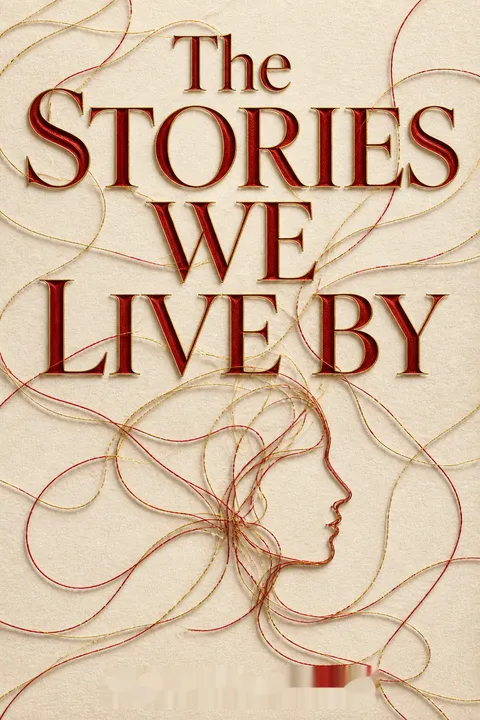

Key Takeaways
1. Identity is a Personal Myth: The Story You Live By
The central idea of this book is a disarmingly simple one: in the modern world in which we all live, identity is a life story.
Crafting meaning. We are all natural storytellers, constantly seeking to impose meaning, unity, and purpose on our scattered and often confusing experiences. This innate drive leads us to compose a "personal myth"—a heroic story of the self that begins in late adolescence and evolves throughout our lives. This myth isn't a delusion or a lie; rather, it's how we discover what is true and meaningful in our existence.
Beyond traits. To truly know a person, or even ourselves, goes beyond understanding their traits or conditional behaviors. It requires grasping their identity—the overarching narrative that provides their life with meaning. Just as a compelling novel has a plot, characters, and themes, so too does our personal myth, shaping how we perceive our past, present, and anticipated future.
Lifelong creation. This personal myth is an act of imagination, a patterned integration of past events, present experiences, and anticipated actions. It's made and remade in the secrecy of our minds, influencing our daily lives and becoming suddenly conscious in moments of great insight or intimacy. The emphasis is on how this story develops from birth to old age, culminating in efforts to craft a satisfying ending.
2. Early Life Experiences Shape Your Story's Tone and Imagery
The first two years of life leave us with an unconscious legacy that especially affects the narrative tone of our story.
Foundational attitudes. Even before we consciously understand what a story is, infancy and early childhood provide crucial raw material for our self-defining narratives. Our earliest bonds of attachment with caregivers, typically formed in the first year, establish an unconscious legacy of optimism or pessimism that will profoundly influence the narrative tone of our adult life story.
Emotional imprints. The preschool years contribute a wealth of emotionally charged imagery, rooted in fantasy play, that will later animate our personal myths. These images—whether of home, school, or archetypal figures like Snow White or the Wicked Witch—are appropriated and reworked to suit immediate personal wishes, often defying adult logic and blurring the lines between fantasy and reality.
Unconscious influence. This pre-rational past inevitably returns to shape our adult identities. A secure attachment fosters an optimistic tone, suggesting a trustworthy world where intentions succeed. In contrast, insecure attachment can lead to a pessimistic tone, implying a capricious world where efforts are often foiled. These early, unconscious attitudes about how the world works become the pervasive backdrop for our later mythmaking.
3. Core Motivations for Power and Love Drive Your Life's Themes
Desires for power and love provide gods and goddesses, heroes and heroines, kings and queens, curious little boys and brave little girls alike with energy, direction, and purpose.
Universal drives. As children enter elementary school, they begin to grasp that human behavior, both in stories and in life, is organized by internal intentions. These intentions coalesce into stable motivational dispositions, primarily centered around two fundamental themes: agency (striving for power, autonomy, mastery, achievement) and communion (striving for love, intimacy, interdependence, acceptance).
Agency's facets. Agency manifests as a desire to assert, protect, and expand the self, to master the environment, and to have impact. This includes:
- Power motivation: Desire for feeling strong and having impact on the world.
- Achievement motivation: Desire for feeling competent and doing things better.
These drives push individuals to consolidate their individuality and control their surroundings.
Communion's facets. Communion, conversely, involves the desire to merge with others, participate in something larger than the self, and relate in warm, close, and loving ways. This includes:
- Intimacy motivation: Recurrent desire for warm, close, and sharing interaction.
- Love (affection, friendship, charity): Broader forms of connection.
These themes become the motivational currents running through our personal myths, determining what characters want and how the plot moves forward.
4. Adolescence Establishes Your Ideological Setting
It is the ideological outlook of society that speaks most clearly to the adolescent who is eager to be affirmed by his peers and is ready to be confirmed by rituals, creeds, and programs.
Questioning reality. Adolescence marks the beginning of conscious mythmaking, driven by biological, cognitive, and social changes. The development of formal operational thinking enables abstract reasoning, leading teenagers to question established realities and explore hypothetical possibilities for themselves and the world. This often involves contrasting their present with what might have been or what could be.
Forming core beliefs. This period is crucial for formulating an "ideological setting"—a backdrop of fundamental beliefs about what is right, true, and good. This includes views on religion, morality, politics, and aesthetics. While society offers various frameworks, the adolescent must grapple with these questions to anchor their identity, often rejecting childhood certainties and seeking new truths.
Social context. The search for ideology is not solitary; it's shaped by interactions with peers, family, and societal institutions. Adolescents may experiment with new roles and belief systems, sometimes creating "personal fables" that celebrate their perceived uniqueness. These early drafts of identity, though often unrealistic, are vital steps toward a more mature life story woven into a historical and social fabric.
5. Adult Life is Defined by Your Imagoes, or Story Characters
I call the characters that dominate our life stories imagoes.
Personified ideals. As adults, we navigate the multiplicity of roles demanded by modern life—worker, spouse, parent, friend. To bring coherence to these diverse selves, we psychologically create "imagoes": personified and idealized concepts of the self that function as main characters in our personal myths. These imagoes are larger than specific social roles, integrating various aspects of who we are, were, or aspire to be.
Agentic and communal archetypes. Imagoes often align with the core themes of agency and communion. Agentic imagoes embody power and mastery, such as:
- The Warrior: Engages in courageous battle, asserts dominance.
- The Traveler: Explores, moves swiftly, seeks adventure.
- The Sage: Strives for knowledge, wisdom, and understanding.
- The Maker: Creates, produces, invents, builds.
Communal imagoes embody love and connection, such as: - The Lover: Seeks passionate, intimate bonds.
- The Caregiver: Nurtures, supports, sacrifices for others.
- The Friend: Cultivates loyal, sharing relationships.
- The Ritualist: Preserves traditions, fosters domestic harmony.
Dynamic and evolving. Imagoes are not static; they enter myths in specific "opening scenes" (often turning points), personify traits and behaviors, and reflect individual and cultural values. They are often built around significant others and can signal fundamental life conflicts. As our myths mature, we strive to create harmony and reconciliation among these often-conflicting characters, moving beyond mere role-juggling to a more integrated sense of self.
6. Mid-Life Demands Reconciliation of Conflicting Selves
In mid-life, we come to identify fundamental conflicts in the myth.
Reassessment and redefinition. The period of mid-life (roughly ages 40-60) often involves a profound, though not always crisis-laden, reassessment of one's life story. Adults look both backward and forward, confronting undeniable signs of aging, increased responsibility for multiple generations, and a heightened awareness of mortality. This prompts a reevaluation of life's illusions and vested interests.
Confronting opposites. A key developmental task of mid-life is the confrontation and potential reconciliation of opposing forces within the self. This can manifest as:
- Masculine/Feminine integration: Men may explore their "anima" (feminine side), becoming more communal; women their "animus" (masculine side), becoming more agentic.
- Work/Home balance: Reconciling the demands and identities formed in professional and domestic spheres.
- Passion vs. contemplation: Youthful idealism gives way to a more philosophical, nuanced perspective, accepting inherent contradictions and paradoxes.
Postformal thought. This period often sees a shift to "postformal" thinking, which moves beyond the absolute truths of formal operations to embrace situationally specific, contextualized truths. This dialectical approach allows for the acceptance of contradictory propositions as simultaneously true, fostering a deeper, more complex understanding of self and world.
7. Generativity Fuels Your Quest for a Lasting Legacy
As a response to this increasing concern, we are challenged in middle adulthood to fashion what I call a generativity script.
Leaving a mark. As adults move through mid-life, concerns about death often increase, prompting a desire to leave something behind that will outlive the self. This drive is channeled into a "generativity script"—a plan for how one hopes to contribute a heroic gift to the next generation, ensuring a form of symbolic immortality.
Seven facets of generativity. Generativity is a dynamic pattern encompassing:
- Desire: Drawing on both agentic (immortality) and communal (need to be needed) motivations.
- Demand: Societal expectations to assume roles like parent, teacher, or leader.
- Concern: A conscious focus on the well-being and future of the younger generation.
- Belief: Optimism about humankind's future and confidence in one's own ability to contribute.
- Commitment: A decision or plan to translate these into action.
- Action: Creating (giving birth, inventing), maintaining (preserving traditions), and offering (letting go of creations for posterity).
- Narration: Integrating these efforts into one's personal myth, providing a satisfying sense of ending that generates new beginnings.
Beyond parenthood. While often expressed through raising children, generativity extends to diverse life pursuits: work, creative endeavors, volunteerism, and community involvement. It's about contributing positively to something larger and more enduring than oneself, ensuring that one's values and efforts continue to shape the world.
8. Malaise Signals a Stagnant or Underdeveloped Personal Myth
To fail in this effort of mythmaking is to experience the malaise and stagnation that come with an insufficient narration of human life.
Unfulfilled potential. When an individual's personal myth is underdeveloped, stagnant, or fails to integrate various aspects of the self, it can lead to feelings of dissatisfaction and unease. This "malaise" arises when core imagoes are not fully articulated, conflicts remain unaddressed, or commitments to vital life projects are lacking.
Examples of stagnation:
- Single-imago dominance: Like Sam Sobel, whose identity revolved solely around "the friend," neglecting other adult roles like husband or father, leading to a sense of incompleteness.
- Unintegrated imagery: Joan Kaminski, who lived through fictional characters and felt like an "outside observer," struggled to find personal passion or integrate observed images into her own life story.
- Childlike identity: Kate Tucker, whose central imago remained "the child," struggled with adult responsibilities and felt perpetually "watched," indicating a lack of psychosocial moratorium and differentiation.
Consequences of inaction. Malaise often stems from an inability or unwillingness to take uncomfortable action to revise one's myth. Whether it's an "escapist" imago that avoids responsibility or a "negative identity" (like Bob Shaver defining himself solely against his alcoholic father) that limits growth, these narrative shortcomings prevent the story from moving forward, leading to a sense of being stuck.
9. A "Good Myth" is Coherent, Open, Credible, and Integrated
The prototype of the “good story” in human identity is one that receives high marks on these six narrative standards.
Standards for maturity. A "good" or mature personal myth is not merely a happy one, but a vitalizing and adaptive narrative that meets specific developmental criteria. These standards guide the evolution of our life stories from adolescence through adulthood, ensuring they remain meaningful and functional.
Six key criteria:
- Coherence: The story makes sense, with characters acting logically and events following causally, providing unity and purpose.
- Openness: The myth is flexible and resilient, welcoming change and growth, avoiding premature foreclosure or rigidity.
- Credibility: The story is grounded in personal and social reality, accountable to facts, and avoids gross distortions or fantastical lies.
- Differentiation: The myth is rich in facets and characterizations, with multiple imagoes and complex plots, reflecting the depth of adult experience.
- Reconciliation: Conflicting forces and imagoes within the story are addressed and, ideally, brought into harmony or a productive dialectical tension.
- Generative Integration: The myth connects the individual to society, fostering contributions to the next generation and a sense of responsibility for the human enterprise.
Dynamic balance. These criteria often exist in dynamic tension; for instance, too much coherence can stifle openness, and differentiation may precede reconciliation. The ideal myth strikes a balance appropriate for one's developmental stage, continuously evolving to meet new challenges and integrate life's complexities.
10. Faith Underpins a Meaningful Life Story
What Erikson calls a “belief in the species” is a basic and general belief in the fundamental goodness of human life, specifically as envisioned for the future.
Beyond dogma. While not necessarily religious, all human beings live by "faith"—an implicit understanding of an ultimate environment and a commitment to some form of order or pattern in the universe. This "faith as knowing" becomes a crucial part of an adult's ideological setting, providing a bedrock for identity.
Structures of belief. Faith structures can range from concrete and unsystematic (Position A) to conventional, externally provided systems (Position B). More mature forms, like Position C ("individuative-reflective faith"), involve questioning conventions and fashioning a personalized ideology. The highest form, Position D ("conjunctive faith"), embraces paradox and inconsistency, integrating seemingly contradictory ideas and images, often emerging in mid-life.
Sustaining commitment. A strong "belief in the species"—an optimistic attitude about humankind's future—reinforces generative concern. This belief, coupled with confidence in one's own worthiness and effectiveness, strengthens the commitment to contribute to the next generation. Shirley Rock, the madam-turned-minister, exemplifies conjunctive faith, embracing her past contradictions while maintaining an unwavering commitment to justice and service, rooted in a deeply personal understanding of God.
11. Your Personal Myth is Dynamic: Embrace Continuous Change
When it comes to our life stories, nothing is ever final. Things can always change.
Lifelong evolution. Personal myths are not static; they are continuously constructed, revised, and reconstructed throughout adulthood. Major life events—marriage, divorce, parenthood, career shifts, losses—as well as symbolic milestones like birthdays, can trigger significant changes in narrative tone, imagery, themes, characters, and the envisioned ending of one's story.
Two types of change. Progressive change in mythmaking can be:
- Developmental: Moving forward to address new developmental issues appropriate for one's life stage (e.g., a young adult exploring ideological settings, a mid-life adult focusing on generativity). This involves refining the existing myth to enhance coherence, openness, differentiation, reconciliation, and generative integration.
- Personological: A more profound transformation, often requiring intense psychotherapy, where the existing myth is deemed "no good" or nonexistent. This involves symbolically returning to early experiences to find new raw materials and create a new self, rather than merely revising an existing one.
Self-understanding as the first step. Identifying your personal myth, whether through self-reflection or dialogue with a sympathetic listener, is the crucial first step towards any desired change. While the book doesn't offer a prescriptive program for change, it emphasizes that understanding your current narrative allows you to consciously work towards a more vitalizing and meaningful story, one that benefits both yourself and the broader social world.
Review Summary
The Stories We Live By receives generally positive reviews, averaging 3.97/5. Readers appreciate McAdams's exploration of how people construct narrative identities, finding the personal myth framework thought-provoking and meaningful. Many highlight the final chapter's life-story interview structure as particularly valuable. Common criticisms include the book's heavy reliance on Judeo-Christian traditions, dated cultural references, repetition, and underdeveloped concepts like imagoes compared to Jungian archetypes. Some readers wanted deeper practical application, while others found it transformative for self-understanding and introspection.
People Also Read
Download PDF
Download EPUB
.epub digital book format is ideal for reading ebooks on phones, tablets, and e-readers.








































