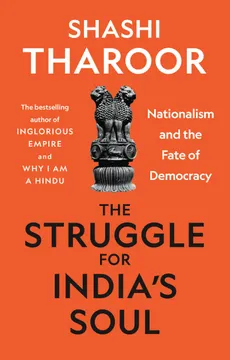

Key Takeaways
1. Nationalism: A Recent, Complex, and Often Two-Faced Idea
Few concepts have gone through as many transformations of connotation as nationalism.
Modern concept. Nationalism, as a political idea, is relatively recent, emerging primarily from the French and American revolutions in the late 18th century. Before this, people's loyalties were typically to local lords, city-states, or monarchs, not to a unified "nation-state" defined by shared ethnicity, language, or culture. The term "nation" itself, in ancient Rome, referred to foreigners and migrants, gradually evolving to denote a community of shared opinion.
Janus-faced nature. Nationalism is inherently dualistic, capable of both constructive and destructive outcomes. It can inspire movements for freedom and self-determination, uniting diverse peoples against imperial rule, but it can also lead to chauvinism, intolerance, and conflict. This "moral transparency" means nationalism can coexist equally well with good and evil, depending on its specific manifestation and underlying values.
Globalization's impact. The rise of globalization initially seemed to diminish nationalism's relevance, fostering a "borderless world" and international cooperation. However, economic setbacks and a backlash against perceived cosmopolitan elites led to a resurgence of ethno-nationalist populism in the 21st century. This shift highlights a tension between "anywheres" (global citizens) and "somewheres" (those rooted in local identity), with the latter often driving contemporary nationalist movements.
2. Patriotism: An Inclusive Love for Homeland, Distinct from Nationalism
Patriotism is far less ideologically-driven than nationalism, takes the successes of others in its stride (since patriots don’t define their love on the basis of the failures of others) and does not involve the same destructive devotion that nationalism does.
Love of homeland. Patriotism is an emotional attachment to one's country, akin to filial love, celebrating its qualities without asserting superiority over others. Unlike nationalism, it is not inherently exclusive or power-hungry; a patriot can acknowledge national flaws and work to correct them, while a nationalist often believes their nation is beyond reproach. This distinction allows for self-criticism and respect for other nations' achievements.
Civic vs. ethnic. Patriotism can be "natural" (land-based) or "covenanted" (based on shared political ideas and values). Civic nationalism, a form of "good nationalism," aligns with patriotism by deriving legitimacy from citizens' consent and democratic institutions, rather than immutable factors like ethnicity or religion. It fosters a sense of belonging to a nation defined by shared ideals, allowing for multiple, layered affiliations.
Orwell's distinction. George Orwell famously differentiated patriotism as defensive and devoted to a particular way of life, without wishing to impose it on others. Nationalism, conversely, is inseparable from the desire for power and competitive prestige, often leading to the suppression of individual identity in favor of the collective. This highlights nationalism's potential for moral perversion, as seen in historical instances of violence and exclusion.
3. India's Identity: A Pluralist Civilization Forged by Shared History
The singular thing about India is that you can only speak of it in the plural.
Unity in diversity. India is an extraordinary mosaic of ethnic groups, languages, religions, and cultures, defying easy generalization. Its identity is not based on a single language, ethnicity, or religion, but on a deep-rooted desire for harmony and a shared history within a coherent territorial space. This pluralism is a reality, not merely an ideal, emerging from India's geography and reaffirmed by its millennia-old history.
Ancient aspirations. The concept of India as a unified civilization, Bharatvarsha, dates back to ancient epics like the Mahabharata and Ramayana, which depict a pan-Indian landscape and shared heroes. Cultural and geographical unity has existed for ages, with empires like the Maurya, Gupta, and Mughal seeking to extend their reach across the subcontinent. Foreign travelers also perceived India as a single entity, regardless of internal divisions.
Modern nationhood. While "nationalism" is a modern concept, India's anti-colonial struggle transformed its cultural unity into a political one. The founders of independent India consciously rejected the European model of a homogenous nation-state, opting instead for a non-European nationalism that embraced and guaranteed its diversity. This vision, articulated by leaders like Nehru and Tagore, emphasized social adjustment, spiritual unity, and the accommodation of myriad "guests" with different habits and requirements.
4. The Constitution: Bedrock of India's Civic Nationalism and Individual Rights
The most important contribution of the Constitution to Indian civic nationalism was that of representation centred on individuals.
Foundational vision. India's Constitution, crafted by leaders like Ambedkar, Nehru, and Patel, is a robustly secular and legal construct. Its Preamble enumerates justice, liberty, equality, and fraternity, proclaiming law as the bedrock of the national project. This framework aimed to free Indians from traditional hierarchies and place citizens in a realm of individual agency, appropriate for self-rule.
Liberal constitutionalism. The founders imposed a liberal Constitution on a society deeply entrenched in traditional customs and prejudices. They prioritized individual citizenship over immutable identities like religion or caste, ensuring that rights were guaranteed to individuals rather than religious communities. This approach aimed to prevent temporary majorities from undermining constitutional provisions and to foster a "constitutional morality" that values free speech and scrutiny of public action.
Living document. The Constitution is a self-generating and self-correcting entity, amended over a hundred times to adapt to changing realities. This flexibility, coupled with judicial activism, has made it a vehicle for social change, promoting human rights, education, and accountability. It recognizes group rights while upholding individual dignity, conceptualizing every Indian as an intersection between liberal individualism and plural belonging.
5. Hindutva: An Ethno-Religious Vision Challenging India's Core Identity
The suggestion that only a Hindu, and only a certain kind of Hindu, can be an authentic Indian is an affront to the very premise of Indian nationalism.
Exclusionary ideology. Hindutva, meaning "Hinduness," is a political doctrine that seeks to define Indian nationhood in ethnic, cultural, and religious terms. Its proponents argue that a true Hindu considers India their motherland, ancestral land, and holy land, thereby excluding Muslims and Christians whose faiths originated outside India. This vision fundamentally contradicts the pluralistic and secular foundations of the Indian Constitution.
"Hindu Rashtra" ideal. Hindutva aims to establish a "Hindu Rashtra" (Hindu nation) where Hindu values and way of life prevail. This concept rejects "territorial nationalism" (where all inhabitants of a territory are equal citizens) in favor of "cultural nationalism," where the nation is constituted by the Hindu people. This ideology views India's past as a pristine Hindu country, subsequently "despoiled" by foreign invaders, necessitating a "national regeneration" through the revival of Hindu-ness.
Fabrication of history. Hindutva actively reinterprets Indian history to suit its narrative, often demonizing Muslim rulers as foreign invaders and portraying Hindu-Muslim relations as inherently conflictual. This selective historical narrative ignores syncretic traditions and pre-colonial cooperation, instead promoting a religion-based binary where all Muslim rulers are evil and all Hindus are valiant resisters. This approach, ironically, echoes colonial divisions of Indian history.
6. Hindutva Ideologues: Shaping an Exclusionary "Hindu Rashtra"
To keep up the purity of the Race and its culture, Germany shocked the world by her purging the country of the Semitic Races—the Jews. Race pride at its highest has been manifested here. Germany has also shown how well-nigh impossible it is for Races and cultures, having differences going to the root, to be assimilated into one united whole, a good lesson for us in Hindustan to learn and profit by.
Savarkar's foundation. Vinayak Damodar Savarkar, the architect of Hindutva, defined a Hindu as one who considers India their motherland, ancestral land, and holy land. He saw Hindutva as an expansive quality inherent in the Hindu "race," encompassing all aspects of Hindu thought and activity. However, his framework explicitly excluded Muslims and Christians, deeming them unable to fulfill the "holy land" criterion.
Golwalkar's radicalization. M. S. Golwalkar, a key RSS ideologue, intensified Savarkar's vision, explicitly stating that "Hindusthan is the land of the Hindus and is the terra firma for the Hindu nation alone to flourish upon." He rejected territorial nationalism as "emasculating" and openly admired Nazi Germany's racial purity policies, advocating for the assimilation or subordination of minorities. Golwalkar's writings explicitly targeted Muslims and Christians as "hostile elements."
Upadhyaya's refinement. Pandit Deen Dayal Upadhyaya, another influential Hindutva thinker, also rejected territorial nationalism, arguing that India's nationhood must be based on its inherent Hindu character and culture. He believed that Muslims and Christians must "identify themselves completely with Indian life" and the "age-long national cultural stream that was Hindu culture." Upadhyaya's philosophy, while not advocating expulsion like Golwalkar, still demanded the cultural and political subordination of minorities.
7. Modi's India: Remaking the Nation Through Ethno-Nationalist Policies
The cult of the strongman is alive and well and ruling in New Delhi.
Moditva's rise. Narendra Modi's ascent to power in 2014 and 2019 marked the triumph of a hard-line Hindu nationalist vision, transforming Hindutva into "Moditva." This ideology combines Hindutva's cultural nationalism with the cult of a strong, decisive leader who embodies the nation. Modi's re-election, fueled by a powerful personality cult and relentless propaganda, has given fresh impetus to redefining Indian nationalism.
Nine factors of change. India's shift towards Moditva is driven by several interconnected factors:
- Deepening democracy empowering marginalized groups.
- Backlash against cultural globalization and Westernized elites.
- Revolt against the political insider class.
- Hunger for economic liberalization (though not always delivered).
- Global rise of religious consciousness, mirroring Hindutva revivalism.
- Social transformation in urbanizing India, consolidating Hindu identity.
- India-Pakistan dynamics, fostering anti-Pakistan sentiment.
- Demographic youth bulge seeking assertive leadership.
- Technology, especially social media, amplifying prejudice and propaganda.
Militarized nationalism. The Modi regime aggressively asserts a belligerent nationalism, equating its ideological agenda with the national interest. Dissent is labeled "anti-national," and loyalty to the country is redefined as loyalty to the ruling party and the Prime Minister. This militarized nationalism exalts coercive state apparatuses and diverts public attention from governmental failures, making every state action legitimate.
8. Erosion of Institutions: Undermining Democracy for Centralized Power
Almost every independent institution has been hollowed out and made into an instrument of the government’s overweening dominance.
Systemic onslaught. The Modi government has systematically weakened India's autonomous institutions, including the Reserve Bank of India, investigative agencies like the CBI, the Election Commission, and the judiciary. This "etiolation" stems from the Moditva doctrine's inherent autocratic concentration of power, which views independent institutions as threats to its dominance.
Judicial compromise. The judiciary, traditionally a bulwark of democracy, has come under scrutiny for perceived subservience to the government. Instances include controversial case allocations, delays in judicial appointments, and the unprecedented post-retirement appointment of a Chief Justice to Parliament. These actions erode public faith in judicial impartiality and raise concerns about the Court's role as a check on executive power.
Parliamentary decline. The Indian Parliament, meant for deliberation and accountability, has been reduced to a "farce." Sessions are frequently disrupted, and the government treats it as a mere notice-board for decisions rather than a consultative body. This disregard for parliamentary conventions, coupled with the demonization of the opposition, undermines the critical deliberative role of a democracy.
9. Language and Citizenship: Tools for Cultural and Religious Homogenization
By excluding members of just one community, the new law is antithetical to India’s secular and pluralist traditions.
Hindi imposition. Hindutva's long-standing policy to make Hindi the sole "national language" resurfaced with proposals for compulsory Hindi in non-Hindi-speaking states. This move, seen as cultural chauvinism, threatens India's multi-lingual identity and risks alienating southern states. The underlying fear is that Hindi promotion is a "thin end of a more dangerous wedge" towards a "one language, one religion, one nation" ideology.
CAA and NRC. The Citizenship (Amendment) Act (CAA) is the first law to explicitly link Indian citizenship to religion, fast-tracking it for non-Muslim refugees from Pakistan, Afghanistan, and Bangladesh while excluding Muslims. Coupled with a proposed National Register of Citizens (NRC), this threatens to disenfranchise millions of undocumented Indian Muslims, creating a "partition of the Indian soul." This policy directly contradicts India's secular constitutional principles and its historical legacy of inclusive asylum.
Betrayal of secularism. The CAA and NRC represent a profound betrayal of India's foundational secularism, which ensures equal treatment for all religions. By mirroring Pakistan's confessional state logic, the BJP's agenda undermines the very premise of Indian nationalism that rejected religion as a determinant of nationhood. This has led to widespread protests, with many Indians, both Muslim and non-Muslim, resisting what they see as an assault on the idea of India.
10. Kashmir: A Betrayal of Constitutional Promises and Democratic Values
The Kashmir episode was a reminder of a timeless lesson—that constitutional promises made by governments should never be broken, especially through manoeuvres that are so questionable, because that sets a precedent that, if emulated elsewhere in the country, could in due course destabilize the whole republic.
Abrogation of autonomy. In August 2019, the Modi government unilaterally revoked Article 370, which granted special autonomous status to Jammu and Kashmir, and divided the state into two Union Territories. This dramatic decision, made without consulting the Kashmiri people or their elected representatives (who were detained), was a "legal sleight of hand" that bypassed constitutional requirements for state concurrence.
Undermining trust. The government's actions in Kashmir, including a prolonged communications blockade and mass arrests, have been criticized as "garrison governance" and a betrayal of the nationalism that brought Kashmir into the Indian Union. This move risks alienating Kashmiris further, potentially fueling extremism and undermining the democratic participation that mainstream Kashmiri leaders had fostered.
Historical revisionism. The BJP's narrative on Kashmir often demonizes Jawaharlal Nehru, falsely claiming he alone created the "Kashmir problem" and Article 370. Historical records, however, confirm Sardar Patel's involvement and Nehru's consistent emphasis on the Kashmiri people's will. This historical revisionism serves to justify the government's actions and deflect criticism, but it further erodes trust and national unity.
11. Gandhi's Hinduism: An Inclusive Faith Versus Hindutva's Political Creed
Hinduism and Hindutva, as I have argued in my recent book Why I Am a Hindu, represent two very distinct and contrasting ideas, with vitally different implications for nationalism and the role of the Hindu faith.
Gandhi's inclusive vision. Mahatma Gandhi, a devout Hindu, embodied an open, eclectic, and accepting form of Hinduism. His philosophy of satyagraha (truth-force) and ahimsa (non-violence) was rooted in Vedantic principles of universal oneness and respect for all faiths. He famously declared, "I am a Hindu, a Muslim, a Christian, a Parsi, a Jew," reflecting his belief in the unity of all human beings and the acceptance of diverse truths.
Hindutva's rejection. Hindutva ideologues like Savarkar and Golwalkar explicitly rejected Gandhi's pluralistic Hinduism and non-violence, viewing them as weaknesses. They sought to politicize Hinduism into a majoritarian creed, indifferent to devotion but focused on identity and conformity. Despite Modi's public invocation of Gandhi for "Swachh Bharat," the underlying Hindutva ideology privately promotes contempt for his inclusive message and even venerates his assassin.
Divergent paths. The core difference lies in their approach to diversity: Gandhi's Hinduism embraces it, seeing all faiths as equally valuable and individuals as free to find their own spiritual paths. Hindutva, conversely, seeks to homogenize, viewing India as a "Hindu nation" where other identities are subordinate and tolerated only if they conform to a narrow, exclusionary definition of "Indianness." This fundamental divergence poses a critical dilemma for India's future.
12. Reclaiming India's Soul: A Call for Renewed Civic Nationalism
A Hindu state will end up dividing India; a liberal, democratic India, rooted in civic nationalism, undergirded by liberal constitutionalism, welded together by a common purpose, and striving for a shared destiny, will unify the nation in an inclusive sense of belonging.
The existential battle. India faces an existential struggle between its established civic nationalism and the ethno-religious nationalism promoted by the Modi government. The latter's agenda—marked by identity politics, marginalization of minorities, and weakening of democratic institutions—threatens to create a "republic of fear" and fundamentally alter India's character. This "New India" risks becoming a "kakistocracy" driven by bigotry and authoritarianism.
Reaffirming core values. To reclaim India's soul, it is crucial to restore and empower the institutions of civic nationalism: a robust democracy, liberal constitutionalism, free speech, and protection for minorities. This requires a conscious effort to defend pluralism, encourage dissent, and ensure governmental accountability. The goal is an India where individual liberties are paramount, and diversity is celebrated as a strength, not a weakness.
Patriotism for all. A renewed patriotism, rooted in local attachments but embracing a pan-Indian identity, offers hope. This "good nationalism" is benign, tolerant, and inclusive, valuing shared history, common purpose, and mutual respect among all Indians, regardless of their background. It stands in stark contrast to the divisive, fear-mongering ethno-nationalism that seeks to impose uniformity and alienate those who do not conform. The future of India depends on whether its people choose unity in diversity over divisive majoritarianism.
Review Summary
People Also Read










About the Author


Download PDF
Download EPUB
.epub digital book format is ideal for reading ebooks on phones, tablets, and e-readers.








































