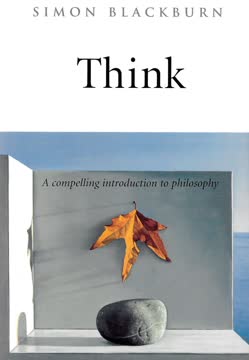
Key Takeaways
1. Philosophy is Conceptual Engineering: Understanding Thought's Structure
For just as the engineer studies the structure of material things, so the philosopher studies the structure of thought.
Study thought's structure. Philosophy isn't impractical or unworldly; it's like conceptual engineering. It examines the fundamental structures of our ideas and concepts, the "mental housing" in which we live. Understanding this structure means seeing how parts function, interconnect, and what happens if changes are made.
Why it matters. Reflection on our concepts is continuous with practice. How we think about free will, human nature, or the world affects our actions, relationships, and even scientific inquiry. Bad philosophy can lead to cramped intellectual houses, hindering progress and understanding.
Avoid monsters. The "sleep of reason produces monsters." Uncritical acceptance of ideas, especially about ourselves or others, can lead to conflict and oppression. Philosophy, through critical self-reflection, is the antidote, enabling us to step back, question assumptions, and see if our perspectives are justified or merely subjective.
2. Radical Doubt Challenges the Foundations of Knowledge
I will suppose therefore that not God, who is supremely good and the source of truth, but rather some malicious demon of the utmost power and cunning has employed all his energies in order to deceive me.
Question everything. Descartes' method of hyperbolic doubt aims to sweep away all ordinary opinions to find certain foundations for knowledge. He notes that senses can deceive and that dreams can be indistinguishable from reality, leading to the possibility that all experience is a delusion.
The Evil Demon. This thought experiment pushes doubt to the extreme: what if a powerful demon deceives us about everything, including the external world? This raises the problem of scepticism – the possibility that we have no knowledge and all our beliefs are delusive, a possibility hard to rule out based on experience alone.
Cogito, ergo sum. In this sea of doubt, Descartes finds one certainty: "I think, therefore I am." Even if deceived about everything else, the act of thinking proves the existence of the thinker. This "Cogito" becomes the single rock upon which he hopes to rebuild knowledge, but it leaves the self as a puzzling, elusive entity.
3. Mind and Body Pose Deep Problems of Interaction and Understanding
It must not be thought that ideas such as those of colour and pain are arbitrary and that between them and their causes there is no relation or natural connection: it is not God's way to act in such an unruly and unreasoned fashion.
Ghost in the machine. Cartesian dualism posits mind and body as distinct substances, leading to the problem of how they interact. This view opens up unnerving possibilities:
- Zombies: Physically identical beings without consciousness.
- Mutants: Physically identical beings with different conscious experiences.
These possibilities suggest we can't know if others are conscious or what their experiences are like.
Interaction problem. If mind and body are distinct, how do physical events cause mental ones (like a pinprick causing pain) or vice versa (like thinking causing blushing)? Locke attributed this to God's arbitrary will, while Leibniz insisted there must be a rational, explicable connection, like a mathematical projection.
Seeking connection. Modern philosophy seeks to bridge this gap, often rejecting dualism. Approaches include:
- Logical behaviourism/Functionalism: Analyzing mental states in terms of behaviour or function.
- Identity theory: Identifying mental states with physical brain states, like identifying temperature with kinetic energy.
The challenge is explaining subjective experience (qualia) and thought in purely physical terms, while avoiding the sceptical possibilities dualism creates.
4. Our Sense of Freedom Clashes with Determinism
If atoms never swerve and make beginning / Of motions that can break the bonds of fate / And foil the infinite chain of cause and effect / What is the origin of this free will / Possessed by living creatures throughout the earth?
Dilemma of determinism. Our intuition of free will, the ability to have done otherwise, seems essential for responsibility and blame. However, determinism (every event caused by prior events) suggests our actions are fixed. Indeterminism (random events) also undermines control.
Consciousness as illusion? Our feeling of freedom might be like Schopenhauer's water or Wittgenstein's leaf, unaware of the necessary causal conditions for its actions. Dualism, positing a non-physical self that intervenes, faces the same dilemma: is the soul's action determined or random?
Compatibilism's inside control. Compatibilism argues freedom and determinism are compatible. Freedom isn't intervention from outside nature, but control from inside the causal order. Our actions are free if they flow from our responsive decision-making processes, even if those processes are determined. Excuses like brainwashing or external constraint are valid because they bypass these normal processes.
5. The Self is Elusive, Perhaps an Organizing Principle
For my part, when I enter most intimately into what I call myself, I always stumble on some particular perception or other, of heat or cold, light or shade, love or hatred, pain or pleasure.
Enduring through change. We think of ourselves as the same person despite vast physical and psychological changes over time. This leads to questions about what constitutes the enduring self, especially when contemplating possibilities like survival after death or reincarnation.
Hume's bundle. Hume found no simple, enduring "I" when introspecting, only a bundle of fleeting perceptions. This "bundle theory" suggests the self is just the collection of experiences and their connections, not a separate substance. The challenge is explaining the apparent "ownership" of experiences – how can there be a pain without someone having it?
Kant's organizing principle. Kant argued that the "I think" accompanying all our experiences isn't an object of awareness, but a necessary principle for organizing experience into a coherent world of objects in space and time. The self is the point of view from which experience is interpreted, a structural requirement for consciousness, not a mysterious substance.
6. Traditional Arguments for God's Existence Face Significant Challenges
Is he both able and willing? whence then is evil?
Arguments for God. Classical philosophy offers arguments for God's existence:
- Ontological: God, defined as perfect, must exist because existence is a perfection (Anselm, Descartes). Gaunilo's "perfect island" objection highlights the flaw.
- Cosmological: The universe's dependency requires a necessary, uncaused first cause (Aquinas). Hume argues "necessary existence" is meaningless and the universe itself could be the uncaused being.
- Design: The world's order resembles human design, implying a divine designer (Cleanthes). Hume counters that analogy from limited experience is weak, and the world's imperfections suggest an imperfect creator.
Problem of evil. The existence of suffering and evil in the world is a major challenge to the idea of an all-powerful, all-knowing, all-caring God. As Epicurus asked, if God is willing and able to prevent evil, why does it exist? The world's mixed nature suggests at best a mixed creator.
Miracles and faith. Reports of miracles are often cited as evidence for God. Hume argues that testimony for a miracle is only credible if its falsehood would be more miraculous than the event itself, a hurdle rarely, if ever, met due to common human error and bias. Pascal's wager suggests believing is rational due to infinite rewards, but assumes specific knowledge of divine preferences.
7. Reasoning Involves Logic, Probability, and Grappling with Induction
It is impossible, therefore, that any arguments from experience can prove this resemblance of the past to the future; since all these arguments are founded on the supposition of that resemblance.
Logic's structure. Formal logic studies the structure of information and valid inference, ensuring that if premises are true, the conclusion must be true. Tools like truth-tables and quantification theory (Frege) reveal how complex statements are built and what follows from them, guarding against ambiguities and contradictions.
Problem of induction. Much of our reasoning is inductive, extrapolating from past experience to predict the future or generalize about the unobserved. Hume's problem of induction highlights that there is no logical guarantee that the future will resemble the past; arguing from past uniformity to future uniformity is itself an inductive inference, leading to a circular argument.
Probability and Bayes. While induction lacks logical certainty, we reason probabilistically. Bayes's theorem provides a framework for updating beliefs based on evidence, emphasizing the importance of prior probabilities (base rates) and the likelihood of evidence given different hypotheses. It reveals fallacies like ignoring the base rate, crucial for evaluating claims like miracle reports.
8. The World as It Appears May Differ Fundamentally from Reality
Hence I think that tastes, odors, colors, and so on are no more than mere names so far as the object in which we place them is concerned, and that they reside only in the consciousness.
Primary vs. Secondary Qualities. Galileo, Descartes, and Locke distinguished primary qualities (like shape, size, motion) inherent in objects themselves, from secondary qualities (like color, taste, smell) which are sensations produced in us by primary qualities. The argument from perceptual relativity suggests secondary qualities are mind-dependent, as different observers perceive them differently with equal validity.
Idealism's challenge. Berkeley argued that primary qualities are also mind-dependent, as we only perceive them through sensations (e.g., solidity through touch). He claimed we cannot conceive of objects existing independently of any mind, leading to subjective idealism – the world consists only of minds and their ideas.
Problems with matter. Hume and Faraday questioned the very conception of independent material substance apart from its powers or forces. If objects are just bundles of powers, and powers are understood in terms of effects on objects, we face a circular problem. This suggests our common-sense notion of solid "things" occupying space may be problematic when pushed to a fundamental level.
9. Understanding the World Requires Grappling with Concepts and Universals
And surely that than which a greater cannot be thought cannot exist only in the understanding.
Concepts as rules. Understanding the world requires using concepts, which are governed by rules distinguishing correct from incorrect application. This raises the ancient problem of universals: what is the reality behind these rules?
- Realism/Platonism: Rules/universals exist objectively, independent of minds.
- Conceptualism: Rules are mental constructs, arising from shared human nature or culture.
- Nominalism: There are no real rules, just dispositions to use words.
Mind's role. The idealist tradition, following Kant, emphasizes the mind's active role in structuring the world we experience. Concepts like space, time, object, and cause are seen as necessary organizing principles of thought, shaping the "phenomenal world" we understand.
Relativism threat. If concepts are mind-dependent or culturally shaped, does this lead to relativism, where different conceptual schemes are equally valid? A "naturalized" realism suggests our concepts are shaped by the world's real causal structures through evolution, providing a basis for objectivity without recourse to mysterious Platonic realms.
10. Practical Reasoning Involves Identifying and Weighing Concerns
To grasp something is to embrace it in one's thought; to know something it is sufficient to touch it with one's thought.
Goals and concerns. Practical reasoning is about deciding what to do. While often seen as means-ends reasoning driven by desires, it's better understood in terms of concerns – aspects of a situation that weigh with us and motivate action, even without strong desire.
Avoiding objectification. It's crucial not to objectify concerns, treating them as problems to be managed or cured rather than acknowledging the underlying goal. This is a source of interpersonal conflict and can be seen in therapeutic approaches that focus on eliminating states of mind rather than addressing what those states are about.
Reasons for action. Concerns provide our reasons for acting or feeling. These reasons can be described factually (what motivated someone) or normatively (what should motivate someone). Identifying with a concern means seeing it as central to one's identity, not something to be easily discarded.
Review Summary
Think receives mixed reviews as an introduction to philosophy. Some praise its engaging approach to big questions, while others find it too dense and challenging for beginners. The book covers major philosophical themes like knowledge, free will, and God, using examples from renowned thinkers. Critics note inconsistent chapter quality and confusing explanations. However, many appreciate Blackburn's thematic organization and ability to inspire deeper thinking. The God chapter stands out as particularly well-executed. Overall, it's recommended for those seriously interested in philosophy rather than casual readers.
People Also Read

FAQ
What is [Think: A Compelling Introduction to Philosophy] by Simon Blackburn about?
- Broad introduction to philosophy: The book offers a comprehensive overview of major philosophical themes, including knowledge, mind, free will, self, God, reasoning, the world, and ethics.
- Accessible conceptual engineering: Blackburn presents philosophy as "conceptual engineering," helping readers understand how our ideas shape our understanding of reality.
- Engagement with fundamental questions: The book explores profound questions such as "What am I?", "Does God exist?", and "How can we know anything for sure?" through both historical and contemporary perspectives.
- Philosophy’s practical value: Blackburn argues that philosophy is essential for critical thinking, self-understanding, and challenging complacency in everyday life.
Why should I read [Think: A Compelling Introduction to Philosophy] by Simon Blackburn?
- Accessible yet rigorous: The book is written for readers without prior philosophical training, making complex ideas understandable and engaging without oversimplifying.
- Comprehensive coverage: It addresses foundational philosophical problems, providing a solid base for further study or personal reflection.
- Critical thinking emphasis: Blackburn encourages readers to question assumptions, analyze arguments, and develop intellectual humility and curiosity.
- Preparation for classic texts: The book equips readers to engage with classic philosophical works and debates.
What are the key takeaways from [Think: A Compelling Introduction to Philosophy] by Simon Blackburn?
- Philosophy as a practical tool: Philosophy is not just abstract theorizing but a way to clarify thinking and improve reasoning in all areas of life.
- Critical examination of arguments: The book models how to analyze and critique both historical and contemporary philosophical arguments.
- Intellectual modesty and reflection: Blackburn stresses the importance of intellectual humility, recognizing the limits of certainty and the value of ongoing inquiry.
- Engagement with perennial questions: Readers gain tools to think deeply about existence, knowledge, morality, and the nature of reality.
What are the main philosophical problems discussed in [Think: A Compelling Introduction to Philosophy] by Simon Blackburn?
- Knowledge and skepticism: The book explores how we can know anything for certain, addressing Descartes’s method of doubt and the challenge of skepticism.
- Mind-body problem and consciousness: Blackburn examines the relationship between mind and body, including dualism, behaviorism, and the nature of subjective experience.
- Free will and determinism: The dilemma of whether our actions are determined or free is analyzed, along with compatibilist responses.
- Personal identity and the self: The book investigates what constitutes the self and how personal identity persists over time.
How does [Think: A Compelling Introduction to Philosophy] by Simon Blackburn explain Descartes’s "Cogito, ergo sum" and its significance?
- Foundation of certainty: Descartes’s "I think, therefore I am" is presented as the one indubitable truth that survives radical doubt.
- Nature of the self: Blackburn explains that Descartes identifies the self with the mind, not the body, leading to the concept of an immaterial soul.
- Critiques and limitations: The book discusses philosophical challenges to Descartes’s argument, such as the "masked man fallacy" and the reliance on "clear and distinct ideas."
- Role in epistemology: The Cogito serves as the starting point for Descartes’s search for certain knowledge.
What is the "Evil Demon" hypothesis in [Think: A Compelling Introduction to Philosophy] by Simon Blackburn, and why is it important?
- Radical skepticism: The Evil Demon thought experiment imagines a powerful being deceiving us about everything, highlighting the possibility that all our experiences could be illusions.
- Challenge to knowledge: This scenario forces us to question the certainty of our beliefs and the reliability of empirical evidence.
- Philosophical method: Descartes uses the Evil Demon to justify his method of doubt, seeking indubitable foundations for knowledge.
- Value for reflection: Blackburn notes that while psychologically unsustainable, the hypothesis is valuable for philosophical inquiry into the nature of certainty.
How does [Think: A Compelling Introduction to Philosophy] by Simon Blackburn address the mind-body problem and the concept of consciousness?
- Cartesian dualism: The book presents Descartes’s view of mind and body as distinct substances, raising questions about their interaction.
- Alternative theories: Blackburn explores behaviorism, functionalism, and identity theory as attempts to explain mental states in physical or functional terms.
- Subjective experience: The nature of consciousness and qualia (subjective experiences) is discussed as a central challenge for physicalist theories.
- Intentionality and thought: The book examines how thoughts represent or "point to" things beyond themselves, complicating the mind-body relationship.
What is the dilemma of free will in [Think: A Compelling Introduction to Philosophy] by Simon Blackburn?
- Determinism vs. randomness: Blackburn explains that if determinism is true, our actions are caused and not free; if indeterminism is true, actions are random and also not free.
- Compatibilism: The book presents compatibilism, which redefines freedom as acting according to one’s internal decision-making processes, even if those are determined.
- Moral responsibility: Blackburn discusses the implications for blame, responsibility, and social practices if free will is reinterpreted or denied.
- Critiques of compatibilism: The book addresses objections, such as scenarios where internal processes are manipulated or controlled.
How does [Think: A Compelling Introduction to Philosophy] by Simon Blackburn explore the concept of the self and personal identity?
- Bundle theory vs. substance: Blackburn contrasts Hume’s view of the self as a bundle of perceptions with Reid’s idea of a simple, indivisible self.
- Memory and continuity: The book examines Locke’s theory that personal identity is based on continuity of consciousness and memory, including challenges like the "brave officer" objection.
- Structural views: Drawing on Kant and Wittgenstein, Blackburn suggests the self may be an organizing principle rather than a substance.
- Puzzles of identity: Issues like amnesia and multiple personalities are discussed to highlight the complexity of personal identity.
What are the main arguments about the existence of God discussed in [Think: A Compelling Introduction to Philosophy] by Simon Blackburn?
- Ontological argument critique: Blackburn explains and critiques Anselm’s ontological argument, highlighting problems with defining God into existence.
- Cosmological and design arguments: The book presents the cosmological argument (first cause) and the design argument, including Hume’s critiques of both.
- Problem of evil: The existence of evil is discussed as a major challenge to the idea of an all-powerful, all-good God.
- Faith and reason: Blackburn distinguishes between religious belief as truth-claims and as emotional or practical engagement, emphasizing the need for critical reflection.
How does [Think: A Compelling Introduction to Philosophy] by Simon Blackburn explain the problem of induction and its significance?
- Hume’s insight: The book presents Hume’s argument that inductive reasoning—inferring future events from past experience—lacks rational justification.
- Lottery analogy: Blackburn uses a thought experiment involving spirits and sky colors to illustrate the difficulty of justifying inductive inferences.
- Implications for science: The problem of induction challenges the certainty of scientific laws and predictions, fostering a "mitigated scepticism."
- Natural habit, not necessity: Our belief in the uniformity of nature is a psychological habit, not a logically necessary conclusion.
What is Kant’s "transcendental idealism" as explained in [Think: A Compelling Introduction to Philosophy] by Simon Blackburn?
- Copernican revolution: Kant proposes that objects must conform to our faculties of intuition and understanding, reversing the traditional view.
- Organizing principles: Space, time, and causation are seen as necessary conditions for experience, structuring how we perceive the world.
- Distinction from subjective idealism: Kant maintains that while we only know phenomena (appearances), these are not mere illusions but are structured by universal cognitive conditions.
- Limits of knowledge: The "noumenal" world (things-in-themselves) remains unknowable, setting boundaries for human understanding.
Download PDF
Download EPUB
.epub digital book format is ideal for reading ebooks on phones, tablets, and e-readers.








































