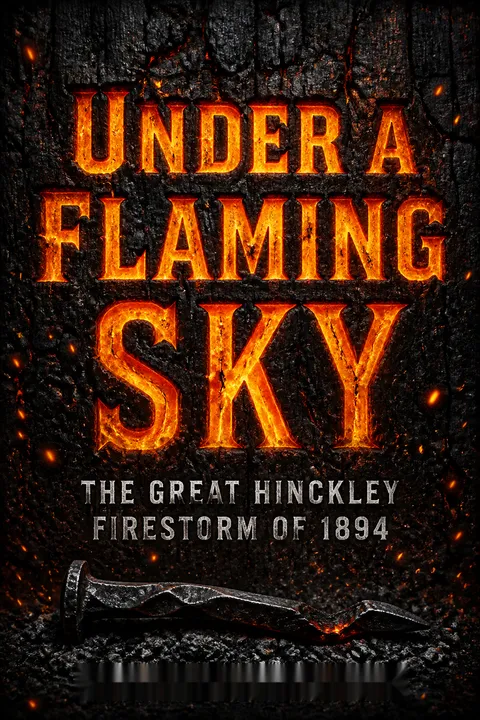

Plot Summary
Ominous Summer Haze
The summer of 1894 in Minnesota was marked by an ever-present haze, the air thick with the scent of wood smoke and the sky tinged yellow-gray. Residents of Hinckley and surrounding towns grew accustomed to the sight and smell, dismissing it as the usual byproduct of seasonal forest fires. Yet, beneath this routine, a sense of foreboding lingered. The land was parched from drought, the forests littered with dry pine slash left by logging, and the winds began to shift ominously. Despite warnings from recent disasters, like the fire in Phillips, Wisconsin, the people of Hinckley carried on with daily life, unaware that the conditions for catastrophe were aligning. The stage was set for a disaster that would test the limits of human endurance and forever scar the landscape and its people.
Hinckley's Promise and Peril
Hinckley, Minnesota, in 1894 was a bustling lumber town, its prosperity built on the white pine industry and the promise of the American frontier. Immigrants from Europe and the eastern United States had flocked here, drawn by jobs in the mill and the hope of land and stability. The town boasted schools, churches, hotels, and a vibrant social life, with trains connecting it to the wider world. Yet, beneath this optimism, danger lurked. The forests had been stripped, leaving behind a tinderbox of dry debris. The town's leaders, proud of their fire department and new equipment, believed themselves prepared. But the relentless heat, drought, and accumulation of flammable material made Hinckley vulnerable, its future balanced precariously between progress and disaster.
Families and Forests
The people of Hinckley were shaped by their origins and aspirations. Families like the Hansens, recent immigrants from Norway, worked hard to build homes and futures in the new land. Their lives revolved around the rhythms of the mill, the seasons, and the hope for a better life. Children played in yards, women tended homes, and men labored in the forests and mills. The landscape itself was in flux—forests felled, land cleared, and new communities rising from the stumps. Yet, the very practices that brought prosperity—clear-cutting, burning slash, and rapid expansion—left the environment fragile. The bonds of family and community were strong, but they would soon be tested by forces beyond anyone's control.
Gathering Storms
As August turned to September, the signs of impending disaster multiplied. Fires smoldered in the woods, the air grew hotter and drier, and the wind began to howl. Meteorologists and local editors like Angus Hay warned of the risks, but few heeded the call. The science of fire and weather was still primitive, and most residents believed that fires could be managed as they always had been. Yet, the convergence of two separate fires—one near Quamba, another near Beroun—set in motion a chain of events that would soon merge into a single, unstoppable inferno. The people of Hinckley, busy with work and preparations for Labor Day, remained largely unaware that their world was about to change forever.
Fire's Relentless Advance
By midday on September 1, 1894, the fires south of Hinckley had grown into roaring fronts, feeding on the dry slash and fanned by hurricane-force winds. The flames crowned in the treetops, creating their own weather—convection columns, fire whirls, and tornadoes of flame. Embers rained down on the town, and the sky darkened to an unnatural twilight. The mill's firebreaks and water barrels proved futile against the scale of the approaching disaster. Panic began to spread as the heat intensified, and the first buildings on the outskirts caught fire. The townspeople, realizing too late the magnitude of the threat, scrambled to save their families and possessions, but the fire was moving faster than anyone could run.
The Town Ignites
In the early afternoon, Hinckley was overtaken by chaos. Flames leapt from building to building, igniting homes, businesses, and the vast lumberyards in explosive bursts. The fire department's hoses melted, and the water supply failed. People fled in all directions—some toward the depots, hoping for rescue by train; others toward rivers, gravel pits, or open fields. The roar of the fire drowned out all else, and the air became unbreathable. Families were separated in the confusion, and desperate choices had to be made in seconds. The town that had been so full of life that morning was reduced to a hellscape of smoke, flame, and terror, as hundreds struggled to escape the advancing wall of death.
Flight and Fury
As the firestorm engulfed Hinckley, survival became a matter of luck and split-second decisions. Some residents ran north along the railroad tracks, others sought refuge in wells, root cellars, or the shallow waters of the Grindstone River. Many were overtaken by the flames, succumbing to heat, smoke, or asphyxiation. The marsh north of town became a death trap, as over a hundred people huddled together, only to be incinerated when the fire swept over them. The sounds of screaming, the sight of burning bodies, and the collapse of familiar landmarks marked the town's final moments. Amidst the horror, acts of heroism and self-sacrifice shone—parents shielding children, neighbors helping neighbors, and strangers risking their lives for others.
Trains Through Hell
The arrival of trains—both a blessing and a curse—offered the only hope for mass escape. Engineers like Bill Best and Jim Root faced agonizing decisions: whether to wait for more refugees or flee before the tracks burned. Trains became lifeboats, packed with terrified passengers, many already burned or injured. As the fire closed in, windows exploded, flames licked at the cars, and the air inside became suffocating. Some trains backed through walls of fire, others derailed or were forced to stop at burning bridges. The crews and passengers fought to keep each other alive, dousing flames with water, shielding children, and praying for deliverance. For many, the journey through the inferno was as harrowing as the fire itself.
Death in the Swamp
North of Hinckley, a group of over a hundred people, cut off from escape, gathered in a marshy clearing, hoping the green grass and damp ground would protect them. But the firestorm, now a single, monstrous conflagration, surrounded them on all sides. The heat became unbearable, and as the flames reached the clearing, panic erupted. People pressed together, trying to shield themselves and their loved ones, but the fire consumed oxygen and radiated lethal heat. In moments, the entire group was overcome—burned alive or suffocated. Evan Hansen perishes here, separated from his family. The next day, rescuers would find only charred bodies and the remnants of wagons and belongings, a grim testament to the fire's indiscriminate destruction.
Skunk Lake Refuge
For those who reached Skunk Lake, a shallow, muddy marsh north of town, survival depended on endurance and luck. Hundreds plunged into the cold water, submerging themselves to escape the searing heat and choking smoke. Families clung together, children were passed from hand to hand, and strangers helped the injured and blind. Marie Hansen leads her children, including Ed Hansen, to safety here. The firestorm swept over the lake, igniting the train wreckage and burning the very air above. For hours, survivors alternated between ducking underwater and gasping for breath, their bodies scorched and their minds traumatized. When the fire finally passed, the lake's edge was littered with the living and the dead, all forever changed by what they had endured.
Sandstone's Ordeal
As the firestorm moved north, the town of Sandstone became its next victim. Despite warnings and the arrival of refugees from Hinckley, many residents hesitated to flee, trapped by disbelief and the routines of daily life. Emil Anderson, a young minister, urges townspeople to seek safety. When the fire arrived, it struck with even greater fury—flaming gas bubbles exploded overhead, and hurricane winds drove the flames through the streets. Some escaped to the Kettle River, submerging themselves for hours; others died in cellars, wells, or open fields. The town was obliterated in minutes, and the survivors, cold and burned, faced a night of agony and uncertainty, cut off from the outside world and awaiting rescue.
Ashes and Aftermath
As dawn broke, the scale of the disaster became clear. Hinckley, Sandstone, and surrounding settlements were reduced to smoldering ruins. Survivors wandered in shock, searching for loved ones among the ashes and bodies. Relief trains arrived with doctors, food, and supplies, but the needs were overwhelming. Mass graves were dug for the dead, and the stench of burned flesh and animals filled the air. The landscape was unrecognizable—forests gone, homes erased, and entire families wiped out. The psychological toll was immense, as grief, guilt, and trauma set in. Yet, amidst the ruin, communities began to organize relief, care for the injured, and account for the missing.
Rescue and Reckoning
In the days following the fire, rescue trains and volunteers poured into the disaster zone. Doctors treated horrific burns with the limited means available, while others searched for survivors and buried the dead. The process of identifying bodies was harrowing, with many remaining nameless. Stories of heroism and loss circulated—engineers like Jim Root who saved hundreds, mothers who shielded children, and entire families lost in an instant. John Blair, the porter, demonstrates extraordinary leadership. Relief committees distributed food, clothing, and money, while the state and nation responded with donations. Yet, the scale of suffering defied easy remedy, and the survivors faced not only physical wounds but deep psychological scars that would last a lifetime.
The Broken Community
The survivors of the Hinckley firestorm grappled with profound loss—of family, home, and community. Many suffered from what would now be recognized as post-traumatic stress disorder, haunted by nightmares, flashbacks, and survivor's guilt. Ed Hansen experiences psychological scars that manifest in adulthood. Tom Sullivan, the conductor, suffers from what would now be recognized as PTSD. The social fabric was torn, as orphans sought new homes, widows mourned, and friendships were tested by the enormity of shared tragedy. Some found solace in faith, others in rebuilding, but for many, the wounds never fully healed. The disaster exposed the limits of human resilience and the need for compassion, understanding, and long-term support in the face of overwhelming catastrophe.
Searching for the Lost
In the aftermath, families searched desperately for missing loved ones, placing ads, scouring lists, and visiting hospitals and morgues. Bill Grissinger searches for his mother and sisters. The process of identification was fraught with uncertainty, as many bodies were burned beyond recognition. Mass graves became the final resting place for the unknown, and the living struggled to accept the loss. Stories of miraculous reunions were rare; more common were tales of heartbreak and unanswered questions. The search for closure became a central part of the community's recovery, shaping the memories and narratives that would define the fire's legacy for generations.
Rebuilding and Remembering
Despite the devastation, survivors and newcomers began the slow process of rebuilding. Marie Hansen rebuilds her life in Duluth. Temporary shelters gave way to new homes, businesses reopened, and schools resumed. Relief committees and state agencies provided aid, though often unevenly and with prejudice. Memorials were erected, and annual commemorations honored the dead. Yet, the scars remained—both physical and emotional. The landscape itself was altered, with forests gone and the economy forever changed. The fire became a defining event in local history, shaping identities and serving as a cautionary tale about the costs of unchecked exploitation and the need for preparedness.
Lessons in Flame
The Hinckley firestorm prompted reflection on its causes—drought, logging practices, lack of fire management, and human complacency. Experts and reformers called for better forest management, fire prevention, and scientific study of fire behavior. The disaster highlighted the dangers of ignoring environmental warnings and the limits of technology and human planning. Over time, new laws and practices emerged, but change was slow and often resisted by powerful interests. The fire's legacy influenced future responses to wildfires and shaped the development of conservation and emergency management in the United States.
Echoes Through Time
Decades after the fire, its echoes persisted in the memories of survivors, the stories passed down, and the landscape itself. Annual reunions, memorials, and museums kept the history alive, even as new generations struggled to comprehend the scale of the tragedy. The fire became a symbol of both human vulnerability and resilience—a reminder of the thin line between civilization and chaos, and the enduring need for community, compassion, and respect for nature. The lessons of Hinckley resonate still, urging vigilance, humility, and hope in the face of disaster.
Analysis
A cautionary tale of hubris, vulnerability, and resilienceUnder a Flaming Sky is both a gripping account of disaster and a profound meditation on the interplay between human ambition and the forces of nature. The Hinckley firestorm exposes the dangers of unchecked exploitation—of forests, land, and labor—and the illusion of control fostered by technology and progress. The disaster is not merely a natural event but the result of cumulative human choices: aggressive logging, inadequate fire management, and a failure to heed warnings. Yet, amid the devastation, the narrative celebrates the capacity for courage, compassion, and endurance. The stories of survivors, rescuers, and communities reveal the best and worst of human nature—panic and heroism, selfishness and sacrifice, despair and hope. Jim Root, John Blair, Marie Hansen, and others exemplify this resilience. The book's enduring lesson is the necessity of humility before nature, the importance of preparedness and collective action, and the healing power of memory and solidarity. In an age of increasing environmental risk, Under a Flaming Sky remains a vital reminder of our shared vulnerability and the enduring strength found in community and remembrance.
Review Summary
Under a Flaming Sky receives strong praise from readers, averaging 4.13 out of 5 stars. Most reviewers commend Daniel James Brown's ability to blend personal narratives with scientific explanations of fire behavior, creating a gripping, emotionally intense read. Many highlight the vivid, unflinching descriptions of the 1894 Hinckley firestorm as both harrowing and educational. Some readers found the multi-character structure occasionally difficult to follow, and a few felt the post-fire chapters were anticlimactic. Overall, readers consider it a compelling, well-researched account of a lesser-known American disaster.
People Also Read

Characters
Evan Hansen
Evan Hansen, a Norwegian immigrant, embodies the dreams and struggles of many who settled Hinckley. Driven by the desire to provide a better life for his family, he toils in the lumber industry and builds a home from scratch. His journey from Norway to Minnesota is marked by sacrifice, resilience, and optimism. On the day of the fire, Evan's determination to reunite with his family leads him into the heart of danger. Tragically, he perishes in the marsh north of town, separated from his loved ones. Evan's story reflects the immigrant experience—hopeful, hardworking, and ultimately vulnerable to forces beyond control. His loss haunts his family, especially his son Ed, shaping their lives and memories.
Marie Hansen
Marie Hansen, Evan's wife, is a figure of quiet strength and adaptability. She endures the hardships of immigration, separation, and the challenges of frontier life. During the fire, Marie's quick thinking and fierce maternal instinct save her children as she leads them through smoke and flames to the relative safety of Skunk Lake. Blinded and traumatized, she survives but is forever marked by loss—her husband gone, her home destroyed. Marie's resilience is tested in the aftermath as she rebuilds her life in Duluth, supporting her children and seeking closure. Her grief and perseverance exemplify the emotional toll of disaster and the capacity for survival amid overwhelming adversity.
Ed Hansen
Ed Hansen, nine years old during the fire, experiences the catastrophe through a child's eyes—confused, terrified, and dependent on his mother's guidance. He survives the ordeal at Skunk Lake, witnessing unimaginable horrors and losing his father Evan. Ed's psychological scars manifest in adulthood, with nightmares and a lifelong struggle to process the trauma. His story, passed down to his descendants, becomes a conduit for understanding the fire's impact across generations. Ed's journey from survivor to family patriarch illustrates the enduring effects of disaster on identity, memory, and the transmission of collective trauma.
Bill Grissinger
Bill Grissinger, another child survivor, is separated from his family in the chaos and narrowly escapes death by boarding Root's train. His burned hands and psychological wounds linger for decades. Bill's search for his mother and sisters, and his eventual reunion with his father, encapsulate the themes of loss, hope, and the randomness of survival. His later life is shaped by the fire, and his recollections provide valuable testimony to the event's human cost. Bill's experience highlights the vulnerability of children in disaster and the lifelong quest for meaning and closure.
Jim Root
Jim Root, the engineer of the Saint Paul and Duluth Limited, becomes a central figure in the rescue of hundreds. Faced with impossible choices, he risks his life to save as many as possible, backing his train through flames to Skunk Lake. Root's actions are lauded as heroic, but he is haunted by the trauma and the burden of those he could not save. His later life is marked by public recognition, but also by personal struggle and a sense of inadequacy. Root's story explores the complexities of heroism, duty, and the psychological aftermath of crisis.
John Blair
John Blair, the African-American porter on Root's train, demonstrates extraordinary calm and leadership during the fire. He organizes passengers, douses flames, and provides comfort amid chaos. Despite the racial prejudices of the era, Blair's actions earn him respect and gratitude from survivors. His story, often overlooked in mainstream accounts, underscores the importance of everyday heroism and the contributions of marginalized individuals in moments of crisis. Blair's legacy is one of compassion, competence, and quiet strength.
Angus Hay
Angus Hay, editor of the Hinckley Enterprise, is both a participant in and recorder of the disaster. His warnings about fire risk go unheeded, and he is forced to flee for his life when the fire arrives. Hay survives by seeking refuge in a gravel pit and later becomes instrumental in organizing relief and documenting the tragedy. His dual role as victim and historian provides a unique perspective on the event, blending personal loss with a commitment to preserving collective memory. Hay's writings shape how the fire is remembered and understood.
Clara Anderson
Clara Anderson, a young woman caught in the chaos, is separated from her family during the fire and endures a harrowing escape. Her journey through confusion, fear, and eventual reunion with her brother Antone reflects the disorienting nature of disaster and the resilience required to survive. Clara's later life is shaped by the trauma and the bonds forged in adversity. Her testimony adds depth to the narrative of survival, emphasizing the importance of family, community, and hope.
Tom Sullivan
Tom Sullivan, conductor on Root's train, plays a key role in organizing the evacuation and maintaining order amid panic. The psychological toll of the experience is profound—he suffers from what would now be recognized as PTSD, haunted by hallucinations and guilt. Sullivan's struggle illustrates the hidden wounds of disaster, the limits of endurance, and the need for understanding and support for those who bear responsibility in crisis. His story is a reminder that heroism often comes at a personal cost.
Emil Anderson
Emil Anderson, a young minister in Sandstone, emerges as a leader during the fire, urging townspeople to seek safety and personally rescuing a baby from the flames. His actions are guided by faith, compassion, and a sense of duty. Anderson's survival and subsequent efforts to aid others exemplify the role of spiritual and moral leadership in times of catastrophe. His experience highlights the intersection of personal conviction, communal responsibility, and the randomness of fate.
Plot Devices
Converging Fires and Environmental Catastrophe
The narrative's central device is the convergence of two separate wildfires, each initially manageable, which merge under extreme weather conditions to create an unprecedented firestorm. This device heightens suspense and underscores the unpredictability of disaster. The firestorm's behavior—creating its own weather, generating hurricane-force winds, and spawning fire tornadoes—serves as both a literal and metaphorical force, overwhelming human efforts at control. The environmental context—drought, logging practices, and lack of fire management—provides a backdrop that transforms human ambition and negligence into tragedy.
Multiple Perspectives and Interwoven Narratives
The story unfolds through the eyes of numerous characters—men, women, children, immigrants, workers, and officials—each offering a unique perspective on the disaster. This polyphonic structure allows for a rich exploration of psychological, social, and cultural dimensions. The interweaving of personal stories with broader historical and scientific context creates a tapestry that is both intimate and epic, grounding the catastrophe in individual lives while illuminating its systemic causes and consequences.
Real-Time Chronology and Escalating Tension
The narrative employs a real-time chronology, tracking the fire's approach, outbreak, and aftermath hour by hour. This device builds tension, immersing readers in the mounting sense of dread, the suddenness of disaster, and the frantic pace of escape and rescue. The use of foreshadowing—warnings ignored, ominous weather, and past disasters—creates dramatic irony, as readers recognize the impending doom that characters cannot see.
Symbolism of Fire and Water
Fire serves as both destroyer and revealer, exposing the vulnerabilities of society and the limits of human control. Water—rivers, lakes, wells—becomes the last refuge, a symbol of hope and the thin line between life and death. The juxtaposition of these elements underscores the randomness of survival and the interplay between nature's fury and human resilience.
Trauma, Memory, and Legacy
The narrative extends beyond the immediate disaster to explore the long-term effects of trauma—nightmares, PTSD, survivor's guilt, and the struggle to rebuild. The use of memoir, testimony, and commemoration as narrative devices connects past and present, highlighting the ways in which memory shapes identity and community. The fire's legacy is traced through personal stories, public memorials, and ongoing debates about environmental stewardship.
About the Author


Download PDF
Download EPUB
.epub digital book format is ideal for reading ebooks on phones, tablets, and e-readers.








































