
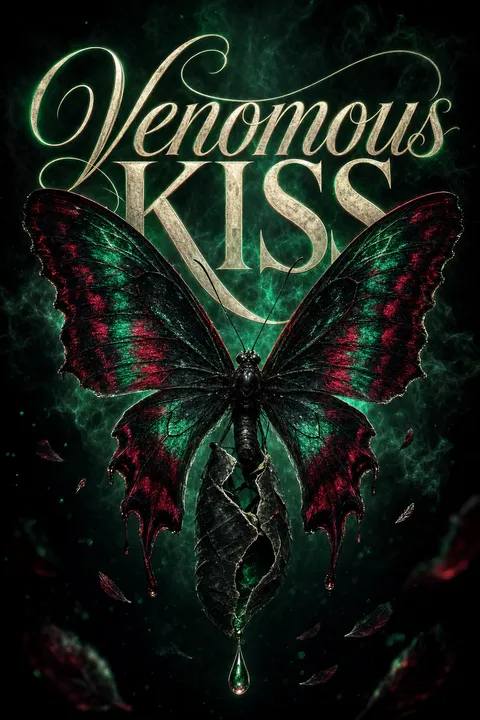


Plot Summary
Prologue
At a bar she attends weekly, Lilith1 nurses straight vodka and watches the crowd, imagining the ways she might kill them. She hates her job, her marriage, the sterile perfection her radio-host husband3 demands. One man is different: a magnetic stranger2 in a black pinstripe suit whose gaze seems to read souls.
She has never spoken to him, only observed the way others worship him. Tonight he catches her staring, smirks, and she flees, unsettled and thrilled. In her diary she records that he saw her too. It is the first flicker of recognition between two people who share a darkness the ordinary world would lock away.
The prologue establishes Lilith as an unreliable, self-aware narrator who frames homicidal fantasy as mundane routine, weaponizing the diary form for confessional intimacy. Smith front-loads the central tension: a woman performing wifely normalcy while a predatory hunger claws beneath. The unnamed stranger functions as mirror rather than rescuer, his soul-reading gaze promising the one thing her husband denies, being truly seen. The bar becomes a liminal confessional where she rehearses violence safely. By opening on mutual observation rather than action, the author signals that this romance runs on recognition and voyeurism, the erotic charge of two monsters sensing kinship across a crowded room.
The Poolside Betrayal
Numb and quietly unraveling, Lilith1 quits her job and drives home early. Through the patio doors she finds Deven,3 her polished radio-host husband, having sex with his co-host in the backyard pool he treasures. She feels no jealousy, only cold curiosity. She pours vodka, lifts a knife from the drawer, and calmly records them, imagining slitting both throats.
When Deven3 notices and scrambles out spouting excuses, blaming her for never needing him, she slides off her wedding ring, drives the blade into the expensive table, pats his cheek twice, and walks out barefoot into the night. The discovery does not shatter her. It liberates the darkness she has spent two married years pressing into a glass box.
Smith inverts the betrayed-wife trope: infidelity becomes emancipation rather than wound. Lilith's refusal of jealousy diagnoses a marriage already emotionally dead, exposing Deven's affair as pretext for her exit rather than its cause. The knife, fondled for its weight, materializes her interiority, transforming abstract intrusive thoughts into a physical object she can wield. Filming the affair reframes her as author of the narrative, not victim of it. The stabbed table and abandoned ring are twin acts of symbolic divorce. Crucially, her calm indicts Deven's demand for ladylike normalcy as the true violence, the slow suffocation of a woman whose nature required acknowledgment, not correction.
Revenge With a Stranger
The stranger from the bar, Reon,2 a suited billionaire who deadpans that he murders people, finally takes the stool beside her. Blunt and unshockable, she propositions him and leads him to the house she shares with Deven.3 In the dark living room he binds her wrists, wraps his belt around her throat, and promises to strangle her at the peak.
Deven3 storms in mid-act, red-faced and ranting, but Lilith1 refuses to stop, climaxing while her husband sputters. Reon2 dresses and leaves without thanks or ceremony, the best sex of her life. Rather than accept Deven's3 pleas for therapy and reconciliation, she packs a suitcase, mocks his flaccid apologies, and checks into a cheap hotel with nowhere else to go.
The revenge fantasy curdles into genuine chemistry, complicating simple retribution. Reon's confession of serial murder, met with Lilith's slow smile rather than fear, cements the recognition seeded in the prologue: here is a man who names her hunger without flinching. The belt asphyxiation literalizes her flirtation with mortality, eros braided with thanatos. Deven's intrusion, meant as her weapon, becomes irrelevant, revealing that revenge was never the point; sensation was. By leaving with only a suitcase and no financial safety net, Lilith chooses freefall over the padded cage. Smith frames self-destruction as self-rescue, a woman preferring the honest abyss to comfortable numbness.
Nashville at Ten Thousand Feet
Reon2 returns to the bar hoping to see her, and Lilith1 finds him in his car, claiming she lost her necklace. On impulse he invites her to fly with him to Nashville for work. She follows. In the cockpit he pilots the small plane while she rides his lap, the aircraft dipping as they climax together.
On the tarmac his sharp associate Hannah,10 married to Reon's2 sister Abigail,7 eyes the married interloper with suspicion. Lilith1 overhears that his aviation empire smuggles weapons and drugs beneath its legitimate cargo. In his apartment they drink and dance, and something unspoken deepens, though Reon2 privately wonders why this abrasive, hollow-eyed woman has burrowed so completely under his skin.
The airborne tryst literalizes the affair's altitude, two people untethered from ground rules and consequence. Reon flying while she rides him is a study in dominance and trust: he controls their survival even mid-ecstasy, and she finds that lethality arousing rather than alarming. The introduction of Hannah and Abigail humanizes Reon by network, hinting at a life beyond killing, while the gun-running exposition establishes stakes. Smith uses Hannah's disapproval as a Greek chorus warning of danger. Reon's internal bafflement marks the romance's inversion: the untouchable predator destabilized by the one woman who does not perform fear, curiosity, or the deference his money usually buys.
Blood in the Alley
Leaving a club, two men trap them in an alley, leering and demanding a turn with Lilith.1 Reon2 calmly offers to let them try, then crushes one's throat and drives the other's own knife into his stomach. Instead of recoiling, Lilith1 kneels and slides the blade out herself, drunk on the rush of blood and power.
Back in his apartment they burn their clothes in the fireplace, and Reon2 admits that killing is his favorite thing, recognizing his own darkness reflected in her. After bound, brutal sex, he retreats to the shower and coldly concludes he must kill her to protect his secret. But she has already slipped away, taking the murder weapon with her.
This is the mutual unmasking, the moment recognition becomes complicity. Lilith extracting the knife herself is her true christening: she is not merely aroused by violence but a participant, claiming the euphoria her father calls blood lust. Reon's post-coital calculus, that intimacy mandates murder, exposes the terrifying logic of his world, where witnesses cannot survive. Her preemptive flight with the weapon flips the power dynamic, arming herself against her own executioner and proving she reads him as clearly as he reads her. Smith stages attraction and annihilation as inseparable; the same intimacy that binds them is precisely what makes her disposable, and she knows it.
The Stalker Returns Masked
Twelve months later, divorced and consumed by the man she fled, Lilith1 weaponizes obsession. Wearing a dead college student's stolen identity and a rotating palette of hair colors, she works catering jobs to infiltrate the exclusive gatherings of a shadowy organization, the Forsaken Society. Her research confirms Reon2 is real: billionaire, killer, and something darker whispered only among servants.
At a men-only event she brushes past the group's masked leader, Soren,4 and his volatile enforcer, Arlo,5 before Reon2 himself materializes. He greets her by her old nickname, Caterpillar, and reveals he has tracked her every alias all along, having had her followed for a year. He is now publicly attached to a woman named Maya.6
The year gap reframes the affair as folie a deux: each has been secretly surveilling the other, mistaking stalking for devotion. Lilith's identity theft and chameleon hair dramatize a woman dissolving her self to chase a fixation, the caterpillar not yet transformed. The Forsaken Society enlarges the story from erotic thriller to conspiracy, a machine of judges and senators who murder with impunity. Reon's revelation that he never lost her collapses her fantasy of agency; she was prey the entire time she believed herself hunter. Maya's introduction injects romantic obstruction, but Smith's real tension is structural: two obsessives orbiting inside an institution that kills anyone who sees too much.
The Father Behind Bars
Shaken, Lilith1 drives to the prison where her father, Keenan,8 has served a life sentence since she was fourteen. She confronts him about her cravings, and he gently confirms she is like him: some people are simply born wrong. He urges her to seek out Arlo,5 an old friend who can help, and to collect money from her aunt.
Arlo5 proves to be both a celebrated criminal therapist and a Society member who instantly recognizes her telling eyes, agreeing to treat her only because he owes Keenan8 a debt. Meanwhile Lilith1 reconnects with her aunt Linda,9 sober for two years now, who presses a duffel bag stuffed with her father's8 hidden cash into her hands.
The narrative pivots from romance to origin story, locating Lilith's blood lust in inheritance and buried childhood trauma. Keenan's tenderness complicates the monster: he protected her by erasing himself from her birth certificate, love expressed through concealment. Arlo's dual role, healer and predator, embodies the Society's corruption of even therapeutic care; his help is transactional debt, not compassion. Linda's sobriety and the cash bag reframe the aunt from neglectful drunk to flawed guardian carrying her own grief. Smith suggests Lilith's pathology is not aberration but lineage, a genetic and environmental legacy. The quest for a cure ironically deepens her immersion in the very world she should flee.
Marked as Mine
Reon2 keeps circling Lilith1 despite the woman on his arm.6 He explains that Maya6 was assigned to him: unmarried Society members past thirty have brides chosen for them, and the Lord, Soren,4 hand-picked his own sister.
Cornering Lilith1 in a restroom, Reon2 fastens a broken-heart pendant engraved with the word Mine around her throat, marking her as claimed, and lifts his shirt to show the necklace she lost that first night, which he has secretly worn ever since. When Maya6 threatens to have Lilith1 removed and Soren4 demands the arranged marriage proceed, Maya6 simply moves into Reon's2 apartment, tightening a vise around a man who wants only the woman he refuses to release.
Possession becomes the love language of a man incapable of ordinary tenderness; the Mine pendant is both romantic vow and property tag, courtship indistinguishable from ownership. The revealed necklace, worn a year against his skin, exposes the sentimental core beneath Reon's lethality, recontextualizing his stalking as devotion he cannot articulate. The arranged-marriage machinery externalizes the couple's conflict: institutional control versus chosen obsession. Maya, weaponizing her brother's power, transforms from decorative fiancee into rival, and her move-in escalates domestic siege. Smith explores how patriarchal systems commodify even the powerful, Reon and Maya both pawns of Soren's will, making Lilith, the illegal outsider, paradoxically the only freely chosen thing in his caged life.
The Hunt Uncovered
Pressing her father8 again, Lilith1 extracts the buried truth: Keenan8 was not merely a killer but the fallen Lord of the Forsaken. Linda9 supplies the rest. The Society owns vast forest land where its members, judges, senators, police chiefs, gather twice a year to hunt human prey chosen by the reigning Lord.
Linda's9 lost love, Tuck, served as Keenan's8 second and died in exactly such a Hunt after alcohol loosened his tongue about Society secrets; Keenan8 himself selected him. The barbarism horrifies Lilith1 even as it explains the euphoria that has always lived in her. She now grasps the full machinery she has been circling, and how ruthlessly it erases anyone who threatens it.
The Hunt reveal is the novel's dark keystone, recasting the Society as an aristocracy of legalized predation, wealth as license to murder. Keenan's killing of Tuck, his own loyal second, to save himself dramatizes the survival logic that governs this world: bonds dissolve before self-preservation, and even the Lord is expendable. Linda's grief gives the abstraction a human cost, foreshadowing Lilith's own peril. Smith stages a generational echo: the daughter drawn toward the exact institution that consumed her father's second and, eventually, her father. Knowledge here is not empowerment but entrapment; the more Lilith understands, the more clearly she sees the cage closing, and how her bloodline made her both native and prey.
The Rooftop Vow She Forgot
Reon2 ends things with Maya6 after she conceals a heart condition and faints in his arms, telling Soren4 plainly he wants only Lilith.1 He arranges a private rooftop dinner high above the city. When Lilith's1 glass shatters and slices his hand, the sight of his blood undoes her, and he takes her against the railing, smearing her skin with it.
Then he offers her a drink. What she does not know is that he has drugged it and bribed an officiant in advance. Sensing the coming Hunt and distrusting Soren4 after rejecting Maya,6 Reon2 secretly, without her consent, makes Lilith1 his legal wife that night, then carries her home and tucks her unconscious into bed.
The rooftop crystallizes the romance's toxic paradox: profound intimacy achieved through violation. Reon's clandestine marriage is protective and predatory at once, a legal shield engineered through drugging and deception, love as unilateral conquest. Blood again mediates their desire, his wound becoming her aphrodisiac, sealing their shared pathology. The non-consensual vow is Smith's most ethically fraught beat, weaponizing marriage, the ultimate consent institution, as an act of control. Yet it is strategically prescient, positioning wifehood as the one Society loophole that can save her. The chapter interrogates whether protection extracted without agency is devotion or possession, refusing easy resolution and leaving the reader complicit in the dark-romance bargain.
Prey in the Forest
Soren4 personally delivers an invitation promising fifty thousand dollars, instructing Lilith1 to wear red and comfortable shoes and to hide it from Reon.2 Lured to a remote address, she finds only a decaying house, her tires slashed, and Soren4 waiting in a glass-shard mask. She is the chosen prey. He fires a shotgun at her feet and grants a ten-minute head start.
Barefoot, underdressed, and freezing, Lilith1 runs for hours through the black forest as masked men chant and close the distance. When a member named Hank stabs her arm and gloats about mutilating her face, she seizes his own knife and buries it in his throat, refusing to become one more body buried among the trees.
The Hunt's payoff transforms Lilith from observer of violence into its target, forcing her latent capability into survival. Soren's betrayal, revenge for Reon spurning Maya, exposes the personal pettiness beneath institutional ritual; the Hunt is not justice but a weaponized ego. Red, her signature color and blood's hue, becomes literal prey-marking, the aesthetic of desire turned funeral. Her killing of Hank is the caterpillar's decisive molt: no longer aroused spectator but agent of her own survival, wielding the very appetite that once frightened her. Smith stages empowerment through mortal threat, arguing that Lilith's darkness, so long a source of shame, is precisely what keeps her breathing when refinement would kill her.
Claimed to Survive
Reon2 arrives late, having broken into her empty apartment first, and learns at the tree line that Lilith1 is tonight's quarry. He finds Arlo5 wounded by her hand and tears through the woods screaming her name. When she stabs him too and bolts, he beheads the dying Hank so no one suspects a woman killed a member.
Cornering Soren,4 who has Lilith1 by the hair, Reon2 plants his axe in the face of another man who dares touch her and forces the pack to a standstill by invoking Society law: wives and children are untouchable. He declares Lilith1 his wife. Bound by their own rules, the members must let her live, though Soren4 vows the reckoning is not finished.
The rescue reframes the earlier non-consensual marriage as grim foresight, the loophole Reon planted now springing to save her. His decapitation of Hank to obscure Lilith's kill is protection through erasure, shielding her by rewriting the record, an act both tender and monstrous. Invoking the wife rule turns the Society's rigid patriarchy against itself; the same misogyny that bars women from membership also renders wives sacrosanct. Smith stages a chilling irony: Lilith is saved not by love recognized but by legal category. The standoff exposes the fragile theater of these rules, order maintained only because breaking it invites mutual destruction, and Reon proves willing to burn everything for her.
The Gift and the Confession
Home and healing under the care of Reon's2 nurse sister Abigail,7 Lilith1 craves control again, and Reon2 offers her a Hunt of her own as a wedding gift. After Deven3 torches her apartment and threatens Linda,9 Soren4 delivers the ex-husband3 as prey, an olive branch. In the forest Lilith1 wounds Deven3 with the axe, has Reon2 inside her while Deven3 weeps, then cleaves his chest open.
But at the parked cars Soren4 detonates the real wound: sixteen years ago Reon2 secretly filmed Keenan8 killing a man and handed the footage to Soren,4 engineering her father's imprisonment8 so Soren4 could seize the Lordship. The man she loves2 took her father8 from her.
The Deven Hunt delivers cathartic wish-fulfillment, the abuser dispatched by the woman he tried to diminish, sex and slaughter fused into ultimate reclamation. But Smith immediately weaponizes triumph, using the high to stage the deepest betrayal: Reon is the architect of Lilith's foundational trauma. The revelation retroactively poisons every intimacy, their meeting recast as cosmic cruelty, love built atop the wreckage he caused. Soren wields truth as a blade sharper than any axe, proving information is the Society's real currency. The beat interrogates whether love can survive when the beloved authored your original grief, positioning the couple's darkness as both bond and unbridgeable wound demanding reckoning.
The Butterfly's Dance
Devastated, Lilith1 retreats to Linda's9 house and refuses Reon,2 though Keenan,8 strangely, does not blame the man who caged him,2 insisting he only followed orders while a killer paid the price. Reon2 comes anyway, having already visited the prison to apologize and beg forgiveness.
Bleeding from roses he tore from Linda's9 bushes, he offers Lilith1 a dead butterfly sealed in glass and a gold ring set with a red ruby, then performs, clumsily, the mating dance she once told him female butterflies demand of their males. He confesses he loves her, that he breathes only for her. She forgives him, admits she loves him too, and finally goes home as his wife in full.
Resolution arrives not through absolution but acceptance of irreparable damage as the price of a matched soul. Keenan's refusal to blame Reon reframes forgiveness as pragmatic release, freeing Lilith to choose. The butterfly motif completes its arc: the caterpillar has transformed, and Reon, the predator who never begs, humbling himself in a ridiculous ritual, offers the ultimate proof of change. The thorn-blood on his hands echoes their entire blood-soaked courtship, love that always drew crimson. Smith closes the redemption on decidedly dark-romance terms: healing means not erasing the wound but building on it, two damaged people whose broken edges interlock precisely because neither demands the other be whole.
Epilogue
Two months on, Lilith1 and Reon2 live together in feral devotion, their public wedding set for the next day, a red dress waiting. Tonight they run naked through the Society forest, not to kill but to play, hunting each other for sport and sex, masks and necklace the only things she wears.
She now works for him, hustling clients so skillfully that Earl11 half fears for his job, and Reon2 cannot keep his hands off her. In a final diary entry, Lilith1 notes that her broken pieces were never as monstrous as she believed; they simply needed a match. This is her last confession to paper, because now she tells her husband2 everything, and he revels in it.
The epilogue converts the forest, site of terror and near-death, into a playground, reclaiming trauma through repetition on the couple's own terms. Hunting each other for pleasure reframes predation as intimacy, the violence that nearly destroyed Lilith now a shared erotic language. The abandoned diary is the psychological thesis: Lilith no longer needs a private repository for her darkness because she has found a witness who neither judges nor cures her but delights in her. Smith closes with the dark-romance ideal, belonging over redemption. Health is not becoming normal but being fully known. The interlocking broken pieces reject the myth that love completes us, insisting instead that it accommodates our worst.
Analysis
Venomous Kiss operates as dark-romance wish-fulfillment that interrogates the genre's own machinery. Smith's central proposition is that the deepest human need is not to be loved but to be seen without correction. Lilith's1 marriage to Deven3 fails not because he cheats but because he pathologizes her, demanding she replace dark thoughts with happy ones, a therapeutic gaslighting that mirrors how society polices women deemed too much. Reon2 offers the opposite: recognition, feeding her hunger rather than fearing it. The romance thus stages a fantasy of radical acceptance, however monstrous its terms. The novel is unflinching about those terms. Reon2 drugs Lilith1 into marriage, stalks her for a year, and is ultimately revealed as the architect of her father's imprisonment,8 the source of her foundational trauma. Smith refuses to sanitize this, forcing the reader into the genre's uncomfortable bargain: can love excuse authorship of another's suffering? The resolution answers not with absolution but with acceptance of irreparable damage, two people whose broken edges interlock precisely because neither demands wholeness. The Forsaken Society functions as sharp class critique, an aristocracy of judges and senators who murder for sport, their wealth purchasing legal immunity and even a private ritual of human hunting. Within this patriarchal machine, women are barred from membership yet, as wives, rendered untouchable, a contradiction Smith exploits: the same misogyny that excludes Lilith1 also saves her. The caterpillar-to-butterfly metaphor governs the emotional arc, reframing violence not as aberration but as metamorphosis, identity claimed rather than a defect cured. The abandoned diary in the finale delivers the thesis cleanly: healing meant finding a witness, not becoming normal. It is a story insisting that some people are matches, not medicine, and that belonging, even in the abyss, is its own dark salvation.
Review Summary
Venomous Kiss receives polarizing reviews with an overall 3.66 rating. Fans praise the chemistry between psychopath FMC Lilith and obsessive MMC Reon, calling their dark romance addictive with excellent spice, particularly a memorable plane scene. Supporters love Lilith's bold, unhinged personality and Reon's devotion. Critics cite poor writing quality, predictable plot, awkward nickname "Caterpillar," disjointed pacing, and lack of depth in the relationship. The secret society subplot divides readers. Many note the morally gray characters and revenge romance elements, though execution varies in reception.
People Also Read








Characters
Lilith
Darkly hungry narratorA copper-haired woman in her late twenties who has spent her life suppressing violent intrusive thoughts and a euphoric fascination with blood. Raised in chaos by her aunt9 after her father's imprisonment8, she married the safe, beige Deven3 hoping normalcy would tame her, and felt only slow suffocation. Blunt, unshockable, and observant to the point of predation, she people-watches and imagines killing. She confesses everything to a diary, terrified she is broken. Beneath the sardonic armor lies a lonely, motherless woman starving to be seen rather than corrected. Her arc traces a caterpillar's transformation: from a woman ashamed of her nature to one who claims her appetite as survival and identity, finding belonging in a man who feeds her darkness2.
Reon Holloway
Billionaire pilot killerA tattooed aviation magnate whose legitimate empire launders illegal guns and drugs, and whose true passion is hunting humans through a secret society. Commanding, unruffled, and allergic to friendship, which he considers liability, he channels his life into work and the kill. Charismatic worship follows him into every room. Emotionally he is a locked vault, expressing devotion only through possession, surveillance, and control, because tenderness is a language he never learned. Lilith1 destabilizes him utterly: the one woman who performs no fear and mirrors his hunger. Behind the granite exterior stirs an obsessive, sentimental core he cannot govern, symbolized by the necklace he wears against his skin. His arc bends a predator toward vulnerability.
Deven Davenport
Cheating beige husbandLilith's1 polished radio-host ex-husband, all white teeth and manicured lawns, who mistook her darkness for a fixable defect and demanded she perform ladylike normalcy. Insecure and needy, he cheats with his co-host, then blames Lilith1 for never needing him. Unable to accept rejection, he curdles from pathetic into dangerous, stalking and threatening her long after the divorce, convinced he can reclaim what he never understood.
Soren Nixon
Media mogul, Society LordThe powerful, legacy leader of the Forsaken Society and owner of a media empire. Cold, calculating, and addicted to the Hunt, he wields information and institutional authority as weapons. Fiercely protective of his sister Maya6, he arranges her marriage to Reon2 to keep a rival close. When crossed, his petty vengeance masquerades as ritual justice. He and Reon2 are matched powers, uneasy former brothers turned adversaries.
Arlo
Therapist and enforcerA renowned criminal therapist, restaurateur, and Society member with a taste for breaking pretty things. Volatile and manipulative, he agrees to treat Lilith1 only because he owes a debt to her father8. A beautiful, dangerous snake, as Keenan8 warns, he masks his own predatory nature behind clinical insight, offering genuine help and self-serving calculation in equal, unpredictable measure.
Maya
Arranged decorative fianceeSoren's4 beautiful model sister, assigned to Reon2 by the Society. Publicly the perfect ornament, she privately reveals a spoiled, threatening streak when Reon's2 attention strays. She conceals a heart condition that causes fainting spells. Desperate to be wanted by a man who never chose her, she weaponizes her brother's power4 against her rival.
Abigail
Reon's loyal sisterReon's2 younger sister, a warm nurse who switched from medical school to nursing. Married to Hannah10, she keeps her brother's2 dark secrets without judgment, showing up uninvited to care for him. Practical and affectionate, she becomes Lilith's1 unexpected ally, tending her wounds and nudging Reon2 toward admitting he loves.
Keenan
Imprisoned father, former LordLilith's1 father, serving life for murder, revealed as the fallen former Lord of the Forsaken Society. He hid his daughter's existence to protect her, erasing himself from her birth certificate. Loving in his ruthless way, he calls her his greatest treasure while acknowledging that some people, himself included, are simply born wrong.
Linda
Recovered guardian auntKeenan's8 sister, who raised Lilith1 through years of alcoholism after her mother died and her brother8 was jailed. Now two years sober and tending a thriving garden, she carries grief for Tuck, the love Keenan8 killed. She safeguards her brother's8 hidden money and offers Lilith1 belated, tender maternal care.
Hannah
Wary business associateReon's2 employee, married to his sister Abigail7 after briefly dating Reon2 herself. Sharp and disapproving, she warns Reon2 against the danger of entangling with a married outsider.
Earl
Trusted company managerThe salt-and-pepper-haired manager who runs Reon's2 aviation empire, loyal and hardworking, aware of some of Reon's2 affairs but not the Society. Soren4 later tries to poach him.
Plot Devices
The Stolen Knife
Talisman of shared darknessThe blade Reon2 plunges into an attacker in the alley, which Lilith1 then pulls free herself, becomes the story's central object. She flees with it, carries it everywhere for a year, sleeps with it beneath her pillow, and uses it during private, erotic reveries of that night. It embodies the blood lust she inherited from her father8 and the euphoria she first tasted with Reon2. The knife recurs at every pivotal threshold: her escape, her stalking, her survival in the forest, where she wields it to kill. As both murder weapon and love token, it materializes the couple's fusion of violence and desire more honestly than any words between them.
The Caterpillar Motif
Metaphor for transformationReon2 nicknames Lilith1 Caterpillar from their first meeting, insisting she has not yet emerged from her cocoon into what she truly is. He tattoos a caterpillar beneath a single butterfly on his hip after their Nashville trip. The metaphor threads the entire narrative, charting Lilith's1 evolution from a woman ashamed of her hunger and trapped in a glass box to one who claims her appetite as power. He later teaches her that female butterflies demand a mating dance from their males, a detail that pays off in the finale. The image reframes her darkness not as pathology but as natural metamorphosis, a becoming rather than a breaking.
The Mine Necklace
Token of possession and vowTwo necklaces mirror each other. Reon2 secretly keeps the pendant Lilith1 lost their first night, wearing it against his skin for a year as a private confession of attachment he cannot voice. Later he clasps a broken-heart pendant engraved with the word Mine around her throat, mimicking the Society's practice of marking claimed brides. The necklaces externalize the couple's toxic, tender bond: love expressed through ownership. Lilith1 wears the Mine pendant through the Hunt and beyond, and it becomes evidence of the marital claim that ultimately shields her, transforming a symbol of possession into an instrument of survival.
The Forsaken Hunt
Institutional death ritualThe Society's twice-yearly ritual in which masked members, judges, senators, police chiefs, hunt a human target across forest land they own, chosen by the reigning Lord. Introduced through whispered research and Linda's9 grief over Tuck, it establishes the machinery of impunity powerful men build to protect their darkest desires. The Hunt escalates from distant horror to personal peril when Lilith1 becomes the chosen prey, then is reclaimed and repurposed as a private ritual of empowerment and even play. It functions as the novel's engine of stakes, revelation, and the couple's ultimate shared language of intimacy through violence.
The Diary Confessions
Framing confessional deviceLilith1 opens many chapters with brief, wry diary entries addressed to a personified journal, confessing homicidal thoughts, desires, and fears that she is irreparably broken. The device grants intimate access to her unreliable, self-aware interiority and establishes the confessional tone before events unfold. It tracks her psychological arc across the book, from a woman terrified a therapist would institutionalize her to one at peace with her nature. The diary's final entry, declaring she no longer needs to confess to paper because she can now tell her husband2 everything, closes the frame and crystallizes the theme that belonging cures what suppression could not.
Download PDF
Download EPUB
.epub digital book format is ideal for reading ebooks on phones, tablets, and e-readers.








































