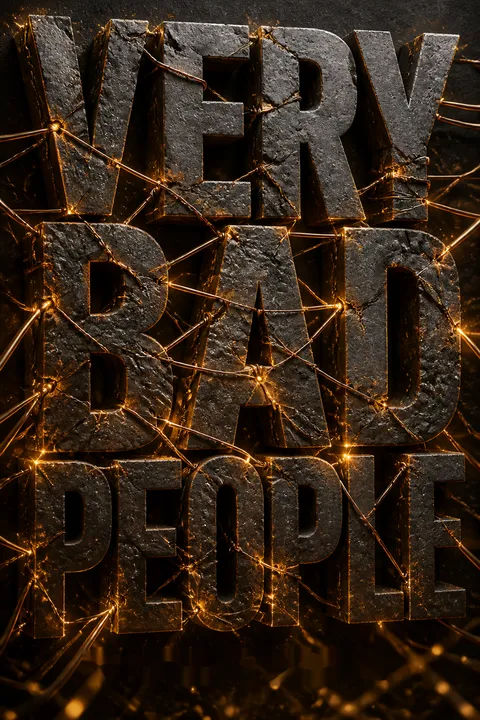

Key Takeaways
1. The Shadow Network: A Global System of Corruption
Like a spider’s web, this network is intricately constructed, alive to the faintest tremors of opportunity or risk, alerting the predators at its centre.
Invisible connections. Global Witness discovered an intricate "shadow network" connecting seemingly unrelated issues like war, environmental destruction, and grand corruption. This network operates virtually invisibly, linking conventional crime bosses with heads of state and captains of industry, enabling vast crimes. It thrives by exploiting the interfaces between legal and illegal, moral and immoral, making connections that allow illicit operations to run through society like an electric current.
Enablers of crime. This shadow network is supported by a "pinstripe army" of professionals who help conceal stolen wealth and facilitate illicit deals. These enablers include:
- Accountants
- Lawyers
- PR companies
- Company formation agents
- Real estate agents
They operate in secrecy jurisdictions, often in the US and UK, masking the true owners of companies and assets.
Globalized corruption. Corruption is not a victimless crime confined to "poor, hot and dusty countries." It kills millions through resource-funded wars and lack of basic services, while its perpetrators—criminals and corporations—and their enablers often live in plain sight in wealthy nations. This globalized industry undermines democracy, rule of law, and environmental protection, making everyone a victim to some extent.
2. Resource Curse: How Natural Wealth Fuels War and Poverty
This plunder was carried out not only by arch crooks like Minin but also by corporations that are household names, whose operations far from the public eye were, as we discovered, often no less criminal than those of the Mafia.
Paradox of Plenty. The "resource curse" describes how countries rich in natural resources like timber, diamonds, oil, and minerals often suffer from poverty, conflict, and corruption. Instead of benefiting citizens, this wealth is looted by elites and corporations, fueling wars and leaving populations in squalor. Global Witness found that the strategic aims of warring factions often rested on controlling these resources.
Corporate complicity. Many multinational corporations, including household names, engage in operations that are "no less criminal than those of the Mafia" when exploiting resources in vulnerable countries. They often turn a blind eye to, or actively conspire with, corrupt regimes to secure access to resources, making their shareholders rich while local populations remain impoverished. This dynamic was evident in cases from Cambodia to Angola and Nigeria.
Human cost. The exploitation of natural resources has devastating human consequences, from funding brutal civil wars to displacing communities and destroying livelihoods. The author's experience in a famine-stricken Cambodian village, where forest destruction led to drought and starvation, highlighted the direct link between resource plunder and human suffering. This reinforced Global Witness's mission to tackle the root causes of such plight.
3. Blood Diamonds: Exposing the Glamour's Dark Side
It was on that day that diamonds lost their lustre. The sparkling gems immortalized in De Beers’ hugely successful ‘A Diamond is Forever’ advertising campaign got a new name. Blood diamonds.
Diamonds of conflict. In the mid-1990s, UNITA rebels in Angola funded their brutal civil war by selling diamonds, generating a staggering US$3.7 billion between 1992 and 1997. De Beers, controlling 80% of the global diamond market, bought these stones to maintain its monopoly and high prices, regardless of their origin or human cost. This practice was also rampant in Liberia and Sierra Leone.
Industry opacity. The diamond industry was notoriously opaque, with deals sealed by handshakes rather than paperwork, making it difficult to trace the origin of stones. De Beers' own annual reports, however, inadvertently admitted to buying "two-thirds" of Angola's increased diamond supply, much of which came from UNITA-controlled areas. This circumstantial evidence was crucial in exposing their complicity.
Catalyzing change. Global Witness's 1998 report, A Rough Trade, exposed De Beers' role, coining the term "blood diamonds" and torpedoing the industry's glamorous image. This, coupled with escalating conflicts in Sierra Leone, galvanized international action. The Kimberley Process, an international certification scheme, was eventually established to stem the flow of conflict diamonds, demonstrating that even a small NGO could challenge a powerful global industry.
4. Warlords and Timber: Cutting the Economic Lifeline
Until Taylor was denied access to arms and money, the war would carry on.
Timber for terror. Charles Taylor, Liberia's warlord president, funded his brutal regime and regional wars by selling tropical timber to Europe and China. His logging companies, like Oriental Timber Company (OTC), were linked to arms trafficking and maintained private militias. Leonid Minin, a Ukrainian Mafia figure, initially facilitated these timber-for-arms deals, providing a rare window into the organized crime networks fueling West African conflicts.
Strategic sanctions. The UN Security Council imposed sanctions on Liberian diamonds in 2001, but initially overlooked timber, Taylor's main economic lifeline. Global Witness, working with local activist Silas Siakor, gathered evidence of the timber-for-arms trade, including shipping manifests and photos of arms being unloaded. This intelligence was crucial in convincing the UN to impose timber sanctions.
Dictator's downfall. Despite initial resistance from countries like France and China (major timber importers), the weight of evidence and sustained advocacy led to UN Security Council Resolution 1478 (2003), sanctioning Liberian timber exports. This cut Taylor's main funding source, leading to his resignation and flight into exile. The case highlighted how international pressure, even from a small NGO, could bring down a dictator and end a war.
5. Kleptocrats and Banks: The Global Laundromat for Stolen Wealth
If it was true that the president of one of the poorest countries in the world could syphon off all of his nation’s wealth into a personal bank account in the richest country in the world, then it would not just be a momentous injustice but a fantastic scandal.
Oil-fueled corruption. Equatorial Guinea, despite being Africa's third-largest oil exporter with rapid GDP growth, saw its population living on less than a dollar a day. President Teodoro Obiang Nguema Mbasogo declared oil revenues a "state secret," while his family amassed vast wealth. This exemplified the "resource curse," where national wealth is diverted to a corrupt elite.
Riggs Bank scandal. Global Witness exposed how hundreds of millions of dollars of Equatorial Guinea's oil wealth were stashed in Riggs Bank in Washington, D.C., under President Obiang's personal control. The bank also facilitated property purchases for Obiang and his family, including a US$2.6 million mansion. The US Senate's Permanent Subcommittee on Investigations (PSI) confirmed these findings, revealing Riggs's complicity in laundering money for Obiang and other dictators like Augusto Pinochet.
Consequences and continued fight. The PSI investigation led to Riggs Bank being fined US$25 million for money laundering and its eventual sale. However, Obiang's son, Teodoro Nguema Obiang Mangue (TNO), continued his lavish spending, acquiring luxury properties, jets, and cars worth hundreds of millions. This led to further investigations in France, Switzerland, and the US, resulting in asset seizures and convictions, yet TNO remains free, highlighting the ongoing challenge of holding powerful kleptocrats accountable.
6. No Safe Havens: Unmasking Anonymous Property Ownership
It is so easy to set up a company with hidden ownership in the UK that even a dead man can do it.
London's allure for dirty money. London became a prime destination for corrupt individuals to launder stolen wealth, particularly through high-end property. Global Witness's investigation into Maxim Bakiyev, son of Kyrgyzstan's former president, revealed how he acquired a £3.5 million Surrey mansion through an anonymously owned company registered in Belize, despite being accused of embezzling over a billion dollars.
The secrecy veil. The use of shell companies registered in secrecy jurisdictions (like Belize or the British Virgin Islands) creates an almost impenetrable labyrinth, obscuring the true beneficial owners of assets. This opacity allows criminals and corrupt elites to hide their ill-gotten gains, making it nearly impossible for law enforcement to trace the money.
Push for transparency. Global Witness, in collaboration with Transparency International, campaigned for public registers of beneficial ownership. Prime Minister David Cameron's pledge to publish data on foreign-owned properties in the UK, spurred by our "Mystery on Baker Street" report, was a significant victory. This advocacy, including an undercover sting on New York lawyers, contributed to the eventual passage of the Corporate Transparency Act in the US, aiming to end anonymous company ownership.
7. Slick Operators: Oil Giants' Complicity in Grand Corruption
The management of oil companies Eni and Shell...were fully aware of the fact that part of the $1.092 billion paid would have been used to compensate Nigerian public officials who had a role in this matter and who were circling their prey like hungry sharks…It was not mere connivance, but a conscious adhesion to a predatory project damaging the Nigerian state.
Nigeria's oil scandal. Nigeria's OPL 245 oil block, potentially worth half a billion barrels of oil, was illegally awarded to Malabu Oil and Gas, a company secretly owned by former petroleum minister Dan Etete. Shell and Eni later paid US$1.1 billion for the block, claiming they dealt only with the Nigerian government. However, court documents revealed this money was immediately transferred to Etete's companies, effectively legitimizing a corrupt deal.
Corporate knowledge. Leaked emails and wiretaps exposed that Shell executives, including former MI6 spies, knew the deal was corrupt and that money would flow to Nigerian officials, including President Goodluck Jonathan. Despite this, Shell and Eni proceeded, with internal communications acknowledging the "political/business principles issues involved." This demonstrated a conscious decision to engage in a "predatory project."
Justice denied (for now). The Milan public prosecutor brought a landmark case against Shell, Eni, and their top executives for international corruption. Despite convictions of middlemen and damning evidence, the main defendants were acquitted on a technicality, highlighting the immense difficulty of prosecuting powerful corporations. The OPL 245 block remains undeveloped, a symbol of how corruption can paralyze even the most lucrative projects, while Nigeria's poverty crisis deepens.
8. Frontline Defenders: The Deadly Cost of Protecting the Planet
It is a struggle that highlights the worst evils of the shadow network and puts a lie to any notion that corruption is a victimless crime.
Defenders under attack. Land and environmental defenders, often indigenous peoples, face extreme violence and murder for protecting their territories from logging, mining, agribusiness, and hydro-dams. Chut Wutty in Cambodia and Berta Cáceres in Honduras are emblematic of the hundreds killed annually, with their murders rarely investigated or prosecuted beyond the trigger men. This terror creates an environment ripe for handing out valuable business concessions.
State and corporate complicity. Governments, often bribed into "pleasant acquiescence," ruthlessly support corporate masters, while companies tolerate or even sanction violence against communities. In Honduras, DESA, a dam construction company, conspired with state security forces to harass and assassinate Berta Cáceres, who opposed their Agua Zarca dam project. This cold mechanics of a hit exposed the deep links between corporate greed and state-sanctioned violence.
Globalized struggle. The fight for land rights and environmental protection is a global struggle against resource colonialism, where the true environmental costs of industries are externalized onto taxpayers and the planet. Global Witness's annual reports on defender killings, like "Hidden Crisis" and "How Many More?", bring these stories to international attention, pushing for accountability and legal protections for those who are "one of our few hopes of survival."
9. The Power of Persistence: Small NGOs Driving Big Change
If you think you’re too small to have an impact, try going to bed with a mosquito in the room.
Unlikely beginnings. Global Witness started as three friends with a "crazy idea" to end the Cambodian civil war by cutting off timber funding. Despite being under-resourced and initially dismissed by governments and larger NGOs, their passion and unconventional methods led to unexpected successes. This "mosquito" approach proved that even small groups could challenge powerful adversaries.
Strategic advocacy. Global Witness's methodology involves meticulous undercover investigations, gathering irrefutable evidence, and strategically releasing findings to policymakers and the media. They leverage alliances with other NGOs, journalists, and sympathetic government officials to amplify their message and push for legislative change. This includes direct lobbying, public reports, and even attending AGMs of target companies.
Transformative impact. Over 25 years, Global Witness has played a pivotal role in:
- Exposing the Khmer Rouge timber trade.
- Co-founding the "Publish What You Pay" movement and the Extractive Industries Transparency Initiative (EITI).
- Catalyzing the Kimberley Process for conflict diamonds.
- Influencing US and EU mandatory disclosure laws for oil and mining companies.
- Pushing for Unexplained Wealth Orders and public registers of beneficial ownership in the UK.
Their work has shifted international policy, exposed the shadow network, and demonstrated that persistence, courage, and a commitment to justice can drive significant global change.
Review Summary
Reviews of Very Bad People are largely positive, averaging 4.05 out of 5. Readers praise the book's eye-opening revelations about global corruption, its thriller-like storytelling, and the inspiring work of Global Witness. Many found it reads like fiction despite being entirely true. Common criticisms include repetitiveness across chapters, overly dense detail regarding legal and regulatory frameworks, and a tendency to bog down in the mid-sections. Most agree it is essential, thought-provoking reading that exposes the staggering scale of corruption worldwide, even if the writing style occasionally hinders engagement.
People Also Read
Download PDF
Download EPUB
.epub digital book format is ideal for reading ebooks on phones, tablets, and e-readers.








































