Plot Summary
Guavas and Forbidden Roads
Darling and her friends—Bastard, Chipo, Godknows, Sbho, and Stina—sneak out of their shantytown, Paradise, to Budapest, a wealthy suburb, in search of guavas to quell their hunger. The journey is both a rebellion and a necessity, as food is scarce and rules are made to be broken. Their trek is filled with laughter, teasing, and the innocent bravado of children, but also with the shadow of Chipo's pregnancy, a silent wound among them. The contrast between the lush, empty streets of Budapest and the chaos of Paradise is stark, and the children's hunger is both literal and metaphorical—a yearning for more than what their world offers.
Paradise's Hungry Children
Life in Paradise is a daily struggle, but the children find ways to make it bearable. They play games, invent stories, and dream of escape, even as they witness violence, poverty, and the slow unraveling of their families. Chipo's silence, after her pregnancy, becomes a symbol of the things too painful to speak. The children's camaraderie is fierce, their laughter a shield against the harshness of their reality. Yet, beneath the surface, trauma simmers—abuse, hunger, and the loss of innocence. Their world is one where childhood is both a refuge and a battlefield.
Stolen Fruit, Stolen Dreams
The children's theft of guavas from Budapest is more than petty crime; it is an act of survival and a small rebellion against a world that denies them dignity. Their encounters with Budapest's residents—especially a foreign woman with a camera—highlight the gulf between their lives and those of the privileged. The woman's casual waste of food and her fascination with their poverty is both bewildering and infuriating. The children's hunger is not just for food, but for recognition, for a place in a world that seems to have forgotten them. Their dreams are as fragile as the fruit they steal.
Chipo's Silence and Secrets
Chipo's pregnancy, the result of incestuous abuse, is a secret that weighs heavily on the group. Her silence is both a coping mechanism and a cry for help. The children's attempts to understand and "fix" her condition—through games, rituals, and even a failed abortion—reflect their innocence and desperation. The adults' inability to protect or heal her is a damning indictment of a society in collapse. Chipo's pain becomes a shared burden, shaping the group's dynamics and foreshadowing the losses to come.
The World Beyond Paradise
The children's fascination with Budapest and the world beyond Paradise is fueled by stories of relatives abroad, tales of America, and the allure of a life without hunger. Darling dreams of joining her Aunt Fostalina in America, imagining a future of abundance and freedom. Yet, these dreams are tinged with skepticism and rivalry—who will escape, and who will be left behind? The world outside is both a promise and a threat, a place where identities can be remade but roots are easily lost.
Country-Game and New Names
The children invent "country-game," a ritualized play where they claim countries as their own, vying for the privilege of being the U.S.A. or Britain, never wanting to be "rags of countries" like Congo or their own Zimbabwe. This game is both a coping mechanism and a commentary on global hierarchies. Names and identities are fluid, and the desire for new names—new beginnings—is ever-present. The arrival of NGOs, with their gifts and cameras, further complicates the children's sense of self, as they become objects of pity and spectacle.
Real Change, Real Bones
The adults in Paradise are swept up in the fervor of elections, pinning their hopes on "change" and a new country. The children watch as their parents dress up, vote, and celebrate, only to be crushed by the reality that nothing changes. The cycle of hope and disappointment is relentless, and the children learn early that promises are easily broken. The memory of their old homes, bulldozed by the government, haunts them, and the new Paradise is built on loss and longing.
The Day the Adults Disappeared
On election day, the adults leave Paradise to vote, and the children are left behind, waiting anxiously for their return. The absence of authority is both liberating and terrifying. The children's hunger and fear grow as the hours pass, and their relief when the adults return is palpable. The episode underscores the fragility of their world, where the disappearance of adults—even briefly—threatens to unravel the thin fabric of security and belonging.
How We Appeared Here
The story of how the residents of Paradise "appeared" there is one of forced displacement, loss, and the struggle to rebuild. The adults mourn their lost homes, histories, and identities, while trying to create new lives from the rubble. The children inherit these wounds, growing up in a place that is both home and exile. The collective memory of past injustices—colonialism, war, betrayal—shapes their present, and the longing for a place to truly belong is ever-present.
The Failed Abortion
In a secret ritual, Darling and her friends attempt to abort Chipo's pregnancy using crude tools and folk remedies. Their actions are a mix of superstition, imitation of Western medical dramas, and genuine fear for Chipo's life. The intervention is interrupted by MotherLove, an adult who responds with unexpected compassion. The episode exposes the limits of childhood agency and the deep scars left by adult failures. It is a moment of reckoning, where innocence collides with the brutal realities of gender, violence, and powerlessness.
Fathers, Sickness, and Secrets
Darling's father returns from South Africa, ravaged by AIDS, a living symbol of broken promises and the cost of migration. His illness is shrouded in secrecy and shame, and Darling is forced to care for him, sacrificing her own childhood. The stigma of the "Sickness" isolates the family, and the community's whispers compound their suffering. The episode is a meditation on loss—of health, of dignity, of the possibility of return. It is also a portrait of the ways in which global crises—disease, economic collapse—are lived in the most intimate spaces.
Blak Power and Broken Homes
The children witness a violent land seizure in Budapest, where a mob drives out a white family, chanting slogans of black empowerment. The event is both exhilarating and terrifying, exposing the complexities of postcolonial identity and the dangers of mob justice. The children's fascination with the white family's home—their possessions, their photographs, their dog—reveals both envy and alienation. The episode is a microcosm of the larger forces tearing the country apart, and the children's complicity is both innocent and unsettling.
For Real: Violence and Games
At Bornfree's funeral, the children reenact his murder in a game that blurs the line between play and reality. Their performance is both cathartic and chilling, a way to process trauma and assert agency in a world where violence is omnipresent. The adults' silence and resignation are mirrored in the children's laughter and brutality. The episode is a meditation on the ways in which violence is internalized, normalized, and passed down through generations.
Leaving in Droves
As conditions worsen, families begin to leave Paradise in search of better lives abroad. The exodus is marked by grief, hope, and the knowledge that those who leave will never be the same. The ties to home—family, ancestors, land—are severed, and the pain of departure is both physical and spiritual. The chapter is a lament for a country in crisis, and a meditation on the price of survival.
Destroyedmichygen: Arrival in America
Darling arrives in "Destroyedmichygen" (Detroit, Michigan), joining Aunt Fostalina's household. The snow, the silence, and the abundance of food are both wondrous and alienating. Darling struggles to adapt, missing her friends and the chaos of Paradise. The promise of America is complicated by loneliness, cultural confusion, and the realization that escape does not guarantee happiness. The chapter is a portrait of the immigrant's double vision—caught between worlds, belonging to neither.
Becoming American, Losing Home
As Darling grows up in America, she learns to navigate new codes—language, fashion, technology—while struggling to hold onto her sense of self. Friendships with other immigrants and African Americans are fraught with misunderstandings and competition. The pressure to succeed, to send money home, and to "become American" is relentless. The longing for home is ever-present, but return becomes increasingly impossible. The chapter explores the costs of assimilation and the slow erosion of memory and belonging.
Weddings, Walls, and Words
At an African wedding in America, Darling observes the collision of cultures—traditions, expectations, and prejudices. The event is both a celebration and a site of tension, as old and new identities clash. Darling's struggles with language, etiquette, and belonging are mirrored in her relationships with family and friends. The walls between worlds—literal and metaphorical—are both protective and confining. The chapter is a meditation on the complexities of diaspora and the search for meaning in unfamiliar rituals.
Writing on the Wall
As a teenager, Darling grapples with the pressures of school, family, and the expectations of success. She rebels in small ways—defacing her bedroom wall, questioning her future, longing for home. The past is both a source of pain and a wellspring of identity. Skype calls with friends in Zimbabwe reveal the widening gulf between those who left and those who stayed. The chapter is a reckoning with loss, guilt, and the impossibility of return.
How They Lived
The novel closes with a chorus of voices—immigrants, exiles, survivors—reflecting on the journey from home to America. The costs of migration are tallied: lost languages, broken families, unfulfilled dreams. The struggle to belong, to make meaning, and to honor the past is ongoing. The chapter is both an elegy and a call to remember, to bear witness, and to imagine new ways of being in the world.
Analysis
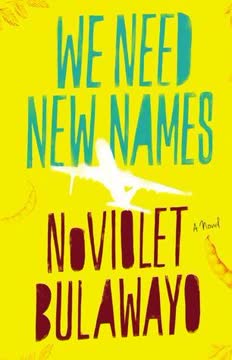
A modern tale of displacement, resilience, and fractured belongingWe Need New Names is a searing, inventive exploration of what it means to come of age amid the ruins of home and the uncertainties of exile. Through Darling's eyes, NoViolet Bulawayo captures the paradoxes of childhood—its capacity for joy and cruelty, its resilience and vulnerability—in a world marked by violence, poverty, and the relentless search for hope. The novel's structure mirrors the journey of migration: from the collective chaos of Paradise to the isolating abundance of America, from the certainty of hunger to the confusion of plenty. Bulawayo's use of language—playful, poetic, and unflinching—renders the familiar strange and the strange familiar, inviting readers to inhabit the liminal spaces between worlds. The book interrogates the costs of survival: the loss of language, the erosion of memory, the impossibility of return. Yet, it also affirms the power of imagination, community, and storytelling to create meaning amid chaos. In an era of mass migration and fractured identities, We Need New Names is both a lament and a celebration—a testament to the enduring human need for home, for names, and for new ways of belonging.
Review Summary
We Need New Names follows Darling, a young Zimbabwean girl, as she navigates poverty and political turmoil before immigrating to America. Reviewers praised Bulawayo's vivid portrayal of childhood in Zimbabwe and the immigrant experience in the US. Many found the first half of the novel, set in Zimbabwe, more engaging than the second half in America. Critics lauded Bulawayo's unique voice and powerful writing, though some felt the episodic structure lacked cohesion. Overall, the novel was widely appreciated for its fresh perspective on displacement and cultural identity.
People Also Read

Characters
Darling
Darling is the novel's narrator, a sharp, imaginative, and sensitive girl who grows up in the shantytown of Paradise, Zimbabwe. Her voice is both childlike and wise, capturing the humor and horror of her world. Darling's journey—from hungry child to immigrant teenager in America—is marked by longing, adaptation, and loss. She is fiercely loyal to her friends, haunted by her father's illness, and driven by dreams of escape. In America, she struggles with alienation, cultural confusion, and the slow erosion of her identity. Darling's psychological arc is one of survival, but also of mourning—for home, for innocence, and for the self she can never fully reclaim.
Chipo
Chipo is Darling's closest friend, whose pregnancy—resulting from abuse by her grandfather—renders her mute and withdrawn. Her silence is both a shield and a wound, and her presence haunts the group. Chipo's trauma is a microcosm of the violence inflicted on girls and women in times of crisis. Despite her suffering, she remains part of the children's games and rituals, embodying both vulnerability and resilience. In adulthood, she becomes a mother, her life shaped by the scars of her past and the burdens of survival.
Bastard
Bastard is the self-appointed leader of the group, loud, aggressive, and quick to assert dominance. His bravado masks deep insecurities—poverty, family instability, and the fear of being left behind. Bastard's competitiveness and cruelty are balanced by moments of vulnerability and loyalty. He dreams of escape, but is also deeply rooted in the world of Paradise. His psychological complexity reflects the ways in which trauma and deprivation shape masculinity and friendship.
Godknows
Godknows is the group's joker, quick with jokes and questions, often the target of teasing. His humor is a defense against the pain of poverty and exclusion. Godknows is curious, imaginative, and eager to please, but also deeply aware of his own marginalization. His longing for recognition and connection drives much of his behavior, and his eventual migration to Dubai is both a fulfillment of dreams and a continuation of the search for home.
Sbho
Sbho is known for her beauty and her big dreams—of living in Budapest, of marrying well, of escaping poverty. She is both admired and resented by her peers, and her confidence is a source of strength for the group. Sbho's optimism is tempered by the realities of their world, and her journey reflects the tension between aspiration and limitation. Her involvement in the failed abortion and her later pursuit of theater abroad highlight her desire for agency and transformation.
Stina
Stina is the most reserved of the children, often silent but deeply perceptive. He is physically strong, emotionally steady, and serves as a stabilizing presence. Stina's silence is not emptiness, but a form of resistance and wisdom. He is less interested in escape than in survival, and his loyalty to the group is unwavering. Stina's psychological depth is revealed in moments of crisis, where his actions speak louder than words.
Mother of Bones
Mother of Bones is Darling's grandmother, a figure of authority, wisdom, and superstition. She is deeply religious, fiercely protective, and haunted by the losses of the past. Her rituals, stories, and prayers are both a source of comfort and a reminder of the weight of history. Mother of Bones embodies the endurance of women in the face of displacement, poverty, and grief. Her relationship with Darling is complex—marked by love, discipline, and the struggle to hold onto tradition in a changing world.
Aunt Fostalina
Aunt Fostalina is Darling's aunt in America, a hardworking nurse who embodies both the promise and the cost of migration. She is determined, resourceful, and fiercely protective, but also burdened by exhaustion, loneliness, and the pressure to support family back home. Her pursuit of the American dream is marked by sacrifice—of health, relationships, and identity. Aunt Fostalina's psychological arc is one of adaptation, but also of longing for a home that is always out of reach.
Father
Darling's father is a shadowy figure, absent for much of her childhood as he seeks work in South Africa. His return, ravaged by AIDS, is a moment of reckoning for the family. He embodies the failures of masculinity, the costs of migration, and the stigma of illness. His decline is both a personal tragedy and a symbol of the broader collapse of the social fabric. Father's relationship with Darling is marked by distance, disappointment, and unspoken love.
MotherLove
MotherLove is a larger-than-life figure in Paradise, known for her generosity, her brewing, and her refusal to be broken by circumstance. She intervenes in moments of crisis—most notably in the failed abortion—offering compassion and understanding where others offer judgment. MotherLove's resilience and empathy make her a source of strength for the community, and her presence is a reminder of the power of kindness in a world marked by suffering.
Plot Devices
Child's Perspective and Voice
The novel's narrative is filtered through Darling's childlike voice, blending humor, naivety, and sharp observation. This perspective allows for a nuanced portrayal of trauma—violence, hunger, displacement—without descending into despair. The child's gaze renders the horrors of Paradise both immediate and surreal, and the transition to adolescence in America is marked by a loss of innocence and the acquisition of new forms of alienation. The voice is both a shield and a tool for survival, shaping the reader's emotional engagement with the story.
Games and Rituals
The children's games—country-game, Find bin Laden, Andy-over—are more than diversions; they are ways of making sense of a chaotic world. Through play, the children assert agency, negotiate hierarchies, and process trauma. The games are also vehicles for social commentary, reflecting global inequalities, the allure of the West, and the internalization of violence. Rituals—religious, cultural, invented—serve as anchors in a world of flux, offering both comfort and critique.
Migration and Double Consciousness
The novel employs migration as both plot and metaphor, tracing the journey from Paradise to America and the resulting fragmentation of self. Darling's double consciousness—caught between worlds, languages, and identities—is mirrored in the structure of the novel, which shifts from collective to individual, from home to diaspora. The tension between longing for home and the impossibility of return is a central motif, explored through memory, language, and the body.
Collective Voice and Polyphony
At key moments, the narrative shifts from Darling's individual perspective to a collective "we," giving voice to the experiences of the broader community—immigrants, exiles, survivors. This polyphonic structure situates Darling's story within a larger tapestry of displacement, loss, and resilience. The collective voice is both elegiac and defiant, bearing witness to histories that are often silenced or forgotten.
Symbolism and Motifs
The novel is rich in symbolism—guavas as hunger and longing, names as identity and aspiration, walls as barriers and canvases for memory. The recurring motif of the mask, the clock, and the map of Africa in Darling's American bedroom encapsulates the struggle to reconcile past and present, home and exile. The use of language—slang, code-switching, deliberate misspellings—serves as both a marker of belonging and a site of resistance.








































