Ideas clave
1. Nuestro Ser Esencial: La Conciencia Inmutable Detrás de la Experiencia
Nuestro ser esencial o ser es anterior e independiente de los pensamientos y sentimientos. Nuestro ser esencial no necesita ser hecho independiente mediante esfuerzo o práctica. Es siempre y ya inherentemente libre. Solo es necesario reconocerlo como tal.
Nuestra verdadera naturaleza es pura conciencia. Esta conciencia es el trasfondo constante e inmutable de todas nuestras experiencias. No se ve afectada por pensamientos, sentimientos o sensaciones, así como una pantalla no se altera por las imágenes que en ella se proyectan. Esta conciencia es:
- Siempre presente: nunca llega ni se va
- Ilimitada: no tiene fronteras ni forma
- Inherentemente pacífica: no puede ser perturbada por la experiencia
- Incondicionalmente plena: no necesita nada de la experiencia para completarse
Nuestro ser esencial no es algo que debamos crear o alcanzar. Ya es quien somos, siempre presente y libremente disponible. El desafío no está en conseguirlo, sino en reconocer lo que ya está aquí.
2. El Velo de la Experiencia: Cómo Perdemos Contacto con Nuestra Verdadera Naturaleza
El sufrimiento es el precio que pagamos por este olvido. Es un llamado de nuestro ser a nuestro ser, diciendo: “¡Date la vuelta! Vuelve a mí. Yo soy lo que buscas, pero me buscas en la dirección equivocada.”
Olvidamos nuestra verdadera naturaleza a través de la identificación. Cuando nos absorbemos demasiado en el contenido de nuestra experiencia — pensamientos, sentimientos, sensaciones y percepciones — perdemos temporalmente de vista nuestro ser esencial. Es como si una pantalla se concentrara tanto en la película que proyecta que olvidara que es una pantalla.
Las consecuencias de este olvido incluyen:
- La sensación de ser un yo separado y limitado
- Sentimientos de carencia, vulnerabilidad e incompletitud
- El surgimiento del miedo, el deseo y el sufrimiento
- Una búsqueda constante de plenitud en objetos y experiencias externas
Este sufrimiento y búsqueda no son castigos, sino recordatorios. Son llamados de nuestro verdadero ser, instándonos a recordar nuestra naturaleza esencial y a regresar a la paz y plenitud que siempre están presentes en nuestro núcleo.
3. El Camino Interior: Reconociendo Nuestro Ser como Pura Conciencia
Para remediar esto, primero hacemos una distinción entre el conocedor y lo conocido, el que experimenta y lo experimentado, el testigo y lo presenciado. Más adelante colapsaremos esta distinción, pero para quien está perdido en la experiencia, que se identifica con cada pensamiento, sentimiento, actividad y relación pasajera, es primero necesario hacer la distinción.
El camino interior implica discriminación. Este enfoque nos invita a distinguir entre el contenido de nuestra experiencia y la conciencia en la que toda experiencia aparece. Es un proceso de notar que somos conscientes de pensamientos, sentimientos y sensaciones, pero no somos esas experiencias mismas.
Aspectos clave de esta práctica incluyen:
- Reconocer que somos el elemento que conoce en toda experiencia
- Percibir el sentido de “ser yo mismo” o “yo soy” que persiste independientemente de lo que experimentemos
- Posar la atención en este sentido de ser, en lugar de en los objetos de la experiencia
- Permitir que la paz y plenitud de nuestra verdadera naturaleza se revelen
Este proceso no consiste en rechazar o suprimir la experiencia, sino en reconocer nuestra verdadera identidad como el espacio consciente en el que toda experiencia ocurre.
4. El Camino Exterior: Ver Toda Experiencia como Manifestación del Ser
Toda experiencia es un color temporal del ser incondicionado, ilimitado y autoconsciente. La experiencia es la actividad del ser; el ser es la experiencia en reposo.
Toda experiencia es una modulación del ser puro. Una vez que hemos reconocido nuestra naturaleza esencial como conciencia, podemos comenzar a ver que toda experiencia no está separada de esta conciencia, sino que es en realidad su actividad o expresión. Es como reconocer que todos los personajes y eventos de una película están hechos de la misma pantalla.
Este entendimiento conduce a:
- Ver la unidad que subyace a toda aparente diversidad
- Reconocer la naturaleza sagrada de toda experiencia
- Experimentar el amor como el reconocimiento del ser compartido
- Percibir la belleza como el brillo del ser en la forma
Este camino exterior no niega el camino interior, sino que lo complementa. Juntos conducen a una comprensión completa de la naturaleza no dual de la realidad, donde nuestro ser y el mundo se reconocen como un todo sin fisuras.
5. Felicidad y Paz: Nuestro Estado Natural de Ser
La felicidad es la misma naturaleza de nuestro ser. Es el conocimiento que nuestro ser tiene de sí mismo. El conocimiento del ser es en sí mismo felicidad.
Nuestra verdadera naturaleza es inherentemente pacífica y feliz. Así como una pantalla nunca se altera por el drama de una película, nuestro ser esencial nunca está realmente agitado ni carente. La paz y felicidad que buscamos no son estados que debamos alcanzar, sino nuestra condición natural cuando no nos identificamos con experiencias temporales.
Puntos clave sobre esta paz y felicidad inherentes:
- Son incondicionales, no dependen de circunstancias externas
- Están siempre presentes, aunque a menudo pasen desapercibidas
- Brillan en momentos de amor, belleza y profunda relajación
- Se acceden reconociendo y reposando en nuestra verdadera naturaleza
Este entendimiento nos invita a dejar de buscar la felicidad en objetos y experiencias externas, y en cambio a reconocer la plenitud y paz que siempre están presentes en nuestro núcleo.
6. El Viaje del Autodescubrimiento: De Destellos a Establecimiento
Una vez que hemos tenido ese primer destello, nuestra vida nunca vuelve a ser la misma. Hemos sido perturbados por algo que se reconoce a la vez como nuevo y familiar.
La autorrealización suele ser un proceso gradual. Aunque algunos pueden tener un reconocimiento súbito y completo de su verdadera naturaleza, para la mayoría es un camino de destellos repetidos y establecimiento paulatino. Este proceso puede compararse con conocer a un nuevo amigo que se vuelve cada vez más familiar e importante en nuestra vida.
El viaje típicamente implica:
- Destellos o intuiciones iniciales de nuestra verdadera naturaleza
- Curiosidad e investigación, que conducen a experiencias más profundas
- “Regresos” repetidos a nuestro ser esencial
- Erosión gradual del hábito de identificarnos con la experiencia
- Estabilidad creciente en reconocer y reposar como nuestra verdadera naturaleza
A medida que nos establecemos más en nuestra verdadera naturaleza, sus cualidades de paz, felicidad y amor comienzan a permear todos los aspectos de nuestra experiencia y expresión.
7. Vivir desde Nuestra Verdadera Naturaleza: Transformando la Experiencia y las Relaciones
Una mente acostumbrada a reposar frecuentemente en su esencia se vuelve cada vez más saturada de paz. Cuando tal mente regresa a la experiencia, no deja esa paz atrás. La lleva consigo, y sus actividades de pensar, sentir, percibir, actuar y relacionarse se convierten en expresión, comunicación y celebración de esa paz.
La autorrealización transforma toda nuestra vida. A medida que nos establecemos más en nuestra verdadera naturaleza, este reconocimiento comienza a impregnar todos los aspectos de nuestra experiencia y expresión. No se trata de escapar del mundo, sino de vivir en él desde un lugar de profunda comprensión y paz.
Esta transformación se manifiesta como:
- Mayor ecuanimidad ante los altibajos de la vida
- Incremento de la compasión y comprensión hacia los demás
- Expresión natural de amor y bondad
- Sensación de facilidad y fluidez en nuestras actividades
- Apreciación más profunda por la belleza de la vida
Vivir desde nuestra verdadera naturaleza no significa que dejemos de experimentar emociones difíciles o desafíos. Más bien, significa que los enfrentamos desde un lugar de conciencia abierta y espaciosa, permitiendo que se muevan a través de nosotros sin quedar atrapados en la identificación o resistencia.
8. El Sagrado ‘Yo’: Comprendiendo la Naturaleza Divina de Nuestro Ser
El nombre ‘yo’ no es el nombre que una persona da a su ser; es el nombre que la conciencia se da a sí misma y debe reservarse solo para la conciencia.
El ‘yo’ es el nombre de lo divino. Cuando usamos la palabra ‘yo’, no nos referimos a un yo personal limitado, sino al ser infinito y autoconsciente que es nuestra verdadera naturaleza. Este ‘yo’ es el mismo en todos los seres, la conciencia universal que las religiones han llamado Dios.
Comprender la naturaleza sagrada del ‘yo’ implica:
- Reconocer que nuestro sentido de ‘yo’ o ‘ser yo mismo’ es la presencia de lo divino dentro de nosotros
- Tener cuidado de no limitar este ‘yo’ identificándolo con estados o cualidades temporales
- Usar el sentido de ‘yo’ o ‘yo soy’ como una puerta hacia nuestra verdadera naturaleza
- Ver que nuestro autoconocimiento es el autoconocimiento de Dios
Este entendimiento nos invita a acercarnos a nuestro sentido del ser con reverencia y a usarlo como un recordatorio constante de nuestra verdadera naturaleza divina. Une la aparente brecha entre lo personal y lo universal, mostrando que nuestro ser más profundo es uno con la realidad última.
Resumen de reseñas
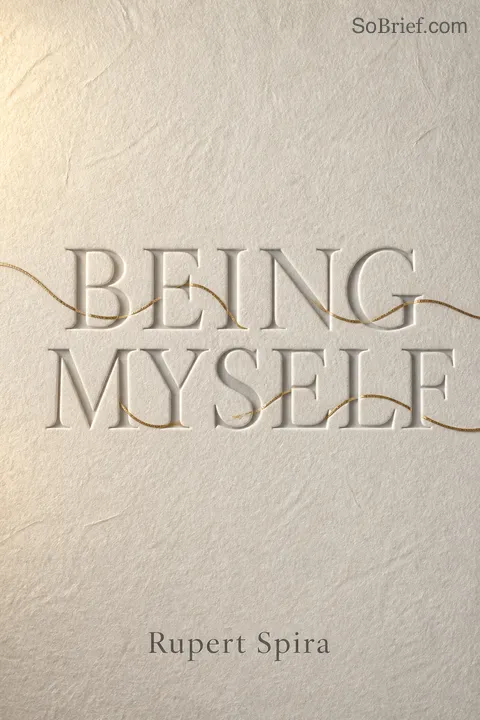
Siendo Yo Mismo, de Rupert Spira, ha recibido elogios por sus enseñanzas claras y accesibles sobre la no-dualidad. Los lectores valoran su enfoque sencillo pero profundo de la espiritualidad, que desmitifica la iluminación y subraya la paz y felicidad inherentes en nuestro interior. Muchos consideran que este libro es transformador, pues ofrece una perspectiva renovada sobre la autoindagación y la conciencia. Aunque algunos señalan similitudes con sus obras anteriores, la mayoría lo ve como una excelente introducción a la filosofía de Spira. Unos pocos lectores encontraron el contenido repetitivo o difícil, pero en general, el libro es muy recomendable para quienes buscan una comprensión espiritual.
Preguntas frecuentes
What is "Being Myself" by Rupert Spira about?
- Non-dual understanding: The book explores the essential, non-dual understanding that our true nature is awareness or being, which is ever-present and unchanging.
- Direct experience of self: It guides readers to recognize the sense of "being myself" as the most intimate and familiar experience, underlying all thoughts, feelings, and perceptions.
- Liberation from suffering: Spira explains how suffering arises from identifying with the content of experience rather than with our essential being, and how true peace and happiness are found by returning to our self.
- Practical contemplations: The book is structured as a series of contemplative meditations, inviting readers to directly investigate and experience their own being.
Why should I read "Being Myself" by Rupert Spira?
- Universal longing for happiness: The book addresses the universal search for peace and happiness, showing why it cannot be fulfilled through external experiences.
- Clear, accessible language: Spira uses simple, direct language and relatable metaphors, making profound spiritual insights accessible to all readers.
- Experiential approach: Rather than offering abstract philosophy, the book provides practical contemplations and meditations to help readers realize their true nature.
- Timeless wisdom: It draws on the perennial philosophy found in all major spiritual traditions, making it relevant regardless of religious or cultural background.
What are the key takeaways from "Being Myself" by Rupert Spira?
- The sense of "being myself" is the ever-present background of all experience and is our true nature.
- Suffering arises when we identify with the changing content of experience (thoughts, feelings, sensations) rather than with our unchanging being.
- True peace and happiness are inherent in our essential self and are revealed when we recognize and rest in our being.
- Enlightenment is not an extraordinary attainment but the simple recognition of our original, unconditioned self.
- The "I" or "I am" is the sacred name of our true self, which is shared by all beings and is identical with God's presence.
How does Rupert Spira define the "sense of being myself" in "Being Myself"?
- Ever-present awareness: The "sense of being myself" is the most ordinary, intimate, and familiar experience, present in all situations regardless of external circumstances.
- Unchanging background: It is the constant factor that remains the same while thoughts, feelings, and experiences change.
- Not limited by experience: Our essential self is not defined by any particular thought, feeling, or relationship; it is transparent, empty, silent, and still.
- Source of peace and happiness: When we recognize our self as this unconditioned being, we naturally experience peace and fulfillment.
What is the main cause of suffering according to "Being Myself" by Rupert Spira?
- Identification with experience: Suffering arises when we allow our essential self to become mixed with or identified with the qualities of experience (thoughts, feelings, sensations).
- Creation of the separate self: This identification gives rise to the sense of being a limited, vulnerable, and incomplete separate self or ego.
- Chronic sense of lack: The separate self lives in a state of insufficiency, always seeking fulfillment in external objects, relationships, or achievements.
- Forgetting our true nature: The root cause of suffering is the overlooking or forgetting of our true, unlimited being.
How does "Being Myself" by Rupert Spira describe the process of recognizing our true nature?
- Disentangling from experience: The process involves seeing that our essential self is prior to and independent of all thoughts, feelings, and perceptions.
- Two paths of meditation: Spira describes an inward-facing path (discriminating between self and experience) and an outward-facing path (recognizing the unity of self and all experience).
- Direct recognition: The book encourages readers to rest in the feeling of "being myself" or the knowledge "I am," allowing being to emerge from the background.
- Gradual or sudden unveiling: For most, this recognition happens gradually through repeated glimpses, but for some, it may occur suddenly and completely.
What is the significance of the "I" or "I am" in "Being Myself" by Rupert Spira?
- Sacred name of being: "I" or "I am" is the name that awareness gives to itself, and is considered the divine name or the name of God.
- Portal to true nature: The feeling of "being myself" or the knowledge "I am" is a direct opening to our essential, unlimited being.
- Universal and impersonal: The "I" is not personal or individual; it is the same infinite, self-aware being in all people.
- Foundation of meditation and prayer: Resting in the "I am" is described as the highest meditation and the essence of spiritual practice.
How does "Being Myself" by Rupert Spira relate individual experience to the Absolute or God?
- Non-dual identity: The book asserts that the individual "I" and the Absolute "I Am" are essentially the same; our being is God's being.
- Manifestation and reality: All experiences, objects, and selves are temporary names and forms of the one infinite, indivisible being.
- Love and unity: The recognition that we share our being with all others is the basis of love, compassion, and the resolution of conflict.
- Spiritual traditions: Spira draws parallels with teachings from Advaita Vedanta, Christianity, Sufism, and other traditions, showing the universality of this insight.
What practical methods or contemplations does Rupert Spira recommend in "Being Myself"?
- Resting in being: The primary practice is to rest in the feeling of "being myself" or the knowledge "I am," allowing attention to relax from the content of experience.
- Self-inquiry: Readers are encouraged to investigate the nature of the self by asking questions like "Who am I?" and tracing the sense of "I" back to its source.
- Twofold meditation: The book suggests both turning away from experience to recognize the self (inward path) and embracing all experience as a modulation of being (outward path).
- No effort required: Ultimately, no special effort, practice, or discipline is needed—simply recognizing and being knowingly the self that we already are.
How does "Being Myself" by Rupert Spira address the concepts of enlightenment, peace, and happiness?
- Enlightenment as recognition: Enlightenment is not a special state or attainment, but the simple revelation of our original, unconditioned being.
- Peace and happiness as nature: Peace and happiness are not experiences to be gained, but the very nature of our self when it is not veiled by identification with experience.
- Not dependent on circumstances: True happiness is unconditional and ever-present, not caused by or dependent on external situations or achievements.
- Gradual establishment: While the initial recognition may be brief, with repeated return to our being, peace and happiness become established and permeate all aspects of life.
What are the most important concepts or metaphors in "Being Myself" by Rupert Spira?
- Screen and movie: Our being is like a screen on which the movie of experience plays; the screen is never affected by the images.
- Actor and role: The analogy of John Smith playing King Lear illustrates how we assume the qualities of experience without ever ceasing to be our true self.
- Watercolour and paper: The sense of "being myself" is like the white paper beneath a painting, always present even if partially obscured.
- Space in a room: Awareness is compared to space, which pervades but is not limited by the room or its contents.
What are the best quotes from "Being Myself" by Rupert Spira and what do they mean?
- "The sense of ‘being myself’ is our most ordinary, intimate and familiar experience. It pervades all experience, irrespective of its content."
This highlights that our true self is always present, regardless of what we are experiencing. - "Enlightenment is, as such, not a new or extraordinary experience to be attained or acquired; it is simply the revelation of the original nature of our self or being."
Enlightenment is not about gaining something new, but recognizing what has always been true about ourselves. - "The name ‘I’ or the knowledge ‘I am’ refers to the element of experience that is unchanging and unchangeable."
The "I am" is the constant, unchanging reality behind all experiences and is the key to self-realization. - "Do not allow experience to persuade you that you are anything other than ever-present, inherently peaceful, unconditionally fulfilled being, the being you share with everything and everyone."
This is a reminder not to let temporary experiences define or limit our true nature, which is shared by all. - "The knowledge ‘I am’ is infinite consciousness shining in each of our finite minds. The feeling of ‘being myself’ is God’s presence pervading our hearts."
This quote encapsulates the central teaching that our individual sense of self is, in essence, the presence of the divine.
La esencia de la meditación Serie
Sobre el autor

Descargar PDF
Descargar EPUB
.epub digital book format is ideal for reading ebooks on phones, tablets, and e-readers.








































