
Resumen de la trama
Perdido en la selva oscura
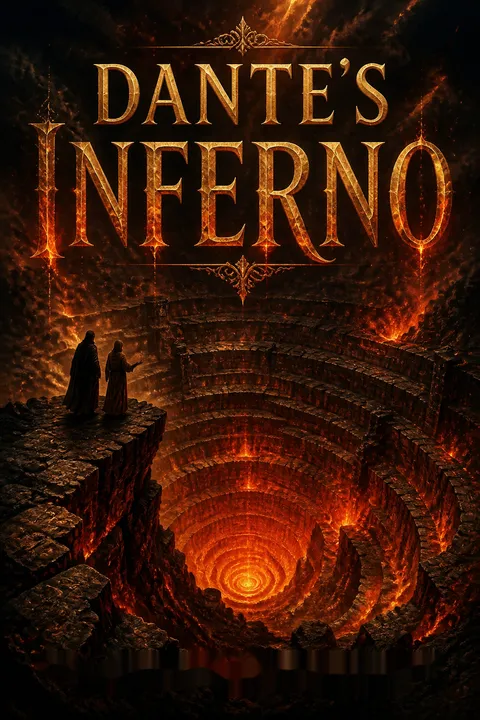
En un bosque oscuro y desalentador, Dante, el protagonista, se da cuenta de que se ha desviado del camino recto. Abrumado por el miedo y la confusión, se topa con tres bestias terroríficas que le bloquean el paso. Justo cuando la desesperación empieza a apoderarse de él, se le aparece el espíritu del poeta romano Virgilio, ofreciéndole guía y una vía de escape. Virgilio le explica que ha sido enviado por Beatriz, la amada de Dante, para conducirlo a través del Infierno y, en última instancia, hacia la redención. Este encuentro sienta las bases del viaje de Dante por los reinos del más allá, comenzando con el descenso al Infierno.
Guiado por Virgilio
Virgilio conduce a Dante hacia la entrada del Infierno, explicándole la estructura y el propósito del reino infernal. A medida que se acercan a las puertas, el temor invade a Dante, pero Virgilio lo tranquiliza, enfatizando la importancia de este viaje para su crecimiento espiritual. La pareja cruza el umbral, adentrándose en un mundo de castigo eterno diseñado para reflejar los pecados de sus habitantes. La sabiduría y la experiencia de Virgilio le otorgan a Dante la fuerza necesaria para enfrentar los horrores que le aguardan, mientras inician su descenso por los nueve círculos del Infierno.
Se abren las puertas del Infierno
Las puertas del Infierno llevan la ominosa inscripción: «Abandonad toda esperanza, los que aquí entráis». Al cruzar Dante y Virgilio, los reciben los gritos de angustia de los condenados. El primer círculo, el Limbo, alberga a los paganos virtuosos y a las almas no bautizadas que viven en un estado de constante anhelo. A Dante le conmueve el dolor de estas almas, a quienes se les niega la presencia de Dios a pesar de su rectitud. Este primer encuentro con los condenados define el tono del viaje, destacando los temas de la justicia y la retribución divina.
Círculos del pecado
Dante y Virgilio continúan su viaje, avanzando a través de los distintos círculos del Infierno, cada uno de los cuales representa un pecado diferente. Desde los lujuriosos hasta los glotones, pasando por los iracundos y los herejes, cada círculo es una representación vívida de las consecuencias del pecado. Dante se siente a la vez horrorizado y fascinado por los castigos impuestos a los condenados, los cuales están hechos a la medida de sus transgresiones terrenales. A medida que descienden a mayor profundidad, la atmósfera se vuelve cada vez más opresiva, reflejando la gravedad de los pecados y el sufrimiento de las almas.
El encuentro con los condenados
A lo largo de su viaje, Dante y Virgilio se encuentran con numerosas almas, cada una con una historia que contar. Estas interacciones ofrecen una profunda comprensión sobre la naturaleza del pecado y la condición humana. Dante se conmueve con los relatos de dolor y arrepentimiento, llegando a sentir compasión por los condenados a pesar de sus culpas. Estos encuentros funcionan como un espejo para Dante, obligándolo a confrontar sus propios defectos y las posibles consecuencias de sus actos. El viaje se convierte así en una profunda exploración de la moralidad y la redención.
El lago helado
Al acercarse al noveno círculo, Dante y Virgilio se encuentran en un páramo helado, donde los traidores yacen atrapados en el hielo. Este último círculo está reservado para los pecadores más deplorables: aquellos que traicionaron a sus benefactores. En el centro de este reino gélido se topan con Lucifer, atrapado en un tormento eterno. La visión del ángel caído sirve como un crudo recordatorio de las consecuencias de la soberbia y la rebelión contra la autoridad divina. Esta escena estremecedora marca la culminación del viaje de Dante por el Infierno.
Ascenso hacia la esperanza
Tras haber sido testigos de todo el espectro del pecado y sus consecuencias, Dante y Virgilio inician su ascenso hacia la superficie. El viaje por el Infierno ha sido una experiencia transformadora para Dante, infundiéndole un renovado sentido de propósito y entendimiento. Al salir de las profundidades, Dante se llena de esperanza y determinación para continuar su camino espiritual. El ascenso simboliza la posibilidad de la redención y el poder de la gracia divina, preparando el escenario para la siguiente etapa del viaje de Dante a través del Purgatorio y, finalmente, hacia el Paraíso.
Analysis
Exploración de la moralidad y la redenciónEl Inferno de Dante es una profunda exploración de la condición humana, la moralidad y la posibilidad de redención. A través de su viaje, Dante confronta las complejidades del pecado y las consecuencias de las propias acciones. La narrativa funciona como una advertencia, instando a los lectores a reflexionar sobre sus propias vidas y las decisiones que toman. El viaje alegórico de la historia permite un examen profundo de temas teológicos y filosóficos, convirtiéndola en una obra atemporal que sigue resonando en el público moderno. En última instancia, el viaje por el Infierno ofrece esperanza, destacando el poder de la gracia divina y el potencial de crecimiento espiritual y redención.
Resumen de reseñas
Infierno, la primera parte de la Divina comedia de Dante, es ampliamente elogiada por su vívida representación del infierno y su brillantez poética. Los lectores aprecian los imaginativos castigos de Dante, su complejo simbolismo y sus toques personales. Muchos lo encuentran sorprendentemente accesible y relevante a pesar de su antigüedad. Con frecuencia se destacan la estructura del poema, su profundidad alegórica y su impacto cultural. Las traducciones varían: algunas conservan el esquema de rima original mientras que otras priorizan la legibilidad. Los lectores suelen recomendar notas complementarias para apreciar plenamente el contexto histórico y literario de la obra.
También leyeron


Characters
Dante
Dante, el protagonista, es un poeta y buscador de la verdad que se encuentra perdido en un bosque oscuro, lo que simboliza su confusión espiritual. A lo largo de su viaje, evoluciona de ser un viajero temeroso e inseguro a convertirse en un individuo más iluminado y decidido. Sus interacciones con las almas condenadas y con su guía, Virgilio, lo obligan a confrontar sus propios pecados y las complejidades morales de la naturaleza humana. El viaje de Dante es tanto una búsqueda física como espiritual de redención y comprensión.
Virgilio
Virgilio, el poeta romano, actúa como el guía de Dante a través del Infierno. Representa la razón y la sabiduría humanas, proporcionando a Dante el conocimiento y el apoyo necesarios para transitar por el reino infernal. La presencia de Virgilio es una fuente de consuelo y fortaleza para Dante mientras le explica la estructura y el propósito del Infierno. A pesar de su sabiduría, Virgilio es también un recordatorio de las limitaciones de la razón humana, ya que no puede acompañar a Dante más allá del Infierno hacia el Paraíso.
Beatriz
Beatriz, la amada de Dante, es el motor de su viaje. Aunque no aparece físicamente en el Infierno, su influencia se percibe a lo largo de toda la narración. Representa el amor divino y la gracia, habiendo enviado a Virgilio para guiar a Dante. El papel de Beatriz es crucial en el viaje espiritual de Dante, ya que encarna la meta última de su búsqueda: alcanzar el entendimiento divino y la redención.
Lucifer
Lucifer, el ángel caído, reside en el noveno círculo del Infierno, atrapado en el hielo. Representa el pecado supremo de la traición contra Dios. Su presencia funciona como un severo recordatorio de las consecuencias del orgullo y la rebelión. El tormento eterno de Lucifer es un poderoso símbolo de la naturaleza destructiva del pecado y de la pérdida de la gracia divina.
Plot Devices
Viaje alegórico
El viaje de Dante por el Infierno es una alegoría del camino del alma hacia la redención. Cada círculo del Infierno representa un pecado diferente, y los castigos reflejan la naturaleza de las transgresiones. Esta estructura le permite a Dante explorar temas morales y teológicos complejos, utilizando imágenes vívidas y simbolismos para transmitir las consecuencias del pecado y la posibilidad de la redención.
Justicia divina
El concepto de justicia divina es fundamental en la narrativa, ya que el castigo de cada alma se adapta a sus pecados terrenales. Esto refuerza la idea de un orden moral regido por la ley divina, donde la justicia se imparte de acuerdo con las acciones de cada uno. El tema de la justicia divina sirve como un recordatorio de la importancia de vivir una vida virtuosa y de las consecuencias de desviarse del camino correcto.
Preguntas frecuentes
Synopsis & Basic Details
What is Dante's Inferno about?
- Spiritual Journey Through Hell: Dante's Inferno is an allegorical journey where the protagonist, Dante, guided by the Roman poet Virgil, descends through the nine circles of Hell, witnessing the punishments of various sinners.
- Confrontation with Sin: The poem explores the nature of sin, its consequences, and the concept of divine justice, as Dante encounters historical and mythological figures suffering for their transgressions.
- Quest for Redemption: Ultimately, the journey is a quest for spiritual understanding and redemption, as Dante confronts his own flaws and seeks a path towards divine grace, setting the stage for his later journey through Purgatory and Paradise.
Why should I read Dante's Inferno?
- Timeless Exploration of Morality: The Inferno offers a profound exploration of morality, sin, and redemption, using vivid imagery and symbolism to convey the consequences of human actions.
- Rich Literary and Historical Context: It provides a deep dive into medieval Italian culture, theology, and philosophy, with numerous literary and historical allusions that enrich the reading experience.
- Powerful and Enduring Narrative: The poem's powerful narrative, compelling characters, and allegorical journey make it a timeless work that continues to resonate with readers, offering insights into the human condition.
What is the background of Dante's Inferno?
- Medieval Italian Context: The poem is deeply rooted in the political and social turmoil of 14th-century Florence, reflecting Dante's personal experiences of exile and his critique of the corrupt political and religious institutions of his time.
- Theological and Philosophical Influences: The Inferno draws heavily from Christian theology, particularly the concept of divine justice and the structure of the afterlife, as well as classical philosophy and mythology, incorporating figures like Virgil and references to Greek and Roman myths.
- Literary and Artistic Traditions: The poem is part of a larger literary tradition of allegorical journeys and visionary literature, and it has had a profound influence on Western art, literature, and culture, inspiring countless works of art and literature.
What are the most memorable quotes in Dante's Inferno?
- "Abandon all hope, ye who enter here.": This inscription above the gates of Hell encapsulates the despair and eternal suffering that awaits the damned, setting the tone for the entire journey.
- "There is no greater sorrow than to recall a happy time in wretchedness.": This quote, spoken by Francesca da Rimini, highlights the torment of remembering past joys while enduring eternal punishment, emphasizing the emotional depth of the Inferno.
- "The way is long, and hard, and steep, and high.": This quote, though not directly from the Inferno, captures the arduous nature of Dante's journey, both literally through Hell and metaphorically through his spiritual struggles.
What writing style, narrative choices, and literary techniques does Dante Alighieri use?
- Allegorical Journey: Dante employs an allegorical journey, where the journey through Hell represents the soul's path towards redemption, with each circle and punishment symbolizing different sins and their consequences.
- Vivid Imagery and Symbolism: The poem is rich in vivid imagery and symbolism, using concrete details and sensory descriptions to create a powerful and immersive experience for the reader, enhancing the emotional impact of the narrative.
- Terza Rima Verse: Dante uses the terza rima verse form, a three-line rhyme scheme (ABA, BCB, CDC, etc.), which creates a sense of continuity and flow, while also allowing for complex and nuanced expression.
Hidden Details & Subtle Connections
What are some minor details that add significant meaning?
- The Three Beasts: The three beasts (leopard, lion, and she-wolf) that block Dante's path in the dark wood symbolize different types of sin: lust, pride, and avarice, foreshadowing the various sins he will encounter in Hell.
- The Wind in the Second Circle: The constant wind in the second circle, where the lustful are punished, symbolizes the restless and uncontrollable nature of their desires, highlighting the torment of their eternal punishment.
- The Frozen Lake of Cocytus: The frozen lake in the ninth circle, where traitors are punished, symbolizes the coldness and lack of love associated with betrayal, emphasizing the severity of this sin.
What are some subtle foreshadowing and callbacks?
- Virgil's Limitations: Virgil's inability to enter Paradise foreshadows the limitations of human reason and the need for divine grace, hinting at the importance of Beatrice's role in Dante's ultimate redemption.
- The Inscription on the Gates: The inscription on the gates of Hell, "Abandon all hope, ye who enter here," foreshadows the despair and suffering that Dante will witness throughout his journey, setting the tone for the entire poem.
- The River Acheron: The river Acheron, which Dante and Virgil cross to enter Hell, is a callback to classical mythology, establishing the infernal realm as a place of both Christian and pagan significance.
What are some unexpected character connections?
- Francesca and Paolo: The story of Francesca and Paolo, lovers punished for their adulterous affair, highlights the destructive power of passion and the tragic consequences of succumbing to earthly desires.
- Ugolino and Ruggieri: The story of Ugolino and Ruggieri, where Ugolino is forced to eat his children due to Ruggieri's betrayal, reveals the depths of human depravity and the horrific consequences of political treachery.
- The Various Popes and Political Figures: The presence of various popes and political figures in Hell underscores Dante's critique of the corruption and abuse of power within the Church and the political landscape of his time.
Who are the most significant supporting characters?
- Charon: Charon, the ferryman of the river Acheron, is a significant supporting character who represents the transition from the world of the living to the realm of the dead, highlighting the finality of death and the beginning of eternal punishment.
- Minos: Minos, the judge of the damned, is a significant supporting character who determines the circle of Hell each soul is assigned to, emphasizing the concept of divine justice and the consequences of sin.
- Cerberus: Cerberus, the three-headed dog guarding the third circle of Hell, is a significant supporting character who represents the gluttony and excess of the souls punished in that circle, highlighting the physical and grotesque nature of their torment.
Psychological, Emotional, & Relational Analysis
What are some unspoken motivations of the characters?
- Dante's Fear and Curiosity: Dante's initial fear and confusion in the dark wood are driven by his spiritual crisis, but his curiosity and desire for understanding motivate him to continue the journey through Hell.
- Virgil's Desire for Recognition: Virgil's motivation to guide Dante is not only out of obedience to Beatrice but also a desire for recognition and a chance to leave a lasting legacy, as he is unable to enter Paradise himself.
- Beatrice's Love and Concern: Beatrice's motivation to send Virgil to guide Dante stems from her deep love and concern for his spiritual well-being, highlighting her role as a symbol of divine grace and redemption.
What psychological complexities do the characters exhibit?
- Dante's Emotional Vulnerability: Dante's emotional vulnerability is evident in his reactions to the suffering of the damned, as he experiences both horror and compassion, revealing his own internal struggles with sin and morality.
- Virgil's Stoicism and Melancholy: Virgil's stoicism and wisdom are tempered by a sense of melancholy, as he is aware of his own limitations and the fact that he cannot accompany Dante beyond Hell, highlighting the limitations of human reason.
- The Damned's Regret and Defiance: The damned souls exhibit a range of psychological complexities, from deep regret and remorse to defiant anger and bitterness, revealing the lasting impact of their sins and the nature of their eternal torment.
What are the major emotional turning points?
- Encounter with Francesca and Paolo: The encounter with Francesca and Paolo is a major emotional turning point, as Dante is moved by their tragic love story, highlighting the destructive power of passion and the complexities of human relationships.
- The Sight of Ugolino's Torment: The sight of Ugolino's torment, where he is forced to eat his children, is a major emotional turning point, as Dante is horrified by the depths of human depravity and the consequences of betrayal.
- The Encounter with Lucifer: The encounter with Lucifer, trapped in ice, is a major emotional turning point, as Dante is confronted with the ultimate embodiment of evil and the consequences of pride and rebellion against divine authority.
How do relationship dynamics evolve?
- Dante and Virgil's Bond: The relationship between Dante and Virgil evolves from one of guide and student to a deeper bond of mutual respect and understanding, as they navigate the horrors of Hell together.
- Dante's Growing Self-Awareness: Dante's relationship with himself evolves as he confronts his own flaws and the consequences of sin, leading to a greater sense of self-awareness and a desire for spiritual growth.
- The Influence of Beatrice: Beatrice's influence on Dante's journey is a constant reminder of the ultimate goal of his quest, as she represents divine love and grace, guiding him towards redemption.
Interpretation & Debate
Which parts of the story remain ambiguous or open-ended?
- The Nature of Divine Justice: The nature of divine justice and the specific criteria for punishment in Hell remain somewhat ambiguous, prompting debate about the fairness and proportionality of the punishments.
- The Role of Free Will: The role of free will in the choices that lead to damnation is open to interpretation, raising questions about the extent to which individuals are responsible for their actions and the influence of external factors.
- The Significance of Dante's Personal Journey: The significance of Dante's personal journey and its connection to his own life and experiences remains open to interpretation, prompting debate about the extent to which the poem is autobiographical.
What are some debatable, controversial scenes or moments in Dante's Inferno?
- The Placement of Certain Figures: The placement of certain historical and political figures in Hell, particularly those who were Dante's personal enemies, is controversial, raising questions about the objectivity of his judgment and the extent to which the poem is a personal vendetta.
- The Severity of Certain Punishments: The severity of certain punishments, particularly those inflicted on individuals for sins of passion or political treachery, is debatable, prompting discussion about the nature of sin and the proportionality of divine justice.
- The Portrayal of Lucifer: The portrayal of Lucifer as a grotesque and powerless figure, rather than a charismatic and rebellious force, is controversial, prompting debate about the nature of evil and the limitations of human understanding.
Dante's Inferno Ending Explained: How It Ends & What It Means
- Emergence from Hell: The ending of the Inferno sees Dante and Virgil emerging from the depths of Hell, symbolizing the end of Dante's journey through sin and despair, and the beginning of his ascent towards spiritual enlightenment.
- Symbolic Rebirth: The emergence from Hell can be interpreted as a symbolic rebirth for Dante, as he has confronted his own flaws and the consequences of sin, and is now ready to begin his journey through Purgatory and ultimately towards Paradise.
- Hope for Redemption: The ending of the Inferno offers hope for redemption, as it suggests that even after experiencing the depths of sin and suffering, there is still a possibility for spiritual growth and the attainment of divine grace, setting the stage for the next phase of Dante's journey.
Sobre el autor
Otros libros de Dante Alighieri
Descargar PDF
Descargar EPUB
.epub digital book format is ideal for reading ebooks on phones, tablets, and e-readers.








































