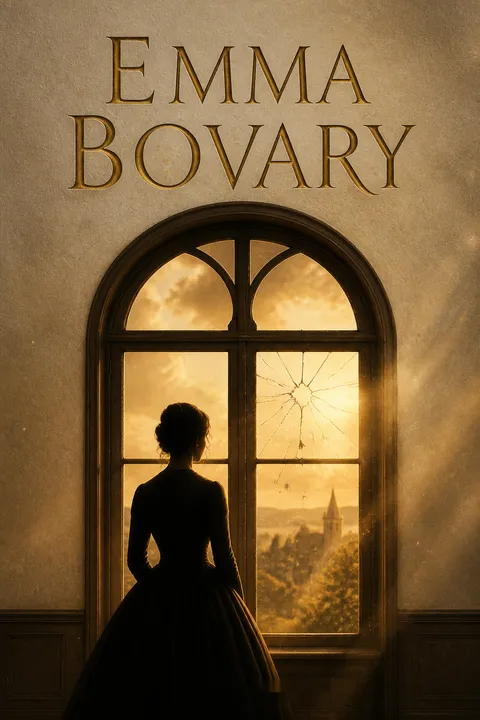
Summary Temporarily Unavailable
This summary is temporarily unavailable and is currently being updated. You can still explore the FAQs and other metadata below.
Resumen de la trama
Sueños provincianos y descontento
Emma Bovary, una joven con grandes sueños, se encuentra atrapada en la vida monótona de un pueblo provincial tras casarse con Charles Bovary, un médico rural amable pero aburrido. Sus ideales románticos, alimentados por novelas y fantasías, chocan con la realidad de su existencia rutinaria. La insatisfacción de Emma crece a medida que anhela la pasión y el lujo que cree merecer, preparando el terreno para su inevitable caída.
Matrimonio y monotonía
Al principio llena de esperanza, Emma pronto se desencanta con su matrimonio con Charles, quien no logra cumplir sus expectativas románticas. Su vida se convierte en una sucesión de días repetitivos y sin inspiración, lo que la lleva a resentir a su esposo y su sencilla existencia. Esta desilusión impulsa a Emma a buscar satisfacción en otro lugar, volviéndose cada vez más inquieta y desdichada.
Tentación e infidelidad
En su afán por encontrar emoción, Emma inicia una serie de aventuras amorosas, primero con el apuesto Rodolphe Boulanger, quien la ve como un entretenimiento pasajero. A pesar de sus esperanzas, Rodolphe la abandona, dejando a Emma con el corazón roto. Su infidelidad es un intento desesperado por escapar de su vida insatisfactoria, pero solo profundiza su vacío y desesperanza.
Deseo y engaño
Sin desanimarse por su fracaso con Rodolphe, Emma se involucra con Léon Dupuis, un joven empleado de leyes que comparte sus ideales románticos. Su relación es apasionada pero insostenible, pues los deseos insaciables de Emma y sus hábitos de gasto imprudente la conducen a la mentira y la ruina financiera. Sus intentos por mantener la apariencia de una vida glamorosa solo agravan sus problemas.
Deudas y desesperación
El estilo de vida extravagante de Emma y sus crecientes deudas la alcanzan, mientras los acreedores comienzan a presionarla. Desesperada por conservar su estatus social y evitar la vergüenza, recurre a medidas cada vez más temerarias, incluyendo falsificar la firma de su esposo. Sus dificultades financieras se convierten en símbolo de su tormento interno y las consecuencias de sus deseos descontrolados.
Caída y desesperanza
A medida que sus deudas se vuelven insuperables y sus relaciones se deshacen, la vida de Emma se descontrola. Sus grandes sueños se reducen a una serie de actos desesperados mientras lucha por encontrar una salida a su situación. El peso de sus decisiones y la realidad que enfrenta se vuelven insoportables, llevándola a una trágica resolución.
Final trágico y reflexiones
Abrumada por sus fracasos y el colapso de sus sueños, Emma se quita la vida, dejando atrás a un Charles devastado y un legado de ruina. Su trágico final funciona como advertencia sobre los peligros de los deseos desmedidos y la búsqueda de ideales inalcanzables. En el desenlace, Charles debe enfrentar la pérdida y la dolorosa toma de conciencia de sus propias limitaciones.
Personajes
Emma Bovary
Emma Bovary es la protagonista cuyas fantasías románticas y descontento con la vida provincial impulsan la historia. Su búsqueda de pasión y lujo la conduce a decisiones destructivas que terminan en su trágico destino. Emma encarna el conflicto entre idealismo y realidad, pues su incansable persecución de sueños inalcanzables la lleva a la ruina.
Charles Bovary
Charles es el marido de Emma, un médico rural bondadoso pero sin imaginación. Ama sinceramente a Emma, pero no logra comprender ni satisfacer sus deseos. Su conformismo y falta de ambición contribuyen al descontento de Emma, y queda devastado tras su muerte, comprendiendo demasiado tarde la profundidad de su infelicidad.
Rodolphe Boulanger
Rodolphe es un terrateniente adinerado que se convierte en el primer amante de Emma. Atraído por su belleza y pasión, la considera un pasatiempo temporal. Su abandono tras la aventura revela su egoísmo y alimenta la creciente desesperación de Emma.
Léon Dupuis
Léon es un joven empleado de leyes que comparte los ideales románticos de Emma y se convierte en su segundo amante. Su relación es intensa pero insostenible, pues Léon carece de la madurez y recursos para sostener el estilo de vida extravagante de Emma. Su partida marca otro punto de inflexión en la caída de Emma.
Monsieur Homais
Homais es el farmacéutico local que se hace amigo de Charles y Emma. Impulsado por la ambición y el deseo de estatus social, suele utilizar a otros para sus propios fines. Su personaje critica los valores burgueses y la superficialidad del ascenso social.
Berthe Bovary
Berthe es la hija pequeña de Emma y Charles. Es en gran medida descuidada por su madre y queda huérfana tras la muerte de Emma y el posterior declive de Charles. El destino de Berthe subraya el daño colateral de las decisiones de Emma y el impacto de las fallas de sus padres.
Recursos narrativos
Idealismo romántico
El recurso central es el idealismo romántico de Emma, que alimenta su insatisfacción y la búsqueda de sueños inalcanzables. Sus expectativas, moldeadas por novelas y fantasías, la llevan a tomar decisiones que culminan en su caída. Este recurso destaca los peligros de vivir en un mundo de fantasía y las consecuencias de ignorar la realidad.
Crítica social
La novela funciona como una crítica a la sociedad burguesa de la época, exponiendo su superficialidad y materialismo. A través de personajes como Homais y la representación de la vida provincial, la historia denuncia el vacío del ascenso social y la búsqueda de estatus. Esta crítica está presente a lo largo de la narrativa, sirviendo de telón de fondo para las luchas personales de Emma.
Ironía trágica
La ironía trágica impregna la historia, pues los intentos de Emma por escapar de su vida monótona solo conducen a mayor miseria. Su búsqueda de pasión y lujo termina en ruina financiera y desesperación personal, culminando en su trágico final. Esta ironía subraya la futilidad de sus sueños y la inevitabilidad de su caída.
Análisis
"Emma Bovary" es una advertencia sobre los peligros de los deseos sin control y la persecución de ideales inalcanzables. A través de la historia trágica de Emma, la novela explora temas como el idealismo romántico, el conflicto entre fantasía y realidad, y las consecuencias de vivir por encima de las posibilidades propias. Critica la superficialidad de la sociedad burguesa y el vacío del ascenso social, al tiempo que destaca el impacto de las decisiones personales en uno mismo y en los demás. La caída de Emma es un recordatorio conmovedor de los riesgos de ignorar la realidad y la importancia de encontrar satisfacción en las circunstancias propias. La vigencia de la novela reside en su exploración de temas universales y su crítica a los valores sociales, convirtiéndola en una reflexión atemporal sobre la naturaleza humana y las complejidades del deseo.
Última actualización:
Report IssueResumen de reseñas
También leyeron







Preguntas frecuentes
Synopsis & Basic Details
What is Emma Bovary about?
- Yearning for more: Emma Bovary, a young woman trapped in a dull marriage and provincial life, seeks passion and excitement beyond her reality.
- Pursuit of fantasy: Driven by romantic ideals from novels, she engages in affairs and extravagant spending, leading to her downfall.
- Tragic consequences: The story explores the destructive nature of unchecked desires and the clash between fantasy and reality, ending in tragedy.
Why should I read Emma Bovary?
- Timeless human drama: The novel explores universal themes of desire, disillusionment, and the consequences of choices, making it relatable across time.
- Complex character study: Emma's character is a nuanced portrayal of a woman struggling against societal constraints and her own inner turmoil.
- Social critique: The book offers a sharp critique of bourgeois society, its values, and the emptiness of social climbing, providing historical and social context.
What is the background of Emma Bovary?
- 19th-century France: The novel is set in provincial France during the mid-1800s, reflecting the social and cultural norms of the time.
- Bourgeois society: It portrays the rise of the middle class, their aspirations, and the superficiality of their values, which contrasts with Emma's romantic ideals.
- Romanticism vs. Realism: The novel is a bridge between Romanticism and Realism, showcasing the clash between idealized notions and the harsh realities of life.
What are the most memorable quotes in Emma Bovary?
- "She wanted to die, but she also wanted to live in Paris.": This quote encapsulates Emma's internal conflict, her desire for escape and her romanticized view of a better life.
- "Human speech is like a cracked kettle on which we tap crude rhythms for bears to dance to, while we long to make music that will melt the stars.": This quote highlights the inadequacy of language to express deep emotions and desires, a central theme in the novel.
- "She was like a ship that had lost its rudder, drifting aimlessly on the sea of life.": This quote captures Emma's lack of direction and her vulnerability to the whims of fate, foreshadowing her tragic end.
Hidden Details & Subtle Connections
What are some minor details that add significant meaning?
- The wedding bouquet: Emma's wedding bouquet, preserved and later found, symbolizes the decay of her initial hopes and the passage of time, highlighting the contrast between her dreams and reality.
- The blind beggar: The recurring presence of the blind beggar, singing a vulgar song, serves as a grim reminder of the harsh realities of life and a foreshadowing of Emma's own tragic fate.
- The dusty attic: The attic where Emma hides her love letters and other mementos represents her secret life and the hidden desires that she cannot openly express, a space of both refuge and confinement.
What are some subtle foreshadowing and callbacks?
- Charles's hat: Charles's ridiculous hat, a symbol of his social ineptitude, foreshadows his inability to understand or fulfill Emma's desires, setting the stage for her discontent.
- Rodolphe's cigar case: Rodolphe's cigar case, a gift from Emma, is later found by Charles, revealing the affair and highlighting the consequences of Emma's actions.
- The recurring waltz: The waltz that Emma dances with Rodolphe is a callback to her initial romantic excitement, contrasting with the later despair of her life.
What are some unexpected character connections?
- Homais and Rodolphe: Homais's admiration for Rodolphe, despite their different social classes, reveals the pervasive influence of social status and the desire for upward mobility.
- Léon and Charles: Léon's initial admiration for Charles, before his affair with Emma, highlights the naivety of youth and the shifting dynamics of relationships.
- Emma and her mother-in-law: The strained relationship between Emma and her mother-in-law, though seemingly minor, underscores the lack of understanding and support in Emma's life.
Who are the most significant supporting characters?
- Monsieur Homais: Homais, the pharmacist, embodies the superficiality and self-interest of the bourgeois class, serving as a foil to Emma's romanticism and a critique of societal values.
- Rodolphe Boulanger: Rodolphe, Emma's first lover, represents the callousness and selfishness of men who exploit women for their own pleasure, highlighting the power dynamics of relationships.
- Léon Dupuis: Léon, Emma's second lover, embodies the romantic idealism that Emma seeks, but his immaturity and lack of resources contribute to her downfall, showing the limitations of romantic fantasies.
Psychological, Emotional, & Relational Analysis
What are some unspoken motivations of the characters?
- Emma's escape: Emma's unspoken motivation is to escape the boredom and limitations of her provincial life, seeking passion and excitement to fill the void in her existence.
- Charles's complacency: Charles's unspoken motivation is to maintain a comfortable and predictable life, avoiding conflict and change, which ultimately contributes to Emma's unhappiness.
- Rodolphe's ego: Rodolphe's unspoken motivation is to satisfy his ego and desires, viewing Emma as a conquest rather than a genuine partner, revealing his manipulative nature.
What psychological complexities do the characters exhibit?
- Emma's romantic delusion: Emma's psychological complexity lies in her inability to distinguish between romantic fantasy and reality, leading to her constant dissatisfaction and destructive choices.
- Charles's obliviousness: Charles's psychological complexity is his inability to perceive Emma's unhappiness and his own shortcomings, highlighting his emotional blindness.
- Léon's immaturity: Léon's psychological complexity is his struggle between his romantic ideals and his lack of maturity, revealing his inability to handle the complexities of a passionate relationship.
What are the major emotional turning points?
- Rodolphe's abandonment: Rodolphe's abrupt departure is a major emotional turning point, plunging Emma into despair and highlighting the fragility of her romantic illusions.
- The opera scene: The opera scene, where Emma is reminded of her romantic dreams, intensifies her dissatisfaction with her life and fuels her desire for escape.
- The discovery of debts: The discovery of her mounting debts is a major emotional turning point, leading to her desperation and ultimately her tragic decision.
How do relationship dynamics evolve?
- Emma and Charles: The relationship between Emma and Charles evolves from initial hope to disillusionment, highlighting the incompatibility of their desires and expectations.
- Emma and Rodolphe: The relationship between Emma and Rodolphe evolves from passionate infatuation to callous abandonment, revealing the power dynamics and the superficiality of their connection.
- Emma and Léon: The relationship between Emma and Léon evolves from romantic idealism to unsustainable passion, highlighting the limitations of their shared fantasies and the consequences of their choices.
Interpretation & Debate
Which parts of the story remain ambiguous or open-ended?
- Emma's true feelings: The extent of Emma's genuine love for Rodolphe and Léon remains ambiguous, leaving readers to question whether she was truly capable of deep emotional connection.
- Charles's understanding: The depth of Charles's understanding of Emma's unhappiness and his own role in her tragedy is open to interpretation, raising questions about his culpability.
- The novel's moral stance: The novel's moral stance on Emma's actions and the societal forces that contributed to her downfall is open to debate, inviting readers to consider the complexities of her situation.
What are some debatable, controversial scenes or moments in Emma Bovary?
- Emma's suicide: Emma's suicide is a controversial moment, raising questions about whether it was an act of despair or a final act of defiance against her circumstances.
- The depiction of adultery: The novel's depiction of adultery is controversial, challenging societal norms and inviting readers to consider the complexities of desire and morality.
- The critique of bourgeois society: The novel's critique of bourgeois society is debatable, with some arguing that it is a valid commentary on societal values, while others see it as overly critical.
Emma Bovary Ending Explained: How It Ends & What It Means
- Emma's tragic death: Emma's suicide by arsenic poisoning is a tragic end, highlighting the destructive consequences of her unchecked desires and her inability to reconcile fantasy with reality.
- Charles's devastation: Charles's devastation and eventual death after discovering Emma's affairs underscore the collateral damage of her choices and the tragic impact on those around her.
- A cautionary tale: The ending serves as a cautionary tale about the dangers of romantic idealism, the pursuit of unattainable dreams, and the importance of finding contentment within one's circumstances, leaving a lasting impact on the reader.
Sobre el autor
Otros libros de Gustave Flaubert


Descargar PDF
Descargar EPUB
.epub digital book format is ideal for reading ebooks on phones, tablets, and e-readers.








































