
Resumen de la trama
Comienzos celestiales e infernales
En el Jardín del Edén, el ángel Aziraphale y el demonio Crowley se encuentran, sentando las bases de un relato cósmico. Ambos reflexionan sobre el inefable plan de Dios, cuestionando la naturaleza del bien y del mal. Crowley, que más que caer se limitó a descender vagamente, se muestra escéptico ante el plan divino, mientras que Aziraphale, a pesar de sus dudas, se mantiene fiel a sus deberes celestiales. Su conversación insinúa el apocalipsis venidero y el papel que desempeñarán en él, estableciendo los cimientos de los acontecimientos que están por desarrollarse.
Las profecías de Agnes Nutter
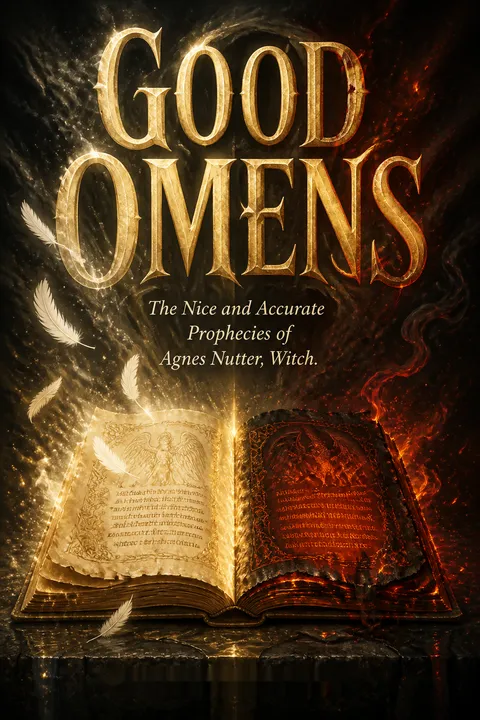
Agnes Nutter, una bruja del siglo XVII, deja tras de sí un libro de profecías de una exactitud asombrosa. Sus crípticas predicciones auguran el fin del mundo, guiando a su descendiente Anathema Device en su empeño por evitar el apocalipsis. El camino de Anathema se entrelaza con los de Aziraphale y Crowley, quienes también buscan impedir el fin de los tiempos. Las profecías sirven como una guía misteriosa que influye en las acciones de aquellos que intentan comprender y alterar su destino.
La llegada del Anticristo
El Anticristo nace, pero una confusión provocada por unas monjas satánicas hace que acabe criándose como un niño normal llamado Adam Young en un pequeño pueblo inglés. Sin ser consciente de su verdadera identidad, Adam posee el poder de desencadenar el Armagedón. A medida que crece, sus habilidades alteran sutilmente la realidad a su alrededor. Mientras tanto, Aziraphale y Crowley, que vigilan al niño equivocado, siguen ajenos a la presencia del verdadero Anticristo, lo que prepara el terreno para una narrativa compleja y llena de humor.
La alianza improbable
A pesar de pertenecer a bandos opuestos, Aziraphale y Crowley forman una alianza improbable para evitar el apocalipsis. A lo largo de los milenios, han encariñado con la Tierra y sus habitantes, y se resisten a verla destruida. Su asociación, caracterizada por un ingenioso intercambio de pullas y un respeto mutuo, impulsa la trama mientras sortean las intrigas celestiales e infernales. Juntos buscan la manera de detener el fin del mundo, evidenciando que la frontera entre el bien y el mal no es tan clara como parece.
La tormenta que se avecina
A medida que se acerca el día profetizado, comienzan a ocurrir fenómenos extraños en todo el mundo. Los patrones climáticos cambian y fuerzas ancestrales se despiertan. Los Cuatro Jinetes del Apocalipsis empiezan a reunirse, y cada uno recibe sus objetos simbólicos. Mientras tanto, el poder de Adam se fortalece, influyendo sin querer en el mundo que lo rodea. Anathema, armada con las profecías de Agnes, llega al pueblo decidida a encontrar y detener al Anticristo. Todo queda dispuesto para un enfrentamiento que decidirá el destino de la humanidad.
La búsqueda del cazador de brujas
Newton Pulsifer, un desventurado miembro del Ejército de Cazadores de Brujas, es enviado a investigar los extraños sucesos de Tadfield. Guiado por el excéntrico sargento cazador de brujas Shadwell, Newt emprende un viaje que lo conducirá hasta Anathema y al epicentro del inminente apocalipsis. A pesar de su falta de experiencia, la intervención de Newt resulta crucial a medida que las fuerzas del Cielo y del Infierno convergen en el pequeño pueblo, cada una con la intención de cumplir sus propios planes.
El niño que desafió al destino
Adam Young, el Anticristo, lucha con su identidad y su inmenso poder. A pesar de que las fuerzas celestiales e infernales lo instan a cumplir su destino y desatar el Armagedón, Adam decide rechazar ese camino. Valora a sus amigos y al mundo que conoce, y opta en su lugar por preservar la Tierra. Su decisión es un testimonio de su humanidad y de la educación que recibió, demostrando el poder de la elección frente a la predestinación.
La última cabalgata de los Cuatro Jinetes
Los Cuatro Jinetes del Apocalipsis (Guerra, Hambre, Polución y Muerte) llegan a la base aérea listos para dar inicio al fin del mundo. Sin embargo, Adam y sus amigos, los Ellos, se enfrentan a ellos con una lógica sencilla e infantil y una gran valentía. Los Jinetes son desarmados no por la fuerza, sino por la inocencia y la determinación de los niños, que se niegan a permitir que el mundo se acabe. Este enfrentamiento resalta cómo la inocencia puede triunfar sobre el caos.
El dilema de Aziraphale y Crowley
Aziraphale y Crowley, aliados inesperados, se encuentran en una encrucijada moral. Deben decidir si siguen sus respectivas órdenes celestiales e infernales o si apoyan la decisión de Adam de salvar el mundo. Su lucha interna refleja el tema más amplio del libre albedrío frente al destino. Finalmente, eligen ponerse del lado de Adam, demostrando su evolución y el profundo vínculo que han forjado a lo largo de los milenios.
El poder de la amistad prevalece
Los Ellos, los leales amigos de Adam, desempeñan un papel fundamental para evitar el apocalipsis. Su apoyo incondicional y su fe en Adam le dan la fuerza necesaria para enfrentarse a los Jinetes y a las fuerzas celestiales. Este capítulo subraya la importancia de la amistad y la unión para superar desafíos que parecen insalvables. Es un canto al espíritu humano y a la fortaleza que se halla en la compañía.
Un nuevo comienzo para todos
Con el apocalipsis evitado, el mundo vuelve a su cauce y la vida sigue adelante. Adam y sus amigos regresan a su rutina normal, mientras los acontecimientos de los últimos días se desvanecen en el recuerdo. También Aziraphale y Crowley encuentran un renovado sentido de propósito y camaradería. La historia concluye con una nota de esperanza, sugiriendo que, aunque el mundo enfrente dificultades, el poder de la elección y la amistad siempre pueden guiarlo hacia un futuro mejor.
Analysis
Una mirada humorística al destino y a la elecciónBuenos presagios, de Terry Pratchett y Neil Gaiman, es una exploración satírica del apocalipsis que combina el humor con temas profundos como el destino, el libre albedrío y la naturaleza del bien y del mal. La obra cuestiona la idea de la predestinación, haciendo hincapié en el poder de la elección personal y en el peso de la educación frente a la naturaleza innata. A través de la alianza improbable entre un ángel y un demonio, la historia desdibuja las fronteras entre el bien y el mal, sugiriendo que la unión y la amistad pueden superar incluso los desafíos más formidables. El tono ingenioso del libro y sus entrañables personajes ofrecen una perspectiva fresca sobre la eterna batalla entre el Cielo y el Infierno, celebrando en última instancia la resiliencia del espíritu humano y el poder duradero del amor y la amistad.
Resumen de reseñas
Good Omens recibe críticas mayoritariamente positivas, elogiado por su humor, su ingeniosa escritura y sus personajes memorables, especialmente el dúo formado por el ángel y el demonio. Muchos lectores lo encuentran divertidísimo y estimulante, y disfrutan de su enfoque satírico del Armagedón. Algunos critican ciertos problemas de ritmo y consideran que algunos personajes resultan menos atractivos. El humor irreverente y el ingenio británico del libro resuenan en muchos, aunque no en todos. Los seguidores aprecian la colaboración entre Gaiman y Pratchett, señalando que sus distintos estilos se mezclan a la perfección. En general, se considera una lectura ingeniosa y entretenida que ofrece tanto risas como crítica social.
También leyeron
Characters
Aziraphale
Aziraphale es un ángel que ha vivido en la Tierra durante milenios, desarrollando un gran afecto por la humanidad y sus peculiaridades. Regenta una librería de ejemplares raros y disfruta de los placeres refinados de la vida. A pesar de su origen celestial, Aziraphale no duda en saltarse las normas si es necesario para proteger el mundo que ama. Su amistad con Crowley, aunque poco convencional, se basa en el respeto mutuo y en el deseo compartido de evitar el apocalipsis.
Crowley
Crowley es un demonio que, a diferencia de sus congéneres infernales, ha aprendido a apreciar la Tierra y a sus habitantes. Es encantador, ingenioso y a menudo cuestiona el plan inefable. La relación de Crowley con Aziraphale es compleja, marcada por un vínculo profundo forjado a lo largo de los siglos. Juntos trabajan para frustrar el apocalipsis, motivados por el deseo de mantener el statu quo y evitar la batalla final entre el Cielo y el Infierno.
Adam Young
Adam Young, el Anticristo, es un niño dividido entre su destino sobrenatural y su crianza humana. Al haberse criado en un entorno afectuoso, desarrolla un fuerte sentido del bien y del mal, lo que lo lleva a rechazar su papel en el apocalipsis. Su decisión de preservar el mundo resalta su humanidad y la influencia de sus amigos, demostrando el poder de la elección sobre la propia naturaleza.
Anathema Device
Anathema Device, descendiente de la bruja profética Agnes Nutter, se encuentra en una encrucijada tras evitarse el apocalipsis. Sin más profecías que la guíen, debe aprender a desenvolverse en la vida sin la certeza de las predicciones de su antepasada. Su viaje refleja la importancia de aceptar la incertidumbre y el poder de la elección a la hora de moldear el propio destino.
Newton Pulsifer
Newton Pulsifer, un desventurado miembro del Ejército de Cazadores de Brujas, desempeña un papel crucial para evitar el apocalipsis. A pesar de su falta de experiencia, sus acciones contribuyen a la salvación del mundo. Su personaje resalta la idea del heroísmo inesperado y la importancia de la perseverancia ante la adversidad.
Agnes Nutter
Agnes Nutter fue una bruja del siglo XVII cuyo libro de profecías predijo con total exactitud el fin del mundo. Sus predicciones, aunque crípticas, guían las acciones de su descendiente Anathema e influyen en los acontecimientos que conducen al apocalipsis. La previsión y astucia de Agnes aseguran que su legado perdure, incluso cuando el mundo se tambalea al borde de la destrucción.
Witchfinder Sergeant Shadwell
Shadwell es el último sargento que queda en el Ejército de Cazadores de Brujas, una organización antaño formidable que hoy es solo la sombra de lo que fue. Hosco y aferrado a sus costumbres, Shadwell está decidido a erradicar a las brujas y cualquier otra amenaza sobrenatural. Su tutela sobre Newt, aunque poco ortodoxa, resulta crucial cuando las fuerzas del Cielo y del Infierno convergen en Tadfield.
The Four Horsemen
Los Cuatro Jinetes (Guerra, Hambre, Polución y Muerte) son seres ancestrales encargados de desencadenar el fin del mundo. Sin embargo, se ven frustrados por Adam y sus amigos, quienes se niegan a permitir que ocurra el apocalipsis. Su derrota subraya cómo la inocencia y el valor pueden triunfar sobre el caos y la destrucción.
Plot Devices
The Nice and Accurate Prophecies
Las buenas y acertadas profecías de Agnes Nutter, bruja es un libro de predicciones asombrosamente exactas que anuncian el fin del mundo. Transmitidas de generación en generación, estas profecías guían las acciones de Anathema Device e influyen en los acontecimientos que conducen al apocalipsis. La naturaleza críptica del libro exige una interpretación minuciosa, lo que añade un elemento de misterio e intriga a la trama.
The Antichrists Switch
La confusión en el hospital, orquestada por un grupo de monjas satánicas, hace que el Anticristo se críe como un niño normal llamado Adam Young. Este intercambio desencadena los acontecimientos posteriores, ya que Aziraphale y Crowley vigilan al niño equivocado creyendo que es el verdadero Anticristo. Este error de identidad añade complejidad a la trama, mientras el auténtico Anticristo permanece oculto a la vista de todos.
The Unlikely Alliance
La alianza entre Aziraphale y Crowley es un recurso clave de la trama que muestra cómo se desdibujan las fronteras entre el bien y el mal. Su colaboración destaca el poder de la unión y de la amistad para superar las dificultades, sin importar el origen o las lealtades de cada uno.
The Gathering Storm
A medida que se acerca el día señalado, ocurren fenómenos extraños en todo el planeta que anuncian el inminente apocalipsis. El clima cambia, fuerzas ancestrales despiertan y los Cuatro Jinetes comienzan a reunirse. Estos sucesos generan una sensación de urgencia y tensión, mientras los personajes corren contra el reloj para evitar el fin del mundo. La tormenta que se avecina sirve de telón de fondo para el drama, elevando las apuestas e impulsando la narración.
The Power of Choice
El recurso central de la trama en esta sección es el poder de la elección. La decisión de Adam de rechazar su papel apocalíptico y preservar el mundo subraya el conflicto entre el libre albedrío y el destino. Este elemento resalta la importancia de las decisiones personales a la hora de moldear el propio futuro y el del mundo en general.
The Innocence of Youth
La inocencia y el valor de Adam y sus amigos desempeñan un papel fundamental para evitar el apocalipsis. Este recurso narrativo destaca la fuerza de la juventud y la importancia de la amistad para superar desafíos aparentemente insuperables, reforzando el mensaje esperanzador de la historia.
Preguntas frecuentes
Synopsis & Basic Details
What is Good Omens: The Nice and Accurate Prophecies of Agnes Nutter, Witch about?
- Synopsis: Preventing Armageddon's arrival: The book centers on the birth of the Antichrist and the impending Armageddon, but focuses on the efforts of an angel, Aziraphale, and a demon, Crowley, to prevent the end of the world they've both grown to enjoy.
- Prophecies guide the narrative: The story is interwoven with prophecies from Agnes Nutter, a 17th-century witch, providing a framework for the events and adding a layer of complexity to the characters' actions.
- Humor and satire: The narrative employs humor and satire to explore themes of good and evil, free will, and the absurdity of bureaucratic systems, both in Heaven and Hell.
Why should I read Good Omens: The Nice and Accurate Prophecies of Agnes Nutter, Witch?
- Witty and engaging: The book offers a unique blend of humor, fantasy, and philosophical musings, making it an entertaining and thought-provoking read.
- Unconventional characters: The dynamic between Aziraphale and Crowley, an angel and a demon who are friends, provides a fresh perspective on the classic battle between good and evil.
- Exploration of profound themes: It delves into questions of free will, destiny, and the nature of humanity, prompting readers to consider their own beliefs and values.
What is the background of Good Omens: The Nice and Accurate Prophecies of Agnes Nutter, Witch?
- Biblical and mythological references: The story draws heavily on biblical prophecies, particularly from the Book of Revelation, and incorporates elements of mythology and folklore.
- Historical context: The narrative spans millennia, referencing historical events and figures, such as the Garden of Eden, the Spanish Inquisition, and the French Revolution, to illustrate the ongoing struggle between good and evil.
- Cultural satire: The book satirizes contemporary society, including aspects of religion, politics, and popular culture, adding a layer of social commentary to the fantastical elements.
What are the most memorable quotes in Good Omens: The Nice and Accurate Prophecies of Agnes Nutter, Witch?
- "I did not fall. I just sauntered vaguely downwards.": This quote encapsulates Crowley's unique perspective on his role as a demon, highlighting his individuality and detachment from traditional notions of evil.
- "The Earth's a Libra.": This seemingly simple statement reflects the book's blend of the mundane and the extraordinary, suggesting that even cosmic events are subject to earthly influences and astrological forces.
- "It may help to understand human affairs to be clear that most of the great triumphs and tragedies of history are caused, not by people being fundamentally good or fundamentally bad, but by people being fundamentally people.": This quote offers a nuanced view of human nature, suggesting that actions are often driven by complex motivations rather than simple morality.
What writing style, narrative choices, and literary techniques does Terry Pratchett use?
- Extensive use of footnotes: Pratchett employs footnotes to add humorous asides, provide background information, and offer satirical commentary on the events and characters in the story.
- Frequent digressions: The narrative often veers off on tangents, exploring seemingly unrelated topics or providing detailed histories of minor characters, adding to the book's whimsical and expansive feel.
- Omniscient narrator: The story is told from an omniscient point of view, allowing the authors to offer insights into the thoughts and motivations of multiple characters, as well as to provide commentary on the broader themes of the narrative.
Hidden Details & Subtle Connections
What are some minor details that add significant meaning?
- The Bentley's fuel gauge: The fact that Crowley's Bentley has been running on an empty fuel gauge for over 60 years symbolizes the supernatural forces at play and Crowley's disregard for mundane human concerns.
- Aziraphale's bookshop inventory: The specific titles and types of books Aziraphale collects, such as Infamous Bibles and books of prophecy, reveal his scholarly nature and his fascination with understanding the divine plan.
- Sister Mary Loquacious's tea: Sister Mary's constant desire for tea, even while holding the Antichrist, highlights the mundane aspects of even the most extraordinary situations and satirizes the everyday habits of human beings.
What are some subtle foreshadowing and callbacks?
- The flaming sword's fate: Aziraphale giving away his flaming sword in the Garden of Eden foreshadows his later acts of kindness and his tendency to prioritize compassion over strict adherence to divine orders.
- The M25's design: Crowley's involvement in the creation of the M25 motorway, designed as an occult symbol, foreshadows his broader efforts to subtly influence human affairs and sow chaos.
- The gerbil's presence: The seemingly random presence of a gerbil at Warlock's birthday party hints at the bureaucratic nature of Hell and the possibility of errors or miscommunications within the infernal ranks.
What are some unexpected character connections?
- Hastur and the Chattering Order: Hastur setting fire to the Chattering Order convent after the baby switch connects the demonic forces directly to the events that set the plot in motion.
- Newton Pulsifer and Agnes Nutter: Newton being a descendant of Thou-Shalt-Not-Commit-Adultery Pulsifer, the man who burned Agnes Nutter, creates an ironic link between the witch and the witchfinder, highlighting the cyclical nature of history.
- Sister Mary Loquacious and Mr. Young: The unlikely connection between Sister Mary and Mr. Young in the hospital delivery room underscores the accidental nature of the Antichrist's switch and the absurdity of the grand plan.
Who are the most significant supporting characters?
- Sister Mary Loquacious: Her role in the baby swap is pivotal, and her later life as a businesswoman adds a layer of irony to her initial Satanic allegiance.
- Newton Pulsifer: His eventual partnership with Anathema and his role in disarming the base make him a key player in averting Armageddon.
- The Them: Adam's friends provide a grounding influence and ultimately help him choose humanity over his intended destiny.
Psychological, Emotional, & Relational Analysis
What are some unspoken motivations of the characters?
- Aziraphale's love for humanity: Beyond his duty, Aziraphale's actions are driven by a genuine affection for humans and their creations, leading him to protect them even at the risk of disobeying Heaven.
- Crowley's desire for freedom: Crowley's efforts to avert Armageddon stem from a desire to maintain the status quo, but also from a deeper longing for autonomy and a rejection of rigid hierarchical structures.
- Adam's need for belonging: Adam's initial susceptibility to his Antichrist powers is fueled by a desire for control and a need to feel special, reflecting a common adolescent struggle for identity and acceptance.
What psychological complexities do the characters exhibit?
- Aziraphale's internal conflict: Aziraphale struggles with the tension between his angelic duties and his personal desires, revealing a complex inner life beneath his outwardly gentle demeanor.
- Crowley's moral ambiguity: Crowley's actions often defy easy categorization, as he grapples with his demonic nature and his growing attachment to humanity, showcasing a nuanced understanding of good and evil.
- Adam's identity crisis: Adam's journey reflects the challenges of adolescence, as he grapples with his identity and the expectations placed upon him, ultimately choosing his own path.
What are the major emotional turning points?
- Aziraphale's realization of Heaven's true intentions: Aziraphale's disillusionment with Heaven's eagerness for Armageddon marks a turning point, solidifying his commitment to working with Crowley to save the world.
- Crowley's fear for Aziraphale's safety: Crowley's genuine concern for Aziraphale's well-being during the fire at the bookshop reveals the depth of their friendship and his capacity for selfless emotion.
- Adam's rejection of his destiny: Adam's decision to defy his intended role as the Antichrist is a powerful emotional moment, demonstrating his capacity for empathy and his commitment to his friends and the world.
How do relationship dynamics evolve?
- Aziraphale and Crowley's friendship: Their relationship evolves from a reluctant arrangement to a deep and abiding friendship, based on mutual respect, shared experiences, and a common love for Earth.
- Adam and the Them: The Them's dynamic shifts as Adam grapples with his powers, testing the bonds of their friendship and forcing them to confront difficult choices.
- Newt and Anathema's romance: Their relationship blossoms amidst the chaos of the impending apocalypse, highlighting the power of human connection in the face of extraordinary circumstances.
Interpretation & Debate
Which parts of the story remain ambiguous or open-ended?
- The ultimate fate of Heaven and Hell: The story concludes with the forces of good and evil seemingly in a stalemate, leaving the long-term implications of Adam's actions open to interpretation.
- The nature of the "ineffable plan": The true nature and purpose of God's plan remain ambiguous, prompting questions about the role of free will and the limits of divine intervention.
- Adam's future: While Adam chooses to remain human, the extent to which his powers are diminished or dormant is left unclear, raising questions about his potential influence on the world.
What are some debatable, controversial scenes or moments in Good Omens: The Nice and Accurate Prophecies of Agnes Nutter, Witch?
- The portrayal of religion: The book's satirical depiction of religious institutions and figures has sparked debate, with some readers finding it humorous and others considering it disrespectful.
- The ending's resolution: The relatively simple resolution of the apocalypse, achieved through Adam's rejection of his destiny, has been criticized by some as anticlimactic or overly simplistic.
- The depiction of Hell and demons: The sympathetic portrayal of Crowley and other demons challenges traditional notions of good and evil, prompting discussion about the nature of morality and the potential for redemption.
Good Omens: The Nice and Accurate Prophecies of Agnes Nutter, Witch Ending Explained: How It Ends & What It Means
- Adam's choice: The ending hinges on Adam's decision to reject his role as the Antichrist and embrace his humanity, signifying the triumph of free will over predetermined destiny.
- The balance of power: The averted Armageddon results in a fragile balance between Heaven and Hell, suggesting that neither side can fully control human affairs and that the future remains uncertain.
- The importance of human connection: The story concludes with a celebration of friendship, love, and the power of choice to overcome even the most daunting challenges, emphasizing the importance of individual agency and collective action in shaping the world.
Sobre el autor
Otros libros de Terry Pratchett
Descargar PDF
Descargar EPUB
.epub digital book format is ideal for reading ebooks on phones, tablets, and e-readers.








































