Summary Temporarily Unavailable
This summary is temporarily unavailable and is currently being updated. You can still explore the FAQs and other metadata below.
Resumen de la trama
Tartaletas de Limón y Sueños
Catherine Pinkerton, hija del Marqués, es famosa por sus exquisitos pasteles y sueña con abrir una pastelería junto a su mejor amiga, Mary Ann. A pesar de su noble cuna y las ambiciones de su madre para que contraiga un buen matrimonio, la verdadera alegría de Cath se encuentra en la cocina, donde pone todo su corazón en cada creación. Sus sueños son vívidos y a veces proféticos, como cuando un limonero brota en su habitación tras una visión, brindándole el fruto para sus famosas tartaletas. El mundo de Cath es caprichoso, poblado por animales parlantes como Cheshire el gato, y se sitúa en el fantástico Reino de Corazones, donde la tradición y las expectativas pesan con fuerza sobre su destino.
La Trampa del Vestido Rojo
La madre de Cath, la imponente Marquesa, está decidida a que su hija se convierta en reina casándose con el Rey de Corazones. Obliga a Cath a llevar un llamativo vestido rojo para un baile real, ignorando el tema en blanco y negro del evento, asegurándose de que Cath destaque y atraiga la atención del Rey. El vestido se convierte en símbolo de la falta de autonomía de Cath, quien es exhibida ante la corte y sometida al escrutinio y juicio de la aristocracia de Corazones. La presión para ajustarse a las expectativas de su madre y la sociedad es asfixiante, y los propios deseos de Cath son desestimados como fantasías infantiles.
La Llegada del Bufón
Durante el baile real, la fiesta se ve interrumpida por la llegada de Jest, un bufón misterioso y carismático que realiza deslumbrantes actos de magia e ingenio. La presencia de Jest es electrizante, cautivando a Cath y a toda la corte. Plantea acertijos, conjura cuervos y saca al Conejo Blanco de un sombrero, convirtiéndose al instante en el nuevo bufón de la corte del Rey. Los ojos de Jest — dorados y enigmáticos — recuerdan a Cath su sueño, y entre ellos surge una chispa de conexión. La llegada de Jest marca el inicio del conflicto interno de Cath entre el deber y el deseo.
La Propuesta del Rey
El Rey de Corazones, un monarca torpe pero bienintencionado, está enamorado de Cath y, alentado por su madre, comienza a cortejarla con pasteles, bailes y atención pública. Cath se horroriza ante la perspectiva de convertirse en reina, consciente de que eso significaría el fin de sus sueños y su independencia. La propuesta del Rey se cierne sobre ella, y la presión familiar y social se intensifica. El único consuelo de Cath es su amistad con Mary Ann y su creciente fascinación por Jest, quien parece comprenderla como nadie más.
Pasteles Prohibidos
Cath y Mary Ann planean en secreto abrir una pastelería, incluso han explorado un local en la ciudad. Su sueño está amenazado por el estatus social de Cath y la desaprobación de sus padres. Mientras tanto, los encuentros de Cath con Jest se vuelven más frecuentes y cargados de tensión romántica. Jest la anima a perseguir su propia felicidad, y su vínculo se profundiza. Sin embargo, la amenaza de la propuesta del Rey y las expectativas de la sociedad de Corazones hacen que su incipiente romance sea peligroso y prohibido.
La Huida al Jardín
Cuando el Rey está a punto de proponerle matrimonio en una fiesta en el jardín real, Cath entra en pánico y huye hacia los jardines del palacio, desesperada por aire y libertad. Jest la encuentra allí, y la química entre ambos es innegable. Él la ayuda a escapar de la asfixiante corte, y comparten un momento de vulnerabilidad y risas. La magia y el encanto de Jest ofrecen a Cath un atisbo de una vida diferente — una en la que podría elegir su propio destino. Su vínculo se sella con una aventura secreta a medianoche, y el corazón de Cath se encamina hacia un camino que desafiará todo lo que le han enseñado.
Jest a la Luz de la Luna
Bajo las rosas iluminadas por la luna, Cath y Jest comparten sus sueños y temores. Jest revela que no es solo un bufón, sino un "Torre" del reino de Ajedrez, en una misión secreta. Su conversación está llena de acertijos, anhelos y la promesa de cosas imposibles. El mundo de Jest es uno de magia y peligro, y sugiere un destino entrelazado con el de Cath. Su conexión se profundiza en amor, aunque ambos saben que su felicidad es precaria, amenazada por las fuerzas del destino y las expectativas de Corazones.
El Ataque del Jabberwocky
La corte se sume en el caos cuando el mítico Jabberwocky ataca un evento real, secuestrando y matando cortesanos. El regreso del monstruo, largamente considerado imposible, destruye la ilusión de seguridad en Corazones. Cath, Jest y sus amigos quedan atrapados en el terror, y el suceso marca un punto de inflexión: la inocencia se pierde y la amenaza de violencia y muerte se vuelve real. El ataque también expone la incompetencia del Rey y la incapacidad de la corte para proteger a su pueblo, avivando aún más las dudas de Cath sobre su futuro como reina.
Sueños de Pastelería
A pesar del trauma, Cath y Mary Ann continúan persiguiendo su sueño de abrir una pastelería, buscando apoyo en el enigmático Hatta, el Sombrerero Loco, creador de sombreros mágicos. Los sombreros de Hatta poseen poderes misteriosos que influyen sutilmente en quienes los usan. Los pasteles de Cath reciben elogios, y ella participa en un concurso de repostería en el Festival de Corazones, con la esperanza de ganar el premio para financiar su tienda. Sin embargo, su posición social y el cortejo del Rey ensombrecen sus ambiciones, y la tensión entre deber y deseo se vuelve insoportable.
El Secreto del Sombrerero
Hatta revela el secreto de sus sombreros: están hechos con materiales provenientes de Ajedrez, y transforman a quienes los llevan, a veces de manera peligrosa. Los límites mágicos entre Corazones y Ajedrez son frágiles, y la propia cordura de Hatta se deshilacha. Las consecuencias de jugar con la magia se hacen evidentes cuando un juez del concurso, tras probar la tarta de calabaza encantada de Cath, se transforma en una Tortuga Falsa — una criatura grotesca y trágica. El incidente se culpa a Cath, y su reputación queda arruinada. El costo de los sueños, la magia y la ambición es el desamor y la pérdida.
El Cortejo de la Reina
Cath se ve obligada a elegir entre su amor por Jest y su deber hacia su familia y reino. La propuesta del Rey se vuelve ineludible, y sus padres amenazan con repudiarla si se niega. Jest revela su verdadera misión: fue enviado desde Ajedrez para robar el corazón de la futura reina de Corazones, creyendo que así terminaría la guerra interminable en su tierra natal. Cath queda devastada por la revelación, pero aún lo ama. Juntos trazan un plan para escapar de Corazones y comenzar una nueva vida en Ajedrez, pero el destino y la profecía conspiran en su contra.
El Festival de Corazones
En el Festival de Corazones, la tarta de Cath es saboteada, y el concurso termina en desastre cuando se revela la transformación en Tortuga Falsa. El Rey proclama públicamente a Cath como su futura reina, y la corte celebra, ajena a su miseria. El amor de Cath por Jest se convierte en un secreto peligroso, y sus sueños de la pastelería quedan destrozados. El festival, que debía ser una celebración, se transforma en un escenario para la humillación de Cath y el triunfo del destino sobre el libre albedrío.
El Juego de Croquet
Un juego real de croquet se convierte en un microcosmos de la política de la corte y la lucha interna de Cath. El coqueteo entre Jest y Cath es interrumpido por los celos del Rey y las maquinaciones de la corte. El juego, lleno de erizos y flamencos vivos, es a la vez absurdo y mortalmente serio. La habilidad e ingenio de Cath brillan, pero el juego termina con la victoria del Rey y el mayor encierro de Cath en el plan matrimonial real. Las advertencias de Jest sobre el destino y la profecía se vuelven más urgentes.
La Tortuga Falsa
La contaminación mágica proveniente de Ajedrez se extiende, y las consecuencias de los sombreros de Hatta y la tarta de Cath se hacen evidentes. La transformación del juez en Tortuga Falsa es un escándalo público, y Cath es culpada. La corte se vuelve contra ella, y sus sueños se desmoronan. Los límites mágicos entre Corazones y Ajedrez se están rompiendo, y el precio de interferir con el destino se paga con sufrimiento y pérdida. La culpa y el dolor de Cath amenazan con consumirla.
El Pozo de Melaza
Tras un violento encuentro con el Jabberwocky, Cath queda gravemente herida. Jest la lleva al legendario Pozo de Melaza, un lugar mágico entre mundos, donde sus heridas son sanadas a un precio misterioso. El Pozo está custodiado por las Tres Hermanas, seres enigmáticos que exigen pago por su magia. El viaje al Pozo es una prueba de desesperación y amor, y el vínculo entre Cath y Jest se fortalece por la experiencia compartida. Pero el precio de la magia siempre es alto, y el poder del Pozo no está exento de consecuencias.
La Elección Imposible
Cath y Jest, con la ayuda de Hatta y Cuervo, intentan escapar de Corazones a través del laberinto que conduce a Ajedrez. Las Tres Hermanas les advierten sobre una profecía: uno será asesino, otro mártir, otro monarca, y uno enloquecerá. Mientras navegan el laberinto, Cath debe elegir entre salvar a su amiga Mary Ann, que está en peligro mortal, o huir hacia la felicidad con Jest. Elige salvar a Mary Ann, poniendo en marcha el trágico cumplimiento de la profecía.
El Laberinto del Destino
En el enfrentamiento culminante, Cath se enfrenta a Sir Peter Peter, cuyas acciones desataron al Jabberwocky y causaron la muerte de Jest. Consumida por el dolor y la rabia, Cath mata al Jabberwocky y exige venganza contra Peter. Las Tres Hermanas regresan, ofreciéndole la oportunidad de vengarse a cambio de su corazón. Cath acepta, sacrificando su capacidad de amar y ser feliz para convertirse en instrumento de venganza. Su transformación está completa: ya no es la joven que soñaba con pasteles y amor, sino la Reina de Corazones, definida por la pérdida y la furia.
El Precio de la Venganza
Cath, ahora Reina, está vacía por el dolor y la venganza. Condena a Peter a muerte, pronunciando las palabras que definirán su legado: "¡Que le corten la cabeza!" La corte, el Rey y todo Corazones temen su nueva crueldad. Las Tres Hermanas reclaman su corazón, dejándola incapaz de amar o ser feliz. La profecía se cumple: Jest es el mártir, Hatta enloquece, y Cath se convierte en la temida monarca. La historia concluye con la transformación de Cath en la Reina de Corazones, sus sueños y amor perdidos para siempre, y su único legado, un reinado de terror y el eco de su corazón roto.
Personajes
Catherine Pinkerton
Catherine es la protagonista, una joven noble con pasión por la repostería y ansias de independencia. Es inteligente, creativa y compasiva, pero está atrapada por las expectativas de su familia y sociedad. Su viaje es una transformación — de soñadora esperanzada enamorada de Jest y sus propias ambiciones, a mujer destrozada por la pérdida, la traición y la crueldad del destino. El arco psicológico de Cath es una caída: su amor y esperanza son sistemáticamente arrebatados, reemplazados por la rabia y la sed de venganza. Sus relaciones — con Mary Ann, Jest, sus padres y el Rey — están marcadas por el anhelo, la decepción y la imposibilidad de reconciliar sus deseos con su realidad. Al final, es la Reina de Corazones, con el corazón perdido literal y metafóricamente.
Jest
Jest es el bufón de la corte, una figura mágica y misteriosa del reino de Ajedrez. Es encantador, ingenioso y profundamente empático, pero también carga con una misión secreta: robar el corazón de la futura reina de Corazones para acabar con la guerra en su tierra natal. El amor de Jest por Cath es genuino, y se convierte en su confidente, cómplice y alma gemela. Su complejidad psicológica radica en el conflicto entre el deber y el amor, y su disposición a sacrificarlo todo por la felicidad de Cath. El destino de Jest como mártir es tanto el cumplimiento de la profecía como una pérdida devastadora para Cath, simbolizando la destrucción de la esperanza y el triunfo del destino sobre el libre albedrío.
Mary Ann
Mary Ann es la mejor amiga de Cath, sirvienta y socia en el sueño de abrir una pastelería. Es práctica, inteligente y ferozmente leal, pero también limitada por su estatus social y sus propios miedos. La relación de Mary Ann con Cath es central en la historia, brindando apoyo y, finalmente, traición — sus acciones bienintencionadas conducen inadvertidamente a la muerte de Jest y la transformación de Cath. Mary Ann representa el costo de los sueños postergados y el dolor de perder a la familia elegida.
El Rey de Corazones
El Rey es un monarca infantil y torpe, enamorado de Cath y decidido a hacerla su reina. Es amable pero despistado, más interesado en pasteles y fiestas que en gobernar. Su cortejo a Cath es a la vez cómico y trágico, pues es ajeno a su miseria y a las consecuencias de su inacción. La incapacidad del Rey para proteger su reino o a Cath es un factor clave en su desilusión y eventual transformación.
Hatta (El Sombrerero Loco)
Hatta es el excéntrico sombrerero cuyas creaciones mágicas influyen en el destino de quienes las usan. Es brillante, ambicioso y cada vez más desequilibrado, atormentado por el miedo a la locura que corre en su familia. Las acciones de Hatta — traer semillas mágicas de Ajedrez, fabricar sombreros encantados — desencadenan muchas de las tragedias de la historia. Su relación con Cath y Jest está cargada de celos, culpa y la conciencia de ser tanto creador como destructor. La caída de Hatta en la locura cumple la profecía y advierte sobre los peligros de la ambición desmedida y la interferencia con el destino.
Cuervo (El Raven)
Cuervo es el leal amigo de Jest y un antiguo verdugo de Ajedrez, que a menudo habla en acertijos y alusiones poéticas. Es una figura de fatalidad y profecía, guiando y advirtiendo a los protagonistas. La presencia de Cuervo es un recordatorio constante de la trayectoria trágica de la historia, y su transformación en heraldo de la muerte bajo el mandato de Cath marca la pérdida definitiva de la inocencia y la esperanza.
La Marquesa (Madre de Cath)
La Marquesa está decidida a que Cath sea reina, encarnando las opresivas expectativas de la sociedad y la familia. Es manipuladora, emocionalmente volátil y desestima los sueños de Cath. Su relación con Cath está marcada por un amor retorcido en control, y su incapacidad para ver los verdaderos deseos de su hija contribuye a su caída.
Sir Peter Peter
Peter es un campesino rudo y resentido cuyas acciones — alimentar a su esposa con las calabazas mágicas de Ajedrez — desatan al Jabberwocky y desencadenan la cadena de tragedias. Su desesperación, dolor y violencia lo convierten en víctima y villano. El enfrentamiento de Peter con Cath es el clímax de su transformación, pues ella elige la venganza sobre la misericordia.
Las Tres Hermanas (Tillie, Elsie, Lacie)
Las Tres Hermanas son entidades misteriosas y eternas que custodian el Pozo de Melaza y el paso entre Corazones y Ajedrez. Exigen pago por su magia y profetizan el destino de los personajes principales. Su papel es la personificación del destino: ofrecen elecciones, pero siempre a un precio terrible. Su pacto con Cath — su corazón a cambio de venganza — sella su transformación en la Reina de Corazones.
Cheshire
Cheshire es el gato sardónico y omnipresente que observa, comenta y a veces interviene en los acontecimientos. Representa la voz del escepticismo y la inevitabilidad del destino, advirtiendo a Cath sobre los peligros venideros. Su desapego e ingenio ofrecen alivio cómico y un escalofriante recordatorio de la trágica inevitabilidad de la historia.
Recursos Narrativos
Destino vs. Libre Albedrío
La narrativa se estructura en torno a la tensión entre destino y libre albedrío. La profecía de las Tres Hermanas — uno será asesino, otro mártir, otro monarca, y uno enloquecerá — pesa sobre los personajes, moldeando sus decisiones y acciones. A pesar de los esfuerzos de Cath por escapar a su destino, cada intento de afirmar su voluntad la acerca más al desenlace profetizado. La historia utiliza presagios, sueños y advertencias mágicas para reforzar la sensación de inevitabilidad, explorando también el tormento psicológico de luchar contra un destino predeterminado.
Realismo Mágico y Simbolismo
La magia impregna el mundo de Corazones, desde los sueños proféticos de Cath y el limonero encantado hasta los sombreros transformadores de Hatta y el Pozo de Melaza. Estos elementos mágicos funcionan como símbolos de esperanza, ambición y los peligros de interferir con fuerzas que superan la comprensión humana. La transformación — literal y metafórica — es un motivo recurrente que representa la pérdida de la inocencia, el costo de la ambición y las consecuencias irreversibles de las decisiones.
Romance Trágico
La historia de amor entre Cath y Jest es el núcleo emocional de la novela, impulsando la trama y la transformación de Cath. Su romance está marcado por el secreto, el anhelo y la constante amenaza de ser descubierto. La tensión entre amor y deber, felicidad y sacrificio, se explora a través de su relación, culminando en el martirio de Jest y la caída de Cath en la venganza. El romance es fuente de esperanza y catalizador de tragedia.
Sátira Social y Absurdo
El mundo de Corazones es un reflejo satírico de la sociedad victoriana, lleno de rituales absurdos, reglas arbitrarias y la tiranía de las apariencias. La obsesión de la corte por los pasteles, las fiestas y la corrección oculta una podredumbre e incompetencia profundas. La ineptitud del Rey, la volatilidad de la corte y los juicios sin sentido evidencian la absurdidad del poder y los peligros de la conformidad ciega.
Descenso Psicológico
La estructura narrativa sigue el descenso psicológico de Cath, de soñadora esperanzada a reina vengativa. Cada pérdida — de amor, amistad, sueños y autonomía — despoja su humanidad, dejando solo rabia y deseo de venganza. El uso del monólogo interno, los sueños y la imaginería simbólica (corazones, rosas, sangre) profundiza la comprensión del lector sobre su transformación y el costo de la venganza.
Análisis
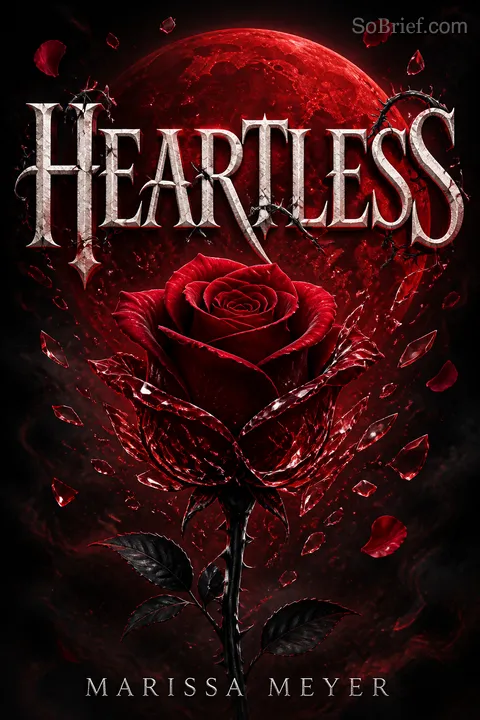
Heartless es una magistral reinvención del origen de la Reina de Corazones, que combina lo caprichoso y lo oscuro para explorar la creación de un villano. Marissa Meyer construye un mundo donde los sueños y la magia son a la vez encantadores y peligrosos, y donde la lucha entre destino y libre albedrío es tanto personal como universal. La novela indaga en el costo de la ambición, el dolor de los sueños no cumplidos y el poder destructivo del duelo y la venganza. El viaje de Catherine es una advertencia sobre los peligros de negar el verdadero yo y las consecuencias de las decisiones tomadas bajo presión. La inevitabilidad trágica de la historia se intensifica por su entorno lúdico y absurdo, haciendo que la última transformación sea aún más devastadora. Heartless plantea, en última instancia: ¿qué sucede cuando un corazón se rompe más allá de toda reparación? La respuesta es una reina cuyo único legado es el eco de su propio dolor — "¡Que le corten la cabeza!"
Última actualización:
Report IssueResumen de reseñas
También leyeron

Preguntas frecuentes
Synopsis & Basic Details
What is Heartless about?
- Aspiration vs. Expectation: Heartless follows Catherine Pinkerton, a talented baker in the whimsical Kingdom of Hearts, who dreams of opening a pastry shop with her best friend, Mary Ann. However, her ambitious mother, the Marquesa, is determined for Cath to marry the King of Hearts and become queen, a destiny Cath dreads.
- Forbidden Connection: Amidst the King's bumbling courtship and the suffocating societal pressures, Cath finds herself drawn to Jest, the mysterious and charming new court joker. Their clandestine meetings and shared moments of magic ignite a forbidden romance that challenges Cath's predetermined path.
- Descent into Darkness: As a mythical monster, the Jabberwocky, terrorizes the kingdom, and magical elements from the neighboring land of Chess begin to bleed into Hearts, Cath's world unravels. Betrayal, loss, and a devastating personal tragedy force her to make impossible choices, ultimately transforming her from a hopeful dreamer into the feared Queen of Hearts.
Why should I read Heartless?
- Villain Origin Story: Readers should delve into Heartless for its compelling and tragic exploration of how a beloved character transforms into a notorious villain. It offers a nuanced look at the forces—both external and internal—that shape Catherine's descent, making her journey relatable despite its fantastical setting.
- Rich World-Building: Marissa Meyer crafts a vibrant, yet subtly dark, reimagining of Wonderland, filled with familiar characters given fresh depth and new, intriguing magical elements. The blend of whimsical absurdity with genuine peril creates a unique and immersive reading experience.
- Emotional Depth & Conflict: The novel excels in its emotional complexity, particularly in portraying Catherine's internal struggle between duty, love, and self-preservation. It's a story about the devastating cost of unfulfilled dreams and the destructive power of grief and vengeance, resonating with themes of fate versus free will.
What is the background of Heartless?
- Literary Allusion & Reimagining: Heartless is a prequel to Lewis Carroll's Alice's Adventures in Wonderland, specifically focusing on the origin story of the Queen of Hearts. Meyer draws heavily from Carroll's characters and whimsical tone, but infuses it with a darker, more tragic narrative, exploring the "why" behind the Queen's infamous cruelty.
- Victorian Social Commentary: The Kingdom of Hearts, with its rigid social hierarchy, absurd courtly rituals, and emphasis on appearances, serves as a satirical mirror to Victorian society. Cath's struggle against her mother's ambition and the King's ineptitude highlights the oppressive expectations placed upon women of noble birth during that era.
- Intertextual Playfulness: The novel cleverly weaves in elements from other literary works, such as Edgar Allan Poe's "The Raven" (through Cuervo's dialogue) and Shakespearean plays (like "King Lear" and "The Taming of the Shrew" referenced in theater productions), adding layers of intertextual richness and foreshadowing.
What are the most memorable quotes in Heartless?
- "My dear, sweet, stupid child." (The Marquesa, Chapter 8): This quote, frequently uttered by Cath's mother, encapsulates the Marquesa's condescending affection and her inability to see Cath's true desires or capabilities beyond her own ambitions for her daughter. It highlights the suffocating maternal pressure that drives much of Cath's early conflict.
- "My specialty is the impossible." (Jest, Chapter 7): Jest's declaration to Catherine not only defines his magical abilities and role as a joker but also serves as a recurring motif for their forbidden love and Cath's own desperate hopes. It becomes a poignant reminder of the dreams that ultimately prove impossible in the face of fate.
- "Off with his head." (Catherine, Chapter 54): The iconic phrase, uttered by Catherine in the novel's climax, marks her complete transformation into the Queen of Hearts. It signifies the ultimate triumph of vengeance and the irreversible loss of her former self, becoming a chilling echo of her broken heart and shattered innocence.
What writing style, narrative choices, and literary techniques does Marissa Meyer use?
- Whimsical yet Gothic Tone: Meyer masterfully blends the whimsical, absurd elements characteristic of Wonderland with a growing sense of gothic dread and tragedy. This tonal shift mirrors Catherine's psychological descent, starting light and becoming increasingly dark as the story progresses.
- Symbolic Imagery & Motifs: The narrative is rich with recurring symbols, such as the color red (passion, danger, royalty), hearts (love, vulnerability, the kingdom itself), and various food items (representing Cath's true self, comfort, or corruption). The motif of "transformation" is central, both literal (False Turtle, Jabberwocky) and metaphorical (Catherine's change).
- Foreshadowing & Prophecy: Meyer employs extensive foreshadowing, particularly through Cath's prophetic dreams, the enigmatic pronouncements of the Three Sisters, and Cuervo's cryptic rhymes. This creates a strong sense of inevitability, reinforcing the theme of fate versus free will, even as characters attempt to defy their destinies.
Hidden Details & Subtle Connections
What are some minor details that add significant meaning?
- Recurring Dream-Plants: Beyond the initial lemon tree (Chapter 1), Cath's dreams manifest new plants in her room, like white roses (Chapter 8) and bleeding hearts (Chapter 49). These aren't just whimsical details; they subtly track her emotional state and the progression of her relationship with Jest (lemon for his eyes, white roses for their secret love, bleeding hearts for her grief and hardening).
- Hatta's Hat-Making Materials: Hatta's use of "unique materials" from Chess, such as "soft, worn shards of sea glass," "fish scales," and "bones" (Chapter 31), subtly foreshadows the magical contamination and transformations that plague Hearts. It hints that the magic isn't just whimsical but has tangible, sometimes dangerous, origins from the war-torn land of Chess.
- The King's "Sweet Pastry" Affection: The King's consistent description of Cath as his "sweet pastry" or "decadent truffle" (Chapter 23, 32, 39) is more than just a quirky endearment. It highlights his superficial understanding of her, reducing her to her baking talent rather than seeing her as a complex individual, reinforcing why their union is doomed to be loveless.
What are some subtle foreshadowing and callbacks?
- The "Raven and Writing Desk" Riddle: Jest's initial riddle (Chapter 4) and Hatta's later, darker interpretation (Chapter 52) are direct callbacks to Lewis Carroll's original, but Meyer uses them to foreshadow Hatta's descent into madness and the tragic, poetic nature of Jest's fate. The riddle's "few interesting notes" and "black-stained feathers" become grim metaphors for their destinies.
- Peter Peter's Pumpkin Patch Destruction: The burnt, abandoned section of Peter Peter's pumpkin patch (Chapter 24) subtly foreshadows the origin of the Jabberwocky. It implies that the magical pumpkins from Chess, brought by Hatta, were already causing destructive transformations before Cath's pie, hinting at a deeper, pre-existing corruption.
- The Three Sisters' Payment Demands: The Sisters' requests for specific items (Jest's bells, Cuervo's feather, Hatta's time, Cath's "un-used kiss" and later "heart") are not arbitrary. They foreshadow the sacrifices and losses each character will endure, particularly Jest's eventual martyrdom (losing his bells) and Cath's ultimate emotional hollowing (her heart).
What are some unexpected character connections?
- Hatta and Peter Peter's Shared History: It's revealed that Hatta gave Peter Peter the "cursed" pumpkin seeds from Chess years ago (Chapter 52), directly linking Hatta to the origin of the Jabberwocky and Lady Peter's transformation. This unexpected connection makes Hatta a more direct catalyst for the tragedy than initially perceived.
- The Duchess and Margaret Mearle's Romance: The Duke of Tuskany, initially portrayed as arrogant and aloof, is revealed to secretly adore Margaret Mearle (Chapter 9). This unexpected romantic interest, facilitated by Cath, highlights the Duke's hidden shyness and Margaret's own surprising capacity for love, contrasting with Cath's doomed romance.
- Cuervo's Past as an Executioner: Cuervo's revelation that he was once the White Queen's executioner (Chapter 47) is a surprising twist for a seemingly somber companion. This past role directly foreshadows his eventual transformation back into the hooded executioner at Cath's command, linking his loyalty to a history of violence and fate.
Who are the most significant supporting characters?
- The Three Sisters (Tillie, Elsie, Lacie): Beyond their role as oracular beings, the Sisters are pivotal agents of fate, directly influencing the plot through their prophecies and demands for payment. Their chilling, synchronized dialogue and unsettling youthfulness underscore the inescapable nature of destiny and the high price of magic, making them more than just plot devices.
- Sir Peter Peter: While a villain, Peter is a significant supporting character because his actions (feeding his wife the cursed pumpkins, his grief-fueled rage) are the direct catalyst for the Jabberwocky's rampage and Jest's death. His character highlights the destructive consequences of unchecked desperation and the spread of Chess's magic into Hearts.
- The White Rabbit: Often a figure of comic relief, the White Rabbit's constant anxiety and obsession with time (Chapter 1, 3, 28) subtly reflect the underlying chaos and impending doom in Hearts. His role as the King's herald also places him at the center of many awkward social situations, highlighting the absurdity of the court.
Psychological, Emotional, & Relational Analysis
What are some unspoken motivations of the characters?
- The Marquesa's Fear of Social Decline: While her ambition for Cath is overt, the Marquesa's relentless push for the royal marriage is subtly driven by a deep-seated fear of losing her family's standing. Her constant worry about appearances and her family's "contribution" to the kingdom (the festival, Chapter 29) suggest a desperate need to secure their status, which she believes only a royal marriage can guarantee.
- Hatta's Desire for Control over Madness: Hatta's ambition to be the "greatest hatmaker" and his constant battle with his family's "madness" (Chapter 31, 52) reveal a deeper motivation: a desperate attempt to control his own inherited fate. His manipulation of others and his detached demeanor are a defense mechanism, a way to assert control in a world where his own sanity is precarious.
- Jest's Internal Conflict over His Mission: Jest's initial mission is to "steal the heart" of the future Queen of Hearts for Chess (Chapter 36). His growing love for Cath creates an unspoken internal conflict, evident in his hesitation and eventual confession. His actions, like advising the King on courtship (Chapter 27), are a twisted fulfillment of his mission, but his true motivation shifts to protecting Cath, even at his own expense.
What psychological complexities do the characters exhibit?
- Catherine's Dissociation and Emotional Numbness: As Cath endures repeated betrayals and losses, she develops a psychological complexity marked by dissociation. After Jest's death, she describes herself as "hollow" (Chapter 51) and "empty and numb" (Chapter 54), a coping mechanism to survive the unbearable pain. This isn't just a plot outcome but a profound psychological shift, where her capacity for joy and love is literally severed.
- The King's Avoidance of Responsibility: The King, despite his kind nature, exhibits a complex psychological avoidance of responsibility. He prefers to be distracted by trivialities like pastries and croquet (Chapter 12, 26) rather than confront the growing threats to his kingdom (Jabberwocky attacks, Jest's "betrayal"). His "idiocy" is a form of self-preservation, allowing him to remain blissfully ignorant of the harsh realities of his reign.
- Mary Ann's Practicality vs. Heroism: Mary Ann's character is complex in her oscillation between grounded practicality and a surprising yearning for heroism. Her initial skepticism about the bakery dream (Chapter 8) and her later, ill-fated attempt to "be a hero" by confronting Peter Peter (Chapter 46) reveal a hidden desire for significance beyond her station, which ultimately leads to unintended consequences.
What are the major emotional turning points?
- The First Dream-Plant (Lemon Tree): The appearance of the lemon tree in Cath's room (Chapter 1) is a subtle but significant emotional turning point. It marks the first tangible manifestation of her dreams and her connection to Jest, igniting a sense of wonder and possibility that contrasts sharply with her mundane noble life.
- Jest's Confession of Love and Mission: Jest's revelation that he was sent to "steal her heart" (Chapter 36) is a devastating emotional turning point. It shatters Cath's perception of their romance, forcing her to confront the possibility that their love was a calculated part of his mission, leading to profound heartbreak and a re-evaluation of her choices.
- Catherine's Decision to Accept the King's Proposal (as a Means to an End): Cath's public acceptance of the King's proposal (Chapter 50), not out of love but as a strategic move for vengeance, is a critical emotional turning point. It signifies her conscious sacrifice of personal happiness and her embrace of a darker path, marking the beginning of her transformation into the Queen of Hearts.
How do relationship dynamics evolve?
- Catherine and Mary Ann: From Partnership to Betrayal: Their relationship evolves from a close, supportive friendship built on shared dreams of a bakery (Chapter 2, 9) to one strained by Mary Ann's well-intentioned but disastrous betrayal (revealing Cath's secret to her parents, Chapter 38). This leads to Cath's bitter rejection of Mary Ann, symbolizing the loss of her most cherished bond and the innocence of her dreams.
- Catherine and Jest: From Whimsical Romance to Tragic Sacrifice: Their dynamic shifts from playful flirtation and secret rendezvous (Chapter 6, 17) to a deep, passionate love (Chapter 36). However, their relationship is constantly threatened by external forces and Jest's mission, culminating in his self-sacrifice (Chapter 47) to protect Cath, solidifying his role as her martyr and the catalyst for her vengeance.
- Catherine and Her Parents: From Filial Duty to Resentment: Initially, Cath is largely compliant with her parents' wishes, albeit reluctantly (Chapter 2, 15). Their refusal to support her bakery dream and their insistence on the royal marriage (Chapter 30) escalate her resentment. The final confrontation, where her father threatens Mary Ann (Chapter 30) and her mother dismisses her feelings (Chapter 38), irrevocably breaks their bond, pushing Cath towards a path of defiance and ultimately, cruelty.
Interpretation & Debate
Which parts of the story remain ambiguous or open-ended?
- The True Nature of the Three Sisters: While they are presented as oracular beings and agents of fate, their motivations and ultimate allegiances remain ambiguous. Are they truly neutral, simply revealing destiny, or do they actively manipulate events for their own mysterious purposes, as suggested by their "payment" demands and cryptic laughter (Chapter 42, 43)?
- The Extent of Hatta's Madness: Hatta's "madness" is a family curse, but the degree to which it influences his actions versus his conscious choices is debatable. Is his detachment and manipulation a symptom of his impending madness, or a calculated strategy to survive and achieve his ambitions, as he claims to "know a secret" to avoid his fate (Chapter 31)?
- The Future of Chess and Hearts: The novel ends with Cath as the Queen of Hearts and Jest as the martyr, implying the war in Chess might continue or change. The long-term consequences of Cath's "stolen" heart on the balance of power in Chess, and whether her reign of terror in Hearts truly brings stability or just a new form of chaos, are left open to interpretation.
What are some debatable, controversial scenes or moments in Heartless?
- Catherine's Rejection of Mary Ann: Cath's harsh dismissal of Mary Ann (Chapter 38, 51) after Mary Ann's well-intentioned but disastrous betrayal is a controversial moment. While Cath is in immense pain, her cruelty towards her loyal friend raises questions about the speed and depth of her transformation, and whether her "heartlessness" is truly justified or a tragic overreaction.
- The Justification of Jest's "Heart-Stealing" Mission: Jest's initial mission to "steal the heart" of the future Queen of Hearts (Chapter 36) is debatable. While he falls in love with Cath, the premise of his mission—to manipulate her emotions for a political end—can be seen as morally ambiguous, even if his intentions later shift to genuine affection.
- The Morality of the Three Sisters' Prophecies: The Sisters' prophecies, particularly "Assassin, Martyr, Monarch, Madman," are presented as inevitable (Chapter 43). However, the debate lies in whether these prophecies are truly unchangeable fate or if the Sisters' pronouncements and demands for payment actively force the characters into these roles, thus making them complicit in the tragedy.
Heartless Ending Explained: How It Ends & What It Means
- The Final Transformation & Loss of Heart: The novel culminates in Catherine's complete metamorphosis into the Queen of Hearts. After Jest's death at Peter Peter's hand, Cath, consumed by grief and a thirst for vengeance, makes a pact with the Three Sisters. They take her broken heart, leaving her emotionally numb but empowered to exact retribution. She then, as Queen, sentences Peter Peter to beheading, uttering her infamous catchphrase, "Off with his head" (Chapter 54).
- The Price of Vengeance & Fate's Triumph: The ending signifies the devastating cost of vengeance and the triumph of fate over free will. Catherine sacrifices her capacity for love, joy, and empathy to become a ruthless monarch. Jest becomes the "martyr," Hatta descends into "madness," and Cath becomes the "monarch," fulfilling the Sisters' prophecy. Her heart is literally removed, symbolizing her emotional desolation and the complete loss of the girl who dreamed of baking and love.
- A Cycle of Pain & The Birth of a Villain: The ending is not a happy one, but a tragic origin story. It explains why the Queen of Hearts is so cruel and obsessed with beheadings: it's a direct consequence of her profound loss and the emotional void left by her broken heart. The narrative suggests that her tyranny is born from deep pain and a desire to control a world that relentlessly took everything from her, perpetuating a cycle of suffering rather than breaking it.
Sobre el autor
Otros libros de Marissa Meyer
Descargar PDF
Descargar EPUB
.epub digital book format is ideal for reading ebooks on phones, tablets, and e-readers.








































