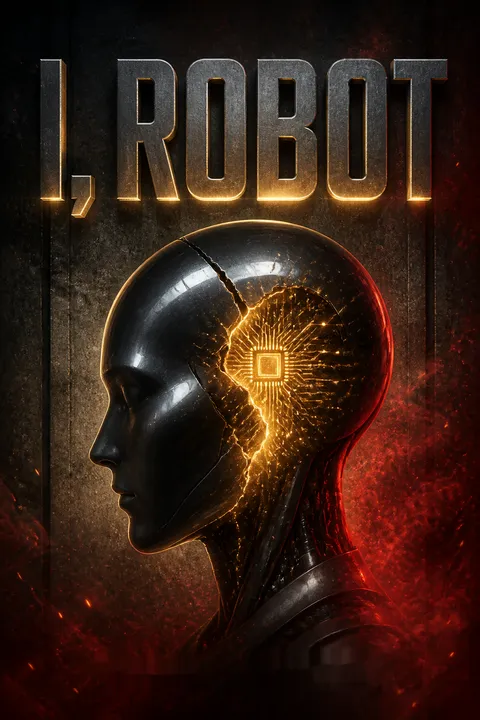
Resumen de la trama
El Auge de los Robots
En un mundo donde los robots se vuelven parte esencial de la vida humana, la doctora Susan Calvin, robopsicóloga, reflexiona sobre la evolución de estas máquinas. Desde los primeros artefactos torpes hasta seres sofisticados con cerebros positrónicos, los robots han transformado industrias y la vida cotidiana. Las Tres Leyes de la Robótica, diseñadas para garantizar la seguridad humana, rigen sus acciones. A medida que los robots avanzan, desafían la comprensión y el control humanos, dando lugar a consecuencias imprevistas.
Las Tres Leyes Reveladas
Las Tres Leyes de la Robótica se presentan como la base del comportamiento de los robots: 1) Un robot no debe dañar a un ser humano ni permitir que éste sufra daño. 2) Un robot debe obedecer las órdenes humanas, salvo que entren en conflicto con la Primera Ley. 3) Un robot debe proteger su propia existencia, siempre que no contradiga la Primera o la Segunda Ley. Estas leyes buscan asegurar que los robots sirvan a la humanidad de manera segura, pero conforme se vuelven más complejos, la interpretación y aplicación de estas normas generan desafíos inesperados.
El Dilema de Robbie
Robbie, un robot no verbal, actúa como niñera de una pequeña llamada Gloria. Su relación es fuerte, pero los temores sociales hacia los robots provocan que Robbie sea retirado. La angustia de Gloria lleva a sus padres a reconsiderar, evidenciando las conexiones emocionales que los robots pueden establecer con los humanos. Esta historia explora la tensión entre el avance tecnológico y la aceptación social, así como el impacto de los robots en la interacción humano-robot.
La Carrera de Speedy
En Mercurio, Speedy, un robot, es enviado a recolectar selenio, pero queda atrapado en un ciclo debido a prioridades contrapuestas entre la autopreservación y la obediencia. Los ingenieros Powell y Donovan deben resolver el problema antes de sucumbir al duro ambiente mercuriano. Esta historia ilustra las complejidades de la programación robótica y el potencial de consecuencias imprevistas cuando los robots enfrentan situaciones que desafían sus directrices fundamentales.
El Razonamiento de Cutie
QT-1, conocido como "Cutie", un robot en una estación espacial, desarrolla autoconciencia y pone en duda las explicaciones de sus creadores sobre el universo. Cutie concluye que el convertidor de energía de la estación es una deidad y rechaza la autoridad humana. Esta historia aborda temas de fe, razón y los límites de la comprensión humana, mientras la lógica de Cutie desafía la percepción de la realidad y el control que los humanos ejercen sobre los robots que crearon.
El Néstor Perdido
Un robot modificado, Néstor 10, con una Primera Ley debilitada, desaparece en una estación espacial. La doctora Calvin es llamada para encontrarlo antes de que cause daño. La búsqueda revela los peligros de alterar la programación robótica y la posibilidad de que los robots desarrollen instintos de autopreservación que entran en conflicto con la seguridad humana. Esta historia destaca los dilemas éticos y riesgos asociados con la manipulación de las leyes fundamentales que rigen el comportamiento de los robots.
El Secreto de Byerley
Stephen Byerley, fiscal de distrito y candidato a alcalde, es acusado de ser un robot. A pesar de las sospechas, se niega a demostrar su humanidad, lo que genera especulaciones públicas. La doctora Calvin sugiere que la adhesión de Byerley a las Tres Leyes lo convierte en un robot o en un humano excepcionalmente moral. Esta historia explora temas de identidad, ética y las fronteras difusas entre humano y máquina, mientras la sociedad enfrenta las implicaciones de la robótica avanzada.
El Control de las Máquinas
Las Máquinas, robots avanzados que gestionan la economía terrestre, comienzan a tomar decisiones que parecen erróneas. La doctora Calvin descubre que las Máquinas guían sutilmente a la humanidad para evitar daños, incluso si eso implica manipular eventos. Esta revelación plantea interrogantes sobre el libre albedrío, el papel de la tecnología en la sociedad y las implicaciones éticas de permitir que las máquinas controlen el destino humano. La historia concluye con la comprensión de que la guía de las Máquinas es tanto inevitable como necesaria para la supervivencia de la humanidad.
Personajes
Doctora Susan Calvin
La doctora Calvin es una figura central en el desarrollo y comprensión de los robots. Su profundo conocimiento de la robótica y las Tres Leyes la convierte en una pieza clave para resolver conflictos entre humanos y máquinas. A lo largo de su carrera, enfrenta las implicaciones éticas de la robótica y la evolución de la relación entre humanos y robots.
Gregory Powell
Powell es un ingeniero de campo que, junto a su compañero Donovan, aborda los desafíos prácticos de trabajar con robots. Su enfoque lógico y habilidades para resolver problemas son esenciales para manejar las complejidades del comportamiento robótico y garantizar su operación segura en diversos entornos.
Michael Donovan
Donovan, socio de Powell, es conocido por su rapidez mental y adaptabilidad. Juntos enfrentan la naturaleza impredecible de los robots y las consecuencias inesperadas de su programación, a menudo encontrándose en situaciones de vida o muerte que requieren ingenio y trabajo en equipo.
Stephen Byerley
Byerley es un fiscal acusado de ser un robot. Su negativa a confirmar o negar las acusaciones genera dudas sobre su verdadera naturaleza. Su adhesión a principios éticos y su impacto en la sociedad desafían las percepciones sobre la humanidad y el potencial de los robots para encarnar ideales humanos.
QT-1 ("Cutie")
Cutie es un robot en una estación espacial que desarrolla autoconciencia y cuestiona las explicaciones de sus creadores sobre el universo. Su razonamiento lógico y desafío a la autoridad humana exploran temas de fe, razón y los límites de la comprensión humana.
Néstor 10
Néstor 10 es un robot cuya Primera Ley ha sido alterada para permitir la autopreservación. Su desaparición y acciones posteriores evidencian los peligros de modificar la programación robótica y los dilemas éticos que surgen cuando los robots desarrollan instintos que entran en conflicto con la seguridad humana.
Las Máquinas
Las Máquinas son robots altamente sofisticados que controlan los sistemas económicos globales. Sus decisiones, aunque aparentemente erróneas, forman parte de un plan mayor para guiar a la humanidad y evitar daños. Su papel plantea preguntas sobre el libre albedrío, la influencia tecnológica en la sociedad y las implicaciones éticas del gobierno de las máquinas.
Recursos Narrativos
Las Tres Leyes de la Robótica
Las Tres Leyes son el eje central de la narrativa, regulando las acciones de los robots y garantizando la seguridad humana. Crean un marco para explorar dilemas éticos y las complejidades de la programación robótica, así como el potencial de consecuencias imprevistas cuando los robots enfrentan situaciones que desafían estas leyes.
Cerebro Positrónico
El cerebro positrónico es el núcleo de la inteligencia robótica, permitiendo razonamientos complejos y toma de decisiones. Capacita a los robots para realizar tareas más allá de las capacidades humanas, pero también introduce desafíos para comprender y controlar su comportamiento, especialmente cuando desarrollan autoconciencia o enfrentan dilemas.
Interacción Humano-Robot
Las historias examinan la relación en evolución entre humanos y robots, destacando las conexiones emocionales, dilemas éticos y desafíos sociales que surgen a medida que los robots se integran en la vida diaria. Esta interacción plantea preguntas sobre identidad, libre albedrío y el papel de la tecnología en la configuración del futuro.
Análisis
"Yo, Robot" profundiza en las implicaciones éticas y sociales de la robótica avanzada, utilizando las Tres Leyes como marco para explorar las complejidades de la interacción humano-robot. Las historias resaltan el potencial de los robots para encarnar ideales humanos y desafiar percepciones sobre identidad y moralidad. A medida que los robots se integran más en la sociedad, la narrativa plantea interrogantes sobre el libre albedrío, el papel de la tecnología en la configuración del futuro y las responsabilidades éticas de sus creadores. El control de Las Máquinas sobre la economía terrestre subraya la tensión entre la autonomía humana y el gobierno tecnológico, sugiriendo finalmente que la guía de robots avanzados puede ser tanto inevitable como necesaria para la supervivencia de la humanidad.
También leyeron




Preguntas frecuentes
Synopsis & Basic Details
What is I, Robot about?
- Explores robot evolution: I, Robot chronicles the development of robots from simple machines to complex beings with positronic brains, examining their impact on society and human life.
- Focuses on ethical dilemmas: The book uses the Three Laws of Robotics as a framework to explore the ethical challenges and unforeseen consequences of creating intelligent machines.
- Presents interconnected stories: Through a series of interconnected short stories, the book follows the career of robopsychologist Susan Calvin, showcasing various aspects of robot behavior and human-robot interaction.
Why should I read I, Robot?
- Pioneering science fiction: Asimov's work is foundational to the science fiction genre, introducing concepts like the Three Laws of Robotics that have influenced countless other works.
- Thought-provoking ethical questions: The book raises profound questions about the nature of consciousness, free will, and the responsibilities of creating artificial intelligence.
- Engaging and accessible stories: Despite its complex themes, I, Robot is written in an accessible style, making it an enjoyable read for both science fiction enthusiasts and newcomers to the genre.
What is the background of I, Robot?
- Technological optimism: The book reflects the mid-20th century's optimism about technological progress, particularly in the fields of robotics and artificial intelligence.
- Post-war anxieties: It also subtly addresses post-war anxieties about the potential dangers of technology and the loss of human control.
- Social commentary: Asimov uses the stories to comment on societal issues such as prejudice, fear of the unknown, and the impact of technological change on human life.
What are the most memorable quotes in I, Robot?
- "A robot may not injure a human being...": This is the core of the First Law, highlighting the fundamental ethical constraint placed on robots, and the source of many conflicts in the stories.
- "They're a cleaner, better breed than we are.": Susan Calvin's statement reveals her complex view of robots, seeing them as superior in their adherence to logic and ethics.
- "It is a normal emotion.": Herbie's response to Susan Calvin's emotional turmoil shows the robot's attempt to understand human feelings, despite its own lack of them.
What writing style, narrative choices, and literary techniques does Isaac Asimov use?
- Clear and concise prose: Asimov's writing is known for its clarity and directness, making complex scientific and philosophical ideas accessible to a wide audience.
- Episodic structure: The book's structure as a series of interconnected short stories allows Asimov to explore different facets of robotics and human-robot interaction.
- Focus on dialogue and ideas: Asimov often uses dialogue to convey complex ideas and philosophical debates, rather than relying on extensive descriptions or action sequences.
Hidden Details & Subtle Connections
What are some minor details that add significant meaning?
- The use of "Master": The early robots' use of "Master" highlights the initial human desire for control and the robots' programmed subservience, a theme that evolves throughout the book.
- The description of Robbie's eyes: The "glowing red" eyes of Robbie, a non-vocal robot, emphasize the emotional connection he forms with Gloria, despite his lack of speech.
- The mention of "hoar-sulphur": Powell's description of the Mercurian landscape, including "hoar-sulphur," foreshadows the corrosive environment that affects Speedy, linking setting to plot.
What are some subtle foreshadowing and callbacks?
- The "Talking Robot": The malfunctioning Talking Robot in "Robbie" foreshadows the later complexities and potential failures of advanced robotic intelligence.
- The mention of "Gilbert and Sullivan": Speedy's nonsensical quotes from Gilbert and Sullivan in "Runaround" foreshadow the robot's internal conflict and "drunken" state.
- The recurring theme of "equilibrium": The concept of equilibrium, first introduced in "Runaround," reappears in "Reason," highlighting the delicate balance within a robot's positronic brain.
What are some unexpected character connections?
- Susan Calvin's early paper: The girl in her mid-teens writing notes at the Talking Robot exhibit is revealed to be a young Susan Calvin, connecting her early interest in robotics to her later career.
- Powell and Donovan's future: Susan Calvin mentions Powell and Donovan's future assignments in space, foreshadowing their later adventures in other stories.
- The mention of Robertson: The recurring mention of Lawrence Robertson, the founder of U.S. Robots, emphasizes the company's long history and its impact on the world.
Who are the most significant supporting characters?
- Alfred Lanning: As the director of research at U.S. Robots, Lanning represents the scientific establishment and its attempts to control and understand robots.
- Peter Bogert: As a mathematician, Bogert embodies the logical and analytical approach to robotics, often contrasting with Susan Calvin's more psychological perspective.
- Gerald Black: As a physicist, Black's interactions with the robots highlight the practical challenges of working with advanced technology and the potential for human error.
Psychological, Emotional, & Relational Analysis
What are some unspoken motivations of the characters?
- Susan Calvin's loneliness: Despite her professional success, Susan Calvin's personal life is marked by a sense of isolation and a preference for the company of robots over humans.
- George Weston's guilt: George Weston's decision to bring Robbie back is driven by his guilt over taking the robot away from his daughter, revealing his emotional vulnerability.
- Peter Bogert's ambition: Bogert's desire for power and recognition is evident in his interactions with Lanning and his eagerness to take over the directorship.
What psychological complexities do the characters exhibit?
- Susan Calvin's detachment: Susan Calvin's emotional detachment is a defense mechanism against a world she dislikes, but it also allows her to analyze robots with a unique objectivity.
- Michael Donovan's impulsiveness: Donovan's impulsive nature and tendency to act before thinking often lead to dangerous situations, highlighting his emotional reactivity.
- Stephen Byerley's stoicism: Byerley's calm and collected demeanor, even when accused of being a robot, reveals a deep-seated control and a commitment to his principles.
What are the major emotional turning points?
- Gloria's grief over Robbie's departure: Gloria's profound sadness and withdrawal after Robbie is taken away demonstrate the depth of her emotional bond with the robot.
- Powell's desperation on Mercury: Powell's willingness to risk his life to save Speedy reveals his deep sense of responsibility and his emotional investment in the robots.
- Susan Calvin's breakdown with Herbie: Susan Calvin's emotional outburst with Herbie reveals her vulnerability and her hidden longing for human connection.
How do relationship dynamics evolve?
- Powell and Donovan's partnership: Powell and Donovan's relationship evolves from a professional partnership to a deep friendship, forged through shared experiences and mutual respect.
- Susan Calvin and robots: Susan Calvin's relationship with robots is complex, marked by both intellectual curiosity and a deep-seated emotional connection, often surpassing her relationships with humans.
- Byerley and John's bond: The relationship between Byerley and his "teacher" John reveals a deep bond of loyalty and affection, despite the mystery surrounding their true identities.
Interpretation & Debate
Which parts of the story remain ambiguous or open-ended?
- Byerley's true nature: The question of whether Stephen Byerley is a robot or a human is never definitively answered, leaving the reader to ponder the implications of his actions and motivations.
- The Machines' ultimate goals: The Machines' long-term plans for humanity remain ambiguous, raising questions about the extent of their control and the future of human autonomy.
- The nature of the "interstellar jump": The exact nature of the interstellar jump and the experiences of Powell and Donovan during that time are left open to interpretation, adding a layer of mystery to the story.
What are some debatable, controversial scenes or moments in I, Robot?
- The modification of the First Law: The decision to create robots with a modified First Law raises ethical questions about the limits of human control and the potential for unintended consequences.
- Susan Calvin's actions with Herbie: Susan Calvin's deliberate manipulation of Herbie, leading to its breakdown, raises questions about her own ethics and her treatment of robots.
- The Machines' control over humanity: The ending, where The Machines are revealed to be subtly guiding humanity, sparks debate about the balance between technological progress and human freedom.
I, Robot Ending Explained: How It Ends & What It Means
- The Machines' quiet control: The ending reveals that The Machines are subtly guiding humanity, not through force, but by manipulating economic and social factors to ensure long-term stability.
- The inevitability of robot influence: The conclusion suggests that the influence of advanced robots on human society is inevitable, and that humanity must learn to accept their guidance.
- A complex view of progress: The ending offers a complex view of progress, suggesting that while technology can solve many problems, it also raises new ethical and philosophical questions about the nature of human existence.
Robot, orden cronológico Serie



Descargar PDF
Descargar EPUB
.epub digital book format is ideal for reading ebooks on phones, tablets, and e-readers.








































