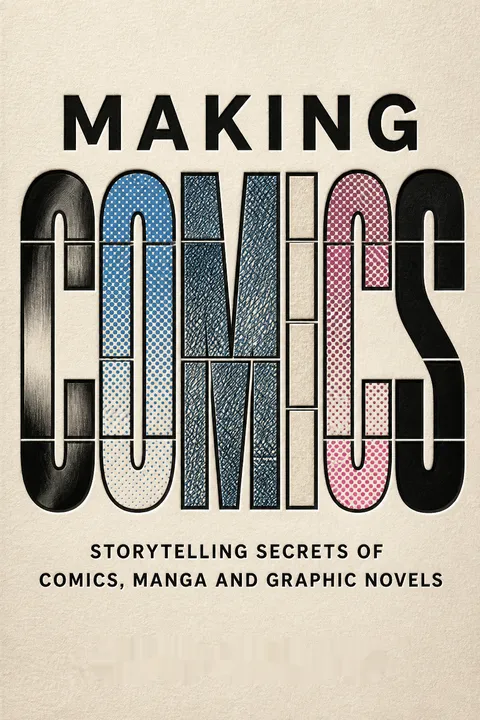

Ideas clave
1. La Narración en Cómics Se Basa en Cinco Decisiones Fundamentales
En estas páginas, he hecho todo lo posible por revelar los secretos de la narración que no veo en otros libros, las ideas que todo artista de cómics debe abordar antes siquiera de tomar un lápiz...
Decisiones esenciales. Crear cómics implica elecciones básicas que moldean la experiencia del lector. No se trata solo de habilidad para dibujar, sino de cómo guías al lector a través de la historia.
Las cinco decisiones:
- Elección del momento: qué mostrar en cada viñeta.
- Elección del encuadre: cómo componer la vista del panel.
- Elección de la imagen: qué dibujar dentro del marco.
- Elección de la palabra: qué texto incluir.
- Elección del flujo: cómo se disponen las viñetas en la página.
Claridad y persuasión. Estas decisiones trabajan en conjunto para lograr claridad, asegurando que el lector comprenda la historia, y persuasión, atrayéndolo emocionalmente al mundo narrativo. Dominar estas elecciones complementa el instinto y ayuda a resolver problemas.
2. Los Personajes Necesitan Vidas Internas Creíbles y Distinción Visual
Si muchas de nuestras mejores historias incluyen un cambio profundo en la perspectiva de un personaje principal, las mejores nos hacen vivir ese cambio junto a ellos.
Más allá de la superficie. Los personajes requieren profundidad, impulsada por su historia, deseos y conflictos internos. El público conecta más cuando puede inferir sentimientos y motivaciones a través de acciones y expresiones.
Identidad visual. Un diseño visual distintivo es esencial para el reconocimiento y para transmitir personalidad. Considera:
- Altura, peso, perfil
- Rasgos expresivos
- Lenguaje corporal y postura
Comunicación no verbal. Las expresiones faciales y el lenguaje corporal son herramientas poderosas para mostrar emociones y relaciones. Estudiar la vida real y recursos como Darwin o Faigin puede mejorar tu capacidad para comunicar sin palabras.
3. Palabras e Imágenes se Combinan de Siete Maneras Distintas
... LOS CÓMICS CONSISTEN EN NARRATIVAS O EXPOSICIONES PICTÓRICAS DONDE LAS PALABRAS (A MENUDO LETREADAS DENTRO DEL ÁREA DE LA IMAGEN EN GLOBOS DE DIÁLOGO) SUELEN CONTRIBUIR AL SIGNIFICADO DE LAS IMÁGENES Y VICEVERSA.
La sinergia es clave. Palabras e imágenes en los cómics son dos ramas del mismo árbol, trabajando juntas para crear significado. Su combinación no siempre es igual ni sencilla.
Siete tipos de combinación:
- Específico de palabra: las imágenes ilustran el texto.
- Específico de imagen: las palabras añaden banda sonora o narración a las imágenes.
- Dúo específico: palabras e imágenes transmiten el mismo significado.
- Intersección: palabras e imágenes se superponen parcialmente en significado.
- Interdependiente: palabras e imágenes se necesitan mutuamente para tener sentido.
- Paralelo: palabras e imágenes siguen caminos separados.
- Montaje: las palabras forman parte de la imagen.
Elementos textuales. Los globos de diálogo, globos de pensamiento y efectos de sonido son componentes visuales que transmiten diálogo, pensamientos internos y experiencias auditivas, cada uno con sus propias convenciones e impacto en el ritmo y la atmósfera.
4. Construir un Mundo Creíble es Crucial, No Solo un Fondo
... LA PROPORCIÓN DE ARTISTAS QUE DEDICAN MUY POCO ESFUERZO A LOS ENTORNOS EN CONTRASTE CON LOS QUE DEDICAN DEMASIADO ES DE NOVENTA Y NUEVE A UNO.
El sentido del lugar importa. Los entornos no son solo fondos estáticos; evocan ambiente, proporcionan contexto e incluso pueden ser personajes por sí mismos. Descuidar los “fondos” es un error común.
Establecer el escenario. Planos de establecimiento efectivos, ya sean vistas amplias o secuencias fragmentadas, sumergen al lector en el mundo. Los detalles, la perspectiva e incluso viñetas silenciosas contribuyen a esta inmersión.
Referencia y detalle. Usar referencias (dibujar de la vida, fotos) ayuda a capturar la riqueza del mundo real o imaginado. Incluso estilos simples pueden transmitir un fuerte sentido del lugar mediante detalles cuidadosamente elegidos.
5. Las Herramientas Evolucionan, Pero Lo Esencial Sigue Siendo Simple
LAS ÚNICAS HERRAMIENTAS ESENCIALES SON UNA FORMA DE HACER MARCAS Y UNA SUPERFICIE DONDE HACERLAS.
Más allá de lo sofisticado. Aunque la tecnología ofrece muchas opciones, el requisito básico para hacer cómics es mínimo: algo con qué dibujar y algo sobre qué dibujar. No se necesitan herramientas caras para empezar.
Tradicional vs. Digital:
- Tradicional: lápices, plumas (estilográfica, técnica, marcador), pinceles (marta, sintético), tinta, papel (cartulina Bristol), gomas, reglas, cajas de luz.
- Digital: computadoras (Mac/PC), software gráfico (Photoshop, Illustrator), tabletas/monitores para dibujo (Wacom Cintiq).
Flujo de trabajo y cuidado. Independientemente de las herramientas, desarrollar buenos hábitos, tomar descansos para evitar fatiga y cuidar el equipo son vitales para una práctica creativa sostenible. Las herramientas digitales ofrecen flexibilidad (capas, corrección fácil) pero requieren copias de seguridad y habilidades distintas.
6. Entender Estilos y Géneros Globales Enriquece Tu Trabajo
NINGÚN PAÍS TIENE TODAS LAS RESPUESTAS. LOS DIBUJANTES DE CÓMICS EN TODO EL MUNDO TOMAN ATAJOS. LOS EDITORES EN TODAS PARTES INTENTAN CLONAR LO QUE FUNCIONÓ LA ÚLTIMA VEZ. LOS ESTANTES DE LAS TIENDAS EN TODAS PARTES SON DEMASIADO CORTOS.
Aprender de la diversidad. El cómic es un medio global con ricas tradiciones en Japón (Manga), Europa (Bande Dessinée) y Norteamérica. Estudiar estos enfoques revela técnicas narrativas y prioridades diversas.
Influencias internacionales:
- Manga: fuerte expresión de personajes, movimiento subjetivo, transiciones aspecto a aspecto, diversidad de géneros.
- Europeo: énfasis en la construcción del mundo, entornos detallados.
- Americano: históricamente centrado en la primacía de la figura, puesta en escena dinámica (post-Kirby).
Las cuatro tribus. Los artistas suelen agruparse en filosofías distintas: animistas (historia/personaje primero), clasicistas (técnica/forma primero), formalistas (experimentación primero), iconoclastas (expresión/individualidad primero). Comprender estas perspectivas ayuda a navegar el ecosistema del cómic.
7. Hacer Cómics Requiere Dedicación y Aprendizaje
REALMENTE, REALMENTE HAY QUE TRABAJAR DURO. DIBUJAR CÓMICS REQUIERE CASI TODO TU TIEMPO LIBRE...
Un oficio exigente. Crear cómics demanda mucho trabajo y dedicación. A menudo se describe como desafiante, incluso desgarrador, pero también profundamente gratificante.
Desarrollar tu camino. Encontrar tu estilo único implica experimentar, aprender de otros y enfocarte en lo que realmente te apasiona. No persigas solo modas ni intentes imitar a otros a la perfección.
Crecimiento continuo. La industria cambia constantemente, especialmente con el auge de los webcómics y plataformas digitales. Mantente adaptable, sigue aprendiendo, observa patrones y trabaja con constancia.
Resumen de reseñas
Making Comics ha recibido elogios destacados por parte de los lectores gracias a su enfoque profundo y completo sobre la creación de cómics. Muchos valoran las explicaciones claras de McCloud, sus consejos prácticos y el formato visual atractivo que utiliza. El libro es reconocido por su utilidad tanto para artistas y guionistas noveles como para quienes simplemente desean comprender mejor este medio. Los lectores lo encuentran inspirador, entretenido y educativo, y con frecuencia lo comparan favorablemente con obras anteriores de McCloud. Algunos destacan que su valor trasciende el mundo del cómic y se extiende a la narración en general, aunque unos pocos señalan que ciertas secciones pueden resultar más relevantes para artistas que para escritores.
También leyeron
Preguntas frecuentes
What’s "Making Comics: Storytelling Secrets of Comics, Manga and Graphic Novels" by Scott McCloud about?
- Comprehensive guide to comics: The book is a detailed exploration of the art and craft of making comics, focusing on storytelling techniques, visual communication, and the unique language of comics.
- Beyond drawing skills: McCloud emphasizes that making comics is more than just drawing well; it’s about making storytelling choices that engage and immerse readers.
- Covers all aspects: Topics include panel composition, character design, world-building, the integration of words and pictures, and the tools and technology used in comics creation.
- Applicable to all styles: Whether you’re interested in graphic novels, superhero comics, manga, strips, or webcomics, the book provides principles that apply across genres and formats.
Why should I read "Making Comics" by Scott McCloud?
- Unique focus on storytelling: Unlike most how-to-draw books, McCloud’s work delves into the storytelling secrets and narrative techniques that are often overlooked.
- For creators and fans: The book is valuable for aspiring comics creators, teachers, and anyone interested in understanding how comics work on a deeper level.
- Practical and theoretical: It combines hands-on exercises with theoretical frameworks, helping readers both practice and understand the craft.
- Industry relevance: McCloud addresses the rapidly changing comics industry, ensuring the advice is relevant for both print and digital creators.
What are the key takeaways from "Making Comics" by Scott McCloud?
- Five storytelling choices: The book identifies five crucial choices in comics creation—moment, frame, image, word, and flow—that shape how stories are told.
- Integration of words and pictures: Effective comics require a balance and interplay between visual and verbal elements, using seven types of word/picture combinations.
- Character and world-building: Memorable comics feature believable characters with inner lives and distinctive designs, set in rich, immersive worlds.
- Tools and methods matter: The choice of tools, from traditional pens to digital tablets, influences the creative process but should serve the story, not dictate it.
How does Scott McCloud define the "Five Choices" in comics storytelling?
- Choice of Moment: Deciding which moments in the story to depict as panels, and what to leave out, to maximize clarity and impact.
- Choice of Frame: Selecting the distance, angle, and point of view for each panel, affecting how readers perceive action and emotion.
- Choice of Image: Determining the level of detail, style, and what visual information to include, balancing clarity with mood.
- Choice of Word: Choosing what dialogue, narration, or sound effects to include, and how they interact with the images.
- Choice of Flow: Arranging panels and page layouts to guide the reader’s eye and control the pacing of the story.
What are the "Seven Types of Word/Picture Combinations" in "Making Comics" by Scott McCloud?
- Word-Specific: Words carry most of the meaning, with images providing illustration or atmosphere.
- Picture-Specific: Images tell the story, with words adding little or serving as minor labels.
- Duo-Specific: Words and pictures send the same message, reinforcing each other.
- Interdependent: Words and pictures work together, each providing information the other lacks.
- Intersecting: Words and pictures follow different courses, with meanings intersecting at key points.
- Parallel: Words and pictures appear to follow separate paths without intersecting.
- Montage: Words are treated as part of the image, blending visually and conceptually.
How does "Making Comics" by Scott McCloud approach character design and development?
- Visual distinction: The book stresses the importance of making characters visually unique and easily recognizable, even in simple styles.
- Inner life and motivation: Characters should have clear desires, backgrounds, and personalities that drive their actions and relationships.
- Expressive traits: Mastery of facial expressions and body language is essential for conveying emotion and intent.
- Avoiding stereotypes: McCloud discusses the history and pitfalls of visual stereotypes in comics, urging creators to be thoughtful and original.
What advice does Scott McCloud give on world-building in comics?
- Sense of place: Creating immersive environments is crucial; backgrounds should evoke mood and context, not just fill space.
- Establishing shots: Use wide or detailed panels to orient readers and set the scene, varying the approach based on story needs.
- Reference and research: Drawing from life, using photos, and studying real-world details enhance believability and richness.
- Balancing detail: McCloud warns against both overloading and neglecting backgrounds, advocating for purposeful, story-driven choices.
How does "Making Comics" by Scott McCloud address the integration of words and images?
- Mutual enhancement: Words and pictures should work together, each enhancing the other’s meaning and emotional impact.
- Word balloons and captions: The book explores the design and placement of word balloons, thought bubbles, and captions for clarity and mood.
- Sound effects and lettering: Attention to the style and integration of sound effects and lettering can add energy and nuance to a comic.
- Experimentation encouraged: McCloud encourages creators to experiment with different combinations and to trust their instincts while remaining aware of the effects.
What tools and techniques does Scott McCloud recommend for making comics?
- Traditional tools: The book covers pencils, pens, brushes, paper, and inking techniques, with advice from various professional artists.
- Digital tools: McCloud discusses the transition to digital, including tablets, software like Photoshop and Illustrator, and digital lettering.
- Choosing what works: He emphasizes that the best tools are those that suit your style and workflow, not necessarily the most expensive or popular.
- Care and ergonomics: Practical tips include taking care of your hands, setting up a comfortable workspace, and maintaining your tools.
How does "Making Comics" by Scott McCloud compare comics styles and cultures (e.g., manga, European, American)?
- Cultural differences: The book examines how Japanese manga, European bandes dessinées, and American comics differ in pacing, framing, genre diversity, and visual style.
- Influence and convergence: McCloud notes increasing cross-pollination between styles, with artists borrowing techniques and genres from each other.
- Genre maturity: Manga is highlighted for its wide range of genres and storytelling approaches, while European comics are praised for world-building.
- No single right way: The book encourages learning from all traditions and finding a personal approach that fits your story and audience.
What are the "Four Tribes" of comics creators described by Scott McCloud?
- Animists: Focused on storytelling and character, aiming to create immersive, emotionally engaging narratives.
- Classicists: Value craft, beauty, and mastery of traditional techniques, often emphasizing clear, elegant visuals.
- Formalists: Interested in experimenting with the form and structure of comics, pushing boundaries and exploring new possibilities.
- Iconoclasts: Driven by personal expression, often challenging conventions and prioritizing authenticity over polish.
- Ecosystem metaphor: McCloud suggests that all four "tribes" are necessary for a healthy comics culture, and most creators blend elements from each.
What are the best quotes from "Making Comics" by Scott McCloud and what do they mean?
- "Learn from everyone. Follow no one. Watch for patterns. Work like hell." – McCloud’s personal rules for creative growth, emphasizing openness, independence, observation, and hard work.
- "Telling stories is why comics exist." – Highlights the centrality of narrative to the medium, beyond just drawing skills.
- "Every technique we use begins its life as a conscious process and, with luck, gradually becomes second nature." – Stresses the importance of practice and developing instinct through mindful learning.
- "You could ignore everything I’ve written and still produce a great comic. You could follow every suggestion I’ve made and still turn out a piece of crap." – Reminds readers that rules and advice are guides, not guarantees, and that creativity ultimately comes from within.
- "Comics is an ecosystem, and each of the four tribes has a role to play in keeping it healthy and growing." – Encourages respect for different creative philosophies and the diversity of the comics community.
Los Libros de Cómics Serie
Descargar PDF
Descargar EPUB
.epub digital book format is ideal for reading ebooks on phones, tablets, and e-readers.








































