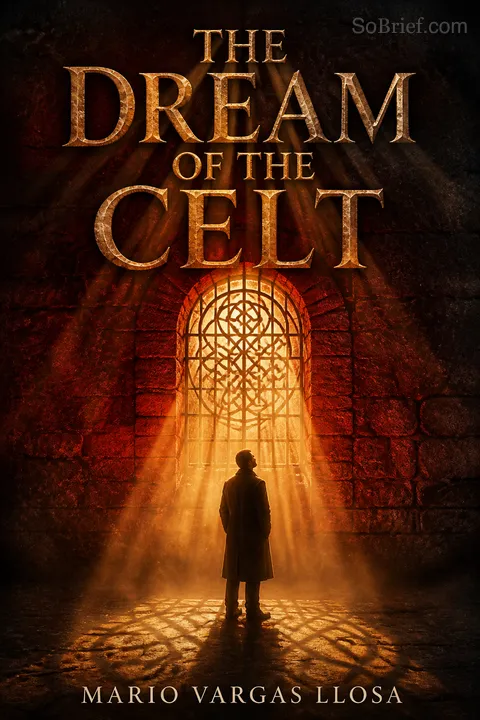
Resumen de la trama
Congo: Shadows and Awakening
Roger Casement arrives in the Congo as a British consul, initially believing in the civilizing mission of colonialism. His early optimism is shattered as he witnesses the systematic exploitation and brutalization of the Congolese people under King Leopold II's regime. The chicote, a whip made from hippopotamus hide, becomes a symbol of colonial cruelty. Casement's meticulous investigations and firsthand interviews with missionaries, soldiers, and mutilated victims reveal a landscape of suffering: villages decimated, hands severed, and entire communities erased by the insatiable demand for rubber. The experience transforms Casement, igniting a moral awakening that will haunt him for life. He begins to question not only the colonial project but also his own complicity, setting him on a path from imperial servant to passionate advocate for the oppressed.
Childhood Echoes and Loss
Born in Ireland to a Protestant father and a secretly Catholic mother, Casement's childhood is marked by love, loss, and a sense of not fully belonging. His mother's early death leaves a void, and his father's emotional distance and eventual decline into spiritualism deepen Roger's isolation. Raised among relatives in the Ulster countryside, he finds solace in nature and stories of Irish myth, but always feels like an outsider. The duality of his upbringing—between British loyalty and Irish roots, Protestant and Catholic—plants the seeds of his later identity crisis. The loss of his mother becomes a recurring motif, a source of longing and a touchstone for his search for meaning and belonging throughout his life.
Colonial Dreams Shattered
Casement's youthful belief in the civilizing power of commerce and Christianity is tested as he works for trading companies and later as a diplomat in Africa. He witnesses firsthand the hypocrisy of colonial rhetoric: treaties signed by illiterate chiefs, forced labor, and the use of violence to extract resources. Encounters with figures like Henry Morton Stanley reveal the self-serving nature of imperial adventurers. Casement's attempts to mitigate abuses—insisting on payment for African laborers, denouncing the chicote—are met with indifference or hostility. His growing disillusionment is compounded by illness and loneliness. The Congo becomes both a crucible and a graveyard for his ideals, forging in him a new sense of justice and a deep skepticism toward empire.
The Rubber Curse Unveiled
Tasked with investigating rumors of atrocities, Casement embarks on a harrowing journey through the Congo's interior. He documents the devastation wrought by the rubber trade: villages emptied, bodies mutilated, and survivors traumatized. His report, later known as the Casement Report, shocks the world and galvanizes international outrage. Yet, the machinery of exploitation proves resilient. Casement's efforts to bring justice are stymied by political interests and the inertia of empire. The experience leaves him physically and emotionally scarred, but also cements his reputation as a fearless truth-teller. The Congo's suffering becomes a mirror for Casement's own internal conflicts and a catalyst for his transformation from imperial agent to radical critic.
Witness to Atrocity
Haunted by what he has seen, Casement returns to Europe a changed man. He forms alliances with activists like Edmund Morel and Alice Stopford Green, launching campaigns against colonial abuses. His friendship with Joseph Conrad, who draws on Casement's experiences for "Heart of Darkness," underscores the moral ambiguity and psychological toll of bearing witness. Casement's reports make him both a hero and a target; he is celebrated for his courage but also vilified by those with vested interests. The publication of his findings brings fleeting reforms but also personal isolation. The darkness of the Congo lingers in his psyche, fueling both his activism and his growing sense of alienation from the world he once served.
The Amazonian Inferno
Casement's crusade leads him to the Amazon, where he investigates the Peruvian Amazon Company's exploitation of indigenous peoples. The pattern repeats: forced labor, torture, and mass death in the pursuit of rubber. Casement's meticulous documentation exposes the complicity of British investors and the indifference of local authorities. He rescues survivors, confronts company officials like Victor Macedo and Armando Normand, and risks his life to smuggle evidence out of the jungle. The Amazon becomes another theater of human cruelty, echoing the Congo's horrors. Casement's reports spark international condemnation but also unleash a backlash. The relentless exposure to suffering deepens his empathy but also erodes his health and spirit, pushing him toward the brink of despair.
Allies and Betrayals
Casement's activism brings him into contact with a network of reformers, writers, and politicians. His relationships with figures like Alice Stopford Green, Herbert Ward, and Joseph Conrad are marked by mutual admiration but also by ideological rifts and personal disappointments. The campaign against the rubber barons is undermined by political expediency and the self-interest of supposed allies. Casement's sexuality, discreetly expressed in coded diaries and fleeting encounters, becomes a source of vulnerability. As rumors and accusations swirl, he finds himself increasingly isolated, betrayed by friends and institutions he once trusted. The personal and political intertwine, leaving Casement exposed to both public censure and private heartbreak.
The Making of a Rebel
Disillusioned with the limits of reform, Casement turns his attention to Ireland. Inspired by the Gaelic revival and the struggle for national self-determination, he becomes involved with the Irish Volunteers and Sinn Féin. His experiences in the colonies convince him that only armed resistance can break the chains of oppression. Casement's dual identity—British knight and Irish nationalist—places him in a precarious position. He travels to the United States and Germany, seeking support for Irish independence. The outbreak of World War I presents both an opportunity and a dilemma: can Ireland's cause be advanced through alliance with Britain's enemies? Casement's journey from imperial servant to rebel is fraught with moral ambiguity and personal risk.
Ireland's Burning Heart
Back in Ireland, Casement is swept up in the rising tide of nationalist sentiment. He helps organize the smuggling of arms, delivers impassioned speeches, and forges connections with key leaders of the independence movement. Yet, he is also plagued by doubts about the wisdom and timing of armed rebellion. The divisions within the nationalist camp—between moderates and radicals, Catholics and Protestants, pragmatists and idealists—mirror Casement's own internal struggles. His efforts to secure German support for the Easter Rising are hampered by mistrust and miscommunication. As the insurrection approaches, Casement finds himself increasingly marginalized, his warnings unheeded, his loyalty questioned by both allies and adversaries.
The Easter Rising's Tragedy
The Easter Rising erupts in Dublin, a bold but doomed attempt to seize Irish independence. Casement, arriving by German submarine with arms and hopes of averting disaster, is quickly captured. The rebellion is crushed, its leaders including Patrick Pearse and Joseph Plunkett executed, and Ireland plunged into mourning and renewed resistance. Casement's role is misunderstood; he is painted as both traitor and martyr. His trial in London is a spectacle of political retribution, with his private life weaponized against him. The publication of his alleged "Black Diaries" destroys his reputation and undermines efforts to save him from execution. In prison, Casement confronts his fate with a mixture of resignation, faith, and longing for the Ireland he loved.
Prison, Shame, and Faith
Imprisoned in Pentonville, Casement endures physical deprivation, public vilification, and the betrayal of friends and countrymen. The exposure of his private diaries—real or forged—turns public opinion against him, casting him as a degenerate as well as a traitor. Visits from loyal friends and family offer brief solace, but the weight of shame and impending death is overwhelming. Casement turns to religion, seeking comfort in confession and the rituals of the Catholic faith. His final days are marked by introspection, regret, and a search for meaning in suffering. The boundaries between personal and political, public and private, blur as Casement prepares to meet his end.
The Final Reckoning
As the date of his execution approaches, Casement reflects on his life's journey—from the green hills of Ireland to the jungles of Africa and South America, from imperial servant to condemned rebel. He writes farewell letters, confesses his sins, and reconciles with his faith. The night before his death is filled with memories, dreams, and a sense of peace hard-won through suffering. On the morning of August 3, 1916, Casement walks to the gallows with composure, accompanied by priests and watched by indifferent officials. His last word is "Ireland." In death, he becomes both a symbol of sacrifice and a cautionary tale about the costs of conscience and the complexities of identity.
Legacy in Ashes
Casement's execution does not end his story. His body is buried in an unmarked grave, his name tainted by scandal and political manipulation. For decades, the controversy over the authenticity of the "Black Diaries" overshadows his achievements. In Ireland, his legacy is slow to be reclaimed, hindered by social conservatism and the stigma of his sexuality. Only with changing attitudes does Casement begin to be recognized as a pioneer of human rights and a martyr for Irish freedom. His life becomes a battleground for competing narratives—hero or traitor, saint or sinner, victim or agent of his own downfall.
The Many Faces of Casement
Casement's story resists easy categorization. He is at once a product of empire and its fiercest critic, a man of faith and doubt, a public crusader and a private outcast. His capacity for empathy is matched by his vulnerability to despair. The same qualities that make him a champion of the oppressed—idealism, sensitivity, moral rigor—also render him susceptible to isolation and betrayal. His sexuality, a source of both joy and shame, becomes a weapon in the hands of his enemies. Casement's life is a testament to the irreducible complexity of the human soul, the impossibility of separating light from shadow.
The Price of Conscience
Casement's journey is marked by sacrifice—of comfort, reputation, and ultimately life itself—in the service of justice and freedom. His willingness to bear witness to atrocity, to speak truth to power, exacts a heavy toll. The world he sought to change proves resistant, and his own flaws are magnified by adversity. Yet, in his final moments, Casement finds a measure of redemption—not in vindication or victory, but in the integrity of his conscience and the love of those who remain loyal. His story is a meditation on the costs and rewards of living according to one's deepest convictions.
The Dream of the Celt
Casement's life embodies the dream of the Celt: a longing for justice, freedom, and belonging that transcends borders and identities. His struggles in the Congo, the Amazon, and Ireland are united by a refusal to accept the world as it is. The dream is both realized—in the inspiration he provides to future generations—and denied, in the suffering and failure that mark his end. Casement's legacy is not a simple triumph, but a challenge: to confront the darkness within and without, to hold fast to hope in the face of despair, and to recognize the humanity in all its contradictions.
Analysis
"El sueño del celta" is a profound meditation on the costs of conscience, the ambiguities of identity, and the enduring struggle for justice in a world marked by cruelty and hypocrisy. Through the life of Roger Casement, Mario Vargas Llosa explores the psychological and moral complexities of bearing witness to atrocity, the dangers of idealism, and the personal toll of living according to one's deepest convictions. The novel interrogates the myths of empire and nation, exposing the violence and self-deception at their core. Casement's journey—from colonial official to radical critic, from celebrated humanitarian to condemned traitor—embodies the contradictions of his era and the perennial tension between public virtue and private vulnerability. The use of the "Black Diaries" as both plot device and symbol raises questions about truth, reputation, and the politics of memory. Ultimately, the novel suggests that heroism is inseparable from frailty, and that the dream of freedom—personal, national, or universal—remains both a guiding light and an elusive ideal. Casement's legacy, contested and complex, challenges readers to confront the darkness within and to persist in the pursuit of justice, even when the world seems indifferent or hostile.
Resumen de reseñas
The Dream of the Celt is a historical novel about Roger Casement, an Irish nationalist and human rights activist. The book explores Casement's experiences in Congo and Peru, where he exposed colonial atrocities, and his later involvement in the Irish independence movement. Reviews praise Vargas Llosa's detailed portrayal of Casement's life and the historical context, though some find the writing style dry at times. The novel is commended for its exploration of complex themes like colonialism, human rights, and personal identity. Overall, readers appreciate the book's historical significance and Vargas Llosa's storytelling.
También leyeron


Characters
Roger Casement
Roger Casement is the novel's complex protagonist, a man whose life is defined by contradiction and transformation. Born into a divided Irish family, he is shaped by early loss and a sense of not fully belonging. His career as a colonial official exposes him to the darkest aspects of imperialism, awakening in him a fierce empathy for the oppressed. Casement's journey from imperial servant to radical critic is marked by courage, vulnerability, and a relentless pursuit of justice. His sexuality, discreetly expressed and later weaponized against him, adds another layer of isolation and complexity. Casement's relationships—with friends, lovers, and political allies—are fraught with both intimacy and betrayal. In his final days, he seeks solace in faith and memory, facing death with a mixture of resignation and defiance. Casement's legacy is both inspiring and cautionary, a testament to the costs of conscience and the enduring power of the human spirit.
Alice Stopford Green
Alice Stopford Green is a historian and activist who becomes Casement's closest friend and intellectual anchor. Her salon in London is a hub for Irish nationalists, writers, and reformers. Alice's influence is profound: she introduces Casement to the richness of Irish history and culture, encourages his political engagement, and provides unwavering support during his trials. Their relationship is marked by deep affection, mutual respect, and occasional disagreement—especially over Casement's alliance with Germany. Alice's loyalty endures even as Casement's reputation is destroyed by scandal. She embodies the moral and emotional center of his life, offering both comfort and challenge as he navigates the complexities of identity, politics, and faith.
Edmund D. Morel
Edmund Morel is a British journalist and activist whose partnership with Casement is instrumental in exposing the atrocities of the Congo. Driven by a passion for justice and a meticulous attention to detail, Morel complements Casement's idealism with strategic acumen. Their collaboration leads to the formation of the Congo Reform Association and sparks international outrage. Yet, their relationship is not without strain; political differences and the pressures of public life create distance. Morel's eventual refusal to support Casement during his trial is a source of deep pain, highlighting the fragility of alliances in the face of scandal and political expediency.
Joseph Conrad
Joseph Conrad, the Polish-born novelist, meets Casement in the Congo and is profoundly influenced by his experiences. Their friendship is characterized by intellectual exchange and mutual admiration. Conrad's "Heart of Darkness" draws on Casement's reports, exploring the psychological and moral dimensions of colonial atrocity. Yet, Conrad's reluctance to publicly support Casement during his trial reflects the limits of solidarity in a world governed by fear and self-preservation. Conrad serves as both witness and commentator, illuminating the ambiguities of conscience and the darkness at the heart of human nature.
Herbert Ward
Herbert Ward is an English sculptor and former African adventurer who shares with Casement a passion for justice and a deep skepticism toward empire. Their friendship is rooted in shared experiences and mutual respect, but is ultimately tested by political differences and personal tragedy. Ward's loss of his son in World War I and his disapproval of Casement's alliance with Germany create an irreparable rift. Ward embodies the tensions between loyalty and principle, cosmopolitanism and nationalism, that define Casement's world.
Robert Monteith
Robert Monteith is a former British officer turned Irish nationalist who becomes Casement's closest ally during the final phase of his life. Brave, disciplined, and unwavering in his commitment, Monteith accompanies Casement on the ill-fated submarine mission to Ireland. His loyalty and optimism provide a counterpoint to Casement's doubts and despair. Monteith's presence is a source of strength, but also a reminder of the sacrifices demanded by revolutionary struggle. His fate remains uncertain, a symbol of the unresolved tensions at the heart of the Irish cause.
Patrick Pearse
Patrick Pearse is a poet, educator, and revolutionary whose charisma and idealism inspire the Easter Rising. His belief in the redemptive power of sacrifice shapes the movement's ethos and strategy. Pearse's relationship with Casement is marked by both admiration and disagreement, particularly over the timing and tactics of rebellion. His execution after the Rising cements his status as a martyr and galvanizes the nationalist movement. Pearse represents the fusion of spirituality and politics, the willingness to embrace suffering for a higher cause.
Joseph Plunkett
Joseph Plunkett is a young, frail intellectual whose brilliance and fervor make him a key architect of the Easter Rising. His collaboration with Casement in Germany is driven by a shared sense of urgency and destiny. Plunkett's commitment to martyrdom and his belief in the transformative power of bloodshed reflect the mystical strain in Irish nationalism. His tragic death, shortly after marrying his beloved Grace Gifford, adds a note of personal loss to the collective tragedy of the Rising.
Victor Macedo & Armando Normand
Victor Macedo and Armando Normand are among the most notorious overseers in the Amazonian rubber camps. Their actions—torture, murder, and the systematic dehumanization of indigenous peoples—embody the darkest aspects of colonial exploitation. Casement's confrontations with them are moments of moral clarity and personal risk. These characters serve as foils to Casement's conscience, illustrating the capacity for ordinary men to become instruments of atrocity in the pursuit of profit and power.
Eivind Adler Christensen
Eivind Adler Christensen is a young Norwegian whose relationship with Casement is marked by intimacy, dependence, and ultimately betrayal. Initially a source of comfort and desire, Eivind's true loyalties are ambiguous; he is suspected of being a British informant. His presence exposes Casement's vulnerability and the dangers of trust in a world of espionage and intrigue. Eivind's actions contribute to Casement's downfall, highlighting the personal costs of political struggle and the fragility of human connection.
Plot Devices
Framing Narrative and Temporal Shifts
The novel employs a framing device: Casement's final days in Pentonville Prison, awaiting execution, serve as the anchor for a series of extended flashbacks. The narrative moves fluidly between past and present, weaving together childhood memories, African and Amazonian adventures, and the unfolding tragedy of the Easter Rising. This structure allows for a deep exploration of memory, regret, and the search for meaning at the end of life. The juxtaposition of personal and historical timelines underscores the interplay between individual agency and the forces of history.
Testimony, Documentation, and the Power of Witness
Casement's role as investigator and chronicler is central. His reports on the Congo and Amazon are not just plot points but meditations on the act of bearing witness. The novel foregrounds the tension between truth and denial, the risks of speaking out, and the ways in which testimony can be both weapon and shield. The "Black Diaries"—whether authentic or forged—become a plot device that encapsulates the dangers of documentation: the written word as both evidence and curse, capable of saving or destroying a life.
Duality, Identity, and Psychological Conflict
Casement's internal divisions—Irish and British, Protestant and Catholic, public hero and private outcast—mirror the broader conflicts of his era. The novel uses motifs of doubling and mirroring to explore the instability of identity. Psychological realism is achieved through introspective passages, dreams, and hallucinations, blurring the boundaries between reality and imagination. The narrative interrogates the costs of living with divided loyalties and the impossibility of achieving wholeness in a fractured world.
Foreshadowing and Irony
From the outset, the narrative is suffused with a sense of impending tragedy. Early episodes—childhood losses, colonial disillusionment, failed friendships—foreshadow Casement's ultimate fate. Irony pervades the story: the man who exposes the crimes of empire is destroyed by the very powers he once served; the champion of justice is condemned as a traitor and pervert. The use of historical hindsight deepens the sense of inevitability, inviting readers to reflect on the interplay of choice and circumstance.
Symbolism and Motifs
Recurring symbols—the chicote, the rubber, the diaries, the gallows—serve as touchstones for the novel's themes of suffering, complicity, and the longing for liberation. The "dream of the Celt" motif encapsulates the tension between aspiration and reality, hope and despair. Nature—lush, indifferent, and sometimes healing—contrasts with the violence of human society. The motif of the journey, both literal and metaphorical, underscores the restless search for meaning and belonging.
Sobre el autor
Otros libros de Mario Vargas Llosa

Descargar PDF
Descargar EPUB
.epub digital book format is ideal for reading ebooks on phones, tablets, and e-readers.








































