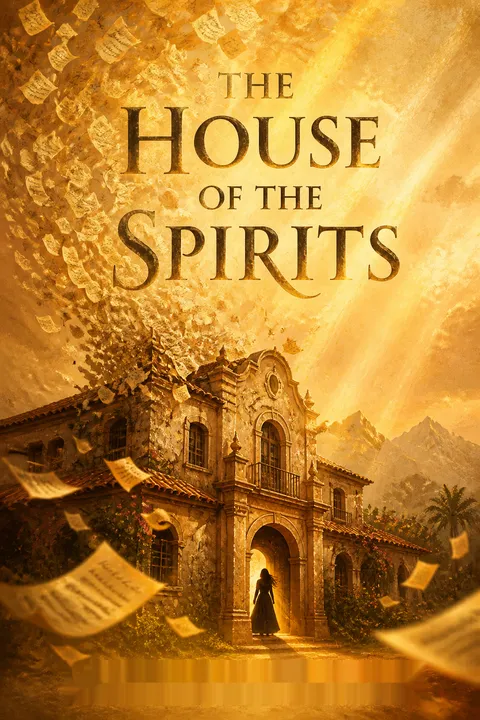

Resumen de la trama
La llegada de Barrabás, el perro
Un perro misterioso llega por mar. La novela comienza con la llegada de Barrabás, un perro que llega a la familia del Valle por mar, marcando el inicio de una historia donde lo mágico se entrelaza con lo cotidiano. Clara, una joven con inclinación por documentar los acontecimientos importantes, anota la llegada del perro, que presagia el viaje espiritual y sobrenatural de la familia. La familia del Valle, presentada durante una solemne misa de Jueves Santo, prepara el escenario para una narrativa rica en temas de familia, espiritualidad y misticismo.
El silencio profético de Clara
El silencio y la clarividencia de Clara emergen. Tras un evento traumático, la joven Clara del Valle opta por el silencio, refugiándose en un mundo de sueños proféticos y telequinesis. Su familia, especialmente su madre Nívea, lucha por comprender sus dones. El silencio de Clara se convierte en un símbolo poderoso de su conexión con el mundo espiritual, distinguiéndola de las preocupaciones ordinarias de su familia y resaltando su papel como puente entre lo místico y lo real.
Las ambiciones de Esteban
Esteban busca riqueza y poder. Esteban Trueba, comprometido con Rosa, hermana de Clara, está impulsado por una ambición implacable de restaurar la fortuna familiar. Su incansable trabajo en las minas y su sueño de casarse con Rosa subrayan su determinación y anticipan su futuro como patriarca. El carácter de Esteban se define por su búsqueda del éxito, que tendrá consecuencias duraderas para su familia y las generaciones venideras.
La dinámica familiar Trueba
Relaciones complejas moldean la saga familiar. Se presenta a la familia Trueba, con la hermana de Esteban, Férula, desempeñando un papel significativo. Férula sacrifica su propia felicidad para cuidar a su madre enferma, generando tensiones con Esteban. Su relación está cargada de resentimientos y obligaciones no expresadas, preparando el terreno para futuros conflictos y alianzas dentro de la familia, mientras las ambiciones de Esteban chocan con el desinterés de Férula.
El despertar espiritual de Clara
Clara abraza sus dones místicos. Clara profundiza en su camino espiritual, aceptando sus habilidades clarividentes y convirtiéndose en médium. Su conexión con el mundo espiritual contrasta marcadamente con las búsquedas materialistas de Esteban, destacando el tema de dualidad en la novela. El despertar de Clara es tanto una transformación personal como un catalizador de cambio dentro de la familia, desafiando creencias y expectativas tradicionales.
La tragedia de Rosa
La muerte prematura de Rosa conmociona a todos. Rosa, conocida por su belleza etérea, muere inesperadamente, dejando a la familia en duelo. Su fallecimiento marca un punto de inflexión, afectando profundamente a cada personaje. Esteban, devastado por la pérdida de su prometida, redirige sus ambiciones hacia la reconstrucción de la hacienda familiar. La muerte de Rosa subraya la exploración de la novela sobre el destino, el amor y el impacto de la pérdida en el espíritu humano.
El amor secreto de Blanca y Pedro
Amigos de la infancia se convierten en amantes secretos. Blanca y Pedro Tercero, amigos desde niños, se reencuentran en Tres Marías, donde sus juegos inocentes evolucionan hacia un romance clandestino. A pesar de las presiones sociales y familiares, encuentran consuelo en la compañía mutua, soñando con un futuro juntos. Sin embargo, su amor está lleno de desafíos, pues el padre de Blanca, Esteban, nunca lo aprobaría. Sus encuentros secretos se vuelven un escape preciado de sus mundos restringidos.
La despedida fantasmal de Férula
El espíritu de Férula visita a Clara. Férula, la hermana distanciada de Esteban, realiza una visita espectral a la casa Trueba, anunciando su muerte. Su aparición es un recordatorio conmovedor de su vida desinteresada y del vínculo no expresado que compartía con Clara. La presencia fantasmal de Férula subraya el tema de la novela sobre las conexiones espirituales que trascienden la muerte, dejando una huella duradera en Clara y profundizando su conciencia del mundo espiritual.
El terremoto sacude el mundo de Trueba
Un desastre natural cambia vidas. Un devastador terremoto golpea, destruyendo la hacienda de los Trueba y su sentido de seguridad. Esteban resulta gravemente herido, y la familia debe unirse para sobrevivir a las secuelas. Clara, obligada a tomar el mando, descubre su propia fortaleza y resiliencia. El desastre actúa como catalizador de cambio, exponiendo la fragilidad de sus vidas y la necesidad de adaptación, reflejando las convulsiones internas dentro de la familia.
La silenciosa rebeldía de Clara
Clara se aleja de Esteban. Tras una confrontación violenta con Esteban, Clara se retira en silencio, cortando los lazos emocionales con su esposo. Su retirada es un acto poderoso de desafío, afirmando su autonomía y rechazando el control opresivo de Esteban. El silencio de Clara se convierte en un símbolo de su fuerza interior e independencia espiritual, permaneciendo como una fuerza guía para sus hijos, especialmente para Blanca.
El matrimonio no deseado de Blanca
La unión forzada de Blanca con Jean. Bajo la presión de Esteban, Blanca se casa con Jean de Satigny, un hombre al que no ama, para legitimar a su hijo no nacido y evitar un escándalo. Su corazón permanece con Pedro Tercero, y lucha con las limitaciones de su nueva vida. Su matrimonio está marcado por el engaño y la desilusión, evidenciando el conflicto entre las expectativas sociales y los deseos personales.
El nacimiento afortunado de Alba
El nacimiento de Alba trae esperanza. Alba, hija de Blanca, nace en circunstancias auspiciosas, simbolizando esperanza y renovación para la familia Trueba. Su llegada es un momento de alegría en medio de las luchas continuas. Clara ve en Alba un faro de luz, destinada a la felicidad y al éxito. El nacimiento de Alba marca un nuevo capítulo para la familia, mientras navegan las complejidades del amor, el legado y el paso del tiempo.
El espíritu de Clara nunca se va
La presencia de Clara conforta a Esteban Trueba. Tras la muerte de Clara, Esteban es perseguido por su espíritu, que él percibe como una presencia reconfortante. A pesar de su escepticismo inicial, encuentra consuelo en la creencia de que Clara le ha perdonado sus transgresiones pasadas. Su espíritu simboliza el poder duradero del amor y el perdón, brindando a Esteban paz y una conexión con el mundo espiritual que Clara siempre abrazó.
La valiente resistencia de Alba
Alba soporta la tortura con resiliencia. Alba, nieta de Esteban, es capturada y torturada por el régimen por ayudar a fugitivos políticos. A pesar de la brutalidad, se mantiene desafiante, negándose a traicionar a sus seres queridos. Su fortaleza y coraje se convierten en un testimonio de la capacidad del espíritu humano para resistir la opresión, resaltando los temas de resistencia y lucha por la justicia frente a la tiranía.
El nuevo comienzo de Alba
Alba encuentra esperanza y renovación. Tras sobrevivir a su calvario, Alba emerge con un renovado sentido de propósito. Decide documentar la historia de su familia, usando los cuadernos de Clara como guía. A través de la narración, Alba busca preservar el pasado mientras forja un nuevo camino para ella y su hijo por nacer. Su viaje simboliza la resiliencia del espíritu humano y el legado perdurable del amor y la familia.
Personajes
Clara del Valle
Un alma mística y profética. Clara es la hija menor de la familia del Valle, conocida por sus habilidades clarividentes y profunda conexión con el mundo espiritual. Su silencio y sueños proféticos la distinguen, convirtiéndola en una figura central en la narrativa familiar. Clara encarna el realismo mágico de la novela, navegando los límites entre lo visible y lo invisible.
Esteban Trueba
Patriarca ambicioso y temperamental. Esteban está impulsado por la ambición y el deseo de restaurar la fortuna familiar. Su compromiso con Rosa y posterior matrimonio con Clara moldean su trayectoria vital. Su temperamento volátil y búsqueda implacable de poder influyen en sus relaciones y en el legado familiar, convirtiéndolo en una figura compleja en busca de redención.
Blanca Trueba
Dividida entre el amor y el deber. Blanca es hija de Esteban y Clara, atrapada entre su amor por Pedro Tercero y las expectativas de su padre. Su vida está marcada por compromisos, incluido un matrimonio no deseado. A pesar de sus luchas, Blanca se mantiene resiliente, encontrando fuerza en el amor por su hija Alba, encarnando la tensión entre las normas sociales y la libertad personal.
Pedro Tercero García
Amante rebelde y apasionado. Pedro Tercero es amigo de la infancia y amante secreto de Blanca. Sus ideales revolucionarios y desafío a la autoridad lo convierten en blanco de la ira de Esteban. A pesar de los peligros, Pedro permanece comprometido con su amor por Blanca y su visión de cambio social, representando la lucha por la justicia y la igualdad.
Alba Trueba
Superviviente resiliente y compasiva. Alba, nieta de Esteban y Clara, es conocida por su coraje y determinación. Sus experiencias de tortura y resistencia resaltan su fortaleza y compromiso con la justicia. Alba encarna los temas de resiliencia y el poder del amor para superar el odio y la violencia.
Férula Trueba
Hermana desinteresada y devota. Férula es la hermana de Esteban, cuya vida está marcada por sacrificios y deseos no cumplidos. Su visita fantasmal a Clara simboliza su vínculo perdurable con la familia. Férula destaca temas de lealtad, amor y el impacto de las expectativas sociales en la felicidad personal.
Jean de Satigny
Esposo encantador pero engañoso. Jean es el esposo de Blanca, cuyo exterior refinado oculta una vida de secretos y excesos. Su matrimonio con Blanca es una fachada, impulsada por ganancias financieras más que por amor. Jean representa la superficialidad y ambigüedad moral de la alta sociedad.
Recursos narrativos
Realismo mágico
Mezcla de realidad y lo sobrenatural. La novela emplea el realismo mágico para explorar la intersección entre lo místico y lo cotidiano. La clarividencia de Clara y la visita fantasmal de Férula resaltan la permeabilidad de la realidad, desafiando las percepciones y creencias de los personajes. Este recurso enriquece la narrativa, permitiendo una exploración más profunda de temas como el destino, el amor y lo sobrenatural.
Saga familiar
Narrativa generacional de amor y conflicto. La historia se despliega como una saga familiar multigeneracional, siguiendo las vidas y relaciones de las familias del Valle y Trueba. Esta estructura permite una rica exploración de temas como el legado, el poder y el impacto de la historia en las vidas individuales. El formato de saga familiar ofrece un marco para el desarrollo intrincado de personajes y la profundidad temática de la novela.
Simbolismo
Objetos y eventos con significados profundos. La novela utiliza el simbolismo para transmitir temas y emociones complejas. Barrabás, el perro, representa la intersección de lo mágico y lo mundano, mientras que el nacimiento de Alba simboliza esperanza y renovación. Estos símbolos enriquecen la narrativa, ofreciendo a los lectores una visión del mundo interior de los personajes y los temas generales de la novela.
Análisis
Exploración del poder, el amor y el legado. "La casa de los espíritus" de Isabel Allende es una profunda exploración de la interacción entre poder, amor y legado dentro de una saga familiar. A través del realismo mágico, la novela se adentra en las complejidades de las relaciones humanas, el impacto de las convulsiones políticas y sociales, y el poder perdurable del amor y el perdón. La narrativa de Allende entreteje lo místico y lo cotidiano, invitando a los lectores a considerar la permeabilidad de la realidad y el potencial transformador de la compasión y la comprensión. El rico tapiz de personajes y temas ofrece una reflexión atemporal sobre la condición humana, enfatizando la importancia de la resiliencia, la esperanza y la capacidad de cambio.
También leyeron

Preguntas frecuentes
Synopsis & Basic Details
What is The House of the Spirits about?
- Multi-generational family saga: The House of the Spirits chronicles the lives of the del Valle and Trueba families across several generations, exploring their loves, losses, and the impact of political and social upheaval in an unnamed South American country.
- Magical realism intertwines: The narrative blends realistic events with elements of the supernatural, such as clairvoyance, telekinesis, and ghostly visitations, creating a unique and captivating world.
- Themes of love, power, and justice: The novel delves into themes of love, both romantic and familial, the corrupting influence of power, and the struggle for social justice, all set against a backdrop of political turmoil and revolution.
Why should I read The House of the Spirits?
- Rich, immersive storytelling: Isabel Allende's writing style is captivating, drawing readers into a world filled with vivid characters, intricate relationships, and a blend of the real and the magical.
- Exploration of complex themes: The novel tackles profound themes such as love, loss, power, social injustice, and the cyclical nature of history, offering readers much to contemplate.
- Unique blend of genres: The House of the Spirits seamlessly combines elements of family saga, historical fiction, and magical realism, creating a reading experience that is both thought-provoking and emotionally resonant.
What is the background of The House of the Spirits?
- Unnamed South American country: The novel is set in an unnamed South American country, drawing inspiration from Chile's political and social history, particularly the period of unrest and dictatorship.
- Political and social upheaval: The story unfolds against a backdrop of political turmoil, including the rise of socialism, military coups, and the struggle for social justice, reflecting the turbulent history of Latin America.
- Cultural and historical influences: The narrative incorporates elements of Latin American culture, including its rich traditions, folklore, and the influence of indigenous beliefs, adding depth and authenticity to the story.
What are the most memorable quotes in The House of the Spirits?
- "Barrabás came to us by sea...": This iconic opening line immediately establishes the novel's blend of the ordinary and the extraordinary, setting the stage for the magical realism that permeates the story.
- "How much does a man live, after all? Does he live a thousand days, or one only?": This quote from Pablo Neruda, which serves as an epigraph, encapsulates the novel's exploration of time, memory, and the fleeting nature of human existence.
- "I'm going to be married soon,": Clara's sudden declaration after years of silence is a pivotal moment, highlighting her connection to the spiritual realm and foreshadowing the events that will shape her life and the lives of those around her.
What writing style, narrative choices, and literary techniques does Isabel Allende use?
- Magical Realism: Allende masterfully blends realistic events with fantastical elements, creating a world where the supernatural is commonplace and accepted, enhancing the novel's thematic depth.
- Non-linear narrative: The story unfolds through multiple perspectives and across generations, employing flashbacks and foreshadowing to create a complex and interconnected narrative structure.
- Rich, evocative language: Allende's prose is characterized by its vivid imagery, sensory details, and lyrical quality, drawing readers into the world of the novel and making it feel both real and magical.
Hidden Details & Subtle Connections
What are some minor details that add significant meaning?
- The color green: Rosa's green hair and the green of the sea are recurring motifs, symbolizing her otherworldly beauty and her connection to the mystical, foreshadowing her early death and her transformation into a mermaid-like figure.
- The three-legged table: Clara's three-legged table, which moves on its own, is a recurring symbol of her connection to the spirit world and her ability to manipulate the physical realm, highlighting her unique powers.
- The embroidered tablecloth: Rosa's endless embroidery of fantastical creatures foreshadows the blending of reality and imagination in the novel, and the tablecloth itself becomes a symbol of her creative spirit and her escape from the mundane.
What are some subtle foreshadowing and callbacks?
- Clara's prophecies: Clara's early predictions, such as the earthquake and the death of her godfather, foreshadow the many tragedies and upheavals that will befall her family, highlighting her clairvoyant abilities.
- The poisoned brandy: The poisoned brandy intended for Severo del Valle foreshadows the political violence and betrayals that will plague the family, and the fact that it kills Rosa instead highlights the theme of unintended consequences.
- The recurring image of the mermaid: Rosa's description as a mermaid and her transformation in death foreshadow the blending of the real and the mythical, and the image reappears later in the novel, connecting her to the spiritual realm.
What are some unexpected character connections?
- Férula and Clara's bond: Despite their different personalities, Férula and Clara develop a deep, unspoken bond, with Férula becoming Clara's caretaker and confidante, highlighting the unexpected connections that can form between seemingly disparate individuals.
- Pedro Tercero and Jaime's friendship: Despite their different social classes and political views, Pedro Tercero and Jaime form a strong bond, highlighting the power of shared ideals and the unexpected connections that can transcend social barriers.
- Tránsito Soto and Esteban Trueba: The unexpected connection between Esteban and Tránsito, a prostitute he knew from his youth, reveals a hidden side of his character and foreshadows her later role in his life, highlighting the complex relationships that can form across social divides.
Who are the most significant supporting characters?
- Nana: Nana is a constant presence in the del Valle household, serving as a caretaker, confidante, and a link to the family's past, providing a sense of continuity and stability amidst the chaos.
- Pedro Segundo García: Pedro Segundo is a loyal and hardworking tenant of Tres Marías, whose relationship with Esteban Trueba is complex and fraught with tension, highlighting the power dynamics between landowners and peasants.
- The three Mora sisters: The three Mora sisters are spiritualists who become close friends with Clara, providing her with a community of like-minded individuals and further exploring the novel's themes of the supernatural.
Psychological, Emotional, & Relational Analysis
What are some unspoken motivations of the characters?
- Esteban's need for control: Esteban's relentless pursuit of wealth and power stems from a deep-seated need for control, driven by his impoverished childhood and his desire to avoid vulnerability, which ultimately leads to his isolation.
- Férula's desire for recognition: Férula's devotion to her mother and brother masks a deep-seated desire for recognition and love, which she expresses through self-sacrifice and a subtle manipulation of those around her.
- Clara's search for meaning: Clara's retreat into silence and her exploration of the spiritual realm are driven by a search for meaning and purpose beyond the confines of her family and society, highlighting her desire for autonomy and connection to something greater.
What psychological complexities do the characters exhibit?
- Esteban's internal conflict: Esteban is torn between his desire for power and his love for his family, leading to internal conflicts and violent outbursts, highlighting the psychological toll of his ambition and his inability to reconcile his desires.
- Clara's detachment: Clara's detachment from the material world and her focus on the spiritual realm reveal a complex psychological makeup, highlighting her ability to transcend the limitations of her physical existence but also her difficulty in connecting with others on an emotional level.
- Férula's self-loathing: Férula's self-loathing and her need for self-sacrifice reveal a complex psychological makeup, highlighting her internal struggles with guilt, resentment, and her desire for both love and punishment.
What are the major emotional turning points?
- Rosa's death: Rosa's death is a major emotional turning point, triggering a series of events that shape the lives of the characters, particularly Esteban, and highlighting the fragility of life and the impact of loss.
- Clara's silence: Clara's decision to stop speaking is a major emotional turning point, marking her retreat into her inner world and her rejection of the expectations placed upon her, and highlighting her desire for autonomy.
- Esteban's violence against Clara: Esteban's act of violence against Clara is a major emotional turning point, severing their relationship and highlighting the destructive nature of his anger and his inability to control his emotions.
How do relationship dynamics evolve?
- Esteban and Férula's estrangement: The relationship between Esteban and Férula evolves from a close bond in childhood to a strained and resentful one in adulthood, highlighting the destructive impact of unspoken resentments and the inability to reconcile their different needs.
- Blanca and Pedro's enduring love: Despite societal pressures and their separation, Blanca and Pedro's love endures, highlighting the power of love to transcend social barriers and the passage of time, and their relationship evolves from a childhood friendship to a passionate and enduring love.
- Clara and Alba's bond: The relationship between Clara and Alba is characterized by a deep, unspoken understanding and a shared connection to the spiritual realm, highlighting the power of familial love and the transmission of knowledge and wisdom across generations.
Interpretation & Debate
Which parts of the story remain ambiguous or open-ended?
- The nature of Clara's powers: The extent and source of Clara's psychic abilities remain ambiguous, leaving readers to question whether they are supernatural gifts or simply a manifestation of her unique perspective on the world.
- The true identity of the assassin: The identity of the person who poisoned Rosa remains unknown, leaving readers to speculate about the motives and the larger political forces at play, and highlighting the novel's exploration of the hidden forces that shape history.
- The meaning of the spirits: The nature and purpose of the spirits that Clara communicates with remain ambiguous, leaving readers to question whether they are benevolent guides or simply figments of her imagination, and highlighting the novel's exploration of the boundaries between the real and the unreal.
What are some debatable, controversial scenes or moments in The House of the Spirits?
- Esteban's treatment of women: Esteban's violent and controlling behavior towards women, particularly his rape of Pancha García, is a controversial aspect of the novel, raising questions about power, gender, and the legacy of patriarchal societies.
- The use of violence: The novel's depiction of violence, both political and personal, is a controversial aspect, raising questions about the nature of revolution, the cycle of violence, and the human capacity for cruelty.
- The portrayal of class: The novel's portrayal of class dynamics, particularly the relationship between the wealthy landowners and the impoverished peasants, is a controversial aspect, raising questions about social justice, economic inequality, and the legacy of colonialism.
The House of the Spirits Ending Explained: How It Ends & What It Means
- Alba's decision to write: Alba's decision to document her family's history is a powerful act of resistance, reclaiming her narrative and challenging the forces that have sought to silence her, and highlighting the importance of memory and storytelling in the face of oppression.
- The cyclical nature of history: The novel's ending suggests that history is cyclical, with patterns of violence, oppression, and resistance repeating across generations, highlighting the need for change and the importance of learning from the past.
- The enduring power of love and hope: Despite the tragedies and losses, the novel's ending emphasizes the enduring power of love, family, and hope, suggesting that even in the darkest of times, the human spirit can find a way to endure and to create a better future.
Trilogía Involuntaria Serie
Descargar PDF
Descargar EPUB
.epub digital book format is ideal for reading ebooks on phones, tablets, and e-readers.








































