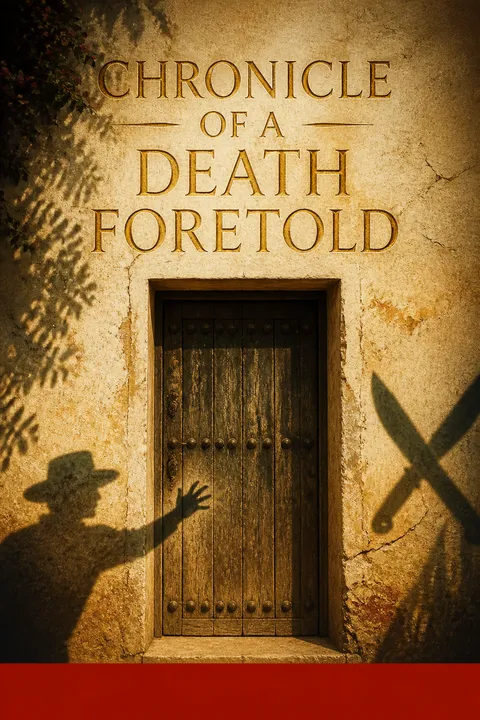

Resumen de la trama
Una Mañana Presagiosa
El día de su muerte, Santiago Nasar se despierta temprano para recibir la llegada del obispo. Lo atormentan sueños con árboles, que su madre, Plácida Linero, no logra interpretar como señales ominosas. A pesar de un dolor de cabeza y una sensación de inquietud, Santiago se viste con lino blanco, sin saber el peligro que le espera. El pueblo está lleno de expectación por la visita del obispo, pero bajo esa superficie se está gestando un suceso más oscuro. La mañana de Santiago transcurre entre interacciones rutinarias, aunque el ambiente está cargado de presagios. Su madre, reconocida por interpretar sueños, pasa por alto las señales de una tragedia inminente. Al salir, la atmósfera del pueblo mezcla celebración con una tensión no expresada, preparando el escenario para el desenlace fatal.
El Secreto Oscuro de una Boda
Ángela Vicario, devuelta a su familia la noche de bodas, acusa a Santiago Nasar de ser el hombre que le quitó la virginidad. Sus hermanos, Pedro y Pablo Vicario, sienten la obligación de restaurar el honor de su hermana. El escándalo conmociona al pueblo, aunque la verdad de la acusación de Ángela permanece ambigua. Su denuncia desencadena una cadena de eventos que conducirá a la muerte de Santiago. La boda, que debía ser una ocasión de alegría, se convierte en el catalizador de una tragedia alimentada por el honor y las expectativas sociales. La confesión de Ángela, sea cierta o no, se transforma en la fuerza motriz detrás de la misión mortal de sus hermanos.
La Decisión Mortal de los Hermanos
Pedro y Pablo Vicario, impulsados por un sentido del deber familiar, deciden matar a Santiago Nasar. Anuncian abiertamente sus intenciones, esperando que alguien los detenga. A pesar de sus declaraciones públicas, la inacción del pueblo sella el destino de Santiago. Los hermanos afilan sus cuchillos con una determinación inquebrantable, aunque en secreto desean ser detenidos. Sus acciones son una mezcla de valentía y desesperación, que reflejan la complejidad del honor y el deber. La respuesta pasiva del pueblo ante las amenazas de los hermanos subraya una complicidad colectiva en el crimen que está por ocurrir.
La Complicidad Silenciosa del Pueblo
El pueblo conoce el plan de los hermanos Vicario, pero nadie interviene. Algunos lo desestiman como palabras de borrachos, otros lo ven como una cuestión de honor. El alcalde, el coronel Aponte, confisca los cuchillos de los hermanos, pero no logra impedir que consigan otros nuevos. La renuencia de los habitantes a actuar refleja una profunda adhesión a las normas culturales y el miedo a alterar el statu quo. Esta inacción colectiva se convierte en un elemento crucial en la tragedia que se desarrolla, pues el silencio de la comunidad permite que el asesinato se lleve a cabo sin obstáculos.
El Error Fatal de una Madre
Plácida Linero, madre de Santiago, sin saberlo, deja a su hijo fuera de la casa, creyendo que está seguro adentro. Su error, basado en una falsa seguridad proporcionada por su sirvienta Divina Flor, se convierte en un momento decisivo en la historia. Cuando Santiago, herido y desesperado, se acerca a su hogar, la puerta permanece cerrada, sellando su destino. Las acciones de Plácida, guiadas por el instinto maternal y la desinformación, evidencian las trágicas consecuencias de la falta de comunicación y la fragilidad de la percepción humana en momentos críticos.
La Autopsia Implacable
Tras la muerte de Santiago, el padre Amador realiza una autopsia tosca que viola aún más el cuerpo del joven. La autopsia, ordenada por el alcalde, es un espectáculo grotesco que subraya la brutalidad del crimen. La falta de pericia médica del sacerdote resulta en un examen fallido, dejando el cuerpo de Santiago mutilado e irreconocible. Este acto de violencia póstuma refleja la incapacidad del pueblo para honrar a los muertos y sirve como un sombrío recordatorio de la sinrazón del asesinato.
Cartas de Amor Inquebrantable
Años después de la tragedia, Ángela Vicario escribe innumerables cartas a Bayardo San Román, el esposo que la devolvió. Sus cartas, llenas de anhelo y arrepentimiento, finalmente conducen a una reconciliación. Bayardo regresa con las cartas sin abrir, simbolizando una resolución compleja de su matrimonio malogrado. La persistencia de Ángela en escribir a Bayardo revela un amor duradero y un deseo de redención, ofreciendo un destello de esperanza en medio de la oscuridad del pasado.
La Culpa de una Comunidad
El pueblo sigue atormentado por la muerte de Santiago, enfrentando la culpa y el peso de su inacción. El magistrado investigador, desconcertado por el caso, no encuentra pruebas de la culpabilidad de Santiago. La memoria colectiva del suceso se convierte en un testimonio del poder destructivo del honor y la capacidad humana para la negación. Con el paso de los años, los habitantes continúan lidiando con su papel en la tragedia, incapaces de escapar a la sombra de su complicidad.
Personajes
Santiago Nasar
Santiago Nasar es un joven adinerado de ascendencia árabe, conocido por su encanto y buena apariencia. Es acusado falsamente de deshonrar a Ángela Vicario, lo que lleva a su asesinato por parte de sus hermanos. Su carácter encarna la inocencia y las trágicas consecuencias de las expectativas sociales. Su muerte, marcada por la confusión y la incredulidad, resalta la sinrazón del crimen y la naturaleza destructiva de la violencia basada en el honor.
Ángela Vicario
Ángela Vicario es la hermosa pero pasiva hija de una familia pobre. Su acusación contra Santiago Nasar pone en marcha los acontecimientos de la historia. Su personaje evoluciona de víctima de la presión social a mujer que toma control de su propia narrativa a través de sus cartas a Bayardo San Román. Sus acciones revelan las complejidades del amor, la vergüenza y la redención.
Pedro Vicario
Pedro Vicario, uno de los gemelos, es el hermano más resuelto y autoritario. Impulsado por el deber de restaurar el honor de su hermana, en secreto espera ser detenido. Su carácter refleja el conflicto interno entre las expectativas sociales y la moral personal, destacando el poder destructivo del honor.
Pablo Vicario
Pablo Vicario, el gemelo mayor, inicialmente sigue a su hermano, pero finalmente asume el liderazgo en el plan para matar a Santiago. Representa la lucha entre la lealtad familiar y la conciencia individual. Sus acciones subrayan el tema de la complicidad y la dificultad de liberarse de las normas culturales.
Plácida Linero
Plácida Linero, madre de Santiago, es conocida por su habilidad para interpretar sueños. Su incapacidad para reconocer las señales ominosas en los sueños de Santiago y su trágico error al dejarlo fuera de la casa contribuyen a su muerte. Su personaje encarna los temas del amor maternal, la falta de comunicación y los límites de la percepción humana.
Bayardo San Román
Bayardo San Román es un hombre rico y enigmático que se casa con Ángela Vicario, solo para devolverla al descubrir que no es virgen. Su carácter se define por el orgullo y el deseo de control, aunque finalmente se reconcilia con Ángela, mostrando capacidad de perdón y amor. Sus acciones resaltan las complejidades del honor y la posibilidad de redención.
Padre Amador
El padre Amador es el cura del pueblo que realiza la autopsia de Santiago. Su falta de conocimientos médicos provoca un examen fallido que profana aún más el cuerpo. Representa el fracaso de la autoridad religiosa y moral ante la violencia social.
Clotilde Armenta
Clotilde Armenta, dueña de una lechería, es una de las pocas que intenta evitar el asesinato de Santiago. Sus advertencias son ignoradas, evidenciando la inacción colectiva del pueblo. Su personaje encarna la responsabilidad individual y la lucha por actuar contra las normas sociales.
Nahir Miguel
Nahir Miguel, padre de Flora, ofrece refugio a Santiago y le presta un rifle para defenderse. Representa la sabiduría y el instinto protector familiar. Sus acciones contrastan con la pasividad del pueblo, subrayando la importancia de la agencia individual frente a la violencia.
Cristo Bedoya
Cristo Bedoya es el amigo cercano de Santiago que intenta desesperadamente advertirle del peligro. Su fracaso para alcanzarlo a tiempo resalta los temas del destino y las limitaciones de la intervención humana. Su personaje destaca los lazos de amistad y la tragedia de las oportunidades perdidas.
Recursos Narrativos
Sueños Presagios
Los sueños recurrentes de Santiago con árboles y pájaros funcionan como un recurso que anticipa su muerte. La incapacidad de su madre para interpretarlos correctamente subraya el tema de la falta de comunicación y los límites de la percepción humana. Estos sueños crean una sensación de inevitabilidad que marca el tono de la tragedia.
Honor y Venganza
El concepto de honor es un recurso central que motiva a los hermanos Vicario a matar a Santiago. La presión social para restaurar el honor de su hermana desencadena un ciclo de violencia y tragedia. Este recurso destaca el poder destructivo de las normas culturales y los dilemas morales de quienes quedan atrapados en ellas.
Inacción Pública
La falta colectiva del pueblo para impedir el asesinato de Santiago es un recurso que enfatiza los temas de complicidad y responsabilidad moral. A pesar de conocer las intenciones de los hermanos, la inacción de los habitantes permite que el crimen ocurra, reflejando los peligros de anteponer las expectativas sociales a la conciencia individual.
Redención Epistolar
Las cartas de Ángela a Bayardo funcionan como un recurso que explora los temas del amor, el arrepentimiento y la redención. Su persistencia en la escritura conduce finalmente a una reconciliación, ofreciendo una resolución a su matrimonio malogrado. Las cartas simbolizan el poder de la comunicación y la posibilidad de sanar heridas del pasado.
Análisis
"Crónica de una muerte anunciada" es una profunda exploración de la naturaleza destructiva del honor y las expectativas sociales. Gabriel García Márquez teje magistralmente una narrativa que examina las complejidades del comportamiento humano, el peso de las normas culturales y las consecuencias de la inacción. La novela funciona como una crítica a una sociedad que prioriza el honor por encima de la vida humana, evidenciando los dilemas morales de quienes quedan atrapados en su red. A través del trágico destino de Santiago Nasar, Márquez expone la absurdidad de la violencia justificada por el honor y la culpa colectiva de una comunidad que la permite. La vigencia de la obra radica en su capacidad para provocar reflexión sobre los valores que rigen las relaciones humanas y la necesidad de la agencia individual para desafiar códigos culturales destructivos.
También leyeron



Preguntas frecuentes
Synopsis & Basic Details
What is Chronicle of a Death Foretold about?
- Inevitable murder foretold: The novella centers on the foretold murder of Santiago Nasar, a young man in a small Colombian town, exploring the events leading up to his death and the community's complicity.
- Honor culture explored: The story examines the rigid social codes of honor and revenge that dictate the actions of the Vicario brothers, who openly declare their intention to kill Santiago Nasar to avenge their sister's dishonor.
- Narrative reconstruction unfolds: The narrator, a friend of Santiago Nasar, returns to the town years later to piece together the fragmented memories and testimonies of the townspeople, attempting to understand the circumstances surrounding the tragedy.
Why should I read Chronicle of a Death Foretold?
- Masterful storytelling captivates: Gabriel García Márquez's unique blend of journalistic precision and magical realism creates a compelling and suspenseful narrative that keeps readers engaged from beginning to end.
- Exploration of complex themes resonates: The novella delves into universal themes of fate, free will, honor, guilt, and collective responsibility, prompting readers to reflect on the complexities of human nature and societal norms.
- Cultural insights enlighten: The story offers a glimpse into the cultural values and traditions of a small Latin American community, providing insights into the dynamics of honor, gender roles, and social expectations.
What is the background of Chronicle of a Death Foretold?
- Based on real events: The novella is inspired by a real-life murder that occurred in Colombia in 1951, lending a sense of authenticity and urgency to the narrative.
- Colombian societal norms: The story is set against the backdrop of a traditional Colombian society where honor and reputation are highly valued, and where violence is sometimes seen as a legitimate means of restoring social order.
- Post-colonial influences evident: The novella reflects the lingering effects of colonialism on Latin American culture, including the persistence of patriarchal values and the complex relationship between tradition and modernity.
What are the most memorable quotes in Chronicle of a Death Foretold?
- "On the day they were going to kill him, Santiago Nasar got up at five-thirty in the morning...": This opening line immediately establishes the inevitability of Santiago Nasar's death, creating a sense of suspense and foreboding that permeates the entire novella. It highlights the theme of fate and the predetermined nature of the tragedy.
- "There had never been a death more foretold.": This quote encapsulates the central irony of the story, emphasizing the community's awareness of the impending murder and their failure to prevent it. It underscores the theme of collective responsibility and the town's complicity in Santiago Nasar's death.
- "Love can be learned too.": This chilling statement by Pura Vicario reflects the societal pressure on women to conform to traditional gender roles and the devaluation of individual agency in matters of love and marriage. It highlights the theme of societal expectations and the constraints placed on women in a patriarchal society.
What writing style, narrative choices, and literary techniques does Gabriel García Márquez use?
- Journalistic precision blends: Márquez employs a journalistic style, presenting the story as a factual account based on interviews and investigations, creating a sense of realism and immediacy. This is juxtaposed with elements of magical realism.
- Fragmented narrative builds suspense: The non-linear narrative structure, with its shifting perspectives and fragmented memories, creates a sense of mystery and suspense, gradually revealing the events leading up to Santiago Nasar's death.
- Symbolism enriches meaning: The novella is rich in symbolism, with recurring motifs such as dreams, weather, and colors adding layers of meaning and foreshadowing to the narrative. The use of white linen as Santiago's attire symbolizes innocence and vulnerability.
Hidden Details & Subtle Connections
What are some minor details that add significant meaning?
- Starch in white linen: Santiago's mother notes that his skin is too delicate for starched linen, yet he wears it anyway. This detail subtly foreshadows his vulnerability and the violence his body will endure, as the unyielding fabric contrasts with his defenselessness.
- Victoria Guzman's rabbit guts: Victoria Guzman's deliberate act of feeding rabbit guts to the dogs to upset Santiago Nasar reveals her deep-seated resentment towards him and his father. This seemingly minor act foreshadows the brutal violence that Santiago Nasar will soon face, connecting animalistic cruelty to human violence.
- Widower Xius's tears: The widower Xius's tears "bubbling inside his heart" when forced to sell his house highlight the profound emotional cost of material transactions and foreshadow the emotional devastation that will engulf the town after Santiago Nasar's death. This connects to the theme of loss and the disruption of personal history.
What are some subtle foreshadowing and callbacks?
- Dreams of trees and birds: Santiago Nasar's dreams of trees and birds are initially dismissed as harmless, but later serve as a haunting reminder of his impending doom. The recurring motif of dreams underscores the theme of fate and the inability to escape one's destiny.
- The accidental gunshot: The story of the servant girl accidentally firing a gun in Santiago Nasar's childhood home foreshadows the accidental nature of his death, highlighting the role of chance and unintended consequences in the tragedy. This also connects to the theme of violence and its unpredictable nature.
- "He was just like his father": Victoria Guzman's statement that Santiago Nasar was "just like his father" after he grabs Divina Flor by the wrist foreshadows his eventual fate, suggesting that he is destined to repeat his father's mistakes and suffer a similar end. This reinforces the theme of inherited traits and the cyclical nature of violence.
What are some unexpected character connections?
- Narrator's family ties: The narrator's familial connections to both the Nasar and Vicario families create a sense of personal involvement and complicate his role as an objective investigator. This highlights the theme of collective guilt and the difficulty of separating oneself from the tragedy.
- Maria Alejandrina Cervantes and Santiago Nasar: The past relationship between Maria Alejandrina Cervantes and Santiago Nasar, though no longer romantic, reveals a deeper connection between them and adds another layer of complexity to his character. This also highlights the theme of lost love and the enduring impact of past relationships.
- Colonel Lázaro Aponte and spiritualism: Colonel Lázaro Aponte's interest in spiritualism, revealed later in the story, contrasts with his initial dismissive attitude towards the Vicario brothers' threats. This highlights the theme of human fallibility and the limitations of reason in the face of irrationality.
Who are the most significant supporting characters?
- Clotilde Armenta: The reluctant prophet: Clotilde Armenta's attempts to warn Santiago Nasar and her recognition of the twins' ambivalence make her a crucial figure. She embodies the theme of individual responsibility and the struggle to act against societal norms, even when facing overwhelming odds.
- Cristo Bedoya: The loyal friend: Cristo Bedoya's desperate attempts to warn Santiago Nasar and his subsequent guilt highlight the theme of friendship and the limitations of human intervention in the face of fate. His medical knowledge and social standing further emphasize his potential to have altered the course of events.
- Divina Flor: The unwilling participant: Divina Flor's fear of Santiago Nasar and her inability to warn him, despite knowing of the impending danger, underscore the theme of power dynamics and the vulnerability of young women in a patriarchal society. Her role highlights the complexities of complicity and the difficulty of acting against one's own self-preservation.
Psychological, Emotional, & Relational Analysis
What are some unspoken motivations of the characters?
- Vicario brothers' desire to be stopped: The Vicario brothers' open declaration of their intent to kill Santiago Nasar suggests an unspoken desire to be stopped, revealing their internal conflict between societal expectations and their own conscience. This highlights the theme of honor as a burden.
- Plácida Linero's guilt and denial: Plácida Linero's locking of the door and her subsequent denial of any ominous signs in Santiago Nasar's dreams suggest an unspoken guilt and a desire to protect herself from the truth. This underscores the theme of maternal love and the lengths to which a mother will go to protect her child, even in death.
- Angela Vicario's hidden love for Bayardo: Angela Vicario's initial rejection of Bayardo San Roman and her subsequent accusation against Santiago Nasar may mask an unspoken attraction to Bayardo, revealing the complexities of love and desire in a society where marriage is often based on social and economic considerations. This connects to the theme of societal expectations and the constraints placed on women.
What psychological complexities do the characters exhibit?
- Vicario twins' fractured masculinity: The Vicario twins' alternating displays of resolve and vulnerability reveal a complex understanding of masculinity, highlighting the psychological toll of adhering to rigid gender roles and the internal conflict between societal expectations and personal feelings.
- Plácida Linero's denial and superstition: Plácida Linero's reliance on dream interpretation and her subsequent guilt over misinterpreting Santiago Nasar's dreams reveal a complex psychological state marked by denial, superstition, and a desperate attempt to make sense of the tragedy.
- Bayardo San Roman's wounded pride: Bayardo San Roman's initial arrogance and his subsequent descent into alcoholism reveal a complex psychological state marked by wounded pride, a sense of entitlement, and an inability to cope with the loss of control.
What are the major emotional turning points?
- Angela's accusation: Angela Vicario's naming of Santiago Nasar as her "perpetrator" is a major emotional turning point, setting in motion the chain of events that will lead to his death and transforming her from a passive victim into an active agent in the tragedy.
- Plácida Linero locking the door: Plácida Linero's decision to lock the door, believing Santiago Nasar is safe inside, is a major emotional turning point, sealing his fate and condemning her to a lifetime of guilt and regret.
- Bayardo's return with the letters: Bayardo San Roman's return with the unopened letters is a major emotional turning point, offering a glimmer of hope and redemption after years of suffering and highlighting the enduring power of love and forgiveness.
How do relationship dynamics evolve?
- Angela and Bayardo's reconciliation: The relationship between Angela Vicario and Bayardo San Roman evolves from one of forced marriage and rejection to one of enduring love and reconciliation, highlighting the transformative power of time, distance, and self-discovery.
- Vicario brothers' shifting power dynamic: The relationship between the Vicario brothers shifts from one of fraternal loyalty to one of shifting power dynamics, as Pedro's initial resolve gives way to Pablo's determination, revealing the complexities of sibling relationships and the burden of shared responsibility.
- Santiago and his mother's strained bond: The relationship between Santiago Nasar and his mother, Plácida Linero, is marked by a subtle distance and a lack of communication, highlighting the theme of miscommunication and the tragic consequences of unspoken emotions.
Interpretation & Debate
Which parts of the story remain ambiguous or open-ended?
- Santiago Nasar's guilt or innocence: The central question of whether Santiago Nasar was actually guilty of dishonoring Angela Vicario remains unanswered, leaving the reader to grapple with the ambiguity of truth and the unreliability of memory. This ambiguity underscores the theme of collective guilt and the difficulty of assigning blame.
- Angela Vicario's true motivations: Angela Vicario's reasons for naming Santiago Nasar as her "perpetrator" are never fully explained, leaving room for speculation about her true motivations and the extent to which she was influenced by societal pressure or personal desires.
- The role of fate versus free will: The extent to which Santiago Nasar's death was predetermined by fate or the result of individual choices remains open to interpretation, prompting readers to consider the interplay between destiny and human agency.
What are some debatable, controversial scenes or moments in Chronicle of a Death Foretold?
- The community's inaction: The townspeople's failure to prevent Santiago Nasar's murder is a controversial aspect of the story, raising questions about moral responsibility, collective guilt, and the power of social pressure to override individual conscience.
- Angela Vicario's accusation: Angela Vicario's naming of Santiago Nasar as her "perpetrator" is a controversial moment, prompting debate about the validity of her claim and the extent to which she was justified in seeking revenge.
- The graphic violence: The novella's graphic depiction of Santiago Nasar's murder is a controversial element, raising questions about the author's intent and the ethical implications of portraying violence in such a visceral manner.
Chronicle of a Death Foretold Ending Explained: How It Ends & What It Means
- Santiago's brutal demise: The story culminates in the graphic and brutal murder of Santiago Nasar, who is repeatedly stabbed by the Vicario brothers in front of his own home. This ending underscores the destructive power of honor culture and the senselessness of violence.
- Community's enduring guilt: The novella concludes with the narrator reflecting on the enduring guilt and remorse of the community, highlighting the long-lasting consequences of their inaction and the impossibility of escaping the shadow of the tragedy.
- Ambiguous resolution lingers: Despite Angela and Bayardo's eventual reconciliation, the ending remains ambiguous, leaving the reader to grapple with the unresolved questions surrounding Santiago Nasar's guilt or innocence and the true meaning of honor and redemption. The "Chronicle of a Death Foretold ending explained" reveals a cyclical nature of violence and the lasting impact of societal pressures.



Descargar PDF
Descargar EPUB
.epub digital book format is ideal for reading ebooks on phones, tablets, and e-readers.








































