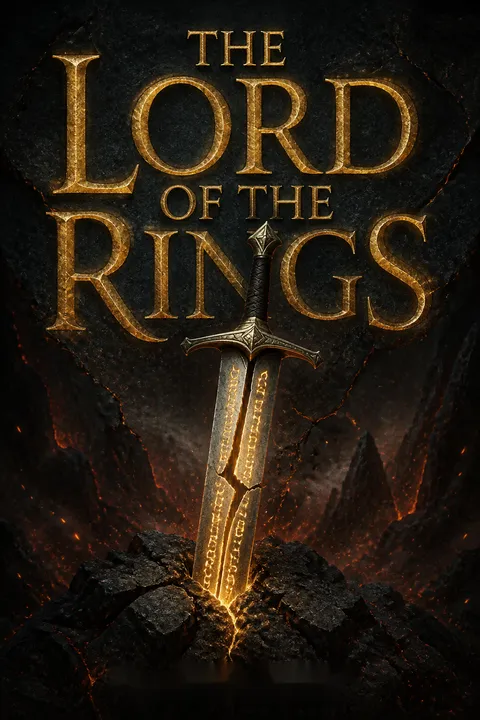

Resumen de la trama
Sombras sobre la Comarca
La historia comienza en la tranquila Comarca, donde los hobbits llevan vidas sencillas y plácidas. Bilbo Bolsón, excéntrico y adinerado, planea una gran fiesta de cumpleaños, pero la posesión de un misterioso anillo ha preservado su juventud y ha despertado el interés del mago Gandalf. Gandalf descubre que el anillo es el Anillo Único, forjado por el Señor Oscuro Sauron para dominar la Tierra Media. El poder de Sauron está resurgiendo en Mordor, y sus sirvientes, los Nazgûl, buscan el Anillo. Bilbo se marcha de la Comarca y le hereda el Anillo a su sobrino Frodo. Frodo, junto a sus leales amigos Sam, Merry y Pippin, se ve obligado a huir cuando los Espectros del Anillo acechan. Su viaje comienza con incertidumbre, mientras la sombra del mal se extiende incluso hasta las fronteras de la Comarca.
Se forma la Comunidad
A Frodo y sus compañeros se les une Aragorn, un misterioso montaraz, y tras superar muchos peligros, logran llegar a Rivendel. Allí, un concilio de elfos, hombres, enanos y Gandalf revela la historia del Anillo y la amenaza que representa Sauron. La única esperanza es destruir el Anillo en los fuegos del Monte del Destino. Así se constituye la Comunidad: Frodo, Sam, Merry, Pippin, Aragorn, Gandalf, el elfo Legolas, el enano Gimli y Boromir de Gondor. Juntos emprenden una misión plagada de peligros, perseguidos por las fuerzas de Sauron y por el traicionero Saruman, un mago corrompido.
Senderos peligrosos
La Comunidad se enfrenta al crudo invierno de Caradhras y se ve obligada a adentrarse en las Minas de Moria, donde sufren el ataque de los orcos y de un Balrog, un antiguo demonio. Gandalf cae al abismo junto con el Balrog, sacrificándose para que los demás puedan escapar. Los miembros supervivientes encuentran refugio en el reino encantado de Lothlórien, donde la dama Galadriel les ofrece consejo y valiosos regalos. La compañía navega río abajo por el Anduin, pero la influencia del Anillo crece y Boromir intenta arrebatárselo a Frodo. La Comunidad se disuelve: Frodo y Sam parten solos hacia Mordor, Merry y Pippin son capturados por los orcos, y Aragorn, Legolas y Gimli emprenden la búsqueda de los captores.
La corrupción del Anillo
Mientras Frodo y Sam avanzan por tierras salvajes, se les une Gollum, el antiguo poseedor del Anillo, quien se convierte en su guía. La mente de Gollum está distorsionada por el poder del Anillo, debatiéndose constantemente entre la lealtad y la traición. Mientras tanto, los ejércitos de Saruman asolan Rohan, y el rey Théoden es liberado de la influencia del mago por Gandalf, quien ha regresado transformado en Gandalf el Blanco. Los Rohirrim, junto con Aragorn y sus compañeros, defienden el Abismo de Helm frente a las fuerzas de Saruman. Merry y Pippin, al lado de los Ents, lideran un asalto a Isengard, derrocando el poder de Saruman. La corrupción del Anillo está siempre presente, pues incluso los más sabios y fuertes se ven tentados por su promesa de poder.
La disolución de la Comunidad
Los miembros de la Comunidad se encuentran dispersos. Frodo y Sam, guiados por Gollum, cruzan las Ciénagas de los Muertos y se aproximan a Mordor. Aragorn, Legolas y Gimli persiguen a los orcos, unen fuerzas con Rohan y luchan en grandes batallas. Merry y Pippin inspiran a los Ents para atacar Isengard. Gandalf se enfrenta a Saruman, quien queda despojado de su poder. La carga del Anillo se vuelve cada vez más pesada para Frodo, y Gollum los conduce a la guarida de Ella-Laraña, una monstruosa araña. Frodo es capturado y Sam, creyéndolo muerto, toma el Anillo para continuar con la misión.
Guerra en el Oeste
Los ejércitos de Sauron sitian Minas Tirith, la capital de Gondor. Gandalf y Pippin llegan para auxiliar a la ciudad, mientras Aragorn busca la ayuda de los Muertos para cumplir un antiguo juramento. Rohan cabalga en auxilio de Gondor y se desata la Batalla de los Campos del Pelennor. El rey Théoden cae en combate, Éowyn y Merry derrotan al Rey Brujo, y Aragorn llega con refuerzos. La ciudad se salva, pero a un costo enorme. Los líderes del Oeste deciden marchar hacia la Puerta Negra para desviar la atención de Sauron lejos de Frodo y Sam, quienes avanzan con dificultad en Mordor.
El retorno del Rey
Se revela que Aragorn es el heredero de Isildur y es coronado como el rey Elessar de Gondor. Trae sanación a los heridos y unifica los reinos de los Hombres. Faramir y Éowyn encuentran el amor y la redención. Los ejércitos del Oeste marchan hacia la Puerta Negra, desafiando a Sauron y otorgando a Frodo y Sam su única oportunidad de llegar al Monte del Destino. Comienza la era de los Hombres, mientras los elfos y otros pueblos antiguos se preparan para abandonar la Tierra Media.
El camino a Mordor
Frodo y Sam, disfrazados de orcos, atraviesan la desolación de Mordor. La tierra es estéril, repleta de los ejércitos de Sauron y de ojos vigilantes. El peso del Anillo casi doblega a Frodo, y la lealtad de Sam es lo único que los sostiene. Gollum, impulsado por su obsesión, los acecha. El viaje es una prueba de resistencia, esperanza y voluntad, a medida que los hobbits se acercan al Monte del Destino, el único lugar donde el Anillo puede ser destruido.
La tierra de la sombra
El tramo final hacia el Monte del Destino es una pesadilla de agotamiento, sed y miedo. Frodo es casi dominado por el poder del Anillo, y Sam debe llevarlo a cuestas. Gollum los ataca y, en medio de la lucha, le arranca de un bocado el dedo a Frodo y se apodera del Anillo. En su delirio de triunfo, Gollum cae al fuego, destruyendo el Anillo. El poder de Sauron se desmorona, Barad-dûr se derrumba y la Sombra se disipa del mundo. Frodo y Sam son rescatados por las Águilas mientras Mordor estalla en ruinas.
El fin de todas las cosas
Los vencedores celebran y Aragorn es coronado rey. Los hobbits son honrados por sus hazañas. Los elfos, enanos y hombres comienzan a sanar las heridas de la guerra. Frodo y Sam regresan a la Comarca, pero Frodo ha cambiado para siempre debido a su terrible experiencia. La Comarca ha sufrido bajo la malicia de Saruman, y los hobbits deben luchar para restaurarla. La paz regresa, pero las heridas de Frodo no logran sanar.
Saneamiento de la Comarca
Los hobbits encuentran la Comarca bajo el control de rufianes liderados por Saruman (Zarquino) y Lotho Sacovila-Bolsón. La tierra está devastada, los árboles talados y los hobbits oprimidos. Frodo, Sam, Merry y Pippin organizan a la Comarca, derrocan a los rufianes y se enfrentan a Saruman, quien muere a manos de Lengua de Serpiente. La Comarca es restaurada, pero Frodo no encuentra la paz. Sam se casa con Rosita y forma una familia, mientras el dolor de Frodo persiste.
El fin de una era
A Frodo, que lleva heridas que nunca sanarán, se le concede el viaje a las Tierras Imperecederas junto con Gandalf, Bilbo y los elfos. Sam, Merry y Pippin regresan a la Comarca, transformados por su viaje. La era de los elfos y la magia llega a su fin, y comienza la era de los Hombres. La historia concluye con el regreso de Sam a su hogar, feliz al saber que el mundo se ha salvado, aunque a un costo personal inmenso.
Analysis
Una meditación mítica sobre el poder, el sacrificio y la esperanzaEl Señor de los Anillos perdura como una obra fundamental de la fantasía moderna porque logra entrelazar la aventura épica, una profunda introspección psicológica y una visión moral trascendente. El mundo de Tolkien está construido con una minuciosidad extraordinaria, pero su verdadero valor reside en la exploración de la condición humana (y hobbit). El Anillo es un símbolo de la tentación de dominar, y la historia sostiene que el verdadero heroísmo no radica en la fuerza o la sabiduría, sino en la humildad, la misericordia y la resiliencia. La estructura narrativa, con sus tramas entrelazadas y perspectivas cambiantes, refleja la complejidad de la historia y la interconexión entre todos los pueblos. El motivo del viaje propicia la transformación personal, pero también asume la pérdida y la imposibilidad de regresar sin haber cambiado. El Saneamiento de la Comarca aterriza la épica en lo cotidiano, recordándonos que al mal también se le debe hacer frente en nuestro propio hogar.
Resumen de reseñas
El Señor de los Anillos es ampliamente considerado una obra maestra de la literatura de fantasía. Los lectores elogian la intrincada creación de mundos de Tolkien, sus vívidas descripciones y su narrativa épica. Los temas de la trilogía sobre el bien contra el mal, la amistad y el crecimiento personal resuenan profundamente en muchos. Aunque algunos consideran que el ritmo es lento y el estilo de escritura desafiante, la mayoría lo define como un clásico atemporal que revolucionó el género de la fantasía. El impacto de los libros va más allá de la literatura, inspirando innumerables adaptaciones e influyendo en la cultura popular durante generaciones.
También leyeron
Characters
Frodo Baggins
Frodo es un hobbit reflexivo y de naturaleza noble que hereda el Anillo Único de Bilbo. Elegido por el destino y la amistad, se convierte en el portador del Anillo, con la tarea de destruirlo en el Monte del Destino. El viaje pone a prueba su resistencia, voluntad y moralidad, a medida que el poder del Anillo casi lo consume. Frodo se distingue por su compasión, mostrando a menudo misericordia hacia Gollum e incluso hacia Saruman. Su evolución psicológica es la de una carga y un aislamiento crecientes; cambia para siempre, incapaz de regresar por completo a la inocencia de la Comarca. La historia de Frodo es una lección de sacrificio, resistencia y de los límites del heroísmo.
Samwise Gamgee
Sam es el jardinero y amigo más cercano de Frodo, y encarna la lealtad, la humildad y la resiliencia. Es el pilar emocional de la misión, sosteniendo a Frodo tanto física como espiritualmente. El amor de Sam por Frodo y por la Comarca le otorga la fuerza necesaria para resistir la tentación del Anillo. Es práctico, valiente y resolutivo, representando el poder de la bondad cotidiana. El viaje de Sam es el de una transformación que va de humilde servidor a héroe, encontrando finalmente la felicidad y la paz en su familia y su hogar.
Gandalf
Gandalf es un Maia, un espíritu enviado para ayudar a la Tierra Media bajo la apariencia de un anciano. Es sabio, compasivo y astuto, y se encarga de coordinar la resistencia contra Sauron. Su caída en Moria y su regreso como Gandalf el Blanco simbolizan la muerte y el renacimiento, y su papel pasa de ser el de un guía al de un líder. Es un catalizador del cambio que inspira valor y unidad. La profundidad psicológica de Gandalf radica en su humildad y en su comprensión de los peligros del poder; rechaza el Anillo sabiendo el efecto corruptor que posee.
Aragorn (Strider, Elessar)
Aragorn es el último heredero de Isildur, criado en el anonimato. Es un hábil montaraz, guerrero y sanador, que se debate entre su destino y sus propias dudas. El viaje de Aragorn consiste en aceptar su herencia y unificar a los Pueblos Libres. Es noble, abnegado e inspira una lealtad absoluta. Su amor por Arwen y su humildad lo diferencian de otros reyes. Su arco psicológico gira en torno a asumir la responsabilidad y la esperanza, culminando en su coronación y la restauración del reino.
Gollum (Sméagol)
Gollum es una criatura semejante a un hobbit, corrompida por el Anillo y dividida entre su identidad original (Sméagol) y su lado oscuro (Gollum). Es astuto, digno de lástima y está obsesionado con el Anillo («mi tesoro»). La relación de Gollum con Frodo es compleja: es a la vez guía y traidor, despertando la empatía de Frodo y la sospecha de Sam. Su tormento psicológico y su adicción al Anillo impulsan la trama, y su acto final —arrebatar el Anillo y caer al fuego— salva a la Tierra Media de manera involuntaria.
Sam, Merry, and Pippin
Merry y Pippin, primos de Frodo, comienzan como hobbits alegres y traviesos, pero maduran hasta convertirse en líderes y guerreros. Merry ayuda a derrotar al Rey Brujo; Pippin salva a Faramir y sirve a Gondor. Su desarrollo psicológico está marcado por la pérdida de la inocencia, el valor y un profundo sentido de la responsabilidad. Junto con Sam, representan la resiliencia y la capacidad de adaptación de los hobbits.
Legolas
Legolas es un elfo del Bosque Negro, diestro en el tiro con arco y en sintonía con la naturaleza. Es elegante, perceptivo y entabla una estrecha amistad con Gimli, superando la antigua enemistad entre elfos y enanos. La perspectiva de Legolas aporta una sensación de asombro y melancolía al ser testigo del declive de la era de su pueblo.
Gimli
Gimli es un enano de Erebor, valiente y obstinado. Su amistad con Legolas es un símbolo fundamental de reconciliación. El orgullo de Gimli por su herencia y su amor por las Grutas Centelleantes muestran la sensibilidad de los enanos más allá de su faceta guerrera. Es leal, divertido y valora profundamente el honor.
Saruman
Saruman fue en su momento el líder de los magos, pero su ansia de poder y conocimiento lo lleva a traicionar a los Pueblos Libres. Se convierte en un títere de Sauron, desatando la guerra y la destrucción industrial. El arco psicológico de Saruman es una advertencia sobre la soberbia, la seducción del poder y la autodestrucción que conlleva la traición. Su final es humillante, asesinado por su propio sirviente, Lengua de Serpiente.
Sauron
Sauron es el Señor Oscuro, un Maia corrompido por Morgoth que busca esclavizar a la Tierra Media a través del Anillo. Nunca se le ve directamente, pero su presencia se siente como una voluntad malévola y omnipresente. Sauron representa la fuerza psicológica de la dominación, el miedo y la desesperación. Su derrota no se logra mediante el enfrentamiento directo, sino gracias a la humildad y la resistencia de los seres más pequeños e inesperados.
Plot Devices
The One Ring
El Anillo es el recurso central de la trama; representa el poder absoluto y su influencia corruptora. Tienta a todo aquel que se cruza en su camino, revelando sus deseos y debilidades más profundas. El poder del Anillo aísla y abruma a Frodo, impulsando la narrativa y poniendo a prueba la moral de los personajes. Su destrucción es la única vía para derrotar a Sauron, pero solo puede lograrse mediante un acto de gracia —la intervención de Gollum— y no únicamente por la fuerza de voluntad.
The Fellowship
La creación y posterior disolución de la Comunidad estructuran la narrativa, permitiendo el desarrollo de múltiples líneas argumentales y puntos de vista. La diversidad del grupo —hobbits, hombres, un elfo, un enano y un mago— simboliza la necesidad de cooperar por encima de las diferencias. La ruptura de la Comunidad da lugar a misiones paralelas, donde cada una contribuye a la victoria final.
The Journey
El motivo del viaje es tanto literal como simbólico. Los personajes atraviesan paisajes vastos y peligrosos que reflejan sus propios conflictos internos. El viaje los pone a prueba y los transforma, despojándolos de su inocencia y forjando nuevas identidades. El concepto del «camino» es recurrente, enfatizando el destino, la elección y lo desconocido.
Temptation and Mercy
Los personajes son puestos a prueba constantemente por el Anillo y por oportunidades de venganza o poder. La misericordia de Frodo hacia Gollum, la piedad previa de Bilbo y la moderación de Sam resultan cruciales; estos actos de compasión son los que finalmente permiten la destrucción del Anillo. La estructura narrativa utiliza anticipaciones y paralelismos para reforzar la idea de que la misericordia, y no la fuerza, es la clave de la victoria.
War and the Passing of Ages
La Guerra del Anillo sirve como un escenario de conflicto creciente, con batallas memorables en el Abismo de Helm, los Campos del Pelennor y la Puerta Negra. La narrativa utiliza estos acontecimientos para marcar el fin del dominio de los elfos y otros pueblos antiguos, y el inicio de la era de los Hombres. La estructura entrelaza la escala personal con la épica, demostrando cómo los pequeños actos influyen en el destino del mundo.
Parallel Storylines
Tras la disolución de la Comunidad, la historia se divide en varios hilos: la misión de Frodo y Sam, la guerra en el Oeste y las aventuras de Merry y Pippin. La narración alterna entre estos escenarios, generando suspenso y ofreciendo distintas perspectivas sobre los mismos acontecimientos. Este recurso permite una exploración rica y detallada del mundo y sus habitantes.
The Scouring of the Shire
El regreso de los hobbits a una Comarca corrompida traslada la escala épica al hogar, demostrando que el mal puede echar raíces en cualquier parte. El saneamiento es una limpieza tanto literal como simbólica, y una reflexión sobre la necesidad de mantener la vigilancia y el valor en la vida cotidiana. Asimismo, pone de manifiesto el costo psicológico del viaje, reflejado en la imposibilidad de Frodo de sanar por completo.
The Passing of the Ring-bearers
La partida de Frodo, Bilbo y los elfos hacia las Tierras Imperecederas ofrece una resolución agridulce. Es un reconocimiento de que algunas heridas no pueden sanar en este mundo, y de que el fin de una era representa el inicio de otra. La estructura narrativa utiliza este recurso para brindar un sentido de cierre y, al mismo tiempo, de continuidad histórica.
Preguntas frecuentes
```markdown
Synopsis & Basic Details
What is The Lord of the Rings about?
- A Quest Against Absolute Evil: The Lord of the Rings chronicles the perilous journey of Frodo Baggins, a hobbit, who inherits a seemingly innocuous magic ring from his eccentric uncle, Bilbo. This ring is, in fact, the One Ring, an artifact of immense power forged by the Dark Lord Sauron to dominate all of Middle-earth.
- The Fellowship's Formation: To prevent Sauron from reclaiming the Ring and plunging the world into eternal darkness, a diverse fellowship is formed at the Council of Elrond. This group, comprising hobbits, Men, an Elf, a Dwarf, and a Wizard, embarks on a desperate quest to destroy the Ring in the only place it can be unmade: the fires of Mount Doom in Mordor.
- Sacrifice and the Dawn of a New Age: The narrative follows the Fellowship's trials, their eventual breaking, and the individual journeys of its members as they fight against Sauron's growing power. It culminates in the Ring's destruction, Sauron's defeat, and the restoration of Aragorn, the rightful king, ushering in a new age for Middle-earth, albeit one marked by the fading of Elves and the lingering wounds of war.
Why should I read The Lord of the Rings?
- Immersive World-Building: Tolkien's masterpiece offers an unparalleled depth of world-building, from its intricate languages and detailed histories to its rich mythologies and diverse cultures. Readers are transported to a Middle-earth that feels ancient and real, fostering a profound sense of immersion.
- Profound Thematic Exploration: Beyond the adventure, the book delves into universal themes such as the corrupting nature of power, the importance of friendship and loyalty, the resilience of the ordinary, and the bittersweet beauty of sacrifice. It's a story that resonates deeply with the human condition.
- Enduring Literary Influence: As a foundational work of modern fantasy, The Lord of the Rings has influenced countless authors, artists, and filmmakers. Reading it provides insight into the origins of many tropes and narrative structures prevalent in the genre today, offering a richer appreciation for its legacy.
What is the background of The Lord of the Rings?
- Deep Mythological Roots: The story is set in the Third Age of Middle-earth, a world with a vast, ancient history detailed in Tolkien's other works like The Silmarillion. This background includes the creation myths, the rise and fall of ancient kingdoms, and the long struggle against primordial evil, providing a rich tapestry against which the events of the Ring War unfold.
- Linguistic Inspiration: Tolkien, a philologist, initially created the Elvish languages (Quenya and Sindarin) for his own enjoyment, and then built the world of Middle-earth around them to give them a place and history. This linguistic foundation lends an extraordinary authenticity and depth to the names, songs, and lore within the narrative.
- Post-WWI Reflections: While Tolkien explicitly denied allegory, his experiences in World War I and observations of industrialization deeply influenced the story's themes. The devastation of the Shire, the industrial blight of Isengard, and the pervasive sense of loss and fading beauty reflect a profound concern for the impact of war and unchecked technological progress on nature and traditional ways of life.
What are the most memorable quotes in The Lord of the Rings?
- "All that is gold does not glitter, / Not all those who wander are lost; / The old that is strong does not wither, / Deep roots are not reached by the frost.": This iconic verse, from Gandalf's letter to Frodo, serves as a crucial piece of foreshadowing and character introduction for Aragorn. It encapsulates the theme of hidden nobility and the deceptive nature of appearances, urging readers and characters alike to look beyond the surface.
- "I wish it need not have happened in my time," said Frodo. "So do I," said Gandalf, "and so do all who live to see such times. But that is not for them to decide. All we have to decide is what to do with the time that is given us.": This exchange between Frodo and Gandalf in "The Shadow of the Past" is a powerful meditation on destiny, responsibility, and agency. It highlights the universal human desire to avoid hardship, yet underscores the moral imperative to act courageously within one's given circumstances, a central theme of the entire saga.
- "There's some good in this world, Mr. Frodo, and it's worth fighting for.": Uttered by Samwise Gamgee, this simple yet profound statement encapsulates the core message of hope and perseverance in the face of overwhelming evil. It reflects Sam's unwavering loyalty and his deep love for the simple beauties of life, which he believes are worth defending, even when all seems lost.
What writing style, narrative choices, and literary techniques does J.R.R. Tolkien use?
- Archaic and Formal Language: Tolkien employs a rich, often archaic vocabulary and formal sentence structures, especially in descriptions and the speech of noble characters or ancient beings. This choice imbues the narrative with a mythic, timeless quality, evoking the sense of reading an ancient legend or historical account, as seen in the elevated prose of Elrond's speeches.
- Omniscient and Shifting Perspective: The narrative primarily uses an omniscient third-person perspective, but frequently shifts its focus, particularly after the Fellowship breaks. This allows for a comprehensive view of the unfolding war, contrasting the intimate, often internal struggles of Frodo and Sam with the grander, external conflicts involving Aragorn, Gandalf, and the armies of Men, Elves, and Dwarves.
- Extensive Use of Poetry and Song: Throughout the text, Tolkien intersperses numerous poems, songs, and riddles, which serve multiple functions: they enrich the world-building by providing historical context, cultural insights, and character depth; they break up the prose, offering moments of reflection or emotional release; and they often foreshadow future events or reveal hidden truths, such as Bilbo's "Road goes ever on" poem or the Lay of Lúthien.
Hidden Details & Subtle Connections
What are some minor details that add significant meaning?
- The Significance of Pipe-weed: Beyond a simple hobbit pleasure, pipe-weed is revealed in the Prologue and later by Merry to be a plant native to Gondor, brought north by the Men of Westernesse. This seemingly trivial detail subtly links the Shire to the ancient history of Men and the wider world, foreshadowing the hobbits' eventual involvement in larger events and highlighting the unexpected origins of common things.
- The Elven-cloaks' Camouflage: The grey cloaks given by Galadriel are not merely warm garments; they possess a subtle magic that allows the wearer to blend seamlessly with their surroundings. This detail, initially presented as a practical gift, symbolizes the Elves' deep connection to nature and their mastery of subtle, non-aggressive forms of power, contrasting with Sauron's overt might.
- The Names of the Days and Months: Appendix D reveals that the Shire's calendar and weekday names are translations of older Dúnedain and Elvish terms, often with forgotten meanings. This deep linguistic layering underscores the ancient lineage of Middle-earth's cultures and the hobbits' unconscious connection to a grander past, even in their seemingly isolated existence.
What are some subtle foreshadowing and callbacks?
- Bilbo's "Thin and Stretched" Feeling: In "A Long-Expected Party," Bilbo describes feeling "all thin, sort of stretched, if you know what I mean: like butter that has been scraped over too much bread." This seemingly whimsical complaint subtly foreshadows the Ring's insidious effect, which drains its bearer's vitality and makes them feel insubstantial, a fate Frodo later experiences more acutely.
- Sam's Oliphaunt Rhyme: Sam's recitation of the "Oliphaunt" rhyme in Ithilien, initially a moment of comic relief, subtly foreshadows the later appearance of the Mûmakil in the Battle of the Pelennor Fields. It transforms a childhood fancy into a terrifying reality, emphasizing the vastness and unexpected dangers of the world beyond the Shire.
- The Barrow-blades' True Purpose: The daggers given to the hobbits by Tom Bombadil, taken from the Barrow-downs, are revealed by Gandalf to be "blades wrought by our own kindred in the North in the deep past." Merry's blade, in particular, proves to be a "troll's bane" and later, crucially, the only weapon capable of wounding the Witch-king, fulfilling an ancient prophecy and highlighting the enduring power of forgotten artifacts.
What are some unexpected character connections?
- Aragorn's Hidden Lineage and the Elfstone: Aragorn's true identity as the heir of Isildur is a central reveal, but the depth of his connection to the Elves is often overlooked. He is not only fostered by Elrond but is also betrothed to Arwen, Elrond's daughter, making him a descendant of Lúthien and Beren. The green Elfstone, Elessar, given to him by Galadriel, is a token of this heritage and a symbol of his future kingship, linking him directly to the ancient Elven-kings.
- Gimli and Galadriel's Unlikely Bond: The initial animosity between Gimli and Legolas, reflecting the ancient feud between Elves and Dwarves, is famously overcome. However, Gimli's profound reverence and love for Lady Galadriel, culminating in his request for a strand of her hair, is a truly unexpected connection. This bond transcends racial prejudice and symbolizes the healing of old wounds, foreshadowing Gimli's unique fate of sailing to the Undying Lands.
- Tom Bombadil's Ancient Knowledge: Tom Bombadil's seemingly whimsical nature belies his immense age and unique connection to Middle-earth. His casual familiarity with the "River-woman's daughter" (Goldberry) and his deep knowledge of the Old Forest and Barrow-wights hint at a primordial existence far predating the Elves and Men. His immunity to the Ring's power further emphasizes his singular, almost elemental, connection to the land itself, making him an enigmatic figure outside the conventional power structures.
Who are the most significant supporting characters?
- Tom Bombadil: Though he appears briefly, Tom Bombadil is profoundly significant as a character who exists outside the power struggles of Middle-earth. His immunity to the Ring's influence and his ancient, joyful connection to nature offer a glimpse of a different kind of power—one of pure being and harmony, untouched by the world's conflicts. He represents a primal, untamed spirit of the land.
- Lady Galadriel: As one of the most powerful and ancient Elves remaining in Middle-earth, Galadriel serves as a crucial source of wisdom, comfort, and subtle aid to the Fellowship. Her temptation by the Ring and her subsequent rejection of it highlight the immense moral strength required to resist absolute power, while her gifts, particularly the Phial, prove vital to Frodo's quest.
- Faramir: Boromir's younger brother, Faramir, stands out as a man of Gondor who resists the Ring's temptation, demonstrating a rare wisdom and compassion. His encounter with Frodo and Sam, and his understanding of the Ring's true nature, provide a stark contrast to his brother's fall and underscore the theme that true strength lies not in wielding power, but in refusing it.
Psychological, Emotional, & Relational Analysis
What are some unspoken motivations of the characters?
- Bilbo's Lingering Attachment to the Ring: While Bilbo outwardly claims to be "thin, sort of stretched" and desires a permanent holiday, his deep-seated reluctance to part with the Ring, calling it "My Precious" in a manner disturbingly similar to Gollum, reveals an unspoken, almost subconscious addiction. His "joke" at the party is a thinly veiled attempt to escape the Ring's hold, but his struggle with Gandalf shows the profound psychological grip it still has on him.
- Aragorn's Self-Doubt and Burden of Kingship: Aragorn's reluctance to claim his throne is often attributed to humility, but it also stems from a deep-seated fear of failure and the weight of his lineage. His long years as Strider, a wandering Ranger, allowed him to avoid the direct responsibilities of kingship. His internal struggle is not just about proving his worth, but about overcoming the historical failures of his ancestors, particularly Isildur, and the fear that he might succumb to the same temptations.
- Denethor's Despair and Pride: Denethor's seemingly irrational actions, such as his favoritism towards Boromir and his eventual madness, are driven by a profound, unspoken despair. He sees the inevitable decline of Gondor and the Age of Men, and his pride prevents him from accepting help or hope from outside sources, especially Gandalf, whom he views as a rival. His use of the palantír, a desperate attempt to gain knowledge and control, ultimately feeds his despair, leading to his tragic end.
What psychological complexities do the characters exhibit?
- Frodo's Empathy and the Burden of Pity: Frodo's decision to spare Gollum, echoing Bilbo's earlier act of pity, is a pivotal moment that highlights his deep empathy. This compassion, however, becomes a psychological burden, as he grapples with the moral implications of his choices and the constant threat posed by Gollum's treachery. His internal conflict between mercy and self-preservation is a central psychological complexity, demonstrating that even good intentions can lead to unforeseen perils.
- Sam's Simple Loyalty vs. Growing Wisdom: Sam's character evolves from a simple, unquestioning servant to a figure of profound wisdom and resilience. His initial "hobbit-sense" and distrust of the unknown are gradually tempered by his unwavering loyalty to Frodo and his experiences in the wider world. His internal monologues, particularly in Mordor, reveal a growing understanding of the larger stakes and a deep, unarticulated love for his master, showcasing a complex blend of simplicity and profound moral strength.
- Saruman's Intellectual Arrogance and Isolation: Saruman's fall is a psychological study in the dangers of intellectual pride and the pursuit of knowledge for its own sake. His belief that he can control power, rather than be controlled by it, leads him to isolate himself from his peers and ultimately from reality. His "mind of metal and wheels" symbolizes a detachment from living things and a descent into a sterile, destructive form of wisdom, culminating in his pathetic end as a "beggar in the wilderness."
What are the major emotional turning points?
- Bilbo's Relinquishment of the Ring: The scene where Bilbo finally gives up the Ring, after a fierce internal struggle and Gandalf's stern intervention, is a major emotional turning point. It marks the first clear demonstration of the Ring's corrupting power and the immense difficulty of letting go of absolute control, setting the stage for Frodo's even greater struggle.
- The Breaking of the Fellowship at Parth Galen: Boromir's attempt to seize the Ring from Frodo, followed by his valiant but ultimately fatal defense of Merry and Pippin, shatters the Fellowship and forces Frodo to continue alone with Sam. This event is a profound emotional blow, marking the loss of innocence and the realization of the Ring's divisive power, forcing the remaining members to confront their individual destinies.
- Éowyn's Defiance of the Witch-king: Éowyn's revelation as Dernhelm and her slaying of the Witch-king on the Pelennor Fields is a powerful emotional climax. Her act of defiance, driven by love and despair, shatters the ancient prophecy that "no living man may hinder me." This moment is a triumph of courage and will, not just for Éowyn, but for all who felt trapped by fate and the overwhelming power of evil.
How do relationship dynamics evolve?
- Gimli and Legolas: From Ancient Feud to Deep Friendship: The initial tension between Gimli and Legolas, rooted in centuries of Elvish-Dwarvish animosity, gradually transforms into one of the most profound friendships in the story. Their shared perils, mutual respect for each other's skills, and particularly Gimli's reverence for Galadriel, forge an unbreakable bond that transcends racial divides, symbolizing hope for reconciliation in Middle-earth.
- Frodo and Sam: Master and Servant to Co-dependant Companions: Their relationship evolves from a traditional master-servant dynamic to one of deep, almost symbiotic, companionship. Sam's unwavering loyalty and practical support become indispensable to Frodo, especially as the Ring's burden grows. Frodo, in turn, relies on Sam not just for physical aid but for emotional and moral strength, highlighting how their shared ordeal forges an unbreakable bond of love and mutual dependence.
- Aragorn and Théoden: From Distrust to Mutual Respect: Théoden, initially under Saruman's sway and distrustful of outsiders, views Aragorn with suspicion. However, through Gandalf's intervention and Aragorn's actions in battle, Théoden comes to recognize Aragorn's true nobility and wisdom. Their relationship transforms into one of mutual respect and alliance, symbolizing the rekindling of ancient bonds between the realms of Men and the hope for a united front against evil.
Interpretation & Debate
Which parts of the story remain ambiguous or open-ended?
- The Nature and Origin of Tom Bombadil: Tom Bombadil remains one of the most enigmatic characters, defying easy categorization. His power over the Ring, his ancientness ("Eldest, that's what I am"), and his detachment from the larger conflict leave his true nature ambiguous. He is neither Elf, Man, nor Dwarf, and his role seems to be that of a primal spirit of the land, a force of nature rather than a participant in the cosmic struggle, prompting endless reader speculation about his identity and purpose.
- The Fate of the Entwives: Treebeard's lament for the lost Entwives, who "did not die" but were "lost" after crossing the Great River to tend their gardens, leaves their ultimate fate unresolved. This ambiguity adds a layer of melancholy to the Ents' story and raises questions about the lasting impact of war and industrialization on nature. Their potential return, "when we have both lost all that we now have," suggests a cyclical view of history and a hope for future reconciliation that remains unfulfilled within the narrative.
- The Long-Term Healing of Frodo's Wounds: While Frodo is physically healed in Rivendell and after the Ring's destruction, his spiritual and psychological wounds are explicitly stated to be "not wholly cured." His departure to the Undying Lands, a place of healing, leaves the exact nature and duration of his recovery open to interpretation. This ambiguity acknowledges the lasting trauma of profound sacrifice and suggests that some burdens cannot be fully shed within the mortal world, even after victory.
What are some debatable, controversial scenes or moments in The Lord of the Rings?
- Gandalf's Delay in Reaching Frodo: Gandalf's prolonged absence after instructing Frodo to leave the Shire, leading to Frodo's perilous encounters with the Nazgûl, is a point of contention. While Gandalf explains he was imprisoned by Saruman, some readers question whether his priorities or judgment were flawed, or if his delay was a deliberate, albeit risky, part of a larger, unseen plan to test Frodo and the Ring.
- Boromir's Temptation and Death: Boromir's attempt to seize the Ring from Frodo is a deeply debated moment. While it highlights the Ring's corrupting power, some argue that his character arc is too abrupt or that his death, though valiant, is a convenient way to remove a morally compromised character. Others see it as a tragic but realistic portrayal of human fallibility and the immense pressure of the quest.
- The Eagles' Role and Late Intervention: The Eagles' repeated interventions, particularly their rescue of Gandalf from Orthanc and Frodo and Sam from Mount Doom, often spark debate. Critics argue that their power is too deus ex machina, questioning why they don't intervene earlier or more directly in the war. Tolkien's explanation that they are not "taxi services" and act only at specific times, or when commanded, points to their role as agents of a higher power, not mere plot devices.
The Lord of the Rings Ending Explained: How It Ends & What It Means
Tierra Media Serie
Sobre el autor
Otros libros de J.R.R. Tolkien
Descargar PDF
Descargar EPUB
.epub digital book format is ideal for reading ebooks on phones, tablets, and e-readers.








































