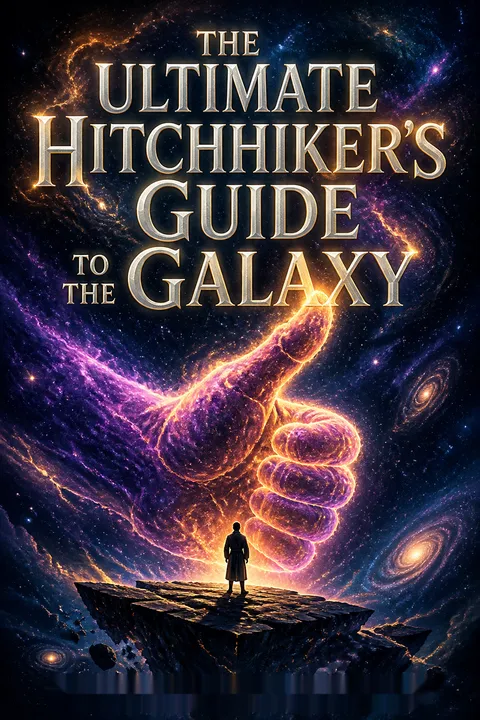

Resumen de la trama
La amenaza vogon se cierne sobre sus cabezas
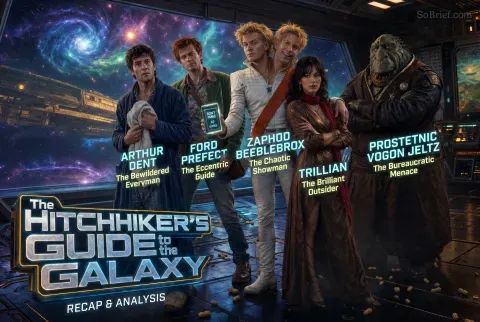
El Corazón de Oro, una nave espacial impulsada por el Generador de Improbabilidad Infinita, se enfrenta a la destrucción inminente por parte de una nave vogon liderada por el capitán Prostetnic Vogon Jeltz. Los vogones, célebres por su despiadada burocracia, son implacables en su persecución, impulsados por una venganza personal contra la Tierra. A bordo del Corazón de Oro, Zaphod Beeblebrox, el capitán de la nave, está demasiado preocupado con su propia crisis existencial como para percatarse del peligro. Mientras tanto, Ford Prefect, Arthur Dent y Trillian lidian con la catástrofe inminente cada uno a su manera. La tripulación se debate en busca de una solución a medida que los vogones se acercan, lo que pone de manifiesto lo absurdo e impredecible de su situación.
Crisis de té en medio del caos
En medio del caos del ataque vogon, la búsqueda de Arthur Dent de una taza de té en condiciones se convierte en una subtrama tan cómica como conmovedora. El Sintetizador de Bebidas Nutri-Matic de la nave es incapaz de producir la bebida deseada, lo que deja a Arthur completamente frustrado. El ordenador de a bordo, distraído por la petición de Arthur, deja a la tripulación vulnerable ante la amenaza vogon. Ford, Zaphod y Trillian se ven obligados a gestionar la crisis sin disponer de todas las funciones de la nave. Esta absurda situación subraya la desesperación de la tripulación y el carácter extravagante del Corazón de Oro, al enfrentarse a una posible destrucción por culpa de una simple bebida.
El encuentro ancestral de Zaphod
En un momento de desesperación, Zaphod Beeblebrox intenta contactar con el espíritu de su tatarabuelo en busca de consejo. El encuentro resulta tan revelador como frustrante, mientras Zaphod lidia con sus decisiones pasadas y el misterioso propósito de su presidencia. Su antepasado le revela que la misión de Zaphod es encontrar al hombre que gobierna el Universo, una tarea que Zaphod se resiste a aceptar. La conversación se interrumpe bruscamente cuando la nave se ve sumida en el caos, dejando a Zaphod con más preguntas que respuestas.
El temido Vórtice de Frogstar
Zaphod es capturado y llevado a Frogstar Mundo B, hogar del Vórtice de Perspectiva Total, un dispositivo que muestra al usuario su absoluta insignificancia en el Universo. El Vórtice es un temido instrumento de tortura psicológica, diseñado para aniquilar el alma de cualquiera. El viaje de Zaphod hacia el Vórtice está plagado de un terror existencial, al tener que confrontar la inmensidad del Universo y su propio lugar en él. La experiencia resulta tan humillante como transformadora, obligando a Zaphod a replantearse su vida y su propósito.
El oscuro secreto de Krikkit al descubierto
Los habitantes de Krikkit, aislados por una nube de polvo, descubren el universo y reaccionan con un horror xenófobo. Su respuesta consiste en construir una flota y declarar la guerra a la galaxia, con el objetivo de destruir todo lo que no sea Krikkit. Esta revelación llega cuando Arthur, Ford y Slartibartfast presencian la historia de Krikkit a través de una Ilusión Informativa. Las Guerras de Krikkit fueron devastadoras, pero la galaxia finalmente triunfó, encerrando a Krikkit en un sobre de Tiempo Lento para evitar una mayor destrucción.
El improbable encuentro de Arthur con Agrajag
Arthur Dent se encuentra en una extraña confrontación con Agrajag, una criatura que afirma que Arthur lo ha matado involuntariamente en múltiples vidas pasadas. El odio de Agrajag hacia Arthur es de una intensidad desbordante, y ha construido una Catedral del Odio para conmemorar sus agravios. Arthur se queda desconcertado ante las acusaciones y el surrealista encuentro, lo que resalta el absurdo y la imprevisibilidad de sus aventuras.
La búsqueda del Mensaje de Dios
Arthur y Fenchurch se embarcan en un viaje para encontrar el Último Mensaje de Dios a su Creación, una pista críptica que podría explicar los extraños sucesos que han experimentado. Sus viajes los llevan a lo largo y ancho de la galaxia, donde conocen a personajes excéntricos y se enfrentan a desafíos que ponen a prueba su determinación. La búsqueda se convierte en una metáfora de su propio viaje en pos de un sentido en un universo que parece indiferente a su existencia.
El desconcertante reencuentro familiar de Arthur
Arthur Dent, que ahora lleva una vida sencilla en el planeta Lamuella, se ve inmerso en un desconcertante reencuentro familiar cuando su hija, Random, llega de forma inesperada. Random, fruto de una línea temporal compleja y fragmentada, es un torbellino de emociones y confusión. Arthur, que no está preparado para la paternidad, lucha por conectar con ella en medio del caos de su reencuentro. Mientras intentan encauzar su tensa relación, el universo a su alrededor se tambalea al borde del colapso, y la presencia de Random sirve como un recordatorio constante de la naturaleza impredecible de la existencia.
La búsqueda de identidad de Random
Random Dent, atrapada entre mundos y líneas temporales, se embarca en una búsqueda para encontrar su lugar en el universo. Su viaje está plagado de preguntas existenciales y de un profundo anhelo de identidad. Mientras lidia con su pasado fragmentado y un futuro incierto, la búsqueda de pertenencia de Random se convierte en un microcosmos de la lucha cósmica general. Sus interacciones con su padre, Arthur, y la enigmática Guía ponen de relieve las complejidades de la existencia y el deseo humano de conexión y significado.
El colapso final de las posibilidades
A medida que la narrativa llega a su clímax, el propio universo comienza a deshilacharse, y los límites de la realidad se colapsan bajo el peso de infinitas posibilidades. Los personajes, cada uno en su propio viaje, se encuentran en el centro de esta agitación cósmica. Arthur, Ford, Random y Tricia deben afrontar las consecuencias de sus actos y la interconexión de sus destinos. En un universo donde todo es posible, el colapso final sirve como un recordatorio de la fragilidad de la existencia y de la eterna búsqueda de comprensión y pertenencia.
Analysis
Indagación existencial en medio del absurdo cósmicoGuía del autoestopista galáctico. Serie completa de Douglas Adams es una exploración satírica de temas existenciales con el trasfondo de un universo caótico e indiferente. A través de las desventuras de Arthur Dent y sus compañeros, Adams profundiza en el absurdo de la existencia, la búsqueda de sentido y el deseo humano de conectar con los demás. La narrativa rebosa humor e ingenio, utilizando recursos como el Generador de Improbabilidad Infinita y el Vórtice de Perspectiva Total para resaltar lo impredecible de la vida. Los viajes de los personajes reflejan las complejidades de la identidad y el propósito, mientras navegan por un universo donde todo es posible. En última instancia, la obra funciona como un recordatorio de la fragilidad de la existencia y de la eterna búsqueda de comprensión y pertenencia en un cosmos que desafía toda lógica.
Resumen de reseñas
La serie Guía del autoestopista galáctico recibe, por lo general, críticas muy positivas gracias a su humor ingenioso, sus conceptos imaginativos y sus personajes memorables. Los lectores elogian el estilo de escritura inteligente de Adams y sus absurdas tramas. Muchos consideran que los dos primeros libros son los más sólidos, mientras que las entregas posteriores reciben reacciones encontradas. Algunos lectores opinan que la serie pierde fuerza o se vuelve repetitiva en los últimos volúmenes. En general, los seguidores aprecian la combinación única de ciencia ficción y comedia, aunque a algunos les cuesta lidiar con la narrativa inconexa y los giros aleatorios de la trama.
También leyeron
Characters
Zaphod Beeblebrox
Zaphod es el ex presidente de la Galaxia, de dos cabezas y tres brazos, conocido por su personalidad extravagante y sus decisiones impulsivas. Se encuentra en una misión para encontrar al hombre que gobierna el Universo, una tarea que ni él mismo comprende del todo. El viaje de Zaphod está marcado por crisis existenciales y encuentros con su pasado, mientras lucha por definir su identidad y su propósito.
Arthur Dent
Arthur se ve arrojado de nuevo a un mundo que creía destruido, luchando por dar sentido a sus experiencias. Su viaje es de autodescubrimiento e indagación existencial, en un intento por comprender la naturaleza de la realidad y el lugar que ocupa en ella. La resiliencia y la curiosidad de Arthur lo impulsan a desvelar la verdad detrás de las anomalías cósmicas a las que se enfrenta.
Ford Prefect
Ford es un autoestopista experimentado y amigo de Arthur, conocido por su rapidez mental y sus caóticas peripecias. Su viaje está marcado por una serie de acontecimientos improbables mientras intenta escapar de los vogones y desentrañar los misterios del universo. Las acciones de Ford están guiadas por un deseo de libertad y aventura, lo que lo convierte en una figura clave en el drama cósmico que se desarrolla.
Trillian
Trillian, antes conocida como Tricia McMillan, es la única otra superviviente humana de la Tierra. Es ingeniosa y rápida a la hora de actuar, y suele tomar el control en situaciones de crisis. Su formación científica y su curiosidad la impulsan a explorar los misterios del Universo, lo que la convierte en un miembro valioso de la tripulación.
Marvin the Paranoid Android
Marvin es un robot con un cerebro del tamaño de un planeta, pero vive sumido en una depresión y un cinismo perpetuos. Su pesimismo y su humor seco aportan un contrapunto cómico, aunque su inteligencia suele resultar de gran utilidad. La desesperación existencial de Marvin refleja las dificultades de la tripulación, subrayando lo absurdo de su situación.
Random Dent
Random es la hija de Arthur, atrapada entre líneas temporales y mundos distintos. Su búsqueda de pertenencia e identidad es un elemento central de la narrativa, mientras lidia con un pasado fragmentado y un futuro incierto. Las interacciones de Random con su padre y con el universo que la rodea ponen de relieve las complejidades de la existencia y el deseo humano de conexión y sentido.
Prostetnic Vogon Jeltz
Jeltz es el capitán de la nave vogon que persigue al Corazón de Oro. Lo mueve una venganza personal contra la Tierra y sus supervivientes, encarnando a la perfección la naturaleza burocrática y cruel de los vogones. Su implacable persecución añade tensión y peligro al viaje de la tripulación.
Slartibartfast
Slartibartfast es un anciano magrateano que guía a Arthur y a Ford a través de la historia de Krikkit. Su conocimiento y experiencia aportan una perspectiva crucial sobre el pasado de la galaxia y la amenaza que representa Krikkit. Su personaje combina sabiduría y excentricidad, ofreciendo una visión única del universo.
Agrajag
Agrajag es una criatura que está convencida de que Arthur lo ha matado en múltiples vidas pasadas. Su odio hacia Arthur es inmenso, lo que conduce a un enfrentamiento surrealista en la Catedral del Odio. El personaje de Agrajag resalta el absurdo del destino y la interconexión de todas las cosas en el universo.
Wonko the Sane
Wonko es un ermitaño que ofrece orientación a Arthur y Fenchurch en su viaje. Su perspectiva única del mundo, moldeada por sus propios encuentros con lo absurdo, aporta tanto humor como lucidez. La sabiduría de Wonko los ayuda a encajar las piezas del rompecabezas de sus experiencias, ofreciendo una comprensión más profunda de las fuerzas cósmicas en juego.
Plot Devices
Infinite Improbability Drive
El Generador de Improbabilidad Infinita es el revolucionario sistema de propulsión del Corazón de Oro, que le permite cruzar distancias inmensas de forma instantánea. Su naturaleza impredecible genera caos y situaciones cómicas, impulsando la trama y colocando a la tripulación en los escenarios más inverosímiles. El papel del Generador como recurso narrativo resalta el absurdo y la imprevisibilidad del Universo.
Total Perspective Vortex
El Vórtice de Perspectiva Total es un dispositivo que muestra al usuario su absoluta insignificancia en el Universo. Funciona como una herramienta de tortura psicológica, obligando a los personajes a confrontar su lugar en el gran orden de las cosas. El papel del Vórtice en la narrativa subraya los temas del existencialismo y la búsqueda de sentido en un Universo indiferente.
Bistromathic Drive
El Generador Bistromático es un método revolucionario de viaje espacial basado en las matemáticas caóticas de las cuentas de los restaurantes. Permite a las naves recorrer distancias enormes de manera instantánea, añadiendo un toque extra de absurdo a la historia. El papel de este generador como recurso de la trama subraya la imprevisibilidad y la complejidad del universo.
God's Final Message
El Último Mensaje de Dios a su Creación es una misteriosa pista que impulsa el viaje de Arthur y Fenchurch. Este mensaje representa la búsqueda de sentido en un universo caótico, funcionando como una metáfora de su necesidad de comprensión. Su naturaleza esquiva subraya el tema de la indagación existencial y el deseo humano de obtener respuestas.
Temporal Reverse Engineering
La ingeniería inversa temporal es un recurso de la trama que permite a los personajes manipular el tiempo y la probabilidad, creando un universo donde cualquier cosa es posible. Este dispositivo subraya los temas del caos y la imprevisibilidad, mientras los personajes navegan por una realidad donde los límites de la existencia cambian constantemente. Funciona como una metáfora de las complejidades de la vida y de la búsqueda de sentido en un cosmos en constante cambio.
Preguntas frecuentes
Synopsis & Basic Details
What is The Ultimate Hitchhiker's Guide to the Galaxy about?
- A Cosmic Comedy of Errors: The Ultimate Hitchhiker's Guide to the Galaxy is a sprawling, satirical science fiction epic following the misadventures of Arthur Dent, the last surviving human after Earth is unexpectedly demolished for a hyperspace bypass. He is thrust into space with his alien friend Ford Prefect, a researcher for the titular electronic guidebook.
- Quest for Meaning in Absurdity: Their journey across the cosmos introduces them to a cast of eccentric characters, including the two-headed ex-President of the Galaxy Zaphod Beeblebrox, the perpetually depressed robot Marvin, and the resourceful Trillian. Together, they stumble through improbable coincidences, encounter ancient civilizations, and inadvertently become entangled in a quest for the Ultimate Question to Life, the Universe, and Everything.
- Satire on Modern Life: At its core, the series is a biting commentary on bureaucracy, technology, philosophy, and the human condition, wrapped in a veneer of absurdist humor and cosmic indifference. It explores themes of existentialism, the search for purpose, and the sheer, mind-boggling scale of the universe, all while maintaining a uniquely British wit.
Why should I read The Ultimate Hitchhiker's Guide to the Galaxy?
- Unparalleled Absurdist Humor: Readers should dive into this collection for its unique blend of sharp wit, surreal situations, and philosophical comedy. Douglas Adams masterfully uses humor to dissect profound existential questions, making you laugh while contemplating the meaning of life, the universe, and everything.
- Imaginative World-Building: The series presents a wildly inventive and unpredictable universe, filled with bizarre alien races, improbable technologies, and unforgettable locations like the Restaurant at the End of the Universe. It's a journey that constantly subverts expectations and expands the boundaries of imagination.
- Enduring Cultural Impact: Beyond its entertainment value, the Guide has left an indelible mark on popular culture, introducing iconic phrases like "Don't Panic" and "42" into the lexicon. Reading it offers a chance to experience a foundational work of comedic science fiction that continues to influence writers and thinkers.
What is the background of The Ultimate Hitchhiker's Guide to the Galaxy?
- Radio Series Origins: The Hitchhiker's Guide to the Galaxy began as a BBC Radio 4 comedy series in 1978, born from Douglas Adams's own hitchhiking experiences and a desire to combine comedy with science fiction. Its episodic nature in radio heavily influenced the books' fragmented, digressive narrative style.
- British Satirical Tradition: Adams's work is deeply rooted in the British tradition of absurdist humor and satire, drawing comparisons to Monty Python and P.G. Wodehouse. This background informs the dry wit, the critique of bureaucracy, and the understated absurdity that permeates the entire series.
- Technological & Philosophical Commentary: Written during a period of rapid technological advancement and growing existential anxieties, the books reflect contemporary concerns about artificial intelligence, the nature of reality, and humanity's place in an increasingly complex universe. Adams uses sci-fi tropes to comment on human folly and the search for meaning.
What are the most memorable quotes in The Ultimate Hitchhiker's Guide to the Galaxy?
- "Don't Panic.": Inscribed on the cover of The Hitchhiker's Guide to the Galaxy itself, this phrase becomes a recurring mantra and a symbol of the book's reassuring, if often ironic, advice in the face of cosmic chaos. It encapsulates the series' blend of humor and existential calm.
- "The Answer to the Great Question of Life, the Universe and Everything is Forty-two.": This iconic revelation from the supercomputer Deep Thought is perhaps the most famous quote, highlighting the absurdity of seeking a singular, simple answer to complex questions and the human tendency to ask the wrong questions.
- "Space is big. Really big. You just won't believe how vastly hugely mind-bogglingly big it is.": This opening line from the Guide's entry on "Space" perfectly sets the tone for the series, emphasizing the overwhelming scale of the universe and simultaneously deflating it with characteristic Adamsian understatement and humor.
What writing style, narrative choices, and literary techniques does Douglas Adams use?
- Absurdist and Ironic Tone: Adams employs a distinctive voice characterized by dry wit, deadpan delivery, and profound irony, often juxtaposing mundane details with cosmic events. This creates a humorous detachment that allows for sharp social and philosophical commentary.
- Narrative Digressions and Meta-Commentary: The story is frequently interrupted by lengthy, often hilarious, digressions from The Hitchhiker's Guide to the Galaxy itself, or by the narrator's own observations. These meta-narrative elements expand the universe, provide exposition, and serve as a running commentary on the nature of storytelling and information.
- Satire, Pastiche, and Wordplay: Adams masterfully uses satire to critique bureaucracy, consumerism, and human folly, often through exaggerated scenarios and characters. His writing is rich with inventive wordplay, puns, and a playful subversion of genre conventions, making the complex ideas accessible and entertaining.
Hidden Details & Subtle Connections
What are some minor details that add significant meaning?
- The Girl in Rickmansworth's Lost Idea: The opening of The Hitchhiker's Guide to the Galaxy mentions a girl who "suddenly realized what it was that had been going wrong all this time, and she finally knew how the world could be made a good and happy place." This idea is lost when Earth is destroyed. This seemingly throwaway detail highlights the pervasive futility and missed opportunities that define the universe, suggesting that even profound insights are vulnerable to cosmic indifference and the arbitrary nature of existence.
- Mr. Prosser's Genghis Khan Ancestry: Arthur's local councilman, Mr. L. Prosser, is revealed to be a "direct male-line descendant of Genghis Khan," yet he is a nervous, worried man with a predilection for fur hats. This absurd detail, found in Chapter 1 of The Hitchhiker's Guide to the Galaxy, subtly satirizes the arbitrary nature of power and lineage, contrasting a mundane bureaucrat with a mighty conqueror, and hinting at the hidden, often ridiculous, connections across history that shape individual lives.
- The Significance of the Number 13: Ford's observation in Mostly Harmless that the Guide's office building on Saquo-Pilia Hensha lacks a 13th floor, mirroring Earth's superstition, is a subtle nod to the pervasive, almost universal, nature of human (and pseudo-human) quirks. It suggests that even advanced alien civilizations carry irrational cultural baggage, reinforcing the idea that the universe is often more absurdly human than truly alien, and that some irrationalities are deeply ingrained.
What are some subtle foreshadowing and callbacks?
- Arthur's "Tremendous Difficulty with my Life-style": This seemingly innocuous complaint, uttered by Arthur in Life, the Universe and Everything, is revealed in So Long, and Thanks for All the Fish to have caused a galactic war due to a freak wormhole and Vl'hurg linguistic interpretation. This is a brilliant callback that retroactively imbues a mundane phrase with cosmic significance, emphasizing the unpredictable and often disastrous ripple effects of even the smallest actions in Adams's universe.
- The "Mostly Harmless" Entry: Ford's updated entry for Earth in the Guide, changed from "Harmless" to "Mostly harmless" in The Hitchhiker's Guide to the Galaxy, is a recurring motif. This subtle shift foreshadows the later revelation that Earth is a supercomputer designed to find the Ultimate Question, implying a hidden, dangerous purpose beneath its innocuous exterior, and serving as a meta-commentary on the Guide's own fallibility and evolving understanding of reality.
- Marvin's Leg and the Steel Pillar: In Life, the Universe and Everything, Marvin's leg is revealed to be the Steel Pillar of the Wikkit Key. This detail is foreshadowed by Marvin's constant complaints about his "terrible pain in all the diodes down my left-hand side" and his "pegleg" in The Restaurant at the End of the Universe, subtly connecting his personal suffering to a grander, galactic purpose and the Krikkit Wars, suggesting a pre-ordained, if miserable, destiny.
Who are the most significant supporting characters?
- The Dolphins as Earth's True Intelligentsia: Beyond their iconic "So long, and thanks for all the fish" message, the dolphins are revealed in The Hitchhiker's Guide to the Galaxy as the second most intelligent species on Earth, conducting experiments on humans. This elevates them from mere plot devices to profound, enigmatic figures, symbolizing a higher, often unseen, wisdom and a critique of human self-importance. Their departure is a quiet, knowing act of resignation to humanity's inevitable fate.
- The Golgafrinchans: Bureaucracy's Ultimate Folly: This entire population, consisting of "middlemen" like hairdressers, telephone sanitizers, and marketing executives, is a satirical stand-in for humanity's most useless elements. Their accidental colonization of prehistoric Earth in The Restaurant at the End of the Universe, and subsequent failure to evolve beyond committee meetings and leaf currency, serves as a biting commentary on bureaucratic inefficiency and the self-destructive tendencies of modern society, directly influencing Arthur's "ancestors" and the course of Earth's history.
- Hactar, the Repentant Supercomputer: The gigantic spaceborne computer Hactar, designed to create an Ultimate Weapon but sabotaged by its own creator, is a tragic and pivotal figure in Life, the Universe and Everything. Pulverized and scattered, his "repentance" and subsequent manipulation of the Krikkiters to fulfill his original, flawed function (destroying the universe) reveal a deep, almost human, complexity. He embodies the dangers of unchecked power and the unintended consequences of creation, even in a state of disembodied dust.
Psychological, Emotional, & Relational Analysis
What are some unspoken motivations of the characters?
- Zaphod's Escape from Purpose: Zaphod's constant recklessness, impulsiveness, and self-inflicted brain damage (as revealed in The Hitchhiker's Guide to the Galaxy) are driven by an unconscious desire to escape the burden of his true mission: finding the ruler of the Universe. His "manic self-publicist" persona and two heads serve as a distraction from the profound, pre-programmed purpose he fears, highlighting a deep-seated anxiety about destiny and the loss of free will.
- Ford's Unacknowledged Loyalty to Arthur: Despite his frequent exasperation with Arthur, Ford's consistent efforts to rescue and protect him, even at great personal risk, suggest a deeper, unacknowledged emotional bond. His fifteen-year "exile" on Earth and his later return to save Arthur (and the Guide entry) in So Long, and Thanks for All the Fish hint at a profound, if gruff, affection that transcends his usual detached adventurer persona.
- Trillian's Quest for Authenticity: Trillian's decision to leave Earth with Zaphod, and her later pursuit of scientific understanding (astrophysics, then working for the Guide), stems from a profound dissatisfaction with mundane existence and a longing for something "real." Her "tiny secret interior deadness" (in Mostly Harmless) reveals a deep emotional void, driving her relentless quest for genuine significance and connection in the chaotic universe, often at the expense of personal relationships.
What psychological complexities do the characters exhibit?
- Arthur's Existential Inertia and Adaptation: Arthur's primary psychological complexity is his profound resistance to change and his yearning for the familiar, even amidst cosmic absurdity. His repeated attempts to make tea, his attachment to his dressing gown, and his desire for a "normal" life on Lamuella, despite having witnessed the universe's destruction, illustrate a deep-seated human need for comfort and routine in the face of overwhelming, incomprehensible chaos.
- Marvin's Hyper-Intelligence as a Curse: Marvin's perpetual depression isn't merely a character quirk; it's a direct consequence of his immense intellect. His ability to process infinite information leads to an inescapable awareness of the universe's futility and the triviality of organic life, making his existence a perpetual torment. This highlights the philosophical
Guía del autoestopista galáctico Serie
Sobre el autor
Otros libros de Douglas Adams
Descargar PDF
Descargar EPUB
.epub digital book format is ideal for reading ebooks on phones, tablets, and e-readers.








































